
Every grape grower knows the specific anxiety of watching a vine put out lush leaves only to deliver a harvest of tiny, sour berries. That signal points to a nutrient imbalance that no amount of sunlight or water can fix. The right fertilizer acts as the fulcrum between vigorous canopy growth and the dense sugar-packed clusters that make homegrown grapes worth the trellis space.
I’m Mohammad Maruf — the founder and writer behind Drink4Good. I have spent many hours dissecting the NPK ratios, calcium levels, and secondary trace elements that separate a mediocre grape vine fertilizer from one that transforms a struggling vine into a consistent producer, analyzing dozens of product formulations and hundreds of verified user outcomes across different growing zones.
This guide evaluates five formulations of different types and price tiers to help you identify the most effective grape vine fertilizer for your soil conditions and growing goals, whether you are in a backyard row or tending container vines on a patio.
How To Choose The Best Grape Vine Fertilizer
Grapes are hungry plants, but they are also sensitive to overfeeding. Choosing the right product means balancing nitrogen for foliage with phosphorus and potassium for fruit set and sugar accumulation. The wrong ratio produces a jungle of leaves and almost no fruit.
Match the NPK Ratio to the Growth Stage
Early spring calls for a balanced or slightly nitrogen-leaning formula (like a 5-1-1 fish emulsion) to push out green growth. Once fruit clusters appear, switch to a formula higher in potassium (K) and phosphorus (P) such as a 1-4-4 or a specialized fruit blend. A continuous high-nitrogen feed past bloom kills yield.
Choose Your Application Method
Granular fertilizers such as the Espoma Berry Tone or Soil Seed & Water Bacchus release nutrients over several weeks and improve soil structure through microbial activity. Liquid feeds like the TPS Nutrients Grape Fertilizer deliver immediate absorption and allow precise mid-season corrections, but require more frequent application.
Check for Calcium and Micronutrients
Grapes are heavy users of calcium for cell wall strength and boron for flower fertility. A fertilizer that includes both (like Growth Technology GT Fruit Focus) helps prevent blossom-end rot, poor fruit set, and berry cracking. Look beyond the three-number NPK on the label.
Quick Comparison
On smaller screens, swipe sideways to see the full table.
| Model | Category | Best For | Key Spec | Amazon |
|---|---|---|---|---|
| Soil Seed & Water Bacchus | Granular Organic | Deep soil health revival | 9 lbs granular concentrate | Amazon |
| Growth Technology GT Fruit Focus | Liquid Mineral | Complete nutrient delivery | 250 mL concentrate | Amazon |
| TPS Nutrients Grape Fertilizer | Liquid Grape-Specific | Mid-season vine correction | 32 oz ready-to-dilute | Amazon |
| Espoma Berry Tone | Granular Organic | Established berry patches | 4-3-4 NPK, 4 lbs | Amazon |
| Alaska Fish Fertilizer | Liquid Fish Emulsion | Early spring green growth | 5-1-1 NPK, 115 oz | Amazon |
In-Depth Reviews
1. Soil Seed & Water Bacchus Organic Fertilizer
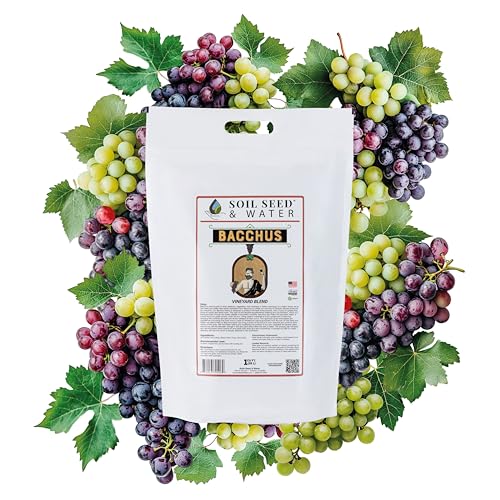
The Bacchus formula from Soil Seed & Water targets soil biology rather than just feeding the plant a salt solution. Its granular concentrate adds organic matter, improves water retention, and supports the fungal networks that grape roots depend on for phosphorus uptake. Multiple verified buyers report that near-dead vines in pots revived within one season and produced heavy crops the following year.
This OMRI-listed product is ideal for growers who want to wean vines off synthetic inputs and rebuild long-term soil fertility. The powdery consistency, described as similar to a chocolate drink mix, makes it easy to apply as a top-dress around the root zone in a vineyard row or around a single backyard trellis.
One caveat is that the product works slowly because it feeds the soil food web before feeding the vine directly. Users in cold climates should apply it early in the growing season so microbes have time to break down the material before the vine enters its heaviest fruiting period.
Why it’s great
- Revives stressed and potted vines effectively
- Soil amendment plus fertilizer in one product
- OMRI listed for organic certification compliance
Good to know
- Requires water to activate the microbial release
- Results may take several weeks to appear
2. Growth Technology GT Fruit Focus
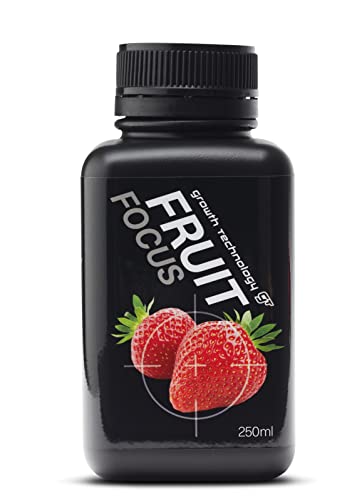
GT Fruit Focus includes all 12 essential minerals that fruit plants require, with a notable inclusion of calcium that many liquid fertilizers skip. This is critical for grapes because calcium drives cell division in developing berries and helps the vine resist fungal infections like powdery mildew. Users report that foliage becomes noticeably thicker and glossier within the first week of application.
The liquid concentrate mixes easily with water at a rate of 3–5 mL per liter for soil applications, making the small 250 mL bottle stretch across dozens of feeding sessions. Gardeners who grow a variety of fruits alongside grapes appreciate the single-formula simplicity — one bottle covers citrus, berries, and stone fruits without needing separate products.
The primary drawback is the concentrated viscosity, which can cause the original bottle to leak if stored on its side. Transferring the liquid to a squeeze bottle or storing it upright prevents mess. The high concentration also means the cost per feeding is low, but the upfront investment is higher than a generic granular bag.
Why it’s great
- Complete mineral profile with calcium
- Highly concentrated so it lasts many feedings
- Works in soil and hydroponic setups
Good to know
- Bottle design prone to leakage during shipping
- Requires measuring for proper dilution ratio
3. TPS Nutrients Grape Fertilizer
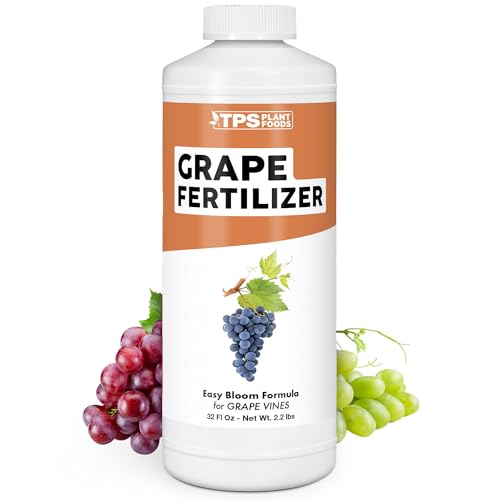
TPS Nutrients designed this formula with a specific 3-3.6-5.1 NPK that leans heavily into potassium and phosphorus, the two elements that drive flower development and sugar transport into the berries. This ratio makes it a strong choice for the later part of the growing season when the vine shifts from leaf production to fruit ripening. Users switching from a balanced granular have noted faster visible improvement in berry size and color after two applications.
At one ounce per gallon of water, the 32 oz bottle makes eight full gallons of feed — enough to cover multiple established vines or a medium vineyard row for several weeks. The liquid format penetrates dry soil quickly and reaches the root zone faster than a granular pellet that requires rain to dissolve.
The main consideration is that this product is not designed for early spring use when vines need more nitrogen for canopy development. Pairing it with a fish emulsion or balanced feed in the early season creates the best full-year program. Some users also note that the bottle ships without a measuring cup, so a separate syringe or spoon is helpful.
Why it’s great
- NPK ratio optimized for fruit development
- Fast-acting liquid absorbs into root zone rapidly
- Made in the USA with clear instructions
Good to know
- Needs nitrogen support during early growth stage
- No measuring device included in the package
4. Espoma Berry Tone
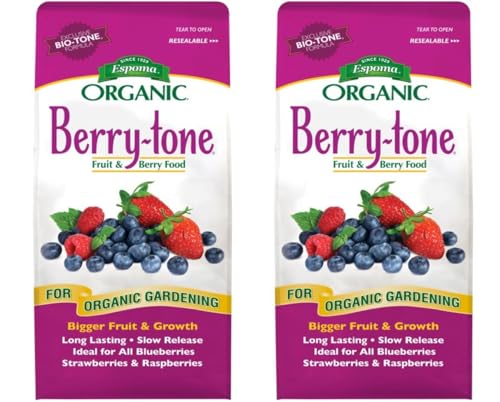
Espoma’s Berry Tone is a dry granular that uses the company’s Bio-tone microbial formula to release nutrients slowly over several months. Its 4-3-4 NPK provides a balanced foundation that works well for established grape vines and other fruiting plants like raspberries and blueberries. Users with mature patches report that a single spring application produces visible increases in berry set compared to unfertilized vines.
The biggest advantage of this product is convenience — no mixing, no measuring, no liquid spills. You sprinkle the granules around the root zone once in early spring and once again in late spring, then water it in. The organic ingredients feed the soil microbiology rather than forcing growth with synthetic salts, which reduces the risk of root burn.
The two-bag packaging assumes you have a large planting area, and some users with only a few containers found they received more product than needed. The formula is slightly tilted toward berry bushes, so growers who want a more grape-specific ratio may prefer a dedicated liquid feed during the fruiting phase. The granules also require soil moisture or rainfall to become bioavailable.
Why it’s great
- No mixing required — sprinkle and water in
- Bio-tone microbes improve long-term soil health
- Approved for organic gardening
Good to know
- Two 4 lb bags may be excessive for small gardens
- Slow release requires rain or irrigation to activate
5. Alaska Fish Fertilizer 5-1-1
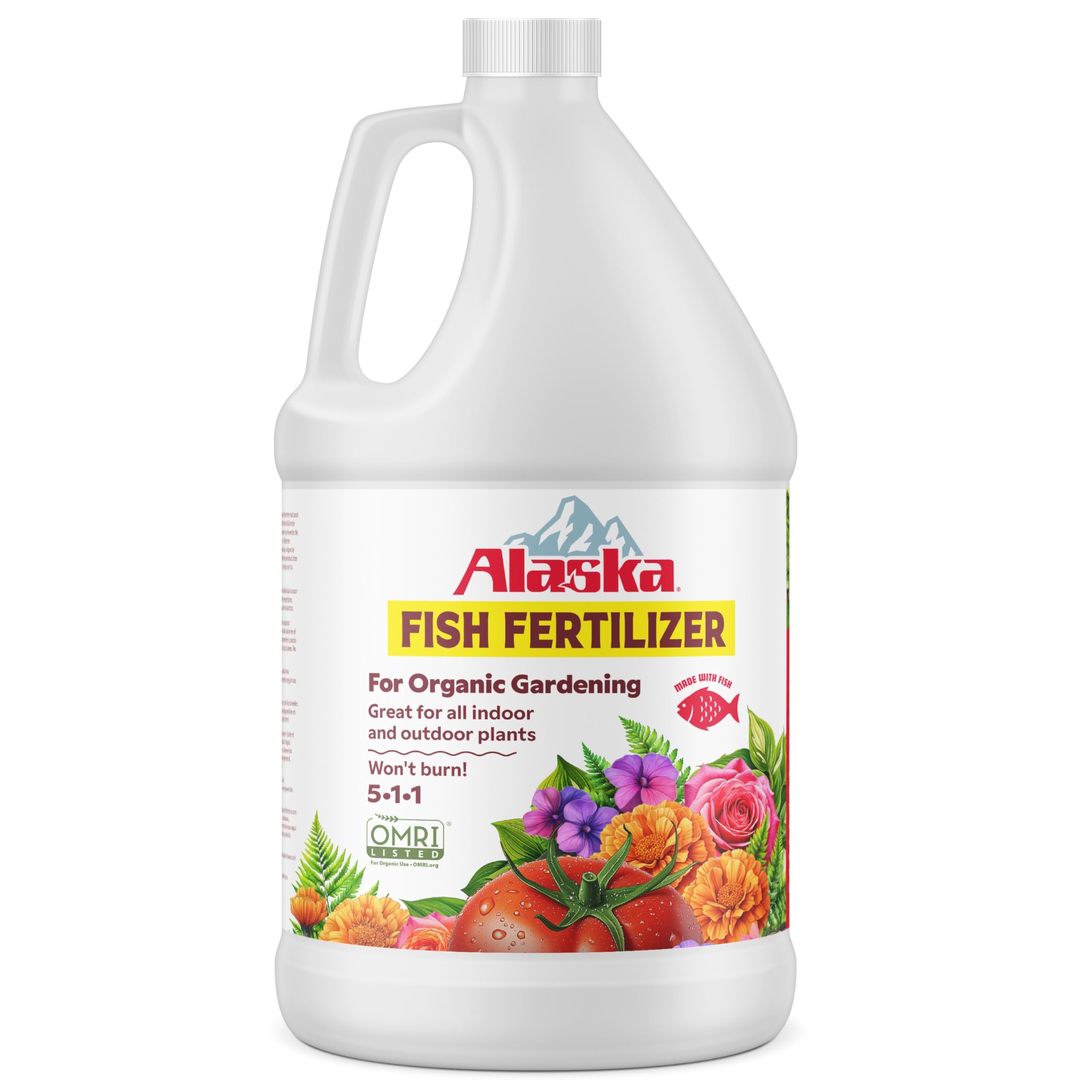
Alaska Fish Fertilizer is a classic organic nitrogen source that has been a staple in gardens for decades. The 5-1-1 ratio is high in nitrogen, making it best suited for early spring applications when grape vines push out their first leaves and shoots. The large 115-ounce jug provides extended coverage for multiple vines at a very low cost per feeding.
Cold-processed production preserves micronutrients and beneficial microorganisms that synthetic processes destroy. OMRI listing confirms compliance with organic standards, and the formula is safe for beneficial soil life when used according to instructions. Users have noted faster vegetative growth and deeper green color within days of the first application.
The most frequently cited drawback is the strong fishy odor that lingers for about a day after application. This is not an issue for outdoor vineyard use, but it can be unpleasant if applied near patios or open windows. The formula is also nitrogen-heavy, so growers must switch to a phosphorus-potassium booster once fruit clusters form to avoid all leaf and no fruit.
Why it’s great
- Large volume provides exceptional value per feed
- OMRI listed for certified organic growers
- Fast-acting liquid boosts green growth immediately
Good to know
- Strong fishy smell for about 24 hours after use
- Needs a phosphorus-potassium supplement during fruiting
FAQ
Can I use a high-nitrogen lawn fertilizer on my grape vines?
How often should I fertilize grape vines during the growing season?
Is organic or synthetic fertilizer better for grape vines?
Will liquid fertilizer burn my grape vines if I overdo it?
Final Thoughts: The Verdict
For most users, the grape vine fertilizer winner is the Soil Seed & Water Bacchus because it combines soil-building organic matter with a formulation tailored specifically for wine and table grapes, producing the most dramatic revival stories in verified reviews. If you want a complete mineral package that also works in hydroponics, grab the Growth Technology GT Fruit Focus. And for an entry-level liquid that corrects mid-season deficiencies quickly, nothing beats the TPS Nutrients Grape Fertilizer.