
Most gaming headsets tune their drivers to exaggerate gunshots and footsteps, leaving vocals thin and bass boomy when you switch over to your playlist. The result is a separate headphone for gaming and another for music — an expensive and cluttered compromise. The best options in this space deliver a wide, natural soundstage that handles both a game’s positional cues and the full body of a studio recording without needing a second pair of cans.
I’m Mohammad Maruf — the founder and writer behind Drink4Good. I’ve spent countless hours cross-referencing frequency response curves, driver materials, and real-world user feedback to separate the headsets that actually respect music from those that just market good numbers.
Whether you stream competitive shooters or lose yourself in open-world scores, the right gaming headset for music balances low-latency wireless, a detachable mic for clean listening, and a driver that doesn’t crush the mids and highs.
How To Choose The Best Gaming Headset For Music
Choosing a headset that works equally well for gaming and music comes down to three factors most reviews gloss over: driver architecture, frequency response balance, and how the microphone affects the audio path when not in use.
Driver Architecture and Diaphragm Material
Standard 50mm dynamic drivers are common, but the real differentiator is whether the headset uses a single chamber or a dual-chamber design. Single-chamber drivers often let bass bleed into the mids, muddying vocals. Dual-chamber designs like those in the HyperX Cloud Alpha physically separate the bass and mid-range frequencies inside the driver housing, reducing distortion. Titanium-coated diaphragms — found in the Razer BlackShark V3 and ASUS ROG Delta II — add stiffness without extra weight, which improves transient response for cymbals, strings, and fast-paced electronic music.
Frequency Response and Soundstage
A flat or neutral frequency response curve is ideal for music, but most gaming headsets artificially boost the low end (80–120 Hz) and upper treble (8–12 kHz) to emphasize explosions and footsteps. For a headset that serves both purposes, look for models that offer EQ software (such as Corsair iCUE or Logitech G HUB) so you can dial back the bass shelf and lift the mids for vocal clarity. Open-back designs, like the Sennheiser HD 505, deliver a wider, more natural soundstage for music but leak sound and sacrifice bass slam — a trade-off worth considering if you play in a quiet room.
Microphone Detachability and Audio Path Integrity
A permanently attached boom mic can introduce electrical noise and restrict the headphone’s impedance path, subtly degrading music playback quality. A detachable mic — present on the HyperX Cloud Alpha, Razer BlackShark V3, and ASUS ROG Delta II — physically disconnects the microphone circuit when removed, allowing the headset to behave more like a pure set of headphones. If you primarily listen to music and occasionally game, this feature alone can elevate your listening experience more than any driver upgrade.
Quick Comparison
On smaller screens, swipe sideways to see the full table.
| Model | Category | Best For | Key Spec | Amazon |
|---|---|---|---|---|
| ASUS ROG Delta II | Premium Wireless | High-res wireless music and gaming | 50mm titanium-plated drivers, 24-bit/96kHz | Amazon |
| Sennheiser HD 505 | Open-back Wired | Audiophile-grade music listening | Open-back, 20Hz–20kHz, neutral sound | Amazon |
| Logitech G522 | Mid-Range Wireless | Wireless versatility with EQ control | PRO-G 50mm, 48kHz/24-bit, 60hr battery | Amazon |
| Razer BlackShark V3 | Premium Wireless | Low-latency wireless with THX Spatial | Triforce Titanium 50mm, 70hr battery | Amazon |
| Corsair HS80 RGB | Mid-Range Wired | Dolby Atmos immersion and mic clarity | Custom 50mm neodymium, 20Hz–40kHz | Amazon |
| HyperX Cloud Alpha | Mid-Range Wired | Clean dual-chamber audio for gaming and music | Dual chamber drivers, 15Hz–25kHz | Amazon |
| FIFINE H13BP | Budget Wired | Entry-level RGB with decent clarity | 50mm dynamic, 7.1 surround, USB | Amazon |
In‑Depth Reviews
1. ASUS ROG Delta II Wireless Gaming Headset
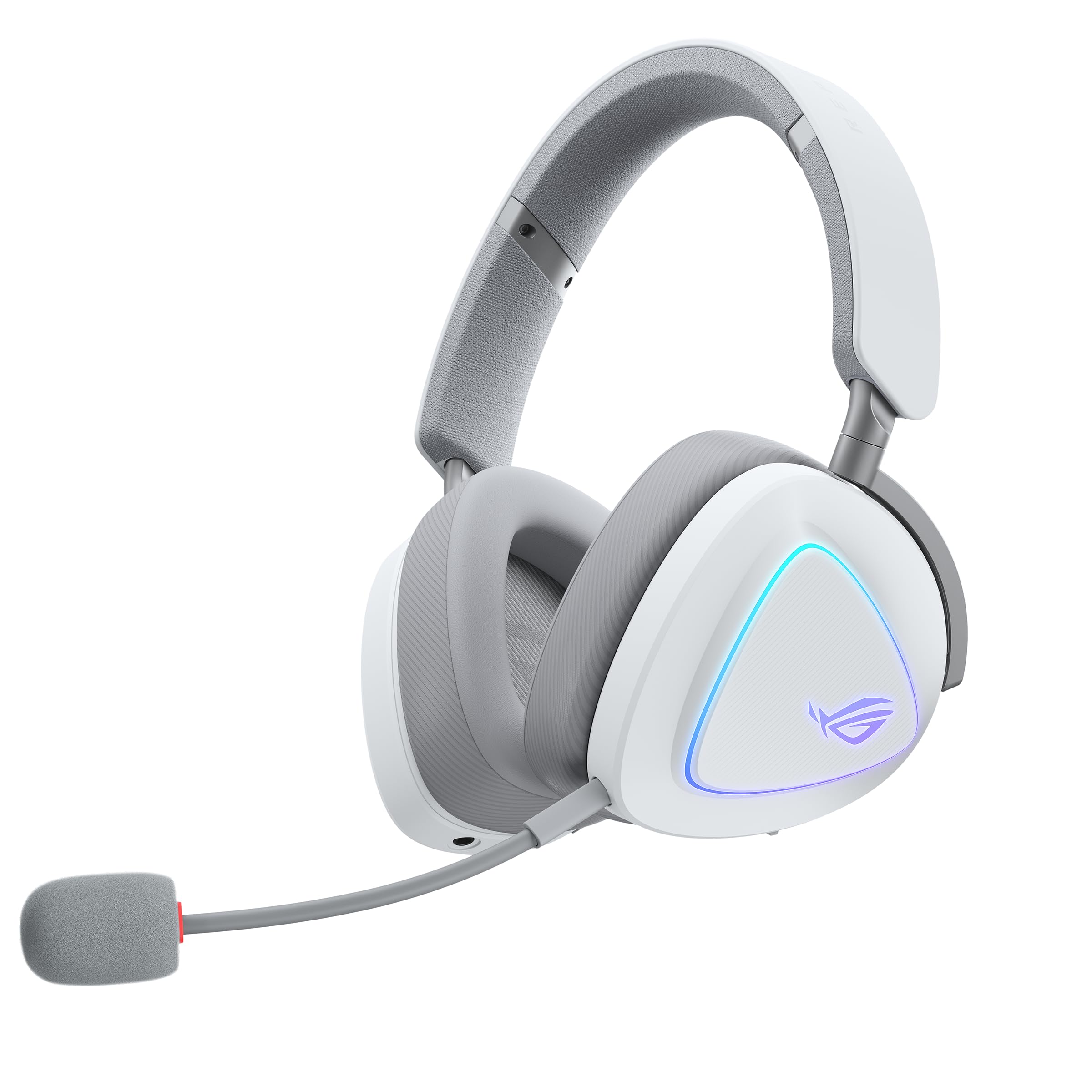
The ASUS ROG Delta II earns its top spot by pairing 50mm titanium-plated diaphragm drivers with a tri-mode connectivity system that lets you toggle between Bluetooth 5.2, 2.4GHz via the ROG SpeedNova dongle, and a 3.5mm analog cable. The titanium coating stiffens the diaphragm for faster transient response, which translates to cleaner attacks on piano notes and snare hits compared to standard polymer drivers. The 24-bit/96kHz resolution over 2.4GHz is a rare find in wireless gaming headsets — most cap at 48kHz — and it makes a noticeable difference in lossless streaming tracks where micro-detail in the upper mids matters.
The DualFlow Audio feature allows simultaneous 2.4GHz and Bluetooth connections, so you can hear game audio from your PC and take a call from your phone without pausing the match. The 110-hour battery life on 2.4GHz with RGB off removes the daily charging chore, and the quick-charge function delivers 11 hours from a 15-minute top-up. The super-wideband detachable mic captures voice detail well enough for streaming, and removing the boom mic preserves the pure headphone path for music sessions.
The included mesh fabric earcups reduce heat buildup during long listening periods, and the 180-degree swivel makes storage easy. Potential buyers should note the clamping force is light, which helps comfort but may feel insecure during head movements. The Armoury Crate software offers a full EQ suite to flatten any V-shaped tuning, but the sleep function has occasional bugs that require a driver restart.
Why it’s great
- True high-resolution 24-bit/96kHz wireless audio for music clarity
- DualFlow connection lets you mix game and phone audio seamlessly
- 110-hour battery with fast charging is best-in-class for this category
Good to know
- Light clamping force may not suit very active movements
- Armoury Crate sleep function can be inconsistent
2. Sennheiser HD 505

The Sennheiser HD 505 is a pure open-back headphone, not a gaming headset with a mic — but it belongs on this list because it solves the music-quality problem better than any traditional gaming headset. The open-back design vents the rear of the driver, eliminating bass pressure build-up and creating a spacious, airy soundstage that positions instruments in a three-dimensional space. For orchestral scores, acoustic guitar, or vocals, the HD 505 renders the layers cleanly without the bass bleed that plagues most closed-back gaming headsets.
The advanced laminate diaphragm delivers a neutral frequency response with controlled bass extension that reaches deeper than the HD 600 series while keeping the mids open and natural. The clamping force is noticeably lighter than older Sennheiser models, and the velour ear pads are plush enough for all-day wear without overheating. The 1.8-meter cable terminates in a 3.5mm plug with a screw-on 6.35mm adapter, making it compatible with standard gaming DACs or console controllers.
These are not a wireless solution, and they lack any built-in microphone. You will need to add a separate desk mic or a modmic if you want voice chat during gaming. The open-back design also leaks sound, so it is not ideal for shared spaces or noisy environments. For listeners who prioritize music fidelity first and can accommodate a separate mic solution, the HD 505 offers studio-grade performance at a mid-range price.
Why it’s great
- Wide open-back soundstage with natural instrument separation
- Neutral tuning with better bass extension than Sennheiser HD 600
- Excellent long-term comfort with velour pads and light clamp
Good to know
- No microphone built in — requires separate mic for gaming
- Open-back design leaks sound and offers no isolation
3. Logitech G522 Lightspeed Wireless Gaming Headset

The Logitech G522 uses PRO-G audio drivers that deliver synchronized 48kHz/24-bit audio over a wired USB connection or Lightspeed wireless, with Bluetooth 5.0 as a third connectivity option. The 50mm drivers are tuned for low distortion and rich bass, but the real value for music listeners is the G HUB software suite, which includes a parametric EQ and Blue VO!CE microphone processing. You can dial in a neutral profile for music and save a separate gaming profile with boosted positional cues, switching between them instantly.
The full-bandwidth 48kHz/16-bit detachable microphone captures voice with broadcast-level clarity, and removing the boom mic disconnects the microphone circuit entirely, keeping the audio path clean for music playback. The 280-gram build is lightweight for a wireless headset with RGB, and the washable suspension band is a practical addition for long-term hygiene. Battery life reaches 60 hours with lighting off, and the wireless range extends up to 30 meters.
The LIGHTSYNC RGB side-facing lighting is customizable through G HUB but adds minimal weight. Some users report that the default sound signature is slightly V-shaped, with elevated bass and treble that can sound artificial on acoustic tracks — easily corrected with EQ. The earcup cushions are rounded and breathable, but users with very large heads may find the clamp pressure a bit tight after several hours.
Why it’s great
- PRO-G drivers with 48kHz/24-bit support for clean audio reproduction
- Detachable mic and Blue VO!CE for excellent voice clarity
- Tri-connectivity (Lightspeed, Bluetooth, USB) covers all platforms
Good to know
- Default EQ has elevated bass and treble — needs software adjustment for music
- Clamp pressure may be too firm for extended wear on larger head sizes
4. Razer BlackShark V3 Wireless Gaming Headset

The Razer BlackShark V3 revises the classic esports design with Hyperspeed Wireless Gen-2, lowering latency to under 10 milliseconds — the lowest among the wireless headsets on this list. The Triforce Titanium 50mm Gen-2 drivers use a titanium-coated diaphragm that responds faster to transient signals, producing cleaner separation between footsteps and music layers. With THX Spatial Audio activated, the soundstage expands to 7.1.4 channels, providing overhead positioning that improves immersion in both games and cinematic music.
The detachable HyperClear Super Wideband 9.9mm microphone captures a wider frequency range than typical boom mics, making voice sound natural and full without the tinny quality common in gaming headsets. The 70-hour battery life on a single charge covers a full work week of mixed gaming and music listening. Dual wireless connectivity allows simultaneous 2.4GHz and Bluetooth 5.3 audio, so you can game on PC while taking calls or listening to music from your phone.
The headset is lightweight at roughly 300 grams, with memory foam earpads covered in breathable fabric. The Pro-Tuned FPS profiles in Razer Synapse provide game-specific EQ settings, but these are optimized for competitive audio cues rather than music enjoyment — you will want to create a custom flat EQ for music. The included USB-C to USB-A adapter is a smart inclusion for console compatibility, though Bluetooth pairing requires a deliberate process that may not be immediately obvious.
Why it’s great
- Ultra-low latency Hyperspeed Wireless for lag-free gaming and music
- THX Spatial Audio creates a wide, immersive soundstage for music
- Detachable super-wideband mic delivers natural voice quality
Good to know
- Setup documentation is sparse; dongle location may be confusing
- FPS EQ profiles are not music-optimized — custom EQ needed
5. Corsair HS80 RGB USB Premium Gaming Headset

The Corsair HS80 RGB is a wired USB headset with Dolby Audio 7.1 Surround Sound and custom-tuned 50mm neodymium drivers that extend up to 40kHz — surpassing the standard 20kHz ceiling found in most gaming headsets. This extended frequency range allows the HS80 to reproduce high-frequency harmonics and air in acoustic recordings that cheaper drivers roll off. The high-fidelity 24-bit/96kHz USB audio path is clean enough for casual music production and critical listening, though the default tuning leans slightly bright in the treble region.
The broadcast-grade omni-directional microphone is one of the best in its class, rivaling standalone desk mics in clarity. The flip-up mute function with a visible LED indicator is a practical convenience for live streaming and voice calls. The floating headband design distributes weight evenly, and the memory foam earpads are covered with a breathable microfiber cloth that reduces sweat during long sessions. The overall build quality uses metal reinforcement in critical stress points.
The HS80 does not offer wireless connectivity — it is strictly USB-C wired, which is excellent for zero latency but limits mobility. The cloth earpads may feel itchy for some users, and the headband tension can be tight on larger heads, requiring a break-in period. The Corsair iCUE software provides a full 10-band EQ and sound customization, but the Dolby Atmos implementation has a volume modulation bug on some firmware versions that occasionally lowers the overall playback level.
Why it’s great
- Extended 40kHz frequency range for detailed high-frequency reproduction
- Broadcast-grade mic with flip-to-mute and LED indicator
- Dolby Audio 7.1 provides wide soundstage for games and films
Good to know
- Wired USB only — no wireless or analog 3.5mm option
- Clamping force may be tight for large heads; cloth pads can itch
6. HyperX Cloud Alpha Gaming Headset

The HyperX Cloud Alpha remains a benchmark in the mid-range category because of its patented Dual Chamber driver technology, which physically separates the bass and mid-range frequencies into two distinct chambers inside the earcup. This design prevents the low-end from bleeding into the mids, resulting in cleaner vocals and instrument separation than single-chamber competitors in the same price tier. The frequency response spans 15Hz to 25kHz, providing sub-bass extension that feels powerful but controlled.
The aluminum frame is genuinely durable — customers report surviving drops, door slams, and chair rolls over multiple years without structural failure. The detachable braided cable reduces microphonic noise and includes an in-line audio control for quick volume and mute adjustments. The noise-cancelling microphone uses a cardioid pickup pattern with a detachable design, so music listeners can remove it entirely to restore a pure headphone path. The memory foam earcups are covered in leatherette that provides good passive isolation.
The Cloud Alpha works across virtually every platform with a 3.5mm jack, including PC, PS5, Xbox Series X|S, Nintendo Switch, and mobile. The leatherette on the headband and earcups does tend to peel after two to three years of heavy use, and the ear cushions become less plush over time. The microphone is adequate for communication but does not match the clarity of the Corsair HS80 or Logitech G522. Some users with larger heads find the clamping force firm during sessions exceeding three hours.
Why it’s great
- Dual Chamber drivers prevent bass bleed for cleaner vocals
- Aluminum frame is exceptionally durable for long-term use
- Detachable cable and mic for easy storage and replacement
Good to know
- Leatherette padding peels after 2–3 years of regular use
- Microphone quality is good but not top-tier for streaming
7. FIFINE Wired Gaming Headsets AmpliGame H13BP
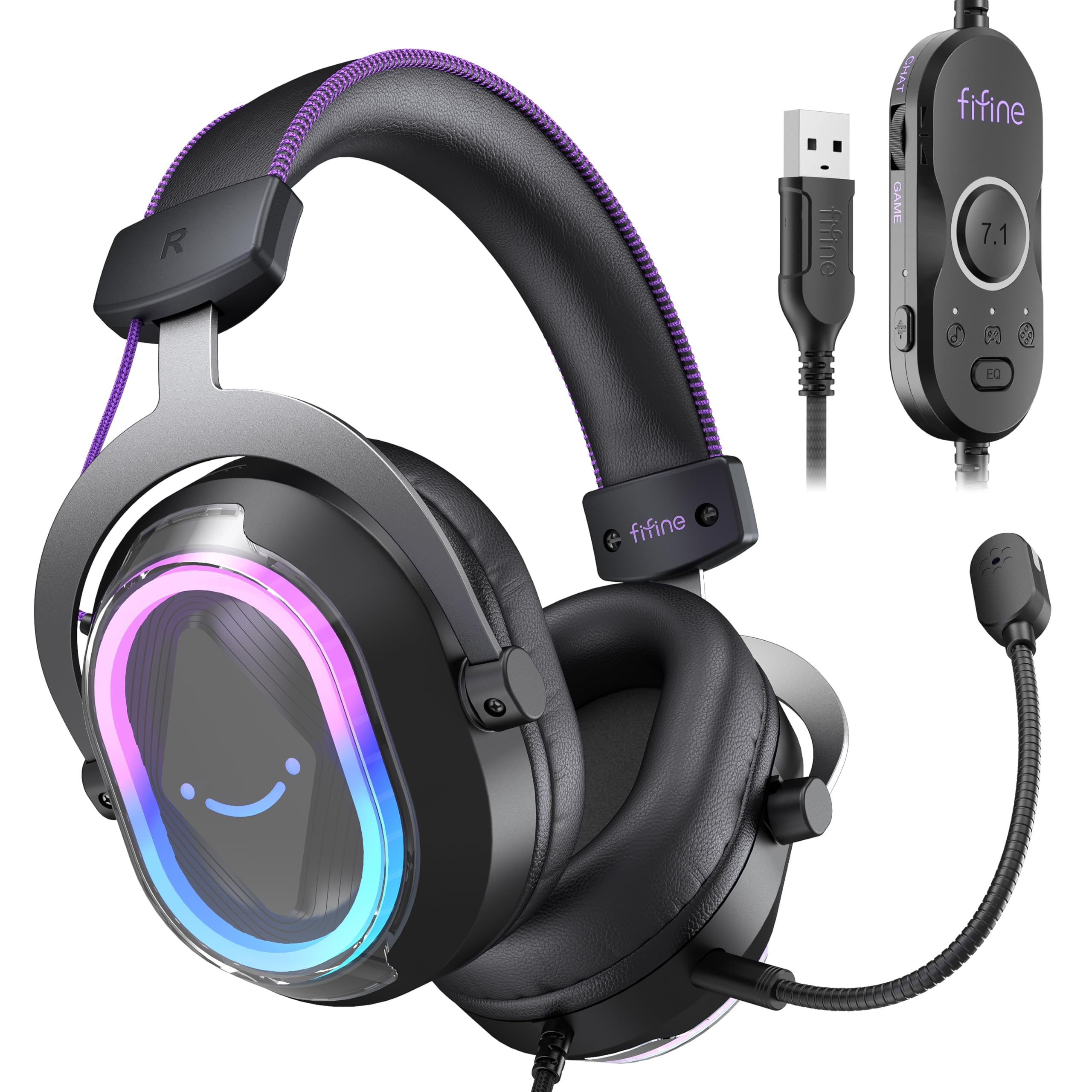
The FIFINE H13BP is an entry-level wired gaming headset that uses 50mm dynamic drivers with a virtual 7.1 surround sound processor accessible via the in-line USB control box. For the budget segment, the H13BP delivers surprisingly clear audio across the frequency spectrum, with customers noting good sound clarity for footsteps, music, and in-game audio. The virtual surround is not as precise as Dolby Atmos or THX implementations, but it widens the stereo field enough to create a more immersive listening experience for music and single-player games.
The rhombus-frame design with 11-mode RGB lighting appeals to streamers and aesthetics-focused users. The protein skin ear pads and memory foam cushions are comfortable for extended sessions, and the adjustable headband accommodates various head shapes. The in-line control box offers dedicated volume, game/chat balance, EQ mode switching (three presets), and a one-click mute button with a red LED indicator for the noise-cancelling microphone. The USB-A connection is plug-and-play on PC, Mac, PS5, and PS4.
The sound quality is competitive within its price bracket, but the plastic construction feels less durable than the aluminum-frame options from HyperX or Razer. The microphone noise cancellation is effective for background hum and typing but does not perform as well in very noisy environments. Some users report a squeaking noise from the earcups during movement and the braided cable transmits some friction noise. The 7.55-foot cable is generous for desk setups but limits portability.
Why it’s great
- Good audio clarity for both gaming and music at an entry-level price
- 11-mode RGB adds visual appeal for streaming setups
- In-line control box with game/chat balance and EQ modes
Good to know
- Plastic construction is less durable than aluminum competitors
- Earcup squeak and cable noise can be distracting during quiet passages
FAQ
Can I use a gaming headset for music without the microphone installed?
What is the difference between 7.1 virtual surround and stereo for music?
Does Bluetooth latency affect music quality on a gaming headset?
Why do some gaming headsets sound muddy for music but clear for footsteps?
Final Thoughts: The Verdict
For most users, the gaming headset for music winner is the ASUS ROG Delta II because it combines high-resolution 24-bit/96kHz wireless audio, a titanium-coated driver that reproduces music detail faithfully, and a detachable mic that keeps the headphone path clean. If you want studio-quality open-back sound and don’t mind a separate mic, grab the Sennheiser HD 505. And for the best all-round value with proven durability and clean dual-chamber audio, nothing beats the HyperX Cloud Alpha.