
Backyard practice swings shouldn’t mean chasing balls into the neighbor’s hedge or replacing a broken window. The gap between a real golf ball and a toy is wider than most beginners realize — flight too short kills your swing feedback, while a ball that’s too hard turns the living room into a hazard zone. The right practice ball delivers a strike feel that builds muscle memory without demanding a full acre of land.
I’m Mohammad Maruf — the founder and writer behind Drink4Good. My research into this category focuses on matching construction materials and dimple patterns to realistic spin behavior so you don’t waste swings on balls that feel like wiffle balloons.
These recommendations are built on hours of spec analysis and verified user feedback covering durability, flight consistency, and surface feel across the most popular options. This guide will help you find the best golf practice balls for your specific training space without overpaying for features that don’t improve your game.
How To Choose The Best Golf Practice Balls
Picking a practice ball isn’t a one-size-fits-all decision. The right choice depends on where you swing, how hard you swing, and what kind of feedback helps you improve. Here are the three factors that separate useful training tools from frustrating toys.
Construction Material: Foam vs. Plastic
Foam balls are the safest choice for indoor or tight spaces. They’re soft enough to avoid damaging furniture and typically travel 30 to 50 yards on a full swing. The downside is a muted strike feel that can mask off-center hits. Plastic balls with a hollow core and dimpled surface offer a louder crack and more realistic spin response, making them better for outdoor chipping and mid-iron practice. Avoid ultra-thin plastic shells — they dent or split within a few sessions.
Flight Distance and Limited-Flight Design
Most practice balls advertise limited flight, but not all limits are the same. A true limited-flight ball uses weight, material density, and aerodynamic holes or dimples to cap distance at 40 to 70 yards regardless of swing speed. Balls that fly under 20 yards kill any useful launch feedback for full swings. For backyards smaller than 30 feet, the short-flight plastic options with 26 holes are the sweet spot — they travel 10 to 15 yards off a wedge and mimic a real ball’s trajectory.
Surface Texture and Dimple Simulation
A dimpled surface matters more than most buyers realize. Balls with a smooth plastic shell produce erratic flight because they lack the aerodynamic lift and spin stability that dimples create. The best designs either mold soft dimples into the foam surface or drill holes into the plastic shell. The number of holes typically ranges from 26 to 40, and more holes generally improve straightness but reduce total distance slightly.
Quick Comparison
On smaller screens, swipe sideways to see the full table.
| Model | Category | Best For | Key Spec | Amazon |
|---|---|---|---|---|
| Faswin 105 Pack | Premium Plastic | High-volume outdoor training | Stitched seams for crack resistance | Amazon |
| KOFULL 100 Pack | Premium Plastic | Large group drills and parties | 1.65 inch diameter hollow build | Amazon |
| JAYA 32 Pack Foam | Mid-Range Foam | Indoor and quiet backyard practice | 0.36 kg foam with dimple texture | Amazon |
| FINGER TEN 24 Pack | Entry Plastic | Budget outdoor chipping drills | 1.6 inch diameter perforated plastic | Amazon |
| Bac-kitchen 50 Pack | Entry Plastic | Kids and beginners in small yards | 26-hole design with mesh bag | Amazon |
In‑Depth Reviews
1. Faswin 105 Pack Practice Golf Balls
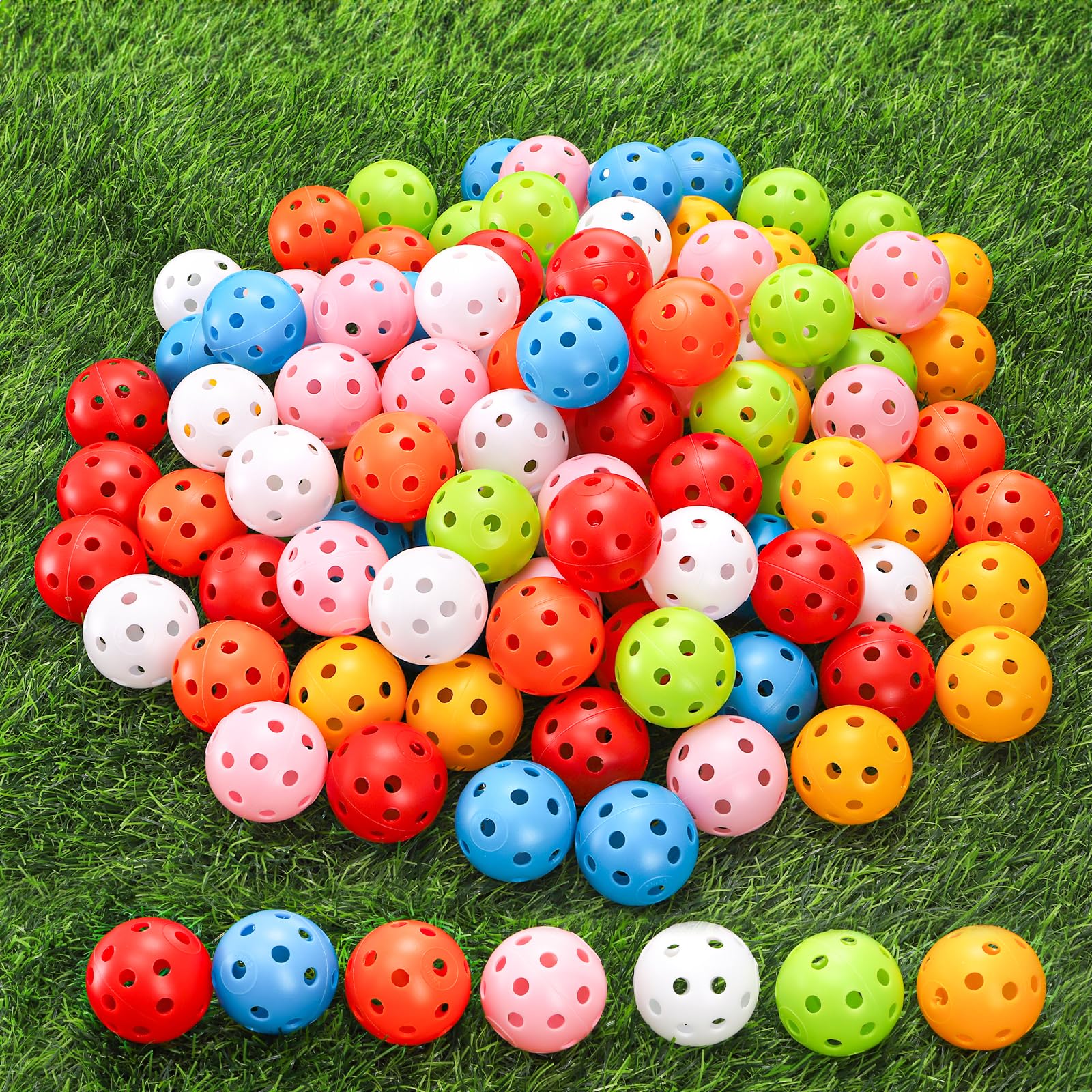
With 105 balls in a single pack, the Faswin delivers the highest count in this lineup without dropping into flimsy construction. Each ball measures 41mm and uses 26 aerodynamic holes paired with stitched seams — a detail that prevents splits better than the one-piece molded shells found on cheaper plastic balls. The polyurethane blend holds shape after repeated full swings, and the 449-gram total weight means the whole pack is easy to carry to the driving range or back yard.
The seven-color mix (red, yellow, blue, green, white, pink) makes retrieval fast no matter the grass or gravel surface. Flight distance sits in the 15-to-25-yard range off an iron, which is the sweet spot for chipping and half-swing practice. The seam stitching also adds a small audible crack on contact that helps verify center strikes — something foam balls cannot provide. A few users note minor denting after heavy use on hard ground, but the overall durability is notably higher than budget options.
For anyone running team drills, group lessons, or just needing a bulk supply that won’t vanish after a weekend, the Faswin 105-pack combines volume with build quality that outlasts anything at a lower price tier. The stitched seams and hole pattern create consistent flight behavior that translates well between practice and real course conditions.
Why it’s great
- Stitched seams resist splitting better than molded plastic
- 105 balls at 41mm each cover large group or long practice sessions
- Seven bright colors improve visibility across all terrain
Good to know
- Can show minor surface dents on concrete or asphalt contact
- Some users report slight weight variation between individual balls
2. KOFULL 100 Pack Plastic Golf Balls

The hollow core construction of the KOFULL balls keeps each unit at 4.2 grams, making them among the lightest options here. The 1.65-inch diameter is slightly larger than a standard golf ball, which is a deliberate choice for beginners and kids who need a bigger visual target during swing training. The dimpled surface is molded directly into the plastic shell rather than drilled, which reduces stress points that cause cracks.
Verified reviews consistently note that these balls hold their shape well over dozens of swings, resisting the denting that plagues thinner Chinese-made hollow balls. The limited flight path works best for pre-game warm-ups and short-game drills — a wedge swing carries about 10 to 15 yards. Because the balls are so light, they fly easily even with partial swings, making them suitable for introducing children to the basic motion without fear of breakage. A small percentage of users found them too light for realistic full-swing feedback, preferring denser foam for that purpose.
The 100-count pack offers excellent value for families or coaches who need a large supply that survives repeated abuse. The white color is clean but less visible in snow or light sand compared to multi-color packs. Overall, this is the strongest option for buyers who prioritize durability per ball over flight realism.
Why it’s great
- Molded dimple shell resists cracking better than thin drilled plastic
- 100-count pack at 4.2 grams each for lightweight practice
- Slightly larger diameter helps beginner hand-eye coordination
Good to know
- Too light for realistic full-swing distance feedback
- White color is harder to find in light sand or snow
3. JAYA 32 Pack Foam Practice Balls
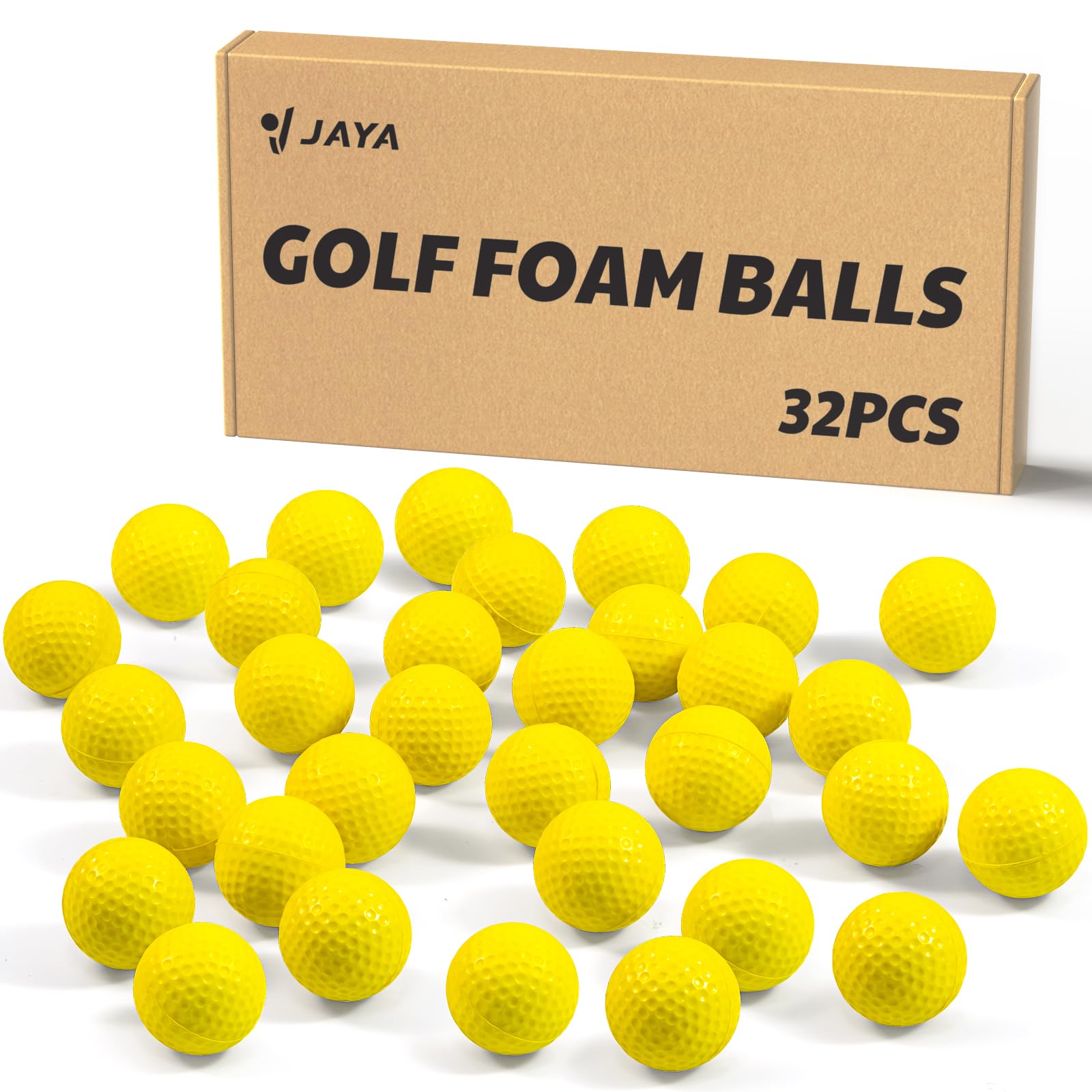
Foam practice balls occupy a different niche than plastic, and the JAYA 32-pack executes that niche well. The dimple-style texture on the foam surface is the key differentiator — most foam balls are smooth and produce little to no spin, but this molded pattern adds enough friction to generate a modest ball flight curve. The 0.36-kilogram total weight distributed across 32 balls means each ball is dense enough to travel 40 to 50 yards on a full swing without risking damage to windows or siding.
User feedback highlights the low noise level as the primary reason for buying. The soft foam generates a dull thud rather than a sharp crack, which is ideal for indoor hitting nets or early-morning practice when neighbors are sensitive. The bright yellow color stands out sharply against green grass, making retrieval easy even in moderate rough. Multiple users reported surviving 100-plus swings per ball without visible wear, which is impressive for a foam product. The only consistent criticism is that the foam can compress slightly over time, reducing the dimple depth after several hundred strikes.
If you practice indoors, in a net, or in a small yard where breaking something is a real concern, the JAYA foam balls give you the best strike feel of any soft practice ball while keeping noise and damage risk to an absolute minimum. The 32-pack is a reasonable quantity for solo or paired practice sessions.
Why it’s great
- Dimple-style foam surface provides realistic spin feel
- Very low noise during use — ideal for indoor nets
- Bright yellow color makes retrieval quick
Good to know
- Foam compression can reduce dimple depth after heavy use
- 32-pack may not be enough for group drills
4. FINGER TEN 24 Pack Plastic Practice Balls
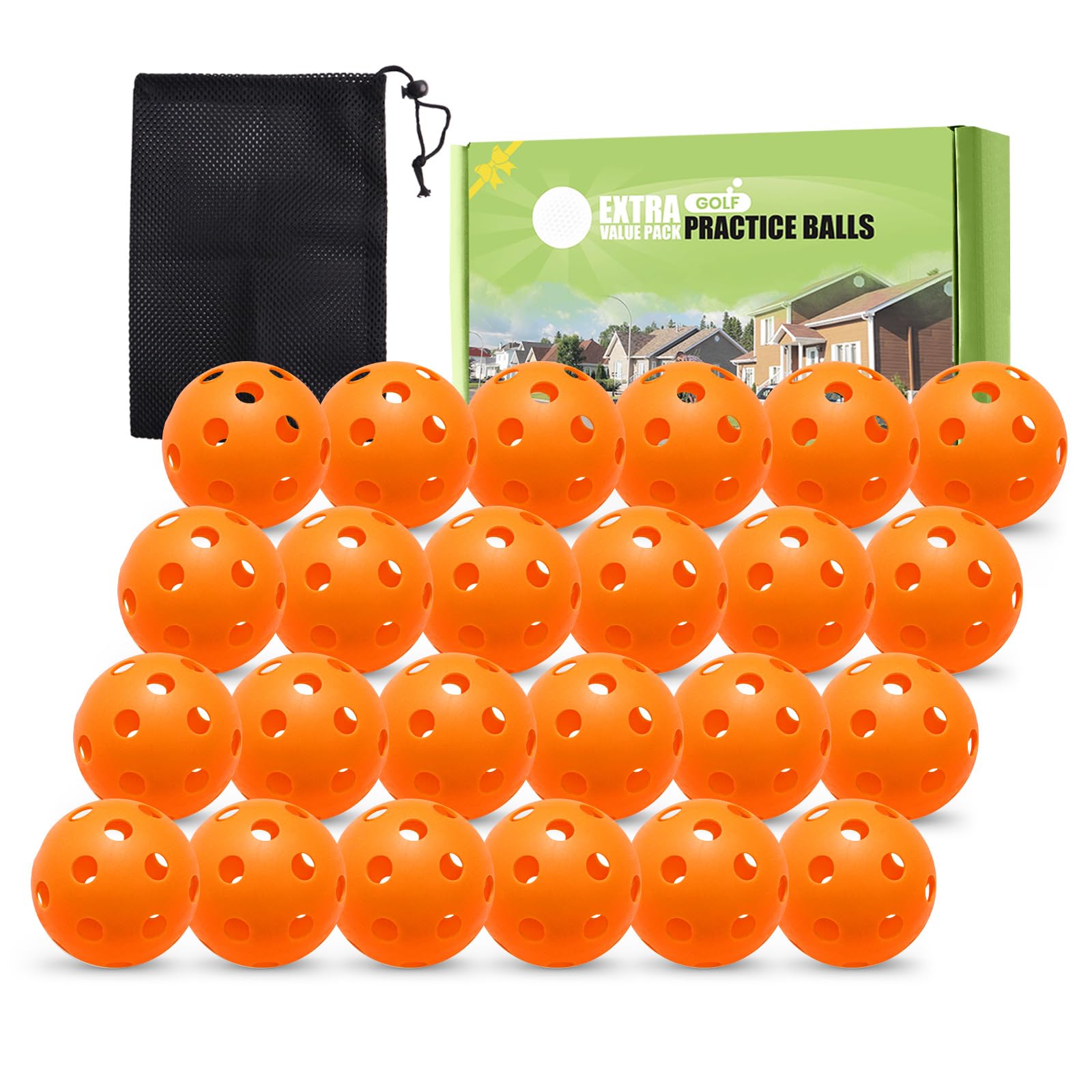
The FINGER TEN plastic balls are the classic budget-friendly choice for outdoor chipping practice. Each 1.6-inch ball uses a perforated design — small holes punched through the shell — to limit flight distance while still producing a satisfying plastic-on-club sound. The lightweight construction means a full swing with a wedge sends them about 20 yards, which is controllable for a standard suburban back yard. The orange color option is particularly easy to track against blue sky or green turf.
Durability is the main trade-off at this tier. Multiple user reviews note that after roughly ten to fifteen hits, some balls begin to split along the molding seam. The material is a thin high-strength plastic that dents rather than shatters, but the dents reduce aerodynamic consistency. For pure chipping practice and swing path training, this doesn’t matter much — the feedback from the ball’s sound and flight direction remains useful. The set comes with 24 balls, which is enough for light solo use but runs thin for group sessions.
Buyers who practice once or twice a week and need a no-regret entry point into limited-flight plastic balls will find the FINGER TEN pack hard to beat. Just plan to replace them after a season of regular use, as the splitting issue is a material limitation at this price point.
Why it’s great
- Clear audible feedback on contact for swing timing
- Orange color provides high visibility across most backgrounds
- 24-pack is a low-cost entry for testing plastic practice balls
Good to know
- Seam splitting can occur after 10 to 15 hits
- Lightweight feel may not satisfy intermediate golfers
5. Bac-kitchen 50 Pack Plastic Practice Balls

The Bac-kitchen 50-pack focuses on volume and portability at a low entry point. Each ball has 26 holes drilled into a green molded plastic shell that measures about 40mm in diameter. The high hole count effectively limits air resistance, so a controlled swing with a 9-iron sends the ball about 10 to 15 yards — perfect for small backyards or indoor use. The included mesh drawstring bag makes transport and storage simple, which is a useful bonus that competitors omit.
Durability is this pack’s weakest point. The single-piece molded construction lacks the seam reinforcement of stitched options, meaning a direct hit on concrete or a hard mis-swing can crack or flatten the ball. Several user reviews mention that a 6-year-old child could deform a ball during play, so this is best suited for adults making consistent contact or for beginners who aren’t swinging with full speed. The green color is a poor choice for grassy terrain — several users mentioned needing extra time to locate balls after a session. The pack also includes a few plastic tees, which is a thoughtful addition for practice setup.
Given the low cost per ball and the included carry bag, the Bac-kitchen pack works well for casual family golf games, pet fetch training, or budget-conscious beginners who want a large quantity without committing to premium materials.
Why it’s great
- 50 balls at a low per-unit cost for bulk practice needs
- Mesh drawstring bag included for easy transport
- 26-hole design ensures short safe flight in tight spaces
Good to know
- Green color blends into grass — easy to lose
- Single-piece molded shell can crack on hard ground contact
FAQ
Can I use foam practice balls in a golf simulator or hitting net?
How many practice balls do I actually need for backyard training?
Do dimple patterns on foam balls actually improve spin feel?
Final Thoughts: The Verdict
For most users, the best golf practice balls winner is the Faswin 105 Pack because the stitched seams and aerodynamic hole design deliver the best balance of durability, realistic flight, and high ball count. If you want a quiet, indoor-safe option that won’t damage your home, grab the JAYA 32 Pack Foam. And for budget-conscious beginners or casual backyard chipping, nothing beats the value of the FINGER TEN 24 Pack.