
Gravity deer feeders solve a specific problem that timed spin-cast feeders create: hungry deer learn the exact minute your spinner fires, yet the battery inevitably dies on the seventh night. A well-built gravity feeder delivers corn or protein pellets 24/7 without a single battery, motor, or timer to fail — the deer feed themselves at their own pace, and you refill only when the hopper runs low.
I’m Mohammad Maruf — the founder and writer behind Drink4Good. This guide is built from hours of cross-referencing technical specs, customer durability reports, and real-world assembly feedback across every major gravity feeder on the market right now.
The right unit keeps feed dry, deters raccoons, and survives full seasons without warping or rusting, which is exactly why I put together this deep analysis on the best gravity deer feeders for serious land managers and weekend hunters alike.
How To Choose The Best Gravity Deer Feeders
Gravity feeders are elegantly simple — a hopper sits above a tray or chute, and feed drops by weight as deer eat. But the difference between a unit that lasts five years and one that leaks moisture after one season comes down to material thickness, leg design, and feed-port geometry.
Hopper Material: Polyethylene vs. Metal
Roto-molded polyethylene is the dominant choice at premium price points because it resists denting, doesn’t rust, and handles UV exposure without becoming brittle. Metal hoppers, usually galvanized steel, are cheaper and heavier-duty in theory, but any scratch through the zinc coating becomes a rust starting point. In humid climates, poly consistently outlasts painted or galvanized metal by multiple seasons.
Feed-Port Height and Angle
The industry sweet spot is 42 inches from the ground to the bottom of the feed port — tall enough to block raccoons and squirrels from reaching the chute, low enough that adult deer can eat comfortably. Ports angled at 10 degrees with a 1-inch overhang reduce spillage when deer bump the tray. Units that allow adjustable port height add flexibility if you manage a mixed herd of fawns and mature bucks.
Capacity vs. Refill Frequency
A 30-gallon hopper holds roughly 200 pounds of corn and will last a small herd roughly two to four weeks depending on deer pressure. A 300-pound unit can stretch that to six weeks or more, which matters if your feeder is deep in the woods. Capacity has a direct trade-off with weight — a full 300-pound feeder requires either a post-mounted system or a reinforced tripod to stay stable.
Mounting Style: Tripod vs. Post
Tripod legs spread the load on uneven ground and usually support 200-pound capacities without concrete. Post-mounted feeders require a single 4×4 set three feet deep (and often cemented), but they eliminate any risk of antler interference because nothing surrounds the feed tray. Post mounts also make it harder for raccoons to climb compared to an open tripod frame.
Quick Comparison
On smaller screens, swipe sideways to see the full table.
| Model | Category | Best For | Key Spec | Amazon |
|---|---|---|---|---|
| Moultrie Gravity Feeder | Tripod | Long-duration management | 250 lb capacity, poly | Amazon |
| Boss Buck 200 lb | Tripod | Fast herd adoption | 75-in legs, 3-way ports | Amazon |
| Banks Outdoors FB300 | Post Mount | Maximum capacity | 300 lb poly, 42-in ports | Amazon |
| American Hunter 30gal | Freestanding | Mixed-species feeding | 30 gal, adjustable legs | Amazon |
| Banks Outdoors FB150 | Post Mount | Antler-safe setup | 150 lb, single-post | Amazon |
| On Time Buckeye 30 Gal | Freestanding | All-weather durability | 200 lb, poly/metal legs | Amazon |
| Generic Metal Feeder 11 Gal | Hanging/Wall | Backyard viewing | 11 gal, galvanized | Amazon |
In‑Depth Reviews
1. Moultrie Gravity Deer Feeder – Tripod Game Feeder
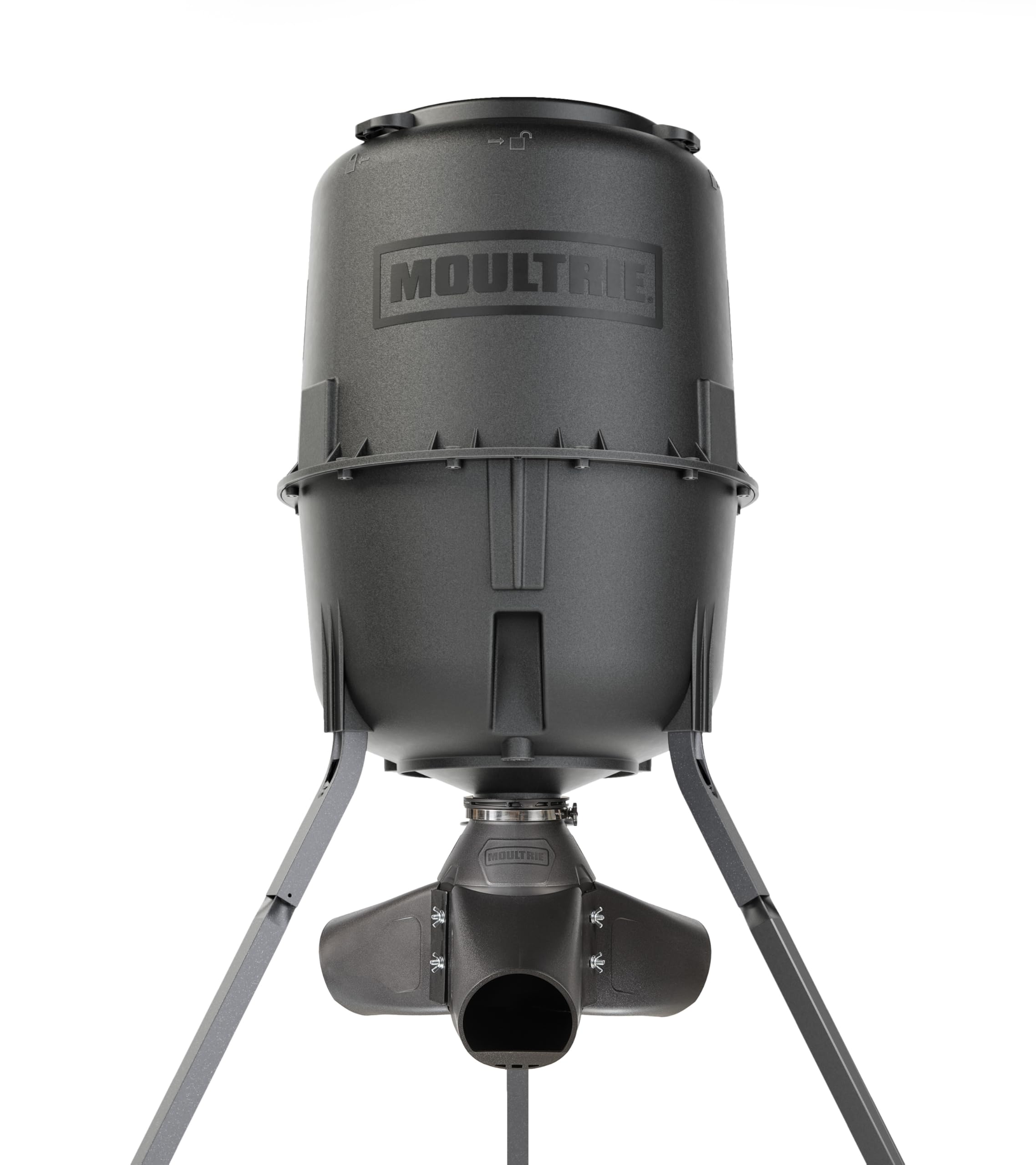
The Moultrie hits the sweet spot between hopper size and portability. Its 250-pound UV-resistant polyethylene hopper handles four 50-pound bags of corn or protein pellets without strain, and the triple funnel system lets you dial in the feed rate for everything from whole corn to fine pellets. The tripod legs use stainless fasteners throughout — a detail that matters when you’re assembling on damp ground in late August.
Assembly is fully tool-free, which is rare at this capacity level. The twist-on lid seals tight enough to keep out raccoons, and the Quick-Lock adapter means you can add a timed spin-cast kit later if you want to transition back to scheduled feeding. Customers consistently note that the powder coating on the legs holds up better than comparable brands after two or three seasons of rain and sun.
The feed ports sit at the standard 42-inch height, but the angled tray design keeps spillage low even when multiple deer feed simultaneously. For land managers running a bait site on a lean schedule, this unit’s no-battery reliability and 250-pound reservoir make it the strongest all-around gravity feeder on the market right now.
Why it’s great
- 250 lb hopper cuts refill trips drastically
- Triple funnel adjusts flow for corn or pellets
- Stainless hardware resists corrosion
Good to know
- Plastic hopper can warp if left in direct sun for years without UV treatment — Moultrie uses UV-stabilized resin, so the real risk is low
- Not suited for wall or hanging mount; strictly a freestanding tripod setup
2. Boss Buck Gravity Deer Feeder 200 lb

The Boss Buck’s 200-pound roto-molded barrel pairs with an adjustable 3-way feed sleeve that lets you match the drop rate exactly to your feed type — wide open for whole corn, restricted for protein pellets. The 75-inch tripod legs are taller than average, which pushes the feed ports higher off the ground and makes it noticeably harder for raccoons to stand and clean out the tray.
The slow-feed ports feature a 10-degree angle and a 1-inch overhang that reduces spillage even when deer are feeding aggressively. Customer reports show deer finding this feeder within the first night more consistently than some competitors — likely because the 10-inch port opening presents a generous visual cue against dark woods. The build quality on the galvanized legs is solid, though a few buyers noted missing bolts in the hardware kit.
The 3-inch-deep hatch lid seals against rain effectively, and the brown color helps the feeder blend into timber edges. Boss Buck backs this unit with a one-year limited warranty. For anyone managing a mid-size tract who wants a feeder that deer locate fast and varmints struggle to raid, this is a smart mid-range buy.
Why it’s great
- Deer locate it quickly — many reports of activity night one
- Tall legs block most raccoon access
- 3-way flow sleeve gives real feed-rate control
Good to know
- Hardware kit occasionally missing bolts — check contents before heading to the field
- Feed can spill easily if ports are set to full-open for corn
3. Banks Outdoors Feedbank 300 lb Feeder

The Banks Outdoors FB300 redefines “set it and forget it” for remote properties. Its 300-pound polyethylene hopper stores more than seven 40-pound feed bags at once, which translates to six weeks or longer between refills under moderate deer pressure. The post-mounted design uses a single 4×4 set three feet into the ground, which leaves zero obstructions around the feed tray — bucks can approach from any direction without rubbing antlers against tripod legs.
The feed ports sit at 42 inches and are fully adjustable for flow rate. The watertight lid is large enough to dump a full bag of corn into without spillage, though the plastic latch hardware has drawn criticism from long-term users who report it feeling less robust than the rest of the build. Several five-year owners note that the joint between the bin and the base can deform under relentless sun exposure, but a bead of silicone at assembly solves that issue proactively.
Banks also sells a feeder sleeve that wraps around the post to block raccoons and squirrels from climbing. Overall, the FB300 is built for property owners who want a gravity feeder that can sustain a large herd through winter without weekly trips into the woods — capacity and simplicity are its core strengths.
Why it’s great
- 300 lb hopper is the largest among D2C gravity feeders
- Single-post design is antler-safe and raccoon-discouraging
- Feed ports hold at optimal 42-inch height
Good to know
- Lid latches feel less durable than the main structure
- Joint between bin and base may need silicone sealant after a few seasons in high UV
4. American Hunter WF 30gal Nesting Hopper
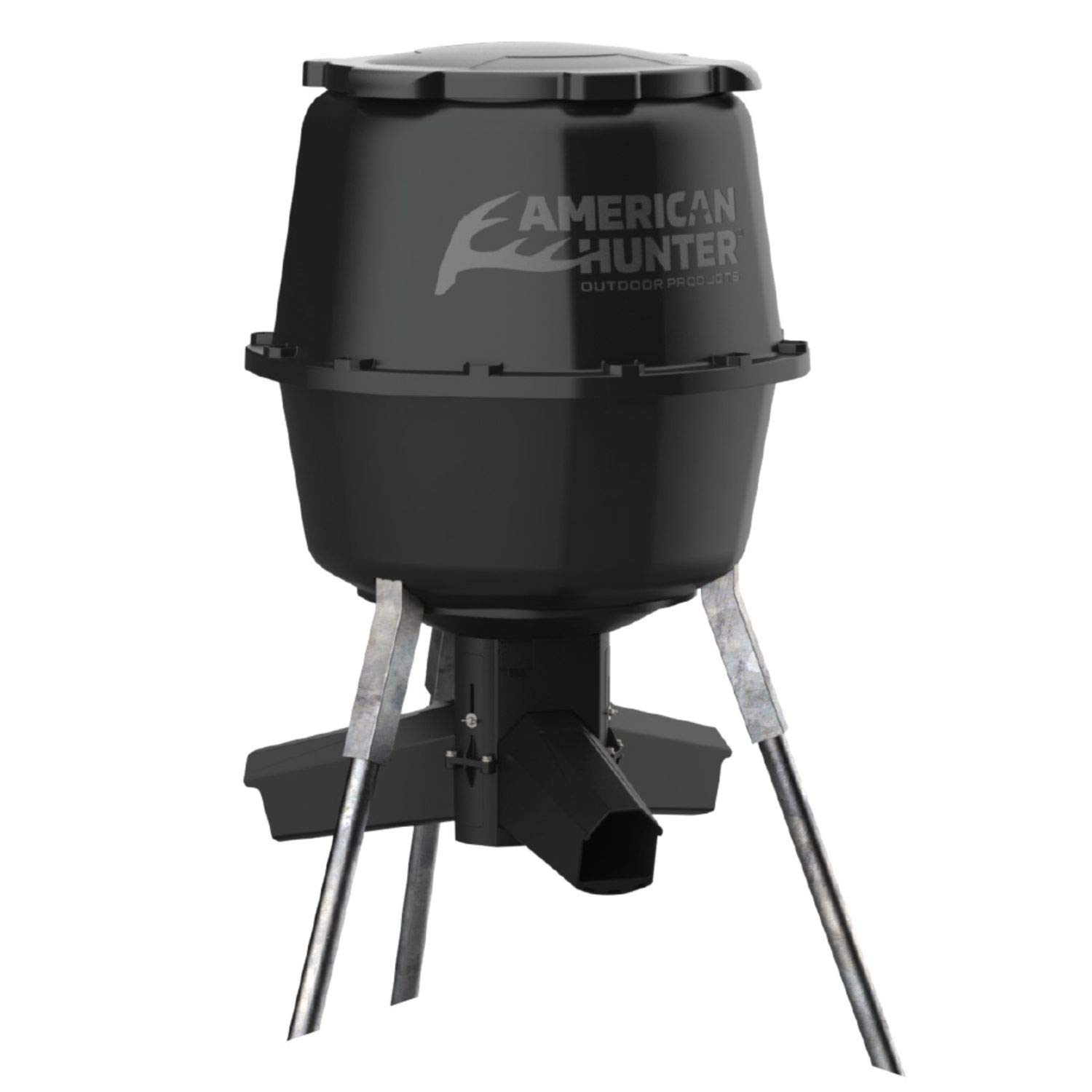
The American Hunter 30-gallon nesting hopper is built around a practical concept: a freestanding gravity feeder that holds roughly four and a half 40-pound bags, with legs that adjust in height so you can lower the feed tray for smaller deer or fawns. The blend-material construction resists rust and weather effectively, and the unit ships as a single box with minimal assembly required.
Customers report the feeder holds about two 50-pound bags of corn comfortably, and the adjustable legs allow you to drop the port height significantly — one user removed a leg section entirely to accommodate a smaller herd. The main downside reported is that raccoons can climb the tripod legs if the unit is not placed far from overhanging branches. A simple PVC feeder sleeve mod solves that problem, but it’s worth factoring in if raccoon pressure is heavy on your property.
For the price point, this unit delivers a surprisingly large capacity with good build quality. It doesn’t have the heavy-duty polyethylene thickness of the premium Banks or Moultrie feeders, but for a mid-range budget that still needs crowd-scale feed delivery, the American Hunter deserves a close look.
Why it’s great
- Holds ~4.5 bags of feed — strong capacity for the price tier
- Adjustable leg height works for fawns and mature deer
- Easy assembly with tools already in the garage
Good to know
- Raccoons can climb the legs if not modified
- Long-term weather resistance is unproven past 2–3 seasons
5. Banks Outdoors FB150 Post Mounted Feeder

The Banks Outdoors FB150 is essentially the smaller, more affordable sibling of the FB300, built on the same single-post mounting system. The 150-pound capacity is enough for a smaller herd or a supplemental feeding station, and the 42-inch feed port height keeps the tray accessible to deer while blocking raccoons. The adjustable feeding ports let you dial in corn or pellet flow similarly to the larger model.
Setup requires an 8-foot 4×4 post set three feet into the ground, which gives the unit exceptional stability on slopes or soft ground. Owners who installed on cemented posts report zero tipping even after years of use. The plastic lid is large and removable for easy filling, though the latch mechanism has drawn the same durability questions as the FB300 — multiple users have added a steel lid protector to reinforce the closure.
For a mid-range budget, the FB150 delivers premium post-mount advantages without the full investment of the 300-pound unit. The single-post design also eliminates any chance of antler damage that tripod legs can cause, making it a smart pick for properties with large-antlered mature bucks.
Why it’s great
- Post mount leaves clear 360-degree access — no antler interference
- Adjustable ports handle different feed sizes cleanly
- Very stable on cemented post, even in strong wind
Good to know
- Lid latch quality is below the rest of the build — plan for reinforcement
- Post not included; requires concrete tools for proper installation
6. On Time 71540 Buckeye Gravity Feeder – 30 Gal
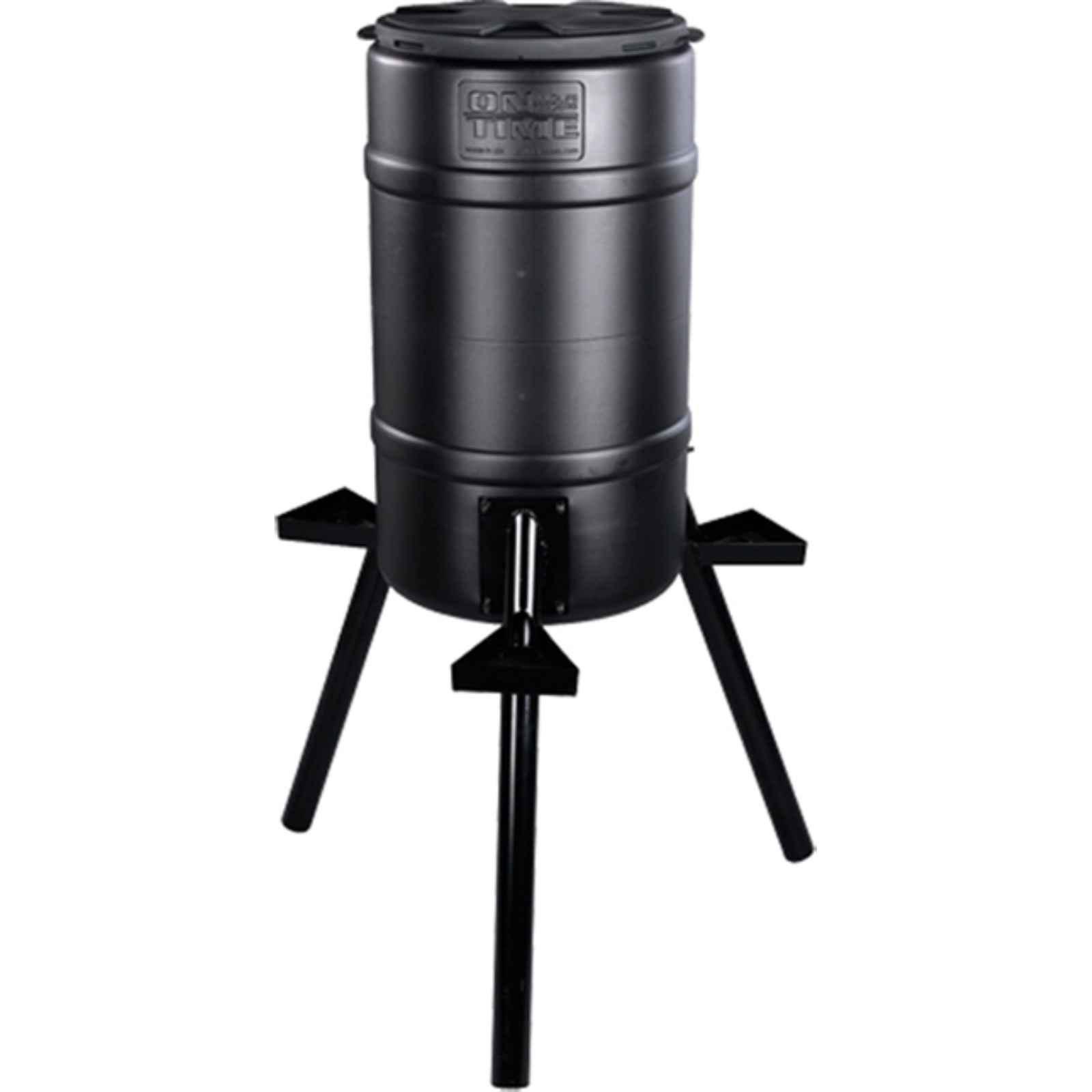
The On Time Buckeye 30-gallon feeder uses a polyethylene hopper supported by very sturdy metal legs — the leg assembly is heavy enough that owners consistently recommend two people for that step. The 200-pound capacity is a nice middle ground between the light-duty 11-gallon units and the 300-pound giants. The dark black color blends into shadows well, and the hopper’s rounded shape sheds rain without pooling on the lid.
Customer feedback emphasizes how well this feeder keeps corn dry. Several long-term owners report that adding a bead of silicone between the base plate and the hopper during assembly eliminates any trace of moisture intrusion, even through consecutive rainy weeks. The legs can be buried a few inches into the ground for added stability on soft soil, and the overall build feels heavier than the spec sheet suggests.
For someone who needs a proven, straightforward gravity feeder that will survive a few hard seasons without warping or rusting, the Buckeye delivers a very strong value-to-durability ratio. The only real drawback is the assembly difficulty — the leg-to-hopper interface requires precise alignment, and the hardware is not forgiving of misalignment.
Why it’s great
- Excellent moisture resistance with silicone mod
- 200 lb capacity is practical for most hunting properties
- Metal legs are noticeably sturdier than plastic-leg competitors
Good to know
- Assembly requires two people for the leg attachment step
- Leg alignment is exacting — rushing it risks stripping bolt holes
7. Automatic Metal Deer Feeder – 60 lb / 11 Gal
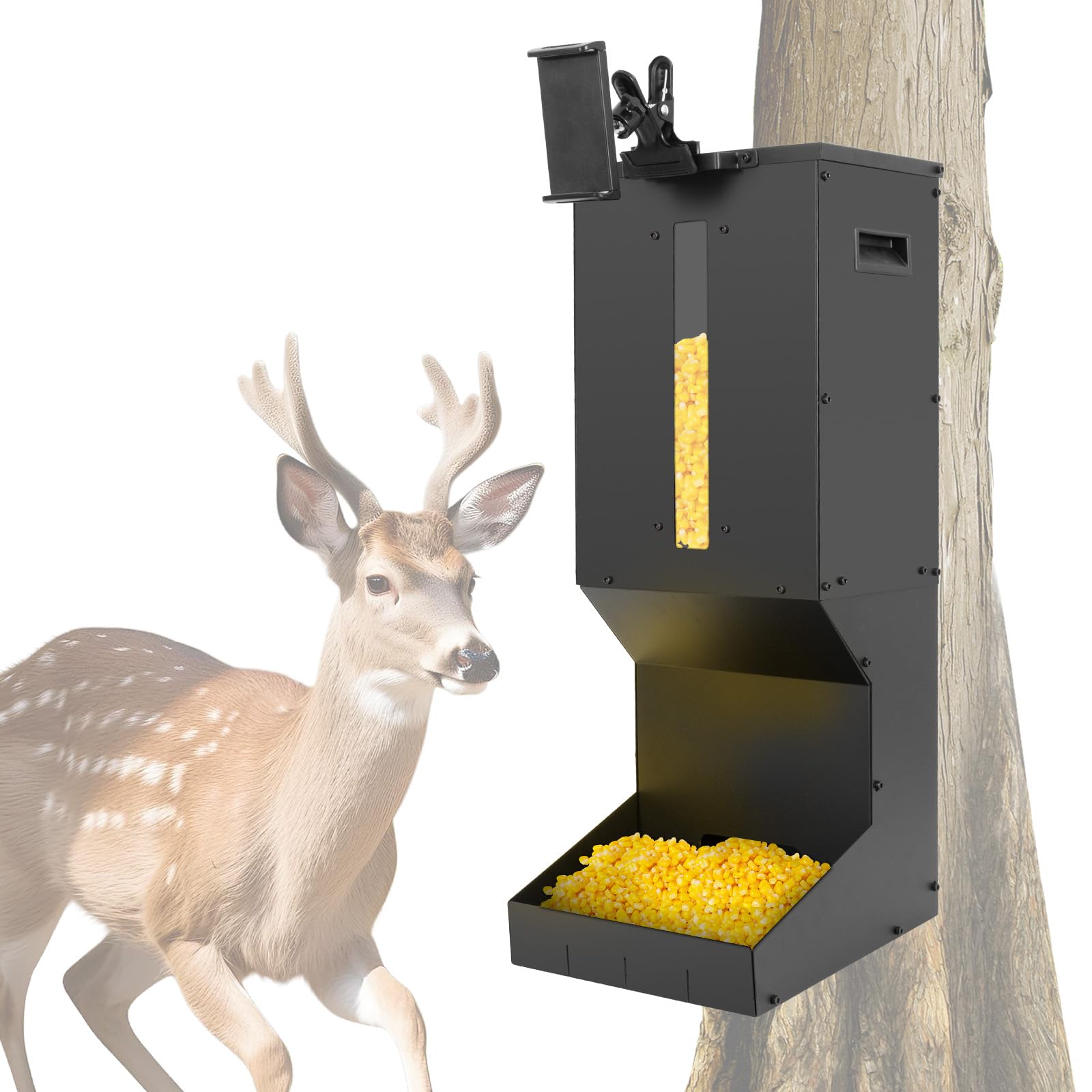
This small 11-gallon feeder serves a different niche than the large tripod or post-mount units — it’s built for backyard deer viewing or feeding smaller livestock like goats and dogs. The galvanized steel construction is heavy-duty for its size, and the included mounting kit lets you hang it from a tree branch or attach it to a wall or fence. A clear food-level window on the front lets you see remaining feed without removing the lid.
Customers report it holds roughly three-quarters of a 50-pound bag of feed, and the gravity chute dispenses reliably for dogs, goats, and deer alike. The weatherproof lid seals well against rain, though the manual power source means there is no timer or electronic control — you fill it and the animals feed at their own rhythm. The included camera mount is compatible with Moultrie trail camera accessories, making this an easy option for up-close wildlife photography.
For the budget tier, the build quality punches above its price point. The galvanized finish resists rust far better than painted metal alternatives in this size class. If your goal is a small, versatile gravity feeder for the yard or a supplemental feeding point, this unit is a solid, affordable entry point.
Why it’s great
- Galvanized steel resists corrosion better than painted alternatives
- Clear level window eliminates guesswork on fill status
- Versatile mount options — hang, wall, or fence
Good to know
- 11 gallon capacity requires frequent refills under heavy deer pressure
- Not suitable for large-scale or remote feeding setups
FAQ
What is the best height to set a gravity feeder for adult deer?
How long does a 200-pound gravity feeder last between refills?
Can gravity feeders be used with protein pellets or only corn?
How do I stop raccoons from emptying my gravity feeder?
Is a post-mounted or tripod gravity feeder better?
Final Thoughts: The Verdict
For most users, the gravity deer feeders winner is the Moultrie Gravity Feeder because its 250-pound capacity, stainless hardware, and triple funnel feed control deliver premium performance at a mid-range investment. If you want maximum capacity and an antler-safe design for a permanent site, grab the Banks Outdoors FB300. And for a durable, budget-friendly tripod that deer locate immediately, nothing beats the Boss Buck 200 lb feeder.