
That nagging doubt about whether you actually hit your 7-iron 150 yards or if that one perfect shot was a fluke is the exact pain a serious golfer wants to eliminate. The modern golf sensor — whether a screw-on smart tag, a pocket radar, or a full launch monitor — exists to replace hope with hard numbers, measuring club head speed, ball spin, and carry distance with a precision your naked eye can’t match.
I’m Mohammad Maruf — the founder and writer behind Drink4Good. I’ve spent countless hours researching and comparing the hardware specs, real-world data accuracy, and ecosystem limitations of the current generation of golf club sensors, so you know which units deliver actionable feedback and which ones just drain batteries.
This guide breaks down nine of the best options on the market, from budget-friendly screw-on trackers to premium launch monitors, to help you choose the best golf club sensors for lowering your handicap and eliminating guesswork from every swing.
How To Choose The Best Golf Club Sensors
Picking the right sensor depends entirely on what you want to measure. A screw-on swing analyzer tells you tempo and club head speed. A pocket radar unit focuses on speed metrics alone. A full launch monitor captures ball spin, launch angle, and carry distance. Understanding the trade-off between convenience and data depth is the first step.
Data Depth vs. Ease of Use
Screw-on sensors like the Arccos Smart Sensors are the most convenient — screw them into the butt of your grip and forget they exist. They automatically track every shot, but they are limited in what they measure (primarily GPS location and distance). Pocket radars like the RYP Golf Radar require no phone app on each swing but only measure swing speed. Launch monitors like the Garmin Approach R10 or Rapsodo MLM2PRO require setup in front of a net or at the range, but they give you spin rate, club path, and smash factor — the deep data that directly informs swing changes.
Subscription Costs and Lock-In
The upfront price tag is only part of the equation. Devices like the Arccos Gen 3+ and Gen 4 bundles include a free first-year membership, but require an annual subscription afterward for advanced analytics and caddie features. Conversely, the Voice Caddie SC4 PRO and Garmin Approach R10 offer core features without a mandatory recurring fee. Always check the fine print: if the sensor becomes a paperweight without a subscription, factor that into your long-term budget.
Indoor vs. Outdoor Compatibility
If you plan to practice in the garage or a simulator room, you need a device that works indoors without GPS. The Garmin Approach R10 and Voice Caddie SC4 PRO are designed for indoor and outdoor use. The Arccos sensors rely entirely on GPS and a phone, making them useless in a net setup. The Rapsodo MLM2PRO uses doppler radar and dual cameras, functioning well indoors with a net and a compatible app like Awesome Golf.
Quick Comparison
On smaller screens, swipe sideways to see the full table.
| Model | Category | Best For | Key Spec | Amazon |
|---|---|---|---|---|
| Arccos Gen 4 Bundle + Link Pro | Smart Sensor | Automatic shot tracking on the course | 15 sensors + putter sensor + Link Pro | Amazon |
| Garmin Approach R10 (Bundle) | Launch Monitor | Indoor simulator and range practice | Club head speed, ball spin, launch angle | Amazon |
| MILESEEY GeneSonic Pro | GPS + Speaker | GPS rangefinder and cart speaker combo | Detachable handheld, 43K courses, no sub | Amazon |
| Voice Caddie SC4 PRO | Launch Monitor | Budget indoor simulator with no fees | Prometrics engine, 3D range, no sub | Amazon |
| Rapsodo MLM2PRO | Launch Monitor | Tour-level data with video swing capture | Dual camera + Doppler radar, 15 metrics | Amazon |
| Garmin Approach G80 | Launch Monitor GPS | All-in-one GPS + basic launch monitor | Club/ball speed, smash factor, tempo | Amazon |
| Arccos Gen 3+ | Smart Sensor | Data-driven golfers on a mid-range budget | 14 screw-on sensors, AI caddie, IP54 | Amazon |
| RYP Golf Radar | Swing Speed Radar | Pure swing speed feedback on the range | No ball needed, LCD, voice feedback | Amazon |
| EENOUR Golf Range Finder | Laser Rangefinder | Entry-level laser distance with slope | 1200-yard range, slope mode, IP54 | Amazon |
In‑Depth Reviews
1. Arccos Gen 4 Bundle Smoke + Link Pro

The Arccos Gen 4 bundle represents the most complete sensor ecosystem you can screw into your grips. This edition includes 15 smart sensors, a dedicated putter sensor, and the Link Pro — a tiny pocket-mounted device that captures shots automatically without pulling your phone out during the round. The IP54 rating and lightweight design mean you won’t feel them, and the two-year warranty on sensors adds peace of mind for the long haul.
Data quality depends on two things: the free first-year membership to the Arccos Caddie app, and the Link Pro’s ability to pair reliably. The A.I.-powered rangefinder adjusts for wind, elevation, temperature, and humidity, giving you a precise “Caddie Number” for every shot. After about five rounds, the system identifies your true club distances and suggests club selection based on real performance, not ego.
On the downside, this is a premium ecosystem that requires an annual subscription after the first year, and some users report occasional missed shots that need manual correction in the app. The Link Pro’s charging case is a nice touch, but the device itself can lose connection if buried deep in a pocket. For golfers committed to data-driven improvement who play regularly, this is the most seamless automatic shot tracker available.
Why it’s great
- Fully automatic shot tracking with no phone needed during play thanks to Link Pro.
- AI caddie provides real-time club recommendations based on your actual yardages and conditions.
- Annual free sensor renewal program replaces up to 5 sensors each year.
Good to know
- Requires expensive annual app membership after the first year.
- Link Pro can occasionally miss shots or lose connection.
- Premium price point makes it a serious investment for committed golfers.
2. Garmin Approach R10 Signature Series Bundle
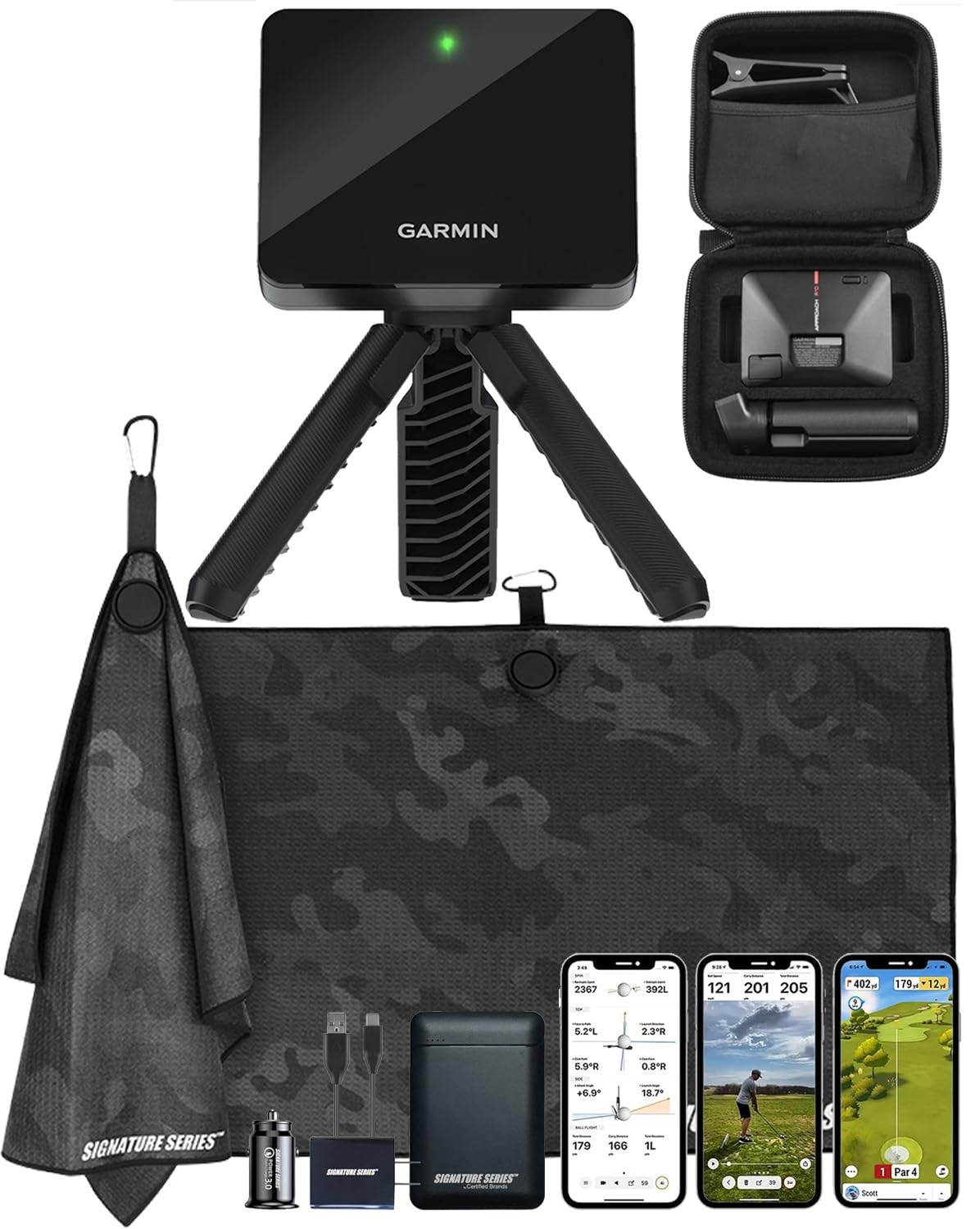
The Garmin Approach R10 is the go-to launch monitor for garage simulators and driving range enthusiasts. This bundle sweetens the deal with a portable power bank, wall charger, and microfiber cloth, but the real value is in the R10’s ability to track club head speed, ball speed, swing tempo, ball spin, and launch angle when paired with the Garmin Golf app. The 10-hour battery life means you can practice for hours without hunting for an outlet.
Set it up six to eight feet behind the ball, and it uses doppler radar to estimate ball flight — accurate enough for meaningful practice. The app supports virtual rounds on over 42,000 courses, and up to three other golfers can join, making it a social tool as much as a training aid. The included phone mount clips onto your bag for easy viewing, and the device works both indoors with a net and outdoors at the range.
Where it falls short is in its reliance on a smartphone for all data display — there is no built-in screen. The R10’s spin axis accuracy is decent but not tour-grade; serious players may outgrow it. Some users report difficulty with high-lofted wedges indoors. Still, for the mid-range price, it’s the most versatile launch monitor for players who want to bridge home practice and on-course improvement.
Why it’s great
- Portable and easy to set up indoors or outdoors in minutes.
- Virtual rounds on 42,000+ courses with multiplayer support.
- Long 10-hour battery life with included power bank backup.
Good to know
- No built-in screen — requires a smartphone or tablet at all times.
- Spin axis and wedge data can be less reliable than pro-level units.
- Premium subscription needed for advanced simulator features.
3. MILESEEY GeneSonic Pro Golf Speaker
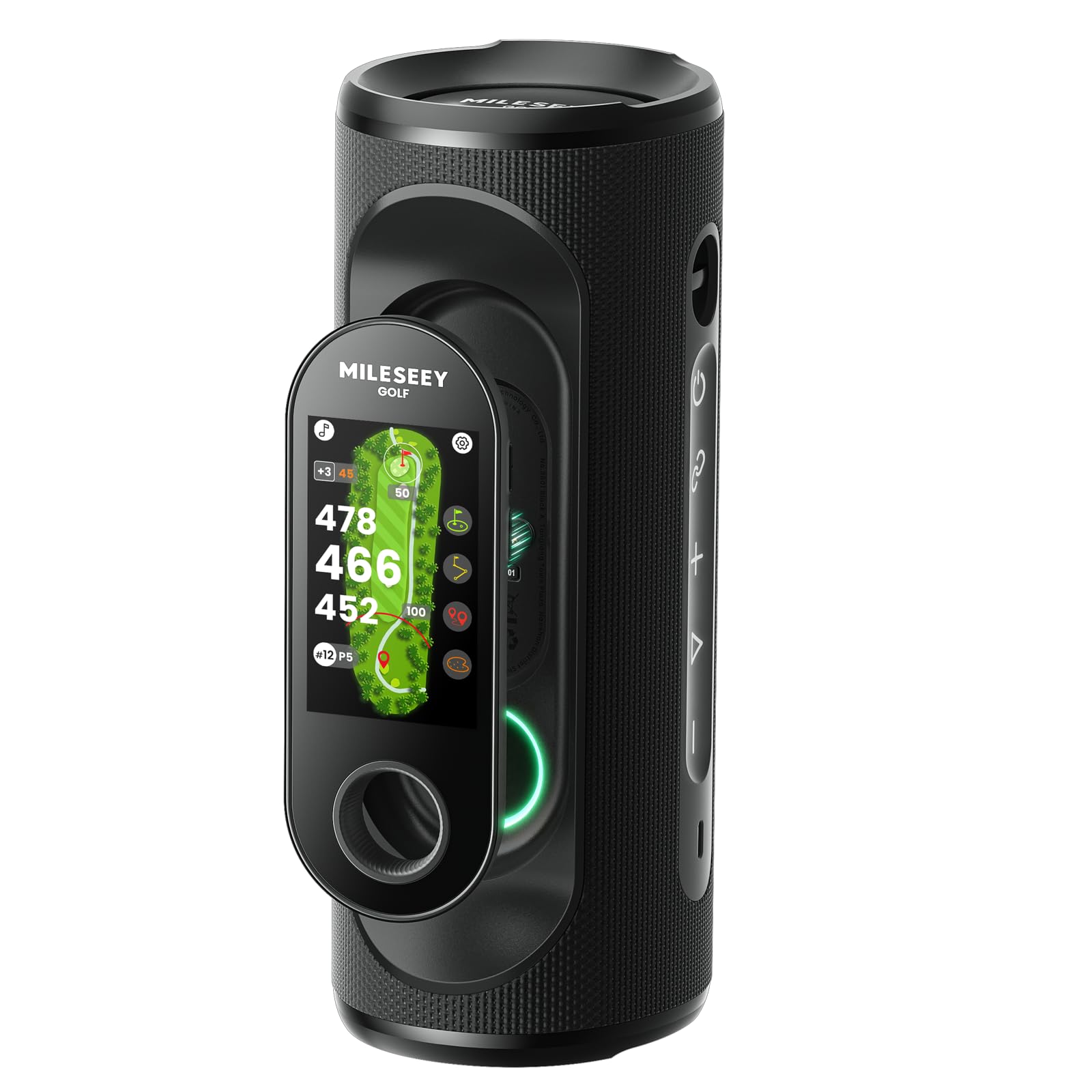
The GeneSonic Pro is a category-defying device: a golf cart speaker with a detachable GPS rangefinder. The handheld unit pulls away from the magnetic main body, allowing you to take it to the tee box for precise distances while leaving the powerful 40W speaker on the cart. The IP67 waterproof rating means rain won’t stop the music or the GPS, and the 43,000+ preloaded courses come with zero subscription fees — a massive selling point against cloud-dependent competitors.
The GPS touchscreen is responsive and shows hazard layups, green views, and hole layouts. Quad-MagLock technology (126N of force) keeps the main unit anchored to the cart frame over bumpy terrain. Audio quality is genuinely impressive for a golf accessory, with a dual-band crossover delivering clear mids and punchy bass. The 15-hour battery handles multiple rounds on a single charge.
However, the device is bulky. It takes up space in the cupholder area, and the app ecosystem for shot tracking and score syncing is less polished than Arccos or Garmin. Some users report missing courses and inconsistent GPS accuracy on newly built holes. If you value loud cart music and a no-subscription GPS in one package, it’s a unique buy, but pure data hunters might prefer a dedicated sensor system.
Why it’s great
- Detachable handheld GPS with 43K+ courses and no subscription.
- Powerful 40W cart speaker with clear, full-range audio.
- Strong magnetic mount stays put on bumpy cart paths.
Good to know
- Bulky design takes up significant cart space.
- Shot tracking and app integration less refined than dedicated systems.
- Some missing course data reported for newer layouts.
4. Voice Caddie SC4 PRO Launch Monitor

The SC4 PRO is a serious contender for the budget indoor simulator crown. Its prometrics engine measures club and ball data from swing to impact to flight, delivering ball speed, carry distance, spin rate, launch angle, and club head speed with solid consistency. The built-in screen displays basic metrics, and it includes a 3D driving range and five free E6 Connect courses — no annual subscription required to keep using the device.
Setup is straightforward: place the unit six feet behind the hitting area, use standard balls (no dots needed), and launch the app. The speed training mode is excellent for focused work on swing tempo and club speed. The LCD screen is small but adequate for quick glances, and the unit is compact enough to throw in a bag and take to the range.
Accuracy complaints are real but not universal. Some users report the SC4 PRO misreads spin axis indoors under certain lighting conditions, causing carry distance errors of 10-15 yards on wedge shots. The plastic build feels a bit light compared to premium metal units. For its price point, it offers the best “no recurring fees” simulator experience available, but golfers with very high swing speeds may find the data degrades at the extremes.
Why it’s great
- No subscription fees for core features and 3D driving range.
- Compact, portable design works indoors and outdoors with standard balls.
- Speed training module and E6 Connect integration included.
Good to know
- Small built-in LCD screen shows limited data at a time.
- Plastic housing feels less durable than higher-end metal competitors.
- Occasional indoor lighting interference with spin axis accuracy.
5. Rapsodo MLM2PRO Launch Monitor
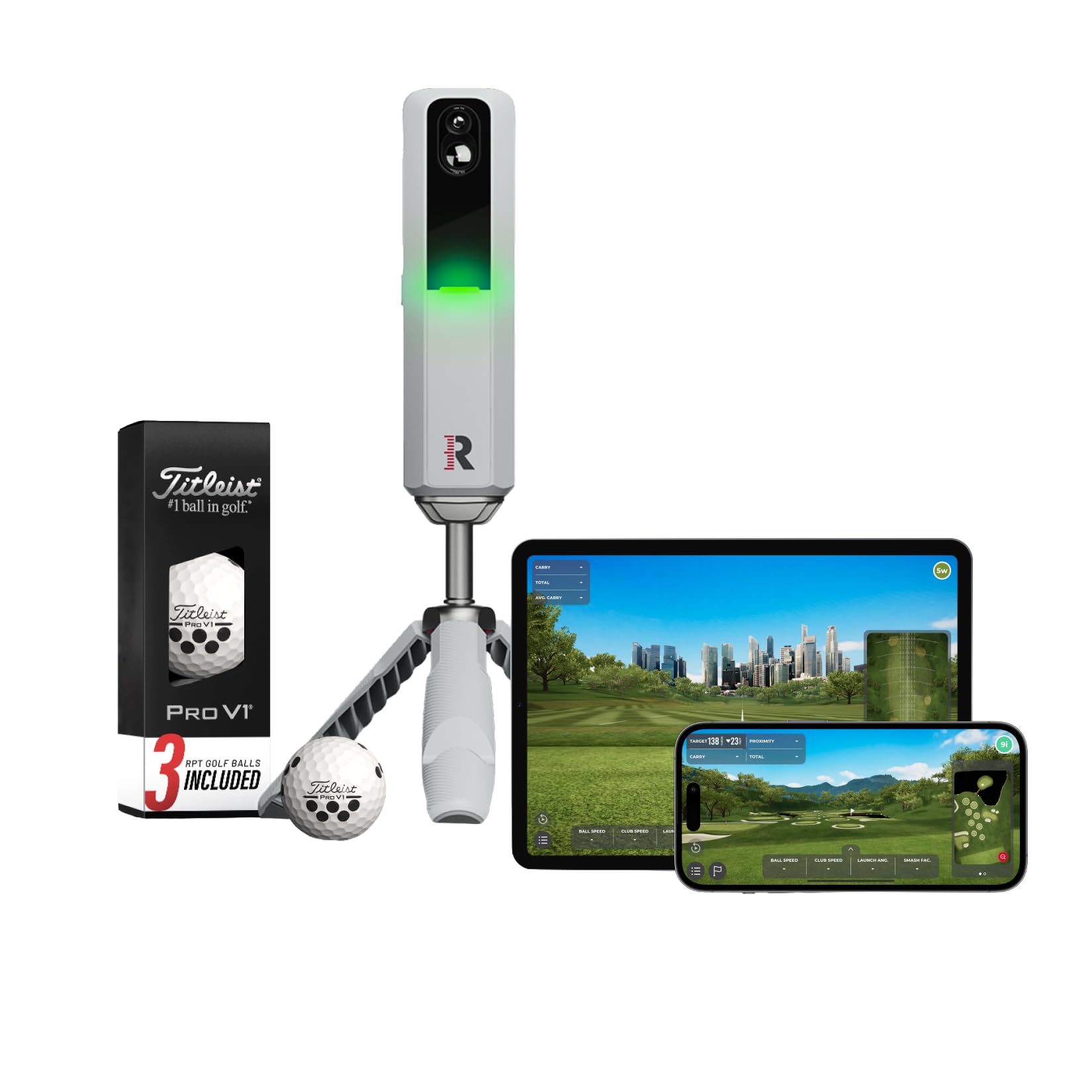
The MLM2PRO uses doppler radar combined with dual cameras to capture 15 key metrics including spin rate, spin axis, club path, and launch angle. The video capture feature lets you review your swing in slow motion alongside the data overlay — an incredibly useful tool for diagnosing swing faults. The 45-day premium trial unlocks simulator courses on Awesome Golf and E6 Connect, giving you a taste of the full experience before committing to a paid plan.
Real-world accuracy is impressive for the price, with users reporting carry distance within 2-3% of Trackman data. The device requires three Callaway RPT Chrome Soft X balls (included) for spin data, and the camera system needs clear lighting. Setup involves placing the unit on a tripod about seven feet behind the ball, aligning it level with the hitting zone. The included carrying case and tripod make transport easy.
The biggest recurring complaint is software stability — connection drops mid-session, buggy firmware updates, and slow customer support from Rapsodo are noted across multiple reviews. The special marked balls wear out after months of use, and replacements are expensive. For data depth, the MLM2PRO is hard to beat at its price, but be prepared to tinker with the software.
Why it’s great
- Dual camera + radar provides tour-level spin and club path data.
- Video swing replay synced with data overlay for deep analysis.
- 45-day premium trial unlocks robust simulator and practice modes.
Good to know
- Requires expensive Callaway RPT balls for accurate spin measurement.
- Software connectivity issues and app crashes reported frequently.
- Customer support responsiveness is inconsistent.
6. Garmin Approach G80

The G80 is a unique hybrid: a full-function GPS golf handheld with an integrated launch monitor. The 3.5-inch sunlight-readable touchscreen shows 41,000+ preloaded course maps, and the radar tucked into the top of the device measures club head speed, ball speed, smash factor, swing tempo, and estimated distance. In practice mode, it works as a tempo trainer, and the closest-to-pin game adds a fun competitive element.
The real selling point is the ultra-bright display and the 15-hour battery life. On the course, the GPS shows front, center, and back distances with a tap-to-distance feature that lets you measure to any point on the hole. The launch monitor is best used at the range or in a warmup net — the radar unit captures club head speed within a few MPH of pro-level units, and the tempo trainer is genuinely helpful for smoothing out transition.
Accuracy complaints center on the launch monitor’s ball flight distance (often reported as ±5 yards compared to real carry) and a tendency to struggle with very fast swing speeds above 100 MPH. The included rubber band mount for carts is flimsy. The G80 is a niche device best suited to golfers who want one device for GPS and basic range feedback, but it doesn’t replace a dedicated launch monitor for serious indoor practice.
Why it’s great
- Combines GPS course data with a basic launch monitor in one device.
- Excellent sunlight-readable touchscreen with 15-hour battery life.
- Tempo trainer and closest-to-pin game add valuable practice modes.
Good to know
- Ball flight distance accuracy is only within ±5 yards.
- Rubber band golf cart mount feels cheap and unreliable.
- Launch monitor struggles to read swing speeds over 100 MPH.
7. Arccos Smart Sensors Gen 3+

The Gen 3+ system is the previous-generation package that still delivers the core Arccos experience at a lower entry point. It includes 14 weather-resistant sensors (13 regular plus one putter sensor) that screw into the butt end of your clubs. The free first-year membership gives you full access to the Arccos Caddie app, including the A.I.-powered rangefinder that adjusts for wind, elevation, temperature, and humidity.
Setup is genuinely simple — screw them on, activate the app, and the sensors automatically detect each swing. After a few rounds, the system learns your true distances and suggests club selection accordingly. The lightweight design (roughly three grams) means you won’t feel them during the swing. IP54 weather resistance handles a light drizzle, and the battery life is rated for years of use before needing replacement.
The catch is the same as the Gen 4: the annual subscription fee after year one. Some users also note that the sensors occasionally register a practice swing as a shot or miss a putt from off the green. The Gen 3+ lacks the Link Pro, so you must carry your phone in your pocket for automatic tracking. For data-hungry golfers on a mid-range budget, it’s the smartest entry point into the Arccos ecosystem.
Why it’s great
- Lightweight screw-on design with automatic shot detection.
- AI Caddie provides real-time club recommendations after just a few rounds.
- Long battery life with IP54 weather resistance for course play.
Good to know
- Annual subscription required after the first free year.
- Requires phone in pocket for shot capture — no standalone link.
- Occasional missed shots or false practice swing detection.
8. RYP Golf Radar Swing Speed Monitor

The RYP Golf Radar is the simplest device on this list by design. It measures club head speed in MPH or KPH without requiring you to hit a ball — just swing your driver, iron, or Rypstick in front of the unit, and it displays your speed on a bright LCD screen. It also stores your last ten swings and provides optional voice feedback after each swing, making it a useful training tool for tempo and speed work.
It runs on five AA batteries (not included), which is a bit of a throwback, but the real-time feedback is reliable. Users who have verified readings against pro shop launch monitors report consistent results within a few MPH. For aging golfers trying to adjust club selection as swing speed drops, or for anyone doing speed training protocols, this is a cost-effective way to track progress.
The build quality is functional but not rugged — the plastic housing feels light, and dropping it could be a problem. The battery drain is notably fast, with some users reporting fresh batteries dying after just a few sessions. There are no GPS features, no shot tracking, and no spin data. It does one thing (measure swing speed) and does it well for the price, but it’s a narrow tool.
Why it’s great
- Measures club head speed without hitting a ball, perfect for swing speed training.
- LCD display with voice feedback and last-10-swings memory.
- Verified consistent readings when cross-checked against professional launch monitors.
Good to know
- Requires five AA batteries that drain relatively quickly.
- Plastic build feels light and less durable than metal competitors.
- Limited to swing speed only — no shot tracking or GPS features.
9. EENOUR Golf Range Finder with Slope

The EENOUR is a laser rangefinder — not a sensor that reads swing metrics — but it belongs on this list because it’s the most affordable way to get precise distances on the course. With a 1200-yard range, 7X magnification, and a 23.5mm ultra-clear lens, it rivals units costing three times as much. The slope mode automatically calculates adjusted distances for uphill and downhill shots, and the pin-lock vibration alert confirms you’ve locked onto the flag.
The rechargeable battery supports up to 20,000 measurements per charge, and the IP54 waterproof rating means it’s safe in light rain. The magnetic side mount attaches securely to the cart frame for one-handed access. The five measurement modes (line distance, pin lock, slope, horizontal/vertical, and speed) cover every scenario you’ll face on the course.
The device does not measure club head speed, spin, or any swing metric. It’s a distance tool, period. Some users note that the magnetic mount is not as strong as advertised and that the slope mode is non-conforming for tournament play. For the entry-level price, the EENOUR delivers laser accuracy and excellent build quality in a compact package, making it a smart upgrade from GPS-only rangefinders.
Why it’s great
- 1200-yard range with 7X magnification and ultra-clear lens system.
- Rechargeable battery provides up to 20,000 measurements per charge.
- Slope mode, pin-lock vibration, and five measurement modes in a compact body.
Good to know
- No swing speed or shot tracking data captured.
- Magnetic mount strength is less than advertised for some users.
- Slope mode is non-conforming for official tournament rounds.
FAQ
What is the difference between a golf sensor and a launch monitor?
Do golf club sensors work indoors without a net?
Can I use standard golf balls with any launch monitor?
How often do screw-on sensor batteries need replacing?
Final Thoughts: The Verdict
For most users, the golf club sensors winner is the Arccos Gen 4 Bundle with Link Pro because it provides the most seamless automatic shot tracking and AI-powered strategy adjustment for on-course play. If you want to build an indoor simulator and improve swing mechanics through detailed ball and club data, grab the Garmin Approach R10. And for the best value in a dedicated launch monitor that does not lock you into a subscription, nothing beats the Voice Caddie SC4 PRO.