
Moles don’t eat your plant roots — they tunnel through your lawn hunting for grubs and earthworms. Kill the food source, and the moles move on. The trick is choosing a grub poison that actually works underground, persists long enough to break the cycle, and won’t harm your pets or soil biology.
I’m Mohammad Maruf — the founder and writer behind Drink4Good. I’ve spent hundreds of hours cross-referencing active ingredient efficacy, soil persistence data, and real-world application results for grub-targeting lawn treatments to separate what actually starves moles from products that just kill surface insects.
After analyzing coverage areas, reapplication intervals, and safety profiles across five top contenders, this guide cuts through the noise to reveal the grub killer for moles that delivers lasting results without collateral damage to your yard.
How To Choose The Best Grub Killer For Moles
Moles travel up to 200 feet per day following grub populations. Surface insecticides that kill ants or fleas won’t necessarily penetrate deep enough to eliminate the grubs moles crave. You need a product whose active ingredient targets white grubs specifically, persists in the root zone, and covers enough square footage to disrupt the mole’s entire roaming territory.
Active Ingredient Strategy: Biological vs. Synthetic
Biological options like Bacillus popilliae (Milky Spore) multiply in soil and remain active for years, making them ideal for prevention in established neighborhoods with known Japanese beetle grub pressure. Synthetic chemicals such as bifenthrin, carbaryl, and zeta-cypermethrin kill on contact and degrade faster — better for acute infestations where you need grubs gone within days.
Coverage Area and Reapplication Cadence
One mole can ruin a half-acre lawn. A 20-pound bag of granules treating 25,000 square feet can cover a serious mole territory in a single application. Smaller 10-ounce bags might only handle a few hundred square feet, forcing multiple purchases. Check the square footage per unit before matching it to your yard size.
Persistence and the Grub Life Cycle
Grubs hatch in mid-summer and feed aggressively through early fall. A single treatment that lasts 3 months will cover the entire feeding window. Products with shorter residual activity may require a follow-up application in late August to catch the second wave of hatchlings — otherwise the mole’s food supply returns before winter.
Quick Comparison
On smaller screens, swipe sideways to see the full table.
| Model | Category | Best For | Key Spec | Amazon |
|---|---|---|---|---|
| St. Gabriel Milky Spore | Biological | Long-term prevention | 10 oz covers 2,500 sq ft | Amazon |
| BioAdvanced Complete Insect Killer | Synthetic Granules | Season-long broad control | 20 lb treats 25,000 sq ft | Amazon |
| Motomco Mole Killer Worms | Poison Bait | Direct mole elimination | 12 worms per bonus box | Amazon |
| Monterey Go-DIE Bait | Strychnine Grain | Gopher and mole tunnel baiting | 16 oz powder/grain mix | Amazon |
| Sevin Lawn Insect Granules | Synthetic Granules | Broad multi-pest knockdown | 20 lb treats lawns and ornamentals | Amazon |
In‑Depth Reviews
1. St. Gabriel Organics Milky Spore Powder, 10oz
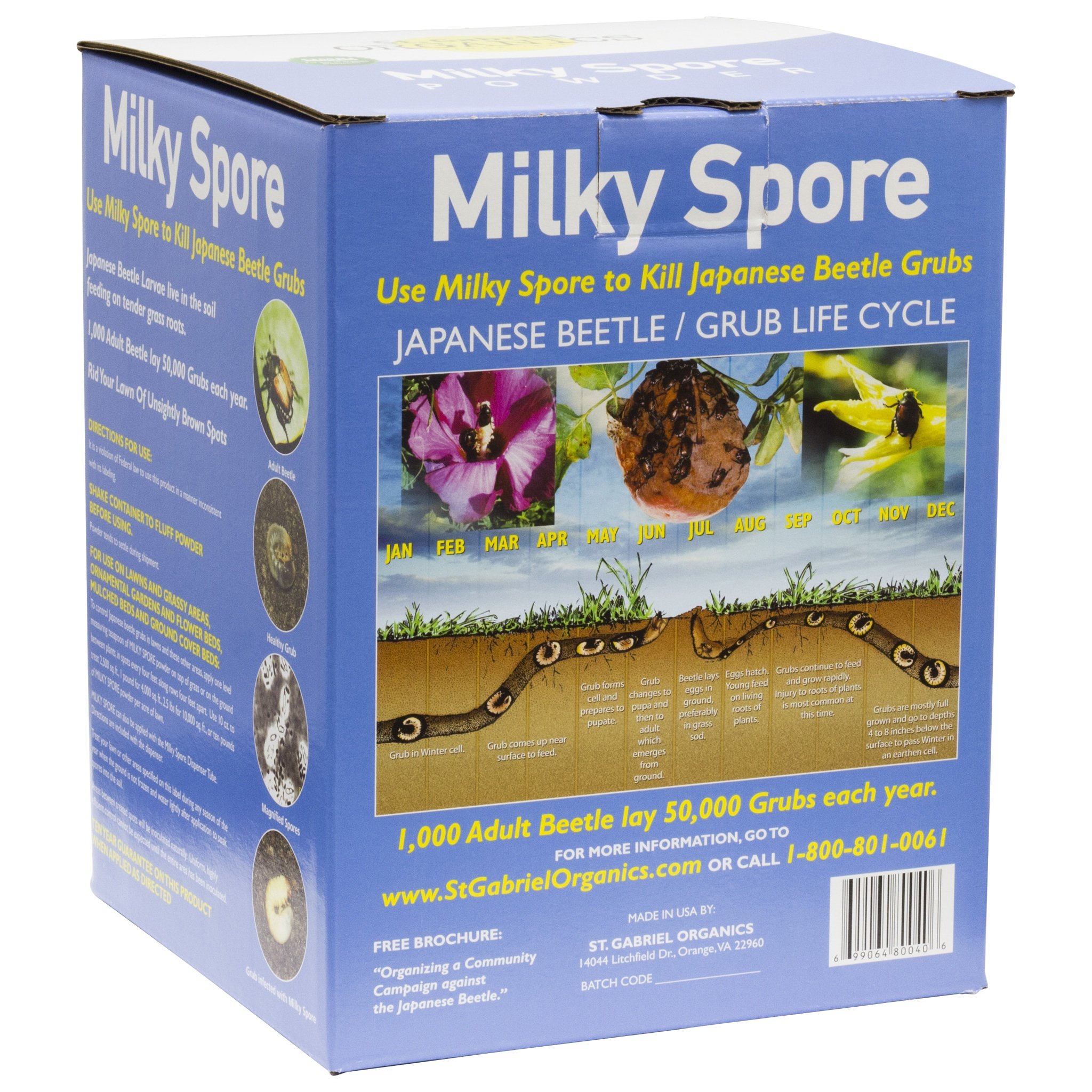
Milky Spore is the only entry on this list that multiplies inside the soil. Once you apply Bacillus popilliae, the bacteria infect Japanese beetle grubs, replicate inside them, and release millions of new spores into the soil when the grub dies. This self-replicating cycle means a single treatment can suppress grub populations for a decade or more — far outlasting any synthetic granular.
Coverage is modest at 2,500 square feet per 10-ounce bag, but that’s deceptive because the spores persist and spread with water movement. Real-world users report that a single bag applied to active grub zones revived dead patches within a week and kept beetle pressure low for multiple seasons. The powder must be watered in and only works when soil temperatures stay above 50°F — so early summer application is critical.
Critically, Milky Spore is harmless to earthworms, fireflies, and beneficial soil organisms. Multiple verified reviews confirm that the grass came back green and the moles stopped digging — not because the spores killed the moles, but because the grub buffet disappeared entirely.
Why it’s great
- Self-multiplying spores provide years of grub control from one application
- Safe for pets, beneficial insects, and earthworms
- Verified results: dead grub zones recovered grass within a week
Good to know
- Only targets Japanese beetle grubs — won’t touch other mole food sources
- Needs warm soil (above 50°F) to activate; slow initial action
- Small bag looks underwhelming for the price point
2. BioAdvanced Complete Brand Insect Killer for Lawns Granules
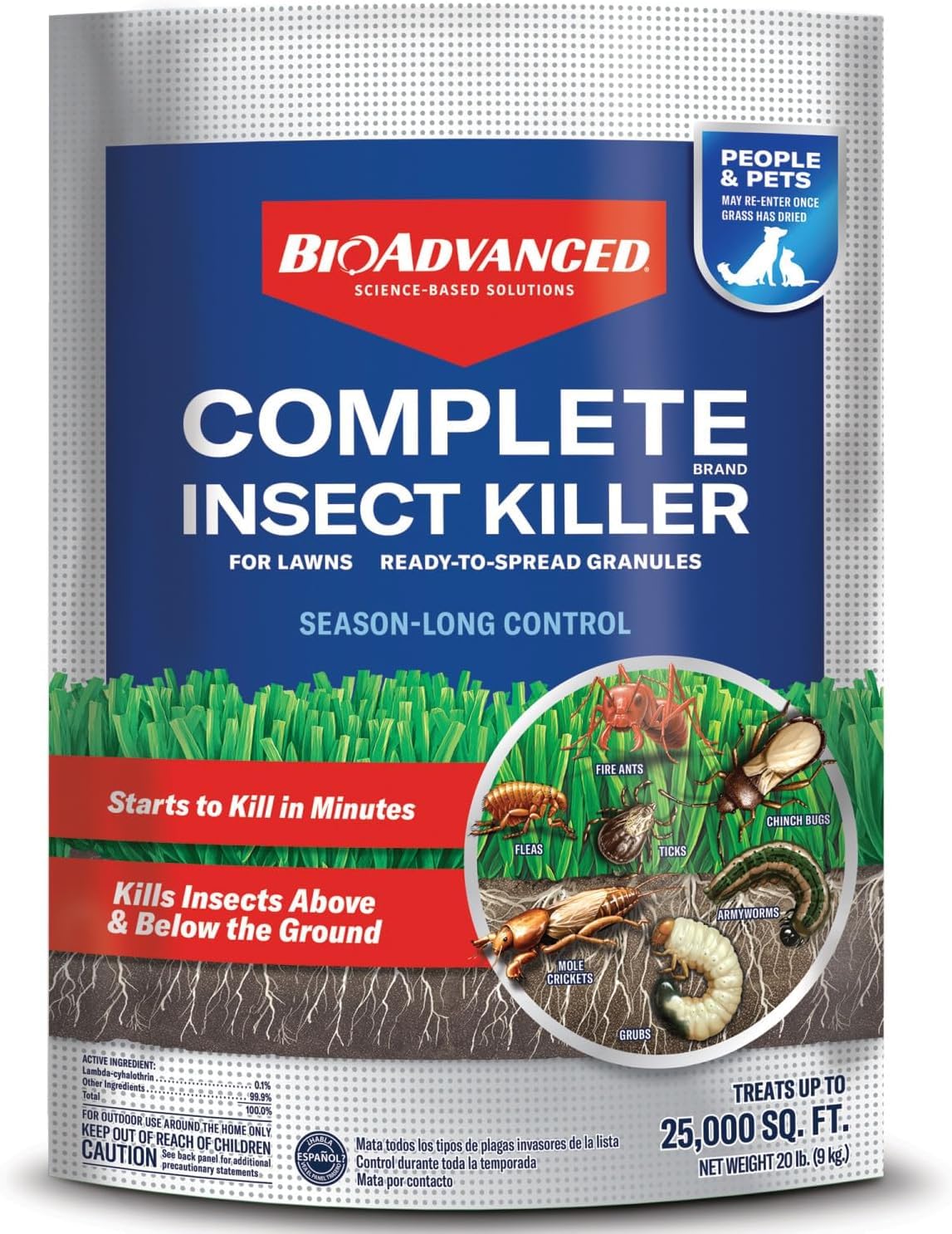
This 20-pound granule bag treats an enormous 25,000 square feet — enough to cover nearly an entire suburban acre in one pass. The active ingredient (bifenthrin and zeta-cypermethrin blend) kills grubs, mole crickets, chinch bugs, ants, fleas, and ticks on contact, making it one of the broadest-spectrum lawn insecticides available without a commercial license.
Users report roughly 3 months of residual protection in warm climates, which covers the critical July-through-September grub feeding window. The granules work best with a broadcast spreader, and several reviews confirm it is safe for St. Augustine and other warm-season turf varieties. For mole control specifically, the grub kill is fast — you’ll see activity drop within days.
One notable caveat from actual buyers: some moles continued tunneling even after the grubs were eliminated. This suggests the product may not completely remove earthworms (a secondary mole food source) or that application gaps left untreated corridors. It’s a powerful tool, but pairing it with a targeted grub-only strategy may be needed for stubborn mole lines.
Why it’s great
- Massive 25,000 sq ft coverage — one bag handles most residential lawns
- Kills grubs, ants, ticks, and mole crickets simultaneously
- Season-long residual that matches the grub hatching window
Good to know
- May not eliminate earthworms, so moles can still find food
- Synthetic chemical will harm beneficial insects if overapplied
- Fleas and stink bugs show some resistance in user reports
3. Motomco Mole Killer Ready to Use Bonus Box, 12 Worm

This product takes a completely different approach — instead of killing the food source, it delivers a lethal dose directly to the mole. The synthetic earthworm-shaped bait mimics the mole’s favorite meal. When a mole bites into one, the active ingredient (bromethalin) causes fatal neurological failure within 24 hours. Users who placed these worms in active tunnels report moles vanishing with no new mounds forming.
The bonus box contains 12 pre-formed bait worms that are simple to handle: peel one out of the tray, poke a hole in the tunnel roof with a stick or finger, drop the worm inside, and cover the opening. The labor time is under a minute per placement. Multiple verified reviewers confirm they went from heavy mole activity to zero new holes within a week of placing 3–4 worms across the network.
There are two real-world failure modes. First, the bait worms can melt or deform if left in direct sunlight or heat, so storage and placement in shaded tunnel sections matters. Second, some moles simply don’t encounter the bait if it’s placed in an inactive run. Careful tunnel identification (stomp down the raised ridges and mark the ones that get re-elevated overnight) is essential for success.
Why it’s great
- Works even after other poisons, traps, and bombs failed
- Immediate placement with no mixing or spreading equipment
- Quick results — mole activity stops within days
Good to know
- Worms melt in warm conditions if left in sunlight
- Requires identifying active tunnels — wrong placement yields no results
- Only 12 worms per box; large infestations need multiple packs
4. Monterey Go-DIE Gopher Bait

Monterey Go-DIE is a strychnine-based grain bait labeled for pocket gophers, but its application method — placing bait directly into tunnel systems — is identical to what works for moles. The strychnine alkaloid formulation is designed to avoid “bait shyness,” meaning gophers and moles don’t learn to avoid it after the first consumption. Reviews show that a single dose often eliminates the pest without requiring reapplication.
One landowner on three acres reported reducing an 80-gopher population to just 15 new holes after the first pass, with no secondary poisoning of hawks or dogs. The 16-ounce canister provides enough bait for dozens of tunnel placements. For moles specifically, some users report reduced activity after application, but the product is not officially labeled for moles — that makes it a secondary option if primary mole baits like Motomco fail.
The biggest risk is the strychnine itself: it is highly toxic to dogs, cats, and children if ingested directly. The label explicitly warns against placing bait where non-target animals can reach it. Additionally, one reviewer received a canister that was less than half full, indicating quality control inconsistencies during packaging.
Why it’s great
- No bait shyness — animals don’t learn to avoid it after one feeding
- Single-dose kill with no reapplication needed in most cases
- Proven on massive gopher infestations across multiple acres
Good to know
- Not officially labeled for moles — off-label use at your discretion
- Extremely toxic to pets and children if accessed
- Packaging inconsistency reported in some units
5. Sevin Lawn Insect Granules, 20 Pounds

Sevin is the household name in lawn insect control, and its 20-pound granule bag delivers the same carbaryl-based formula that has been trusted for decades. It kills over 30 listed pests including grubs, ants, fleas, ticks, and worms. For mole control, the grub kill is the mechanism — remove the white grubs, and the moles eventually leave.
The granules are easy to spread with a broadcast or drop spreader, and the 20-pound size covers a significant portion of a typical lawn. Users report strong results against ant infestations near tree bases and general bug suppression. The USDA specification met designation adds a layer of quality assurance for buyers who want a standard they can verify.
However, the user reviews are mixed on grub-specific efficacy. One review bluntly states “Did not work,” while another says it “takes care of the bugs.” The carbaryl chemistry has a shorter soil half-life than bifenthrin-based alternatives, which means reapplication may be necessary for season-long control. For a dedicated grub-killing strategy aimed at starving moles, the shorter residual makes Sevin a weaker choice than the BioAdvanced or Milky Spore options.
Why it’s great
- Proven carbaryl formula with decades of lawn use
- Kills 30+ pests — useful if your lawn has multiple insect issues
- 20-pound bag provides generous coverage for the price
Good to know
- Shorter soil persistence means grubs may return within weeks
- Mixed user results — some report it did nothing for their infestation
- Carbaryl is broad-spectrum and kills beneficial insects on contact
FAQ
Will killing grubs make moles leave immediately?
Can I use a biological grub killer like Milky Spore in cold climates?
Is it better to kill grubs or directly poison moles?
Final Thoughts: The Verdict
For most users, the grub killer for moles winner is the St. Gabriel Milky Spore Powder because its self-multiplying biological action eliminates Japanese beetle grubs for years from a single application, starving moles without harming your soil ecosystem. If you need faster knockdown across a larger lawn, grab the BioAdvanced Complete Insect Killer for its 25,000-square-foot coverage and season-long residual. And for those with an active tunnel network that won’t quit, nothing beats the Motomco Mole Killer Worms for immediate, targeted elimination.