
If your knees ache and your calves burn after every run, the root cause is likely your foot-strike pattern. Most runners land heel-first, sending a shockwave up the kinetic chain with every step. A shoe built around a zero-drop platform and a roomy toe box lets your foot behave the way nature designed it — loading through the forefoot and midfoot, where the body’s natural suspension system lives.
I’m Mohammad Maruf — the founder and writer behind Drink4Good. I’ve spent hundreds of hours analyzing running shoe geometry, stack heights, drop measurements, and outsole durometers to identify the specific construction details that actually encourage a forefoot strike pattern. This guide ranks nine models based on the biomechanical specs that matter most to midfoot and forefoot strikers.
Finding a pair that actively supports this gait cycle requires looking past marketing fluff and focusing on metrics like ramp angle, toe spring, and foam density. This is the complete guide to the best forefoot strike running shoes for road, trail, and daily training.
How To Choose The Best Forefoot Strike Running Shoes
Choosing a shoe for a forefoot strike isn’t like shopping for a standard daily trainer. You need to prioritize specific geometry and feedback cues that other runners can ignore. Here are the three factors that define a great forefoot-strike shoe.
Drop Height and Ramp Angle
Drop — the difference in millimeters between heel and forefoot stack height — is the single most important spec for a forefoot striker. A high-drop shoe (8mm to 12mm) encourages a heel strike by lifting the heel higher than the toes. A zero-drop shoe (0mm) keeps the foot parallel to the ground, making a forefoot or midfoot landing feel natural. Some shoes in the 3mm to 5mm range offer a transitional ramp angle that works well if you’re migrating away from heel striking gradually.
Toe Box Volume and Shape
A forefoot strike loads the metatarsal heads and toes with every step. If the toe box is narrow or tapered, your toes will jam together instead of splaying to absorb impact. A wide, foot-shaped toe box — sometimes called anatomical or natural shape — allows the toes to spread and the forefoot to function as a broad, stable platform. Look for brands that specify a tapered toe box versus a fully square or rounded forefoot.
Cushioning Profile and Stack Height
Forefoot strikers need impact protection under the ball of the foot, not under the heel. A shoe with too much heel cushioning can feel unstable when you land forward. Conversely, a minimal stack (under 15mm) gives excellent ground feel but demands strong intrinsic foot muscles. A moderate stack of 20mm to 30mm with a responsive foam provides the best balance for most runners transitioning to or refining a forefoot gait.
Quick Comparison
On smaller screens, swipe sideways to see the full table.
| Model | Category | Best For | Key Spec | Amazon |
|---|---|---|---|---|
| ALTRA Torin 7 | Road | Daily training & long runs | 0mm drop, 28mm stack | Amazon |
| ALTRA Lone Peak 9 (Women’s) | Trail | Technical trail & everyday hiking | 0mm drop, MaxTrac outsole | Amazon |
| ALTRA Lone Peak 9 (Men’s) | Trail | Rocky terrain & all-day wear | 0mm drop, MaxTrac grip | Amazon |
| ALTRA Escalante 4 | Road | Tempo runs & gym work | 0mm drop, 24mm stack | Amazon |
| Topo Athletic Terraventure 4 | Trail | Rocky single-track & hiking | 3mm drop, Vibram outsole | Amazon |
| New Balance FuelCell Rebel V5 | Road | Mile repeats & daily tempo | 6mm drop, 36mm stack | Amazon |
| FLUX FOOTWEAR Adapt | Barefoot | Transition to minimal foot function | 0mm drop, 12mm stack | Amazon |
| Saucony Endorphin Pro 4 | Race | Race day & fast training | 8mm drop, carbon plate | Amazon |
| On Cloudmonster 2 | Road | Easy miles & walking recovery | 6mm drop, CloudTec sole | Amazon |
In‑Depth Reviews
1. ALTRA Men’s Torin 7 Road Running Shoe

The Torin 7 uses Altra’s EGO™ MAX foam in a 28mm stack height — a density that provides plush, resilient cushioning without the mushy feeling that disrupts forefoot loading. The 0mm drop keeps your heel and forefoot on the same plane, so your calves and achilles can operate through a full natural range of motion. Runners report zero break-in time and a glove-like fit that accommodates everything from marathon training to daily walking.
Its FootShape™ toe box is genuinely generous: wide enough to allow full toe splay but not so massive that narrow-footed runners feel sloppy. The engineered mesh upper breathes well over long distances, and the outsole shows impressive wear resistance past 300 miles. The Torin 7 simply disappears underfoot — the highest compliment a forefoot-strike shoe can earn.
Long-term users consistently note that knee pain and toe-squeezing issues vanish after switching to this model. The combination of zero drop, moderate stack, and a foot-shaped last makes it the most accessible gateway into forefoot-strike running for both road and occasional light trail use.
Why it’s great
- Zero drop with responsive EGO™ MAX foam for smooth forefoot transitions
- Wide FootShape™ toe box eliminates toe jamming on landing
- No break-in period — immediate comfort out of the box
Good to know
- Upper is breathable but not fully waterproof
- Color options may require protective spray for lighter shades
2. ALTRA Women’s Lone Peak 9 Trail Running Shoe
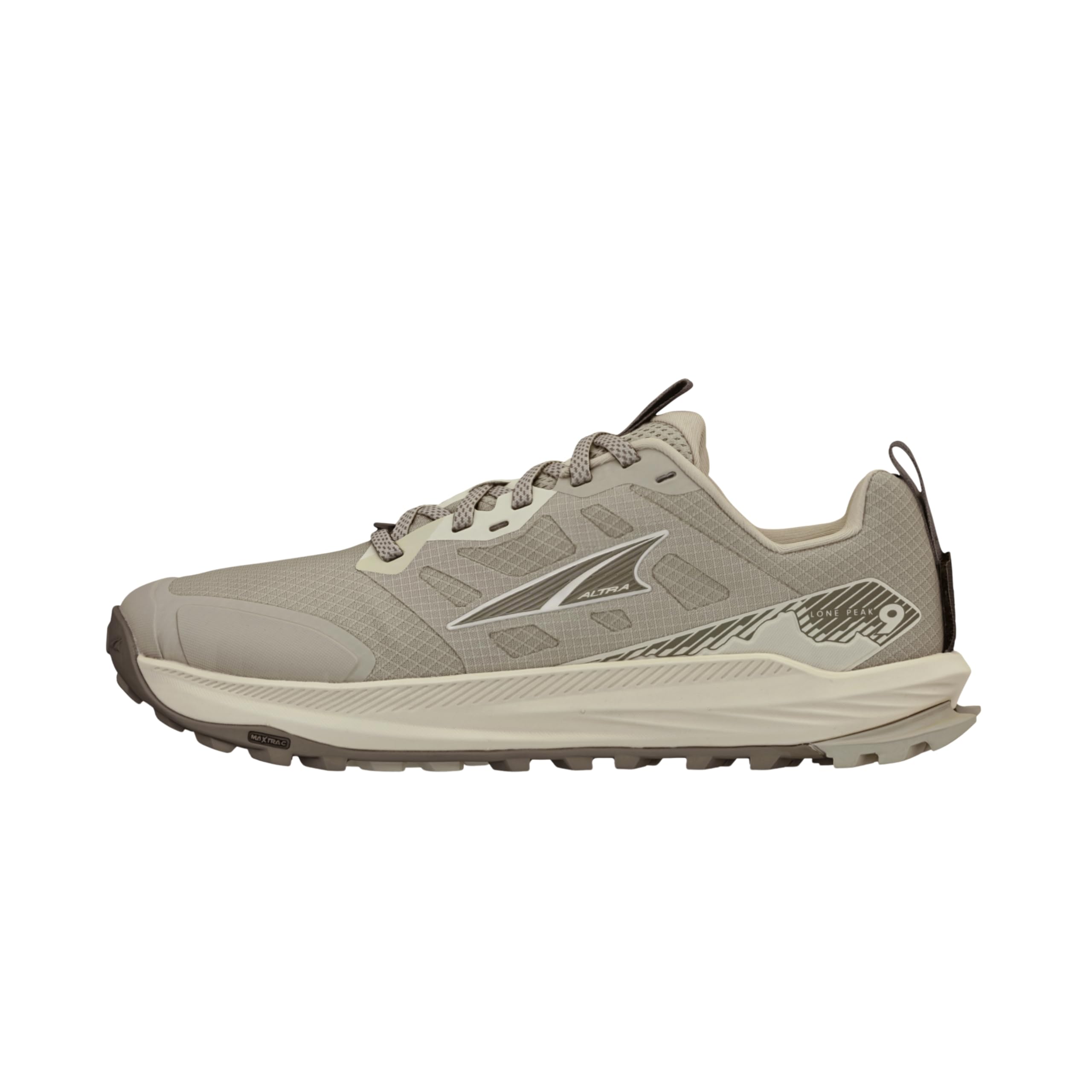
The Lone Peak 9 is the trail counterpart to the Torin, built on the same zero-drop platform but with a MaxTrac rubber compound and a deeper, multi-directional lug pattern. The 25mm stack provides enough underfoot protection for rocky single-track while still transmitting enough terrain feedback for precise foot placement — essential for a forefoot striker navigating roots and stones.
Users with high arches and a history of lumbar issues praise the Lone Peak’s ability to keep the pelvis aligned during long hikes and runs. The wide toe box is genuinely foot-shaped, not just a wider version of a tapered last, which lets the toes splay naturally during steep ascents. Multiple reviewers called out the exceptional arch support and the secure heel hold that prevents slippage on downhills.
It’s worth noting that the mesh upper isn’t waterproof, but it dries quickly after stream crossings. For runners who want a single shoe that handles trail running, daily walking, and gym work without compromising forefoot strike mechanics, the Lone Peak 9 delivers.
Why it’s great
- Zero-drop geometry with MaxTrac compound grips wet rock and loose dirt
- Roomy toe box allows full splay on climbs and descents
- Lightweight build (under 11 oz) for a trail shoe
Good to know
- Not waterproof — mesh dries fast but won’t keep feet dry in sustained rain
- Hand wash recommended to preserve outsole adhesion
3. ALTRA Men’s Lone Peak 9 Trail Running Shoe
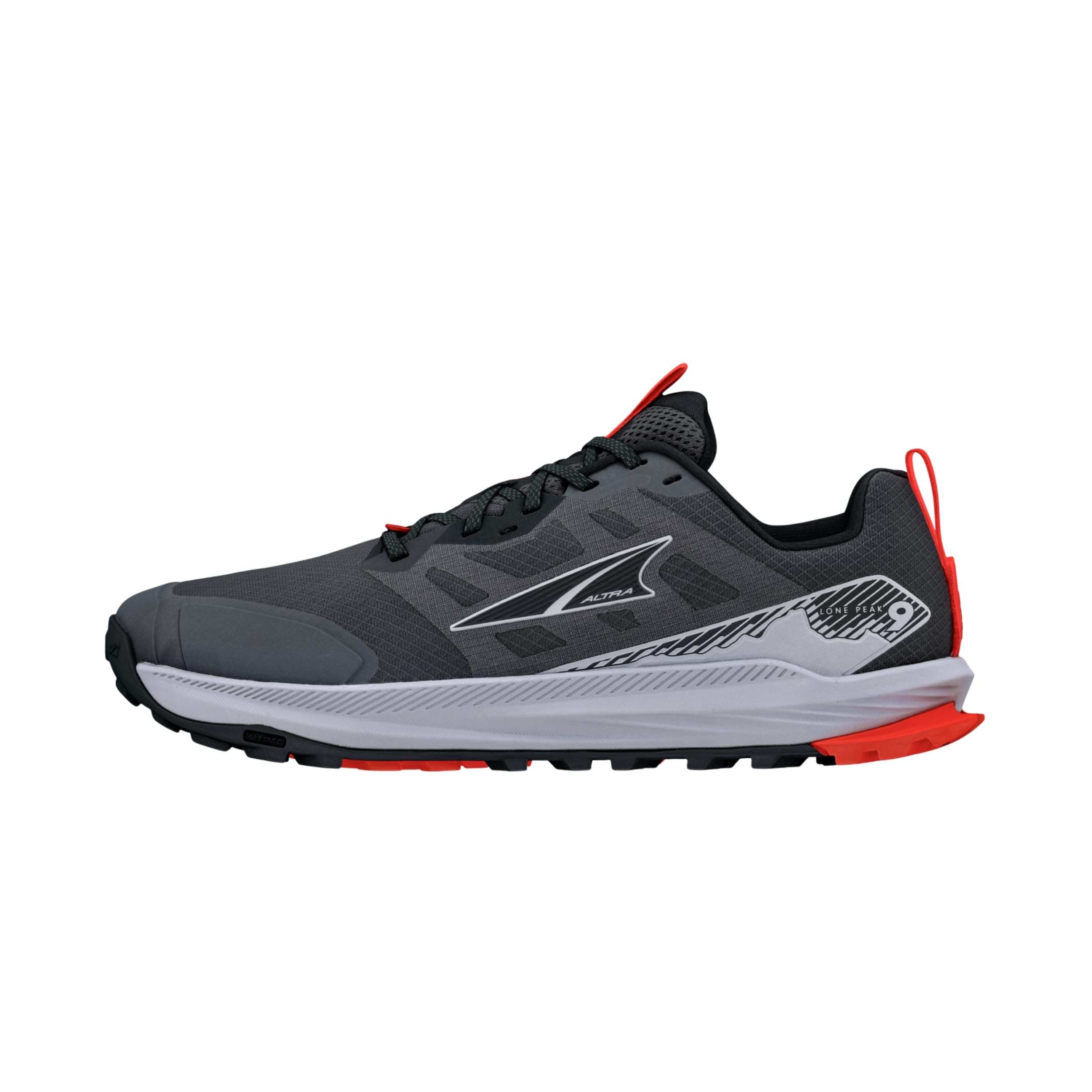
The men’s Lone Peak 9 shares the same zero-drop, Balanced Cushioning™ platform as the women’s version, but with a men’s-specific last shape that accommodates a wider forefoot volume. The 25mm stack uses Altra’s EGO™ foam, which is firmer than the EGO™ MAX in the Torin, offering a more direct ground connection that forefoot strikers often prefer on uneven trail surfaces.
Reviewers who put hundreds of kilometers on these in Colorado’s Rocky Mountains report that the MaxTrac outsole holds up on snow, ice, and loose scree without chunking. The toe box is wide enough to accommodate orthopedic arch supports, and the zero-drop geometry keeps the foot in a flat, stable position — a must for runners who load through the metatarsals on steep terrain.
A common sizing note: the Lone Peak 9 runs slightly large. Most users recommend going down half a size from your usual running shoe. The breathable mesh upper drains and dries fast, making this a reliable choice for wet or humid trail conditions where a waterproof membrane would trap heat.
Why it’s great
- MaxTrac outsole delivers reliable traction on mud, snow, and rock
- Firmer EGO™ foam provides stable, responsive forefoot platform
- Generous toe box fits orthotics and wide feet comfortably
Good to know
- Runs half a size large — size down or consider wide width
- Mesh upper is breathable but not waterproof
4. ALTRA Women’s Escalante 4 Road Running Shoe
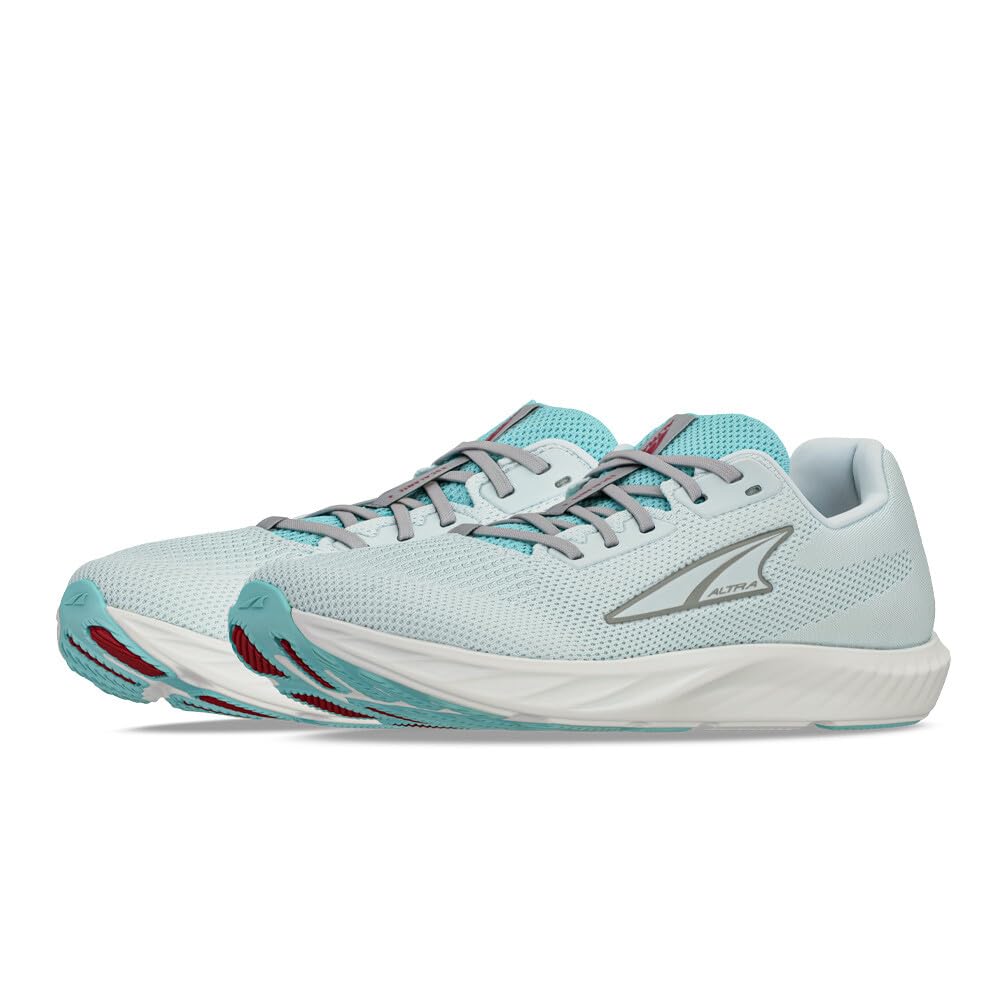
The Escalante 4 pairs a 24mm stack of Altra’s EGO™ foam with a 0mm drop, creating a lower-to-the-ground feel than the Torin 7 while retaining ample forefoot cushioning. The sock-like knit upper wraps the midfoot securely without pressure points, and the FootShape™ toe box provides enough room to accommodate bunions and overlapping toes without slipping at the heel.
Reviewers with arthritis and toe overlap specifically praised the Escalante 4 for reducing pain during walks and light jogs. The shoe weighs just over 8 ounces in women’s sizing, making it a nimble option for tempo intervals and gym sessions. The outsole tread pattern is road-oriented and relatively minimal, so ground feel is excellent for a cushioned zero-drop shoe.
One persistent complaint: the factory laces are short and tend to slip, causing knots to come undone mid-run. Many users swap them for no-tie elastic laces, which actually improve the fit further. The Escalante 4 is a strong pick for runners who want zero-drop geometry in a lightweight, low-profile package that still offers enough cushion for 10-mile runs.
Why it’s great
- Low 24mm stack with zero drop for excellent forefoot ground feel
- Lightweight knit upper fits snugly without irritating bunions
- Comfortable enough for both running and all-day wear
Good to know
- Factory laces are short and prone to slipping
- Road-specific outsole is not designed for trail use
5. Topo Athletic Men’s Terraventure 4
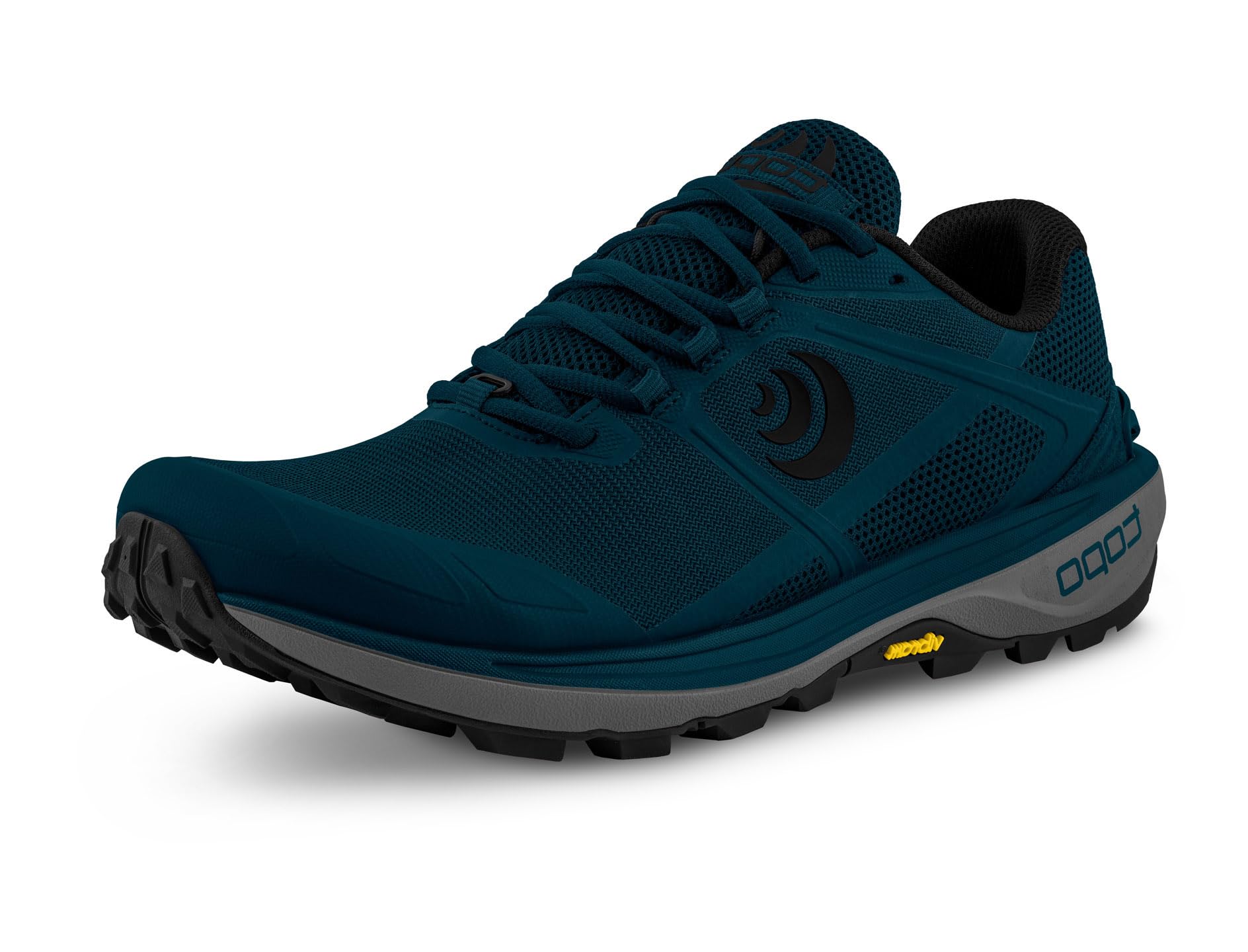
The Terraventure 4 uses a 3mm drop — the smallest ramp angle outside of full zero-drop models — paired with a Vibram outsole that provides exceptional wet- and dry-rock traction. The toe box is notably wide and square, giving forefoot strikers ample room to splay without feeling sloppy at the heel. The 25mm stack uses a firm EVA blend that won’t bottom out on sharp rocks even under heavier runners (tested at 225 lbs).
European walkers and thru-hikers praised the Terraventure 4 for holding up on extended tours without blistering or requiring a break-in period. The non-waterproof version dries quickly after stream crossings, and the 3mm drop strikes a balance between ground feel and the slight heel lift that some runners prefer during steep descents. The arch support is generous enough for flat feet without dominating the insole.
A small percentage of users with low-volume, flat feet report heel slip despite using heel-lock lacing techniques. The fit is best suited to medium-to-wide feet with average to high insteps. For its price point, the Terraventure 4 delivers trail performance that rivals shoes costing significantly more.
Why it’s great
- Near-zero 3mm drop with Vibram outsole for superior trail grip
- Roomy, square toe box allows full forefoot splay
- No break-in period — comfortable from first wear
Good to know
- Heel may feel loose for low-volume, flat feet
- Runs slightly long in length — try half size down
6. New Balance Men’s FuelCell Rebel V5
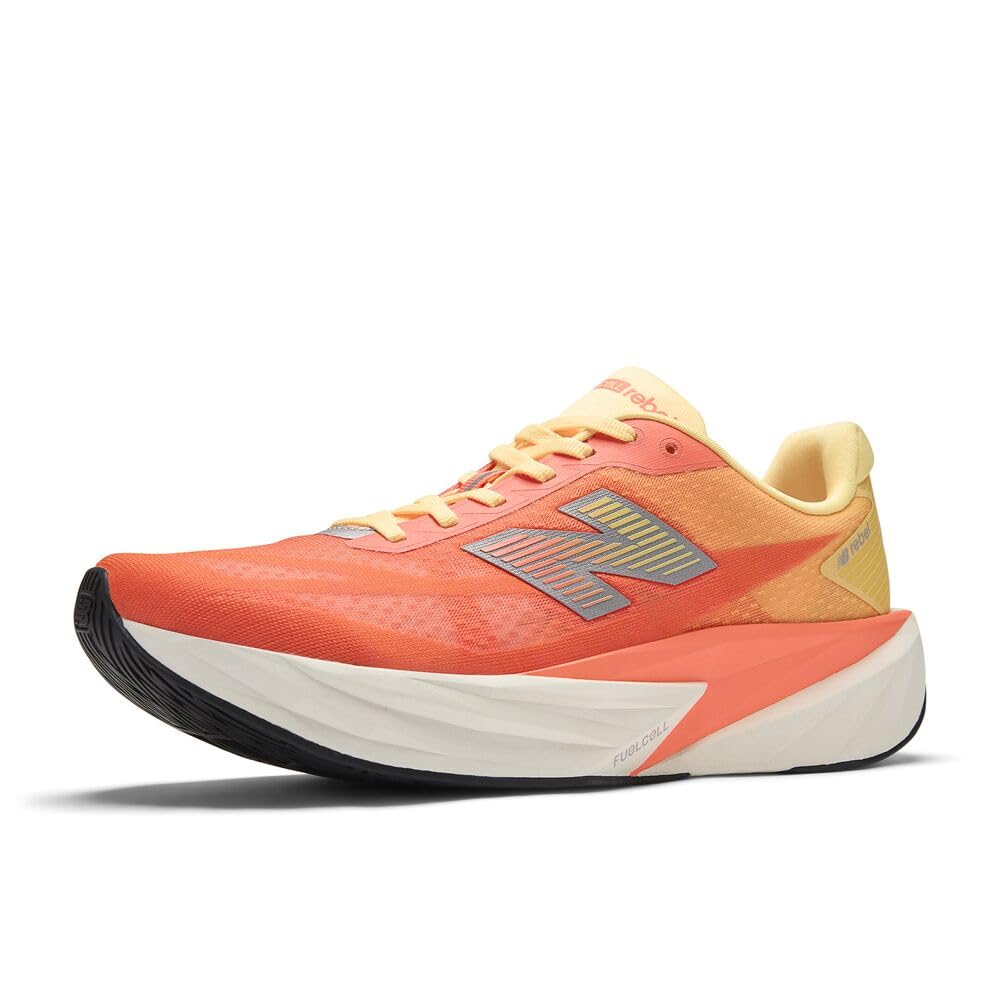
The Rebel V5 uses a 6mm drop and a full-length FuelCell midsole that delivers a bouncy, energetic ride under the forefoot. At 36mm in the heel and 30mm in the forefoot, the stack is high, but the soft foam compresses enough under a forefoot strike to provide real ground feel — not the disconnected sensation you get from stiff super-shoes. The outsole rubber is thin but strategically placed, keeping weight under 8 ounces.
Runners logging 6 to 9 mile tempo efforts praise the Rebel V5 for its combination of lightness and shock absorption. The upper is breathable and true-to-size, with enough width in the forefoot to accommodate moderate splay. The 6mm drop is low enough for most forefoot strikers to maintain a natural gait while offering the option of a slight heel landing when fatigue sets in on long runs.
The main durability caveat: the thin outsole rubber shows visible wear between 75 and 100 miles, though the midsole foam itself holds up well past 150 miles. For runners who prioritize a light, fast, and springy daily trainer over extreme longevity, the Rebel V5 fits the brief perfectly.
Why it’s great
- Bouncy FuelCell foam provides lively forefoot energy return
- Very lightweight (under 8 oz) for a high-stack daily trainer
- Low 6mm drop suits most forefoot and midfoot strikers
Good to know
- Outsole rubber thins quickly — expect visible wear by 100 miles
- Higher stack (36mm) may feel unstable for some forefoot strikers
7. FLUX FOOTWEAR Adapt Runners
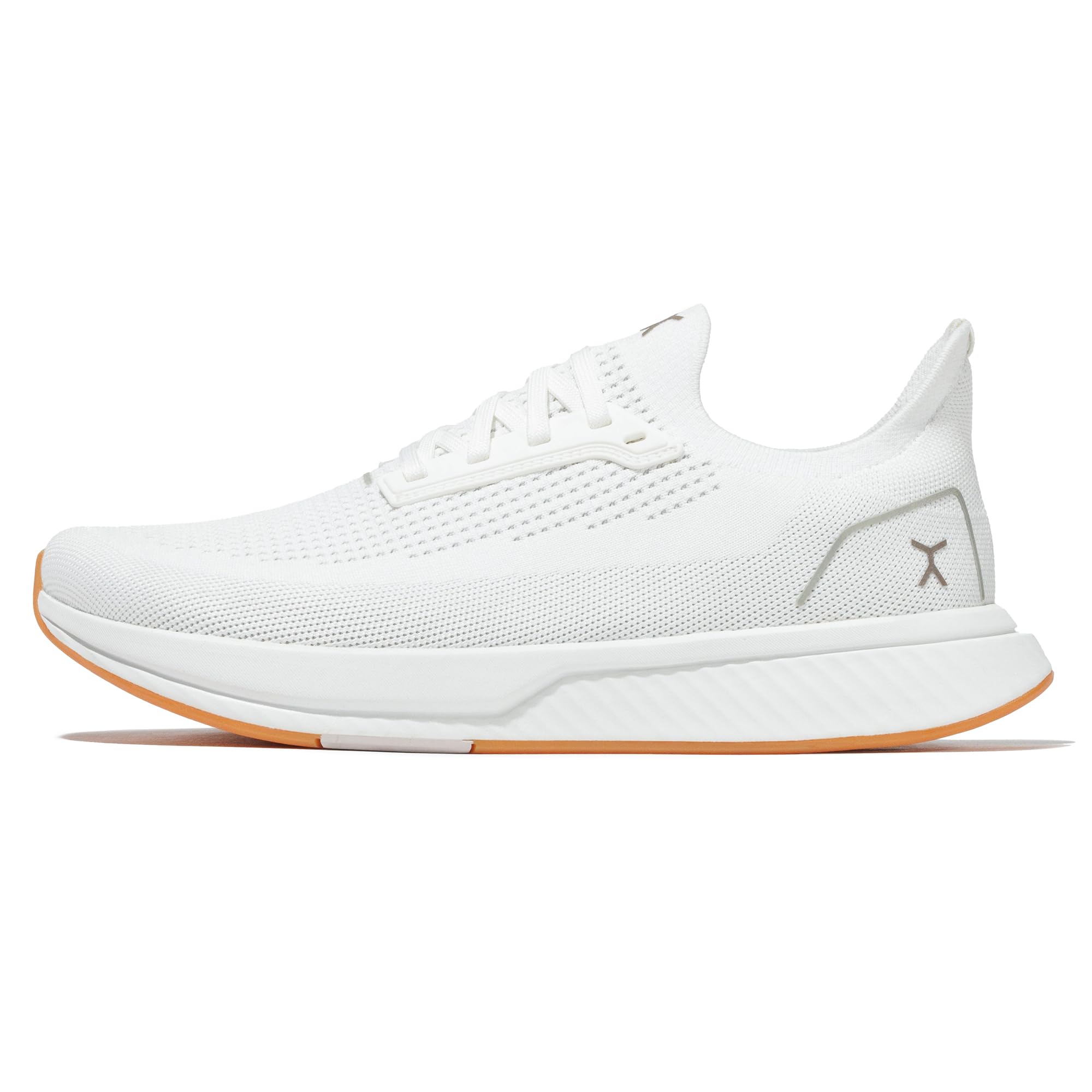
The Adapt Runners are a minimalist barefoot shoe with a 12mm stack and a zero-drop platform — essentially providing the ground feel of being barefoot with a thin layer of puncture protection. The 0mm drop is absolute, and the toe box is exceptionally wide and flat, allowing the toes to splay fully during forefoot loading. The flexible sole rolls naturally with the foot’s movement, encouraging a midfoot or forefoot strike by making heel strikes feel jarring.
Users with flat feet, post-surgical knees, and ankle plates report that the Adapt reduces pain during all-day walking and daily short runs. The shoe requires a transition period — reviewers note initial stiffness and a feeling of ankle collapse that resolves after about two weeks of wear as the foot muscles strengthen. The replaceable insoles allow customization for arch support needs.
Durability feedback is mixed: some users have seen sole separation at the heel after heavy use, while others report the shoe lasting through years of daily wear. The Adapt is best suited to runners who are committed to a minimalist, forefoot-driven gait and want a shoe that provides no interference with natural foot mechanics.
Why it’s great
- True zero-drop barefoot geometry with maximum ground feel
- Extremely wide toe box allows unrestricted toe splay
- Replaceable insoles accommodate custom orthotics
Good to know
- Requires 2-week transition period for foot muscle adaptation
- Durability varies — some users report sole separation
8. Saucony Men’s Endorphin Pro 4
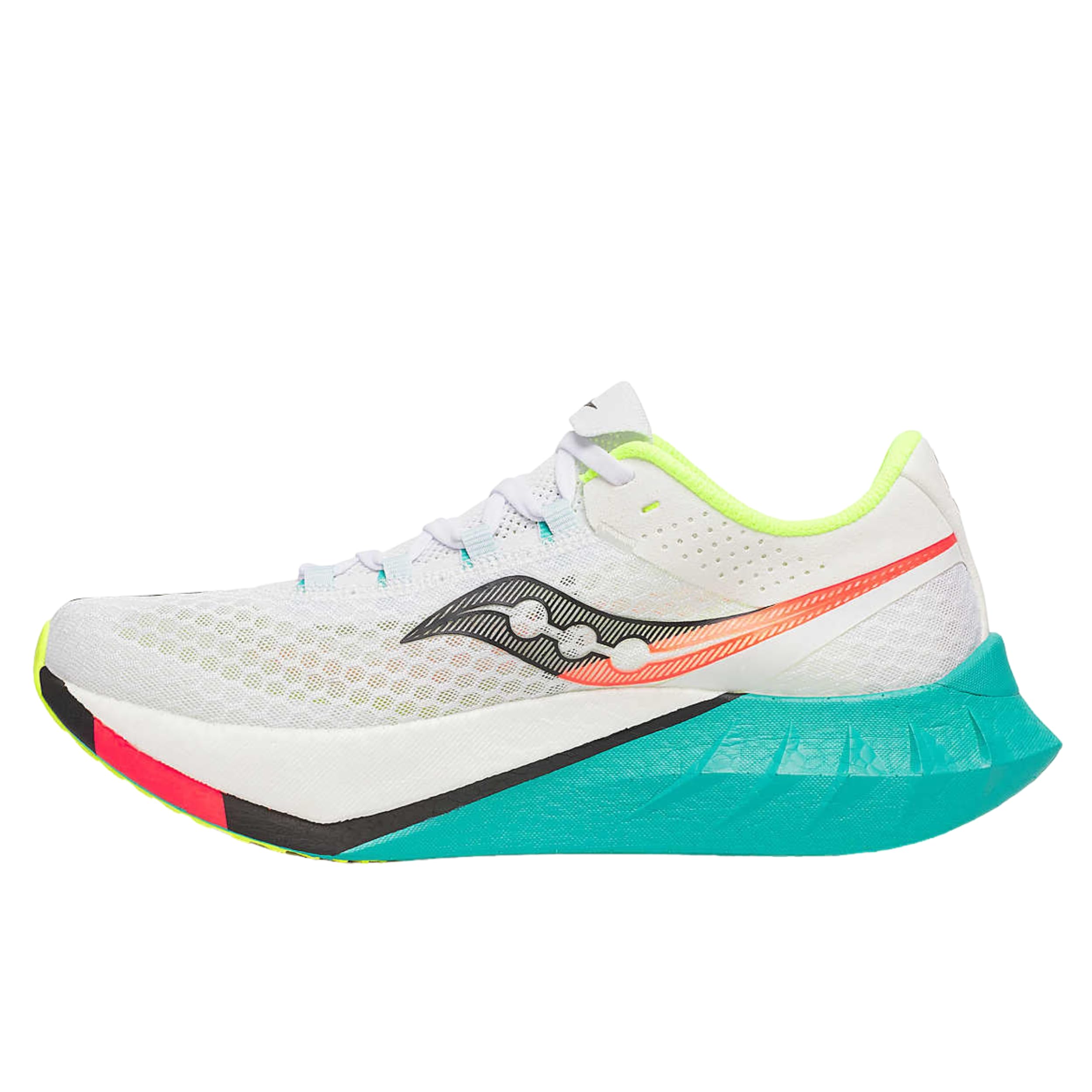
The Endorphin Pro 4 is a carbon-plated super-shoe with an 8mm drop, designed for race-day speed. The higher drop might seem counterintuitive for forefoot strikers, but the aggressive rocker geometry and stiff forefoot plate encourage a forward landing and a quick toe-off. The PWRRUN PB foam provides a high-energy return that feels propulsive when you land on the midfoot or forefoot.
Reviewers who own both the Endorphin Pro 4 and the Endorphin Speed 2 note that the Pro 4 is less bouncy than the Elite but offers excellent stability for a carbon shoe. The upper is thin, breathable, and race-fit, with a secure heel hold that prevents slippage. Durability is notably good for a race shoe — users report 400 miles of life without outsole delamination or foam compression loss.
The main limitation for dedicated forefoot strikers is the 8mm drop, which can feel like it’s encouraging a slight heel bias. This shoe works best for runners who already have a strong forefoot gait and want an efficient, fast platform for racing, not for those trying to learn or refine a forefoot strike.
Why it’s great
- Carbon plate and rocker geometry promote quick forefoot turnover
- Durable PWRRUN PB foam lasts 400+ miles for a race shoe
- Lightweight, breathable upper with excellent heel lock
Good to know
- 8mm drop may feel counterintuitive for dedicated forefoot strikers
- Less bouncy than the Endorphin Elite — optimized for efficiency, not pop
9. On Mens Cloudmonster 2
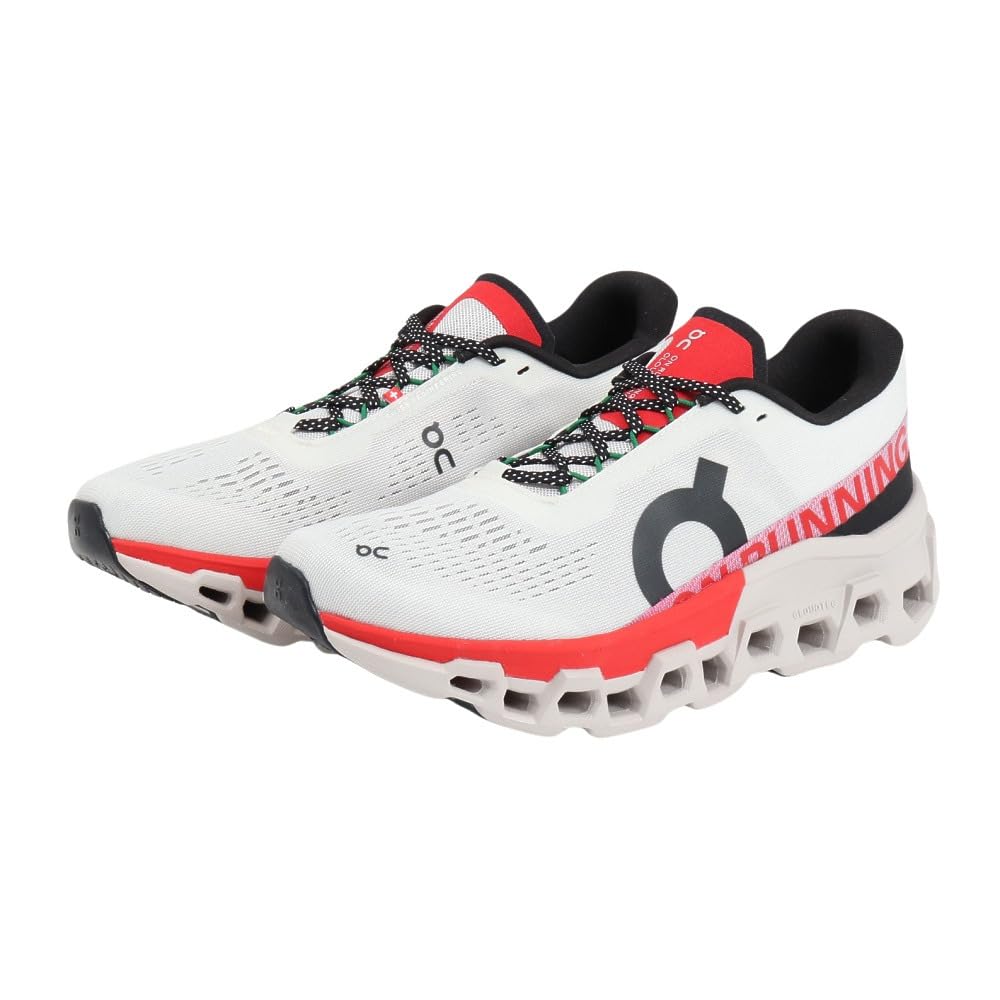
The Cloudmonster 2 is a max-cushion road shoe with a 6mm drop and On’s signature CloudTec sole — a series of hollow pods that compress on impact and snap back to their original shape. The forefoot stack is generous, providing a soft, pillowy landing for runners who want impact protection without a super-shoe feel. The 6mm drop is low enough to accommodate a forefoot strike without forcing it.
Users consistently describe the Cloudmonster 2 as “very comfortable” and “true to size,” noting that it works well for both walking and running. The upper is plush and well-ventilated, and the outsole shows good durability for a max-cushion model. The rocking sensation of the CloudTec sole helps smooth the transition from landing to toe-off, which benefits forefoot strikers who want a more cushioned ride than a typical zero-drop shoe provides.
The Cloudmonster 2 is not designed for speedwork or racing — its weight and high stack make it best suited to easy miles, recovery runs, and all-day wear. For forefoot strikers who need extra cushioning due to joint sensitivity or high mileage, this shoe delivers comfort without the heel lift that aggravates a forefoot gait.
Why it’s great
- CloudTec pods provide soft, springy forefoot cushioning
- 6mm drop suits forefoot strikers needing extra impact protection
- True-to-size fit with plush, breathable upper
Good to know
- High stack and weight make it unsuitable for speedwork
- Not designed for trail running — road-only outsole
FAQ
What drop height should I look for in a forefoot strike running shoe?
Can I use a zero-drop shoe if I have flat feet?
How do I know if a shoe’s toe box is wide enough for forefoot striking?
Are carbon-plated shoes suitable for forefoot strikers?
How long does it take to adjust to a zero-drop forefoot strike shoe?
Final Thoughts: The Verdict
For most runners seeking a forefoot-friendly gait, the best forefoot strike running shoes winner is the ALTRA Torin 7 because its zero-drop platform, wide FootShape™ toe box, and responsive EGO™ MAX foam deliver an unmatched balance of comfort, natural foot mechanics, and road-ready durability for daily training. If you need a trail-specific option that handles technical terrain without sacrificing forefoot function, grab the ALTRA Lone Peak 9 (Women’s) or the ALTRA Lone Peak 9 (Men’s). And for those committed to a truly minimalist barefoot experience that maximizes ground feel and encourages pure forefoot striking, nothing beats the FLUX FOOTWEAR Adapt Runners.