
The dense canopy of a Japanese maple creates a beautiful, dry shade that is notoriously difficult to plant under. Many traditional lawn grasses and sun-loving perennials simply fail, leaving bare soil that quickly becomes a magnet for weeds and erosion. Finding a ground cover that thrives in this low-light, root-competitive zone requires a specific set of traits.
I’m Mohammad Maruf — the founder and writer behind Drink4Good. I’ve spent countless hours analyzing the germination rates, shade tolerance, and root-competition strategies of dozens of ground covers to identify which ones can actually survive and flourish beneath a Japanese maple without damaging its delicate feeder roots.
The right selection for your landscape is the ground cover under japanese maple that combines shallow roots, dry-shade tolerance, and a non-invasive spreading habit to coexist peacefully with the tree’s surface roots.
How To Choose The Best Ground Cover Under Japanese Maple
Selecting a ground cover for this microclimate is a balancing act. You need a plant that tolerates dry shade, won’t compete aggressively for nutrients, and establishes without disturbing the maple’s sensitive root system. Here are the three critical factors to evaluate.
Root Depth and Spread Style
A Japanese maple’s feeder roots run close to the soil surface. Deep-rooted or aggressively rhizomatous ground covers will tangle with and stress the tree. Look for plants with fibrous, shallow root systems that spread by surface runners or clumping rather than deep taproots. Low, mat-forming species are ideal because they insulate the soil without invading the tree’s territory.
Shade and Moisture Tolerance
Under a maple, you get dappled to deep shade, and the tree’s canopy channels rainwater away, creating a rain shadow. The ground cover must tolerate dry conditions once established and low light levels. Species with higher moisture needs will require supplemental watering, which can also alter the soil environment around the maple roots. Prioritize plants labeled for dry shade.
Live Plants vs. Seeds
Seeds are budget-friendly but face a tough challenge under a maple’s dense canopy and dry leaf litter. Germination is inconsistent, and young seedlings are vulnerable. Live plants, while more expensive, provide an immediate, sturdy root system that can better compete with the tree’s roots for moisture and establish a cover faster, reducing the window for weed colonization.
Quick Comparison
On smaller screens, swipe sideways to see the full table.
| Model | Category | Best For | Key Spec | Amazon |
|---|---|---|---|---|
| Creeping Jenny (Live Plant) | Live Perennial | Instant carpet & erosion control | 4″ tall x 18″ spread per plant | Amazon |
| HOME GROWN Verbena Moss Seeds | Seed Mix | High germination & pollinator support | 6,000 seeds; 4″ height | Amazon |
| Sweet Alyssum Seeds | Seed Annual | Quick white blooms from seed | 8,000 seeds; 4″ height | Amazon |
| Forget Me Not Seeds | Seed Perennial/Biennial | Early spring blue blooms in shade | 500 seeds; 6-12″ height | Amazon |
| Creeping Thyme Seeds | Seed Perennial | Steppable mats for walkways | 8,000 seeds; 6″ height | Amazon |
In‑Depth Reviews
1. Creeping Jenny Live Plant (4-Pack)
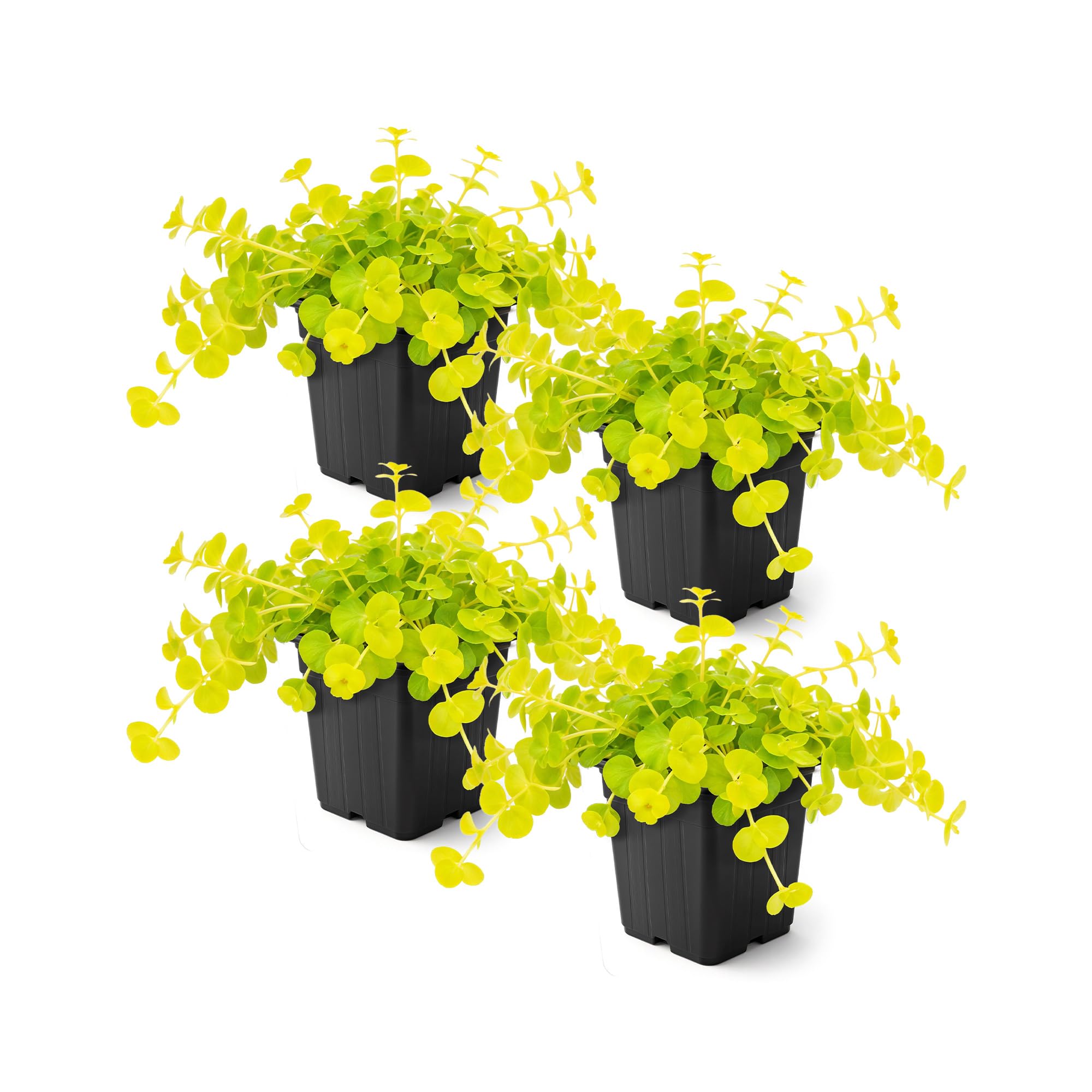
This live 4-pack of Creeping Jenny (Lysimachia nummularia) is the most reliable and effective answer for filling the space beneath a Japanese maple. With vibrant chartreuse-green foliage that brightens deep shade and a low, mat-forming habit that reaches about 4 inches tall and spreads up to 18 inches per plant, it creates a dense, weed-suppressing carpet much faster than seeds. The fibrous root system stays shallow, avoiding conflict with the maple’s feeder roots.
Customer reports confirm that even wilted plants bounce back quickly with moisture, and once established, Creeping Jenny tolerates the dry, shaded conditions typical under a dense canopy. The live plants provide an immediate presence, offering erosion control on slopes and preventing soil from washing away during rains. Its spreading habit also makes it ideal for lining the edge of the tree’s root zone.
Be aware that despite its hardiness, it prefers consistently moist—not soggy—soil. Shipped in small pots, the plants may look tiny upon arrival, but they grow aggressively once settled. For those who want instant visual impact and long-term growth without the guesswork of seed germination, this live option is the clear premium choice for a ground cover under a Japanese maple.
Why it’s great
- Immediate, established root system outcompetes weeds and tree roots
- Spreads up to 18 inches per plant for fast coverage
- Vibrant chartreuse color brightens deep shade under the canopy
Good to know
- Requires regular watering until established, especially in rain shadow
- Plants arrive small and need careful transplanting
2. HOME GROWN Verbena Moss Seeds (6,000+)

If you prefer to sow seeds and want a mix that has shown strong germination rates even in more competitive soil conditions, this Verbena Moss blend is a top mid-range pick. It contains 6,000 non-GMO seeds from an All-America Selections winner, producing a low-growing ground cover that stays around 4 inches tall. The plant forms a soft cushion of fern-like foliage dotted with multicolored star-shaped flowers that attract honeybees and butterflies.
Reviews highlight excellent germination and vigorous early growth, which is crucial when planting in the dry, shaded environment under a maple where seeds often fail. The plant’s heat and drought tolerance are major assets, as the tree’s canopy creates a rain shadow that dries the soil faster than open ground. Verbena moss also has a shallow root system, making it a safe companion for surface roots.
The main challenge is that it requires more sun than a dense maple canopy provides. It thrives in partial sun, so it will perform best under a tree with dappled rather than full dense shade. It also needs moderate watering during establishment. For those with a slightly more open maple canopy or dappled light, this seed mix offers a beautiful, pollinator-rich solution at a strong value.
Why it’s great
- Proven high germination rate from a reputable AAS winner
- Shallow, fibrous roots safe for maple root zone
- Heat and drought tolerant once established
Good to know
- Needs partial sun; weakens in full deep shade
- Requires careful watering during germination in dry spots
3. Sweet Alyssum Carpet of Snow Seeds (8,000)

Sweet Alyssum ‘Carpet of Snow’ is a classic choice for creating a pure white, low-growing carpet under a tree. The seeds are tiny, and when sown directly on bare soil, they can germinate within days under ideal conditions, producing a dense mat of green foliage topped with clusters of fragrant white flowers. It reaches only about 4 inches tall, making it a subtle, non-competitive understory plant.
The plant itself performs well in the dappled shade of a tree, though germination is more reliable in early spring while the tree is still leafless. Once established, it attracts pollinators and self-sows readily for the following season.
The main risk is inconsistent seed quantity and the challenge of working with such small seeds in a root-dense area. Good soil contact is essential, and the area must be kept moist during germination, which can be difficult under the canopy. This is a fine entry-level choice for those willing to accept variable results and who want a fast-blooming, fragrant annual carpet.
Why it’s great
- Creates a dense, fragrant white carpet that suppresses weeds
- Very low height (4 inches) won’t shade the tree base
- Can self-sow for returns in subsequent seasons
Good to know
- Seed count often lower than advertised
- Very small seeds are difficult to sow evenly in root-dense soil
4. Forget Me Not Seeds (500)

Forget-me-nots are one of the few flowering plants that genuinely thrive in partial shade and bloom early in spring, making them a natural fit for the season before the maple fully leafs out. They produce delicate sky-blue flowers with yellow centers on stems that reach 6 to 12 inches tall, creating a soft, romantic understory. As a biennial or short-lived perennial, they self-sow to maintain a presence year after year.
The seed pack comes from a trusted California nursery and claims 500 seeds, though customer feedback reveals inconsistent germination. Some buyers report zero sprouts, even after careful timing and moisture management, while others see success. The key challenge is that forget-me-nots need consistent moisture and cool soil for germination, conditions that are harder to maintain under the dry, shaded canopy of a mature maple.
This option works best for gardeners willing to overseed and accept a lower success rate for the reward of beautiful early-season blue blooms. The height, while taller than a true ground cover, still stays low enough to not crowd the maple’s trunk. For dedicated shade gardeners, it provides a fleeting but beautiful moment in the spring garden cycle beneath the tree.
Why it’s great
- Produces classic blue flowers in early spring before the maple leafs out
- Self-sows for a naturalized carpet over time
- Thrives in partial shade conditions under the canopy
Good to know
- Germination can be poor without consistent cool, moist soil
- Height of 6-12 inches is taller than a traditional low ground cover
5. Creeping Thyme Seeds (8,000+)
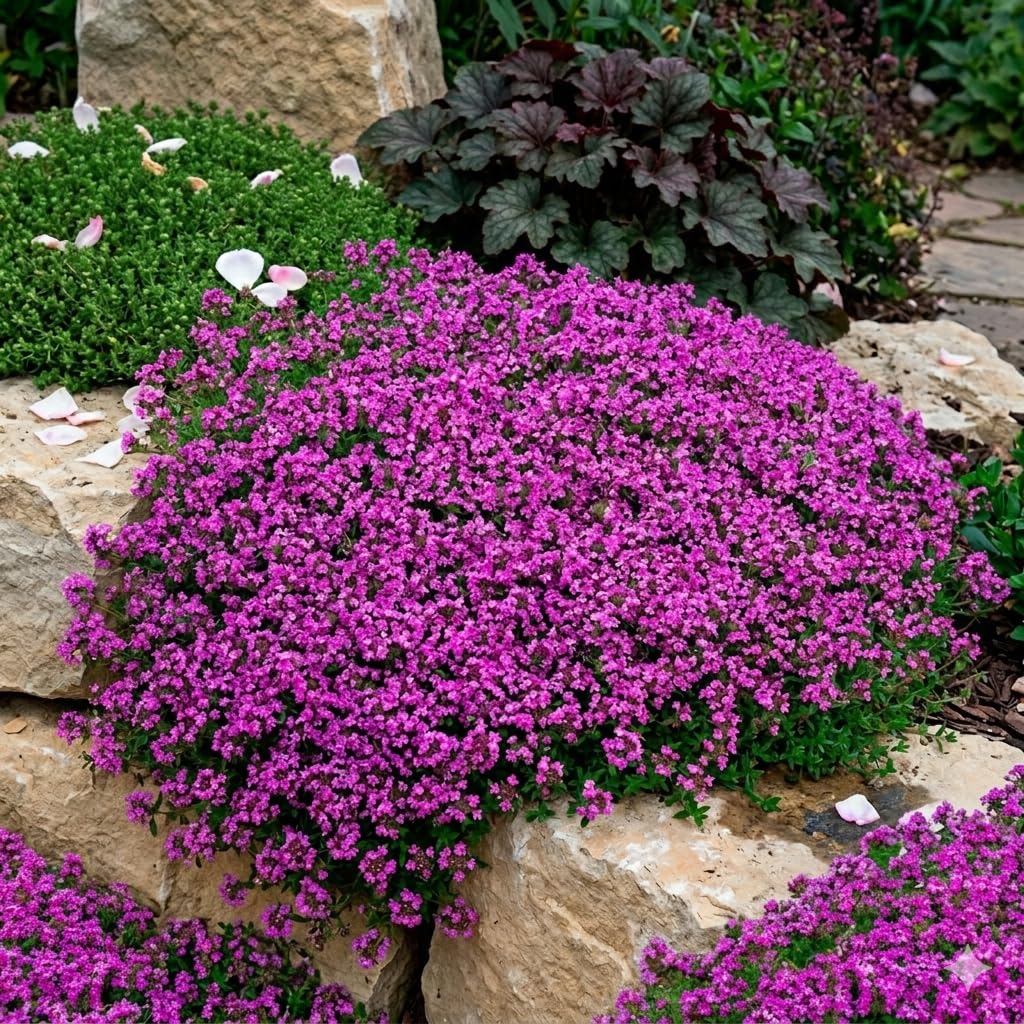
Creeping Thyme is a popular dwarf ground cover known for its ability to handle light foot traffic and produce a fragrant, purple-flowering mat. It reaches about 6 inches tall and spreads by surface runners, making it a candidate for filling gaps between pavers or lining a path near the maple. The 8,000 seed count offers generous coverage potential.
However, customer reviews reveal a significant reliability problem: many users report zero germination, while others achieve success only after controlling temperature and moisture precisely. Creeping Thyme seeds require specific conditions—cool soil around 75-80°F—and are notoriously slow to establish. Under a Japanese maple, where the dry shade and rain shadow complicate these conditions, failure rates are high.
This seed is best suited for experienced gardeners willing to germinate in a controlled setting (such as seed trays) before transplanting. Direct sowing under the tree is risky, with many users calling it a waste of money. For its reported success cases, it creates a beautiful, aromatic carpet, but it is the least reliable choice for a dry-shade ground cover under a Japanese maple compared to live plants or more proven seed mixes.
Why it’s great
- Creates a fragrant, purple-flowering mat that tolerates light foot traffic
- Spreads by surface runners to cover gaps between roots
- Large seed count for broad coverage potential
Good to know
- Very low and inconsistent germination rate in dry shade conditions
- Requires controlled temperature and moisture; poor direct-sowing results
FAQ
Will ground cover roots damage Japanese maple roots?
Is it better to use live plants or seeds under a Japanese maple?
How do I water ground cover under a maple without overwatering the tree?
Final Thoughts: The Verdict
For most users, the ground cover under japanese maple winner is the Creeping Jenny Live Plant 4-Pack because it provides an immediate, reliable carpet of chartreuse foliage that thrives in dry shade without disturbing the maple’s surface roots. If you want a pollinator-friendly seed mix with strong germination, grab the HOME GROWN Verbena Moss Seeds. And for a classic white annual carpet, nothing beats the Sweet Alyssum Carpet of Snow.