
Every guitarist knows the silent frustration of a G string that drifts flat mid-song. That subtle tuning instability isn’t just a nuisance—it erodes the confidence of your performance, whether you’re on stage or in your living room. The solution sits right on your headstock: a high-quality set of tuning pegs that hold pitch with mechanical authority.
I’m Mohammad Maruf — the founder and writer behind Drink4Good. I’ve spent hundreds of hours cross-referencing gear ratios, post heights, locking mechanisms, and customer feedback to identify which tuning pegs deliver genuine stability rather than marketing hype.
After evaluating specifications, installation requirements, and thousands of real-world reviews, I’ve curated this guide to the best guitar tuning pegs across vintage style, locking systems, and premium sealed units that match your playing needs without breaking your budget.
How To Choose The Best Guitar Tuning Pegs
Selecting the right tuning pegs isn’t just about aesthetics. The gear ratio determines how many turns of the button translate to a full string revolution—higher ratios like 19:1 offer micro-adjustments preferred by precision players, while 16:1 balances speed with accuracy. Locking tuners clamp the string at the post to eliminate slip and speed up string changes, whereas non-locking designs rely on winding around the post, best suited for vintage-correct restorations. The mounting hole diameter (10mm modern vs. 11/32″ vintage) and pin alignment (2-pin Fender system vs. 45-degree screw tag) dictate whether your new pegs fit without drilling.
Gear Ratio and Tuning Feel
Gear ratio directly affects how sensitive each turn of the peg feels. A 15:1 ratio means one full button rotation tunes the string by a larger amount, ideal for quick tuning between songs but less precise for fine adjustments. Players who bend strings aggressively often prefer 18:1 or 19:1 ratios for the finer control needed to return to pitch accurately. Test your preference—if you find yourself overshooting the note and correcting back, a higher ratio will clean up your tuning workflow.
Locking Mechanism: When You Need It
Locking tuning pegs use a clamp or pin inside the post to secure the string without wrapping three or four times around the shaft. This eliminates the common slippage zone where the string winds over itself. For guitars with a tremolo bridge, locking tuners dramatically improve pitch stability by reducing the string’s ability to shift at the post. Non-locking tuners remain the authentic choice for vintage acoustic and guitar restoration projects where original aesthetics and feel matter more than maximum stability.
Mounting Hole Size and Fixing Tag Orientation
Before purchasing, measure your headstock’s peg hole diameter with calipers. Most modern electric guitars use 10mm (25/64″) holes, while vintage acoustics often use 11/32″ (roughly 8.7mm). The fixing tag—the metal tab that prevents the tuner from rotating—must match your headstock’s hole arrangement. A 45-degree fixing tag fits many Strat and Tele patterns, while some vintage guitars require a specific screw-to-bushing offset. Getting this wrong means either drilling new holes or ordering adapters.
Material, Finish, and Durability
Zinc alloy and chromed brass are the two dominant body materials. Zinc alloy keeps prices accessible and weight moderate, while brass adds density and a more solid mechanical feel but can add noticeable headstock mass. Nickel plating resists corrosion better than chrome in humid environments, and full-metal sealed housings prevent dust and grime from degrading gear smoothness over time. Open-gear designs like those on vintage-style acoustic tuners look classic but require occasional cleaning and lubrication.
Quick Comparison
On smaller screens, swipe sideways to see the full table.
| Model | Category | Best For | Key Spec | Amazon |
|---|---|---|---|---|
| Guyker 6 Inline Locking | Locking Sealed | Electric & acoustic upgrades | 1:15 Gear Ratio | Amazon |
| Musiclily Pro 2-Pins Locking | Locking Sealed | Fender Strat/Tele drop-in | 16:1 Gear Ratio | Amazon |
| Wilkinson E-Z LOK Post | Sealed Non-Locking | Strat/Tele smooth upgrade | 19:1 Gear Ratio | Amazon |
| Golden Gate F-2215 Vintage | Open Gear Vintage | Acoustic guitar restoration | 16:1 Gear Ratio | Amazon |
| Bogart Locking TP 21-BK | Locking Sealed | Budget-friendly locking set | 1:18 Gear Ratio | Amazon |
In‑Depth Reviews
1. Guyker 6 Inline Vintage Guitar Lock String Tuners
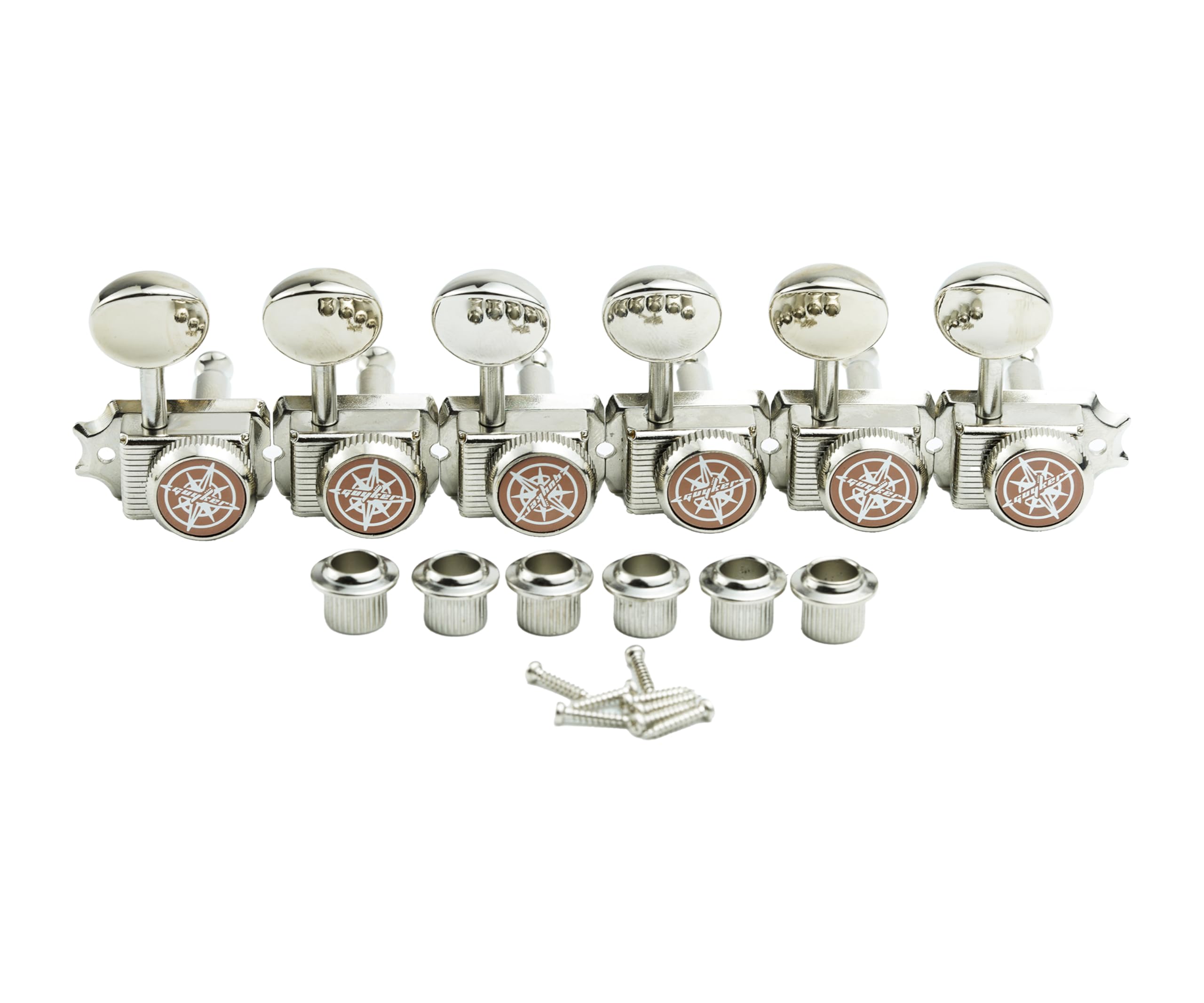
The Guyker locking tuners have earned a reputation for gear smoothness that rivals units costing four times as much. One long-time reviewer noted the gear feel matches Waverly tuners, out-classing Grover and Kluson in smooth rotation while the locking mechanism clamps strings reliably without any slip. The 1:15 gear ratio gives a slightly faster tuning rotation than higher-ratio competitors, which some players prefer for quick string changes and basic tuning adjustments. The oval-shaped sealed housing keeps contaminants out while the nickel plating resists tarnish well.
Installation is straightforward on guitars with 9mm headstock holes, which covers most modern LP, SG, TL, and ST style electrics as well as folk acoustics. The package includes all mounting screws, bushings, and washers. Reviewers consistently highlight the hassle-free fit on Squier J Mascis Jazzmasters and Stratocasters after checking the parameter drawing, though vintage guitars with non-standard hole spacing may require light reaming. The lack of gear lash and zero play in the peg rotation means your tuning holds steady even during aggressive string bending sessions.
The only real limitation is the non-staggered post height—since all six posts are the same height, guitars with a steep headstock angle may need a string tree to maintain proper break angle over the nut. One reviewer on a vintage Kent Lido experienced slightly imperfect hole spacing after enlarging the original holes. For anyone upgrading a modern electric or acoustic, this is the most balanced set of precision and value you’ll find.
Why it’s great
- Gear smoothness compares to premium tuners costing far more
- Locking mechanism eliminates string slip and speeds up changes
- Includes complete mounting hardware and fits most modern 9mm holes
Good to know
- Uniform post height may require string trees on steep headstocks
- May need hole reaming for some vintage guitars with non-standard spacing
2. Musiclily Pro 6-in-line 2-pins Full Metal Locking Tuners

The Musiclily Pro tuners were designed specifically for the modern Fender 2-pin mounting system, meaning they drop directly into Strat and Tele headstocks without any drilling or screw alignment. The 16:1 gear ratio delivers a balance of tuning speed and precision that feels natural for both rhythm and lead players. As a full-metal sealed unit with a unique embossed threaded locking button, these tuners provide a tactile locking action that clamps the string positively with each turn. The black electroplate finish is uniform and resists fingerprints well.
Reviewers on early-90s MiM Strats confirm a flawless fit with no gaps around the bushings. The locking mechanism drastically reduces string change time—one reviewer measured a 70% improvement. The string retention is solid even with a 2-point tremolo bridge, though heavy vibrato users noted that after three years, tuning stability degraded slightly when using the trem aggressively. Blocking the bridge resolved the issue entirely, which suggests the tuners themselves remain mechanically sound. The shaft diameter is just over 10mm, so older Squiers with trapezoid tuners or non-standard headstocks will need hole filing and new pin holes.
The main trade-off is in the locking knob material. The embossed knobs are functional but some reviewers felt they could be more substantial under the turning force required to clamp heavier gauge strings. The black finish holds up well over time against sweat and humidity. For any Fender-style guitar with the modern mounting pattern, these are the easiest locking upgrade available.
Why it’s great
- Drop-in fit for modern Fender Strat/Tele 2-pin systems, no drilling required
- Full metal sealed construction with smooth 16:1 gear feel
- Locking mechanism cuts string change time significantly
Good to know
- Locking knob threads feel less snug compared to premium units
- Non-standard vintage headstocks may require hole filing and new pin holes
3. Wilkinson Chrome E-Z LOK Post Guitar Tuners

The Wilkinson E-Z LOK tuners are not locking tuners despite the name—they are non-locking sealed tuners with a specialized slotted post design that grips the string end without requiring a full wrap around the post. This is a crucial distinction for buyers who want smoother string installation than traditional post-hole designs but prefer authentic winding feel over a clamping mechanism. The 19:1 gear ratio is among the highest in this set, giving you exceptional fine-tuning precision. Each half-turn of the button produces a very small pitch change, perfect for dialing in exact intonation on a Tele or Strat.
Installation matches the modern 10mm (25/64″) hole standard with a 45-degree fixing tag. The contemporary flat-sided mini buttons provide a clean, low-profile look that doesn’t crowd the headstock. The chrome finish is bright and reflective. Reviewers consistently report that these tuners eliminated the tuning warble and instability they experienced with factory Squier and entry-level Fender tuners. One reviewer described tuning as an “ordeal” before the swap and a “simple pleasure” afterward due to the smooth, backlash-free rotation. The non-staggered post height means you retain the string tree on Strat-style guitars.
Because the posts are all the same height and the tuners lack a locking clamp, players with aggressive vibrato techniques may still experience some string slip at the post during extreme bends. This is standard for non-locking designs. The protective plastic film over the Wilkinson logo must be peeled off after installation, which some first-time buyers missed and reported as a finish defect. These tuners represent the best blend of vintage-inspired aesthetics and modern sealed reliability.
Why it’s great
- 19:1 gear ratio offers best-in-class tuning micro-adjustment
- E-Z LOK slotted post simplifies string installation over traditional holes
- Smooth, backlash-free rotation with excellent tuning stability
Good to know
- Non-locking design—string slip possible under extreme tremolo use
- Non-staggered posts require string tree on Strat headstocks
4. Golden Gate F-2215 Vintage Acoustic Guitar Tuners

The Golden Gate F-2215 tuners are a faithful reproduction of the classic Ohio-style open gear machines that appeared on acoustic guitars from the 1920s through the 1960s. The 16:1 gear ratio provides responsive tuning that matches the feel of the vintage originals, while the exposed gears give the headstock an authentic period-correct appearance. The white oval plastic buttons have a slightly aged cream tint rather than a stark clinical white, which helps them blend with restored vintage instruments. The triple nickel plating is applied heavily enough to resist corrosion even in coastal climates.
Real-world installations on a 1937 Slingerland Songster and a 1951 Martin tenor confirmed that these tuners dramatically improved tuning stability and sustain while eliminating the rattling and buzzing from worn-out originals. The 1/4″ shaft with press-fit bushings fits the standard 11/32″ peg holes found on vintage acoustics. Reviewers on a 1950s Harmony found that pairing these with Stew Mac small nickel grommets produced a factory-correct look. The gear feel is smooth with no discernible slop, though one reviewer accurately noted they aren’t as buttery as tuners—but at this price point, that’s expected.
The main considerations for installation are the screw hole alignment. These are designed for vintage Kluson-style patterns, so modern acoustic headstocks with different spacing may require new screw holes. The open gear design means dust and humidity can eventually affect smoothness if never maintained, but occasional light oiling keeps them running smoothly for decades. The small buttons can feel cramped for players with larger fingers, which is historically accurate for the period they replicate.
Why it’s great
- Period-correct vintage open gear design for authentic restoration projects
- Heavy triple nickel plating resists corrosion exceptionally well
- Eliminated buzzing and rattling on 1930s–1950s guitar restorations
Good to know
- Screw hole spacing may not match modern acoustic headstocks perfectly
- Open gears require occasional cleaning and lubrication for long-term smoothness
5. Bogart Locking Guitar String Tuning Pegs

The Bogart TP 21-BK locking tuners bring the locking mechanism to a price point typically reserved for basic non-locking sets. The 1:18 gear ratio gives you the fine control advantage of a high-ratio tuner while the sealed housing protects the internal gears from moisture and dust. The locking mechanism uses a wheel-based clamp that grips the string firmly at the post. The zinc alloy body keeps weight manageable while still feeling solid enough for day-to-day playing. The black finish is uniform and matches black hardware setups nicely.
Installation fit is designed for modern 10mm (3/8″) peg holes with a 45-degree fixing tag. A reviewer on an Epiphone SG confirmed a perfect drop-in fit with an easy first-time installation experience. Another reviewer upgraded a 20-year-old cheap Chinese guitar and reported that the locking feature made an essential difference in keeping the hardtail guitar stable through full sets. A particularly creative reviewer used them on a diddly-bow stick guitar and praised their ability to hold tune. The set includes all hardware: screws, bushings, and ferrules.
The most noticeable limitation is the locking wheel design, which is thin enough that players with larger fingers may find cranking it down slightly uncomfortable. The gear smoothness is good for the price but lacks the buttery consistency of the more expensive sealed units in this guide. One reviewer noted they lock reliably but the feel is less refined than premium brands. For a player looking to add locking functionality to a project guitar or upgrade from truly worn-out tuners without spending more, these deliver genuine utility.
Why it’s great
- Brings locking functionality to an entry-level price point
- 1:18 gear ratio delivers precise tuning control
- Sealed housing and zinc alloy body offer good durability for the price
Good to know
- Locking wheels are thin and may feel small during operation
- Gear smoothness is good but not comparable to premium-tier tuners
FAQ
Can I install locking tuners on an acoustic guitar?
How do I know if my guitar needs staggered or non-staggered posts?
How often should I lubricate open-gear tuning pegs?
Will replacing tuners eliminate tuning issues caused by a bad nut?
What is the difference between 3+3 and 6-in-line tuner configurations?
Final Thoughts: The Verdict
For most users, the best guitar tuning pegs winner is the Guyker 6 Inline Locking Tuners because it delivers gear smoothness that challenges premium brands while keeping the locking mechanism accessible to any player upgrading a modern electric or acoustic. If you want drop-in simplicity for a Fender 2-pin headstock, grab the Musiclily Pro Locking Tuners. And for vintage acoustic restoration where period-correct appearance matters more than locking functionality, nothing beats the Golden Gate F-2215 Vintage Tuners.