
Chasing visible abs often leads to a graveyard of half-used equipment that targets nothing but your wallet. The real challenge isn’t motivation—it’s finding gear that actually forces your rectus abdominis, obliques, and transverse abdominis to fire correctly without wrecking your lower back. You need machines that provide progressive overload, stable resistance paths, and joint-friendly angles, not gimmicks that bounce you around.
I’m Mohammad Maruf — the founder and writer behind Drink4Good. I’ve spent hundreds of hours dissecting build quality, resistance mechanisms, and real-user fatigue patterns across the ab-equipment market so you can skip the trial-and-error phase entirely.
Whether you’re a beginner or a seasoned lifter, selecting the right gym equipment for abs means prioritizing controlled resistance, adjustable tension, and a stable base that supports full spinal flexion without strain.
How To Choose The Best Gym Equipment For Abs
Not all ab gear creates meaningful muscle tension. Many products rely on momentum or shallow range of motion, which builds endurance but little hypertrophy. To build visible, functional abs you need equipment that allows progressive resistance, accommodates your limb length, and protects the lumbar spine during spinal flexion or rotation.
Resistance Type & Adjustability
Hydraulic cylinders and adjustable resistance bands let you scale tension from light activation to high-intensity overload. Fixed tension (common in spring-loaded gear) caps your growth once you adapt. Look for at least three distinct resistance levels for beginners and intermediate users, or a stepless hydraulic dial for continuous load increases.
Back Support & Ergonomics
Lower back pain is the leading reason people abandon ab training. A well-padded backrest or seat cushion with a contoured shape prevents tailbone pressure. For decline benches, ensure the foot roller sits high enough to lock your hips in place—if your hips slide, your hip flexors take over and your abs relax.
Stability & Weight Capacity
A machine that wobbles under load wastes your energy on stabilization instead of ab contraction. Check the frame material (alloy steel, carbon steel) and the base width. Machines under 15 pounds are convenient to move but may need extra bracing during explosive movements. A 300-pound weight capacity or higher is a solid baseline for durability.
Quick Comparison
On smaller screens, swipe sideways to see the full table.
| Model | Category | Best For | Key Spec | Amazon |
|---|---|---|---|---|
| Finer Form Adjustable Ab Bench | Decline Bench | Heavy decline sit-ups & reverse crunches | 1100 lbs weight capacity | Amazon |
| GMWD Chest Press Machine | Press Machine | Pec-focused ab engagement with converging arms | 450 lbs total capacity, 11 leverage positions | Amazon |
| Roman Chair Back Extender | Hyperextension Bench | Lower back & oblique hyperextensions | 275 lbs capacity, dual angle/height adjustment | Amazon |
| MERACH Ab Machine (Round) | Sit-up Machine | Seated crunches & leg lifts with back support | 330 lbs capacity, 3 resistance levels | Amazon |
| Fitvids Ab Crunch Total Body | Band Crunch | Light guided crunches & total-body toning | 300 lbs capacity, 21 exercise modes | Amazon |
| MERACH Waist Twister Board | Twist Board | Rotary core training & waist slimming | 300 lbs capacity, noiseless twisted rope bounce | Amazon |
| Twister Arm Trainer (WAKISA) | Multi-Use | Anti-rotation core work & arm conditioning | 440 lbs max resistance, 15 hydraulic levels | Amazon |
In‑Depth Reviews
1. Finer Form Adjustable Sit Up Ab Bench
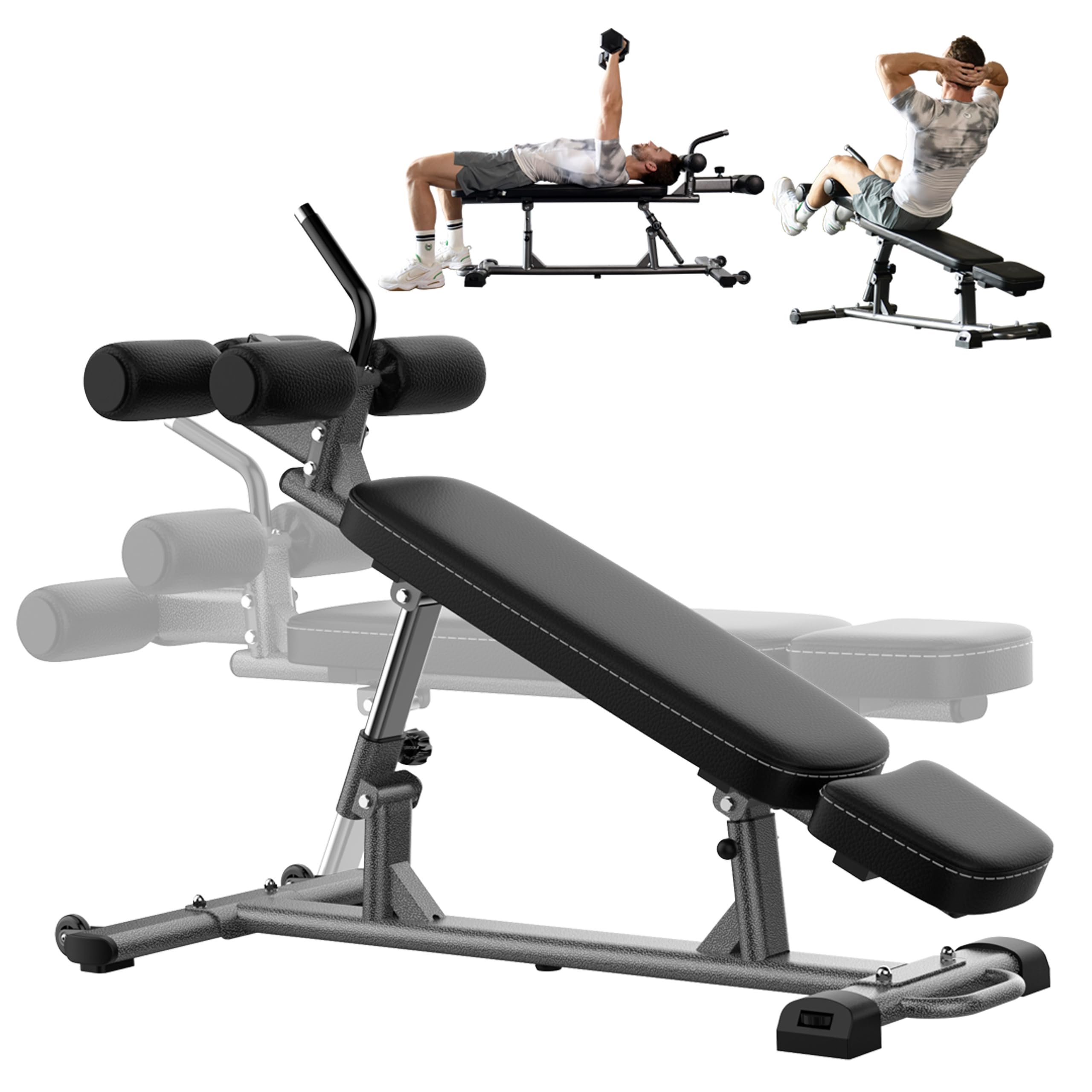
The Finer Form bench is a semi-commercial-grade ab station disguised as a simple decline bench. Its 1100-pound weight capacity speaks to the thick alloy steel frame, and the extended 57.5-inch backboard offers full spinal support for taller users—a rarity among sit-up benches that typically end mid-ribcage. The reverse crunch handle lets you perform leg lifts and decline sit-ups without a separate attachment.
What sets this apart from lighter options is the integrated wheel-and-pin adjustment system. You can move between flat bench press and steep decline in seconds, and the foot roller has enough vertical range to lock in users from 5’2″ to 6’4″. The foam on the roller is firm but dense enough to avoid bruising during high-rep sets.
Assembly takes roughly an hour with the included hardware, and the instructions, though minimal, are supplemented by clear part labeling. The only soft spot is the lack of a padded seat pad—the backboard is the primary surface, so users prone to tailbone sensitivity may want to add a thin mat. For pure ab focus without spin or wobble, this is the gold standard.
Why it’s great
- Massive 1100-lb capacity ensures zero wobble
- Extended backboard supports full spine during decline
- Integrated reverse-crunch handle for progressive overload
Good to know
- Assembly instructions could be clearer
- Some may want extra padding for tailbone
2. GMWD Chest Press Machine
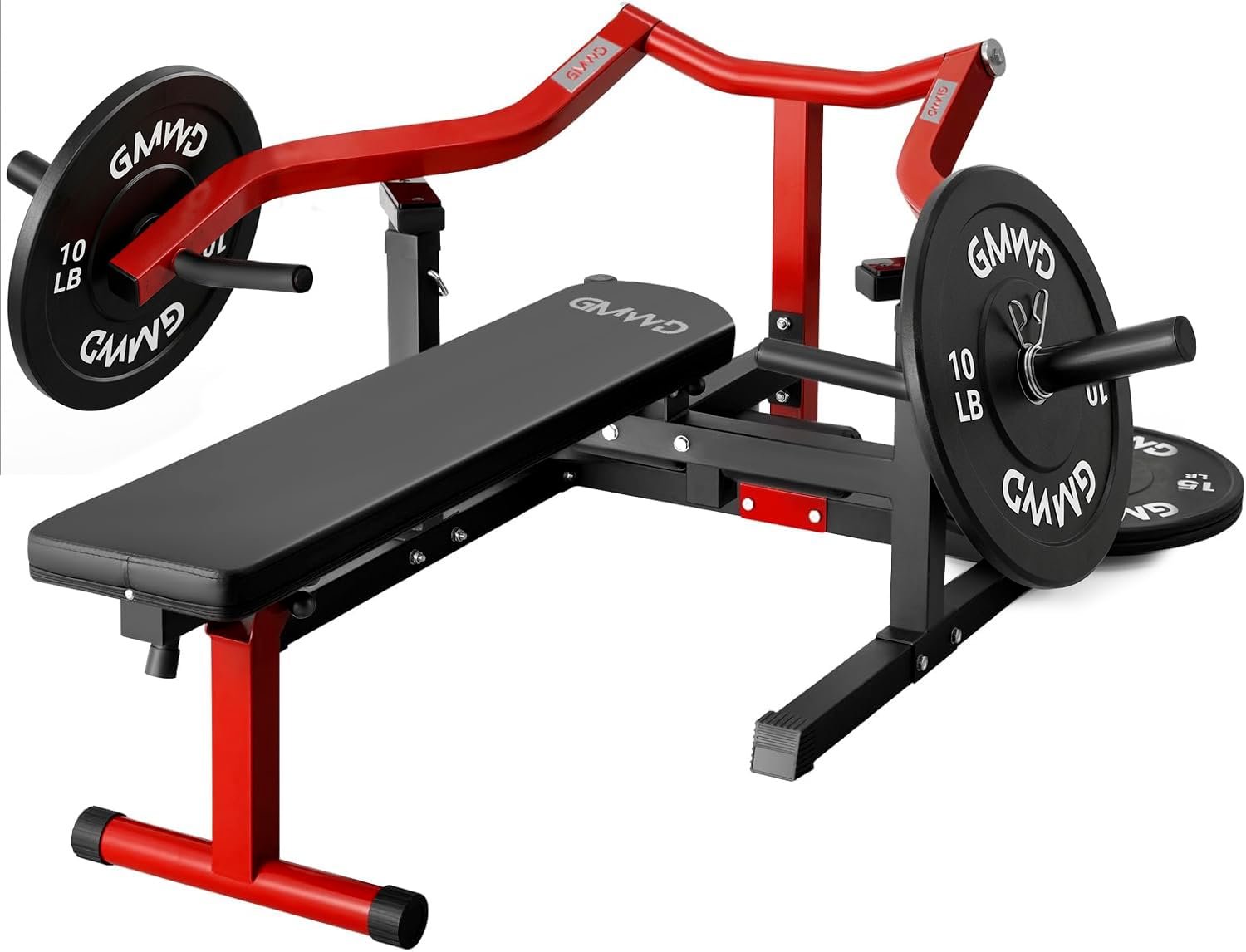
Though marketed as a chest press, the GMWD machine is a serious ab tool when used on its flat bench setting with cross-body anti-rotation movements. The independent converging arms with 11 leverage positions let you stabilize one side while the other moves—directly engaging obliques and transverse abdominis in ways a fixed barbell never can.
The 2″ x 2″ 14-gauge steel frame and 450-pound total capacity mean you can load heavy without frame flex. The folding design, which collapses to roughly 8 sq. ft., is a game-changer for apartment gyms. The adjustable bench offers three back positions (flat, incline, upright) plus a leg adjustment, giving you upright ab work like knee raises with back support.
Assembly is straightforward with basic tools, though the pop pins feel stiff out of the box. Detachable sleeves accept both 1″ and 2″ plates, removing the need to buy specialty weight sets. If you prioritize cable-style tension for core stability and appreciate a machine that doubles as a full upper-body station, this is the most versatile unit in the list.
Why it’s great
- Independent arms correct strength imbalances and engage obliques
- Folds to 8 sq. ft. for apartment storage
- Sleeves accept standard 1″ or 2″ plates
Good to know
- Pop-in pins may need break-in lubrication
- Weight spindles face rearward, limiting wall placement
3. MERACH Ab Machine (Round)
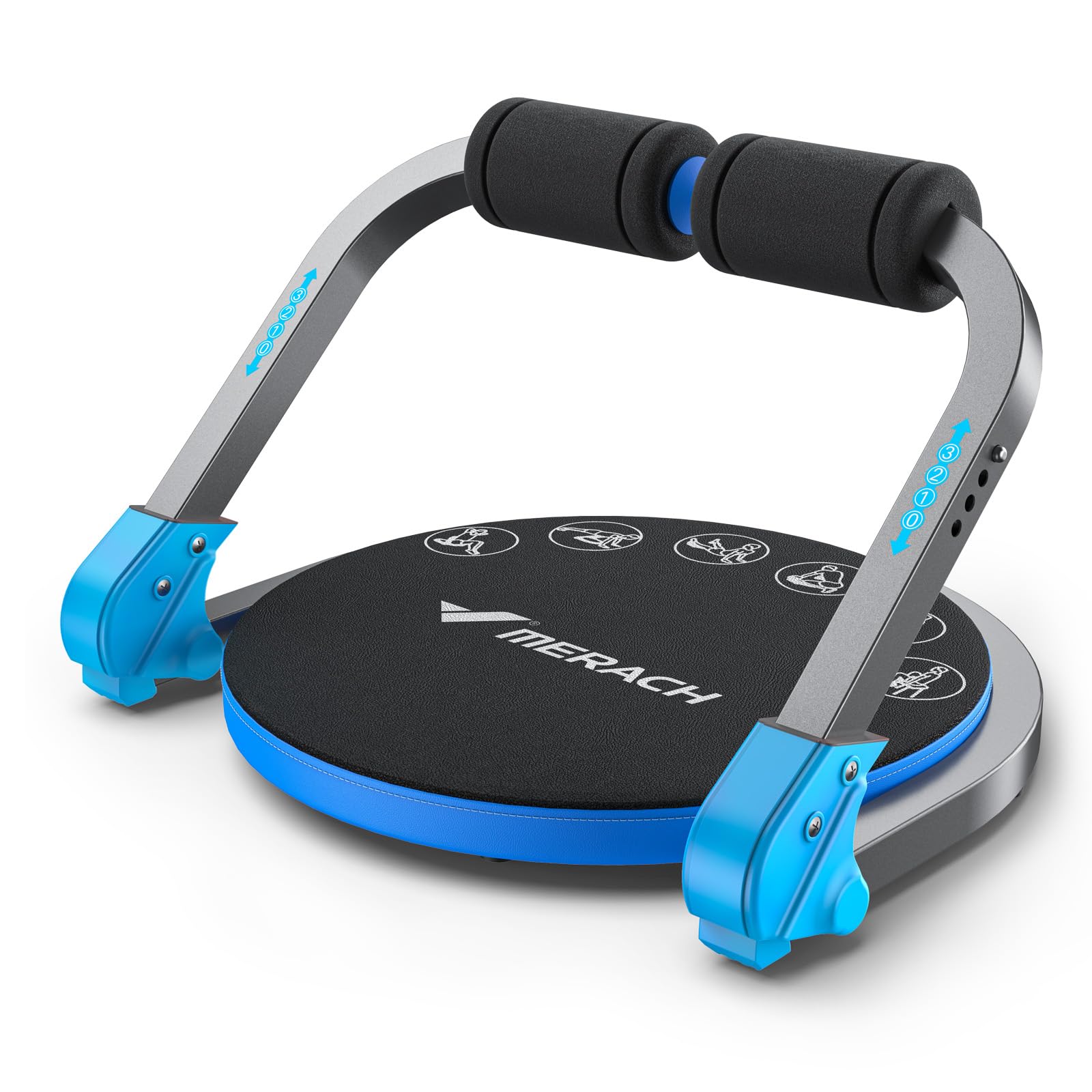
The MERACH round ab machine bridges the gap between a floor crunch pad and a full decline bench. It weighs only 12 pounds, folds in five seconds, and requires zero assembly—literally open the box and start your first set. The 2-inch thick foam handles are soft on the joints and wide enough for both standard and wide-grip crunches.
Resistance comes from a hydraulic rebound system with three clearly separate levels. Level 1 works for warm-ups or beginners, while level 3 provides enough pushback to fatigue a trained core in 15 controlled reps. The 330-pound weight capacity is generous for this form factor, and the non-slip base pads keep the machine planted even on hardwood floors.
One nuance: the foam grips attract lint and dirt over time, so clean them occasionally. The seat cushion is adequate but thinner than the GMWD or Finer Form pads—users over 220 pounds may notice seat bottoming after extended use. Still, for the price and portability, this machine delivers effective sit-up resistance without requiring a dedicated home gym corner.
Why it’s great
- No assembly required, ready in seconds
- Three resistance levels cover warm-up to fatigue
- Folds compactly for storage behind a door
Good to know
- Foam grips attract dust and lint
- Seat pad may feel firm for larger users
4. Roman Chair Back Extender
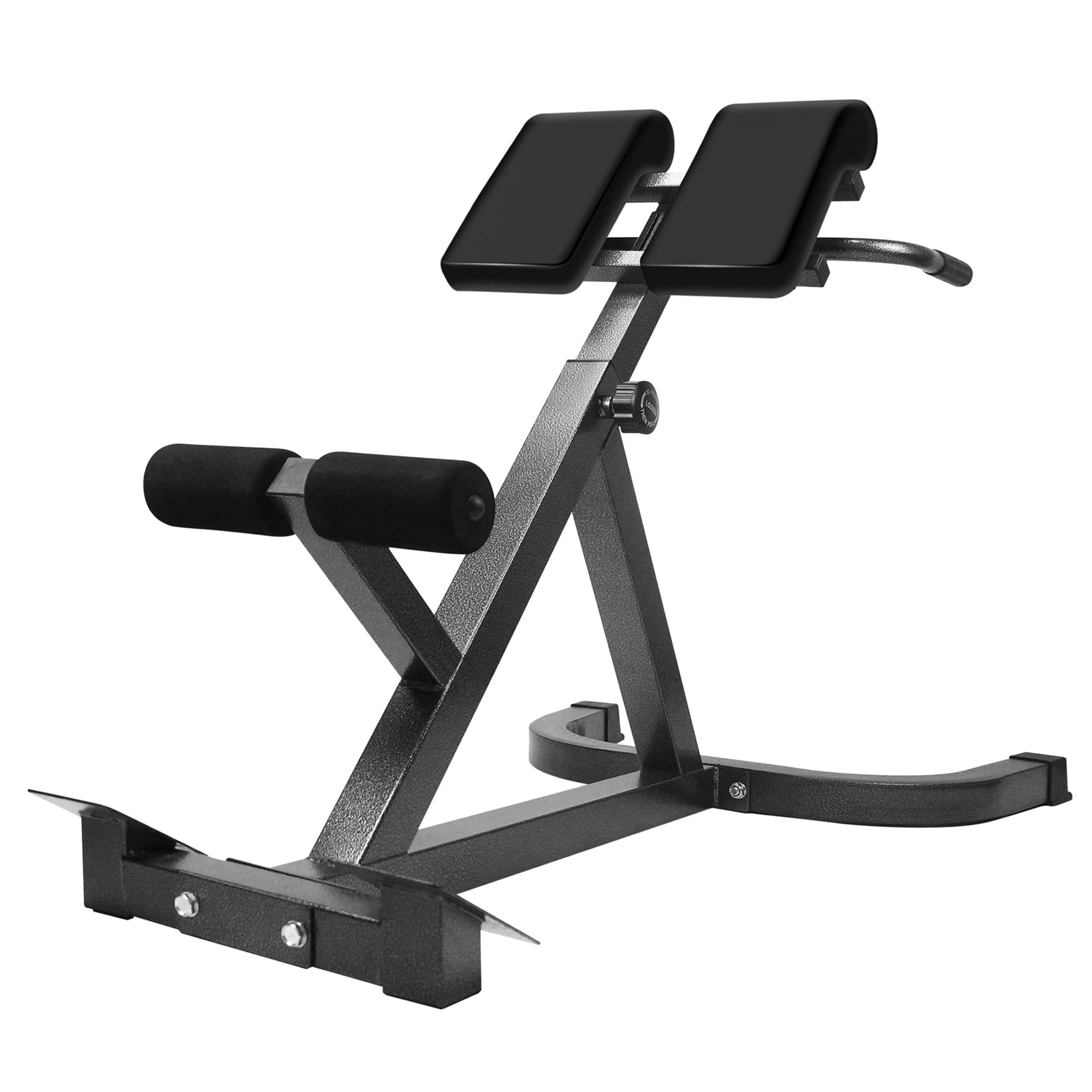
The Roman chair is a staple for posterior chain training, but this SUCXDZQ model shines for ab work because of its twin adjustment points—you can independently set the angle of the back pad and the height of the foot platform. This dual-axis setup lets you shift the focus from spinal erectors to the obliques and rectus abdominis by altering the pivot point.
Constructed from high-strength carbon steel with a 275-pound capacity, the frame is stable enough for side bends, hyperextensions, and hanging knee raises if you add gymnastic rings. The foam pads are 3 inches thick and covered in a textured PVC that doesn’t slip even during sweaty sets. Assembly takes about 30 minutes, and the compact footprint (46″ x 27″) fits in tight spaces.
Some units arrive with minor paint chips due to insufficient packing, and the nylon lock nuts require a firm hand with the included hex wrench. Once assembled, though, the bench feels rock-solid. If you want to strengthen the entire core girdle—front, side, and back—rather than just isolated crunches, this machine offers the widest movement variety for the money.
Why it’s great
- Dual angle/height adjustments for oblique targeting
- Thick, non-slip foam pads stay in place
- Compact footprint for home gym placement
Good to know
- Packaging can cause cosmetic damage in transit
- Nuts may require extra torque to seat fully
5. Fitvids Ab Crunch Total Body Workout

The Fitvids Ab Crunch is a lightweight, fully pre-assembled resistance band system that comes out of the box ready to use. The pivot mechanism uses a central bushing that allows smooth forward flexion without side-to-side wobble. The foam handles are thick enough to keep your shoulders relaxed, and the 21 exercise modes range from standard crunches to oblique twists to leg raises.
Tension is adjusted by hooking the bands into different anchor points on the base. This design is convenient but lacks the micro-adjustability of a hydraulic cylinder—you get discrete tension jumps rather than a smooth scale. At just 2 pounds, the unit is ultra-portable and can be packed in a suitcase, but it also means you’ll need to brace the base with your feet or a heavy object under load.
Several users report missing the tutorial DVD, but the mobile app and included exercise chart cover the same ground. If you travel frequently or need a low-impact starting point to rebuild core activation after an injury, this is the most accessible entry-level equipment on the list. It won’t build massive hypertrophy, but it will restore mind-muscle connection to your abdominals.
Why it’s great
- Fully pre-assembled, use immediately
- Very lightweight and packable for travel
- 21 exercise modes cover entire core
Good to know
- Resistance jumps may feel uneven
- Base needs foot weight or mat to stay planted
6. MERACH Waist Twister Board
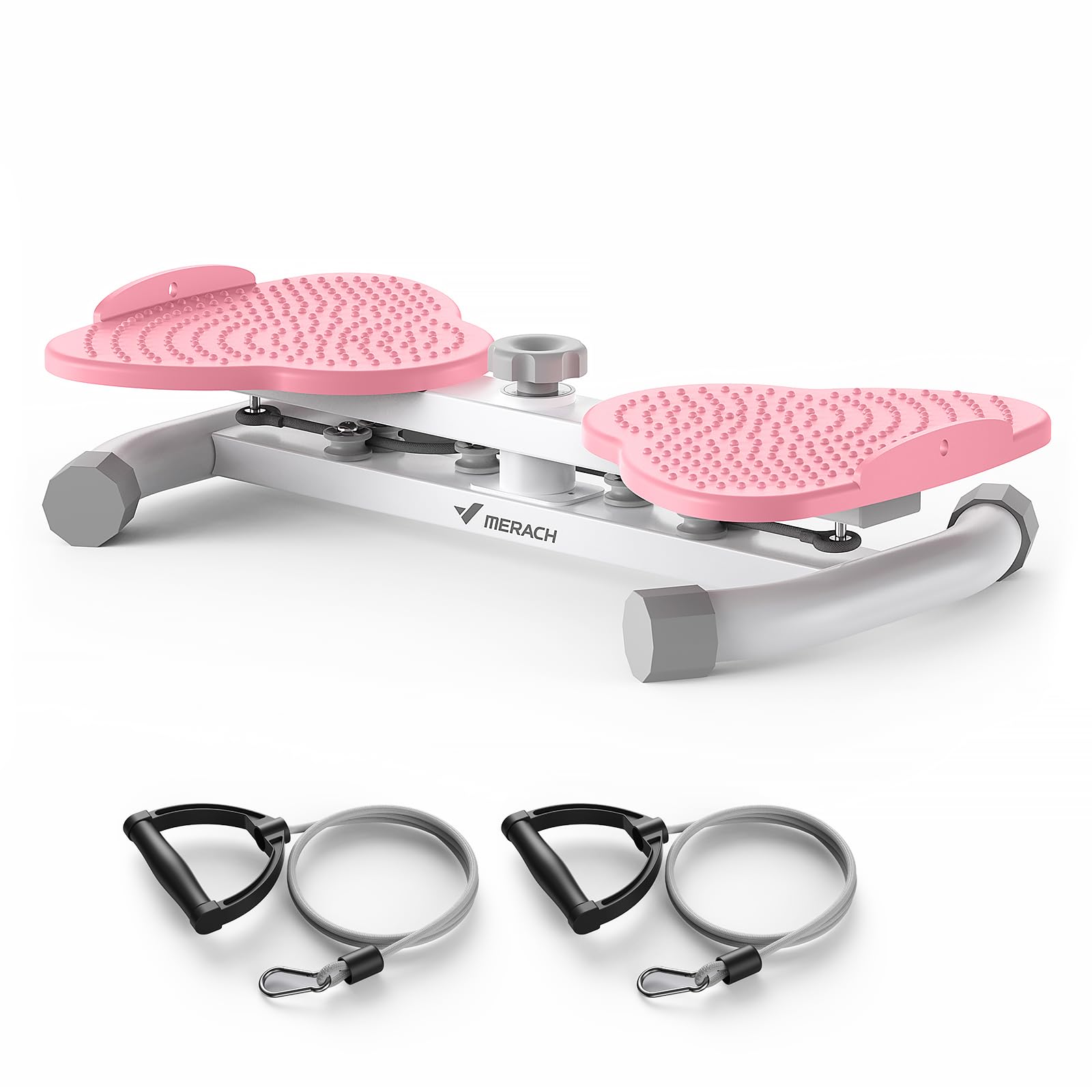
The MERACH Waist Twister uses a dual-pedal standing platform with a central twisted rope instead of a bearing-based disc—this means the rotation is silent and self-centering, which reduces the jarring stop-and-start typical of cheap twisters. The 300-pound capacity comes from the iron frame and the non-slip textured standing surface that also provides a mild foot massage during use.
Side pull-cords add upper-body engagement, allowing you to perform anti-rotation holds that hit the obliques harder than simple twisting. The two-pedal design offers more stability than single-disc models, letting you keep your feet shoulder-width apart for better balance. Four rubber foot caps grip the floor securely, so the board won’t slide during dynamic movements.
The attached resistance bands are non-replaceable and relatively light—users seeking high tension may find them underwhelming and will need to substitute hand weights. Also, the rope mechanism, while quiet, provides a gentle return rather than a snappy rebound. If you want a joint-friendly warm-up tool that doubles as a recovery mobility aid, this board is a solid daily driver.
Why it’s great
- Silent rope mechanism doesn’t disturb others
- Two-pedal design improves stability over single-disc models
- Non-slip surface with foot massage texture
Good to know
- Attached bands are non-replaceable and light
- Rebound tension is mild, not aggressive
7. Twister Arm Trainer (WAKISA)

WAKISA’s 3-in-1 twister is built around an adjustable hydraulic cylinder that offers 15 distinct resistance levels from 22 to 440 pounds. While the arm trainer role focuses on chest and arms, the bundled ab wheels transform this unit into a compact core roller. The golden ratio triangular frame keeps the assembly stable during kneeling roll-outs, and the steel construction ensures longevity even in a garage gym.
The hydraulic system provides micro-rebound control that prevents the sudden snap common with spring-based trainers. Adjustable arm length lets you dial in the lever distance for proper ulnar deviation during pressing motions, which also changes the torque on your core during roll-outs from different angles. The included knee pad is a thoughtful addition for floor-based ab work.
Some users feel the resistance at lower levels (1-8) is lighter than the labeled 440-pound max suggests, but the top settings (12-15) offer genuinely challenging compression. The ab wheels themselves are plastic and may wear faster than dedicated steel-core rollers. For someone who wants one device that handles both anti-rotation pressing and roll-out crunches, this is a space-saving bargain.
Why it’s great
- Wide 15-level hydraulic adjustment covers all strengths
- Converts to ab roller for kneeling core work
- 2-year manufacturer warranty included
Good to know
- Low resistance levels feel lighter than labeled
- Included ab wheel is plastic, not steel
FAQ
Can ab equipment alone give me visible abs without diet changes?
Why do some ab machines cause lower back pain?
How many resistance levels do I really need for progressive ab overload?
Final Thoughts: The Verdict
For most users, the gym equipment for abs winner is the Finer Form Adjustable Ab Bench because its semi-commercial build and full-length backboard support every major ab movement without compromise. If you want a space-saving solution that also builds upper-body stability, grab the GMWD Chest Press Machine. And for a no-assembly, ultra-portable core starter, nothing beats the Fitvids Ab Crunch Total Body for kickstarting muscle activation at home or on the road.