
A 40-inch gaming TV walks a tight line. It needs low input lag and a fast refresh rate for responsive play, but at this size, the budget is often tight enough that manufacturers cut corners on motion handling and panel quality. The wrong pick leaves you with ghosting in fast shooters or a screen that simply can’t keep up with a console’s VRR signal.
I’m Mohammad Maruf — the founder and writer behind Drink4Good. I’ve spent years analyzing display hardware, refresh-rate architectures, and HDMI 2.1 feature sets across hundreds of models to find the units that actually deliver for gaming without wasting space or cash.
To cut through the noise, I compared nine models at 40 to 43 inches across 1080p and 4K resolutions, focusing on the specs that matter most for gaming: native refresh rate, VRR support, input lag, and HDMI 2.1 bandwidth. This is the definitive guide to finding the best 40 inch gaming tv that actually matches your console or PC rig.
How To Choose The Best 40 Inch Gaming TV
A gaming TV at this size is often a secondary screen for a bedroom, dorm, or desk setup. The key is matching the display’s capabilities to your gaming hardware without overpaying for features your console or PC cannot use.
Native Refresh Rate vs. Effective Rate
Many 40-inch TVs advertise “120Hz” via motion interpolation or through a lower-resolution signal. For true next-gen gaming, you need a native 120Hz panel that accepts a 4K 120Hz signal over HDMI 2.1. Without it, VRR and low-lag 120fps gaming are impossible. Always check the HDMI spec: 2.0 tops out at 4K 60Hz, while 2.1 unlocks the full bandwidth.
Panel Technology
At this price tier, most 40-inch gaming TVs use LED backlighting, but premium models now offer OLED (like the LG C3) or QD-OLED (like the Samsung S90F). OLED delivers infinite contrast and sub-1ms pixel response — critical for competitive gaming. On a budget, a well-implemented VA LED panel with decent local dimming can still deliver good black levels and acceptable HDR.
Input Lag and VRR
Look for a TV that supports Variable Refresh Rate (VRR) to eliminate screen tearing and Auto Low Latency Mode (ALLM) to automatically switch to game mode. Input lag below 15ms at 60Hz and below 8ms at 120Hz is the sweet spot for comfortable play. Avoid models that lock VRR to a narrow range (e.g., 48-60Hz) which provides little benefit.
Quick Comparison
On smaller screens, swipe sideways to see the full table.
| Model | Category | Best For | Key Spec | Amazon |
|---|---|---|---|---|
| Samsung OLED S90F | Premium OLED | High-end console & PC gaming | 144Hz native refresh rate | Amazon |
| LG C3 OLED evo | Premium OLED | PS5 / Xbox Series X with Dolby Vision | 0.1ms response time | Amazon |
| Sony BRAVIA 3 II | Premium LED | PS5 exclusive features & Sony upscaling | 4K 120Hz HDMI 2.1 | Amazon |
| Sony BRAVIA 2 II | Mid-Range LED | PS5 gaming with reliable 4K upscaling | 4K X1 Processor | Amazon |
| LG UA77 4K | Mid-Range 4K | Budget 4K with game mode | FreeSync & VRR support | Amazon |
| Amazon Ember 2-Series | Budget Smart | Casual gaming & streaming | Wi-Fi 6 support | Amazon |
| FPD Palette-Series | Entry-Level Smart | 1080p gaming on a tight budget | Google TV built-in | Amazon |
| TuTu 40 Inch FHD | Non-Smart Basic | Ad-free, simple monitor replacement | No built-in OS | Amazon |
| Samsung DU9000 | Large-Screen Value | Massive screen for casual gaming | 120Hz Motion Xcelerator | Amazon |
In‑Depth Reviews
1. Samsung 42-Inch OLED S90F

The Samsung S90F is a QD-OLED panel that hits a native 144Hz refresh rate — a half-step beyond the standard 120Hz found on most gaming TVs. That extra headroom lets PC gamers with high-end GPUs push frame rates further without tearing, while consoles still benefit from the full 4K 120Hz VRR window. The NQ4 AI Gen3 processor handles upscaling with 128 neural networks, so even 1080p content looks remarkably sharp on this 42-inch screen.
Colors are incredibly vibrant thanks to the quantum dot layer, and the OLED blacks deliver infinite contrast that makes HDR gaming shine. Motion Xcelerator ensures fast-paced shooters stay blur-free, and the input lag sits around 5ms at 120Hz, making it one of the most responsive options at this size. The built-in Tizen OS is quick, though the solar-powered remote takes some getting used to.
The biggest compromise is the lack of Dolby Vision support — Samsung sticks with HDR10+. If your gaming library relies on Dolby Vision metadata, you may notice slightly less dynamic tone mapping. Also, the anti-reflective coating is delicate, so cleaning requires care. But for pure gaming performance at 42 inches, this is the most future-proof pick available.
Why it’s great
- Native 144Hz VRR for PC and console
- QD-OLED delivers best-in-class color volume
- Ultra-low input lag at high refresh rates
Good to know
- No Dolby Vision support
- Delicate screen coating requires careful cleaning
- Menu system can feel unintuitive at first
2. LG C3 42-Inch OLED evo

The LG C3 remains a favorite among console gamers for one clear reason: four full HDMI 2.1 ports, all capable of 4K 120Hz with VRR and ALLM. No other 42-inch TV at this price offers multi-device support without an external switch. The a9 AI Processor Gen6 handles tone mapping intelligently, and the 0.1ms response time is practically instantaneous — ideal for competitive titles like Call of Duty or fighting games where every frame matters.
OLED evo panel technology brings a noticeable brightness boost over older C-series models, though HDR peak brightness still trails QD-OLED competitors. Still, in a dim room the contrast is breathtaking, and the LG Game Dashboard gives you quick access to black stabilizer, crosshair overlays, and VRR status. The Magic Remote is responsive, though the pointer-based navigation can feel unsteady during fast menu navigation.
Burn-in risk exists with static HUDs, but LG’s pixel shifting and screen saver features mitigate this well for mixed-use gaming. The webOS 23 platform is snappy, and support for both NVIDIA G-Sync and AMD FreeSync Premium ensures compatibility across PC and console. If you run multiple HDMI 2.1 devices, this is the most convenient option in this size class.
Why it’s great
- Four HDMI 2.1 ports for multi-console setups
- 0.1ms response time for competitive gaming
- Excellent Dolby Vision HDR gaming support
Good to know
- Lower peak brightness than QD-OLED panels
- Remote pointer difficult to use in dark rooms
- Burn-in risk with long static HUD sessions
3. Sony BRAVIA 3 II 43-Inch
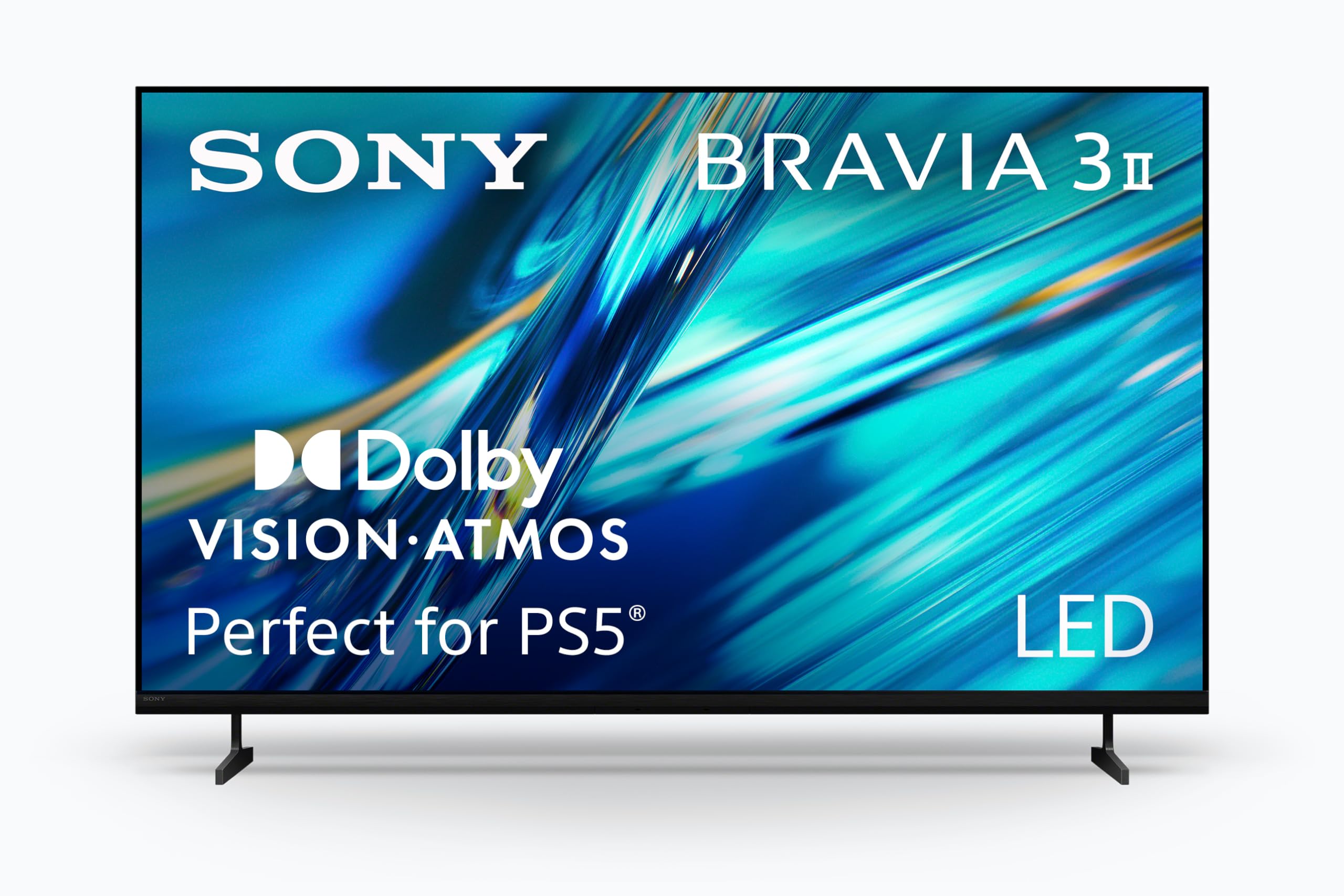
Sony’s BRAVIA 3 II is engineered specifically for PlayStation 5 owners. Exclusive features like Auto HDR Tone Mapping and Auto Genre Picture Mode communicate directly with the console to optimize picture settings per game — no manual tweaking required. The XR Processor with AI scene recognition analyzes each frame in real time, reducing noise and boosting clarity, which is especially helpful for older PS4 titles running in backward compatibility mode.
The 120Hz panel supports HDMI 2.1 VRR and ALLM, though it’s limited to two HDMI 2.1 ports. Motionflow XR keeps fast camera pans smooth, and the XR Triluminos Pro color engine reproduces over a billion shades. The X-Balanced Speaker system delivers surprisingly full sound for a TV this size, reducing the immediate need for a soundbar in most rooms.
Where this TV falls short is the lack of Dolby Vision at 120Hz — the panel supports Dolby Vision but only at 60Hz. Some games that target 120fps will default to HDR10. Setup can also be lengthy due to Google TV’s sign-in requirements. Still, if your primary gaming device is a PS5, the deep integration makes this the most seamless experience available at 43 inches.
Why it’s great
- Exclusive PS5 Auto HDR and Genre Picture modes
- XR Processor with real-time AI upscaling
- Excellent built-in speaker clarity
Good to know
- Dolby Vision capped at 60Hz
- Only two HDMI 2.1 inputs
- Setup requires multiple Google account prompts
4. Sony BRAVIA 2 II 43-Inch
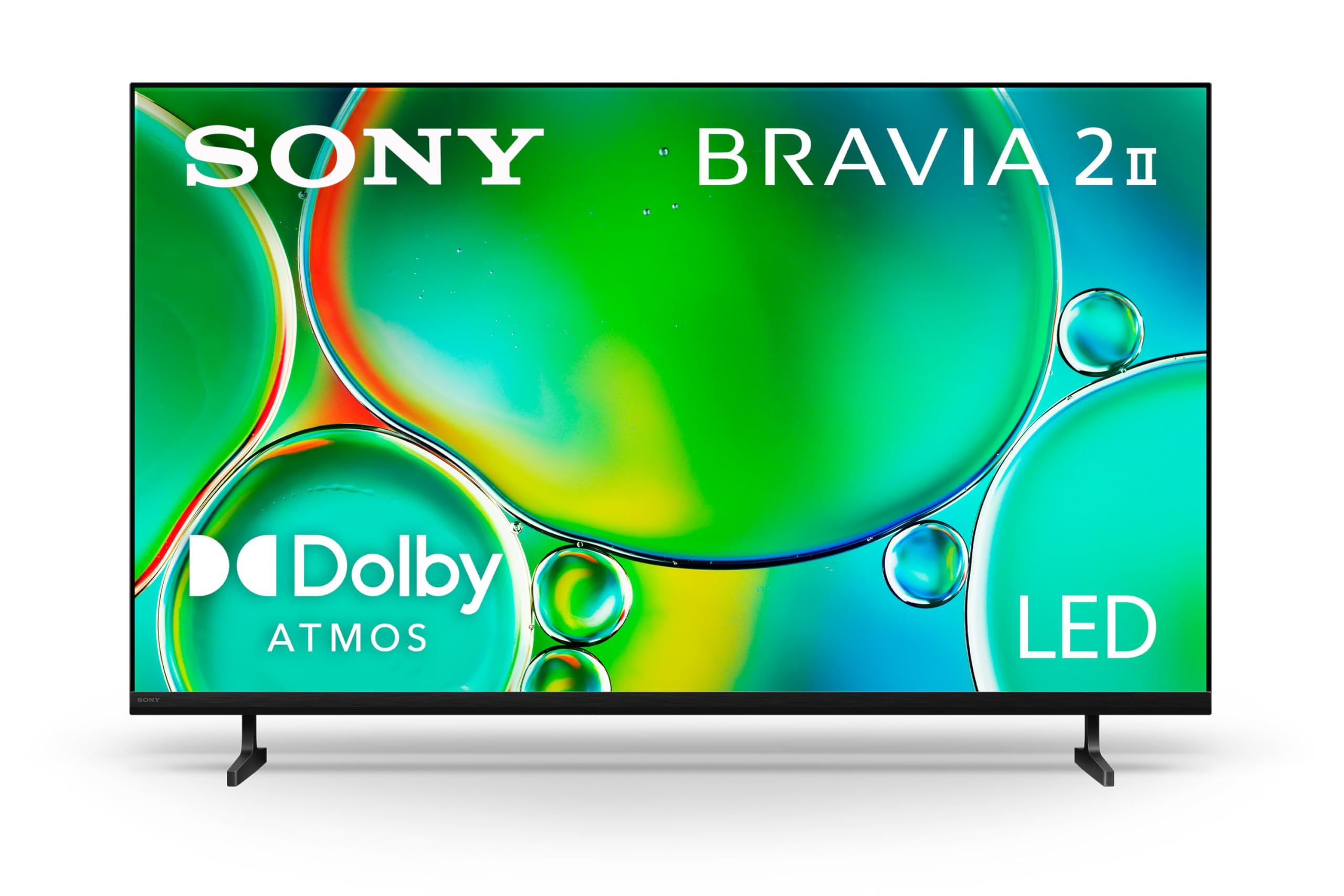
The BRAVIA 2 II is a more affordable entry point into Sony’s gaming ecosystem. It uses the 4K Processor X1 rather than the XR chip, so AI-driven upscaling is less sophisticated, but it still delivers sharp, colorful images from 1080p sources. PS5 owners still get Auto HDR Tone Mapping and Auto Genre Picture Mode, making it the cheapest way to access Sony’s console-first features.
Motionflow XR keeps motion blur in check, though the panel is limited to 60Hz native — there is no 120Hz support here. That makes this TV best suited for story-driven or slower-paced games where frame rates stay at 60fps. The 4K XR-Reality PRO upscaling does a decent job of sharpening lower-resolution games, though fine details can appear slightly soft compared to pricier XR models.
Google TV integration is smooth and responsive, with Apple AirPlay 2 and Google Cast built in for easy streaming. The build quality is solid, and the remote is one of the better standard remotes in this price range. If you don’t need 120Hz and prioritize Sony’s color science and PS5 integration, this is the smartest value play at 43 inches.
Why it’s great
- Includes PS5 Auto HDR and Genre Picture modes
- Clean, natural color reproduction
- Affordable entry to Sony 4K gaming
Good to know
- Limited to 60Hz panel — no 120Hz gaming
- Upscaling is less refined than XR models
- Some users report occasional Wi-Fi drops
5. LG UA77 43-Inch 4K
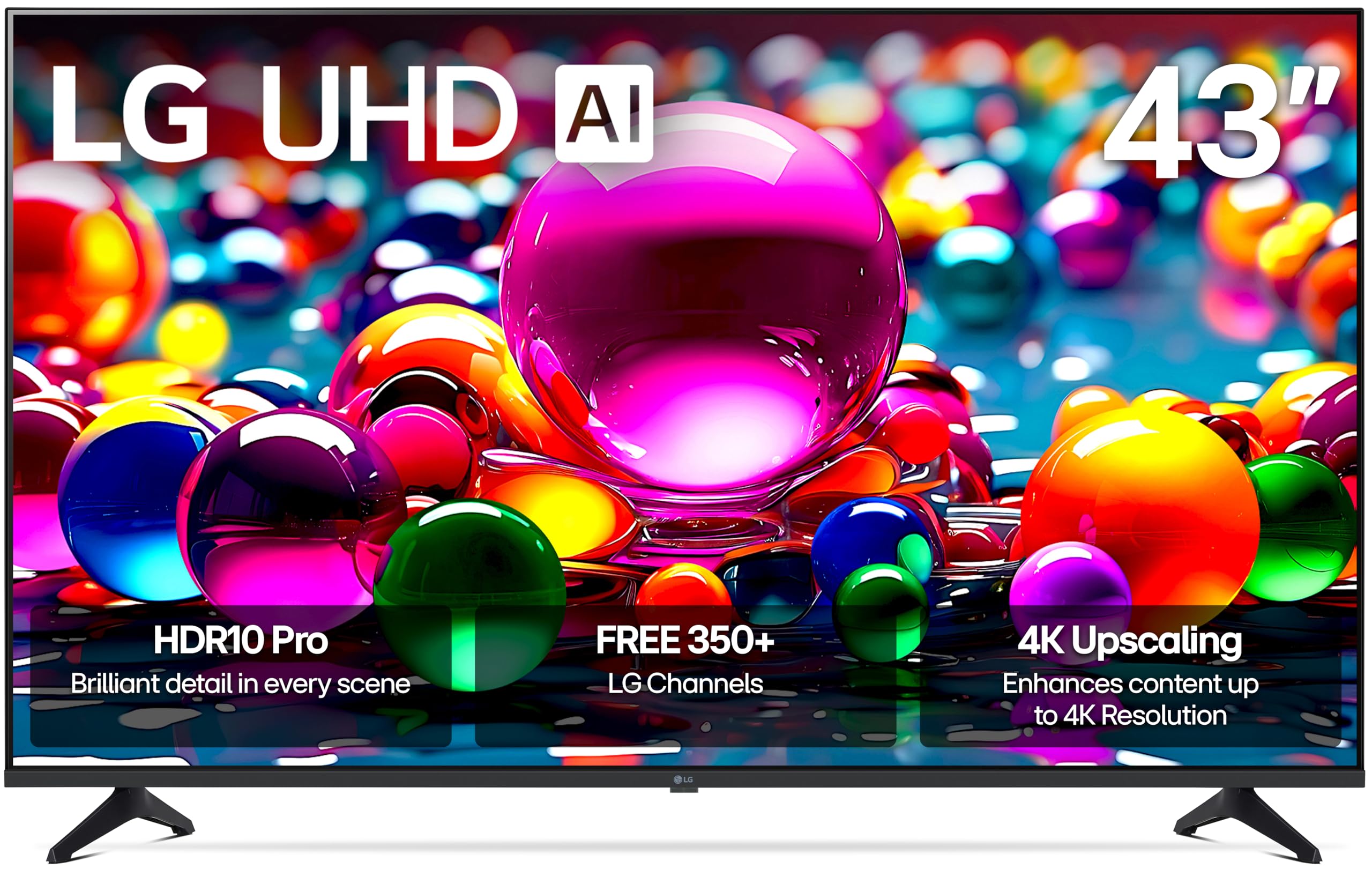
The LG UA77 brings 4K resolution and gaming-specific features to a very accessible price point. It supports AMD FreeSync and VRR, which helps reduce screen tearing in compatible games, and the LG Game Dashboard gives you quick access to black level and response time adjustments. The Alpha 7 AI Processor Gen8 handles 4K upscaling and dynamic tone mapping reasonably well for the class.
Where the UA77 cuts corners is the panel’s native 60Hz limit and the lack of HDMI 2.1 ports — you get standard HDMI 2.0 inputs, so 4K gaming is capped at 60Hz. The LED backlighting produces decent peak brightness for HDR content, though black levels are typical for an IPS-style panel, meaning dark scenes can look washed out in a dim room. Filmmaker Mode is a nice addition for movie watching.
webOS 23 runs smoothly, and the Magic Remote makes navigation intuitive, though the UI can feel slightly sluggish compared to higher-end LG models. The four HDMI inputs provide flexibility for multiple devices, and the built-in Alexa support is useful for voice control. For casual 4K gaming without the need for high frame rates, this is a solid, well-rounded option.
Why it’s great
- Affordable 4K with FreeSync VRR support
- Game Dashboard for quick settings access
- Four HDMI inputs for multi-device setups
Good to know
- 60Hz panel — no 120Hz or HDMI 2.1
- Black levels can appear washed out in dark scenes
- webOS can feel slightly sluggish
6. Amazon Ember 40-Inch 2-Series

The Amazon Ember 2-Series is a 1080p Fire TV that punches above its weight for casual gaming. The new quad-core processor and Wi-Fi 6 support make the interface feel snappier than previous budget Fire TVs, and apps load quickly. The Omnisense ambient feature wakes the display when you enter the room — a nice convenience for a secondary gaming space.
Gaming performance is limited by the 60Hz panel and the lack of VRR or HDMI 2.1, but for cloud gaming via Amazon Luna or casual titles like Stardew Valley, the experience is smooth. The picture quality is acceptable for 1080p, with decent color accuracy out of the box, though the speakers lack bass and may need an external soundbar for immersive play. The Alexa Voice Remote Enhanced with preset buttons speeds up app access.
Where the Ember struggles is in motion handling — fast-moving objects can appear slightly blurry due to the basic 60Hz panel. The Ambient Experience mode is a clever addition, but some users report the TV goes to sleep too quickly in this mode. For a dedicated gaming TV for competitive play, look elsewhere. But for a versatile, user-friendly secondary screen that handles streaming and light gaming well, this is a fantastic deal.
Why it’s great
- Fast interface with Wi-Fi 6 connectivity
- Ambient Experience mode with motion wake
- Alexa Voice Remote Enhanced included
Good to know
- 1080p only — no 4K or high refresh rates
- Poor onboard speakers for immersive gaming
- Motion handling can blur fast action
7. FPD Palette-Series 40-Inch

The FPD Palette-Series is the most affordable smart TV on this list, offering Google TV with Chromecast built-in and HDR10 support at a 1080p resolution. It’s a great fit for budget-conscious gamers who play on older consoles or stream via cloud services. The Google Voice Remote works well, and the interface is clean and responsive for the price.
Gaming performance is adequate for 60Hz 1080p play. Input lag is not professional-grade but acceptable for single-player titles. The 5000:1 contrast ratio (claimed) helps dark scenes look reasonably deep for an entry-level LED panel, though the 90-degree viewing angle means colors wash out quickly if you sit off-center. The dual HDMI 1.4 inputs limit bandwidth, so 1080p at 60Hz is the ceiling.
Customer feedback highlights the remote as a potential weak point — a few units arrived with non-functional remotes. The panel also lacks the brightness needed for impactful HDR, so HDR10 content can look dim. That said, if you need a basic 40-inch screen with smart features for occasional gaming and streaming, this TV delivers surprising value for very little investment.
Why it’s great
- Google TV with built-in Chromecast
- Very affordable entry point for 1080p gaming
- Voice remote included
Good to know
- Narrow viewing angle with color washout
- Some remote reliability issues reported
- Limited to HDMI 1.4 bandwidth
8. TuTu 40-Inch FHD
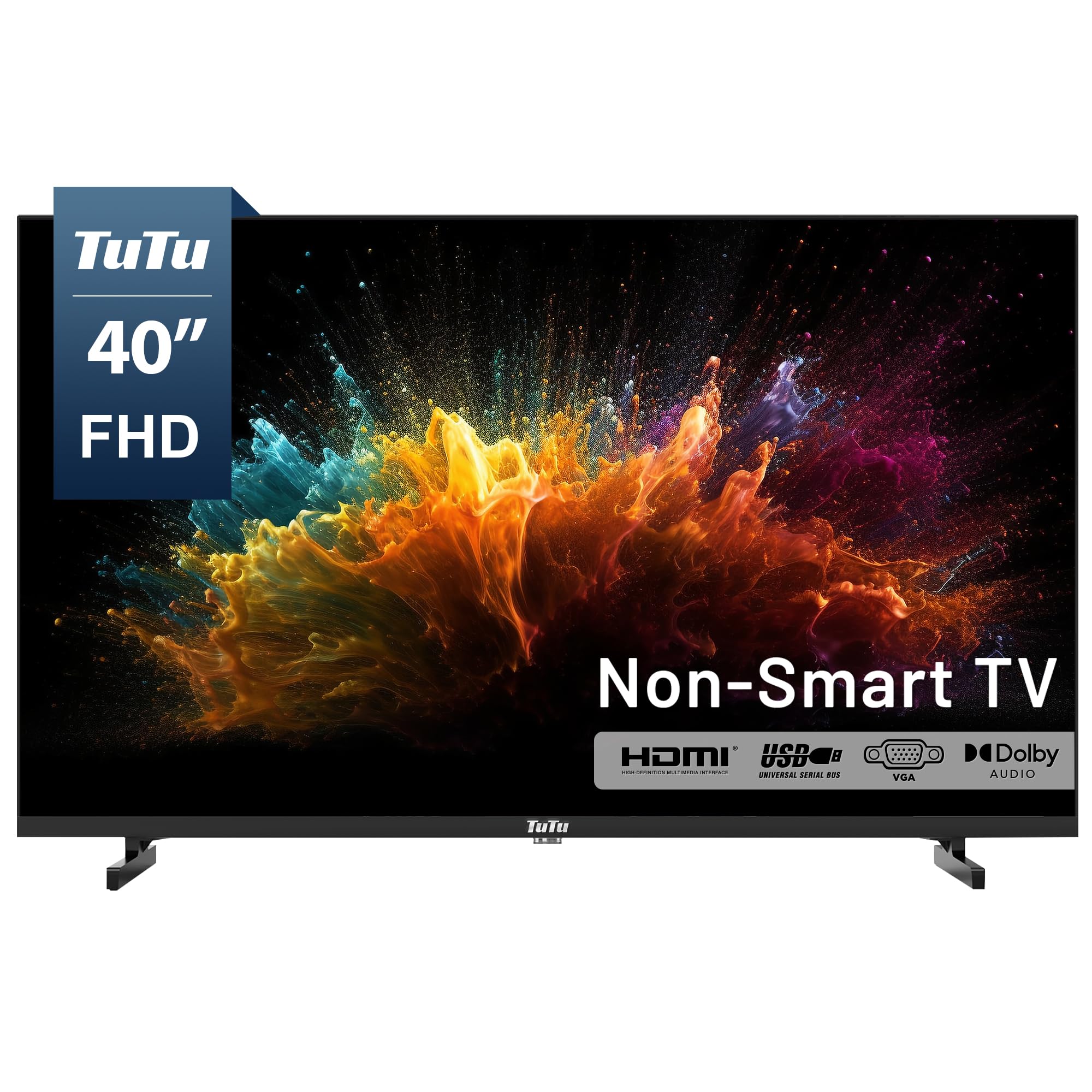
The TuTu 40-inch FHD takes an unusual approach for a modern TV — it has no built-in smart OS at all. This makes it an ideal option for gamers who already own an Apple TV, Roku, or Fire Stick and want a clean, ad-free display. Plug in your streaming device or console and the TV boots to the correct input in about five seconds, with no bloatware or slow menus.
The 1080p panel produces a crisp image for its class, and Dolby Audio support provides clear dialogue and acceptable sound for a bedroom or office setup. The 5ms response time (claimed) keeps motion blur to a minimum, and the 160-degree viewing angle is wide enough for couch co-op. The included ATSC tuner lets you grab free over-the-air HD channels, which is a bonus for cord-cutters.
The downside is the lack of any smart features — you must have an external device for streaming. The remote is basic and lacks a dedicated input button, and the built-in speakers are shallow, lacking bass. The thin bezel design looks modern, but the overall build feels light. For a dedicated gaming monitor that also works as a TV, this is a surprisingly capable option if you already own streaming hardware.
Why it’s great
- No smart OS means no ads or bloatware
- Fast 5-second boot to HDMI input
- Wide 160-degree viewing angle
Good to know
- Requires external streaming device for apps
- Remote lacks dedicated input button
- Shallow built-in speakers
9. Samsung 98-Inch DU9000

The Samsung DU9000 is a massive 98-inch Crystal UHD TV that brings 4K resolution and Motion Xcelerator 120Hz to the supersize category. The Crystal Processor 4K handles upscaling of lower-resolution content, and PurColor technology enhances the color spectrum for more vibrant gaming visuals. The Supersize Picture Enhancer applies AI-driven noise reduction specifically tuned for large screens, keeping the image sharp despite the sheer scale.
Gaming features include a dedicated Game Bar that lets you adjust aspect ratio, enable AI Auto Game Mode, and use Mini Map Auto Detection — useful for competitive titles. Object Tracking Sound Lite tries to simulate directional audio, but the built-in speakers lack the power needed for a room this size. A soundbar is almost mandatory for an immersive experience with this TV.
This is not a 40-inch TV — it’s included here because the DU9000 represents the opposite end of the gaming screen spectrum while still sharing the 4K 120Hz gaming DNA. Input lag is respectable for a non-OLED panel, and the HDR performance is adequate for the price. The real challenge is the shipping risk: several customers report severe damage on delivery. For those with the space and budget, it offers an unmatched cinematic gaming experience.
Why it’s great
- Massive 98-inch screen for immersive gaming
- Motion Xcelerator 120Hz for smooth motion
- Game Bar with Mini Map Auto Detection
Good to know
- Not 40 inches — intended for supersize setups
- Significant risk of shipping damage
- Built-in sound is inadequate for the screen size
FAQ
Can a 40-inch 60Hz TV handle PS5 or Xbox Series X gaming?
Do I need HDMI 2.1 for a 40-inch gaming TV?
Is OLED burn-in a real concern for gaming on a 40-inch TV?
What is the ideal viewing distance for a 40-inch gaming TV?
Final Thoughts: The Verdict
For most users, the best 40 inch gaming tv winner is the Samsung 42-Inch OLED S90F because it combines a native 144Hz refresh rate with QD-OLED color volume and low input lag, making it the most versatile pick for both console and PC gaming. If you want Dolby Vision gaming and four HDMI 2.1 ports for a multi-console setup, grab the LG C3 42-Inch OLED evo. And for an affordable 4K option for casual gaming, nothing beats the LG UA77 43-Inch 4K.