
The leap from a standard 1440p panel to a true 4K gaming monitor isn’t just about more pixels—it rewrites how you perceive motion, color, and depth in every scene. Whether you’re tracking a tracer round in a dimly lit corridor or marveling at the texture of a dragon’s scale, the panel technology you choose dictates the entire experience, with OLED’s infinite contrast and sub-millisecond response times now challenging the best IPS and VA options.
I’m Mohammad Maruf — the founder and writer behind Drink4Good. I’ve spent years analyzing display specifications, panel manufacturing trends, and the real-world performance trade-offs that separate a good monitor from a great one in this rapidly evolving category.
After evaluating eleven models across different price tiers and panel types, I’ve determined that the best 4k gaming monitor for most players balances a high refresh rate with accurate HDR and a panel technology that minimizes ghosting without sacrificing color volume.
How To Choose The Best 4K Gaming Monitor
Selecting a 4K gaming monitor means navigating three interconnected variables: panel chemistry, refresh rate, and HDR capability. The right choice depends on your hardware, your preferred game genres, and your tolerance for trade-offs like burn-in risk on OLED panels or lower contrast on IPS screens.
Panel Technology: OLED vs IPS vs VA
OLED panels deliver per-pixel lighting, producing absolute blacks and a contrast ratio that IPS screens cannot match. This makes games with dark environments—horror titles, space sims, or nighttime driving—look dramatically more immersive. However, OLED panels can suffer from burn-in over years of static UI elements, and their peak brightness in sustained bright scenes is lower than the best IPS panels. Fast IPS technology, like the 0.3ms panel used in the ASUS ROG Strix XG32UCG, offers excellent motion handling without burn-in concerns and typically achieves higher full-screen brightness, making it a safer choice for mixed-use desks.
Refresh Rate and Response Time
A 240Hz refresh rate with a 0.03ms GtG response time, as found on premium OLED models, provides near-instantaneous pixel transitions that eliminate motion blur completely in competitive shooters. The Dual Mode feature seen on the LG 32GX870A-B allows you to switch from 4K 240Hz to FHD 480Hz for games where raw speed matters more than resolution. For most players, 144Hz to 165Hz remains a strong sweet spot, as driving 4K at 240 frames per second requires a top-tier GPU.
HDR Performance and Color Volume
HDR certification numbers matter less than the panel’s ability to maintain brightness across a full-screen white window. VESA DisplayHDR True Black 400, common on OLED monitors, guarantees deep blacks but caps peak brightness. In contrast, a VA panel like the Samsung Odyssey G7 G75F with DisplayHDR 600 can sustain higher brightness on large bright areas, which helps visibility in well-lit rooms. Color gamut coverage above 95% DCI-P3 ensures that HDR content displays the expanded color palette developers intend, with QD-OLED panels often exceeding 99% DCI-P3 coverage for near-cinematic accuracy.
Quick Comparison
On smaller screens, swipe sideways to see the full table.
| Model | Category | Best For | Key Spec | Amazon |
|---|---|---|---|---|
| AOC Q27GAZD | QD-OLED | Color accuracy and contrast on a budget | 240Hz, 0.03ms, QHD 1440p | Amazon |
| LG 27G810A-B | Fast IPS | Dual mode 4K 180Hz / FHD 360Hz | 180Hz, 1ms, 4K IPS | Amazon |
| CRUA 32″ Curved | VA | Immersive curved 4K at a low cost | 240Hz, 4ms, 1500R VA | Amazon |
| KTC H32P22P | Fast IPS | Large 32″ 4K with height adjustment | 165Hz, 1ms, 32″ 4K IPS | Amazon |
| ASUS ROG Strix XG32UCG | Fast IPS | Competitive speed with ELMB Sync | 160Hz, 0.3ms, 32″ 4K Fast IPS | Amazon |
| Samsung Odyssey G7 G75F | VA | Ultrawide 21:9 immersion with 5K2K | 180Hz, 1ms, 40″ 5K2K VA | Amazon |
| KOORUI S3241XO | OLED | Entry-level OLED with full ergonomics | 240Hz, 0.03ms, 32″ 4K OLED | Amazon |
| MSI MPG 321URX | QD-OLED | Reference image quality with KVM | 240Hz, 0.03ms, 32″ QD-OLED | Amazon |
| Samsung Odyssey G8 G81SF | QD-OLED | Glare-free glossy with burn-in prevention | 240Hz, 0.03ms, 32″ QD-OLED | Amazon |
| LG 32GX870A-B | OLED | Brightest OLED with 480Hz dual mode | 240Hz, 0.03ms, 32″ OLED | Amazon |
| ASUS ROG Swift PG32UCDM | QD-OLED | Premium QD-OLED with burn-in warranty | 240Hz, 0.03ms, 32″ QD-OLED | Amazon |
In‑Depth Reviews
1. AOC 27″ QD OLED Gaming Monitor (Q27GAZD)
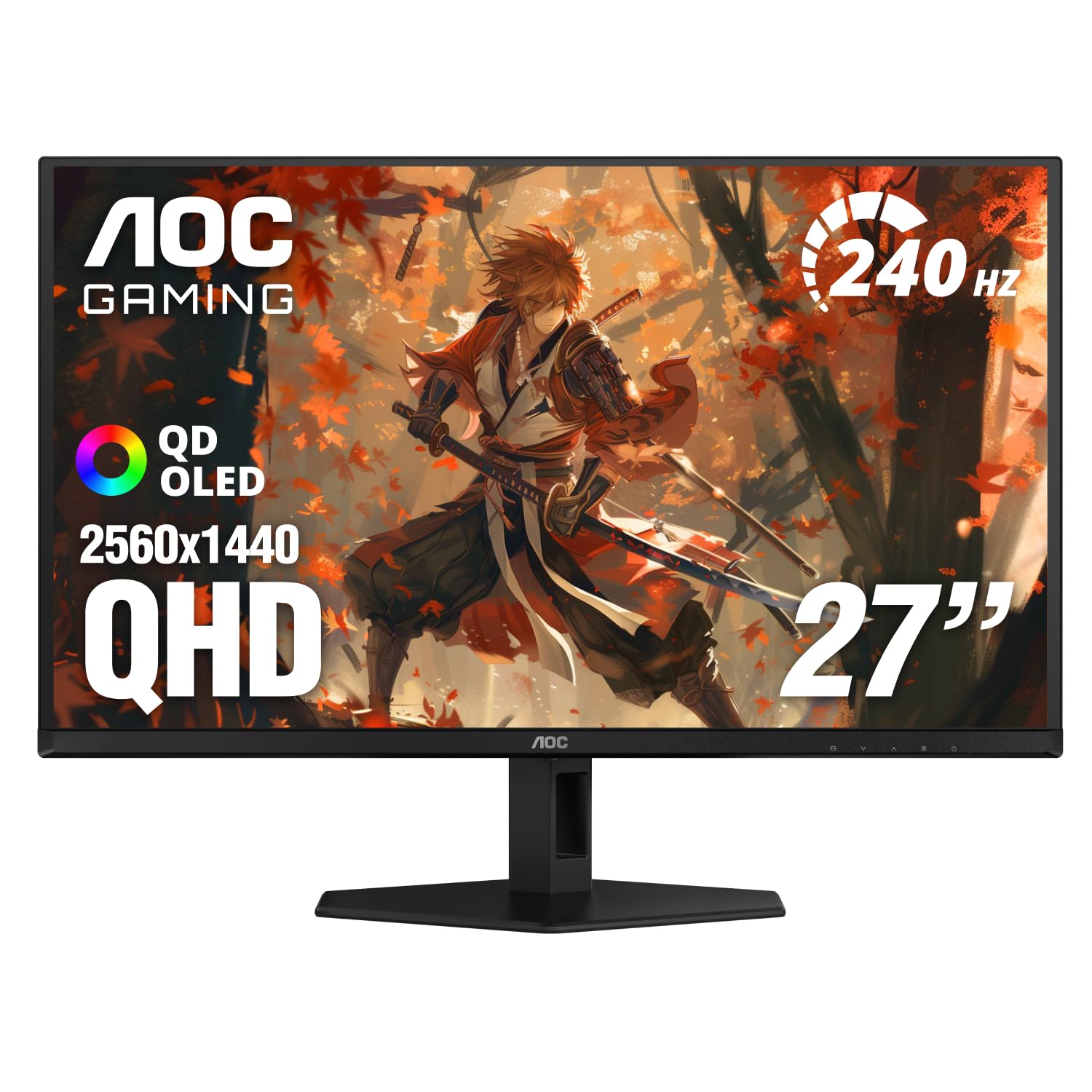
The AOC Q27GAZD brings QD-OLED technology to a price point that undercuts most competitors, delivering a 147.6% sRGB and 110.2% DCI-P3 color gamut that rivals monitors costing three times as much. Its 240Hz refresh rate and 0.03ms GtG response time produce the instant pixel transitions typical of OLED, with HDR400 True Black certification ensuring deep blacks without visible blooming in dark scenes. The 27-inch QHD resolution (2560×1440) is a deliberate choice for gamers who prioritize high frame rates over raw pixel count, as it puts less strain on the GPU than native 4K.
Color accuracy out of the box is exceptional for the price tier, with several reviewers noting that after switching to the DCI-P3 color mode, the monitor’s image quality matched or exceeded a premium ASUS unit. The QD-OLED panel also avoids the text fringing issues that plagued early OLED monitors, making it viable for mixed productivity use. However, the stand is minimal and lacks height adjustment, so budgeting for a VESA monitor arm is advisable. The glossy screen coating creates reflections in bright rooms with dark content, which is a trade-off shared by most OLED panels.
Connectivity includes DisplayPort and HDMI, though gamers aiming for the full 240Hz should note that the HDMI port is limited to 165Hz. The lack of HDMI 2.1 also means console users with a PS5 or Xbox Series X won’t get 4K 120Hz. The 0.03ms response time eliminates ghosting entirely, and Adaptive-Sync compatibility with G-Sync eliminates screen tearing without adding input lag. For PC gamers building a high-refresh-rate QHD system, this monitor offers an OLED experience at a price that challenges mid-range IPS alternatives.
Why it’s great
- QD-OLED color volume and contrast at a very competitive price
- 240Hz refresh rate with 0.03ms GtG for buttery-smooth motion
- Excellent out-of-box color accuracy in DCI-P3 mode
Good to know
- Basic stand lacks height adjustment; plan for a monitor arm
- Glossy screen shows reflections in bright rooms with dark content
- HDMI limited to 165Hz; DisplayPort needed for full 240Hz
2. LG 27G810A-B Ultragear 27″ 4K Gaming Monitor
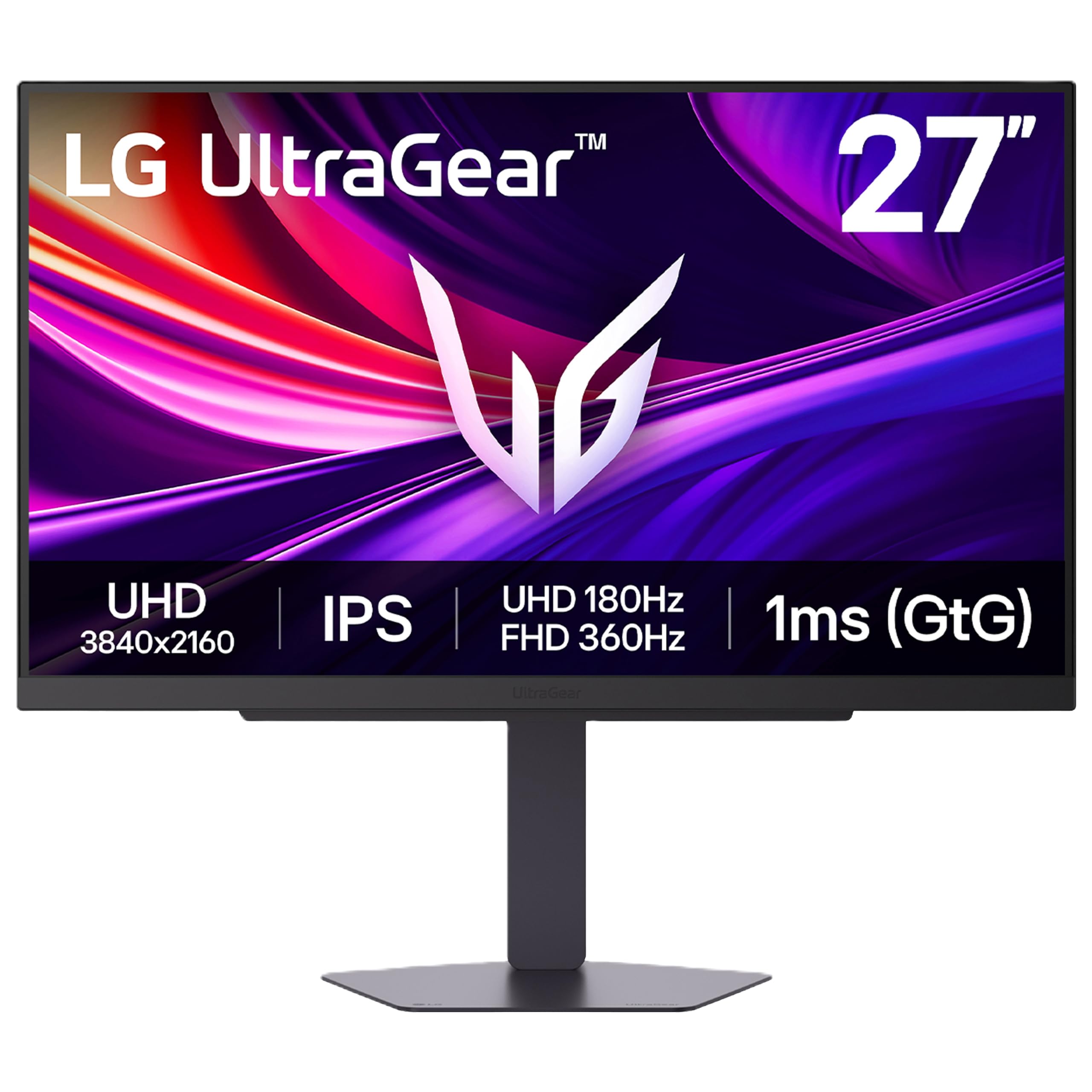
The LG 27G810A-B occupies a unique position in the 4K gaming monitor landscape by offering a Dual Mode feature that lets you run the same panel at 4K UHD 180Hz or switch to Full HD 360Hz for competitive titles. This 27-inch Fast IPS panel delivers a 1ms GtG response time with 95% DCI-P3 color coverage and VESA DisplayHDR 400 certification, hitting a balance that serves both story-driven RPGs and fast-paced shooters without requiring a separate monitor. The IPS technology ensures consistent color at wide viewing angles, and the 180Hz native 4K refresh rate provides a meaningful upgrade over the standard 144Hz
The stand offers full ergonomic adjustment—height, tilt, swivel, and pivot—making it easy to dial in perfect positioning without an aftermarket arm. Connectivity includes HDMI 2.1 and DisplayPort, allowing full-bandwidth 4K 120Hz on PS5 and Xbox Series X. The inclusion of G-Sync compatibility and AMD FreeSync Premium Pro ensures tear-free gameplay across both NVIDIA and AMD GPUs. The 4-pole headphone jack with DTS Headphone:X provides spatial audio without needing a separate DAC, a thoughtful addition for competitive gamers who rely on directional audio cues.
Black Stabilizer and Dynamic Action Sync are effective software features that improve visibility in dark corners and reduce input lag respectively. The fan noise reported by some users is noticeable only in a completely silent room, and the stand base is stable even during intense mouse movements. For gamers who want a single monitor capable of handling both 4K immersion and high-refresh-rate competitive play, this LG model delivers without the burn-in concerns of OLED, making it the most versatile recommendation in this guide.
Why it’s great
- Dual Mode hotkey switches between 4K 180Hz and FHD 360Hz instantly
- Full ergonomic stand with height, tilt, swivel, and pivot adjustment
- HDMI 2.1 supports full 4K 120Hz on current-gen consoles
Good to know
- Fan noise is audible in a completely silent room
- IPS contrast ratio of 1000:1 cannot match OLED black levels
- Stand base is large and occupies significant desk space
3. CRUA 32″ Curved 4K Gaming Monitor
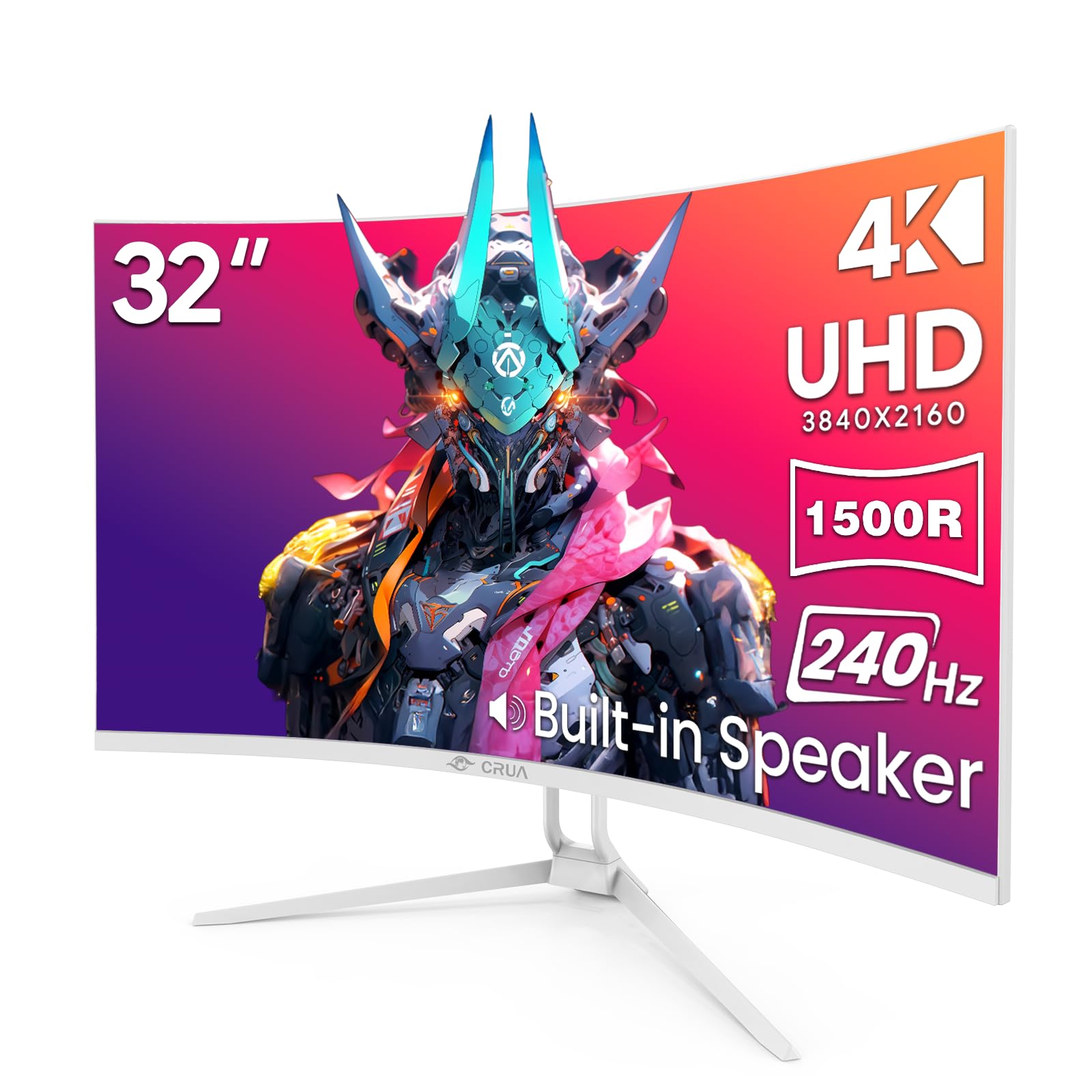
The CRUA 32″ Curved gaming monitor brings together a 3840×2160 4K resolution with a 1500R curvature and a 240Hz refresh rate on a VA panel, targeting gamers who want an immersive curved experience without stretching their budget. The VA panel’s 3000:1 static contrast ratio delivers noticeably deeper blacks than IPS alternatives, making dark scenes in horror games and space sims more atmospheric. The 120% sRGB color gamut and 1.07 billion colors (8-bit + FRC) provide vibrant, punchy visuals that stand out in well-lit rooms, though the 300 cd/m² brightness is modest compared to premium HDR panels.
AMD FreeSync support reduces screen tearing during fast-paced gameplay, and the HDMI 2.1 and DisplayPort 1.4 connectivity allows 4K 240Hz operation from a compatible PC. The built-in speakers are functional for casual use, though audiophiles will want external speakers for serious gaming sessions. The white color scheme and RGB backlighting give it a distinctive aesthetic that stands apart from the black sea of most gaming monitors, and the PIP/PBP mode allows multi-source productivity setups.
The 1500R curve wraps around the user’s peripheral vision at a typical 2-3 foot viewing distance, reducing eye strain during long sessions by minimizing the need for head movement. The monitor supports VESA 75x75mm wall mounting, and the tilt adjustment (-5° to 15°) helps dial in comfortable viewing angles. The VA panel’s slower pixel response of approximately 4ms means some motion blur may be visible in fast-paced shooters compared to IPS or OLED alternatives, but the 240Hz refresh rate compensates by reducing the time between frame transitions.
Why it’s great
- 1500R curvature creates an immersive field of view for gaming and movies
- VA panel delivers 3000:1 contrast ratio for deep black levels
- White aesthetic and RGB lighting stand out from standard black designs
Good to know
- VA pixel response slower than IPS/OLED, visible motion blur in fast games
- Built-in speakers are weak, external audio recommended
- Stand offers tilt only, no height or swivel adjustment
4. KTC 32 Inch 4K Gaming Monitor (H32P22P)
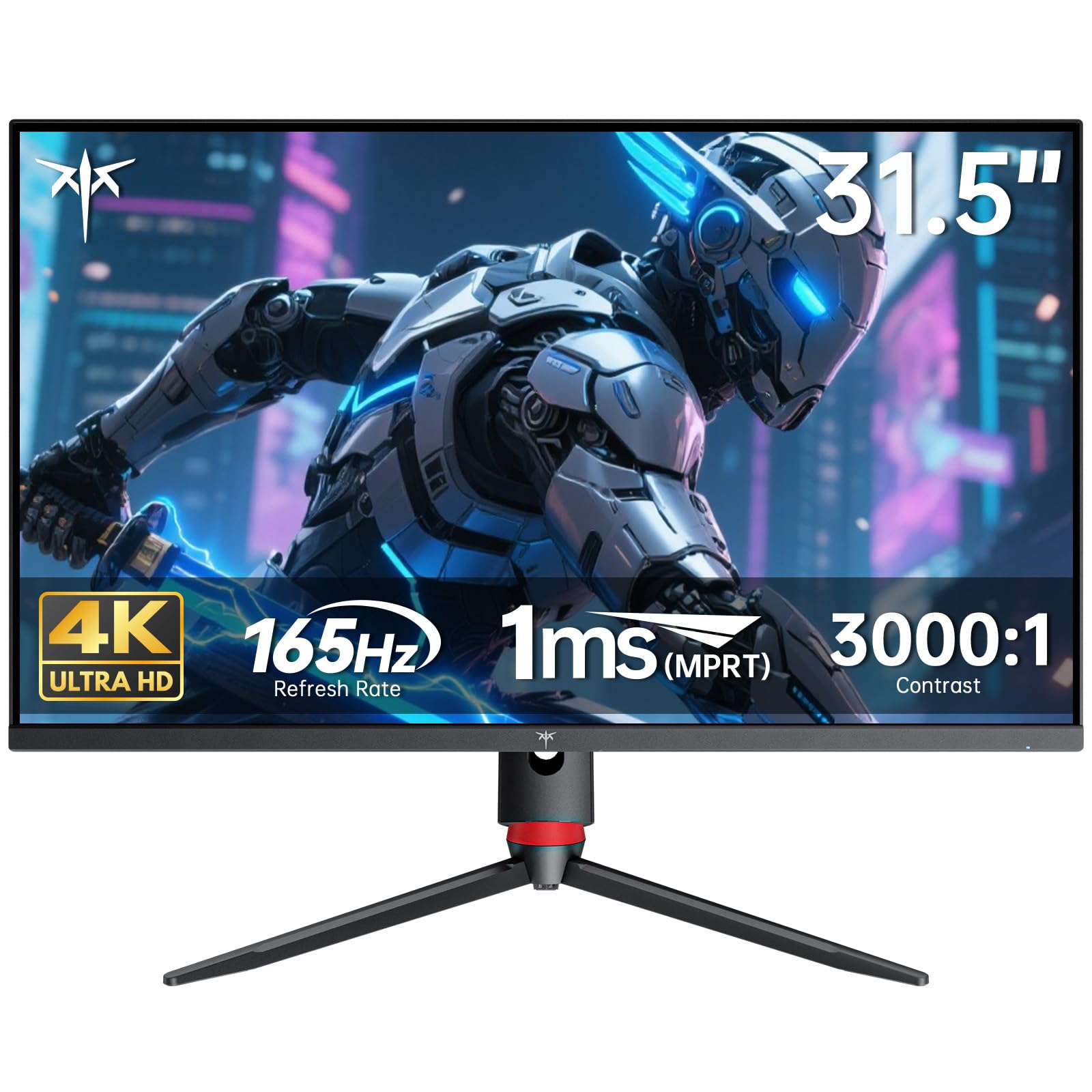
The KTC H32P22P delivers a 32-inch 4K Fast IPS panel with a 165Hz refresh rate and 1ms MPRT response time, positioning it as a strong contender for gamers who want a large screen without paying premium OLED prices. The 121% sRGB color gamut and 1.07 billion color support produce accurate, vibrant visuals out of the box, and the 3000:1 contrast ratio is unusually high for an IPS panel, suggesting the use of advanced backlight tech rather than standard IPS gating. Adaptive Sync technology ensures tear-free gameplay across both AMD FreeSync and G-Sync compatible setups.
The monitor includes HDMI 2.1 and DisplayPort 1.4 ports, supporting full 4K 120Hz on current-gen consoles and 4K 165Hz on PC. The stand provides height and tilt adjustment, and the VESA 100x100mm mount compatibility allows for easy arm installation. The built-in speakers are serviceable for basic audio, though they lack the volume and clarity needed for immersive gaming without a separate headset or speakers. The 165Hz refresh rate is well-matched to the performance ceiling of many mid-range GPUs at 4K resolution.
Color accuracy out of the box is commendable, with minimal backlight bleed reported across the panel, and the IPS viewing angles ensure consistent color reproduction from side positions. The monitor’s OSD menu takes some time to navigate, but once configured, the preset modes deliver a satisfying gaming experience across FPS, RPG, and racing genres. The 12-hour customer support response and three-year warranty provide peace of mind for a purchase at this price point. For gamers upgrading from a 27-inch 1080p or 1440p screen, the jump to 32-inch 4K with 165Hz is transformative.
Why it’s great
- 32-inch 4K Fast IPS panel with good color accuracy and contrast
- 165Hz refresh rate and 1ms MPRT for smooth, responsive gameplay
- Full ergonomic stand with height and tilt adjustment
Good to know
- Some reports of max refresh rate being lower than advertised on certain units
- OSD menu is unintuitive with a learning curve
- Built-in speakers are weak and distort at higher volumes
5. ASUS ROG Strix 32” 4K Gaming Monitor (XG32UCG)
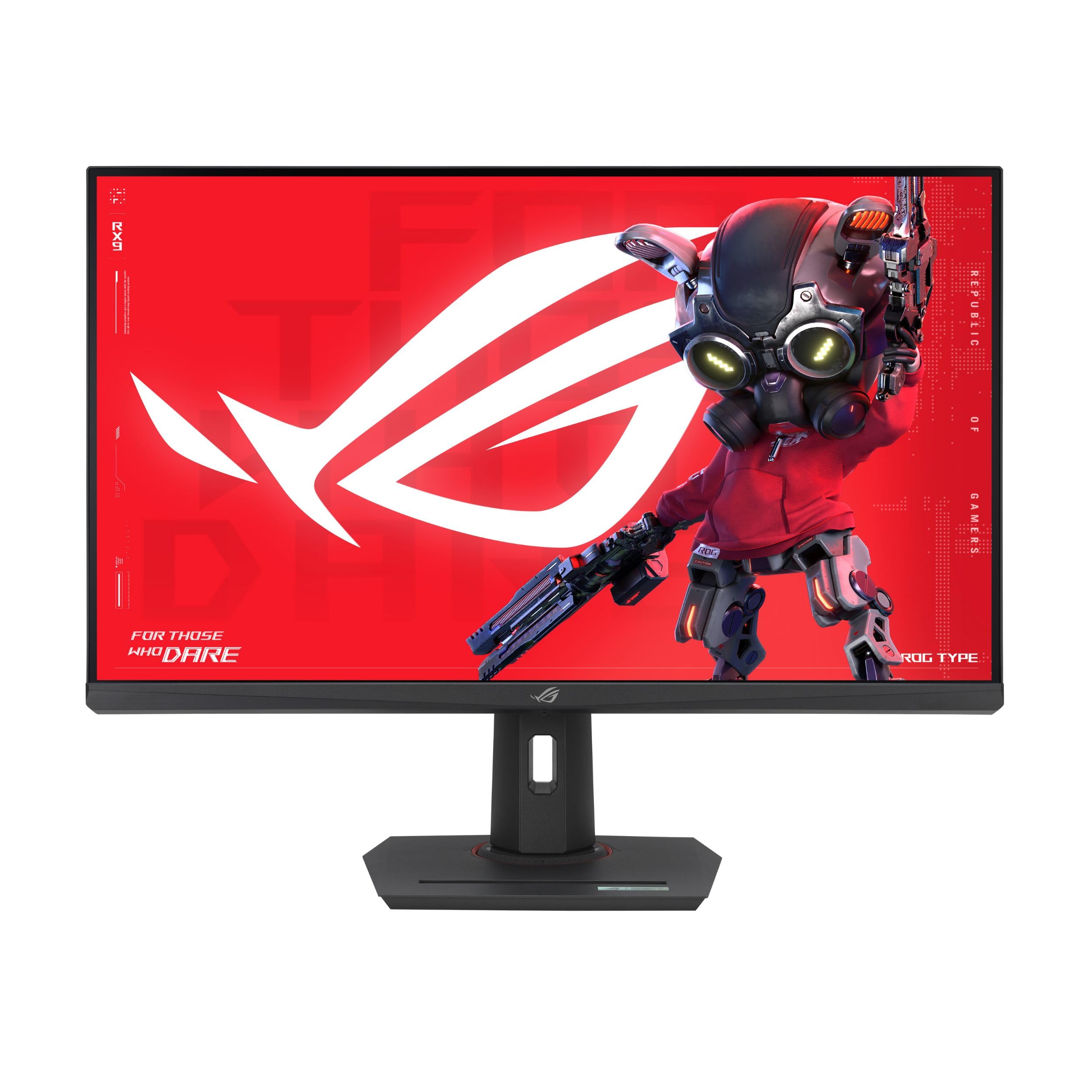
The ASUS ROG Strix XG32UCG is engineered around a Fast IPS panel that achieves a 0.3ms response time, making it one of the fastest non-OLED monitors available. Its Dual Mode allows switching between 4K at 160Hz and Full HD at 320Hz via a hotkey, giving competitive players the frame rate advantage in fast-twitch scenarios while retaining detail in story-driven games. The ASUS Extreme Low Motion Blur Sync (ELMB SYNC) technology eliminates ghosting and tearing simultaneously, a rare combination that provides crystal-clear motion even during rapid camera sweeps.
Color performance reaches 95% DCI-P3 and 130% sRGB coverage, with ASUS advanced gray-scale tracking technology ensuring smooth color gradation without banding. The 32-inch screen provides a comfortable viewing area at a standard desk depth, and the tripod socket is a unique addition for streamers who mount a camera directly above the display. Connectivity includes DisplayPort, HDMI, and a USB-C port with DP Alt mode, allowing a clean single-cable connection to a laptop. The built-in ROG Gaming A.I. technology adjusts settings like crosshairs and shadow control based on what appears on screen.
The ergonomic stand provides height, tilt, and swivel adjustments, and the VESA mount compatibility allows for arm installation. The three-year warranty covers the panel, and the included Adobe Creative Cloud subscription adds value for content creators. The 0.3ms Fast IPS panel avoids the OLED trade-offs of burn-in and limited brightness, making it a durable choice for users who leave static UI elements on screen for hours. For gamers who want near-OLED motion clarity without the maintenance concerns, this ASUS monitor delivers a compelling package.
Why it’s great
- 0.3ms Fast IPS response time with no burn-in risk
- ELMB Sync eliminates ghosting and tearing simultaneously
- Dual Mode hotkey toggles 4K 160Hz / FHD 320Hz on the fly
Good to know
- IPS contrast ratio cannot match OLED deep blacks
- USB-C Alt mode requires good cable; some cables fail at full bandwidth
- Stand base is wide and takes up desk space
6. Samsung 40” Odyssey G7 G75F WUHD Gaming Monitor
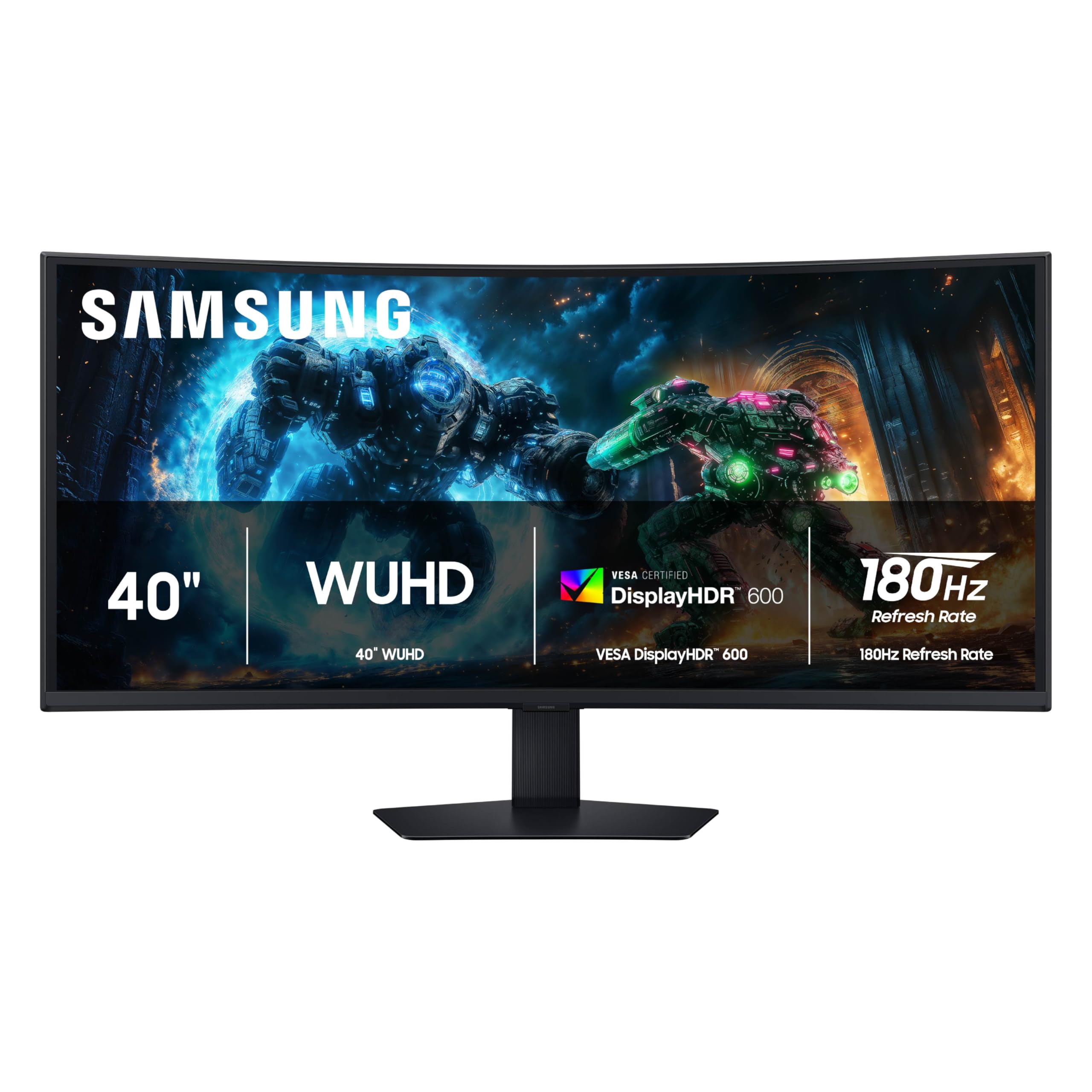
The Samsung Odyssey G7 G75F breaks away from the standard 16:9 format with a 40-inch 21:9 ultrawide display at 5120×2160 WUHD resolution, wrapping around the user’s peripheral vision through a tight 1000R curvature. This VA panel delivers a 3000:1 contrast ratio and VESA DisplayHDR 600 certification, providing deeper blacks and higher sustained brightness than most IPS competitors. The 180Hz refresh rate and 1ms GtG response time, combined with AMD FreeSync Premium Pro certification, ensure smooth, tear-free motion across the expansive field of view.
For racing sims, flight simulators, and open-world RPGs, the 21:9 aspect ratio eliminates black bars and pulls the player deeper into the game world. The 99% DCI-P3 color gamut provides accurate HDR color reproduction, and the 350 cd/m² sustained brightness is adequate for most room lighting conditions. Connectivity includes HDMI and DisplayPort inputs, along with USB hub functionality for peripherals. The ergonomic stand offers height, tilt, and swivel adjustments, accommodating different desk setups and viewing preferences.
VA panel viewing angles are narrower than IPS, meaning color shift occurs when viewed from extreme angles, but at a typical desk position this is rarely an issue. The 1000R curve is aggressive enough to create a true wraparound effect without distorting productivity applications like spreadsheets or code editors. The monitor works well with an RTX 4090 for high-refresh-rate WUHD gaming, and the lack of burn-in risk compared to OLED makes it a safer choice for users who keep static elements on screen for extended work sessions.
Why it’s great
- 40-inch 21:9 WUHD resolution with 1000R curvature for true immersion
- DisplayHDR 600 certification with 3000:1 VA contrast ratio
- 180Hz refresh rate and 1ms response time for smooth gameplay
Good to know
- VA viewing angles narrower than IPS; color shift off-axis
- HDR implementation requires manual adjustment for best results
- Massive screen requires a deep desk and powerful GPU
7. KOORUI 32 Inch 4K OLED Gaming Monitor (S3241XO)
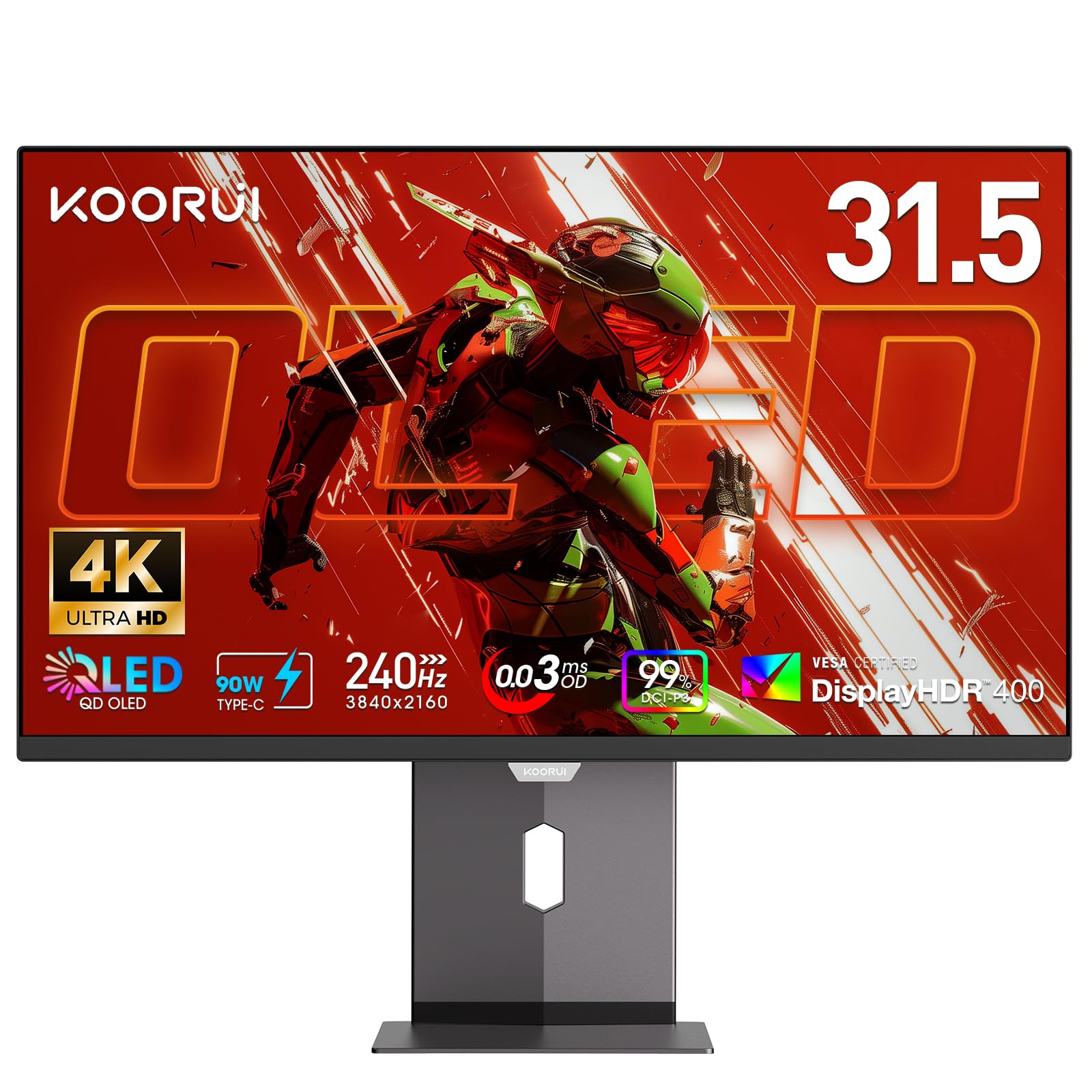
The KOORUI S3241XO brings native 4K OLED technology to a price that undercuts most premium OLED monitors by several hundred dollars, offering a 240Hz refresh rate, 0.03ms GtG response time, and HDR True Black 400 certification. The 1500000:1 contrast ratio delivers the per-pixel black levels that define the OLED advantage, making dark scenes in games like Cyberpunk or Alan Wake appear with stunning depth and no visible blooming. The 99% DCI-P3 color gamut ensures HDR content displays the full expanded color palette.
Connectivity is robust with dual HDMI 2.1 ports, DisplayPort 1.4, USB-C, and USB-A/B ports, allowing seamless switching between PC, PS5, and Xbox Series X. The ergonomic stand provides full adjustment—tilt, swivel, pivot, and height—allowing precise positioning for both gaming and productivity work. The VESA 100x100mm mount compatibility offers flexibility for desk setups. The 280 cd/m² typical brightness is modest compared to premium OLEDs with Micro Lens Array technology, but the peak brightness in HDR highlights creates impactful contrast in supported titles.
Adaptive Sync support ensures tear-free gameplay across a wide range of frame rates, and the 0.03ms response time eliminates motion blur completely during fast camera movements. The OLED panel’s instant pixel response means no ghosting artifacts, even in scenes with rapid transitions between bright and dark elements. The monitor includes a one-year warranty on the display and a three-year warranty on accessories, with the caveat that OLED burn-in mitigation (pixel shifting, pixel refresh) is managed through on-screen controls. For gamers who want OLED’s visual magic without spending flagship money, this KOORUI model is a compelling entry point.
Why it’s great
- Native 4K OLED panel with 1500000:1 contrast and perfect blacks
- Full ergonomic stand with height, tilt, swivel, and pivot
- Dual HDMI 2.1 and USB-C for multi-device flexibility
Good to know
- 280 cd/m² typical brightness is lower than premium OLED models
- OLED burn-in risk exists with years of static UI elements
- OSD menu system takes time to learn
8. MSI MPG 321URX QD-OLED 32″ Gaming Monitor

The MSI MPG 321URX combines a 31.5-inch 4K UHD QD-OLED panel with a 240Hz refresh rate and 0.03ms GtG response time, delivering the infinite contrast and vibrant color of Quantum Dot OLED technology in a format that works equally well for gaming and professional creative work. The 99% DCI-P3 color gamut with Delta E ≤2 accuracy ensures that HDR games and video content display colors with cinematic precision, while the VESA DisplayHDR True Black 400 certification guarantees deep blacks without light bleed. The 10-bit color depth (1.07 billion colors) eliminates color banding in gradients.
The KVM function with Picture-in-Picture and Picture-by-Picture modes allows controlling two devices from a single keyboard and mouse, a feature rarely seen in gaming monitors that proves invaluable for streamers or users who switch between a PC and a Mac. The 90W USB-C power delivery charges a laptop while transmitting video and data over a single cable, keeping the desk clean. Microsoft Gaming Intelligence AI provides software-level control over OLED Care functions like pixel refresh, static dimming, and logo detection to mitigate burn-in risk.
Ergonomics include a four-way adjustable stand (height, tilt, swivel, pivot) and a VESA mount option. The included HDMI 2.1 and DisplayPort 1.4a ports support full-bandwidth 4K 240Hz on compatible GPUs. The QD-OLED panel’s glossy coating enhances perceived contrast and color vibrancy in dim rooms, though reflections may be visible in bright direct light. The text clarity is excellent for an OLED panel, with no visible fringing at normal viewing distances. The three-year warranty provides long-term confidence for a premium investment.
Why it’s great
- QD-OLED panel with 99% DCI-P3 and Delta E ≤2 color accuracy
- KVM switch with PIP/PBP for multi-device workflows
- 90W USB-C charging and three-year warranty with burn-in coverage
Good to know
- Glossy QD-OLED coating reflects light in bright rooms
- Mac dual-monitor setup requires disabling DSC for stable operation
- Peak brightness lower than IPS in sustained full-screen white
9. Samsung 32” Odyssey QD-OLED G8 G81SF (LS32FG810SNXZA)
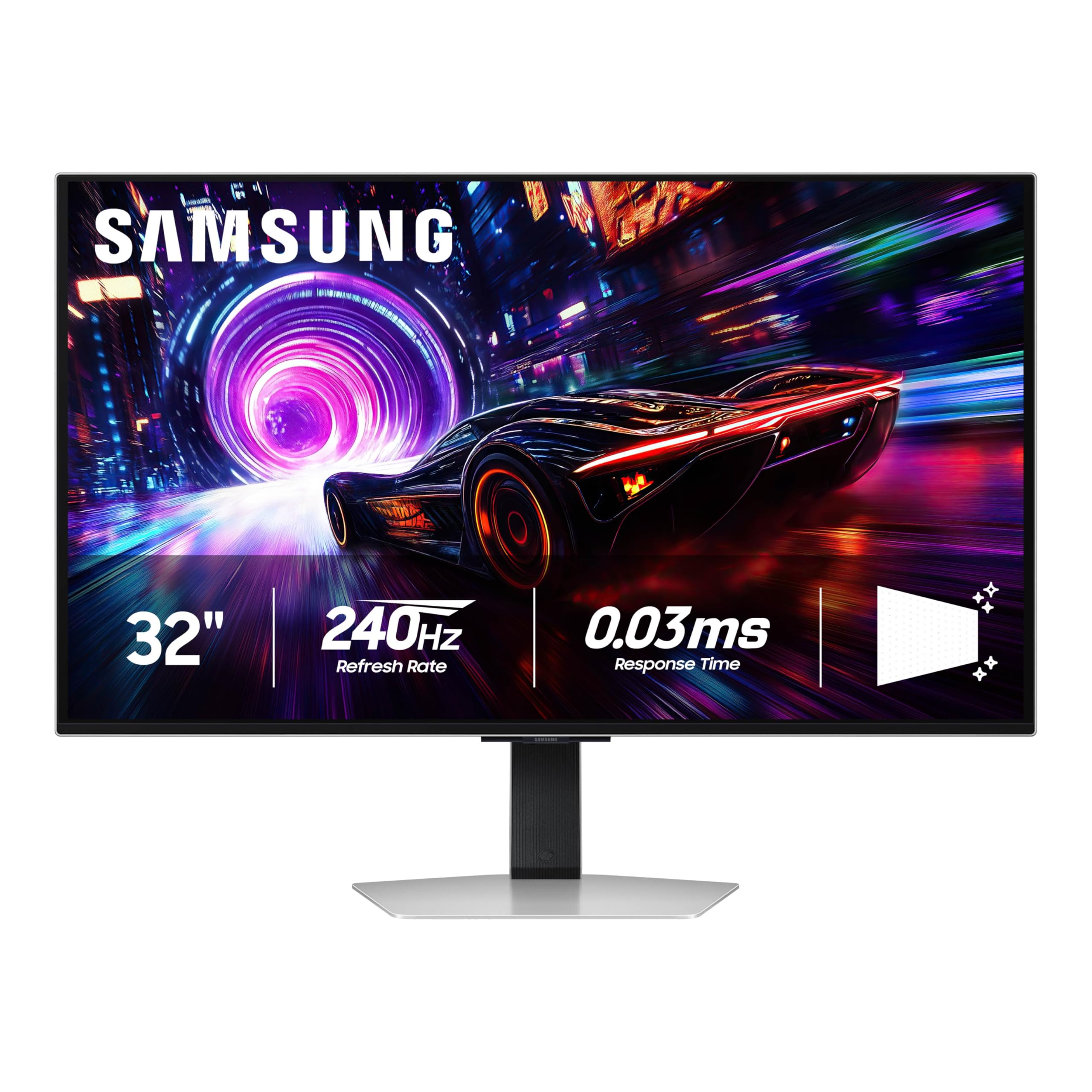
The Samsung Odyssey G8 G81SF advances QD-OLED technology with Samsung’s Glare Free matte finish, which reduces reflections by 54% compared to standard anti-reflection coatings, making it significantly more usable in rooms with windows or overhead lighting. The 32-inch 4K QD-OLED panel delivers 99% DCI-P3 color gamut, VESA DisplayHDR True Black 400 certification, and a 1,000,000:1 contrast ratio for the perfect blacks and vibrant colors that define OLED gaming. The 240Hz refresh rate and 0.03ms GtG response time provide the instantaneous pixel transitions needed for competitive play.
This monitor includes several innovative features for burn-in prevention that are built into the panel itself. The Dynamic Cooling System uses a pulsating heat pipe that diffuses heat five times faster than graphite sheet, while the Thermal Modulation System automatically adjusts brightness to prevent overheating. Logo and Taskbar Detection automatically reduce brightness on static elements to prevent retention. These features make this monitor one of the most burn-in-resistant OLED options available, suitable for users who mix gaming with productivity work.
The CoreSync and CoreLighting+ features project on-screen colors into the room through the monitor’s rear lighting, synchronizing with gameplay for a more immersive environment. The ergonomic stand provides full height, tilt, and swivel adjustment, and the VESA mount compatibility allows for arm installation. G-Sync compatibility and AMD FreeSync Premium Pro ensure tear-free gameplay across both GPU ecosystems. The silver metallic finish gives the monitor a premium appearance that fits into both gaming and professional workspaces.
Why it’s great
- Glare Free coating reduces reflections by 54% for bright room usability
- Advanced burn-in prevention with heat pipe cooling and logo detection
- QD-OLED panel with 1,000,000:1 contrast and 99% DCI-P3 color
Good to know
- Power button durability reported as a potential issue in some units
- Anti-glare finish slightly reduces perceived contrast vs glossy OLED
- Settings menu can be complex to navigate initially
10. LG 32GX870A-B Ultragear 32″ 4K OLED Gaming Monitor
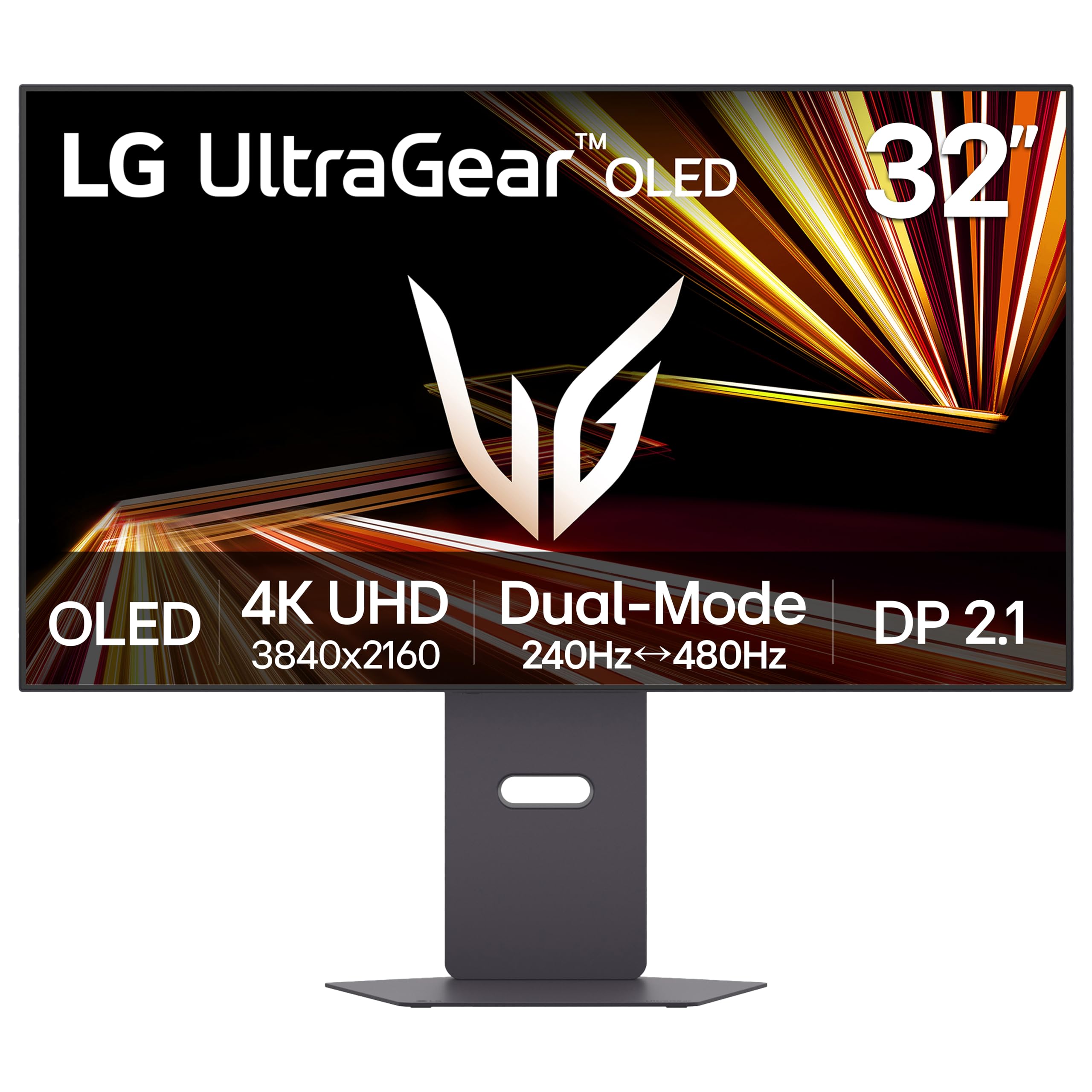
The LG 32GX870A-B pushes the performance boundary with a Dual Mode that hits 4K UHD at 240Hz or Full HD at 480Hz, making it the fastest 4K OLED monitor in this guide. The W-OLED panel utilizes Micro Lens Array+ technology to achieve a typical brightness of 275 nits and a peak brightness of 1300 nits, significantly brighter than standard OLED panels and enabling better HDR highlight detail in games like Forza Horizon 5. The 0.03ms GtG response time ensures that the 480Hz mode is fully usable without motion blur, creating an almost CRT-like clarity in fast-paced shooters.
NVIDIA G-Sync compatibility and AMD FreeSync Premium Pro certification ensure tear-free operation at any frame rate, and the VESA DisplayHDR True Black 400 certification confirms deep black levels. The anti-glare low-reflection OLED coating minimizes distracting reflections without the haze of traditional matte coatings. The built-in speakers are genuinely usable for gaming, providing crisp audio with DTS Headphone:X support for spatial audio through the 4-pole headphone jack. The Switch app allows splitting the screen into up to six sections for multitasking between work, streaming, and gaming.
The ergonomic stand offers full height, tilt, swivel, and pivot adjustment, and the OLED Care tools include pixel cleaning, pixel shifting, and static dimming to prevent burn-in. The two-year limited warranty covers the OLED panel, providing reasonable protection. The DisplayPort 2.1 port supports high bandwidth, though some users note it negotiates at UHBR10 rather than full UHBR13.5. For competitive gamers who refuse to compromise on refresh rate and want the best motion clarity available, this LG monitor sets the bar.
Why it’s great
- Dual Mode reaches 4K 240Hz and up to FHD 480Hz for extreme speed
- Micro Lens Array+ achieves 1300 nits peak brightness for impactful HDR
- Anti-glare OLED coating minimizes reflections without haze
Good to know
- DP 2.1 port negotiates at UHBR10, not full DP 2.1 bandwidth
- Matte coating can appear slightly grainy on static bright pages
- Premium price positions it as an enthusiast-tier investment
11. ASUS ROG Swift 32” 4K OLED Gaming Monitor (PG32UCDM)

The ASUS ROG Swift PG32UCDM represents the culmination of current 4K gaming monitor technology, combining a 32-inch QD-OLED panel with a custom heatsink, graphene film, and advanced airflow design to manage heat and reduce burn-in risk. The 240Hz refresh rate and 0.03ms response time are expected at this tier, but the true differentiators are the 99% DCI-P3 color gamut, True 10-bit color depth, and Dolby Vision support, which together produce an HDR experience that rivals high-end televisions. The Delta E < 2 color difference ensures professional-grade accuracy out of the box.
The thermal management system is the most sophisticated of any monitor in this guide, allowing the panel to sustain higher brightness levels during extended gaming sessions without triggering brightness limiting. The uniform brightness setting ensures consistent luminance across the entire screen, eliminating the center-brightness drop that affects some OLED panels. The DisplayWidget Center software allows OLED Care functions—pixel cleaning, screen shift, and static content detection—to be managed with a mouse rather than through the OSD, making burn-in prevention simple to maintain.
The glossy QD-OLED coating delivers the highest contrast and color vibrancy of any panel type, with zero-nit blacks that make HDR games look truly next-generation. The stand provides height, tilt, and swivel adjustment, and the 90W USB-C power delivery charges a laptop while transmitting video. The three-year warranty explicitly covers burn-in, removing the primary concern that prevents many users from choosing OLED. For gamers who want the absolute best image quality, motion clarity, and features available in a 4K gaming monitor, the PG32UCDM is the definitive choice.
Why it’s great
- Custom heatsink and graphene film enable sustained brightness and reduce burn-in
- Dolby Vision support and 99% DCI-P3 for cinematic HDR quality
- Three-year warranty with explicit burn-in coverage
Good to know
- Glossy screen shows reflections in bright ambient lighting
- Text fringing noticeable if sitting very close to screen
- Premium price reflects top-tier performance and features
FAQ
Can I use a 4K gaming monitor with a PS5 or Xbox Series X?
What GPU do I need to run a 4K 240Hz gaming monitor?
Is burn-in still a problem on modern OLED gaming monitors?
Final Thoughts: The Verdict
For most users, the best 4k gaming monitor winner is the LG 27G810A-B because its Dual Mode provides both native 4K immersion and a competitive FHD 360Hz mode in one versatile IPS package without the burn-in concerns of OLED. If you want the image quality that defines the high end, grab the ASUS ROG Swift PG32UCDM for its QD-OLED panel, Dolby Vision support, and burn-in-proof three-year warranty. And for a budget-friendly OLED entry that still delivers perfect blacks and 240Hz smoothness, nothing beats the AOC Q27GAZD with its QD-OLED panel at a price that redefines the value segment.