
Finding a game that genuinely entertains a ten-year-old, a teenager, and a set of parents without anyone zoning out is the real challenge of modern family time. The best options blend simple rules with enough strategic depth to keep repeat plays fresh, avoiding the trap of shallow luck-based mechanics that lose their appeal after one round.
I’m Mohammad Maruf — the founder and writer behind Drink4Good. I’ve spent years analyzing board game mechanics, material quality, and replay value across hundreds of family-oriented titles to pinpoint the setups that actually deliver consistent tabletop engagement.
Whether you’re after cooperative monster defense, competitive tile-laying, or creative word association, the right best family games turn a regular evening into a memorable shared experience without requiring a lengthy rulebook read.
How To Choose The Best Family Games
The right family game balances accessibility with genuine strategic choice. You want a title that a younger player can grasp within one round but still presents meaningful decisions for experienced gamers. Focus on player count, session length, and the type of interaction the game encourages.
Player Count and Flexibility
Check whether the game works well at both ends of its player range. Some titles shine with four players but drag with two, while others scale gracefully. Cooperative games often handle odd player counts better because everyone plays on the same team and can discuss moves openly.
Cooperative vs. Competitive Dynamics
Cooperative games eliminate the sting of early elimination and encourage communication, making them ideal for families with wide age gaps. Competitive games with indirect interaction, like tile-laying or resource management, keep tension high without generating hurt feelings from direct attacks.
Quick Comparison
On smaller screens, swipe sideways to see the full table.
| Model | Category | Best For | Key Spec | Amazon |
|---|---|---|---|---|
| CATAN 6th Edition | Resource Strategy | Classic trading & building | 60–90 minute playtime | Amazon |
| Castle Panic 2nd Edition | Cooperative Defense | Teamwork against monsters | Supports 1–6 players | Amazon |
| Project L | Tile-Matching Puzzle | Fast engine-building | Acrylic 3D puzzle pieces | Amazon |
| Splendor Duel | Two-Player Strategy | Head-to-head gem collecting | 30-minute average playtime | Amazon |
| Asmodee So Clover! | Cooperative Word Association | Creative clue-giving | 220 password cards included | Amazon |
| Buffalo Games Planted | Resource Management | Plant-themed light strategy | 42 unique houseplant cards | Amazon |
| Thames & Kosmos Ingenious | Abstract Tile-Laying | Deep but simple rules | Spiel des Jahres nominee | Amazon |
In‑Depth Reviews
1. CATAN 6th Edition

CATAN’s 6th Edition refines the modern classic with built-in card trays, chunkier wooden components, and updated artwork that replaces generic labels like Lumber with Wood and Grain with Wheat. The modular hexagonal board ensures no two games unfold the same way, forcing players to adapt settlement placement and trade routes based on variable resource distributions.
The core loop of rolling for resources, trading with opponents, and building roads, settlements, or cities creates tense negotiation moments that engage everyone at the table. The robber mechanic adds a light catch-up element that prevents any single player from running away with the game. At 60-90 minutes, the session length feels substantial without overstaying its welcome.
Plays best with exactly four players, though the expansion kits open up five and six-player options. The rulebook is clear enough that most families grasp the flow within one or two rounds, making it a reliable anchor for regular game nights.
Why it’s great
- Exceptional replay value from variable board setup
- High-quality wooden pieces and card trays in 6th Edition
- Teaches resource management and negotiation organically
Good to know
- Best with 4 players; odd counts feel unbalanced
- Sessions run closer to 90 minutes with new players
- Dice luck can frustrate players who prefer pure strategy
2. Fireside Games Castle Panic 2nd Edition

Castle Panic transforms the family into a coordinated defense squad protecting Castle Bravehold from waves of monsters. The 2nd Edition adds 3D towers, vibrant monster tokens, and an illustrated board that immediately signals the stakes. Players trade cards, coordinate which monster to target first, and decide whether to reinforce the walls or launch counterattacks.
The cooperative design means nobody sits out after being eliminated — everyone works together until the last tower falls or the monsters are defeated. The adjustable difficulty lets families scale the challenge, while the Overlord mode gives one player control of the monster horde for a more competitive twist. Sessions run about 45 minutes, which feels tight enough for two rounds in a single evening.
The card trading mechanic naturally encourages discussion and joint planning, making it a strong pick for families with younger players who might struggle with direct competition. The base game feels complete, but expansions add more monster types and siege engines for groups that want deeper tactical variety.
Why it’s great
- Genuine teamwork with no player elimination
- Multiple game modes increase longevity
- Easy to teach; engaging for ages 8 and up
Good to know
- Basic visuals compared to modern board games
- Experienced gamers may find the strategy light
- Can become addictive — families report playing 15+ times
3. Asmodee Project L

Project L combines tactile acrylic puzzle pieces with a fast engine-building mechanic that feels like a physical version of Tetris mixed with a tableau builder. Players start with just two basic pieces and earn more by completing puzzles, which unlocks the ability to tackle harder multi-layered puzzles worth more points. The three-actions-per-turn limit forces tight optimization decisions.
The acrylic pieces are smooth and satisfying to handle, and the clean iconography means players spend more time planning moves than referencing the rulebook. Turns fly by, keeping downtime minimal even at four players. The solo mode offers a genuinely challenging puzzle experience for when the rest of the family is busy.
The base game works well out of the box, though enthusiasts will eventually want the expansion for additional puzzle variety. Experienced players can outpace newcomers in the first few games, but the learning curve is gentle enough that most players catch on after two rounds.
Why it’s great
- Tactile acrylic pieces feel premium
- Very fast setup and teardown
- Excellent solo mode included
Good to know
- Can feel luck-dependent on puzzle draws
- Base game benefits from expansions for long-term variety
- Skill gap noticeable between new and experienced players
4. Splendor Duel
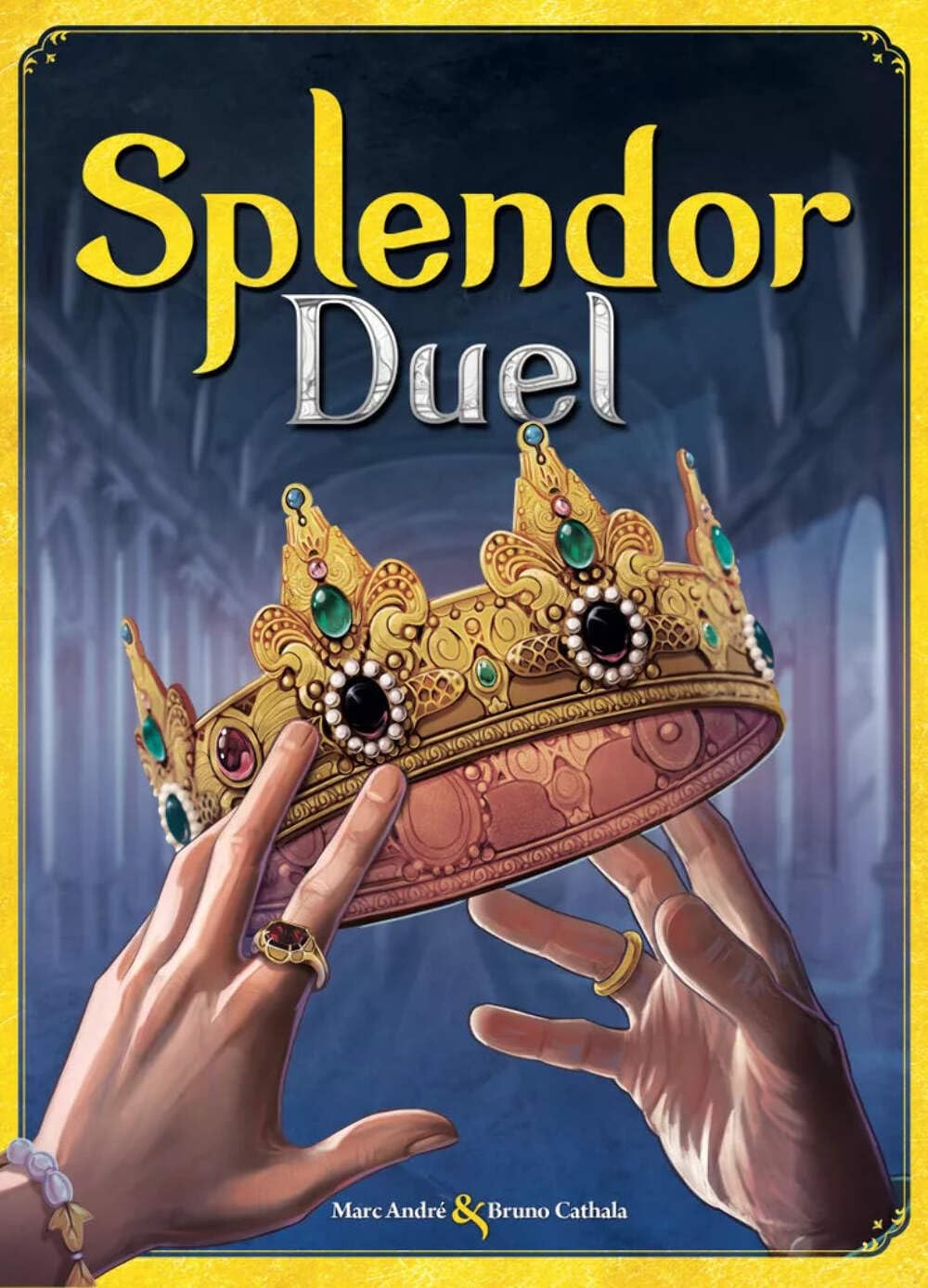
Splendor Duel reimagines the original gem-collecting classic as a dedicated two-player experience with tighter tension and new mechanics like a shared board, special powers, and alternative win conditions. Instead of just racing to 15 prestige points, players can also win by claiming three royal tiles or monopolizing a single gem color, adding strategic depth to every turn.
The components maintain the same high standard as the original — thick card stock, solid gem tokens, and a compact board that fits easily on a small table. The pearl mechanic and privilege scrolls introduce tactical asymmetries that keep each game feeling distinct. The 30-minute playtime makes it easy to squeeze in a round after dinner.
It works best as a standalone title for duos who want a step up in complexity from simple card games without jumping into a multi-hour marathon. Couples and parent-teen pairs will find the head-to-head dynamic particularly engaging, with enough variability to support dozens of matches.
Why it’s great
- Tighter and more strategic than original Splendor for two
- Multiple win paths increase replay value
- Compact box travels easily
Good to know
- Only plays two — not flexible for larger groups
- Needs a couple plays to grasp new mechanics
- Premium price point for its size
5. Asmodee So Clover!

So Clover! is a cooperative word association game where each player writes a single clue that connects two seemingly unrelated keywords printed on a clover-shaped card. Teammates then try to identify which keyword pairs match each clue, leading to plenty of laugh-out-loud moments when a clue is either too clever or too obscure.
The game scales well from three to six players and plays in under 30 minutes with almost no downtime since everyone is engaged simultaneously. The 220 password cards provide substantial variety across repeated sessions, and the cooperative structure means no one feels singled out for a weak clue. Players can team up in larger groups without breaking the game.
It works especially well for families with older kids and adults who enjoy wordplay, parties, or casual gatherings. The rulebook takes about two minutes to explain, making it one of the quickest games to table from box to first turn.
Why it’s great
- Zero player elimination — everyone plays every round
- Extremely portable and fast to teach
- Encourages creative thinking and lateral connections
Good to know
- Soft player cap of six makes large groups split
- Clue quality varies with vocabulary level
- Less strategic depth than tile-laying games
6. Buffalo Games Planted

Planted tasks players with managing a nursery by collecting resource tokens — water drops, sun chips, plant food — to care for and grow 42 unique houseplant varieties. Designed by Phil Walker-Harding of Sushi Go! fame, the game uses a card-drafting and resource-management loop that feels intuitive after a single round. The artwork features recognizable plants like fiddle leaf figs and monsteras, which adds charm for plant enthusiasts.
The components are durable with wood and plastic tokens, a score pad, and drawstring bags for the resource pieces. Games run between 20 and 30 minutes, making it one of the quicker options on this list. The 1-token-for-4 rule can occasionally leave players short on resources, but the variable card setup keeps each match feeling fresh.
It occupies a sweet spot between casual party game and light strategy — deep enough for adults to enjoy, but simple enough that kids ages seven and up can participate without frustration. Families with a gardening or plant interest will find the theme especially appealing.
Why it’s great
- Beautiful, inclusive houseplant artwork
- Fast playtime suits short attention spans
- High-quality tactile game pieces
Good to know
- Token shortage can slow down resource management
- Requires decent table space for card layout
- Theme may not resonate with non-plant lovers
7. Thames & Kosmos Ingenious

Ingenious is an abstract tile-laying game from Reiner Knizia that earned a Spiel des Jahres nomination and a Parents’ Choice Silver Honor Award. Players place colored tiles on a hexagonal board to create lines of matching colors, scoring points for each symbol placed. The twist: your final score is determined by your lowest-scoring color, forcing balanced placement rather than focusing on a single strong color.
Opponents can actively block your needed colors, adding a layer of direct competition without combat. The rules are simple enough to explain in under two minutes, but the strategic depth supports dozens of matches without feeling repetitive. It works equally well with two, three, or four players, and includes a solo variant for solo practice sessions.
The plastic tiles are sturdy, the storage pouch keeps pieces organized, and the 30-45 minute playtime fits comfortably into a weeknight. It’s an excellent choice for families who enjoy dominoes or Scrabble but want a more modern abstract system with deeper tactical decisions.
Why it’s great
- Award-winning design with proven replayability
- Simple rules with genuinely deep strategy
- Scales well across 2-4 players
Good to know
- Abstract theme may not excite younger kids
- Not highly strategic at the most competitive level
- Components are functional rather than premium
FAQ
How do I choose between cooperative and competitive family games?
What player count works best for a family of four?
How important is replay value in a family board game?
Final Thoughts: The Verdict
For most users, the best family games winner is the CATAN 6th Edition because its variable board, negotiation mechanics, and proven track record deliver consistent engagement across a wide age range. If you want cooperative teamwork with no player elimination, grab the Fireside Games Castle Panic 2nd Edition. And for a fast, tactile puzzle experience that suits both solo and group play, nothing beats the Asmodee Project L.