
The right youth football helmet is the single most important piece of equipment a young athlete will ever wear on the field. It must absorb impact, stay put during play, and fit comfortably enough that a child won’t constantly adjust it — all while meeting stringent safety standards that didn’t exist a decade ago.
I’m Mohammad Maruf — the founder and writer behind Drink4Good. I’ve spent years analyzing safety equipment specifications, correlating lab ratings like the Virginia Tech 5-Star test with real-world parent feedback to separate genuine protection from marketing noise.
This guide breaks down the foam types, shell materials, facemask construction, and sizing systems that define a truly safe helmet for young players. Use it to confidently choose the football helmet for youth that matches your child’s position, head shape, and league requirements.
How To Choose The Best Football Helmet For Youth
A youth football helmet isn’t just a smaller version of an adult model. The impact forces, head-to-body weight ratio, and neck strength of a child are fundamentally different, so the padding density, shell geometry, and fit retention features must be purpose-engineered. Here are the three factors that matter most.
Safety Certifications and Impact Ratings
The Virginia Tech Helmet Ratings are the gold standard for comparing how well a helmet reduces concussion risk. A 5-star rating means the helmet ranks in the top tier for impact management across multiple impact types and speeds. Look for this rating explicitly — it indicates the manufacturer submitted to independent lab testing rather than relying on internal claims. NOCSAE certification is the baseline requirement for league play, but the Virginia Tech star system tells you which helmets actually outperform the minimum.
Fit System and Liner Technology
Youth heads grow quickly, so the fit system must be adaptable without sacrificing stability. Inflatable air liners (like SureFit or Riddell’s four-point system) let you fine-tune the fit week to week with a small pump. TPU (thermoplastic urethane) cushioning is superior to standard EVA foam because it maintains its impact-absorbing properties across a wider temperature range — crucial for fall football when games can swing from 40 to 80 degrees. Non-inflatable liners with multi-density foam layers are lighter and simpler but require more precise initial sizing.
Shell Construction and Facemask Compatibility
Polycarbonate (PC) shells are the industry standard for a reason: they offer excellent impact strength without adding excessive weight. Flexural resistance engineering — a design feature that reinforces the back shelf of the shell — reduces the risk of shell deformation during high-energy hits. For the facemask, carbon steel is the most popular material because it balances strength with weight. Make sure the helmet you choose includes the correct facemask type for your child’s position; skill-position players like quarterbacks and running backs benefit from a facemask with fewer bars and a wider field of vision.
Quick Comparison
On smaller screens, swipe sideways to see the full table.
| Model | Category | Best For | Key Spec | Amazon |
|---|---|---|---|---|
| Schutt F7 LX1 Youth | Premium | Top-tier rotational force protection | 3D Tektonic Plates + TPU Cushioning | Amazon |
| Schutt Youth Vengeance A11 (White) | Mid-Range | 5-star rated performance at a moderate price | 5-Star Virginia Tech Rating | Amazon |
| Schutt Youth Vengeance A11 (Black) | Mid-Range | Dual-shell color option with the same protection | TPU Cushioning + Carbon Steel Facemask | Amazon |
| Riddell Victor-i Youth | Premium | Custom fit with inflatable rear liner | Inflatable Rear Liner + S-Jaw Pads | Amazon |
| Riddell Victor Youth | Mid-Range | Proven durability for multi-season use | Patented Side Impact Protection (PSIP) | Amazon |
| Riddell SpeedFlex Youth | Premium | Highest-end Riddell with Flex System | Flex System + 4 Inflation Points | Amazon |
| Champro SH7 Softshell | Budget | Lightweight 7-on-7 or flag football | PRS Foam System + Bio-Fresh Liner | Amazon |
In‑Depth Reviews
1. Schutt F7 LX1 Youth Football Helmet
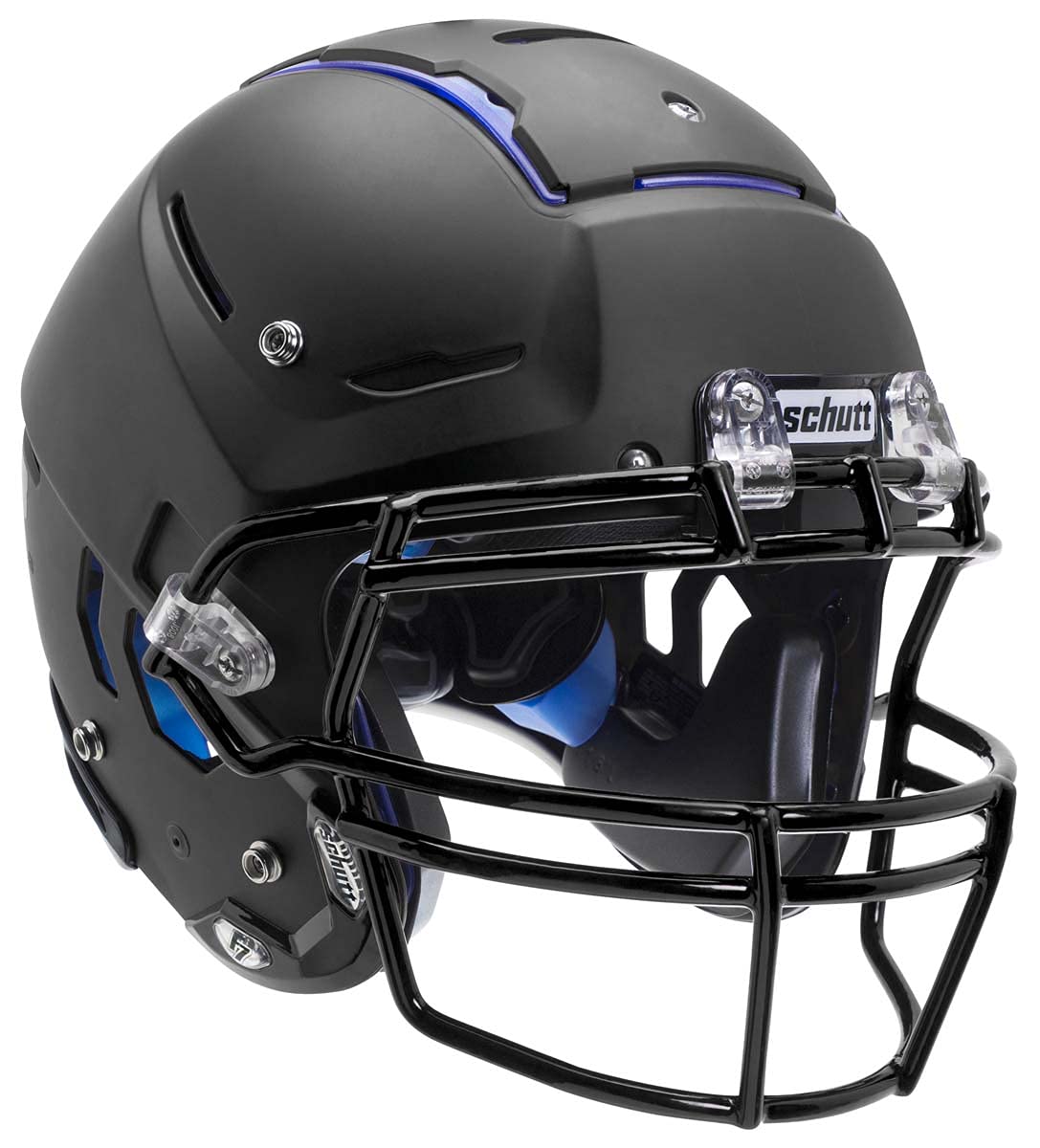
The Schutt F7 LX1 is the most advanced youth helmet in this lineup in terms of impact-absorption engineering. Its 3-Dimensional Tektonic Plates — strategically placed in the most impacted areas — move independently from the shell in multiple directions to reduce rotational forces. This is paired with TPU cushioning, which retains its damping properties far better than standard foam across the temperature swings typical of fall football.
The SureFit inflatable air liner runs along the back and sides of the helmet, allowing you to dial in a custom fit without swapping pads. The Helmet Stabilization System uses larger jaw pads wrapped in synthetic leather combined with internal and external stabilizers made of high-performance impact foam. Parents note that stock jaw pads can feel tight on larger heads, but the Velcro attachment makes swapping to thinner 3/4-inch pads a quick fix. The helmet does not include a facemask, so budget for that separately.
At 1.5 pounds, this is a remarkably lightweight premium option — one review even notes their son could look up without neck pain, unlike with a previous Riddell Speed Flex. The inflatable liner gives it the longest useful life of any helmet here, as you can adjust the fit as your child grows through a season or two.
Why it’s great
- Rotational force reduction via independent Tektonic Plates
- TPU cushioning maintains performance in varying temperatures
- Inflatable SureFit liner enables extended fit lifespan
Good to know
- Facemask not included — requires separate purchase
- Stock jaw pads may be too thick; smaller pads may be needed
- Air pump sold separately
2. Schutt Youth Vengeance A11 (White)

The Youth Vengeance A11 earned a 5-star safety rating from Virginia Tech — the same rating level that serious parents prioritize. It uses the same TPU cushioning system found in Schutt’s premium F7 line, which means it absorbs more impact across a wider temperature range than helmets using standard EVA foam. The shell employs Flexural Resistance Engineering to reinforce the critical back area, improving overall durability and impact absorption.
The included carbon steel facemask is football’s most popular material choice, and the non-inflatable foam liners provide a secure fit without the complexity of an air pump. Inter-link jaw pads with TPU cushioning are mechanically attached — not just glued — so they stay put during play. One parent noted their 8-year-old, 80-pound son fit into this helmet comfortably with room to grow, while another reported it held up through an entire season with no degradation.
This is effectively the best value-to-safety ratio in the mid-range tier. You get the lab-verified protection of a premium helmet without the inflatable liner complexity or the separate facemask purchase required by the F7 LX1. The white shell also makes it easy to match team colors with decals.
Why it’s great
- Virginia Tech 5-star safety rating
- TPU cushioning for consistent impact absorption
- Mechanically attached jaw pads stay secure
Good to know
- Non-inflatable liner offers less room for fit adjustment
- Reported to fit slightly large for some 8-year-olds
3. Schutt Youth Vengeance A11 (Black)

This is the same Youth Vengeance A11 shell and TPU cushioning system as the white version, but in a matte black finish. The specs are identical: a 5-star Virginia Tech rating, carbon steel facemask, and non-inflatable foam liners throughout. The black shell tends to hide scuffs and scratches better over a season, which matters for parents who want the helmet to look clean through multiple games.
Both color options share the inter-link jaw pad system with mechanical attachment — no falling pads mid-play — and the Flexural Resistance Engineering in the back shelf. The black variant is particularly popular with teams that use dark uniforms, as it creates a more cohesive look on the field. Parents consistently praise the durability and fit, with several noting it lasted an entire season and could be reused the following year.
Choosing between the white and black Vengeance A11 comes down to personal preference and team color matching rather than any performance difference. If your league allows black shells and you want a helmet that stays presentable longer between cleanings, this is the pick.
Why it’s great
- Same 5-star protection as white version
- Black shell hides wear better over time
- TPU cushioning is temperature-stable
Good to know
- Non-inflatable fit — must size precisely
- Same limited fit adjustment as white variant
4. Riddell Victor-i Youth Football Helmet
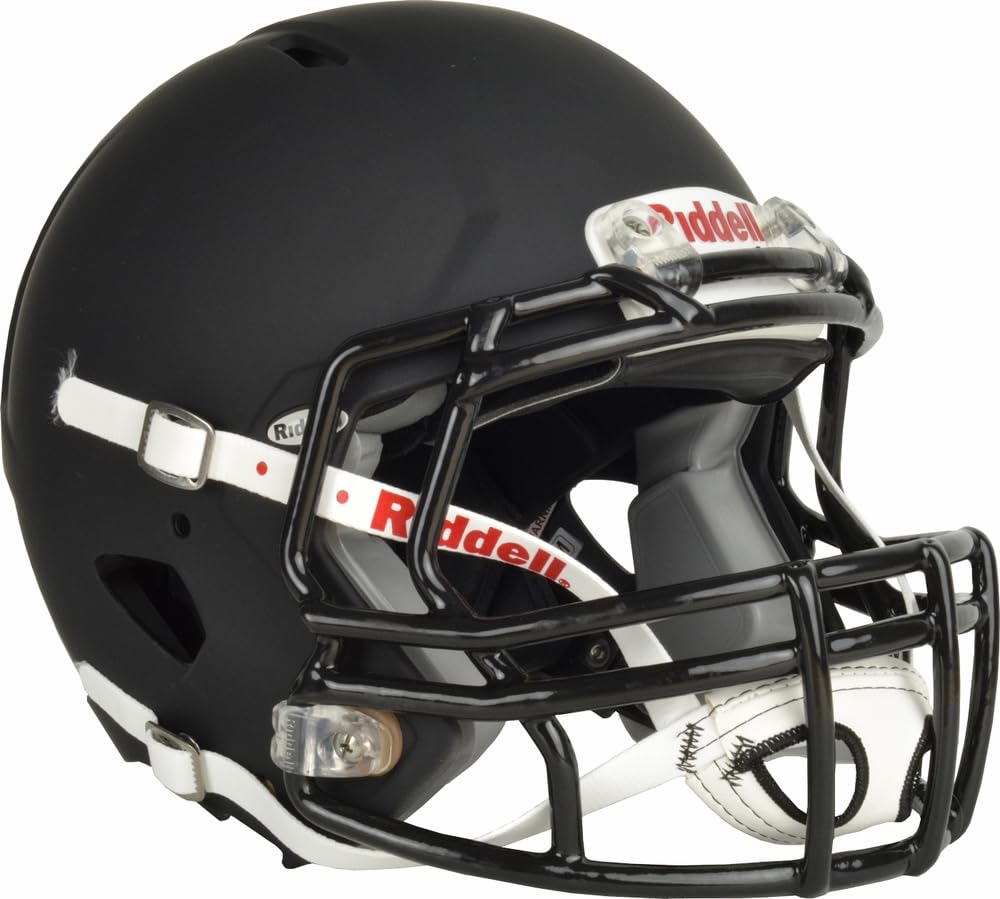
The Riddell Victor-i brings an offset shell design that manages a broad range of impact types, with the interior liner extending down into the mandible area for increased energy attenuation. This extended jaw flap provides noticeably more side protection than the standard Victor model, making it a strong choice for linebackers and running backs who take frequent side hits.
Where the Victor-i differentiates itself is the fit system: an inflatable rear liner combined with S-jaw pads. This lets you tighten or loosen the helmet’s grip around the occipital bone region without swapping any pads. The removable, moisture-resistant comfort overliner is a practical touch for sweaty practice sessions — it can be washed or replaced separately. The included S2B facemask is designed for skill positions, offering a wide field of view with adequate bar coverage.
Parents call it durable and well-made, with one noting it lasted through both a 10U and 12U season. One isolated report mentions screws loosening after the first week, so it’s worth checking all fasteners before first use. The ABS plastic outer shell is slightly less impact-resistant than polycarbonate, but the enhanced side coverage and custom fit justify the premium positioning.
Why it’s great
- Inflatable rear liner for growing heads
- Extended jaw flap for better side protection
- Removable moisture-resistant liner
Good to know
- ABS plastic shell — not polycarbonate
- Some reports of fastener loosening
5. Riddell Victor Youth

The Riddell Victor Youth is a mid-range workhorse that has been on the field for years with a proven track record. Its key feature is Patented Side Impact Protection (PSIP) — research-based mandible protection designed to reduce forces from side impacts, which are common in youth tackle football. The polycarbonate shell provides solid impact strength without adding excessive weight.
The fitted liner system uses an expanded polystyrene inner material with a removable, moisture-resistant overliner for comfort and stability. It’s a simpler system compared to inflatable liners, but it has the advantage of being lighter and having fewer parts that could fail. Parents consistently note that the helmet lasted a full season with no issues and fits similarly to the school-issued helmets their kids use — one reviewer specifically says it’s the same as their school’s helmet but sourced at less cost.
Adjustable chin straps are included and well-regarded by parents. This helmet does not have an inflatable fit system, so accurate initial measurement is essential. It’s a reliable, no-frills option that prioritizes solid side-impact protection at a moderate price point.
Why it’s great
- PSIP mandible protection for side impacts
- Polycarbonate shell is strong yet lightweight
- Removable moisture-resistant liner
Good to know
- No inflatable fit system — sizing must be precise
- Simpler liner technology than TPU models
6. Riddell SpeedFlex Youth Football Helmet

The Riddell SpeedFlex is the most expensive helmet in this roundup for a reason: it integrates Riddell’s Flex System, which engineers flexibility into the shell, facemask, and facemask attachment hinge clips to reduce impact force transfer. The Composite Energy Management system keeps the strategically placed padding locked in place during both games and practices, preventing any shift that could compromise protection.
The four-point inflation system — covering the lateral liner, occipital liner, and each jaw pad — offers the most customizable fit of any helmet here. The jaw pads can be inflated independently, which is a major advantage for kids with narrow or wide jaw structures. The All-Points Quick Release system makes facemask swaps tool-free and fast. The included SF-2BD facemask is suitable for quarterbacks, running backs, and receivers. Note that a special tool (approximately ) is required for initial facemask assembly, and an air pump is sold separately.
Parents of 10- and 11-year-olds report that when sized correctly, the SpeedFlex provides great confidence and protection. One parent returned a Large for a Medium, noting that the inflatable system let them achieve a perfect custom fit. A minor complaint about ear pad pressure exists, but the four inflation points usually solve this with careful adjustment. This helmet, along with the Schutt F7 LX1, represents the top tier of youth helmet technology.
Why it’s great
- Flex System reduces force transfer to the athlete
- Four independent inflation points for precision fit
- Composite Energy Management keeps padding in place
Good to know
- Requires special tool and air pump for setup
- Facemask assembly is not pre-done
- Some children report ear pad pressure
7. Champro SH7 Softshell Helmet

The Champro SH7 Softshell is a completely different category from the five tackle helmets above — this is a lightweight headgear designed specifically for 7-on-7, flag football, or non-tackle practice. It’s not NOCSAE-certified for tackle football, so its use is limited to restricted-contact settings. The shell is a soft polycarbonate outer material lined with Champro’s exclusive PRS Foam System, prioritizing breathability and weight reduction over high-impact absorption.
The Bio-Fresh treatment built into the liner guards against odor and material deterioration, a practical feature for sweaty non-contact drills. The sides offer enough space for printed team logos, making it a popular choice for flag teams that want a unified look. The chin strap is a common pain point — several reviews mention it runs long and can’t be adjusted down enough for smaller faces, even when the helmet shell itself fits correctly.
One parent calls it a solid headgear with plenty of protection for non-tackle play, and another appreciates that their son wears it during practice while teammates remove theirs. For its intended use case — flag football or 7-on-7 — it’s an effective and comfortable option. Just don’t confuse this with a tackle football helmet, as it doesn’t meet the impact standards required for full-contact play.
Why it’s great
- Lightweight and breathable for non-contact play
- Bio-Fresh treatment prevents odor buildup
- Side panels can be customized with logos
Good to know
- Not certified for tackle football
- Chin strap may be too long for small faces
- Limited use case — not for full-contact leagues
FAQ
What is the difference between a youth medium and youth large football helmet?
Do I need to buy a facemask separately for a youth football helmet?
Can a child use the same youth football helmet for two seasons?
Final Thoughts: The Verdict
For most users, the football helmet for youth winner is the Schutt F7 LX1 Youth because it combines TPU cushioning, rotational force-reducing Tektonic Plates, and an inflatable fit system that extends the helmet’s useful life as your child grows. If you want lab-verified performance at a more moderate price, grab the Schutt Youth Vengeance A11 with its 5-star Virginia Tech rating. And for the highest-end inflatable fit with the most customizable jaw and head adjustments, nothing beats the Riddell SpeedFlex Youth.