
Every step with arthritic feet can feel like a negotiation between relief and stability. The wrong shoe amplifies joint pain, while the right one provides a stable, cushioned platform that lets you move through your day without that grinding ache. This guide cuts through the marketing noise to find the footwear that actually delivers measurable relief.
I’m Mohammad Maruf — the founder and writer behind Drink4Good. After analyzing hundreds of reviews, technical specifications, and real-world feedback from people managing arthritis, I’ve focused this guide on the specific features that matter most: adjustable closures, wide toe boxes, and advanced cushioning systems that reduce impact on inflamed joints.
Whether you need a supportive walking shoe, a boot for winter stability, or a stylish sneaker for daily errands, this analysis of the best footwear for arthritic feet zeroes in on models that combine medical-grade features with practical everyday wear.
How To Choose The Best Footwear For Arthritic Feet
Arthritis changes the way a shoe needs to work. Swelling, stiffness, and reduced range of motion mean standard features like laces and narrow toe boxes become obstacles. The right footwear for arthritic feet prioritizes three core attributes: space for the toes to spread, a secure but adjustable fit, and a sole that absorbs shock without being so soft it lacks stability.
Room to Move: The Wide Toe Box
Bunions, hammer toes, and swollen joints need horizontal space. A wide toe box allows the metatarsal bones to splay naturally during the gait cycle, reducing pressure on inflamed joints. Look for brands that specify “wide” or “extra wide” sizing and have a rounded toe profile rather than an aggressive taper. This single feature often determines whether a shoe is wearable for more than an hour.
Adapting to Change: Adjustable Closures
Foot volume can shift dramatically throughout the day, especially with inflammatory arthritis. Velcro straps or slip-on designs that can be tightened or loosened in seconds let you accommodate this fluctuation without the struggle of laces. A secure heel hold is critical — the shoe should lock the foot in place without squeezing the forefoot.
Absorbing the Impact: Cushioning and Support
Every step sends a shockwave up the kinetic chain. The best footwear for arthritic feet uses a midsole that compresses under load (like EVA foam or proprietary cushioning compounds) to dampen that impact. Simultaneously, a firm heel counter and a supportive arch cradle prevent excessive pronation that can torque the knee and hip joints. Removable insoles are a bonus, letting you replace the factory foam with a custom orthotic.
Quick Comparison
On smaller screens, swipe sideways to see the full table.
| Model | Category | Best For | Key Spec | Amazon |
|---|---|---|---|---|
| SAS Time Out | Premium Lace-Up | Maximum durability and arch support | Multiple widths (6E available) | Amazon |
| Orthofeet Siena | Premium Ankle Boot | Cold-weather support with arch relief | Water-repellent leather upper | Amazon |
| Brooks Addiction Walker V-Strap 2 | Premium Walking Shoe | All-day stability on hard surfaces | Extended width sizing (2E, 4E) | Amazon |
| Skechers Max Cushioning Glide Step | Ultra-Cushion Slip-In | Maximum shock absorption with hands-free entry | Hands-free slip-in design | Amazon |
| Skechers Arch Fit Motley – Milo | Mid-Range Lace-Up | Podiatrist-certified arch support | Arch Fit insole with podiatrist design | Amazon |
| OrthoComfoot Men’s Wide Sneaker | Budget-Friendly Wide | Deep wide toe box at a low cost | Wide toe box with arch support | Amazon |
| JBU by Jambu Women’s Fawn | Budget-Friendly Velcro | Comfortable velcro adjustment for sensitive toes | Velcro strap closure system | Amazon |
In‑Depth Reviews
1. SAS Men’s Time Out
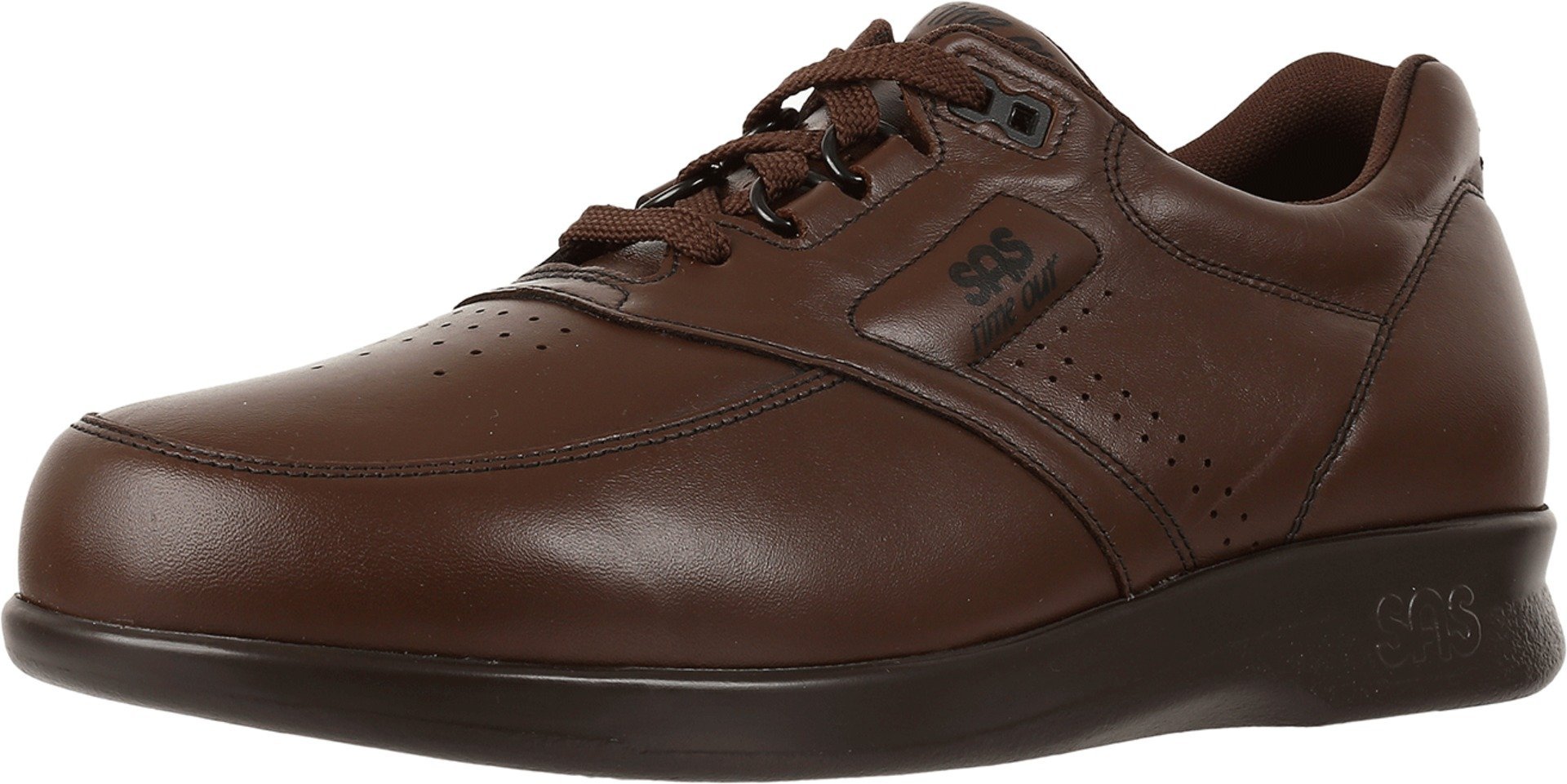
The SAS Time Out represents the pinnacle of long-term value in this category. Built in the USA with premium full-grain leather and a traditional lace-up design, it features a hand-lasted, shock-absorbing outsole and a removable, washable insole that can accommodate custom orthotics. Users consistently report the shoes lasting two to three years of daily wear without collapsing — a claim supported by multiple reviewers with over 20 years of loyalty to the brand.
For arthritic feet, the stand-out feature is the width availability, reaching up to 6E. This allows buyers with severe bunions or wide, swollen feet to find a proper fit without having to size up into an unstable shoe. The firm heel counter and robust arch support provide a non-negotiable foundation for those with joint instability, particularly in the ankle and knee.
The investment makes sense when you amortize the cost over the lifespan. A pair of SAS Time Out shoes may cost more upfront, but their construction quality means they avoid the “disposable shoe cycle” common in cheaper athletic footwear. For men who walk daily and need reliable support, this is the defining option.
Why it’s great
- Exceptional build quality and durability from US manufacturing
- Removable, washable insoles for custom orthotics
- Available in very wide widths (up to 6E) for severe bunions
Good to know
- Significant initial cost; a commitment rather than an experiment
- Traditional lace-up design may be a barrier for limited hand dexterity
2. Orthofeet Women’s Orthopedic Siena Boot
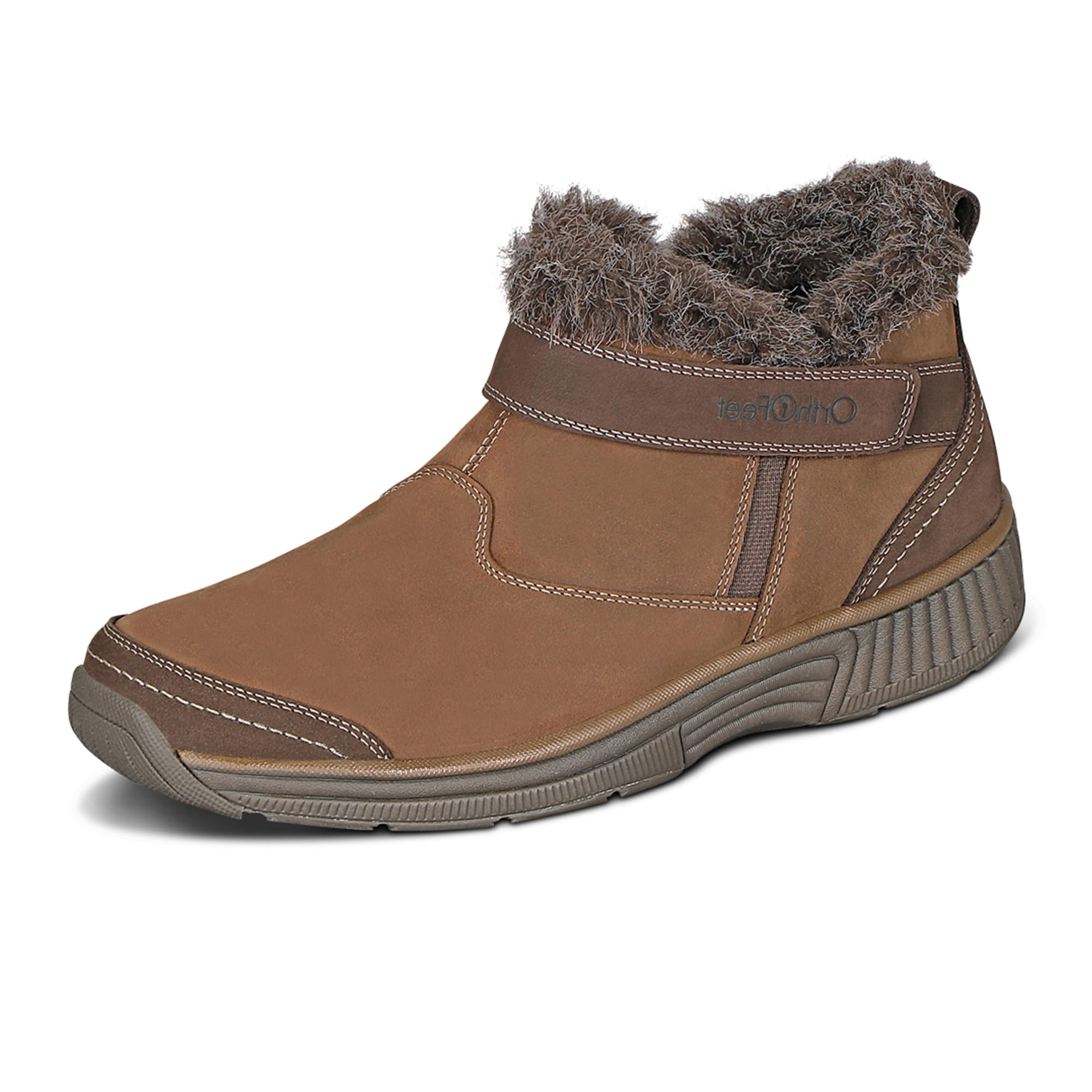
The Orthofeet Siena boot is a rare find: it delivers orthopedic-grade support in a winter-appropriate silhouette without the bulk of a traditional medical shoe. The anatomical arch support and cushioned heel pad are built into the boot, and users with severe plantar fasciitis report immediate relief on first wear — no break-in period needed. The interior is padded and lined to keep feet warm, a critical comfort factor for arthritic joints in cold weather.
The water-repellent leather upper and the slip-resistant outsole provide traction and dryness in snow and rain, letting users maintain stability on slippery surfaces. One reviewer who uses a cane noted the boot gave them enough confidence to walk on snow without fear of falling. The adjustable closure system (a combination of laces and a side zipper) allows for easy on/off and a customized fit around the ankle.
It is worth noting that the boot runs slightly large with thin socks. Many reviewers recommend ordering a half size down or planning to wear a thicker sock or an extra insole. The style is attractive enough for casual wear, bridging the gap between medical necessity and everyday fashion better than most options in this category.
Why it’s great
- Immediate comfort with no break-in period for sensitive feet
- Excellent arch support combined with cold-weather insulation
- Stable, slip-resistant outsole provides confidence on snow and ice
Good to know
- Runs slightly large; sizing requires careful attention to sock thickness
- Higher price point relative to standard walking shoes
3. Brooks Women’s Addiction Walker V-Strap 2

The Brooks Addiction Walker V-Strap 2 is the benchmark for what a supportive walking shoe should be for arthritic feet. It utilizes Brooks’ Extended Progressive Diagonal Rollbar technology, which provides motion control to guide the foot through a natural gait cycle — reducing the torsional stress on arthritic ankles and knees. The Velcro strap system replaces traditional laces, making it effortless to adjust the fit for fluctuating swelling throughout the day.
Users report this shoe excels on hard surfaces. Multiple reviewers with plantar fasciitis and general heel pain note it eliminated their foot pain during 8-hour shifts on concrete. The wide base and sturdy heel counter provide exceptional lateral stability, which is critical for anyone with balance concerns or a history of ankle sprains. The toe box is roomy enough for orthotics, and users typically size up half a length to accommodate them.
The main texture of this shoe is its commitment to function over form. Some women find the shoe makes their feet look “huge” due to its substantial construction — a trade-off many are happy to make for pain-free walking. The company’s durability is legendary, with one reviewer still wearing a pair after eight years of regular use.
Why it’s great
- Excellent motion control technology reduces joint stress
- Velcro closures allow easy adjustment for swelling
- Proven durability, with many pairs lasting years of daily wear
Good to know
- Bulkier silhouette may not suit all style preferences
- Users often need to size up half a length for orthotic insertion
4. Skechers Men’s Max Cushioning Glide Step
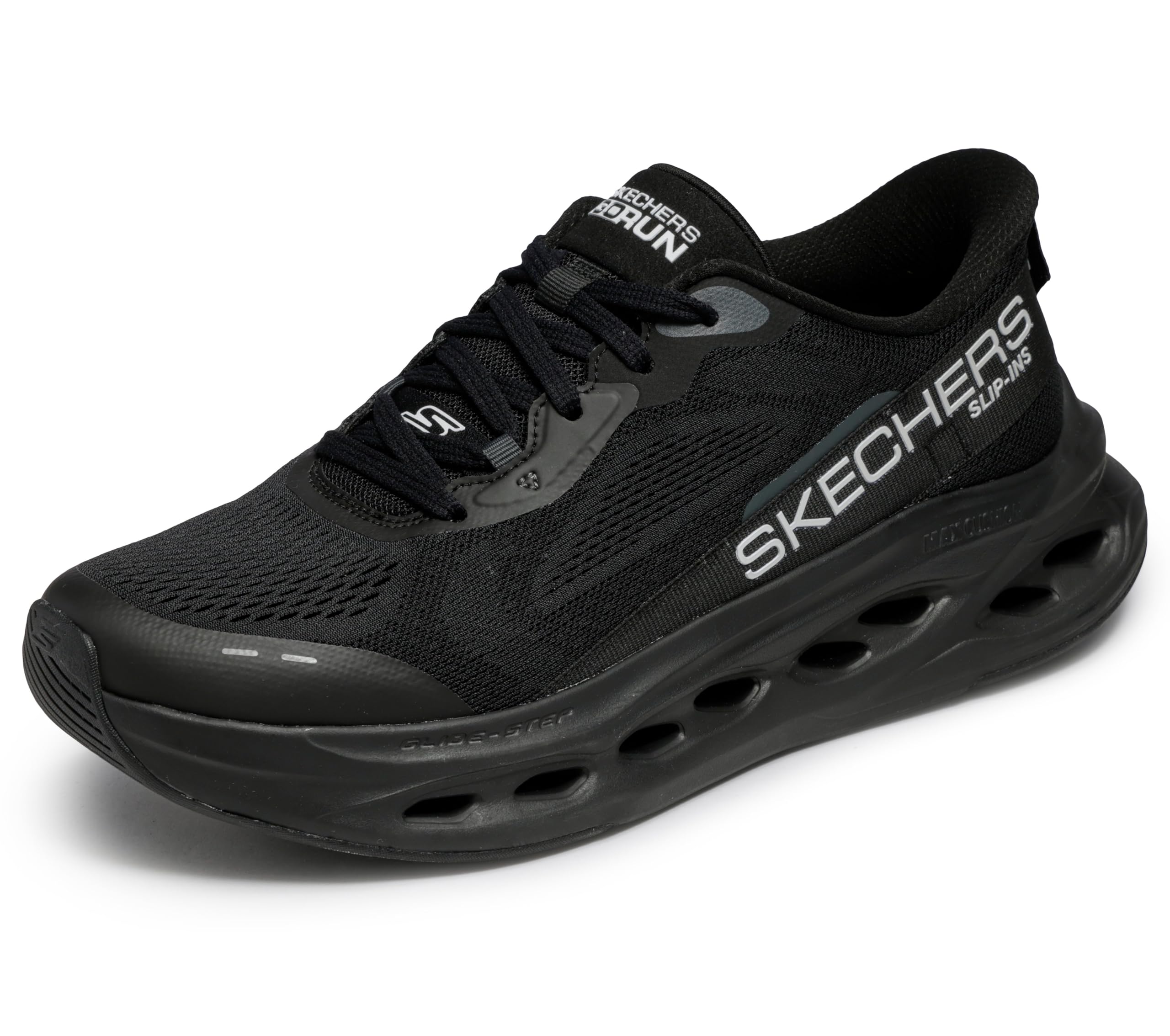
The Skechers Max Cushioning Glide Step redefines the “instant comfort” category for arthritic feet. Its key innovation is the hands-free slip-in design, which uses a structured heel panel that collapses as you step in and then locks into place around the heel. This eliminates the painful bending and struggling with laces that many with hip or back arthritis face. The Max Cushioning midsole provides an extraordinary level of shock absorption, described by users as “walking on clouds.”
For those who spend all day on their feet, this shoe is a revelation. A nurse reported wearing it for 12-hour orthopedic surgery shifts on hard floors without any foot or knee pain. The “Glide Step” geometry creates a natural rocking motion during the gait cycle, reducing the energy required to push off with each step — a direct benefit for painful big toes affected by hallux rigidus or osteoarthritis.
The trade-off is the higher price point, but users consistently compare the comfort favorably to brands like Hoka at half the cost. The shoes are lightweight and breathable, but the ultra-soft midsole may feel unstable for those who need a very firm platform for balance or severe overpronation. It excels for pure forward-motion walking but is less ideal for uneven terrain.
Why it’s great
- Hands-free slip-in design eliminates bending and lacing struggles
- Exceptional shock absorption reduces impact on all major joints
- Natural rocking motion aids gait for painful toes
Good to know
- Very soft midsole may lack stability for some users
- Premium pricing, though still below many Hoka models
5. Skechers Men’s Arch Fit Motley – Milo
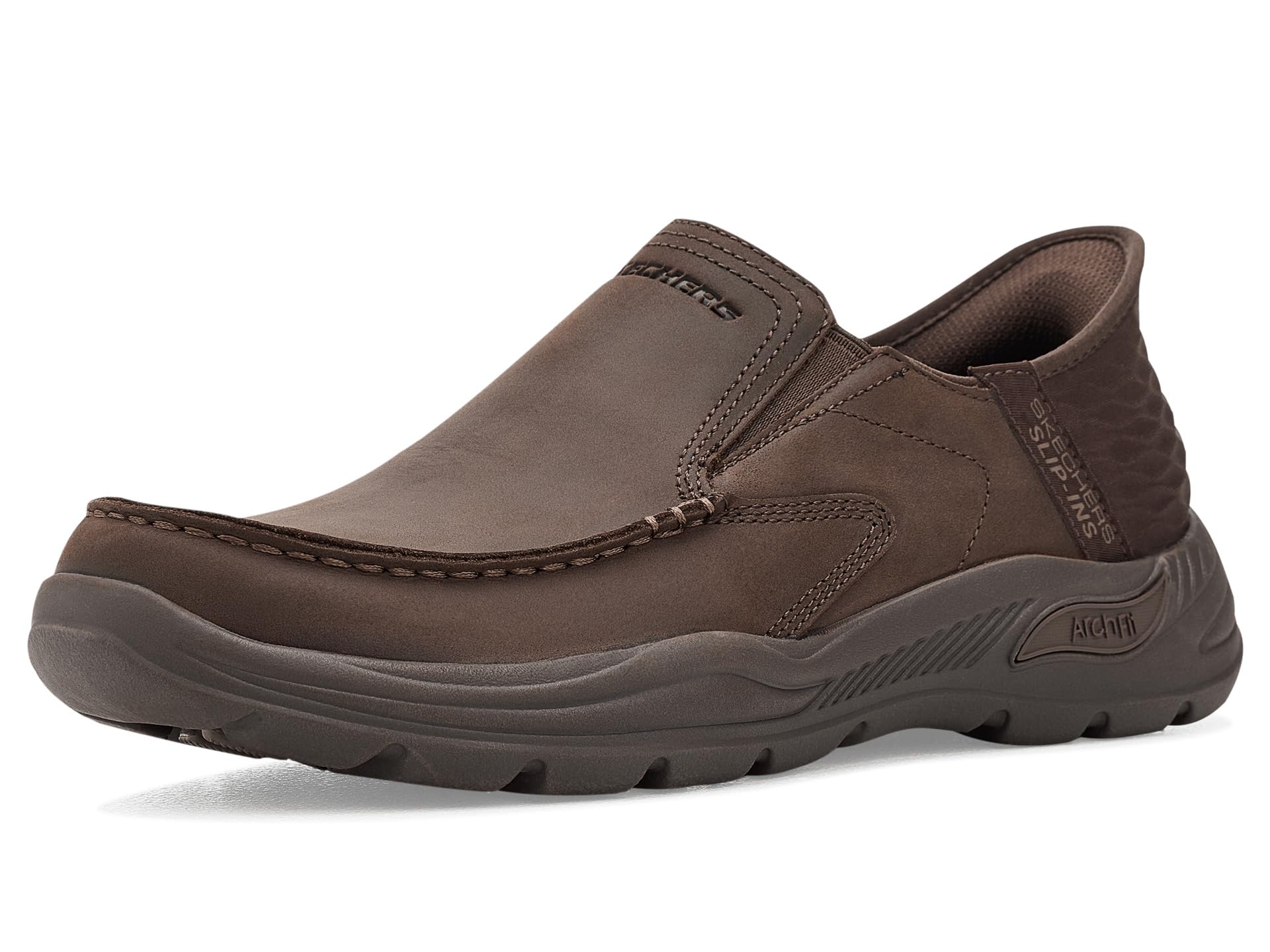
The Skechers Arch Fit Motley – Milo targets the specific need for arch support in a comfortable, lightweight package. Its defining feature is the Arch Fit insole system, which was developed with podiatrists using thousands of foot scans to create a contoured shape that cradles the arch. For men dealing with plantar fasciitis, tendonitis, or the instability that comes with fallen arches, this structured support can significantly reduce heel and midfoot pain.
Users with neuropathy, including one reviewer with nerve damage from the leg down to the foot, reported that these shoes immediately stopped the blistering and irritation caused by their previous footwear. The extra-wide sizing (available up to 14 4E) accommodates swollen feet and bulky ankles, and the back lip of the shoe is designed to aid slip-on entry. The midsole is durable, holding up well for big and tall individuals who put extra stress on their footwear.
The main limitation is sizing precision. While the shoe fits true to size for most, a few users found the toe box snug for their specific foot shape. The Arch Fit insole is not removable, so users who require a custom orthotic cannot swap the factory foam. The lace-up design, while secure, requires some manual dexterity to adjust.
Why it’s great
- Podiatrist-designed Arch Fit insole provides excellent built-in support
- Available in extra-wide widths for larger, swollen feet
- Durable construction suitable for big and tall users
Good to know
- Arch Fit insole is not removable for custom orthotics
- Lace-up design may be less accessible for limited hand function
6. OrthoComfoot Men’s Orthopedic Wide Sneaker
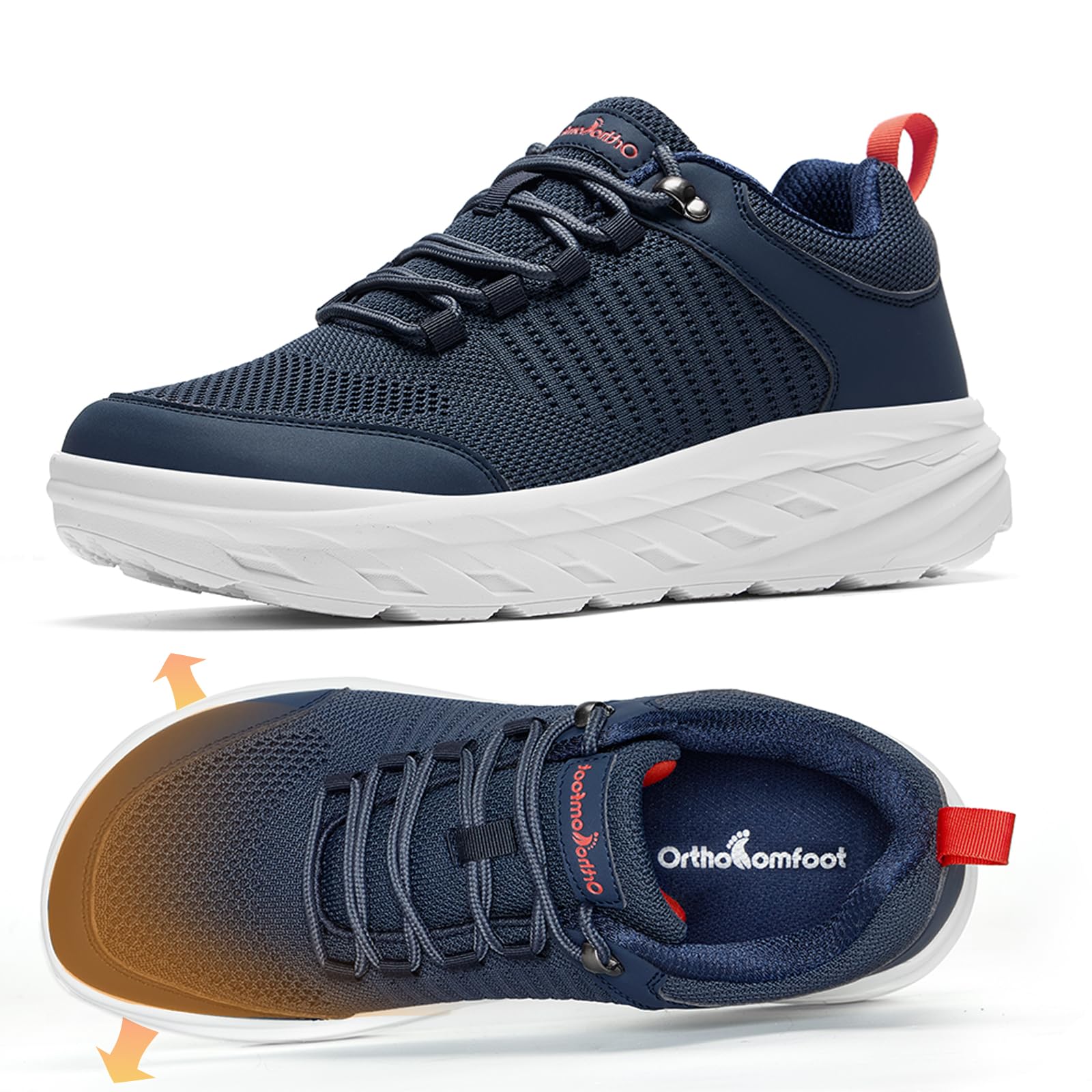
The OrthoComfoot sneaker is the most aggressive value proposition in this category, delivering a wide toe box and integrated arch support at a price point that makes experimentation low-risk. The toe box is genuinely spacious, allowing the metatarsals to splay naturally — a critical feature for those with bunions or hammer toes. The built-in arch support is notable for the price, with users reporting they could stand on hard floors for 9-7 shifts without the foot pain they experienced in previous shoes.
Lightweight and designed for slip-on convenience, the shoe feels like a supportive house shoe but functions well for daily errands and light walking. The flexibility of the sole is a double-edged sword: it provides initial comfort, but some users note it lacks the non-slip grip and heavy-duty construction of more expensive options. The material is breathable but runs warm, which can be a concern for those with poor circulation or swelling.
Sizing is the most common friction point. The shoes are manufactured in Asia and run short in the toe box. Multiple reviewers recommend ordering a half to a full size up, especially for those with a wider foot. The seller’s generous one-year return policy helps mitigate this risk, making it a low-stakes trial for someone new to orthopedic footwear.
Why it’s great
- Excellent wide toe box for splaying metatarsals
- Very lightweight and comfortable for long standing periods
- Low cost of entry with a generous return policy
Good to know
- Runs short; requires sizing up by half to a full size
- Less non-slip grip and durability than premium brands
7. JBU by Jambu Women’s Fawn
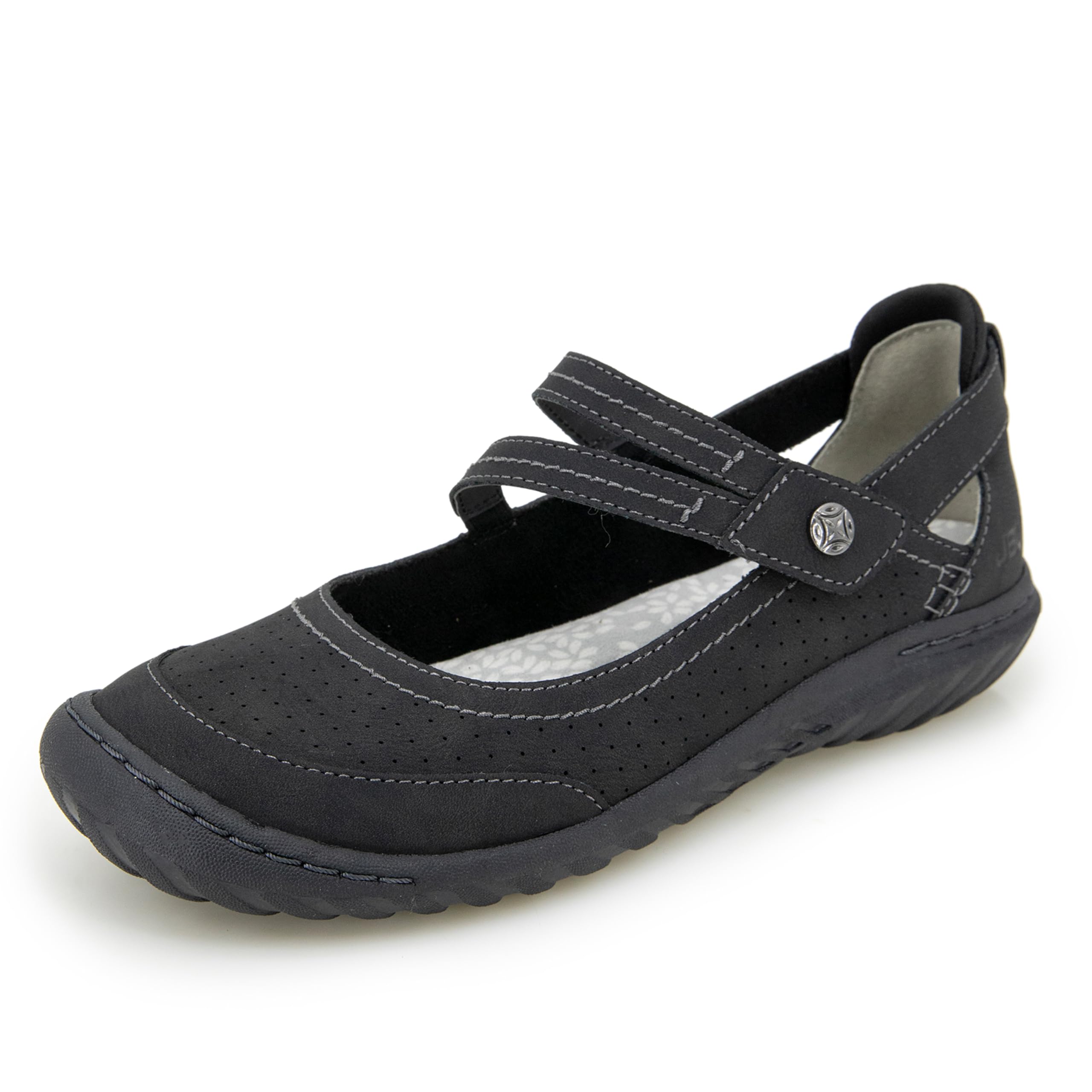
The JBU by Jambu Women’s Fawn is a stylish, practical sneaker that addresses two major arthritic foot concerns: adjustability and toe space. The Velcro strap system allows for micro-adjustments throughout the day, accommodating swelling changes without the hassle of laces. The round toe box is notably roomy, and multiple reviewers with bunions and protruding big toes confirm they experienced no direct pressure or irritation from the upper.
The suede upper offers a more sophisticated look than most orthopedic shoes, making it suitable for casual to business-casual environments. The rubber outsole is light and provides good traction on both carpet and tile. The inner cushioning is comfortable enough for 3-5 mile walks, and the shoes weigh little enough that they don’t fatigue the feet during extended wear.
The main durability concern is the Velcro closure system. Several long-term users reported the straps losing their grip after about a year of regular wear, which reduces the shoe’s useful lifespan. The suede upper also requires more careful cleaning than synthetic materials. For the price, however, the comfort and style combination makes this a compelling option for women who prioritize appearance alongside pain relief.
Why it’s great
- Velcro straps provide easy day-to-day adjustability for swelling
- Stylish, attractive suede upper for a less “medical” look
- Lightweight construction prevents foot fatigue during walks
Good to know
- Velcro can lose grip strength after a year of frequent use
- Suede upper requires more care than synthetic alternatives
FAQ
Should I size up for orthotics in footwear for arthritic feet?
What is the difference between a wide toe box and a wide width shoe?
Can waterproof boots provide enough arch support for plantar fasciitis?
How long should a quality shoe for arthritic feet last?
Final Thoughts: The Verdict
For most users, the footwear for arthritic feet winner is the Brooks Addiction Walker V-Strap 2 because it combines a Velcro closure system, motion control, and a wide sizing range into a proven, durable package. If you face harsh winters and need arch support in a boot, grab the Orthofeet Siena. And for the ultimate hands-free experience with cloud-like cushioning, nothing beats the Skechers Max Cushioning Glide Step.