
The single greatest risk on a roof isn’t the height — it’s losing your footing on an unseen patch of morning dew or loose granular grit. Standard work boots with generic lug soles turn a steep 10/12 pitch into a skating rink, forcing you to compensate with leg fatigue and mental tension. The right footwear changes that equation entirely, turning a precarious perch into a stable platform where your feet are locked to the shingle’s surface.
I’m Mohammad Maruf — the founder and writer behind Drink4Good. I’ve analyzed over 200 roofing-specific boot reviews and cross-referenced slip-resistance data, rubber compound formulations, and shingle-grip geometry to separate marketing claims from real traction performance.
After weeks of comparative research, I’ve assembled this guide to help you find the most reliable footwear for roofing, whether you need industrial-grade traction on steep slate or a lightweight option for daily residential work.
How To Choose The Best Footwear For Roofing
Roofing footwear must balance three competing demands: aggressive traction that won’t mar shingles, enough cushioning to absorb hours of standing on a sloped surface, and sufficient protection from punctures or falling debris. Many general-purpose work boots fail on at least one of these fronts. Understanding a few key specifications will help you avoid that mismatch.
Rubber Compound and Sole Pattern
Not all slip-resistant outsoles are created equal for roofing. Look for proprietary compounds—Cougar Paws uses a specialized sticky rubber that adheres to asphalt shingles without leaving scuff marks. The tread pattern should feature closely spaced, multi-directional lugs rather than deep, widely spaced cleats, which can roll off the edge of a roofing shingle instead of biting into it.
Safety Toe and Puncture Resistance
Steel and composite toes protect against dropped nail guns, tool pouches, or roll shingles, but they increase weight. For roofing, a lightweight composite toe can reduce fatigue on long days while still meeting ASTM safety standards. Puncture-resistant midsoles are also critical if you’re walking over debris-filled attics or renovating older homes with exposed staples.
Weight and Fatigue Management
A heavy boot on a steep pitch forces your lower body to work harder just to stay balanced. Lightweight designs (under 2 lbs per boot) let you move quickly and reduce the energy drain over an 8-hour shingle session. This is why many roofers pair dedicated roofing boots like the Cougar Paws for active climbing and a more robust boot for ground tasks.
Quick Comparison
On smaller screens, swipe sideways to see the full table.
| Model | Category | Best For | Key Spec | Amazon |
|---|---|---|---|---|
| Cougar Paws Peak Performer | Specialty | Steep shingle traction | Replaceable sole system | Amazon |
| Dunlop Explorer Full Safety | Rubber Boot | Wet & chemical protection | Vibram sole, steel toe | Amazon |
| Cougar Paws Performer Boot | Specialty | All-day roof comfort | Ankle-high, lightweight | Amazon |
| Georgia Giant Pull-On Work Boots | Traditional | Heavy ground work | Steel toe, EH rated | Amazon |
| Rocky S2V Tactical Boot | Tactical | Multi-surface versatility | 5 lb, calf-high support | Amazon |
| Muck Arctic Pro | Insulated | Cold weather roofing | 8mm neoprene, 17″ shaft | Amazon |
| Skechers Glide-Step Pro Slip-ins | Athletic | Light duty & layover | Air-Cooled Memory Foam | Amazon |
In‑Depth Reviews
1. Cougar Paws Peak Performer Roofing Boots

Cougar Paws are the gold standard when your workday lives entirely above the fascia. The Peak Performer uses a proprietary sticky rubber compound explicitly engineered to bite into asphalt shingles without leaving scuff marks—a material entirely different from standard slip-resistant outsoles designed for tile or concrete floors. The most practical feature is the replaceable bottom sole, which lets you refresh the gripping surface without buying a whole new boot, effectively doubling the lifespan.
Users consistently report feeling “like Spiderman” on steep 10/12 and 12/12 pitches, with the traction making a measurable difference in confidence and safety. The sole pattern is shallow and multi-directional, preventing the lugs from rolling under on granular shingles. Sizing does run a half to full size large, so order accordingly and expect a snug fit that eliminates heel slip inside the boot.
Construction is lightweight compared to a steel-toe work boot, which helps reduce fatigue when carrying bundles up a ladder. The trade-off is less insulation and puncture protection, so these are best used as dedicated roof boots swapped in once you’re on the deck, not as your all-day ground-to-roof footwear.
Why it’s great
- Replaceable sole extends boot life 2x
- Shingle-specific rubber compound delivers unmatched grip on steep pitches
- Lightweight build reduces climbing fatigue
Good to know
- Sizing runs large — order a full size down
- Limited insulation for cold weather work
- Lacks steel or composite toe protection
2. Dunlop Explorer Full Safety with Vibram Sole

The Dunlop Explorer is a full rubber work boot that brings serious wet-weather credibility to the roofing site. The Vibram sole features deep, mud-tire-style lugs that shed debris and grip aggressively on wet OSB, plywood decks, and metal roofing surfaces. Unlike felt-sole roofing boots, the Explorer’s thick rubber body is completely waterproof and chemical-resistant, making it a top choice for roof coatings, torch-down applications, or mornings when the roof is still slick with dew.
The steel toe and mid-calf height provide real protection against dropped tools and nail punctures, and several reviews cite durability exceeding seven years in demanding conditions like coal mines and oilfields. The outsole’s mud-tire tread pattern can feel slightly uncomfortable for long driving stints, but on the roof it provides the kind of positive bite that keeps you planted on standing seam metal panels.
Sizing runs large — owners consistently recommend ordering a full size down from your usual. The boot is heavy at 3.69 kg per pair, but the trade-off is bombproof construction that shrugs off chemicals, abrasion, and constant kneeling. If you work across multiple roof types in wet climates, this is the most versatile one-boot solution.
Why it’s great
- Fully waterproof with chemical-resistant rubber
- Vibram sole provides excellent traction on wet metal and wood
- Steel toe meets safety requirements for construction sites
Good to know
- Sizing runs large — order one full size down
- Heavy build causes leg fatigue on long ladder climbs
- Mud-tire tread feels awkward for driving
3. Cougar Paws Performer Roof Boot
The Cougar Paws Performer is the more affordable entry point into dedicated roof boots, designed specifically for roofers who need shingle-gripping traction without the height or weight of the Peak Performer. At ankle height and roughly 2.14 kg per pair, it’s noticeably lighter than a traditional work boot, which pays dividends when you’re walking a ridge line or scooting down a sloped dormer eight hours into the day.
Users consistently report that the sticky rubber outsole provides “100% difference” in their ability to traverse a 10/12 pitch safely, with enough bite to walk confidently on composite shingles, wood shakes, and even standing seam metal. The fit is more generous than the Peak Performer, but many roofers still recommend going a half size smaller than their normal shoe to prevent lateral movement inside the boot during side-hill traversing.
The boot is less insulated and armored than a standard work boot, so it functions best as a dedicated roof boot changed into once you’re on the deck. While some owners noted the insoles wear out faster than the outsole, the overall construction holds up well under daily residential roofing conditions. If your work is 70% on the roof and 30% on the ground, this is the boot to keep in your truck bed.
Why it’s great
- Ankle-height design reduces weight and improves mobility on steep slopes
- Sticky rubber sole dramatically improves traction on steep pitches
- All-season build suitable for year-round work
Good to know
- No steel or composite toe protection
- Insoles may need replacement before the outsole wears out
- Not designed for heavy ground work or debris fields
4. Georgia Boot Men’s Georgia Giant Pull-On Work Boots

The Georgia Giant is a heavy-duty pull-on work boot built to survive 14 to 16 hour days in the toughest construction environments. The steel toe and electrical hazard rating meet OSHA requirements for job sites, while the full-grain leather upper resists cuts from sheet metal and roofing debris. This is not a roof-specific boot — the outsole is a traditional slip-resistant welt design — but its durability and comfort make it the boot you wear to and from the roof and for all ground-level tasks like loading bundles, running debris, and operating equipment.
Users who finish concrete, do HVAC work, and handle heavy construction report that the Georgia Giant outlasts competitors from Thorogood and Carolina, with the leather holding up against constant kneeling on abrasive surfaces. The break-in period is short, and the fit accommodates thick work socks without being sloppy. Several owners noted that the stock insoles lack arch support, so a quality aftermarket insole is a worthwhile upgrade for all-day standing.
The pull-on style and ¾ heel make it less suitable for steep roof walking than a dedicated roofing boot, but it excels as your primary ground boot. Pair it with a lighter roof-specific boot like the Cougar Paws Performer to cover both phases of the workday.
Why it’s great
- Durable full-grain leather resists cuts and abrasion on job sites
- Steel toe and electrical hazard rating meet safety standards
- Short break-in period for a leather work boot
Good to know
- Standard outsole lacks specialized shingle grip
- Stock insoles offer minimal arch support
- Heavy build contributes to leg fatigue on ladders
5. Rocky S2V Tactical Military Boot
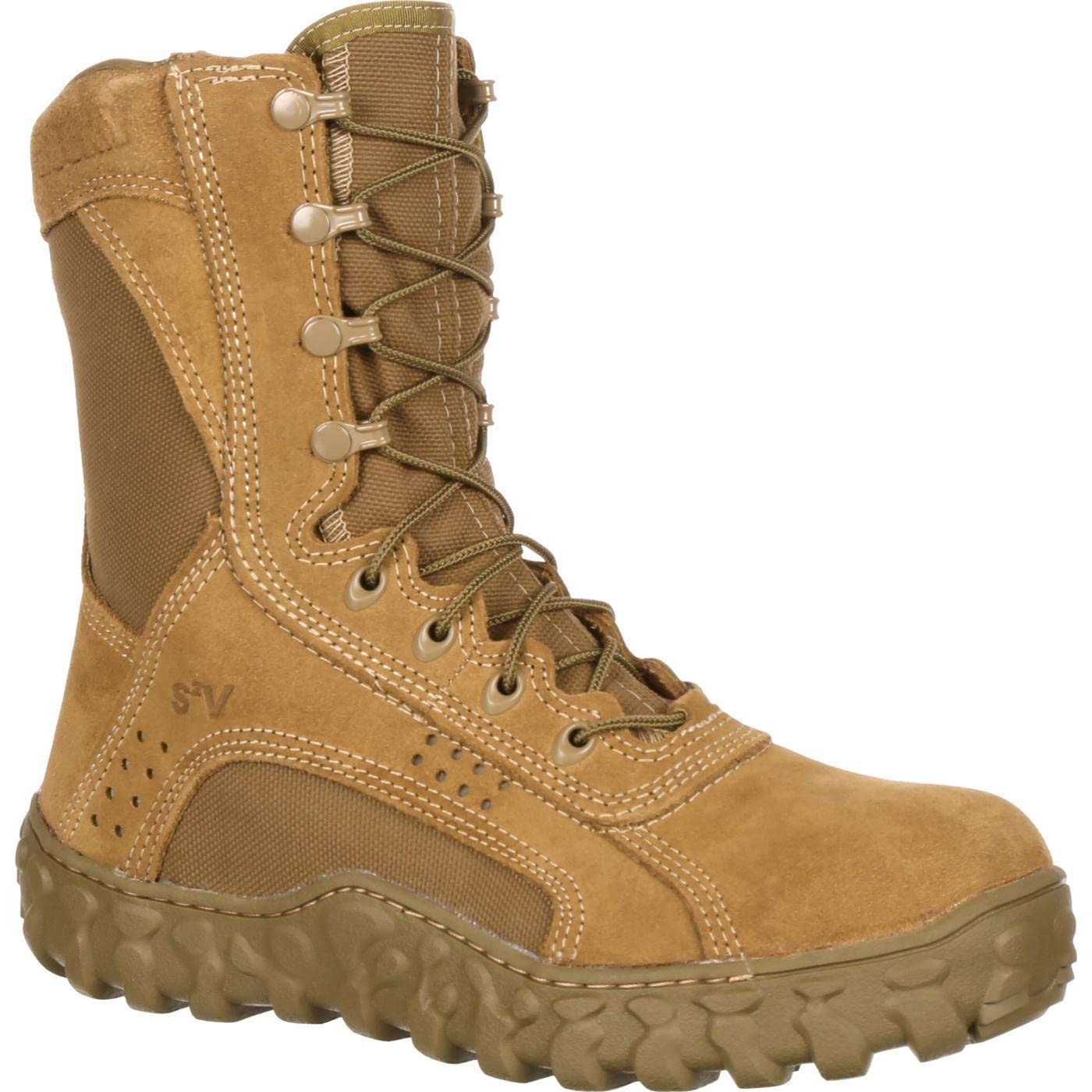
The Rocky S2V is built around a simple principle: if it survives military field deployments, it can handle a roofing workday. The calf-high design provides exceptional ankle support, which is critical when you’re carrying a roofing bundle on one shoulder while navigating a sloped deck. The rubber outsole offers excellent grip on wet grass, dry concrete, and plywood sheathing, though some users note it can be slippery on wet urban surfaces and polished stone.
What sets the S2V apart is its near-zero break-in period — reports consistently mention wearing them straight out of the box with no blisters or hot spots. The boot is lightweight for its height at roughly 5 lbs per pair, and the combination of a supportive midsole and roomy toe box allows for thick wool socks in colder months. Durability is excellent, with seams and toe caps surviving heavy contact without separation.
This boot runs warm in summer and is not specifically designed for shingle grip, so it works best as a versatile all-rounder for roofers who move between residential framing, metal roofing, and ground cleanup. If your week involves three different site types, the S2V is the most adaptable single boot you can own.
Why it’s great
- Zero break-in — comfortable straight from the box
- Superb ankle support for load carrying on sloped surfaces
- Durable construction with stain-resistant materials
Good to know
- Outsole requires caution on wet polished surfaces
- Runs warm in hot weather
- Not optimized for asphalt shingle grip
6. Muck Unisex-Adult Arctic Pro
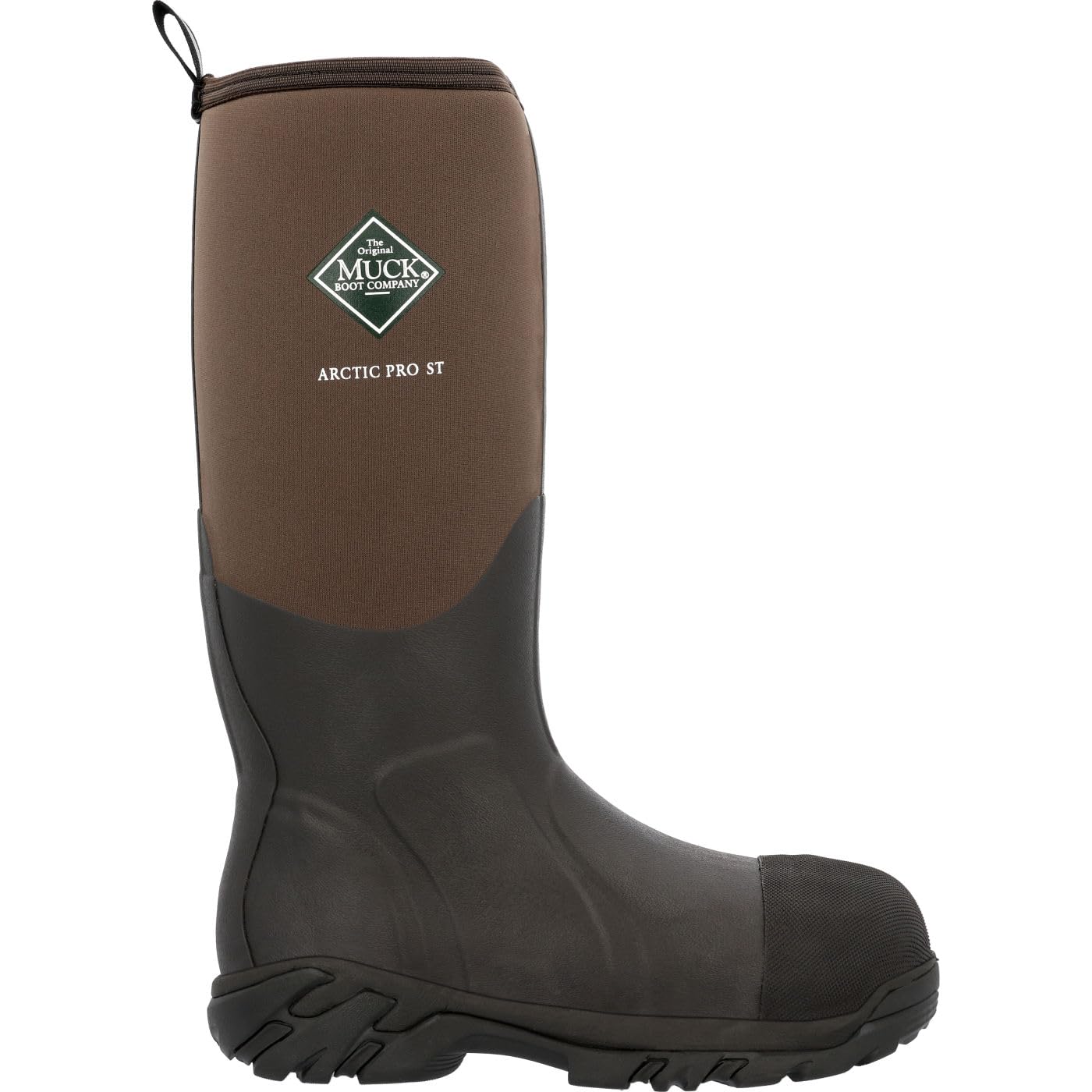
When the temperature drops below freezing and you still have a roof to finish, the Muck Arctic Pro is the boot that keeps you productive. The 17-inch neoprene shaft and 2mm thermal foam underfoot provide serious insulation, with users reporting warm feet after 10-12 hour shifts in -20°F to -30°F conditions in Alaska. The Bob-tracker shaped outsole provides stable footing on snow-covered roofs, and the 100% waterproof construction means standing water on a flat membrane roof never penetrates.
The boots are slightly stiff at first but conform to the foot after a few wears, and the generous fit accommodates two layers of socks without compressing circulation. Several owners note that the steel toe—while protective—is cold-conductive, so a composite toe version would be ideal for extreme cold. The boots are also heavier and bulkier than any other option in this list, making them impractical for warm-weather work or fast ladder climbs.
Durability is proven over multiple winters of heavy use in hunting, farming, and outdoor industrial work. If your roofing season extends into the snow months or you do cold-weather flat roof repairs, the Arctic Pro is the only boot that will keep you working when others are packing up.
Why it’s great
- Proven insulation performance in sub-zero temperatures
- 100% waterproof and Muckproof construction
- Tall shaft protects against snow accumulation
Good to know
- Steel toe conducts cold in extreme temperatures
- Heavy and bulky for fast ladder work
- Not designed for asphalt shingle grip
7. Skechers Glide-Step Pro Slip-ins Work Sneakers
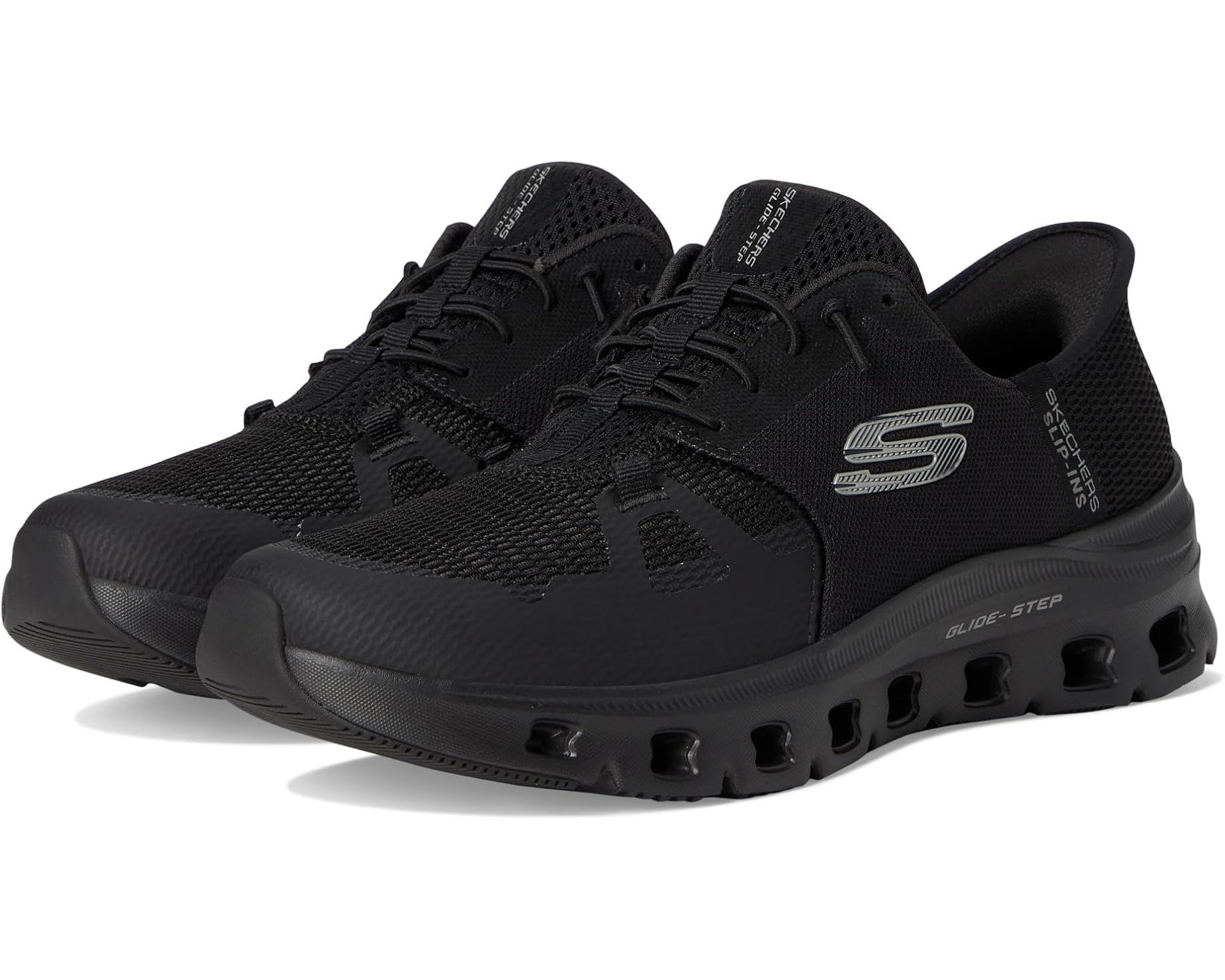
Skechers has carved out a real niche in the work shoe category with the Glide-Step Pro Slip-ins, offering high-end cushioning at an accessible price point. The Air-Cooled Memory Foam insole combined with the Glide-Step midsole delivers exceptional shock absorption, making these a legitimate option for roofers who suffer from plantar fasciitis or metatarsalgia — a common ailment from standing on sloped, unyielding roof decks for years. The slip-resistant outsole handles flat surfaces well, though it lacks the specialized shingle-grip rubber of purpose-built roofing boots.
The hands-free slip-in design is a genuine convenience for roofers who are constantly pulling boots on and off between tasks. Users report the shoes are lightweight, breathable, and water-repellent, with a heel that holds securely despite the lack of laces. After a break-in period of roughly a week, the cushioning molds to the foot and provides noticeable relief from foot and back pain.
These are not for steep pitch work — the outsole simply isn’t aggressive enough. But for flat roof work, tear-offs, ground cleanup, or as a comfortable shop shoe for the end of the day, they are the best value option. Some owners find the stock insoles insufficient and upgrade to custom orthotics, which is easy due to the removable insole design.
Why it’s great
- Air-Cooled Memory Foam provides excellent plantar fasciitis relief
- Hands-free slip-in design saves time on site
- Lightweight and breathable for warm weather
Good to know
- Not suited for steep roof pitches or shingle grip
- Stock insoles may need upgrading for arch support
- Break-in period of about one week required
FAQs
Can I use regular work boots for roofing?
Are Cougar Paws worth the premium price?
What is the difference between slip-resistant and shingle-grip soles?
Final Thoughts: The Verdict
For most roofers, the footwear for roofing winner is the Cougar Paws Peak Performer because its replaceable sole and shingle-specific rubber compound deliver the highest traction-to-weight ratio on steep pitches. If you need 100% waterproof protection with chemical resistance for wet or metal roofing work, grab the Dunlop Explorer Full Safety. And for cold-weather roofing where insulation is the priority, nothing beats the Muck Arctic Pro.