
Walking through slush, crunchy snow, or an unexpected blizzard is only comfortable if your feet stay dry and warm. The wrong pair of snow boots turns a short commute into a freezing ordeal, while the right ones make winter feel like an invitation to explore.
I’m Mohammad Maruf — the founder and writer behind Drink4Good. I spend my days analyzing footwear construction, insulation densities, rubber compound grades, and waterproofing technologies so you don’t have to guess what keeps feet happy in subzero conditions.
Whether you’re shoveling the driveway, walking the dog in a snowstorm, or hiking icy trails, finding the right pair of men’s and women’s boots comes down to understanding insulation weight, outsole grip, and waterproof build quality. This guide breaks down seven proven models so you can confidently choose the best footwear for snow that fits your winter routine.
How To Choose The Best Footwear For Snow
Snow boots occupy a confusing middle ground between insulated winter boots and waterproof hiking shoes. The wrong choice leaves you with clammy feet, frozen toes, or a heavy boot that tires out your legs before you even reach the car. Focus on three core specs rather than brand names.
Insulation Weight and Type
Insulation is measured in grams (200g, 400g, or 800g are common tiers). For daily errands and moderate temperatures above 20°F, 200g works fine. For standing still in single digits or shoveling for an hour, 400g or more prevents cold from creeping up through the sole. Avoid cheap foam-only insulation — synthetic fiber fill holds heat better when damp.
Waterproof Construction Method
Not all waterproof boots are equal. Seam-sealed membranes (like Omni-Tech or KEEN.DRY) block liquid while letting vapor escape. Rubber lowers, often called mud boots, are fully waterproof but trap sweat. Many “waterproof” fabric boots rely on a spray-on coating that wears off in weeks. Look for a boot with an internal bootie or a one-piece rubber shell below the ankle for lasting protection.
Outsole Traction in Snow and Ice
Standard hiking lugs work fine on packed snow but fail on ice. Look for a rubber compound specifically formulated for cold temperatures — it stays flexible rather than hardening into a slick surface. Some boots add multi-directional chevron lugs that bite into slush and compacted snow. If you regularly walk on icy sidewalks, consider models with a recessed heel that accepts clip-on crampons or traction spikes.
Quick Comparison
On smaller screens, swipe sideways to see the full table.
| Model | Category | Best For | Key Spec | Amazon |
|---|---|---|---|---|
| XPETI Crest Thermo | Mid-Range | Hiking & daily wear | 400g insulation | Amazon |
| Men’s Waterproof Muck Boots | Mid-Range | Wet yard work & slush | All-rubber lower shell | Amazon |
| Guide Gear Side Zip Duck Boots | Mid-Range | Rough-duty outdoor work | 400g insulation | Amazon |
| Columbia Transverse Hike | Mid-Range | Women’s all-day snow play | Omni-Tech waterproof | Amazon |
| Columbia Expeditionist Shield | Premium | Lightweight daily w/ warmth | Water-resistant synthetic | Amazon |
| KEEN Revel 4 | Premium | Extreme cold & snowshoeing | 200g KEEN.WARM insulation | Amazon |
| Sorel Tivoli V | Premium | Women’s style & warmth | Seam-sealed waterproof | Amazon |
In‑Depth Reviews
1. KEEN Revel 4 Mid Height Polar Insulated Waterproof
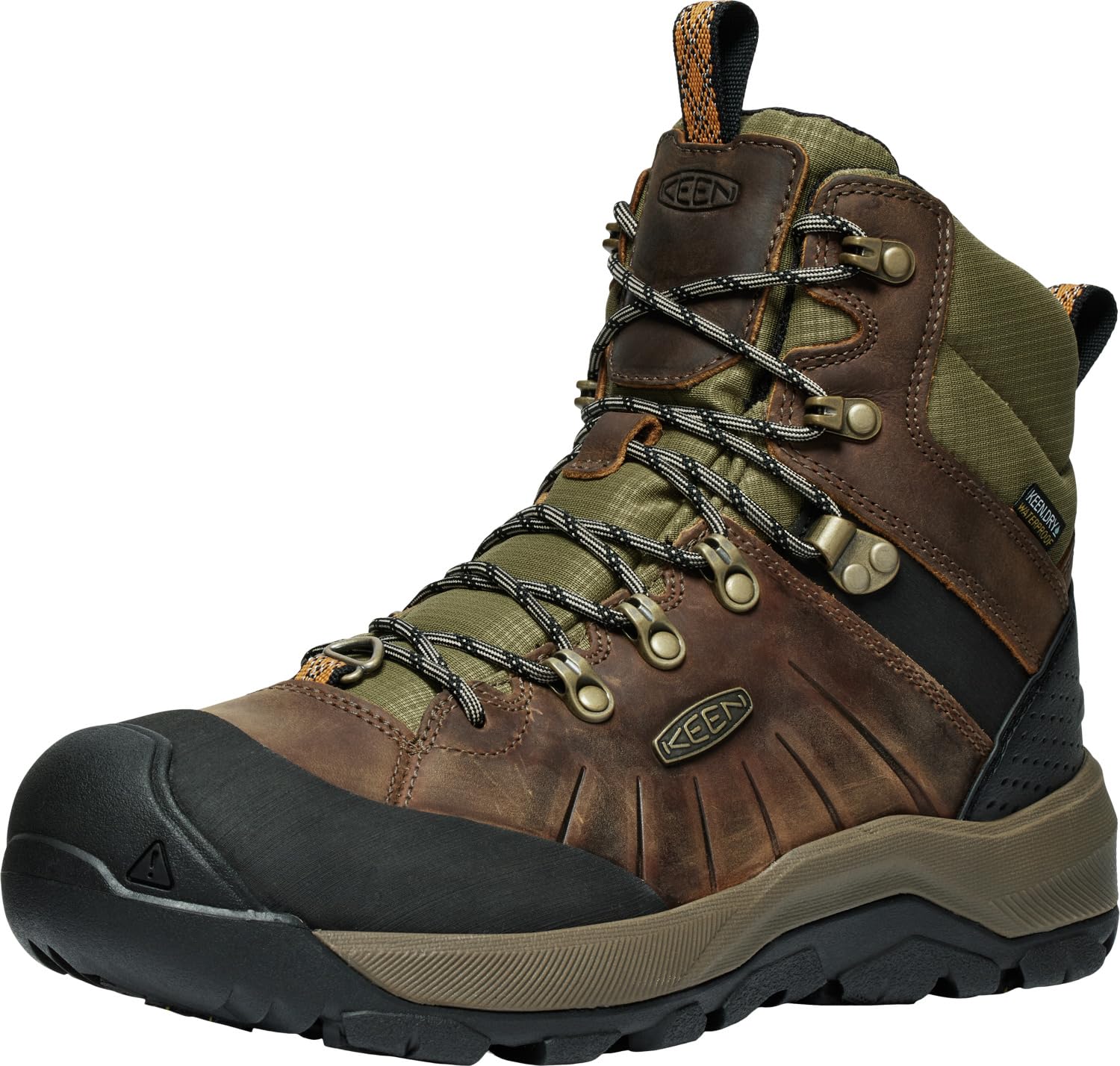
The KEEN Revel 4 is the boot that laugh-tested at -5°F wind chill on a Colorado fourteener. Its 200g KEEN.WARM insulation combined with a thermal footbed keeps toes comfortable in single-digit temps while the wide toe box accommodates thick mountaineering socks. The outsole uses multi-directional lugs that grip so well that several owners report leaving crampons behind on moderate icy trails.
After a full year of harsh winter use, the synthetic upper and rubber toe cap show minimal wear. The boot is true to standard KEEN sizing — half a size up from your sneaker size is the sweet spot if you plan to layer heavy wool socks. The sealed tongue construction blocks snow from seeping in above the laces, a failure point on many cheaper designs.
The Revel 4 is heavier than the Columbia Expeditionist, but that weight pays dividends in cold resilience and durability. It works perfectly with snowshoes and accepted traction spikes without any fit issues. For anyone facing regular single-digit temperatures or backcountry snow play, this is the most confidence-inspiring boot in this roundup.
Why it’s great
- Exceptional warmth tested in subzero wind chill
- Roomy toe box accommodates thick socks and snowshoe bindings
- Outsole grip often eliminates need for traction aids
Good to know
- Heavier than hiking-boot hybrids — not an ultralight option
- Price reflects premium build quality and insulation
2. Columbia Men’s Expeditionist Shield
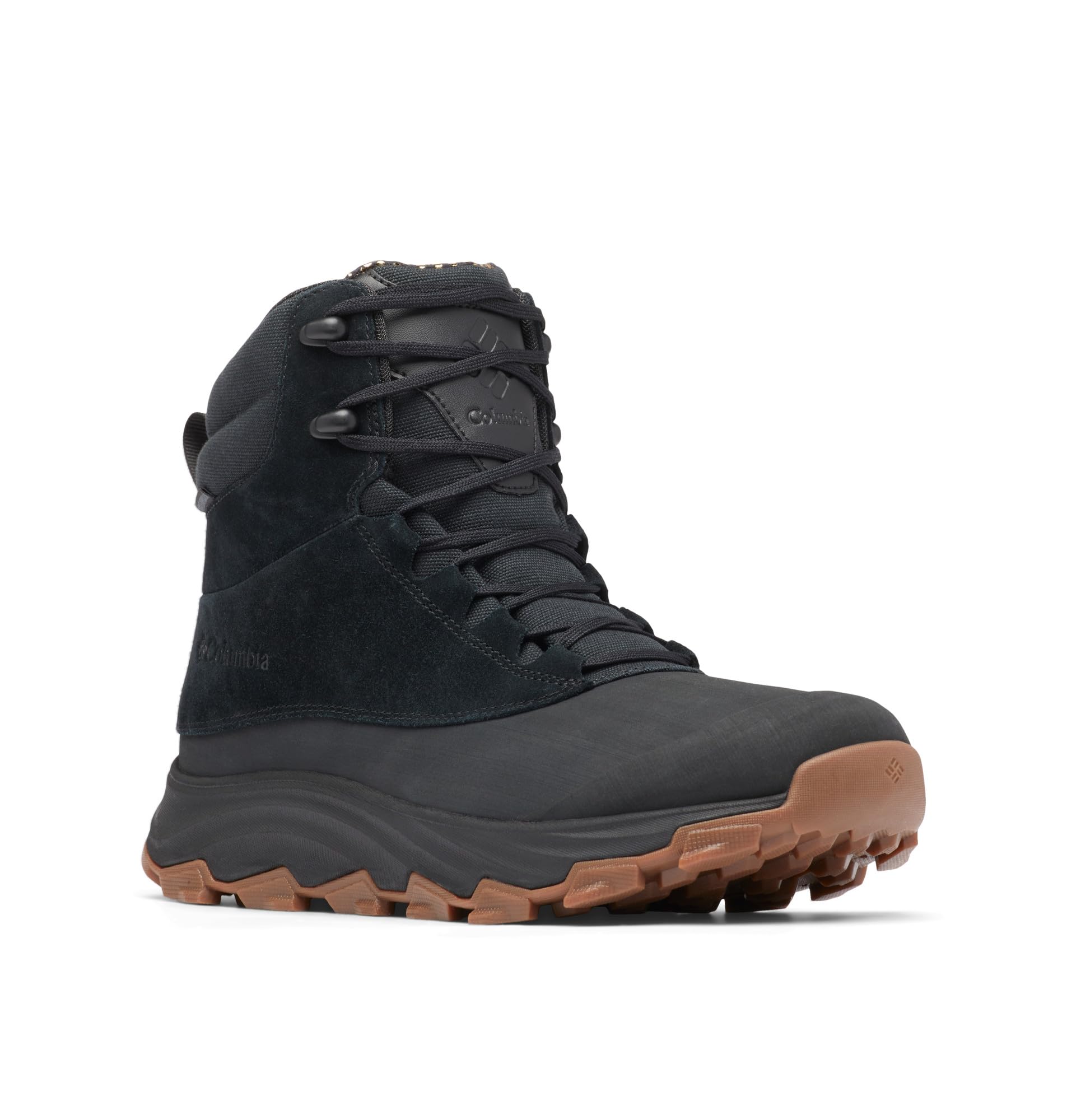
The Columbia Expeditionist Shield walks the line between a winter hiking shoe and a snow boot so well that many owners wear it as their daily driver. The Omni-Heat reflective lining bounces body heat back, keeping feet comfortable down to about 10°F without the swampy feeling of thick foam insulation. It’s lightweight — noticeably closer to a mid-cut hiker than the bulkier KEEN Revel 4.
One important caveat: this is not a fully waterproof boot. The synthetic upper resists water effectively and dries quickly after slush exposure, but prolonged submersion or deep snow will soak through. Several long-term owners confirm that the boot holds up well after three months of daily use, and the outsole provides solid grip on packed snow and icy pavement.
Sizing runs half a size small; order up. The stock insole is minimal and many users replace it with a third-party orthotic for better arch support. If you need a boot that handles snowy commutes, cold walks, and occasional light snow play without feeling like you’re wearing moon boots, the Expeditionist Shield is the smart choice.
Why it’s great
- Lightweight feel like a hiking shoe, warmth like a winter boot
- Dries fast after wet snow exposure
- Comfortable for all-day wear without fatigue
Good to know
- Not fully waterproof — avoid deep puddles or prolonged submersion
- Stock insole is thin and should be replaced for best support
3. Sorel Women’s Tivoli V Waterproof Boot
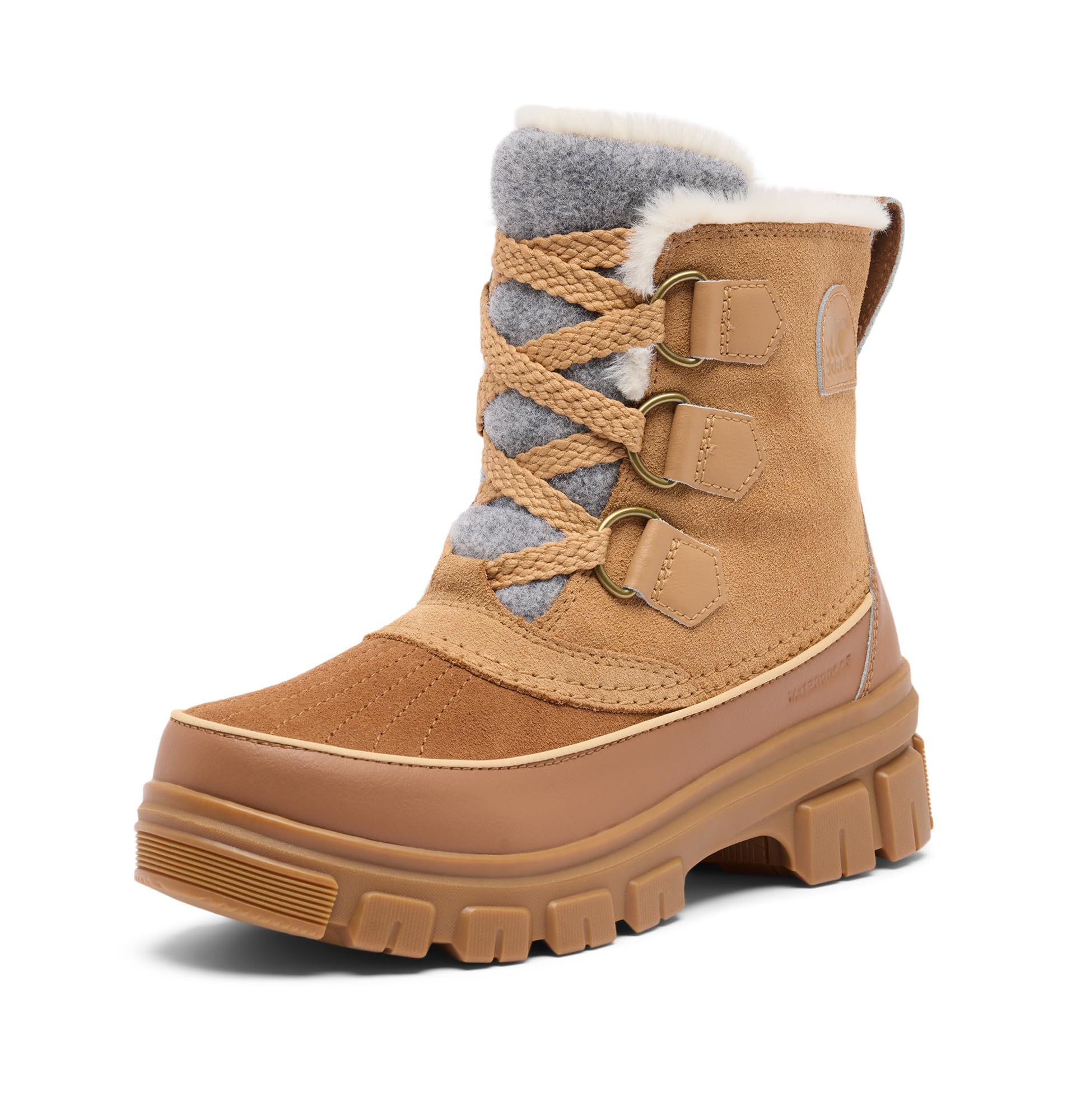
The Sorel Tivoli V proves that a snow boot doesn’t have to look like a rubber work boot to perform. The seam-sealed waterproof construction keeps feet dry through slush, wet grass, and snowy dog walks, while the lightweight synthetic upper avoids the heavy, clunky feel of traditional winter boots. The plush fleece lining wraps the foot in warmth that lasts through hours of outdoor play.
Owners consistently praise the non-slip outsole on icy sidewalks and packed snow. The boot runs true to size, and the mid-calf height keeps snow from spilling over the top during deeper drifts. The midsole offers enough cushioning for all-day wear — one reviewer spent a full Wisconsin winter without needing to break them in.
The Tivoli V uses a synthetic upper rather than leather, making it vegan-friendly and easier to clean after muddy snow days. The army-boot-inspired design looks sharp enough for errands and coffee runs, but the warmth and waterproofing are genuinely Sorel-grade. For women who want style without sacrificing cold-weather function, this is the top contender.
Why it’s great
- Stylish design that looks good beyond the trail
- Seam-sealed construction with effective waterproofing in slushy snow
- Non-slip outsole performs well on icy sidewalks
Good to know
- Lighter insulation than heavy-duty extreme-cold boots
- Price is at the higher end of this roundup
4. Columbia Women’s Transverse Hike Waterproof Hiking Boots

The Columbia Transverse Hike is a waterproof hiking boot that happens to be excellent in snow. The Omni-Tech membrane blocks water entry while the breathable upper prevents sweat buildup — a common complaint with rubber snow boots. Customers who used these for snow play with kids and hiking in Acadia confirmed that they kept feet completely dry and warm in wet, slushy conditions.
The fit runs slightly narrow, particularly in the heel, so owners with wider feet should try before buying or order a half size up. The Techlite midsole provides noticeable cushioning, and the boot requires no break-in period — several reviews mention wearing them straight out of the box for full-day treks without blisters. The outsole grooves handle mud and packed snow well, though they are not as aggressive as the KEEN Revel 4.
This boot shines as a multi-purpose winter shoe: equally at home on a snowy trail, a rainy city sidewalk, or during a day of sledding. The clean gray color avoids the tactical look of many winter boots, and the lightweight build makes it a practical choice for daily wear. For women seeking a snow-capable boot that transitions effortlessly to wet autumn hikes, this is the smartest value.
Why it’s great
- True waterproof membrane with good breathability
- No break-in period — comfortable from the first walk
- Versatile design works for snow, rain, and mild trails
Good to know
- Narrow fit — consider wide sizing if you have standard or wide feet
- Less thermal insulation than dedicated snow boots
5. XPETI Men’s Crest Thermo High-Top Winter Hiking Boots Waterproof Insulated
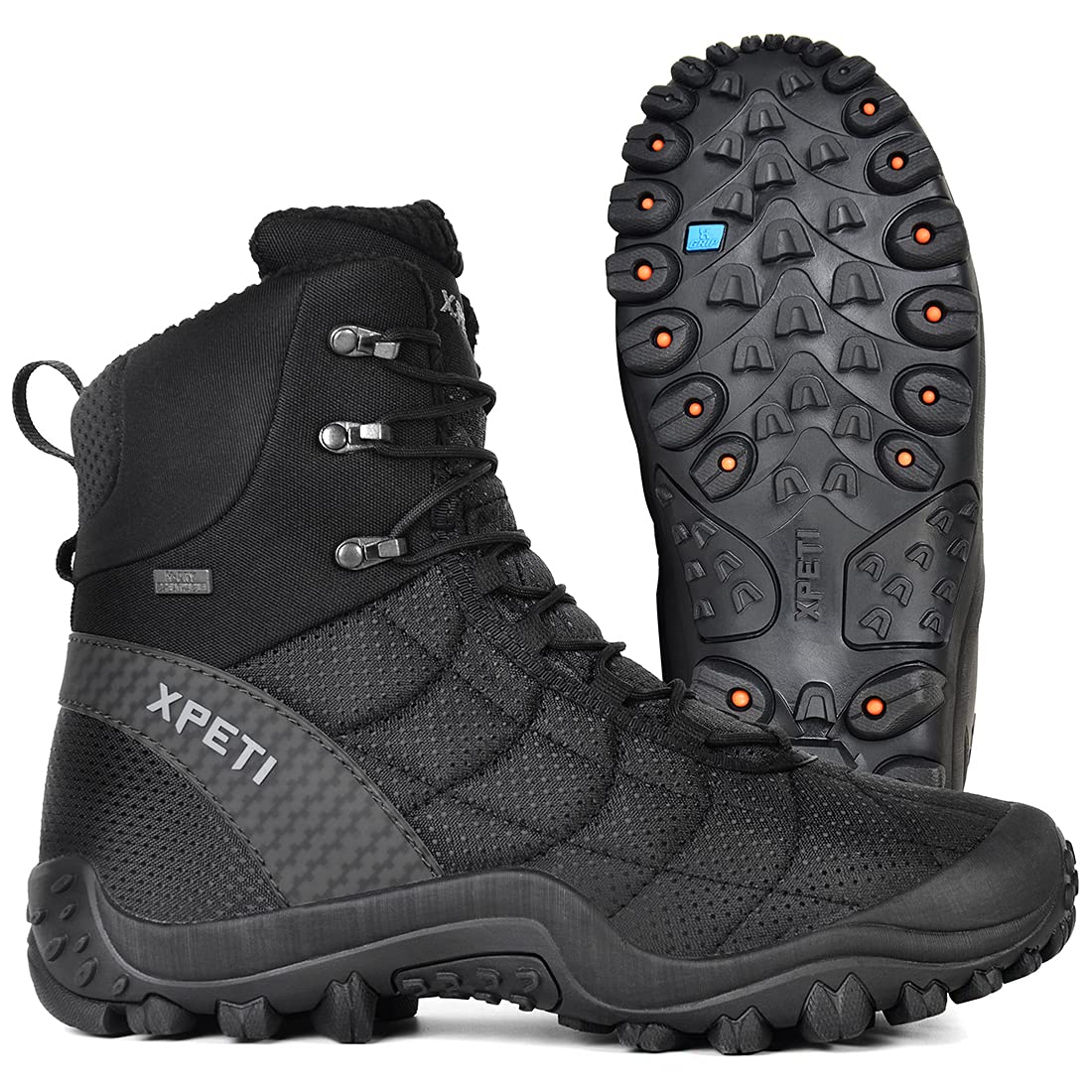
The XPETI Crest Thermo punches far above its mid-range price with 400g of insulation and a one-piece rubber lower that wraps around the entire foot. Owners report staying warm at 6°F with standard wool socks, and the traction compound grips icy grass and muddy transitions with confidence. The high-top cut provides solid ankle support without feeling restrictive.
Sizing requires careful attention: several users needed to order two sizes larger than their normal shoe size to accommodate orthotic insoles and thick socks. The bottom lace hook can press into the ankle bone, a minor ergonomic flaw that a simple lace repositioning solves. The rubber construction is easy to clean — just hose off mud and slush after a day outside.
The waterproofing is strong but not unlimited. One owner noted that snow melting on the top of the tongue area eventually seeped through the lace holes during extended exposure. A quick spray with a DWR treatment addresses that weak point. For the combination of warmth, wet-weather protection, and price, the XPETI Crest Thermo is the most balanced men’s option in this list.
Why it’s great
- 400g insulation keeps feet warm in single-digit temperatures
- One-piece rubber lower blocks snow and slush effectively
- Excellent traction in icy grass and muddy transitions
Good to know
- Size up significantly if you wear orthotics or thick socks
- Lace hole area can leak without additional DWR treatment
6. Guide Gear Men’s Side Zip Insulated Leather Duck Boots, 400 Gram

The Guide Gear Side Zip Duck Boot is the pair you buy when you plan to use it hard for years. Multiple owners report lasting through seasons of off-grid work, wood hauling, and daily farm chores. The 400g insulation is paired with a leather-and-rubber duck-boot design that shrugs off rain, mud, and shallow snow with equal indifference.
The side zip is the standout feature for quick on-off — one owner notes they never unzip it for casual errands, just pull them on. Sizing runs a half size large, so order down if you wear thin socks. The boot is not as heavily padded as the XPETI Crest Thermo, meaning it feels less warm in extreme cold but also less heavy.
The outsole is burly and grips well in wet conditions, though the lack of deep lugs means it can slip on hard-packed ice. If you need a boot that survives years of yard work, hunting trips, and snowy commutes, the Guide Gear delivers durability that cheaper boots cannot match. The trade-off is less refined comfort and insulation compared to mid-range hiking boots.
Why it’s great
- Proven durability — owners report years of heavy use
- Side zip makes on-off incredibly easy
- Leather and rubber construction resists water and wear
Good to know
- Insulation is modest — not ideal for prolonged single-digit temperatures
- Outsole lacks deep lugs for icy traction
7. Men’s Waterproof Rubber Muck Boots – Insulated Mid-Calf Rain & Mud Boots
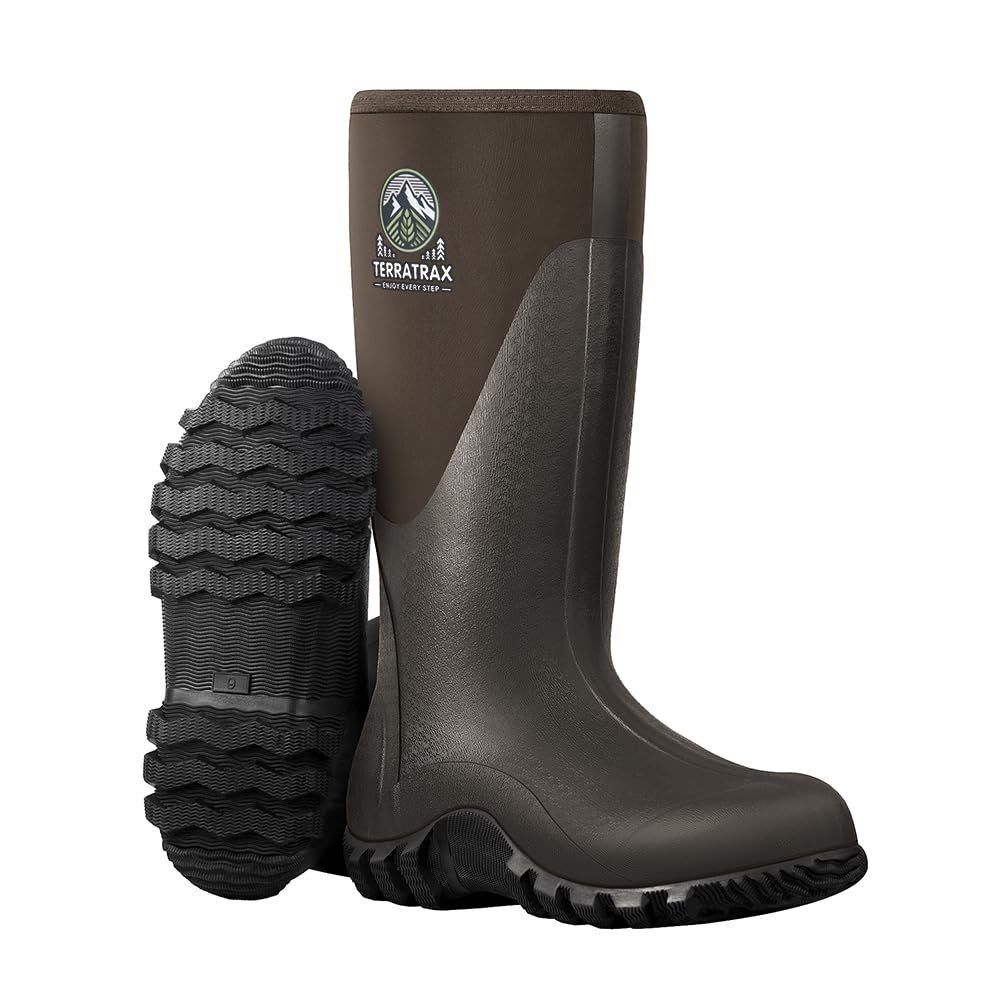
When your day involves standing in puddles, sloshing through muddy livestock pens, or shoveling wet snow, a traditional snow boot is not the answer. These rubber muck boots use a seamless all-rubber lower that is 100 percent waterproof, paired with a neoprene upper that adds flex and a degree of insulation. Owners praise the extra toe room and the outsole’s tenacious grip in slick, wet mud.
The insulation is light — several reviewers note that these are not warm enough for standing still in snowstorms. They work best for active outdoor chores where you generate body heat, or as a rain-and-slush boot that you pull on over thick socks. The mid-calf height keeps puddle splashes from reaching your pants.
Traction on muddy slopes and wet grass is excellent, but the shallow tread pattern struggles on icy pavement. If your winter footwear need centers on wet yard work, fishing trips, or any scenario where standing in liquid is inevitable, this muck boot is the right tool. Just pair it with a thick wool sock for cold conditions.
Why it’s great
- Seamless all-rubber lower guarantees total waterproofness
- Lightweight and flexible — easy to move in
- Excellent traction in mud and wet grass
Good to know
- Minimal insulation — not warm enough for static cold exposure
- Outsole lugs are shallow and slip on ice
FAQ
Can I wear snow boots for hiking on trails without snow?
Why do my feet get cold even in insulated snow boots?
How do I make my snow boots more waterproof?
Can I wear snow boots without thick socks in mild weather?
What traction device works best with snow boots?
Final Thoughts: The Verdict
For most users, the footwear for snow winner is the XPETI Men’s Crest Thermo because it balances 400g insulation, a one-piece rubber lower, and traction rugged enough for icy grass at a price that undercuts winter boots with similar specs. If you want lightweight daily warmth that feels like a hiking shoe, grab the Columbia Expeditionist Shield. And for backcountry extreme cold or snowshoeing adventures, nothing beats the KEEN Revel 4.