
Standing on concrete for eight to twelve hours changes how your body feels by the end of the week. The unyielding surface transmits shock directly up through your heels, knees, and lower back, making the right footwear a non-negotiable piece of safety gear rather than a comfort accessory. Every step on solid concrete removes the cushioning that natural terrain provides, which means the foam density, midsole construction, and outsole pliability of your work shoes matter more than nearly any other feature.
I’m Mohammad Maruf — the founder and writer behind Drink4Good. My approach to this guide involved cross-referencing ASTM safety ratings, analyzing midsole material densities, and mapping real-world fatigue data from workers who log over forty hours a week on concrete floors.
After weeks of comparing support structures, outsole compounds, and comfort technologies, I identified the seven pairs that actually reduce the daily toll of hard surfaces. This guide breaks down the footwear for working on concrete floors that delivers measurable relief across different budgets and work environments.
How To Choose The Best Footwear For Working On Concrete Floors
Concrete transfers nearly every bit of ground impact into your body. Choosing footwear for this surface shifts the priority list away from style and toward measurable cushioning density, midsole rebound rates, and outsole flexibility. Here are the factors that separate a good work shoe from a concrete-specific work shoe.
Midsole Cushioning Density
The midsole is the single component that determines how much shock reaches your joints. Look for shoes that use EVA foam with a density rating above 0.20 g/cm³ — that range provides the balance between soft landing and rebound support. Fresh Foam from New Balance and Memory Foam from Skechers are formulations engineered for sustained compression resistance, meaning they do not flatten out after four hours of standing.
ASTM Safety Ratings and Their Real Impact
ASTM F2412-24 and F2913-24 are the current standards for impact resistance and slip resistance, respectively. A composite or alloy toe cap protects against compression, but it also adds weight. For concrete work, choose alloy toes over steel because they weigh roughly thirty percent less while meeting the same safety threshold. Electric hazard ratings add no weight and are worth having if you work near live circuits.
Outsole Slip Resistance Patterns
Concrete floors in warehouses and workshops often accumulate oil, water, or fine dust. A flat outsole with shallow tread loses grip on slick concrete. Look for outsoles with multidirectional lugs spaced at least three millimeters apart — that pattern channels liquids away from the contact patch. Marking-resistant outsoles also prevent black scuff lines on polished concrete floors.
Weight and Flexibility Trade-Offs
Heavier boots reduce step efficiency across a ten-hour shift. A work shoe under fifteen ounces per shoe allows a more natural walking gait, which reduces fatigue in the hip flexors. However, some lightweight boots sacrifice outsole durability — premium synthetic rubber compounds around 65 durometer hardness give the best life-to-weight ratio for concrete abrasion.
Quick Comparison
On smaller screens, swipe sideways to see the full table.
| Model | Category | Best For | Key Spec | Amazon |
|---|---|---|---|---|
| New Balance Composite Toe Work | Athletic Safety | All-day warehouse shifts | Fresh Foam midsole density | Amazon |
| Timberland PRO Powertrain Alloy Toe | Alloy Safety Hiker | Rough terrain on concrete | 525g per shoe weight | Amazon |
| Timberland PRO Intercept Steel Toe | Steel Toe Athletic | Heavy impact protection | Steel toe cap, breathable mesh | Amazon |
| ROCKROOSTER Moc Toe Boot | Premium Leather Work | Long wear with orthotic comfort | Poron XRD impact cushioning | Amazon |
| NORTIV 8 Composite Toe Boot | Lightweight Composite | Construction and warehouse | ASTM F2412-24, side zipper | Amazon |
| Skechers Arch Fit Orvan – Drex | Slip-On Sneaker | Neuropathy and arch support | Arch Fit removable insole | Amazon |
| Skechers Luxir Industrial | Slip-Resistant Sneaker | Budget-friendly comfort | Air-Cooled Memory Foam | Amazon |
In‑Depth Reviews
1. New Balance Men’s Composite Toe Cremorne Fresh Foam Work Shoes

The Fresh Foam midsole in the Cremorne work shoe is the closest thing to a running shoe platform inside a composite toe safety shoe. The foam density sits in the sweet spot — soft enough to absorb concrete shock without feeling mushy, and resilient enough that it does not bottom out after eight hours of continuous standing. Multiple HVAC technicians and warehouse workers reported eliminating daily foot soreness after switching to these shoes, which points to a midsole return rate that actually sustains consistent energy return.
The composite toe cap is noticeably lighter than steel, and the mesh upper breathes well enough for indoor work in warm environments. Reviewers consistently warned that sizing runs a full half to full size large — the shoe feels wide in the toe box, which works well for wider feet but requires ordering down for a snug fit. The heel wedge design makes removal easy without crushing the heel counter, a detail that extends the structural life of the shoe.
Woodworkers and delivery drivers noted that the Cremorne is less bulky than traditional work boots, making it practical for jobs that require kneeling or climbing. The outsole tread pattern is moderate — not aggressive enough for muddy outdoor work but adequate for polished warehouse concrete. For pure concrete-floor cushioning with safety toe protection, this pair is the benchmark.
Why it’s great
- Fresh Foam midsole provides high-density shock absorption for all-day concrete work
- Lightweight composite toe with breathable mesh upper reduces leg fatigue
- Excellent for wide feet with no break-in period needed
Good to know
- Runs large — order a half to full size down for proper fit
- Moderate outsole tread not ideal for wet outdoor surfaces
2. Timberland PRO Men’s Powertrain Alloy Toe Hiker Shoes

The Powertrain Alloy Toe Hiker from Timberland PRO strikes a different balance than the New Balance — it gives you a taller collar and a more protective outsole while keeping the overall weight at around 525 grams per shoe. That weight is impressively low for a hiker-style safety shoe, and the alloy toe cap means you get the impact protection without the bone-dropping weight of a steel equivalent. Install technicians who wear these for nine to ten hours a day report that the shoe feels broken in from the first wear.
The outsole tread is more aggressive than a standard work shoe, which gives it an advantage on concrete surfaces that transition to gravel or rough terrain. However, the shoe is not waterproof — the upper material prioritizes breathability, which is preferable for indoor work on concrete but leaves you exposed to standing water. Several long-term users noted that the outsole splitting issue appears between six and nine months of heavy use, which is a known weak point on this model.
The lacing system is standard, not the rapid cinch type, and the tongue is padded enough to prevent lace bite during long wear. A number of reviewers with wide feet found that the wide sizing is authentic and accommodates orthotic insoles without pressure points. For workers who need a safety-rated shoe that can handle both concrete warehouse floors and outdoor walkways, the Powertrain fills that niche effectively.
Why it’s great
- Alloy toe cap meets safety standards without the weight penalty of steel
- Taller hiker design protects ankles on uneven concrete transitions
- Wide sizing fits orthotic insoles comfortably
Good to know
- Not waterproof — avoid standing water exposure
- Outsole splitting reported after 6-9 months of daily heavy use
3. Timberland PRO Men’s Intercept Steel Safety Toe Athletic Work Shoe
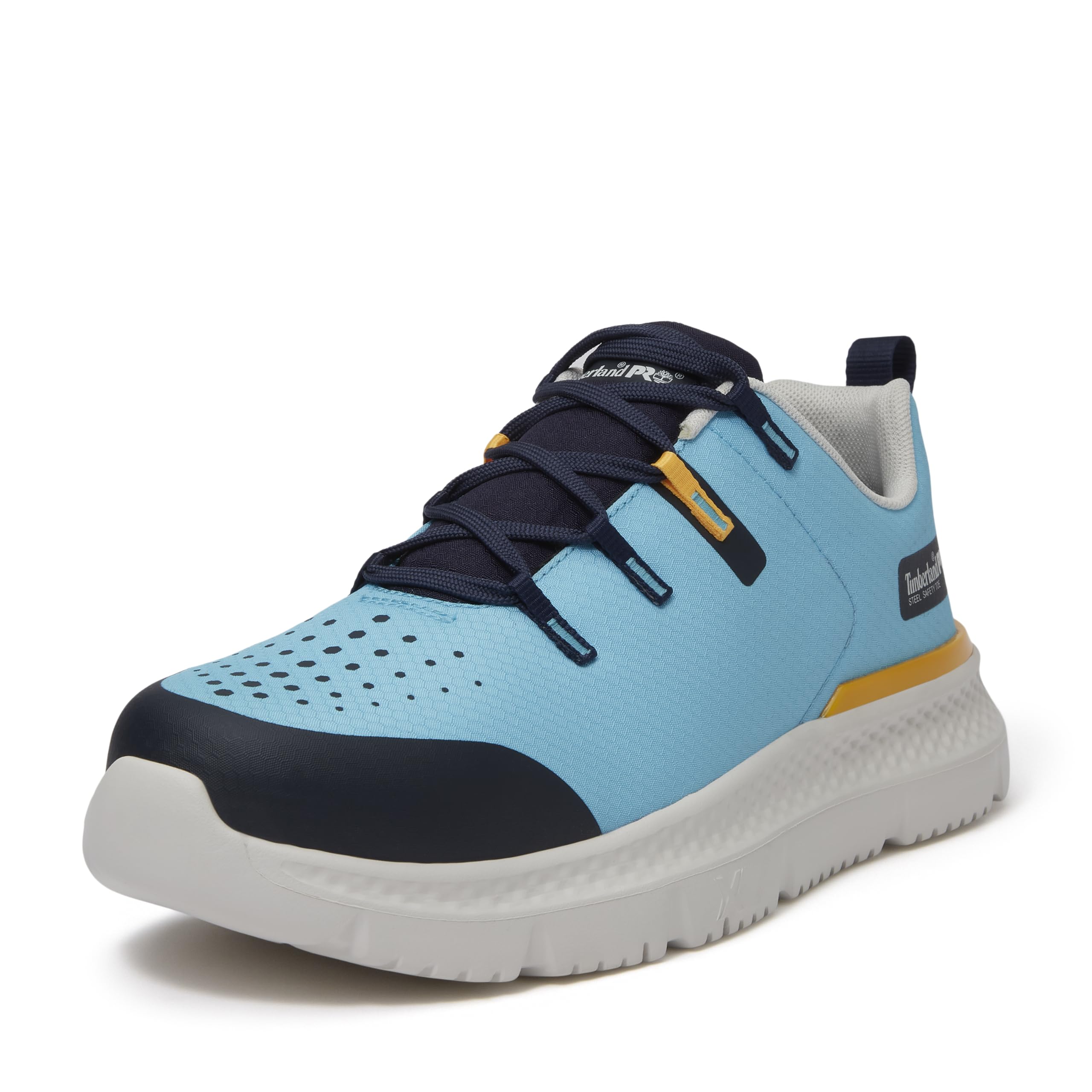
The Intercept delivers a steel toe in a package that feels closer to a cross-training shoe than a traditional work boot. The cushioning is plush from the first step, with an athletic midsole that absorbs concrete impact effectively without the rigid platform that many safety shoes impose. Multiple users noted that the shoe eliminated foot pain that they previously accepted as unavoidable when standing on concrete all day.
The steel toe cap does add weight compared to composite or alloy alternatives, but the overall shoe remains lightweight enough that the difference is noticeable only during direct comparison. The upper is breathable mesh, which helps regulate temperature during active work, but the front toe area is reported to be somewhat delicate — impacts against hard surfaces can leave visible dents in the mesh structure. The outsole has good traction on dry and slightly oily concrete.
Sizing requires attention: the wide variant runs large, and several reviewers recommended ordering a half size down from your normal size. The insoles are thin from the factory, and pairing these with Dr. Scholl’s aftermarket insoles is a common recommendation that elevates the comfort further. Truckers and delivery workers reported this as their go-to shoe for jobs that combine driving with walking on concrete.
Why it’s great
- Steel toe in an athletic, breathable package that reduces concrete fatigue
- Plush midsole cushioning works immediately with no break-in
- Good traction on concrete and light industrial surfaces
Good to know
- Steel toe adds weight compared to composite alternatives
- Front mesh toe area dents easily from impact
- Wide sizing runs large — consider sizing down
4. ROCKROOSTER Men’s Comfortable Work Boots Poron XRD

The ROCKROOSTER moc toe boot uses Poron XRD impact cushioning, a material that absorbs up to ninety percent of impact force — that number is significant when you are logging twenty thousand steps a day on concrete floors. The leather is thick, soft, and flexible enough to require almost no break-in, and the Coolmax lining keeps the interior temperature stable across long shifts. Reviewers who wore these for sixteen months of daily use reported that the orthotic comfort held up longer than expected from a mid-range price point.
The boot is ASTM F2892-18 certified for electrical hazard protection, which adds a layer of safety for shop-floor environments. However, the boot is water-resistant, not waterproof — the stitching pattern prevents a complete water seal. The outsole uses a rubber compound with solid grip and cushion properties, and the heel wear pattern is predictable and manageable. Some users reported poor quality control initially, with crooked eyelets and mismatched toe ridges, but the manufacturer replaced defective pairs without issue.
The fiberboard insole and occasional skipped welt stitch are signs that this boot is not built to the same tolerances as a custom heritage boot, but the combination of Poron XRD cushioning and flexible leather makes it one of the most comfortable options for concrete floors in the premium tier. For workers who want a classic moc toe look with modern shock absorption, this is the pair to try first.
Why it’s great
- Poron XRD cushioning absorbs up to 90% of concrete impact shock
- Soft, flexible leather with almost zero break-in time
- Coolmax lining improves temperature regulation during long shifts
Good to know
- Not fully waterproof — stitching prevents watertight seal
- Quality control issues reported with stitching and alignment
5. NORTIV 8 Men’s Composite Toe Work Boots – Metrostrike-Nano
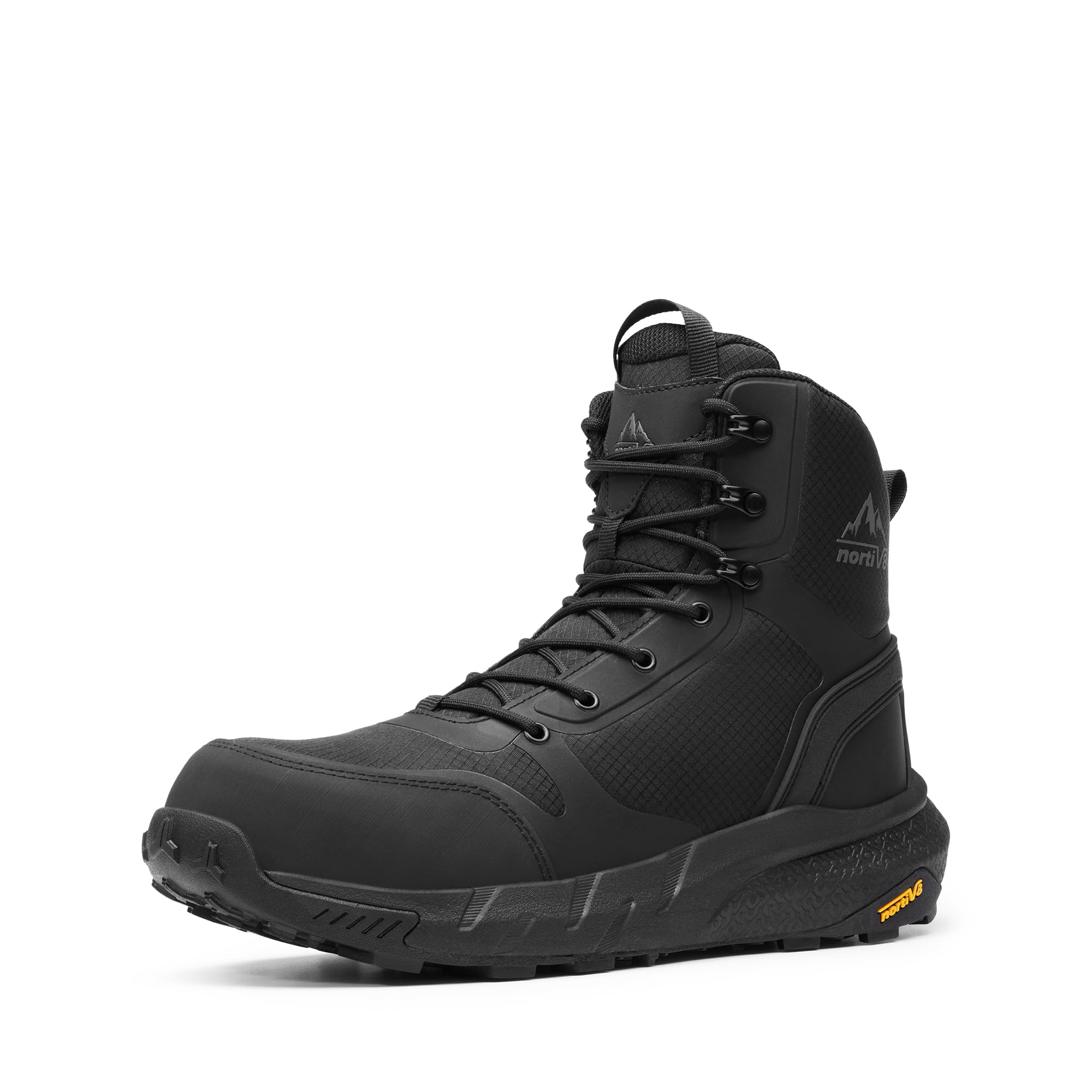
The insoles feel like memory foam from the first wear, and several reviewers noted that the boot needed zero break-in — a rare trait for a composite toe work boot. Construction workers and warehouse staff reported that these boots are more comfortable than boots costing three times as much.
The side zipper is a practical addition for workers who take their boots off multiple times a day for security checkpoints or equipment changes. The tread pattern is moderately aggressive and grips well on dry concrete, but some users found that the treads hold clay and mud excessively when transitioning to outdoor surfaces. A notable flaw reported after several weeks of use is moisture entry at the top of the composite toe cap, which leads to damp feet in snow or heavy rain conditions.
The sizing runs slightly large, and the boot is listed as eight inches but measures closer to six inches, which changes the ankle support profile. For concrete work that stays indoors and dry, the lightweight build and immediate comfort make this a compelling value option. Workers with forty-plus years of boot experience rated this as the most comfortable boot they have ever worn for all-day standing.
Why it’s great
- Lightweight composite toe with memory foam insoles for all-day concrete comfort
- Side zipper enables quick removal without damaging heel structure
- ASTM F2412-24 and F2913-24 certified for safety and slip resistance
Good to know
- Moisture can enter at the toe cap in wet conditions
- Listed as 8″ boot but measures closer to 6″ height
- Tread pattern holds mud and clay when used outdoors
6. Skechers Men’s Arch Fit Orvan – Drex
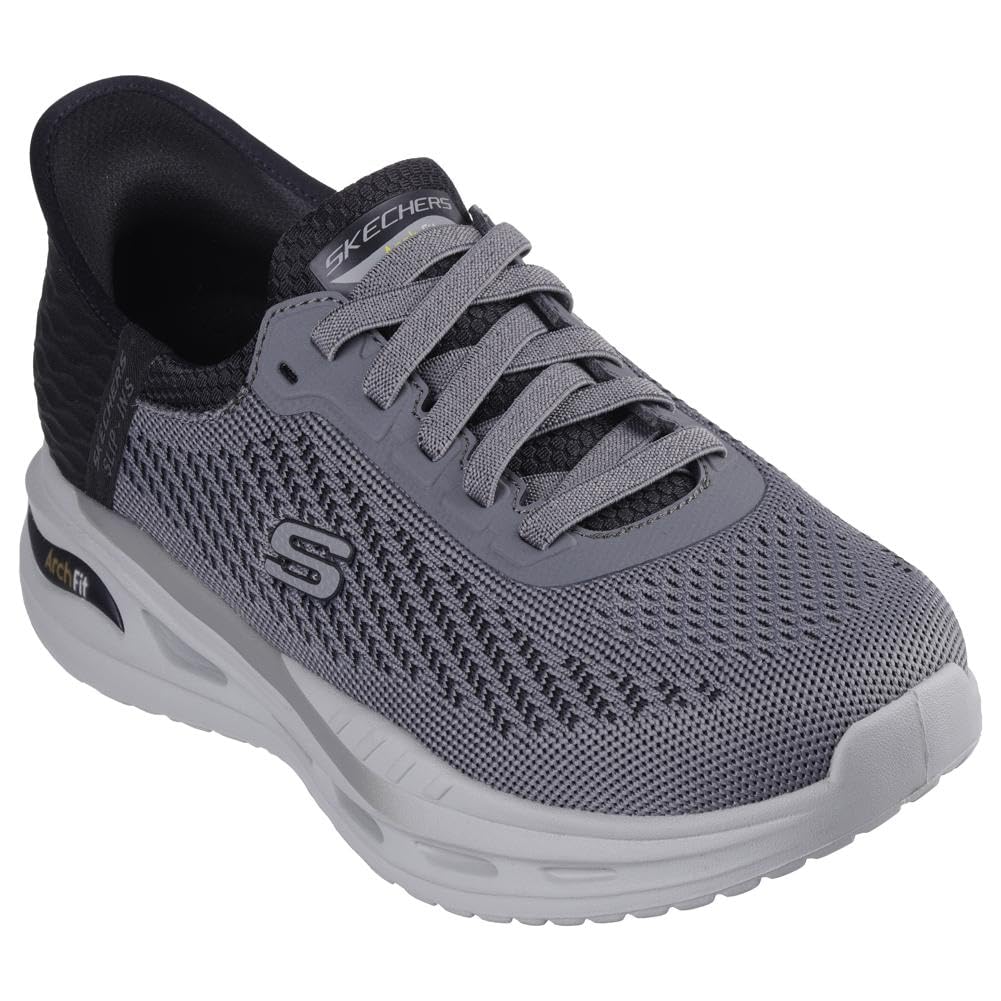
The Skechers Arch Fit Orvan – Drex brings the podiatrist-designed Arch Fit insole system to a slip-on sneaker that works for light to moderate concrete standing. The insole is removable and designed to match the natural contour of the foot arch, which helps distribute pressure more evenly across the midfoot. Reviewers with neuropathy reported that this shoe provided noticeable relief, which speaks to the effectiveness of the arch support geometry for reducing nerve pressure points on hard surfaces.
The slip-on construction uses a stretchable collar that stays secure during walking without crushing the Achilles. The outsole is a standard rubber compound with moderate slip resistance — adequate for clean concrete floors but not certified for oily or wet industrial environments. The midsole cushioning is less dense than the Fresh Foam or Poron XRD options, so it works best for workers who spend most of their shift standing in place rather than walking long distances.
Several reviewers noted that the shoe runs slightly narrow in the standard width, so wide-footed users should order the X-wide option. The durability ceiling is lower than the safety-toe competitors — some users reported the shoe breaking down after six months of daily wear. For entry-level pricing and genuine arch support, this is a strong pick for low-impact concrete work.
Why it’s great
- Arch Fit insole reduces pressure on concrete surfaces for neuropathy relief
- Slip-on collar is secure and comfortable for quick changes
- Good value with podiatrist-designed arch geometry
Good to know
- Midsole density is lower — best for standing rather than long walking
- Runs narrow in standard width — order X-wide if needed
- Durability limited to about 6 months of daily wear
7. Skechers Men’s Luxir Industrial Shoes
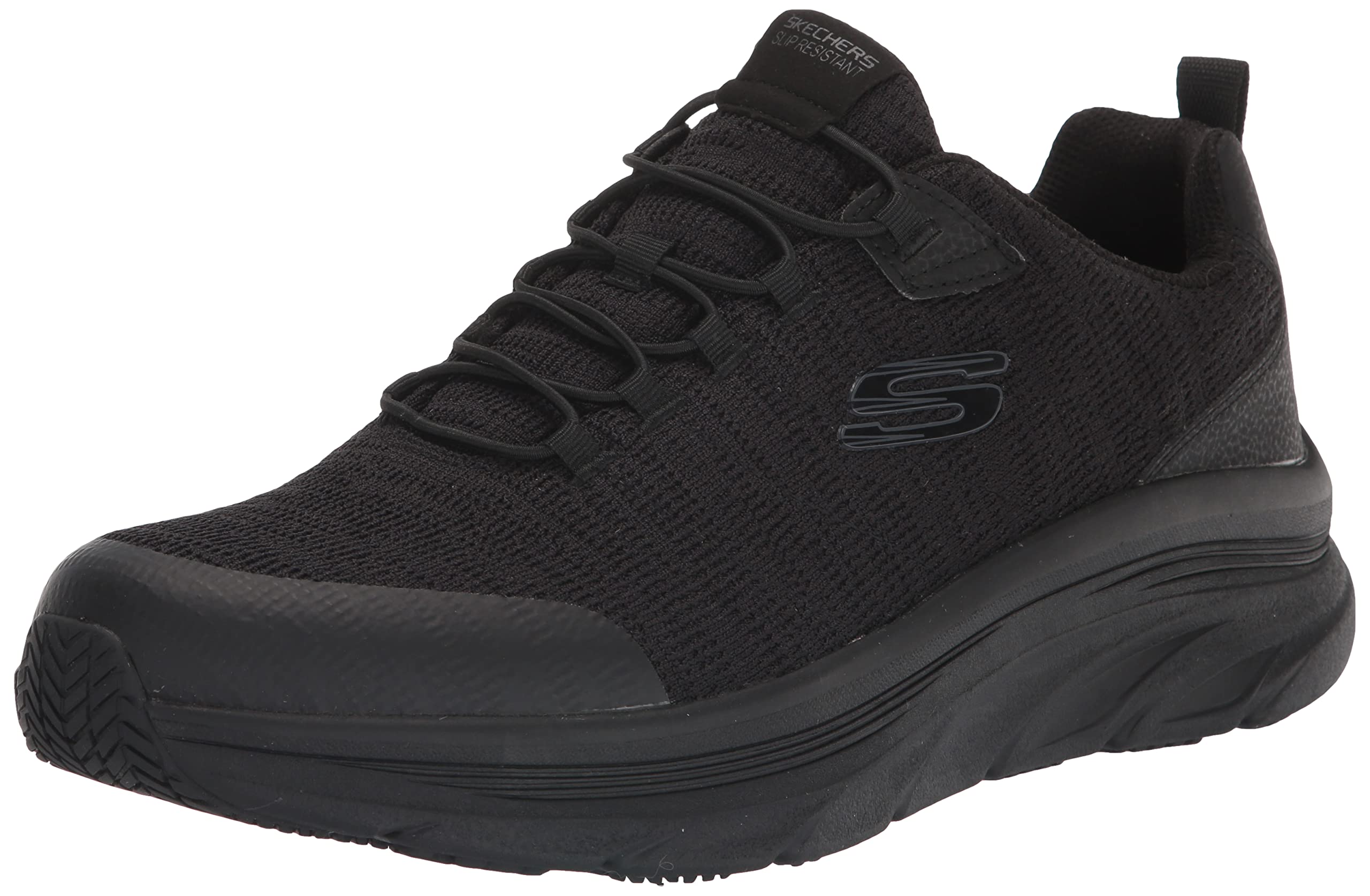
The Skechers Luxir Industrial is the entry point for concrete floor footwear, using the brand’s Air-Cooled Memory Foam insole to deliver immediate step-in comfort. This is not a safety-toe shoe — there is no steel, alloy, or composite cap — so it is best suited for environments where impact protection is not required. The slip-resistant outsole meets basic standards for wet and oily floors, and the relaxed fit design accommodates wider feet without pressure points.
The shock absorption comes entirely from the foam insole rather than a dense midsole compound, which means the cushioning compresses faster over an eight-hour shift compared to the premium options. Reviewers noted that the shoe is comfortable out of the box and remains comfortable for medium-duty use, but the foam loses rebound after several months of daily wear. The upper material is breathable mesh with synthetic overlays, which keeps weight low but limits protection against abrasion.
Workers who need a lightweight, slip-resistant shoe for short shifts on concrete will find this a practical budget option. The electrical hazard rating adds a useful safety layer for shop environments. For any shift exceeding six hours on hard concrete, the midsole density limitations become noticeable, and upgrading to the Arch Fit or Fresh Foam models is recommended for sustained comfort.
Why it’s great
- Air-Cooled Memory Foam insole provides immediate step-in comfort
- Slip-resistant outsole works on wet and oily concrete floors
- Relaxed fit accommodates wider feet without break-in
Good to know
- No safety toe protection — not suitable for impact hazard environments
- Foam cushioning compresses faster than dense midsole alternatives
- Best for shifts under six hours on concrete
FAQ
What midsole density is best for standing all day on concrete floors?
Do I need a safety toe for working on concrete floors?
How often should I replace work shoes for concrete floors?
Can I use running shoes for working on concrete floors?
What does the ASTM F2913-24 slip resistance rating mean for concrete?
Final Thoughts: The Verdict
For most users, the footwear for working on concrete floors winner is the New Balance Composite Toe Cremorne because it combines Fresh Foam midsole density with a lightweight composite toe cap and a breathable upper that supports twelve-hour shifts. If you want alloy toe protection with a hiker’s outsole for mixed terrain, grab the Timberland PRO Powertrain. And for premium leather comfort with Poron XRD impact absorption, nothing beats the ROCKROOSTER Moc Toe Boot for craftsmen who need style and shock relief in equal measure.