
Standard underarm crutches dig into your armpits, pinch nerves, and leave your hands numb after just a few blocks. Forearm crutches transfer your weight through your forearms instead, giving you better leverage, greater stability on stairs, and far less upper-body strain during daily use.
I’m Mohammad Maruf — the founder and writer behind Drink4Good. I’ve spent countless hours analyzing the structural specs, aluminum vs. steel trade-offs, cuff designs, and ergonomic handle geometries that separate a reliable pair of forearm crutches from a pair that will leave you frustrated and sore.
Whether you’re recovering from surgery, managing a long-term condition, or just need better support than bulky hospital crutches, this guide breaks down the top models to help you pick the right pair. We analyzed materials, weight limits, adjustability, and real-user durability data to find the best forearm crutches for every recovery scenario and budget tier.
How To Choose The Best Forearm Crutches
Picking the right forearm crutches isn’t just about height range. You need to match the cuff, handle, material, and tip design to your specific weight, activity level, and recovery timeline. Here’s what separates a great pair from a painful mistake.
1. Cuff Style and Fit: Fixed vs. Open vs. Adjustable
The cuff is what transfers your body weight from your hand to your forearm. Open cuffs (V-shaped or partial rings) are easier to slip in and out of but can feel unstable if your forearm is thin. Fixed or closed cuffs offer more security but can be impossible to adjust if the opening is too small. Some premium models use a semi-enclosed cuff with a strap to prevent the crutch from falling when you let go.
2. Frame Material: Steel, Aluminum, or Alloy Steel
Steel frames are the heaviest but most durable and can support higher weight capacities without flexing. Aluminum frames are significantly lighter — crucial for full-day use or carrying crutches up stairs — but they often have lower weight limits and can feel less solid under heavy load. Alloy steel is a middle ground, offering decent weight savings without sacrificing structural rigidity.
3. Handle and Grip Ergonomics
A straight cylindrical grip forces your wrist into an unnatural angle, causing fatigue and pain within minutes. Look for contoured or ergonomically shaped handles that follow the natural curve of your palm. Padded or gel-infused grips further reduce pressure points. Some premium models also angle the handle to keep your wrist straight, which is critical if you have arthritis or carpal tunnel concerns.
4. Tip Design and Traction
Standard rubber crutch tips work fine on dry pavement but become dangerously slippery on wet floors, tile, and linoleum. Articulating tips pivot to maintain full contact on uneven ground, while larger jumbo-sized tips offer more surface area for stability. If you plan to use crutches outdoors or on glossy indoor floors, consider replacing stock tips with a high-traction aftermarket option like Tornado tips.
5. Foldability and Portability
Traditional forearm crutches are long and awkward to store in cars or public spaces. Folding models collapse in half, fitting into an overhead bin, car trunk, or closet with minimal hassle. If you travel frequently or need to stow crutches under a desk, folding capability becomes a top priority. Some folding models also come with a carrying strap or case.
Quick Comparison
On smaller screens, swipe sideways to see the full table.
| Model | Category | Best For | Key Spec | Amazon |
|---|---|---|---|---|
| in-Motion Pro Crutches | Premium | All-day use, outdoor terrain, travel | 350 lb capacity, spring-assist | Amazon |
| KMINA Forearm Crutches | Premium | Comfort, rehabilitation, light use | 275 lb capacity, padded grips | Amazon |
| PEPE Mobility Folding Crutches | Premium | Travel, compact storage | 220 lb capacity, foldable 22.4″ | Amazon |
| Antdvao Forearm Crutches (Padded) | Mid-Range | Long-term comfort, indoor use | 10-button adjust, padded cuffs | Amazon |
| Antdvao Folding Forearm Crutches | Mid-Range | Portability, everyday convenience | Foldable, 10-button adjustment | Amazon |
| Drive Medical Forearm Crutch | Budget | High weight capacity, durability | 300 lb capacity, alloy steel | Amazon |
| McKesson Forearm Crutches | Budget | Basic recovery, indoor use | Steel frame, 28-37″ height | Amazon |
In‑Depth Reviews
1. in-Motion Pro Crutches
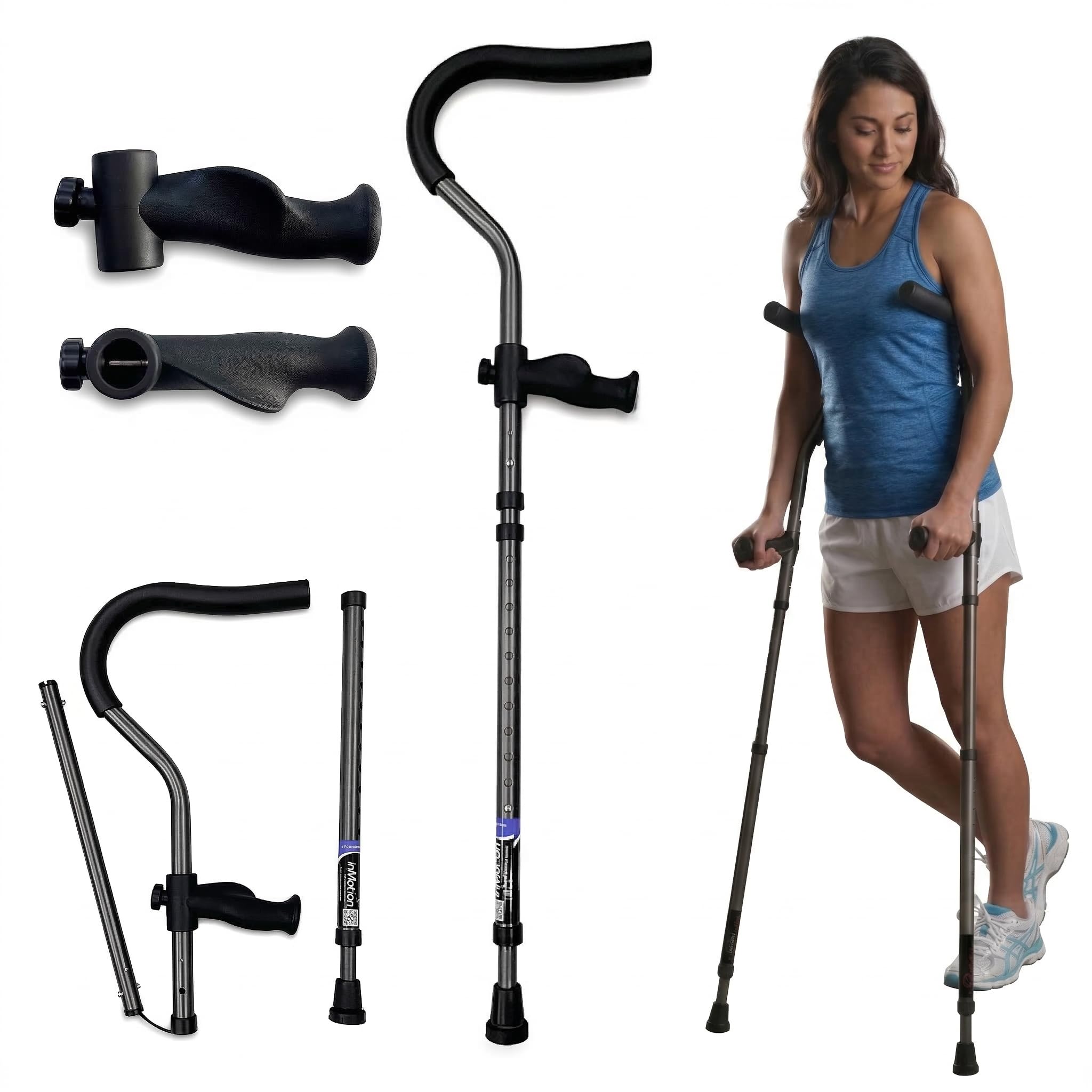
The in-Motion Pro stands alone in this category with its built-in spring-assist technology that absorbs the shock of each step and returns energy forward, dramatically reducing fatigue on long walks. The contoured left/right ergonomic handles keep your wrist in a neutral position, eliminating the nerve-pinching kink that makes standard crutches unbearable after 20 minutes. The articulating crutch tips pivot to maintain maximum surface contact on hardwood, carpet, gravel, and grass — a feature no other model on this list offers.
Designed for users between 5’10” and 7’1″ (with a separate Short size available), the underarm cradle adjusts across 15 positions and the hand grip has 5 independent settings, giving you precise fit control. The frame folds in half in seconds without losing your adjustment settings, fitting into an overhead bin or car trunk. At 6 pounds per pair, it’s heavier than aluminum options, but the spring system more than compensates by reducing the jarring impact that makes traditional crutches exhausting.
User feedback over a decade of use confirms the ergonomic handles eliminate armpit and wrist pain entirely — one long-term user reported zero blisters or soreness over 10 years. The push-button folding release can take some practice, and the bushings may develop a squeak after about a year of heavy use, but the 1-year warranty and responsive customer support handle those issues quickly.
Why it’s great
- Spring-assist reduces joint impact and fatigue significantly
- Articulating tips provide stable footing on any surface
- Ergonomic handles prevent wrist and hand pain
- Folds compactly for storage and travel
Good to know
- Heavier than some aluminum models at 6 lbs per pair
- Handle height adjustment mechanism can be stiff initially
- Not suitable for users under 5’10” in this size
2. KMINA Forearm Crutches for Adults

The KMINA crutches bring European engineering to the mid-premium tier with a silver-colored aluminum frame that weighs just over 2.5 pounds per pair — significantly lighter than steel options. The standout feature is the padded ergonomic hand grips, which are both washable and interchangeable, keeping hygiene up during long recovery periods. The open cuff design uses a V-shape that allows easy entry while still providing a secure fit for most forearm sizes.
With 11 height adjustments, these crutches accommodate users from roughly 5’2″ to 6’2″, and the maximum user weight is rated at 275 pounds. Users consistently report that the padded handles eliminate the hand pain that plagues straight-grip alternatives, making these a strong choice for those transitioning from a walker. The aluminum construction makes them easy to carry upstairs and load into vehicles without fatigue.
Some users note that the open cuffs don’t lock your arm in place — if you need to let go of the handle, the crutch can fall away unless you add an aftermarket strap. The rubber tips can produce a slight creaking sound on smooth floors, and the forearm rest area lacks padding out of the box, so adding a Vive crutch pad is a common recommendation. Despite these tweaks, the KMINA remains a well-respected option that holds up for years of daily use.
Why it’s great
- Lightweight aluminum frame reduces daily fatigue
- Washable, interchangeable padded grips improve comfort
- 11 height settings offer broad fit range
- Made in Spain with quality construction
Good to know
- Open cuffs may need a strap for security
- Rubber tips can creak on smooth surfaces
- Forearm padding is minimal out of the box
3. PEPE Mobility Folding Crutches

The PEPE Mobility crutches are engineered for portability without sacrificing structural integrity. Each crutch weighs just 1.3 pounds and folds down to 22.4 inches — short enough to slip into a large backpack, carry-on luggage, or the back seat of a compact car. The folding mechanism is quick and doesn’t require tools, and the crutches lock rigidly once assembled so there’s no wobble during use.
The V-shaped open cuff provides a secure hold that users describe as more stable than traditional straight-cuff designs, and the 7 height settings accommodate users from roughly 5’4″ to 6’3″. The aluminum frame is rated to 220 pounds, which is adequate for most casual users but limits heavier individuals. The rubber crutch tips offer good grip on dry surfaces, though some users prefer to upgrade to larger aftermarket tips for extra stability on wet pavement.
Long-term users report that these crutches remain quiet and rattle-free even after hundreds of miles of use, thanks to the tight tolerance of the folding joint. The main drawback is the height range — users under 5’4″ will find the minimum setting too tall, and taller users at 6’4″ may need the handle at maximum extension. Adding a carrying strap is a common DIY mod for easier transport when folded.
Why it’s great
- Ultra-light at 1.3 lbs per crutch for easy carrying
- Folds to 22.4 inches for storage in bags and cars
- Quiet, rattle-free folding joint lasts for miles
- V-shaped cuff provides secure arm hold
Good to know
- 220 lb weight limit restricts heavier users
- Not suitable for users under 5’4″
- Add carrying strap for easier transport when folded
4. Antdvao Forearm Crutches with Padded Cuffs

This Antdvao model addresses the single biggest complaint about forearm crutches — chafing and pressure on the forearms and elbows. The elastic crutch padding wraps around the arm support, preventing the hard plastic edge from digging into your skin during extended use. The handle pads are double-layered to cushion the impact that travels up through your wrist with each step, reducing the fatigue that makes long-term use painful.
The frame adjusts with 10 push-button settings, fitting users from 58 to 72.8 inches tall. An anti-drop strap keeps the crutch from clattering to the floor when you need to free your hand, and the overall design is foldable for easy storage. Users with chronic conditions like CRPS report these are more stable than a cane and put far less strain on the shoulders compared to a walker.
Some users note that the clear orange rubber tips are smooth and can be slippery on glossy indoor flooring — many recommend swapping them for high-traction alternatives. At 1 pound per pair, these are exceptionally light, but the plastic forearm support may feel less substantial than metal cuffs on heavier models. The purple color option adds a stylish flair that helps normalize the mobility aid experience.
Why it’s great
- Elastic padding prevents forearm chafing and pressure
- Handle pads cushion wrist impact effectively
- Anti-drop strap keeps crutches secure when hands-free
- 10-button height adjustment fits a wide range
Good to know
- Stock tips are slippery on tile and linoleum
- Plastic cuff feels less robust than metal alternatives
- Maximum handle height may be short for tall users
5. Antdvao Folding Forearm Crutches

This Antdvao folding pair brings together portability and style at a mid-range price point. The semi-enclosed arm cuff design keeps your forearm aligned straight, effectively sharing wrist pressure and reducing strain compared to open-cuff alternatives. A built-in anti-drop strap prevents the crutch from falling when you release the handle, and small reflectors on the handles add a layer of visibility for evening walks.
The 10-button height adjustment system covers 58 to 72.8 inches, and the folding mechanism uses an elastic rope joint that locks the two halves together securely during use. When collapsed, the crutches become compact enough for car trunks, closets, and overhead bins. At just over 10 ounces per pair, these are among the lightest options available — users describe them as “rock solid” for average-weight adults up to around 160 pounds.
Multiple users note that the firm plastic crutch tips are slippery on smooth indoor surfaces like tile and linoleum, making a tip replacement almost mandatory for indoor-heavy use. The pole tip diameter is 3/4 of an inch, which is compatible with most aftermarket crutch tips. Despite this, the folding capability, light weight, and comfortable grip make these a compelling option for users who need to move between home, car, and office throughout the day.
Why it’s great
- Ultra-light folding design for travel and daily carry
- Semi-enclosed cuff reduces wrist pressure effectively
- Built-in reflectors enhance visibility at night
- 10-button height adjustment fits most adults
Good to know
- Stock tips are dangerously slippery on smooth floors
- Best suited for users under 160 lbs
- Requires tip replacement for indoor safety
6. Drive Medical Forearm Crutch

The Drive Medical Forearm Crutch is the workhorse of this lineup, built with alloy steel and hard plastic components to support up to 300 pounds of user weight. The vinyl-coated arm cuffs are ergonomically contoured for comfort, and the extra-large jumbo-sized non-skid tips provide a broad footprint for added stability. The push-button adjustment system lets you set the overall crutch height from 60 to 74 inches, with independent adjustments for the forearm section.
Users consistently praise the sturdy construction — one buyer weighing over 300 pounds confirmed these crutches handle the load without flexing or creaking, which is rare at this price point. The vinyl handgrips are comfortable and durable, and the hard plastic Ortho-K handle provides a solid grip surface that doesn’t become slippery with sweat. The hardware uses standard bolts and lock nuts, making it easy to tighten with basic tools if any joint loosens over time.
The most persistent complaint is the size of the forearm cuffs — they are small and non-adjustable, causing problems for users with larger forearms. Even some average-build users report needing to manually spread the cuffs by up to 2.5 inches to get a comfortable fit. This is a dealbreaker for anyone with thick forearms or who plans to wear these with bulky winter clothing. If the cuffs fit you, however, these are among the most durable and stable budget-tier crutches available.
Why it’s great
- 300 lb weight capacity handles larger users safely
- Alloy steel frame is extremely durable and rigid
- Extra-large tips provide excellent stability
- Push-button adjustment is quick and tool-free
Good to know
- Forearm cuffs are too small for many users
- Cuffs are non-adjustable and cannot be widened
- Heavier than aluminum alternatives
7. McKesson Forearm Crutches

The McKesson Forearm Crutches represent the entry-level standard in this category — a no-frills steel frame with basic height adjustment that gets the job done for short-term recovery or occasional use. The steel construction provides solid stability, and at 5.5 pounds per pair, they are noticeably heavy but also feel reassuringly sturdy under load. The vinyl handgrips and arm cuffs are functional if not particularly padded.
After 1.5 years of daily use by one reviewer, these crutches remained structurally sound, showing only a need for occasional tightening of the adjustment bolts — a task made easy by the standard hardware. Users transitioning from underarm crutches report a significant improvement in safety and mobility, as the forearm design prevents nerve damage in the armpits and gives better leverage on stairs. The crutches arrived quickly and required no assembly beyond setting the height.
The stock crutch tips are widely considered the weak point — several users recommend replacing them immediately with Tornado or other high-traction tips for better grip on wet or smooth surfaces. The forearm cuffs are also on the smaller side, which may be an issue for users with larger arms. For budget-conscious buyers who need a functional pair for post-surgery recovery or occasional use, these McKesson crutches offer reliable performance, provided you budget for tip upgrades.
Why it’s great
- Steel frame is durable and feels solid under load
- Easy to adjust with standard bolts
- Great value for short-term or occasional use
- Significant upgrade in safety over underarm crutches
Good to know
- Stock tips are low quality and need replacement
- Heavier than aluminum competitors
- Small forearm cuffs may not fit larger users
FAQ
How do I know if the forearm cuffs will fit me?
Are forearm crutches better than underarm crutches for long-term use?
What size crutch do I need for my height?
Can I use forearm crutches if I’m non-weight bearing on one leg?
Final Thoughts: The Verdict
For most users, the best forearm crutches winner is the in-Motion Pro Crutches because the spring-assist technology and articulating tips eliminate the jarring impact that makes other crutches exhausting, while the ergonomic handles prevent wrist pain from day one. If you want a lightweight, foldable pair for travel and daily commuting, grab the PEPE Mobility Folding Crutches. And for heavy-duty support at a budget-friendly price, nothing beats the Drive Medical Forearm Crutch — provided the cuffs fit your arms.