
The gap between a decent pull-up and a crushing handshake is often just a few inches of stubborn forearm muscle. Yet most athletes treat this zone as an afterthought, leaving power and endurance on the table until the first wrist ache or pump failure hits mid-session. Dedicated forearm tools move beyond simple grip work to target the supinators, pronators, and flexors that dictate control in climbing, arm wrestling, and every heavy pull.
I’m Mohammad Maruf — the founder and writer behind Drink4Good. I spend my time dissecting the material science, tension engineering, and real-world durability metrics that separate a tool you’ll use weekly from one that collects dust in a garage bin.
This breakdown walks through five of the most effective options available, each chosen for a specific training niche. Whether you are rehabbing a sore wrist or chasing a bone-crushing grip, you’ll find a precise match among the best forearm exercise equipment options discussed below.
How To Choose The Best Forearm Exercise Equipment
Forearm training is not a one-size-fits-all pursuit. The tool that builds crushing grip for an arm wrestler will not serve the climber needing endurance, nor the office worker seeking wrist relief. Before you click add-to-cart, match the device type to your specific demand and environment.
Device Type: Roller, Bar, Or Gripper
A wrist roller targets the entire forearm through a rolling motion that forces concentric and eccentric control as you wind a weight up and down. A wrist bar isolates supination and pronation with direct rotational torque, making it excellent for radial/ulnar deviation work. A grip strengthener focuses primarily on crushing force and finger flexion, offering less benefit for wrist stability. Choose the roller for balanced development, the bar for targeted wrist strength, and the gripper for pure hand power.
Build Materials And Load Capacity
The weakest link in any forearm tool is the attachment point. Look for nylon straps rated above 200 lbs, steel cores on rollers, and metal knurling that does not peel. Plastic loading pins can crack under Olympic plate edges, so verify that the weight channel fits 2-inch plates snugly. For hanging rollers, check that the rope is climbing-grade nylon and that the carabiner or fastening system is metal rather than plastic.
Grip Comfort And Handle Texture
Thicker handles (around 1.5 inches in diameter) force harder muscle engagement but can fatigue hands quickly. Softer foam grips reduce callus buildup but compress over time, eventually ruining purchase. Metal knurling offers the best longevity but can be aggressive on bare palms — some users flip the handle or add athletic tape. If you train daily, a medium-grit knurled steel handle with replaceable grip sleeves is ideal.
Quick Comparison
On smaller screens, swipe sideways to see the full table.
| Model | Category | Best For | Key Spec | Amazon |
|---|---|---|---|---|
| GD Hanging Wrist Roller | Premium Roller | Heavy-load isolation and rehab | Dual-rope design, 17.7 x 1.5 in handle | Amazon |
| GD IRON GRIP 70 | Premium Gripper | Progressive grip strength | Adjustable 44-150 lbs in 6 steps | Amazon |
| PELLOR Wrist Blaster | Mid-Range Roller | Versatile home workouts | Steel core, 80 lb max load | Amazon |
| Fitarc Wrist Bar | Forearm Bar | Supination/pronation targeting | Full-body metal, 2-inch plate fit | Amazon |
| FitBeast Forearm Roller | Budget Wrist Roller | Entry-level forearm conditioning | 220 lb nylon strap, 25% thicker handles | Amazon |
In‑Depth Reviews
1. GD Hanging Wrist Roller
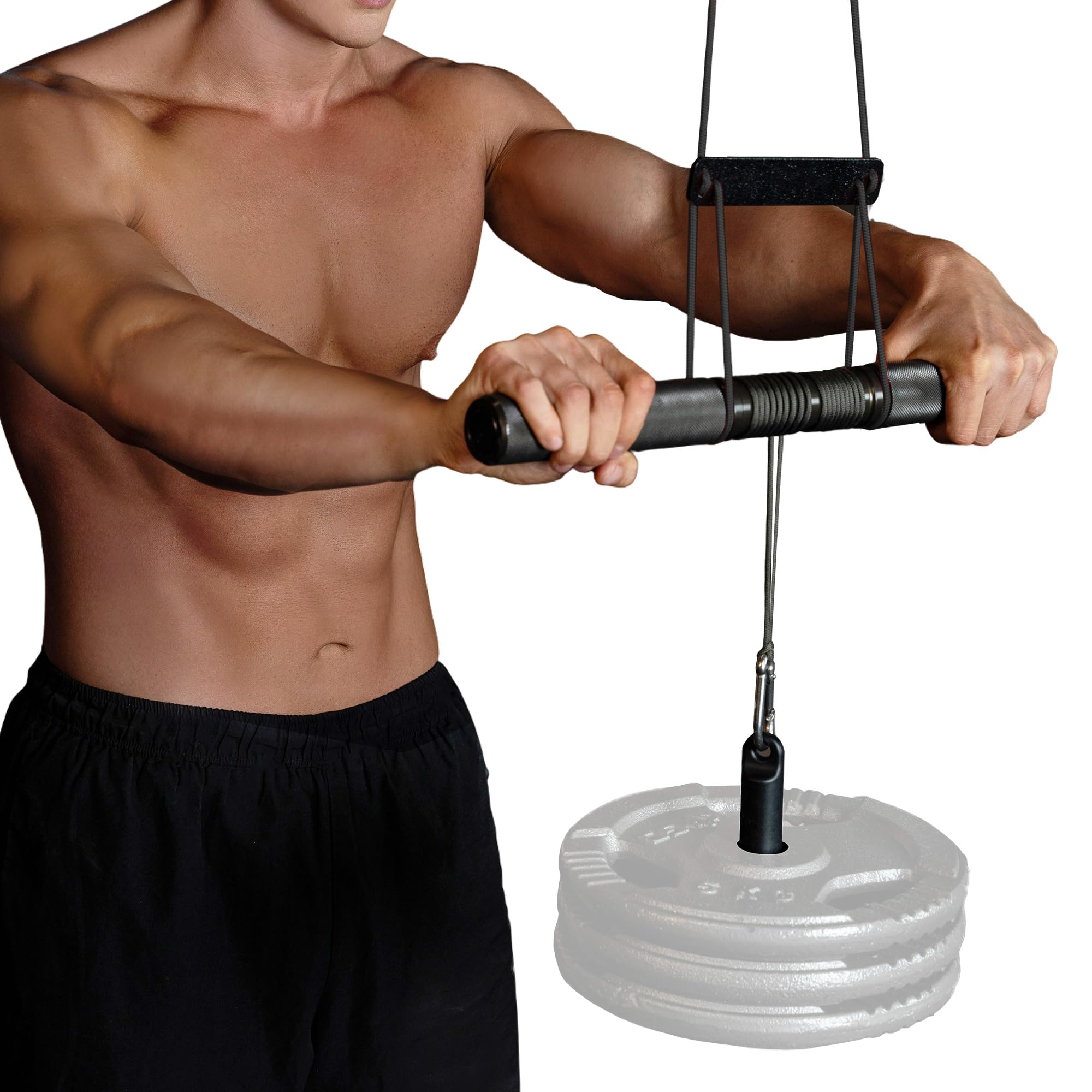
The GD Hanging Wrist Roller solves the fundamental flaw of traditional wrist rollers: shoulder and arm fatigue. By hanging from a door frame or power rack, the system isolates the forearm entirely, allowing you to load over three times the weight without compromising form. The 17.7-inch handle with aggressive metal knurling provides a secure grip even at high loads, and the dual-rope design keeps the weight centered throughout the range of motion. Rope length is adjustable from 14 to 30.5 inches, giving you room to scale the difficulty by altering the travel distance.
Construction is robust, with a high-strength engineering plastic loading pin and climbing-grade nylon rope rated to 450 lbs — overkill for most users but reassuring for heavy barbell loading. The silicone grip on the handle resists sweat and odors, and the entire unit assembles in about three seconds. Experienced lifters report using up to 30 lbs of plates comfortably, with some progressing beyond that using standard 1-inch plates that fit the narrower base. The only real limitation is the loading pin, which has a practical ceiling around 66 lbs before the plastic starts to flex.
Users with forearm pump issues from motocross or climbing consistently note that this roller mimics real-world fatigue patterns without straining the shoulders. The ability to perform pronation, supination, and side-to-side rolls from a hanging position makes it the most complete forearm isolation tool available. For anyone serious about building functional forearm endurance, this is the gold standard.
Why it’s great
- Eliminates shoulder and arm fatigue, isolating forearms completely.
- Dual-rope system keeps weight centered for stable motion.
- Aggressive metal knurling ensures grip security at heavy loads.
Good to know
- Loading pin is plastic with a ~66 lb practical limit.
- Narrow base does not fit 2-inch Olympic plates without adapters.
2. GD IRON GRIP 70

The GD IRON GRIP 70 replaces an entire set of six individual grippers with a single adjustable unit. Resistance ranges from 44 to 150 pounds across six steps, controlled by a lever that shifts spring tension without needing to swap springs or handles. The handle width adjusts in three positions, altering the range of motion so you can target different parts of the stroke — wider for deep finger extension, narrower for peak squeeze. The build uses 4T iron and high-quality engineering plastic handles, giving it a tank-like feel that justifies the premium price.
Unlike cheap grippers that squeak or bind, the GD unit operates quietly thanks to well-fitted compression springs and smooth pivot points. The V-shaped design fits medium to larger hands comfortably, though some users report that the metal knurling on the handles can dig into the palm during high-rep sets. Reversing the grip direction solves this for most, and the handles themselves can be rotated 180 degrees for a smoother surface. The included stand keeps the gripper ready on a desk or gym shelf, which encourages consistent daily use.
South Korean design and manufacturing under US patent No. 9,415,262 B2 add credibility in a market flooded with unbranded knockoffs. The 70 kg (154 lb) max resistance is ideal for intermediate users, though advanced athletes may eventually max out. Students, office workers, and climbers especially appreciate the quiet operation, which allows discreet use during calls or breaks without drawing attention.
Why it’s great
- Single unit replaces six separate grippers with tool-free adjustment.
- Quiet, smooth operation suitable for desk or office use.
- Patented design with premium 4T iron build.
Good to know
- Handles can be aggressive on bare palms during high volumes.
- Max resistance of 150 lbs may limit long-term progression for elite grip athletes.
3. PELLOR Wrist and Forearm Blaster

The PELLOR Wrist Blaster delivers a steel-core roller with PE foam grip padding at a price point that undercuts most competitors. The handle measures 15 inches with a comfortable grip diameter that reduces hand fatigue during extended sets, and the steel core supports up to 80 lbs of standard weight plates — enough for the vast majority of home trainers. The heavy-duty nylon strap uses a carabiner attachment that secures quickly to kettlebells, dumbbells, or plate stacks, making it compatible with nearly any weight you already own.
The foam padding is a double-edged sword: it starts soft and comfortable, but regular daily use can cause it to compress or separate from the metal core. Several owners have simply removed the foam and continued using the bare steel handle, which works fine but loses some grip diversity. The nylon strap length of 55 inches works well for most heights, though shorter users (under 5’8″) may find the rope a touch long, occasionally letting the weight tap the floor at full extension. A small step or platform solves this easily.
Rehab users recovering from carpal tunnel or tennis elbow report consistent relief after incorporating this roller into their routine. The smooth rolling action allows controlled eccentric lowering, which is critical for tendon health. For a mid-range device that balances cost, capacity, and versatility, the PELLOR is a smart buy that punches well above its weight class.
Why it’s great
- Steel core supports up to 80 lbs at a budget-friendly price.
- Comfortable PE foam grip reduces hand fatigue.
- Carabiner attachment works with kettlebells, plates, and dumbbells.
Good to know
- Foam padding may compress or loosen with heavy daily use.
- Rope length can cause weight to hit floor for shorter users.
4. Fitarc Wrist Bar
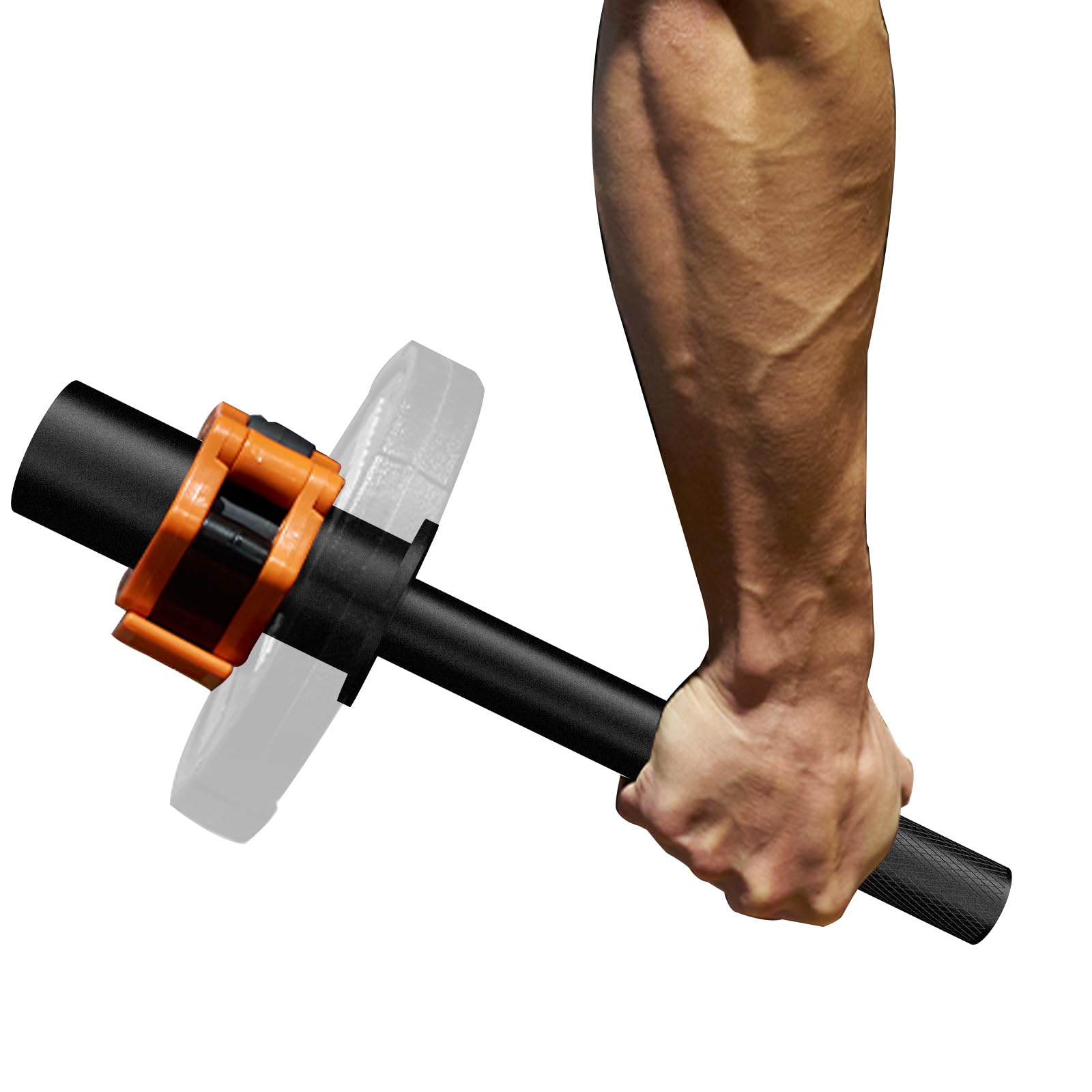
The Fitarc Wrist Bar takes a different approach from rollers by focusing on rotational supination and pronation. The bar is full-body metal with a 2-inch diameter sleeve that accepts Olympic weight plates without wobble, and the included barbell collar secures them firmly. The handle features metal knurling with a non-slip texture that provides a secure grip even when your hands get sweaty — a critical detail for rotational exercises where torque can twist the bar out of your palm.
At 1.7 pounds the bar is light enough for warm-ups but dense enough to feel substantial during weighted wrist curls and rotations. The round shape allows you to perform radial and ulnar deviation exercises by tilting the bar side to side, effectively targeting the stabilizer muscles that most equipment ignores. The standard 2-inch plate compatibility means you can load it from your existing barbell set without buying proprietary weights, and the clamp holds up well under repeated use.
Office workers and desk jockeys who deal with wrist tightness or early-stage tenosynovitis will find this bar particularly effective for maintaining joint health. The isolation is precise enough that 10-15 pounds on the bar creates a serious burn in the deep forearm muscles. While it cannot replace a full wrist roller for comprehensive mass-building, it fills a critical rotational niche that many athletes overlook. For the price, it is one of the most versatile forearm-specific tools you can own.
Why it’s great
- Directly targets supination, pronation, and ulnar deviation.
- Full-body metal build with secure 2-inch plate fit.
- Excellent for wrist rehab and tenosynovitis prevention.
Good to know
- Limited to rotational work — does not replace a wrist roller for full forearm mass.
- Metal knurling may feel aggressive for users with sensitive hands.
5. FitBeast Forearm Strengthener & Wrist Roller
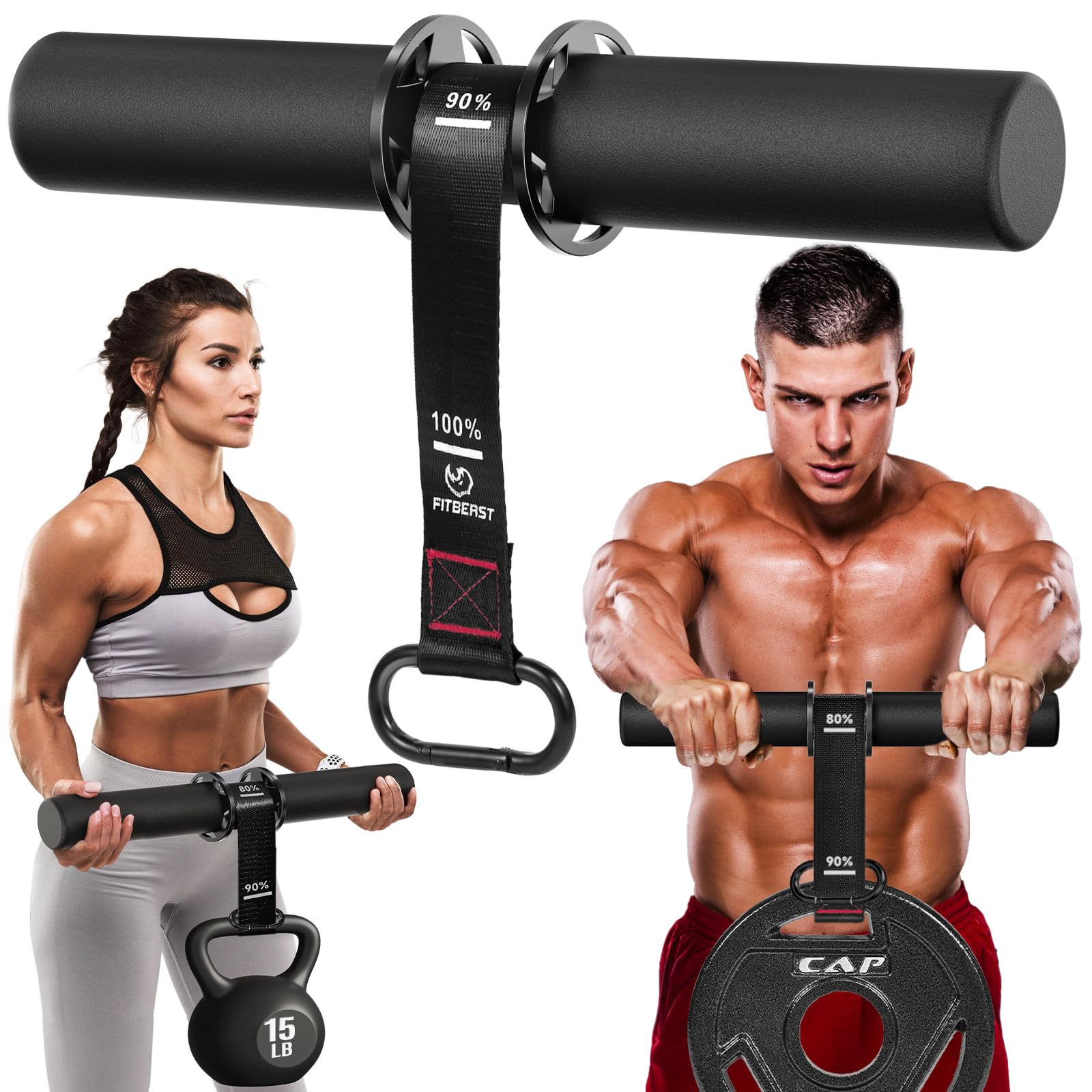
The FitBeast Wrist Roller is the entry-level champion that does everything a beginner needs without breaking the bank. The handles are 25% thicker than standard rollers, forcing your hands to work harder during each rep and accelerating grip strength gains. The nylon strap is rated to 220 lbs, which is overkill for most beginners but provides a huge safety margin for progressive loading. It comes with a 20.4-inch extension strap that allows you to attach water bottles, backpacks, or small kettlebells for variety.
Build quality is solid for the price — the iron construction feels dense and the carabiner clip holds weight securely. Some early users noted that the clip can occasionally snag on the strap when adding or removing plates, but this is a minor annoyance that disappears with a little practice. The included user manual provides clear setup instructions, and the 2-year warranty is unusually generous for this price bracket. The roller works well with 10-15 lb kettlebells or standard weight plates.
Rehab users and motorcyclists have reported immediate benefits, with one dirt bike rider noting that the roller replicated the exact forearm fatigue experienced during long races, allowing targeted endurance training. The compact design stores easily in a gym bag or nightstand drawer. For anyone who wants to test whether dedicated forearm training fits their routine without a major financial commitment, the FitBeast is the logical starting point.
Why it’s great
- 25% thicker handles increase grip engagement during rolls.
- 220 lb nylon strap with 2-year warranty offers exceptional value.
- Works with household objects via included extension strap.
Good to know
- Carabiner clip can snag on strap during weight changes.
- Best for beginners or light-to-moderate loads under 25 lbs.
FAQ
Can forearm exercise equipment help with carpal tunnel or tennis elbow?
How much weight should I start with on a wrist roller?
Final Thoughts: The Verdict
For most users, the best forearm exercise equipment winner is the GD Hanging Wrist Roller because its hanging design isolates the forearm completely and allows heavier loading than any other device. If you want targeted supination and pronation work, grab the Fitarc Wrist Bar. And for a compact, adjustable gripper that fits in a desk drawer, nothing beats the GD IRON GRIP 70.