
Choosing a forest axe is not about grabbing the heaviest head on the longest handle. Real-world performance depends on the geometry of the blade edge, the balance between head weight and handle length, and the specific steel hardness that determines how many swings you get before the edge rolls. A poorly matched axe turns a weekend woodpile into an exhausting, frustrating chore that leaves you with bruised palms and a blunt tool.
I’m Mohammad Maruf — the founder and writer behind Drink4Good. After spending many hours analyzing steel compositions, handle profiles, and head-to-shaft ratios across dozens of forest axes, I have separated the tools that deliver consistent, one-strike splits from those that merely look the part on a shelf.
This guide cuts through the marketing noise to focus exclusively on the hardware specifications that matter when you swing steel into hardwood. My goal is to help you identify the best forest axe for your specific mix of felling, limbing, and splitting tasks.
How To Choose The Best Forest Axe
Selecting a forest axe requires matching three core variables: the head geometry to the wood grain direction, the handle length to the user’s height and swing arc, and the steel’s heat treatment to the intended maintenance frequency. The wrong combination results in stuck heads, rolled edges, or excessive shock transmission through the handle.
Blade Geometry: Convex vs. Wedge Profiles
A convex grind, common on Swedish-style axes, allows the blade to bite into green wood and release without binding — ideal for felling and limbing. A wider wedge profile, found on splitting-specific axes like the Fiskars Super Splitting models, forces the wood apart through sheer displacement but requires more effort to extract from the cut. If you need one axe that does both felling and splitting, choose a hybrid profile with a moderate convex shape and a secondary bevel that thins the edge behind the apex.
Head Weight and Handle Length Ratio
A 2.5 to 3.5-pound head paired with a 28 to 32-inch handle offers the best balance for general forest work. Shorter handles (under 24 inches) limit swing leverage and increase shock transfer to the hands, while handles over 36 inches create excessive arc for anything other than dedicated splitting. Every inch of handle beyond 34 inches requires a noticeably stronger swing to maintain control, especially on off-center strikes.
Steel Hardness and Edge Retention
Carbon steel in the 1055 to 1065 grade range, heat-treated to 50-58 HRC, provides the most field-friendly combination of toughness and edge retention. Steel softer than 50 HRC rolls under heavy use against knotty wood. Steel above 58 HRC holds an edge longer but becomes brittle and chips when striking frozen wood or encountering buried rocks. For a forest axe that you can sharpen with a file in the field, target 1055 carbon steel at 53-56 HRC.
Quick Comparison
On smaller screens, swipe sideways to see the full table.
| Model | Category | Best For | Key Spec | Amazon |
|---|---|---|---|---|
| Fiskars 36″ Super Splitting Axe | Splitting | Medium to large log splitting | 5.95 lbs, 36″ handle, convex wedge | Amazon |
| Fiskars 28″ Chopping Axe | Felling | General felling and kindling | 3.5 lbs, 28″ handle, non-stick coating | Amazon |
| Husqvarna 20″ Carpenter Axe | Carpentry | Limbing, carving, kindling | 2.42 lbs, 20″ handle, Swedish steel | Amazon |
| Husqvarna Hatchet | Hatchet | Light one-handed cutting | 1.32 lb head, 15″ hickory handle | Amazon |
| THKFWD 27.8″ Splitting Axe | Splitting | Firewood splitting with aesthetics | 1065 carbon steel, 27.8″ wood handle | Amazon |
| THKFWD 22.3″ Camp Axe | Hatchet | Camp splitting and kindling | 3.75 lbs, 22.3″ handle, forged carbon steel | Amazon |
| WICING 21″ Chopping Axe | Felling | Entry-level bushcraft and camping | 1.5 lb head, 1055 carbon steel, 21″ handle | Amazon |
In‑Depth Reviews
1. Fiskars 36″ Super Splitting Axe
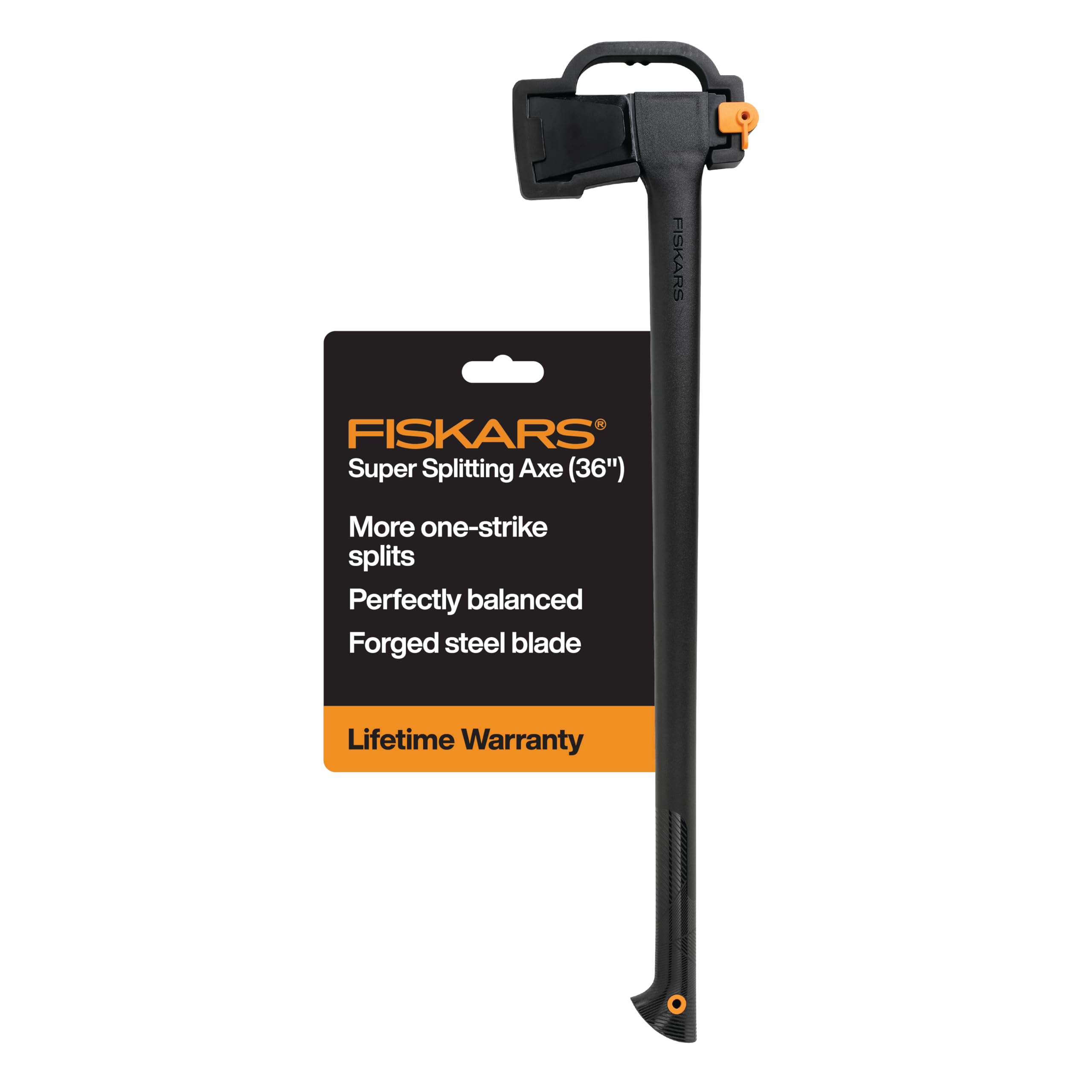
The Fiskars 36-inch Super Splitting Axe uses a convex bevel blade geometry specifically designed to bite deep into medium and extra-large logs while the tapered wedge profile pushes the wood apart as the blade sinks deeper. The 5.95-pound head provides enough mass to drive through knotty rounds without requiring the user to muscle the tool, making it a high-efficiency splitting machine for the firewood pile. The hardened forged steel blade retains its edge longer than traditional mild steel axes, reducing the need for repeated sharpening sessions.
The FiberComp handle is engineered to absorb the shock of repeated impact, which significantly reduces the vibration transmitted to the user’s hands and wrists compared to hickory or ash handles. This impact-dampening quality matters most during long splitting sessions where cumulative stress can lead to fatigue and reduced accuracy. The 36-inch length provides the leverage needed for tall users to generate a full arc without bending over, and the weight distribution toward the head allows the axe to do the work rather than the user’s arms.
Real-world feedback confirms that this axe delivers a superior splits-to-swings ratio, with multiple users reporting five years of consistent performance without the handle loosening or the blade chipping. The convex design also makes the blade easier to remove from deeply buried cuts, reducing the common frustration of a stuck head in wet wood. While it is not designed for felling standing timber, for dedicated splitting duties this is the most efficient option in the comparison.
Why it’s great
- Convex wedge profile splits large logs in fewer strikes
- FiberComp handle absorbs vibration effectively
- Hardened forged steel holds edge between sharpenings
Good to know
- 36-inch handle requires ample overhead clearance
- Not intended for felling or limbing tasks
2. Fiskars 28″ Chopping Axe
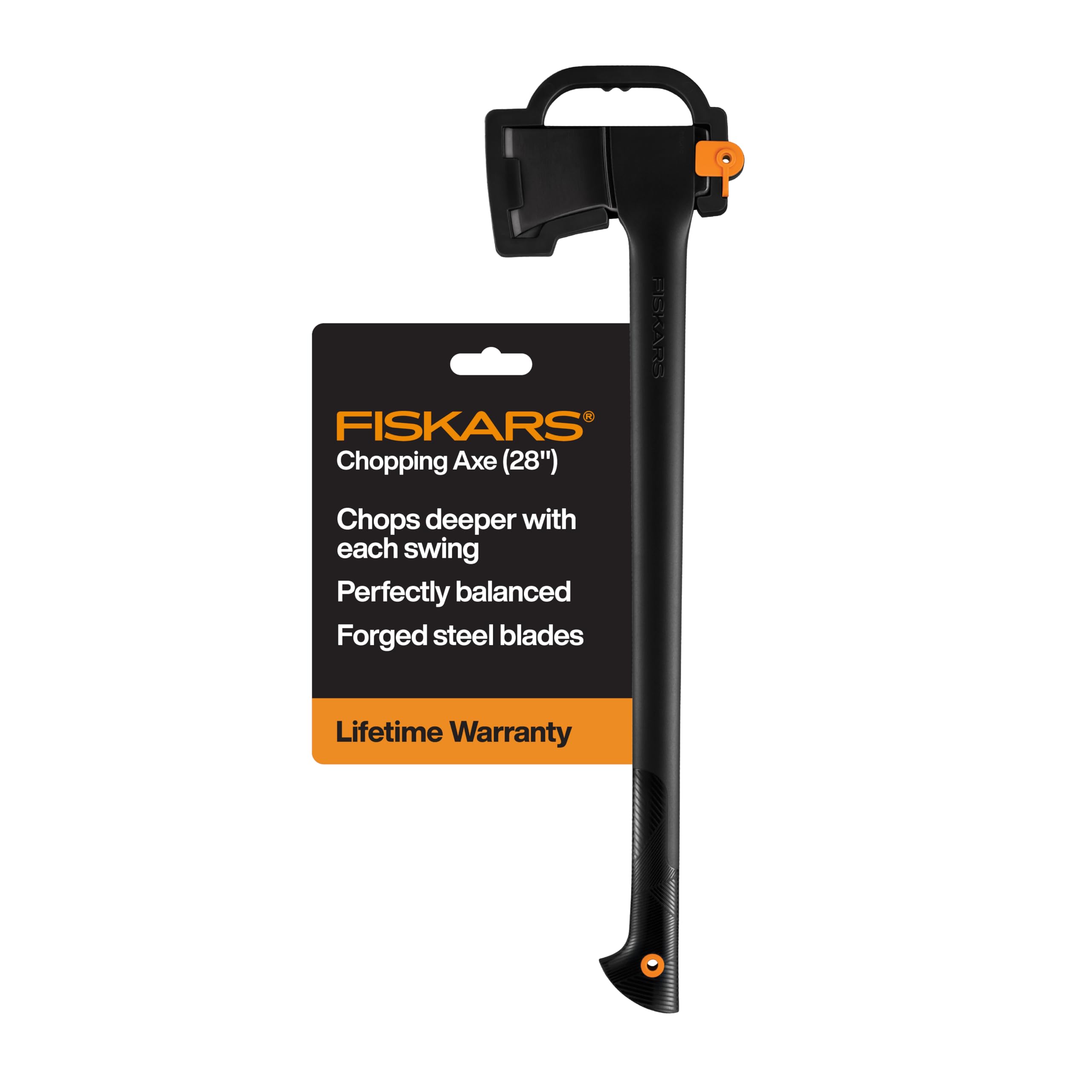
The Fiskars 28-inch Chopping Axe is built around a precision-balanced head design that uses advanced sharpening technology to create an ultra-sharp edge that bites deeper than standard ground profiles. The 3.5-pound head paired with the 28-inch handle creates a weight distribution that feels lighter than its actual mass, allowing for faster swing speeds without sacrificing cutting power. The low-friction coating applied to the blade reduces drag during the cut and prevents the axe head from binding in green or resinous wood.
The handle construction uses Fiskars’ FiberComp material, a polymer composite that does not warp, rot, or splinter like traditional wood handles, and it handles lateral stress better in the field. This matters when you need to pry a stuck head out of a tight cut — a situation that can snap hickory handles. The hardened non-stick blade edge is engineered for felling small trees, splitting kindling, and trimming branches, making this a versatile tool for campsite preparation and backyard cleanup.
User feedback consistently praises the ergonomics of the handle contour, which maintains a secure grip even when wet or cold, and the low vibration transfer that reduces fatigue during extended use. Buyers who also own the X27 splitting axe note that the 28-inch chopping axe feels faster and more maneuverable for general tasks, while still providing enough leverage for moderate splitting. The lifetime warranty adds a layer of confidence, particularly for users who work their axes hard in remote conditions.
Why it’s great
- Low-friction coating prevents binding in wet wood
- FiberComp handle resists rot and lateral breakage
- Balanced 3.5 lb head reduces fatigue during repeated swings
Good to know
- Non-stick coating may wear with heavy use
- Not ideal for splitting large diameter rounds
3. Husqvarna 20″ Wooden Curved Carpenter Axe
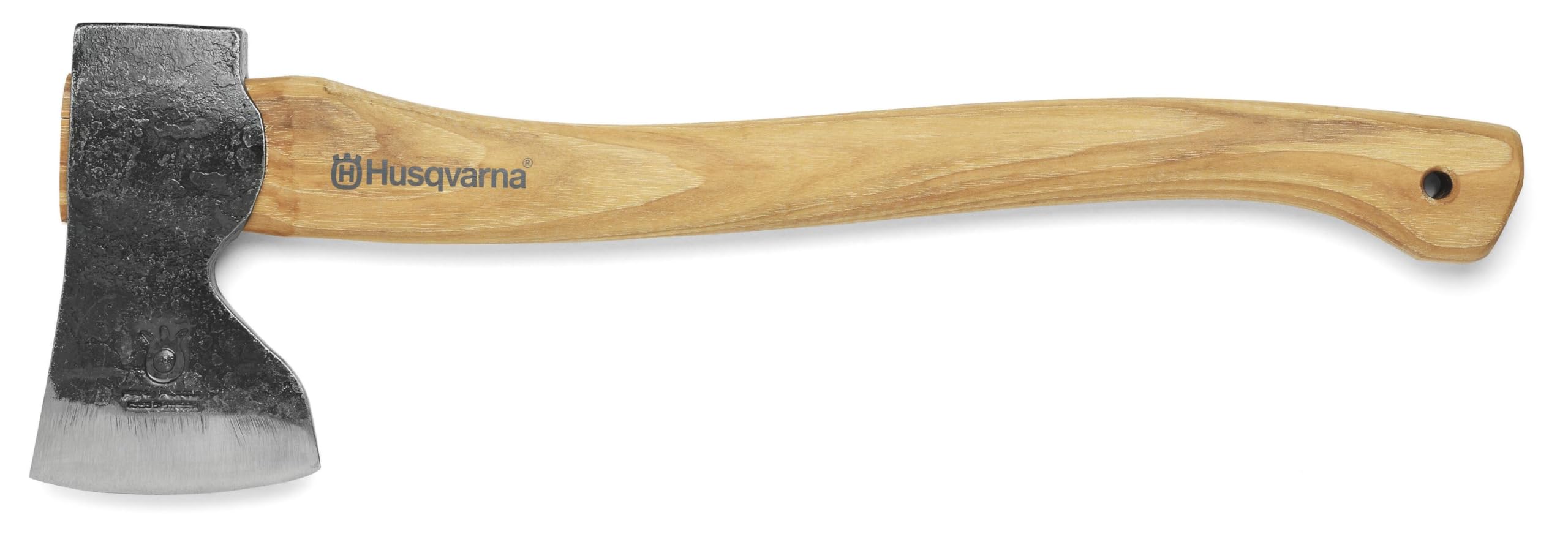
The Husqvarna 20-inch Carpenter Axe is a hand-forged tool manufactured in Sweden by Hultafors, using Swedish alloy steel that heat-treats to a hardness range suited for limbing, carving, and splitting kindling. The 2.42-pound head and 20-inch hickory handle create a compact profile that allows precise control during carving and limbing tasks, where a heavier axe would over-cut and waste wood. The curved handle geometry aligns the user’s wrist with the blade for more accurate strikes during detailed work.
The hickory handle is supplied with a natural-grit finish that requires sanding and a boiled linseed oil treatment to bring out its full grip and moisture resistance. This is a traditional axe that expects the owner to perform final fitting work — the edge arrives with a factory grind that many users choose to reshape for a thinner, sharper primary bevel. The leather edge cover is thick and functional, using brass rivets, and provides safe storage between trips.
Long-term users report that after initial shaping and oiling, the thin head geometry holds an edge well even when used for prying and wedge work on a tree farm. The 20-inch length makes this axe easy to pack in a vehicle or strap to a backpack, and the hand-forged character means each axe has slight variations in the hammer marks, which adds to the tool’s personality. For the user who wants a traditional Swedish axe that can be customized to their exact preferences, this is the strongest option in its size class.
Why it’s great
- Hand-forged Swedish steel with excellent edge potential
- 20-inch hickory handle offers precise control for carving
- Compact size packs easily for remote trips
Good to know
- Requires handle sanding and oiling before use
- Factory edge needs reshaping for optimal performance
4. Husqvarna Hatchet
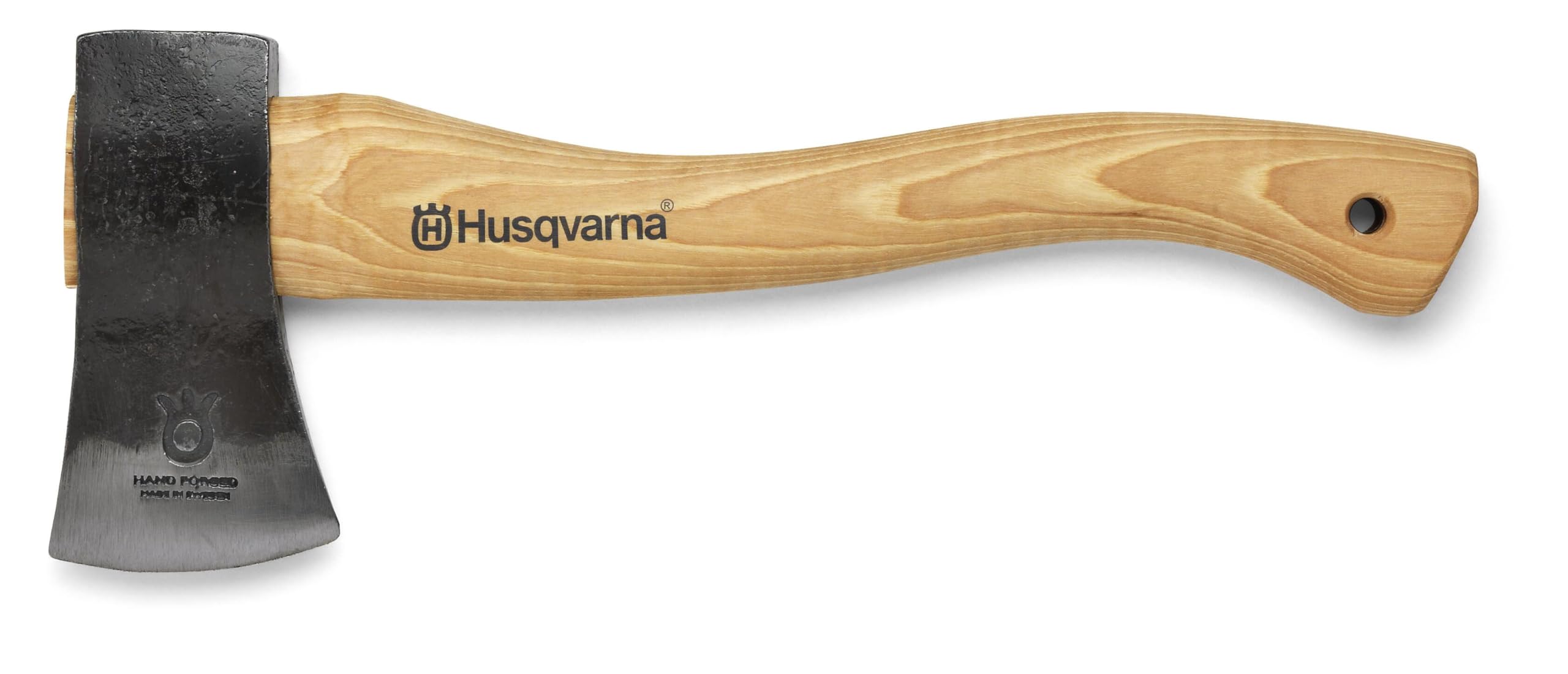
The Husqvarna Hatchet features a 1.32-pound hand-forged axe head attached to a 15-inch hickory handle, making it a pure one-handed tool for light wood cutting, kindling preparation, and camp chores. The head is forged by Hultafors in Sweden using their proprietary alloy steel, which heat-treats to a hardness that holds a working edge through a weekend of use without requiring a touch-up. The small profile allows the user to choke up on the handle for carving or swing with full extension for small felling cuts.
The hickory handle is cut with a straight grain orientation that resists splitting under lateral stress, but like the larger Husqvarna models, the handle ships with a rough surface texture that benefits from sanding and oiling. The leather sheath is made from thick hide with brass rivets and protects the edge during transport, though some users note the sheath’s snap can detach from the leather over time. The hatchet arrives with a factory edge that is functional but benefits from a fine sharpening pass for those who want a shaving-sharp edge.
Buyers who appreciate traditional tools will value the hand-forged character, visible hammer marks, and the connection to Swedish smithing tradition. This hatchet is light enough to carry in a day pack yet sturdy enough to split kindling and process small campfire wood. For the user who wants a premium Swedish hatchet without the premium price of Gransfors Bruks, the Husqvarna offers a comparable steel and construction at a more accessible cost.
Why it’s great
- Hand-forged Swedish steel in a lightweight package
- 15-inch hickory handle is ideal for one-handed use
- Thick leather sheath with brass rivets included
Good to know
- Handle requires sanding and oiling for optimal feel
- Factory edge benefits from additional sharpening
5. THKFWD 27.8″ Splitting Axe
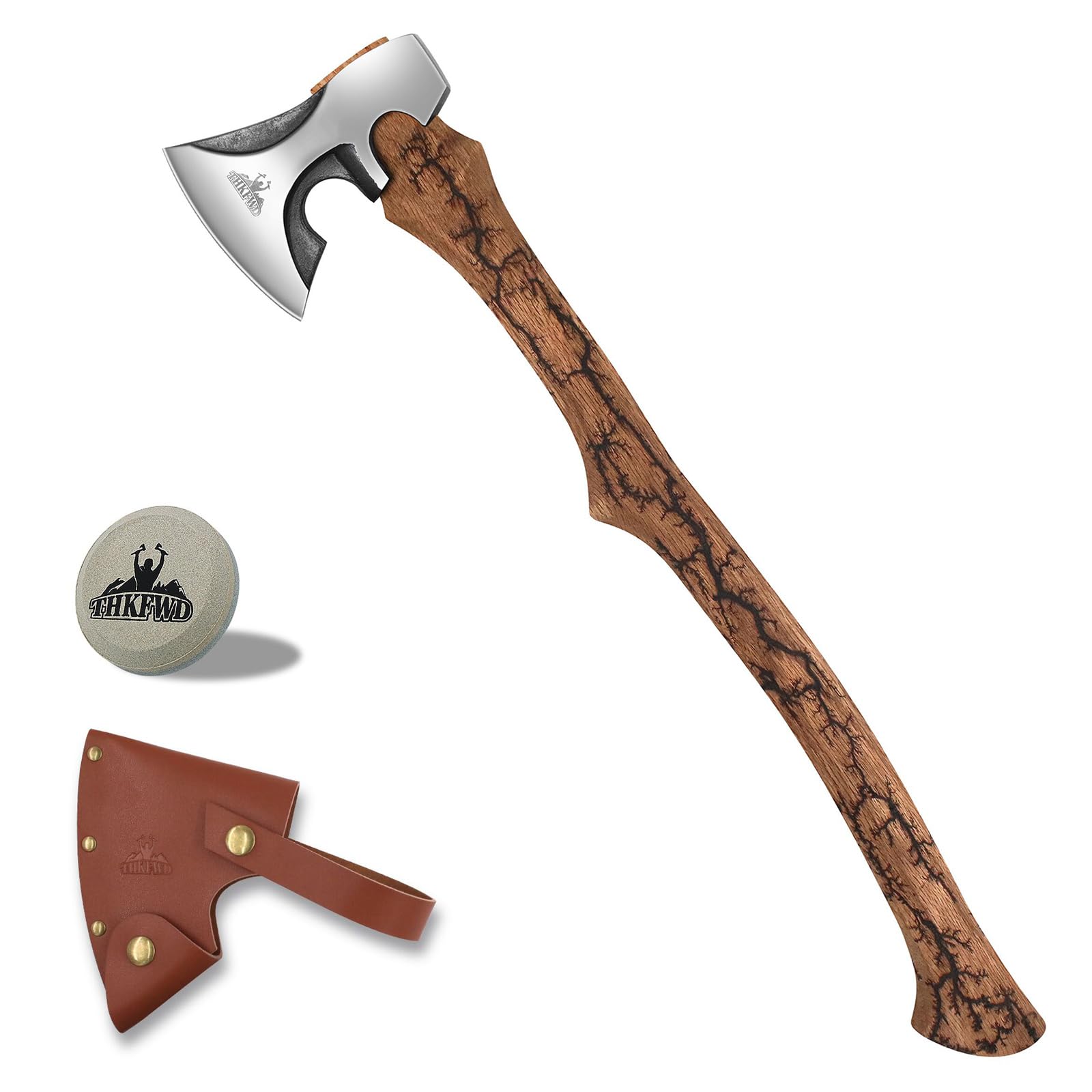
The THKFWD 27.8-inch Splitting Axe is constructed from 1065 high carbon steel that is heat-treated to a density that supports clean splits through firewood, kindling, and smaller logs. The 1065 grade is slightly higher in carbon content than 1055, which allows the blade to hold a sharper edge for a longer period between sharpenings, making it a good choice for users who do not want to maintain the edge after every session. The convex blade geometry helps the head release from the cut after splitting, reducing the energy wasted on extraction.
The wooden handle features a Lichtenberg pattern burn that adds visual character and provides a subtle texture for grip enhancement. The handle is ergonomically shaped with a flared end that reduces the chance of the tool slipping out of the hand during a full swing. The set includes a leather sheath with a belt loop for storage and a sharpening stone for field touch-ups, which adds practical value for the user who needs a ready-to-go kit.
User feedback indicates that the head performs well for splitting tasks when properly seated, but some units have experienced head loosening after approximately 100 strikes, requiring the owner to reseat the wedge. The manufacturer has responsive customer service for replacement requests. For users who appreciate the aesthetic of a burnout pattern handle and want the edge-holding benefits of 1065 steel, this splitting axe provides a good balance of performance and visual appeal at a competitive price point.
Why it’s great
- 1065 carbon steel offers better edge retention than 1055
- Convex geometry aids blade release from cuts
- Includes leather sheath and sharpening stone
Good to know
- Some reports of head loosening after heavy use
- Handle may require wedge reseating over time
6. THKFWD 22.3″ Camping Hatchet

The THKFWD 22.3-inch Camping Hatchet uses forged carbon steel that has been heat-treated to increase density, resulting in a blade that delivers smooth cuts through firewood, logs, and kindling. The 3.75-pound total weight is distributed toward the head to provide momentum on the swing, while the beech wood handle is shaped to reduce hand strain during repeated use. The convex blade edge is fully polished and can be resharpened with a file, which makes field maintenance straightforward without specialized tools.
The handle-to-head ratio is balanced to allow both one-handed and two-handed grips, depending on the cut depth required. The hatchet comes with a leather sheath that includes a belt hole for secure carry, along with a sharpening stone that helps maintain the edge. The blade geometry is optimized for splitting, with a weighted wedge design that pushes logs apart rather than getting stuck in the cut.
User feedback highlights the solid feel of the hatchet and the quality of the included leather cover and sharpening tools. Some users report that the head loosened after approximately 100 strikes, and the handle on one unit failed after four months, but the seller provided a replacement within six days. For the user who wants a visually appealing camp hatchet with a full polished edge and responsive customer support, this is a viable budget-friendly option in the mid-range tier.
Why it’s great
- Heat-treated forged carbon steel for edge durability
- Polished convex blade is easy to resharpen in the field
- Includes leather sheath and sharpening stone
Good to know
- Some reports of head loosening after extended use
- Full polish scratches more easily than brushed steel
7. WICING 21″ Chopping Axe

The WICING 21-inch Chopping Axe is built from 1055 high carbon steel with a hardness rating of 53-56 HRC, placing it in the optimal range for field durability and edge retention. The 1.5-pound head is light enough for one-handed use on smaller tasks while the 21-inch beech wood handle provides enough reach for two-handed swings on campfire wood. The bearded design of the head allows the user to choke up close to the blade for carving and fine cuts, adding versatility beyond simple splitting.
The curved beech wood handle is ergonomically shaped to absorb shock and provide a secure grip, and the wood is treated to resist cracking and splitting under normal use. The set includes a leather sheath, a sharpening stone, and a spare steel wedge for reseating the head if it loosens over time. The blade arrives sharpened and ready for use, though some users report that the factory edge benefits from a finer honing pass on a whetstone for optimal performance.
User feedback indicates that the axe performs well for camping, bushcraft, and garden tasks, with good fit and finish for the price point. The straight grain of the handle is well-oriented, and the head is tightly seated upon delivery. The 21-inch length makes it a good option for users of smaller stature or those who prefer a shorter, more maneuverable axe for woods work where overhead clearance is limited. For an entry-level price, this axe provides a complete kit that removes the need to purchase accessories separately.
Why it’s great
- 1055 steel at 53-56 HRC offers good field durability
- Bearded head allows close-up carving grip
- Complete kit with sheath, stone, and spare wedge
Good to know
- 21-inch handle limits leverage for larger logs
- Factory edge may need fine honing
FAQ
What is the ideal head weight for a general-purpose forest axe?
How often should I sharpen a 1055 carbon steel axe?
Can I use a splitting axe for felling trees?
Final Thoughts: The Verdict
For most users, the best forest axe winner is the Fiskars 28″ Chopping Axe because its 3.5-pound head, low-friction coating, and FiberComp handle deliver the broadest utility for felling, limbing, and splitting at a weight that minimizes fatigue. If you want dedicated splitting power for medium to large logs, grab the Fiskars 36″ Super Splitting Axe. And for traditionalists who want a hand-forged Swedish steel axe that can be customized to their preferred edge profile, nothing beats the Husqvarna 20″ Carpenter Axe.