
At nine months, your baby’s nutritional needs shift dramatically — iron stores begin to deplete, the gut microbiome matures, and solid food becomes a larger part of the diet. The right formula at this stage must bridge the gap between infancy and toddlerhood, delivering higher levels of key nutrients like iron, calcium, and DHA while remaining gentle on a developing digestive system.
I’m Mohammad Maruf — the founder and writer behind Drink4Good. My research focuses on analyzing the clinical data, ingredient sourcing, and regulatory compliance behind infant nutrition products to help parents make informed, confident choices.
This guide compares five leading formulas tailored for older infants, examining their lactase content, HMO profiles, organic certifications, and stage-specific nutrient adjustments so you can find the best formula for 9 month old babies that supports healthy growth without digestive upset.
How To Choose The Best Formula For 9 Month Old
Choosing a formula for a nine-month-old is different from selecting one for a newborn. At this stage, your baby’s iron stores from birth are running low, solid foods are being introduced, and the digestive system is more mature but still sensitive. The right formula should complement solids, support immune development, and provide stage-appropriate levels of key nutrients.
Stage 2 vs. Stage 1 — Higher Iron and Calcium
Stage 2 formulas (typically labeled for 6–12 months) contain higher levels of iron, calcium, phosphorus, and iodine compared to Stage 1. This adjustment supports bone development and replenishes iron stores. When choosing a formula for a nine-month-old, always look for a product explicitly formulated for older infants — not a newborn formula — to ensure these elevated levels.
HMOs Versus Traditional Prebiotics
Human milk oligosaccharides (HMOs) like 2’-FL and LNnT are the most researched prebiotics in infant nutrition. They feed beneficial gut bacteria, support immune cell development, and mimic the prebiotic profile of breast milk. Premium formulas now include dual or multi-HMO blends, while budget-conscious options may use shorter-chain prebiotics like GOS or FOS. For immune support, multi-HMO formulas offer an advantage.
Lactose Sensitivity and Gentle Formulas
If your nine-month-old shows signs of gas, fussiness after feedings, or loose stools, a lactose-reduced or “sensitive” formula may help. These products contain 99 percent less lactose than standard milk-based formulas while still providing complete nutrition. They are not intended for diagnosed lactose intolerance but rather for babies who struggle with the higher lactose content of standard formulas.
Organic Certification and Ingredient Sourcing
USDA Organic certification ensures the milk comes from cows not treated with synthetic growth hormones or antibiotics and that feed is grown without synthetic pesticides. European organic certifications (like EU Organic) are equally rigorous. If avoiding corn syrup, artificial growth hormones, and GMOs is a priority, look for formulas with Clean Label Project certification or explicit non-GMO labeling on the can.
Quick Comparison
On smaller screens, swipe sideways to see the full table.
| Model | Category | Best For | Key Spec | Amazon |
|---|---|---|---|---|
| Happy Baby Organics Stage 2 | Organic Premium | Babies transitioning from breast milk | Higher iron, calcium, phosphorus for 6-12 months | Amazon |
| Mama Bear Sensitivity Premium | Sensitive | Lactose-sensitive babies | 99% less lactose + dual HMOs | Amazon |
| Mama Bear Advantage Premium | Standard Premium | Budget-conscious parents seeking complete nutrition | Dual HMOs (2’-FL + LNnT) | Amazon |
| Similac Go & Grow 360 Sensitive | Sensitive Toddler | Toddlers with lactose sensitivity | 5 HMOs + DHA for brain & eye | Amazon |
| Bubs Essential Infant Formula | Value Entry | Budget-friendly clean ingredient formula | Whole cow’s milk + pre/probiotics | Amazon |
In‑Depth Reviews
1. Happy Baby Organics Stage 2 Infant Formula
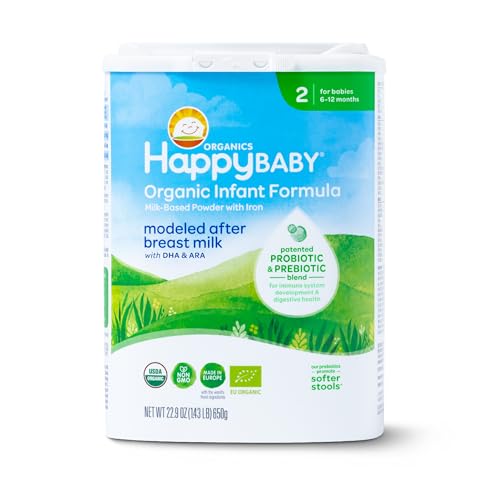
Happy Baby Organics Stage 2 is the only USDA organic formula that tailors its key nutrient levels as your baby grows — providing higher calcium, iron, phosphorus, iodine, and selenium than its Stage 1 counterpart. This stage-specific adjustment is critical for a nine-month-old whose iron stores are depleting and whose bone development accelerates with crawling and pulling up. The formula is made in Europe under both USDA and EU organic standards, a dual certification that speaks to its rigorous ingredient sourcing.
The patented probiotic and prebiotic blend — clinically shown to support softer, more regular stools — is a standout feature for older infants who may experience constipation as solid foods are introduced. The DHA content meets European requirements at levels found in breast milk, supporting brain and eye development during a period of rapid cognitive growth. Parents consistently report smooth transitions from breastfeeding and improved stool consistency after switching.
One practical consideration: the smaller scoop size means you’ll need 32 scoops for a 32-ounce pitcher, which takes slightly more effort during preparation. The outer seal on the canister can also arrive damaged during shipping due to the thin foil. However, for a nine-month-old eating solids and needing organic, stage-appropriate nutrition with proven digestive benefits, this formula delivers measurably better outcomes than standard Stage 1 options.
Why it’s great
- Stage-specific higher iron, calcium, and phosphorus
- Dual organic certification (USDA + EU)
- Clinically studied probiotic/prebiotic blend for stool softening
- DHA at breast-milk levels meeting European requirements
Good to know
- Smaller scoop requires 32 scoops per 32 oz pitcher
- Outer seal may arrive damaged during shipping
- Occasional availability issues in stores
2. Mama Bear Sensitivity Premium Infant Formula
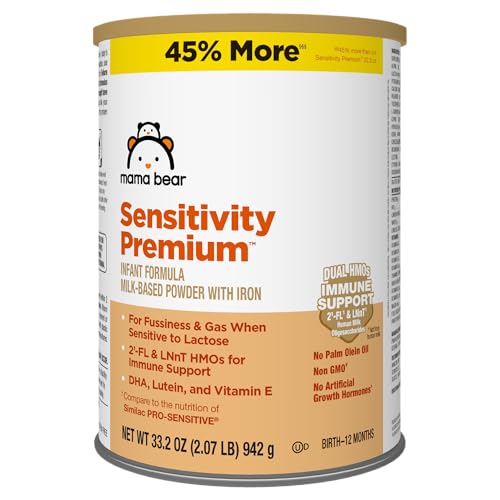
If your nine-month-old shows signs of gas, fussiness, or loose stools after feeding, Mama Bear Sensitivity Premium is engineered specifically for that problem. With 99 percent less lactose than standard milk-based formulas, it’s designed for babies with lactose sensitivity — a common issue as the digestive system matures and solid foods are introduced. It provides complete nutrition for the first year, making it suitable for a nine-month-old who still relies on formula for the majority of their calories.
The dual HMO blend (2’-FL and LNnT) matches the immune-supporting prebiotics found in breast milk, helping beneficial gut bacteria thrive despite the reduced lactose. It includes DHA, lutein, vitamin E, and choline for brain and eye development, all without palm olein oil, artificial growth hormones, or genetically engineered ingredients. Parents report that babies who struggled with standard formulas transitioned smoothly to this sensitive option without the usual digestive upset.
A notable downside reported by some users is a distinct change in the baby’s breath after switching to this formula — likely related to the reduced lactose content altering oral bacteria. The canister size at 33.2 ounces offers good value, but the sensitivity formulation comes at a premium compared to standard options. For a nine-month-old who is genuinely lactose-sensitive, the reduction in gas and fussiness typically outweighs the minor inconvenience of the breath issue.
Why it’s great
- 99% less lactose for sensitive tummies
- Dual HMOs for immune and digestive support
- No artificial growth hormones, GMOs, or palm olein oil
- SNAP eligible for supplemental nutrition programs
Good to know
- May cause bad breath in some babies
- Premium pricing relative to standard formulas
- Not suitable for diagnosed lactose intolerance without pediatrician input
3. Mama Bear Advantage Premium Baby Formula
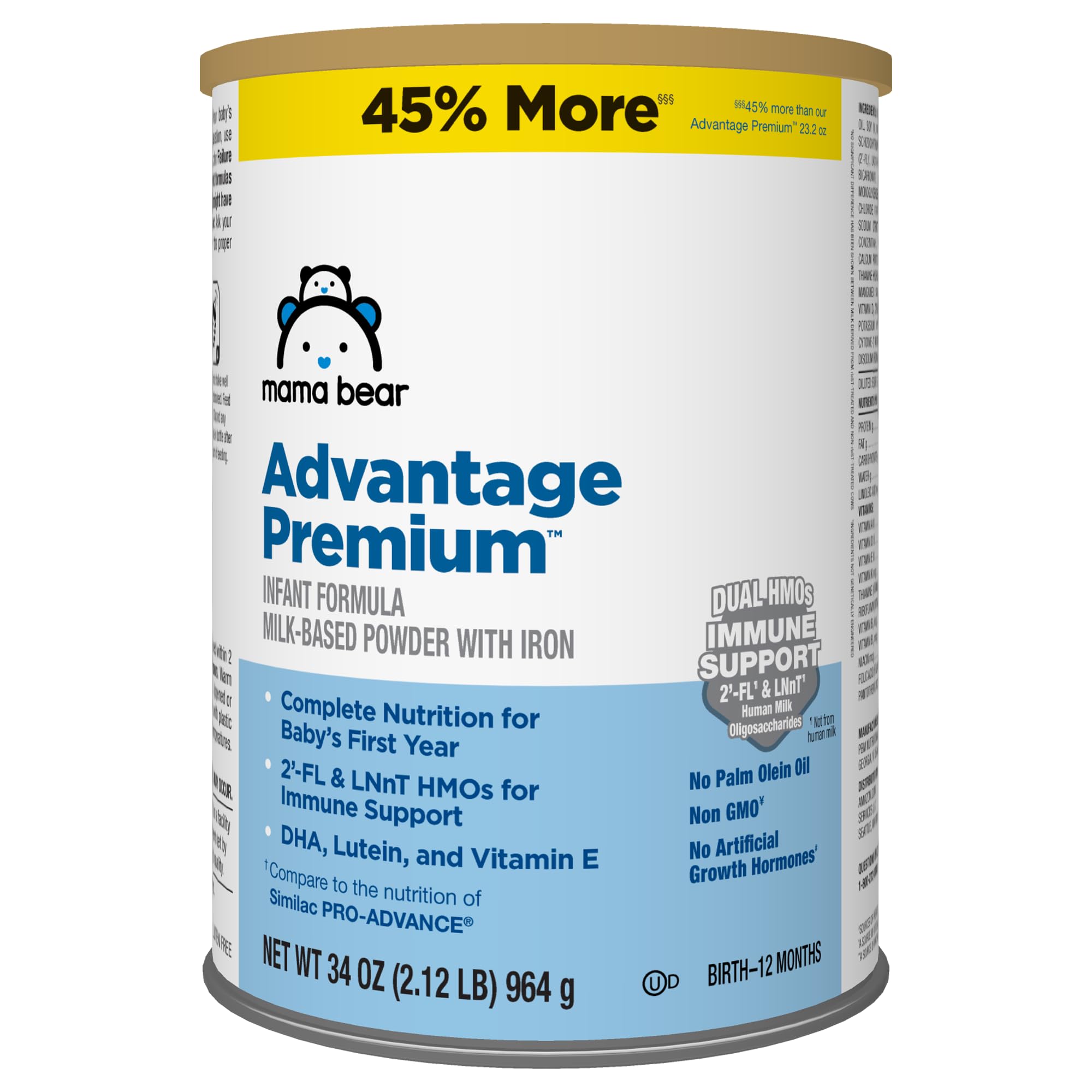
Mama Bear Advantage Premium delivers the same dual HMO technology (2’-FL and LNnT) found in premium national brands at a significantly lower price point — without sacrificing FDA quality standards. This is the Amazon brand’s answer to Similac Pro-Advance, offering multi-HMO immune support in a 34-ounce can that provides more servings per container than many competitors. For a nine-month-old who is tolerating standard milk-based formula well, this is the most cost-effective way to get complete nutrition with enhanced prebiotics.
The formula includes DHA, lutein, vitamin E, and choline for brain and eye development, all without palm olein oil, artificial growth hormones, or GMOs. Parents who transitioned from name-brand formulas report their babies notice no difference in taste or digestion, making it an easy swap. The can is also SNAP eligible, which expands access for families using supplemental nutrition benefits.
The one trade-off is that the formula bottle does not include a convenient lid for storing an open scoop — a minor design detail. Some users also note the powder density varies slightly between batches, so precise measurement using a kitchen scale (targeting the grams-to-ounce ratio) ensures consistent preparation. For most nine-month-olds, the formula mixes well without clumping and supports regular bowel movements without excessive gas.
Why it’s great
- Dual HMO blend at a budget-friendly price
- Complete nutrition comparable to premium national brands
- Non-GMO with no artificial growth hormones
- SNAP eligible; no membership required
Good to know
- No lid for scoop storage inside can
- Powder density can vary between batches
- Contains 100% lactose — not suitable for sensitive babies
4. Similac Go & Grow 360 Total Care Sensitive

Similac Go & Grow 360 Total Care Sensitive is technically a toddler nutritional drink rather than an infant formula, but it’s relevant for nine-month-olds who are close to their first birthday and have lactose sensitivity. It’s the only US sensitive toddler drink with five different HMOs — a significant boost for immune support compared to single or dual HMO formulas. The milk-based formula is designed for children with lactose sensitivity but is not intended for sole-source nutrition.
The DHA, lutein, and vitamin E blend supports brain and eye development, while the absence of palm olein oil helps with calcium absorption. Parents report it’s gentle on sensitive stomachs, reducing gas and fussiness that standard toddler drinks can cause. The taste is reportedly well-received by children, making it an easier transition for picky eaters who are starting to consume more solids.
The main consideration is that this product is labeled as a toddler drink, meaning it’s not formulated to be the primary source of nutrition for a nine-month-old who still relies heavily on formula. It’s best used as a supplement or transition drink once your baby is eating three solid meals daily and drinking less formula. The can also has a smaller size than standard infant formula containers, and while SNAP eligible, it may not be available in all stores.
Why it’s great
- 5 HMOs for advanced immune support
- Reduces gas and fussiness from lactose sensitivity
- DHA, lutein, and vitamin E for brain/eye development
- Pleasant taste that toddlers accept easily
Good to know
- Labeled as toddler drink, not sole-source nutrition
- Smaller can size compared to infant formulas
- Not suitable as primary formula before 12 months
5. Bubs Essential Infant Formula
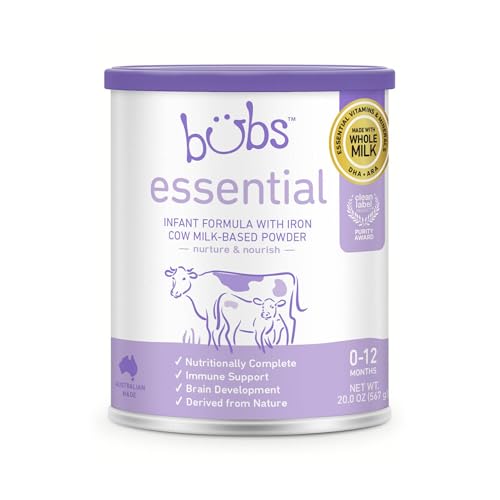
Bubs Essential Infant Formula offers a clean ingredient profile at a price that undercuts most competitors — whole cow’s milk powder from Australia, no corn syrup, no artificial colors or flavors, and no GMOs. The formula has won the Clean Label Project Award and is certified under the First 1,000 Day Promise standard, meaning it meets strict criteria for purity and nutrition. For a nine-month-old, the 20-ounce can lasts less time than larger containers, but the value per ounce remains excellent.
The prebiotic and probiotic blend supports digestive health, and plant-based DHA and ARA provide essential fatty acids without fish-derived ingredients. Parents report it’s easy on the stomach, even for babies with food allergies, and that it doesn’t cause the strong odor typical of some formulas. The powder itself feels “thin” — a lower density than some competitors — but it dissolves well and provides full nutrient coverage for infants 0–12 months.
The main limitation is the smaller can size relative to American competitors — you’ll go through a 20-ounce container faster, which means more frequent reordering. The formula is also not organic, which may matter to parents prioritizing that certification. However, if your nine-month-old has tolerated it well and you’re looking for an affordable, clean-label option with Australian-sourced whole milk, this formula delivers solid nutrition without breaking the budget.
Why it’s great
- Clean Label Project Award + First 1,000 Day Promise certified
- No corn syrup, GMOs, or artificial additives
- Prebiotics and probiotics for digestive support
- Australian whole milk powder at a low price point
Good to know
- Smaller 20-ounce can requires frequent reordering
- Not USDA Organic certified
- Powder appears less dense than American brands
FAQ
Can I still use Stage 1 formula for my 9-month-old?
How do I know if my 9-month-old needs a sensitive formula?
Is it safe to switch formulas abruptly at 9 months?
How much formula should a 9-month-old drink daily?
Are organic formulas worth the higher price at 9 months?
Final Thoughts: The Verdict
For most parents seeking the best formula for 9 month old babies, the Happy Baby Organics Stage 2 wins because it delivers stage-specific higher iron, calcium, and phosphorus with a clinically proven probiotic blend that eases the transition to solids. If your baby struggles with gas and lactose sensitivity, the Mama Bear Sensitivity Premium provides 99 percent less lactose with dual HMOs at a fair price. And for budget-conscious families who want dual HMO technology without paying for organic certification, the Mama Bear Advantage Premium offers the best value per ounce in this category.