
When your baby is screaming in pain from a gassy tummy every night, the search for the right formula feels like a desperate race. The wrong bottle triggers spit-ups, hard stools, and hours of inconsolable crying that leaves everyone exhausted. The right one, however, can bring quiet evenings and relief within a day or two.
I’m Mohammad Maruf — the founder and writer behind Drink4Good. I’ve spent countless hours analyzing infant nutrition studies and formula ingredient panels to understand which specific protein structures, probiotic strains, and carbohydrate sources actually calm colic and relieve constipation.
This guide breaks down the top contenders to help you find a formula for colic and constipation that matches your baby’s unique sensitivities and your budget.
How To Choose The Best Formula For Colic And Constipation
Selecting the right formula means understanding how protein structure, probiotic content, and lactose levels interact with your baby’s digestive system. Here are the three most important factors to consider.
Protein Hydrolysis Level
The size of the protein molecules in the formula determines how easily your baby’s gut can break them down. Intact cow’s milk proteins can be hard to digest, leading to gas and colic. Partially hydrolyzed formulas break these proteins into smaller pieces, while extensively hydrolyzed formulas break them down even further. Amino acid-based formulas skip the breakdown process entirely — they provide the simplest protein building blocks for the most sensitive systems. For severe colic linked to cow’s milk protein allergy, extensively hydrolyzed or amino acid formulas are often the answer.
Probiotic Strains and Benefits
A probiotic adds live beneficial bacteria to support your baby’s gut microbiome. The strain Bifidobacterium lactis (B. Lactis) is commonly added to help promote easy digestion and softer stools. Lactobacillus rhamnosus GG (LGG) has the most clinical research backing for relieving colic in formula-fed babies and helping them eventually tolerate milk protein again. Look for formulas that explicitly list the specific probiotic strain on the label.
Lactose Content and Carbohydrate Source
Lactose is the standard carbohydrate in breast milk and most standard infant formulas. However, some colicky or constipated babies lack enough lactase enzyme to digest it fully, causing gas and bloating. Lactose-free formulas use alternative carbohydrates like corn syrup solids, which are easier for sensitive tummies to process. If your baby has confirmed lactose intolerance or shows significant gas and loose stools with lactose-based formulas, a lactose-free option can provide relief.
Quick Comparison
On smaller screens, swipe sideways to see the full table.
| Model | Category | Best For | Key Spec | Amazon |
|---|---|---|---|---|
| Similac Alimentum With 2′-FL HMO | Hypoallergenic | Colic from protein sensitivity | Extensively hydrolyzed + 2′-FL HMO | Amazon |
| Good Start Dr. Brown’s Gentle Pro | Gentle | Sensitive tummies & softer poops | 100% whey, 2-step hydrolyzed | Amazon |
| Similac Soy Isomil | Soy-Based | Fussiness & gas from milk protein | Plant-based, no palm olein oil | Amazon |
| Enfamil NeuroPro | Standard | Cognitive development & gentle digestion | MFGM + DHA + HuMO6 blend | Amazon |
| Neocate Infant | Amino Acid | Severe food allergies & reflux | 100% amino acid-based | Amazon |
| PurAmino Junior | Amino Acid | Severe GI conditions & allergies (1+ years) | Amino acid-based, tube-feeding safe | Amazon |
| Enfamil Nutramigen | Hypoallergenic | Colic relief from cow’s milk allergy | Extensively hydrolyzed + LGG probiotics | Amazon |
In‑Depth Reviews
1. Similac Alimentum With 2′-FL HMO
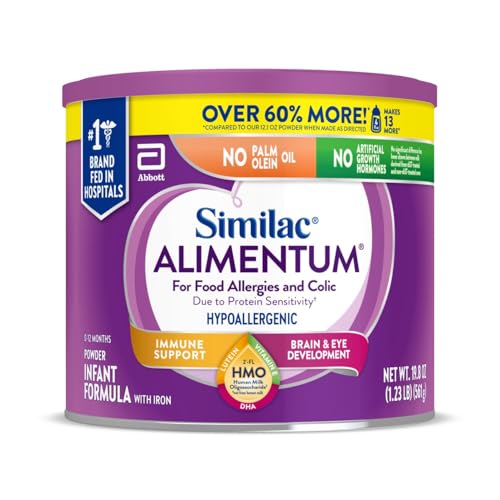
Similac Alimentum uses extensively hydrolyzed whey protein — the milk proteins are broken into tiny fragments that virtually eliminate allergic reactions in most babies with cow’s milk protein sensitivity. It’s the first and only hypoallergenic formula in the US that also includes 2′-FL HMO, an immune-nourishing oligosaccharide found naturally in breast milk, giving it a distinct advantage over older hypoallergenic options.
Parents report that colic symptoms often start fading within 24 hours of switching to Alimentum, backed by clinical data showing reduced crying and discomfort in infants with protein sensitivity. The formula is also lactose-free, making it appropriate for babies who have trouble digesting lactose alongside their protein intolerance. It mixes easily with minimal clumping, which is a practical benefit during late-night feedings.
The main trade-off is the premium price point — Alimentum sits at a mid-range to premium tier depending on can size. Buying the large 19.8-ounce container is more cost-effective per ounce than smaller cans, and the Similac app offers a 20% coupon for new registrants. It’s also SNAP-eligible, which can help families on assistance programs.
Why it’s great
- Clinically proven to reduce colic symptoms within 24 hours
- First hypoallergenic formula with 2′-FL HMO for immune support
- Lactose-free for sensitive digestive systems
Good to know
- Expensive compared to standard formulas
- Only available in 19.8-oz and 33.2-oz cans
2. Good Start Dr. Brown’s Gentle Pro

Good Start Gentle Pro uses a 100% whey protein base that has undergone a two-step hydrolysis process, making the protein fragments ten times smaller than intact cow’s milk proteins. This design mimics the gentleness of breast milk and is specifically formulated to help promote easy digestion and softer stools, making it a strong candidate for babies who are gassy but not severely allergic.
The formula includes the probiotic Bifidobacterium lactis, a strain also found in breast milk, which helps balance gut bacteria and reduce gas and spit-up. Parents consistently report that babies have more regular bowel movements and less crying after switching to Gentle Pro. It mixes well with minimal clumping, and the 32-ounce container is reasonably priced for a sensitive-stomach formula.
One important consideration: this is a partially hydrolyzed formula, not extensively hydrolyzed. It is not designed for babies with diagnosed cow’s milk protein allergy. If your baby has severe colic with visible blood in stool or eczema, you will need a hypoallergenic option instead. But for mild to moderate gas and constipation, it offers excellent value.
Why it’s great
- Two-step hydrolysis makes proteins 10x smaller for easy digestion
- Includes probiotic B. Lactis found in breast milk
- Great price point for a sensitive-tummy formula
Good to know
- Not suitable for diagnosed CMPA — only for mild sensitivities
- Smaller containers last about 6 days for a full-term infant
3. Similac Soy Isomil

Similac Soy Isomil uses a soy protein isolate as its base instead of cow’s milk protein, making it a vegetarian-friendly option for babies who are intolerant to dairy. It is clinically shown to reduce fussiness and gas when switching from milk-based formulas, particularly for infants who have temporary lactose intolerance following a stomach virus or mild protein sensitivity.
The formula contains no palm olein oil, which supports excellent calcium absorption — a common concern for parents choosing soy-based products. It also provides prebiotics for digestive health and DHA plus lutein for brain and eye development. Parents using Soy Isomil report that stools normalize quickly and that fussiness mellows out within a few days of the switch.
However, soy formula should only be used when your pediatrician confirms your baby can tolerate soy protein. Some babies who are sensitive to cow’s milk also react to soy due to cross-reactivity. Additionally, Soy Isomil contains intact soy protein — it is not hydrolyzed, so it is not appropriate for babies with confirmed soy allergy or severe colic from protein sensitivity.
Why it’s great
- Plant-based protein for fussiness and gas reduction
- No palm olein oil for better calcium absorption
- Available in bulk 4-packs at a great per-ounce cost
Good to know
- Not suitable if baby has soy allergy
- Contains intact soy protein — not hydrolyzed
4. Enfamil NeuroPro

Enfamil NeuroPro is built around its Brain Building Duo — MFGM (milk fat globule membrane) components plus expert-recommended DHA. Clinical studies show that these ingredients support cognitive, motor, and communication development through age 5 when fed during the first year. It also contains the exclusive HuMO6 immune blend, a mix of prebiotics designed to support a developing immune system.
While NeuroPro is not specifically marketed as a colic or constipation formula, many parents report that their babies tolerate it well with minimal gas and spit-up. It includes standard levels of lactose as the carbohydrate source, so it works best for infants without known lactose intolerance or severe protein sensitivity. The 36.4-ounce 4-pack offers a convenient subscription option that brings the per-ounce cost below wholesale club prices.
For babies who have mild fussiness but no diagnosed allergy, NeuroPro provides a solid balance of brain-nourishing ingredients and gentle digestion. It is the most widely recommended formula by pediatricians, which adds peace of mind. However, if your baby has clear colic symptoms tied to dairy sensitivity, you would benefit more from a hypoallergenic option like Alimentum or Nutramigen.
Why it’s great
- MFGM + DHA shown to benefit brain development through age 5
- HuMO6 immune blend supports digestive health
- Subscription pricing beats warehouse club deals
Good to know
- Contains lactose — not ideal for lactose-intolerant babies
- Not designed specifically for colic or constipation relief
5. Neocate Infant
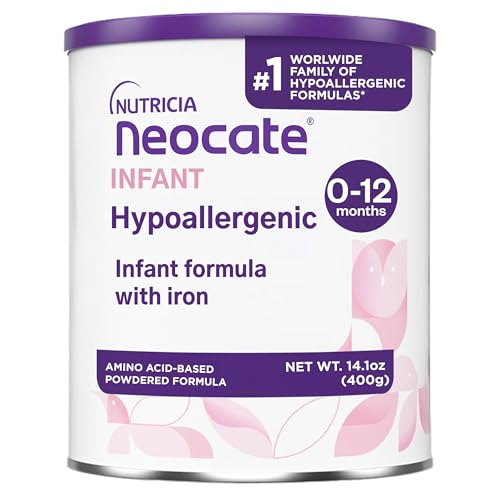
Neocate Infant is a completely amino acid-based formula — it contains no intact or hydrolyzed proteins at all. The protein component is provided in its simplest form (amino acids), making it the most hypoallergenic option available for infants 0–12 months. It is designed for babies who fail extensively hydrolyzed formulas, particularly those with severe cow’s milk protein allergy (CMPA), multiple food allergies, eosinophilic esophagitis, or short bowel syndrome.
Clinical evidence shows that Neocate provides food allergy symptom relief in as little as 3 days. It also includes DHA and ARA for brain and eye development, plus nucleotides to support the immune system. Parents whose babies have tried multiple other formulas without success often call Neocate a lifesaver — it resolved severe reflux, blood in stool, and failure to thrive in many cases.
The main drawback is the cost. Neocate is one of the most expensive infant formulas on the market, with a 14.1-ounce can lasting only a few days for a full-term infant. Many parents find that their pediatrician can write a letter of medical necessity (LOMN) to help get it covered by insurance. The small can size also means frequent reordering — a subscription setup is almost essential.
Why it’s great
- 100% amino acid-based — the most hypoallergenic option available
- Clinically shown to provide symptom relief in 3 days
- Contains DHA, ARA, and nucleotides for developmental support
Good to know
- Very expensive — small can size per unit
- Nipples can clog in cold weather; rinse inside before feeding
6. PurAmino Junior
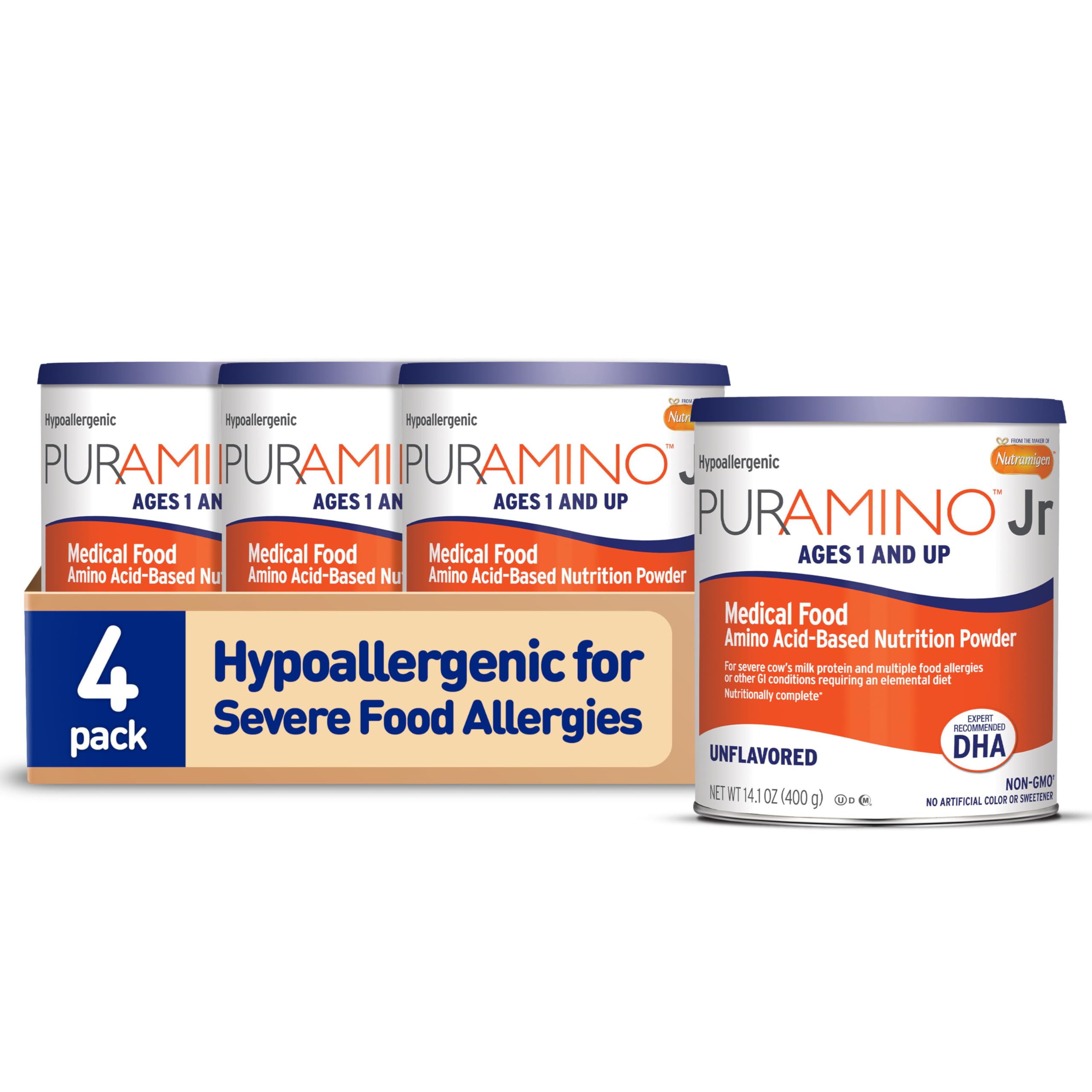
PurAmino Junior is an amino acid-based formula designed for children aged 1 year and older who cannot tolerate intact or hydrolyzed proteins. Like Neocate for infants, it provides nutrition in its simplest form, making it suitable for severe cow’s milk protein allergy (CMPA), multiple food protein allergies, FPIES (Food Protein-Induced Enterocolitis Syndrome), eosinophilic esophagitis, and short bowel syndrome. It is also safe for oral and tube feeding.
Parents caring for children with Sandifer syndrome, GERD, or severe reflux have reported dramatic improvements after switching to PurAmino — coughing, spit-ups, and feeding aversions resolved, and children began gaining weight steadily. The formula is nutritionally complete for ages 1–13, providing 100% of dietary needs for protein, vitamins, and minerals, plus DHA for brain development. It is Kosher (OU-D), Halal, non-GMO, and gluten-free.
As with Neocate, cost is the biggest barrier. A 4-pack of 14.1-ounce cans is a significant investment. However, Mead Johnson offers free cases for multiples (twins, triplets) via a pediatrician’s request, and insurance may cover the formula in certain states. Parents should check with their insurance provider and ask for a letter of medical necessity. Some families also report initial constipation when starting, which typically resolves with adequate hydration.
Why it’s great
- Only formula safe for severe conditions like FPIES and EoE
- Nutritionally complete for ages 1–13 years
- Kosher, Halal, non-GMO, and gluten-free
Good to know
- Very expensive — insurance coverage varies by state
- Some children experience initial constipation when starting
7. Enfamil Nutramigen

Enfamil Nutramigen is an extensively hydrolyzed, lactose-free formula that has been a go-to recommendation from pediatricians for decades. It is clinically proven to begin relieving colic symptoms due to cow’s milk allergy within the first feeding, with 90% of infants improving within 48 hours. The formula contains the probiotic Lactobacillus rhamnosus GG (LGG), the most extensively studied probiotic strain for allergy management and digestive health support in infants.
Nutramigen is designed to not only ease colic but also help the baby’s immune system eventually tolerate traditional milk protein. Many parents report that their babies who could not tolerate any other formula finally slept through the night, stopped crying in pain, and had reduced eczema or skin rashes. The formula includes Omega-3 DHA, ARA, and choline for brain support.
The cost is premium, especially for the 4-pack of 27.8-ounce cans. Parents often use the subscription option to save about 5% and set up automatic deliveries. Each 27.8-ounce jar lasts about 6–7 days for an average infant, so you will go through roughly four jars per month. Despite the price, Nutramigen is widely considered a reliable last resort for babies with confirmed CMPA who do not respond to other hypoallergenic formulas.
Why it’s great
- 90% of infants improve within 48 hours of first feeding
- Includes LGG probiotic for immune and allergy management
- Lactose-free and extensively hydrolyzed for gentle digestion
Good to know
- Expensive — four jars per month typical for full-term babies
- Not recommended for babies without confirmed CMPA
FAQ
How long does it take for a hypoallergenic formula to stop colic symptoms?
Can a baby be allergic to both cow’s milk and soy protein?
Does a formula with probiotics fix constipation or colic right away?
How can I get insurance to cover an expensive formula like Neocate or PurAmino?
Final Thoughts: The Verdict
For most users, the formula for colic and constipation winner is the Similac Alimentum With 2′-FL HMO because it combines extensively hydrolyzed protein with an immune-boosting prebiotic at a mid-range price point that works for the majority of milk protein-sensitive babies. If you want faster colic relief with the most clinically studied probiotic, grab the Enfamil Nutramigen. And for severe allergies or conditions where no other formula works, nothing beats the Neocate Infant or PurAmino Junior.