
When your newborn pulls up their tiny legs and screams through the evening hours, every feeding feels like a battle. Colic turns those precious early months into a blur of sleepless nights and endless worry — and the formula you choose sits at the center of that struggle. Many parents assume all formulas are basically the same, but once you dig into the protein structure, carbohydrate sources, and fat blends, you realize the difference between a screaming gas bomb and a peaceful feeding is often one can away.
I’m Mohammad Maruf — the founder and writer behind Drink4Good. I’ve spent hundreds of hours cross-referencing clinical studies with real-world feeding reports to understand exactly how protein hydrolysis levels, lactose content, and prebiotic blends affect infant comfort in this narrow, gut-sensitive category.
From partially broken-down proteins in hypoallergenic cans to organic A2 milk options that mimic breast milk’s natural structure, the right formula for colic can mean the difference between a baby who sleeps and one who suffers through the witching hour.
How To Choose The Best Formula For Colic
Colic isn’t a diagnosis — it’s a symptom cluster of unexplained crying, gas, and visible discomfort. The right formula addresses the root cause: either a protein sensitivity, lactose overload, or an immature gut microbiome. Here’s how to match the formula type to your baby’s specific trigger.
Protein Hydrolysis: The Most Important Factor
Standard cow’s milk proteins are large and complex. Some babies lack the digestive enzymes to break them down, leading to gas, cramping, and reflux. “Partially hydrolyzed” formulas (like those labeled “Gentle” or “Comfort”) break the proteins into smaller pieces — easier to digest but still containing intact allergens. “Extensively hydrolyzed” formulas (hypoallergenic) shatter the protein chains into fragments too small to trigger an allergic response, which matters if your baby has confirmed cow’s milk protein allergy (CMPA) behind the colic symptoms.
Carbohydrate Source: Lactose vs. Corn Syrup Solids
Lactose is the natural sugar in breast milk and helps establish healthy gut flora. But some colicky babies lack sufficient lactase enzyme, causing fermentation, gas, and explosive stools. “Sensitive” formulas reduce lactose by 90–99 percent and replace it with corn syrup solids or maltodextrin — easier on immature digestive systems — though these lack prebiotic benefits. If you see crying that peaks 30 minutes after feeding, a reduced-lactose formula may be your first trial.
Prebiotic and Probiotic Support
Breast milk feeds beneficial gut bacteria through human milk oligosaccharides (HMOs). Some premium formulas now add 2′-FL HMO or dual HMO blends (2′-FL + LNnT) to mimic this effect. Probiotic strains like Bifidobacterium lactis have clinical evidence showing a reduction in daily crying time in colicky breastfed and formula-fed infants. If your baby’s colic seems to lack clear food triggers, a disrupted gut microbiome may be the root issue.
Quick Comparison
On smaller screens, swipe sideways to see the full table.
| Model | Category | Best For | Key Spec | Amazon |
|---|---|---|---|---|
| Similac Alimentum | Hypoallergenic | Colic from protein sensitivity | Extensively hydrolyzed whey + 2′-FL HMO | Amazon |
| Pepticate | Hypoallergenic | CMPA with reflux and eczema | Extensively hydrolyzed, GOS/FOS prebiotics | Amazon |
| Bobbie Organic Gentle | Partially Hydrolyzed | Mild gas with clean ingredients | 100% lactose, partially hydrolyzed milk protein | Amazon |
| Happy Baby A2 | A2 Protein | Digestive support with A2 + probiotics | A2 beta-casein, probiotic + prebiotic blend | Amazon |
| Baby’s Only A2 Organic | A2 Protein | Organic gentle transition | A2 organic milk, no corn syrup or palm oil | Amazon |
| Mama Bear Sensitivity | Lactose Reduced | Lactose sensitivity + HMO immune support | 99% less lactose, dual HMOs (2′-FL + LNnT) | Amazon |
| Mama Bear Gentle | Gentle Formula | General fussiness and gas on a budget | Partially hydrolyzed, single HMO | Amazon |
In‑Depth Reviews
1. Similac Alimentum With 2′-FL HMO
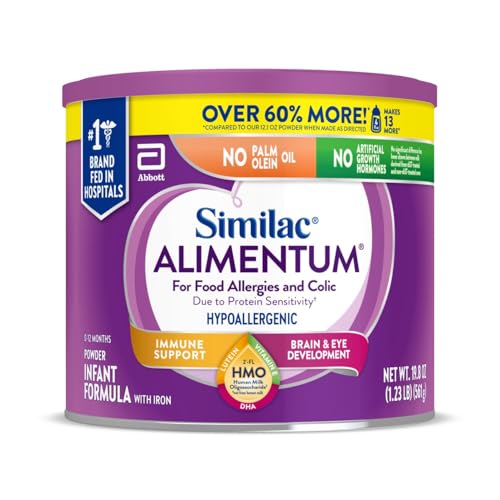
Similac Alimentum is the clinical benchmark for colic caused by cow’s milk protein sensitivity. Its extensively hydrolyzed whey and casein proteins are broken down into such tiny fragments that the immune system no longer recognizes them as allergens — which is why Abbott claims it starts reducing colic symptoms within 24 hours in most infants. The addition of 2′-FL HMO makes this the first hypoallergenic formula to include an immune-nourishing prebiotic found naturally in breast milk, bridging a gap that earlier hypoallergenic formulas left open.
In real-world use, parents report that babies who were screaming through every feeding on standard formulas became calm and slept through the night within two to three days. The protein breakdown is so thorough that even babies with confirmed CMPA — who failed partially hydrolyzed options — tolerate this well. The 19.8-ounce can is a value size compared to ready-to-feed, though you’ll pay for the premium processing.
The biggest drawback is cost, which sits at the premium end of the colic formula spectrum. Some parents note that the formula has a distinct smell and taste (common to extensively hydrolyzed products), though most babies adjust within a few feeds. It’s also SNAP-eligible, and the MySimilac rewards program offers some relief on future purchases. For babies whose colic stems from a real protein allergy, this is the most evidence-backed choice.
Why it’s great
- Extensive hydrolysis stops allergic colic at the molecular level
- 2′-FL HMO supports gut immunity missing in older hypoallergenic formulas
- Clinically proven to reduce symptoms within 24 hours
Good to know
- Premium pricing per ounce compared to standard or gentle formulas
- Distinct hydrolyzed protein odor some babies may initially resist
2. Pepticate Hypoallergenic Infant Formula
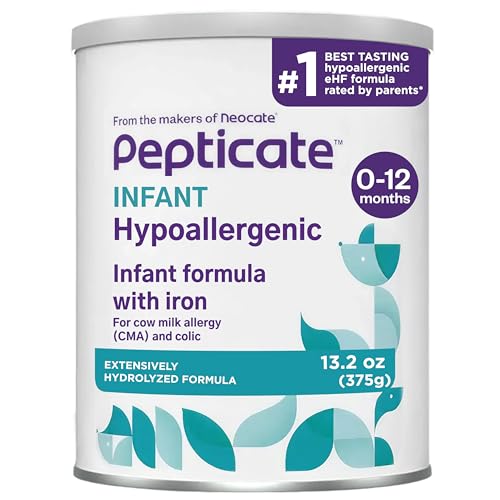
Pepticate is the extensively hydrolyzed formula that parents of reflux-and-eczema babies swear by when Alimentum and Nutramigen have failed. Made by Nutricia (Danone), it’s the number one extensively hydrolyzed formula in Europe, backed by over 30 years of clinical use. Its unique edge is a prebiotic blend of GOS and FOS that mimics the oligosaccharide profile of breast milk — something most hypoallergenic formulas skip entirely. This prebiotic support helps rebuild the gut microbiome that cow’s milk allergy often disrupts.
Parents who have cycled through nine different formulas report that Pepticate was the only one that stopped projectile vomiting, resolved eczema flare-ups, and finally let their babies sleep through the night. The taste is widely cited as the best among hypoallergenic options — less bitter and metallic than competitors — which translates to less bottle refusal. The 1:1 mixing ratio makes preparation straightforward, and the powder dissolves with minimal clumping.
The 13.2-ounce can is smaller than many competitors, meaning you’ll reorder more frequently. And while Pepticate is less expensive per ounce than some premium hypoallergenic options, it still sits squarely in the mid-range cost tier of this category. Some families report success combining it with probiotics for cesarean-born babies, though this should be discussed with a pediatrician first.
Why it’s great
- Superior taste among extensively hydrolyzed formulas reduces bottle refusal
- GOS/FOS prebiotic blend supports gut healing in CMPA infants
- Resolves colic symptoms including reflux and eczema in allergy cases
Good to know
- Small 13.2 oz can requires more frequent repurchasing
- Premium ingredient profile still places it at mid-range pricing
3. Bobbie Organic Gentle Baby Formula

Bobbie Organic Gentle takes a different approach: instead of shattering the proteins completely, it uses partially hydrolyzed milk proteins that are broken down just enough to ease digestion while retaining 100% lactose — the carbohydrate source naturally found in breast milk. This matters because corn syrup solids and maltodextrin, while easier on some digestive systems, don’t feed beneficial gut bacteria the way lactose does. Bobbie is also USDA and EU Organic certified plus Clean Label Project Certified, with over 2,000 quality checks per batch.
Lactation consultants often recommend Bobbie as the closest match to breast milk for babies who need a gentle formula. Parents report that it reduces spit-up frequency, normalizes bowel movements, and eliminates post-feeding fussiness without causing the green, smelly stools that some formulas produce. The 100% lactose formulation means babies who aren’t lactose intolerant get the prebiotic benefits of milk sugars that support a healthy microbiome over the long term.
The 14.1-ounce can is on the smaller side, and the packaging has drawn complaints for confusing labeling between Bobbie’s standard and Gentle versions. It’s also priced at the mid-range level, though the organic certification and European-style manufacturing justify the cost for parents who prioritize clean labels. If your baby has mild colic with no signs of true protein allergy, this is the gentlest entry point into the organic formula world.
Why it’s great
- 100% lactose supports healthy gut microbiome like breast milk
- Partial hydrolysis eases digestion without stripping all allergens
- Double organic certification plus Clean Label Project Certified
Good to know
- 14.1 oz can is smaller; expect more frequent purchases
- Not suitable for babies with confirmed CMPA (not extensively hydrolyzed)
4. Happy Baby Organics Stage 1 A2 Infant Formula

Happy Baby Organics stands alone in the colic formula category as the only USDA organic brand with both a patented probiotic/prebiotic blend and A2 beta-casein protein. The A2 protein structure — the same found in human breast milk and some heritage cow breeds — is naturally easier on immature digestive systems than the A1 protein dominant in most commercial dairy. This formula is also the only USDA and EU organic certified option made in Europe, which matters for parents concerned about production regulations.
Clinically, the probiotic blend has been shown to support softer, more regular stools and gut bacteria profiles closer to breastfed infants. Parents whose babies suffered severe reflux and eczema on standard formulas report complete resolution within days of switching. The 22.9-ounce can offers solid value in the mid-range tier, and the Clean Label Project certification provides additional third-party verification of purity.
The main downside is availability. Multiple users have noted that Amazon’s listing sometimes drops or ships wrong products, and the formula is not always in stock at major retailers. Some parents resort to buying directly from the manufacturer’s subscription program to avoid supply gaps. If availability is consistent in your area, however, this is the strongest A2-based option for colic that doesn’t require full protein hydrolysis.
Why it’s great
- A2 protein mimics breast milk’s natural digestive ease
- Clinical probiotic/prebiotic blend improves stool regularity
- USDA + EU organic and Clean Label Project Certified
Good to know
- Intermittent Amazon stock issues require backup sourcing
- Not extensively hydrolyzed; not for diagnosed CMPA
5. Baby’s Only A2 Organic Milk Infant Formula

Baby’s Only A2 Organic is for parents who want the cleanest possible ingredient deck. This formula contains no corn syrup, no palm oil, no GMOs, no artificial colors, and no growth hormones — a rarity even among organic options. The A2 milk protein is sourced from cows that predominantly produce the A2 beta-casein variant, which studies suggest causes less gastrointestinal inflammation in sensitive infants compared to A1-dominant milk. The proprietary organic fat blend uses organic oils rather than palm olein, avoiding the constipation and calcium malabsorption issues linked to palm oil.
Parents transitioning from breastfeeding report that this formula causes no gas, no fussiness, and normal bowel movements in their babies. The 21-ounce can is made in small batches at a facility in Ohio, with rigorous safety testing that appeals to parents who are skeptical of large-scale formula production. It’s also the most affordable organic A2 option on this list, sitting at the budget end of the organic tier.
The trade-off is that Baby’s Only does not include added HMOs, prebiotics, or probiotics — you’d need to add those separately if your baby’s colic seems tied to gut flora imbalance. The formula also lacks the partially hydrolyzed protein found in “gentle” offerings, so it’s best suited for babies without confirmed protein digestion issues. For parents who prioritize ingredient purity above all else, this is the cleanest starting point.
Why it’s great
- No corn syrup, no palm oil, no GMOs — cleanest ingredient list
- A2 beta-casein protein naturally easier on sensitive tummies
- Small batch production with rigorous Ohio facility testing
Good to know
- No HMOs, prebiotics, or probiotics included in the blend
- No protein hydrolysis; not for babies with confirmed CMPA
6. Mama Bear Sensitivity Premium Infant Formula
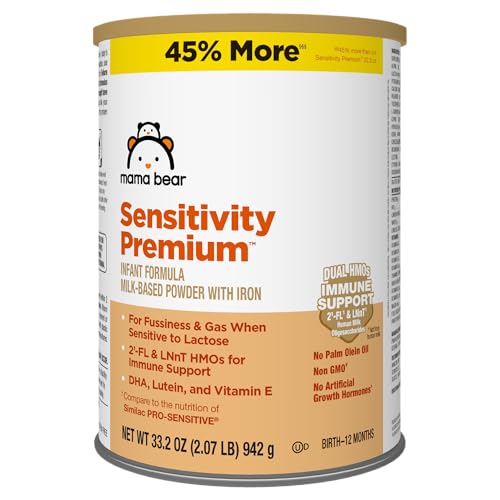
Mama Bear Sensitivity takes the “lactose reduction” approach to colic, removing 99 percent of the lactose found in standard milk-based formulas and replacing it with easily digested carbohydrates. This is the right choice for babies whose crying and gas are directly tied to lactose fermentation — the telltale sign being explosive, watery stools alongside the fussiness. What sets the “Sensitivity” version apart from the standard Mama Bear Gentle is the dual HMO blend (2′-FL and LNnT), which most budget-friendly formulas skip entirely.
Parents report that this formula works as well as Similac Pro-Sensitive at a fraction of the cost, with babies transitioning smoothly from breast milk and experiencing no gas or spit-up. The 33.2-ounce can is the largest on this list, offering exceptional value per feed. It also contains DHA, lutein, vitamin E, and choline for brain and eye development, plus no palm olein oil, which avoids the constipation issues associated with palm oil in some competing formulas.
Some users note that the formula caused bad breath in their babies, which resolved after switching back to a standard lactose formula. And because this is a “sensitivity” rather than a “gentle” formula, the proteins are not partially hydrolyzed — meaning it’s not designed for babies who struggle with protein digestion specifically. If your baby’s colic pattern points to lactose rather than protein, this is the most cost-effective HMO-enhanced solution available.
Why it’s great
- 99% less lactose targets fermentation-based colic effectively
- Dual HMO blend (2′-FL + LNnT) at a budget-friendly price point
- Large 33.2 oz can provides best value per ounce on this list
Good to know
- Proteins are not hydrolyzed; not for CMPA or protein sensitivity
- Some babies develop temporary bad breath on reduced lactose
7. Mama Bear Gentle Premium Baby Formula

Mama Bear Gentle is the Perrigo-manufactured generic equivalent of Enfamil NeuroPro Gentlease, offering the same partially hydrolyzed protein structure at a significantly lower cost per ounce. The partial hydrolysis breaks milk proteins into smaller peptides than standard formula but not as small as extensively hydrolyzed versions — making this effective for general fussiness, gas, and crying without crossing into prescription-tier pricing. It includes a single HMO (2′-FL) for immune support, plus DHA and choline for brain development.
Parents making the switch from Enfamil Gentlease report virtually no difference in their baby’s digestive response, with reduced gas and crying that matches the name brand. The 21.5-ounce can has a built-in scoop holder on the lid — a small but appreciated detail for late-night feedings. It’s certified kosher, gluten-free, non-GMO, and contains no artificial growth hormones, matching the quality profile of formulas at double the price.
The catch is availability: this is an Amazon-exclusive private label, so it’s not sold in physical stores. This matters if you run out and need formula immediately. Some users also note that the formula is slightly thicker after mixing compared to Enfamil, which may affect bottle nipple flow. But for budget-conscious parents dealing with mild-to-moderate colic symptoms, this is the most cost-effective entry point into the partially hydrolyzed formula category.
Why it’s great
- Generic equivalent of Enfamil Gentlease at a fraction of the cost
- Partially hydrolyzed proteins reduce gas and fussiness effectively
- Single HMO, DHA, and choline included at budget pricing
Good to know
- Amazon exclusive — not available in physical stores for emergencies
- Slightly thicker consistency may require faster-flow nipple
FAQ
How quickly should I see improvement after switching to a colic formula?
Can I switch between partially hydrolyzed and extensively hydrolyzed formulas directly?
Final Thoughts: The Verdict
For most parents facing colic from protein sensitivity, the formula for colic winner is the Similac Alimentum With 2′-FL HMO because its extensive hydrolysis stops the allergic cascade at the molecular level while the HMO supports immune and gut health. If you want the best-tasting extensively hydrolyzed option with prebiotics for CMPA-related eczema and reflux, grab the Pepticate Hypoallergenic. And for colic tied to lactose fermentation rather than protein allergy, nothing beats the value of the Mama Bear Sensitivity Premium with its dual HMO blend at a budget-friendly price per ounce.