
Finding a formula that stops the endless crying, gas, and reflux without sacrificing nutrition is the central challenge when your baby has a milk intolerance. A wrong choice can mean hours of lost sleep and a fussy infant who struggles to gain weight.
I’m Mohammad Maruf — the founder and writer behind Drink4Good. I’ve spent weeks analyzing the ingredient lists, customer feedback patterns, and digestion-focused formulations within this specific category to separate the genuinely gentle options from marketing noise.
Whether your child needs reduced lactose, plant-based protein, or a delicate probiotic blend, this guide to the best formula for milk intolerance breaks down the top contenders so you can feed with confidence.
How To Choose The Best Formula For Milk Intolerance
Choosing the right formula for a milk intolerant baby means decoding the label beyond just the word “sensitive.” You need to understand the core difference between reduced-lactose formulas, plant-based alternatives, and A2 or partially hydrolyzed protein options, as each targets a distinct type of digestive distress.
Identify the Type of Intolerance First
Lactose intolerance (an inability to digest the milk sugar) presents differently than a cow’s milk protein allergy (an immune reaction to the protein itself). Reduced-lactose formulas like the Mama Bear Sensitivity work for the former, while soy-based options like Similac Soy Isomil or A2 protein formulas like Happy Baby A2 are designed for the latter, avoiding the offending protein entirely.
Evaluate the Digestive Support Additives
Prebiotics (like HMOs — human milk oligosaccharides) and probiotics (like B. lactis) actively shape your baby’s gut microbiome. Formulas with multiple HMO strains (such as Similac Go & Grow with 5 HMOs) feed beneficial bacteria, helping to crowd out the gas-causing species. The presence and count of these additives is often the deciding factor in whether a “gentle” formula actually reduces colic and discomfort.
Check the Fat and Protein Source Profile
Palm olein oil, often used to mimic breast milk fat, can interfere with calcium absorption and cause hard stools in sensitive babies. Opting for a formula that is “no palm olein oil,” like the Mama Bear Sensitivity, reduces constipation risks. Similarly, A2 protein (Happy Baby A2) is structurally different from the standard A1 protein and is often better tolerated by infants with mild stomach upset.
Quick Comparison
On smaller screens, swipe sideways to see the full table.
| Model | Category | Best For | Key Spec | Amazon |
|---|---|---|---|---|
| Happy Baby A2 | A2 Organic | Reflux & Eczema | 22.9 oz; A2 protein + probiotics | Amazon |
| Mama Bear Sensitivity | Reduced-Lactose | Lactose Sensitivity | 33.2 oz; 99% less lactose + Dual HMOs | Amazon |
| Happy Baby Organic Stage 1 | Organic Standard | Transition from Breast | 22.9 oz; USDA organic + probiotic blend | Amazon |
| Mama Bear Gentle | Gentle Formula | Fussiness & Gas | 21.5 oz; partially broken down protein | Amazon |
| Similac Go & Grow Sensitive | Toddler Sensitive | Toddler Lactose Sensitivity | 23.3 oz; 5 HMOs for digestibility | Amazon |
| Similac Soy Isomil (RTF) | Soy Plant-Based | Cow Protein Allergy | 1 Qt pack; DHA + prebiotics | Amazon |
| Similac Soy Isomil (Powder Bulk) | Soy Value Pack | Bulking Dairy-Free | 30.8 oz powder (4-pack) | Amazon |
In‑Depth Reviews
1. Happy Baby Organics Stage 1 A2 Infant Formula

This formula leverages A2 beta-casein protein, which many experts believe is structurally easier for sensitive infants to digest than standard A1 protein found in most milk-based formulas. Numerous parents report a dramatic drop in reflux episodes and eczema flare-ups after switching, underscoring its specific utility for babies with non-lactose milk protein sensitivities.
Happy Baby is the only USDA organic formula to include a patented blend of probiotics (B. lactis) and prebiotics (such as GOS), which helps cultivate a gut microbiome closer to that of breastfed infants. The result is softer, more regular stools and reduced constipation — a common problem with many standard gentle formulas.
The formula is certified both USDA and EU organic and carries the Clean Label Project seal, meaning it is free from heavy metals and industrial contaminants. The powder mixes cleanly with minimal shaking, and the 22.9 oz can size is standard, though Amazon listings can be intermittent, making a subscription less reliable here than with bulk competitors.
Why it’s great
- A2 protein is uniquely tolerated by CMPA babies; reduces visible reflux quickly.
- Clinically studied probiotic/prebiotic blend promotes gut health similar to breast milk.
- Double organic certification ensures strict ingredient sourcing standards.
Good to know
- Amazon stock can be unpredictable; best for those with secondary grocery access.
- Price per ounce is higher than standard name-brands like Similac or Enfamil.
2. Mama Bear Sensitivity Premium Infant Formula
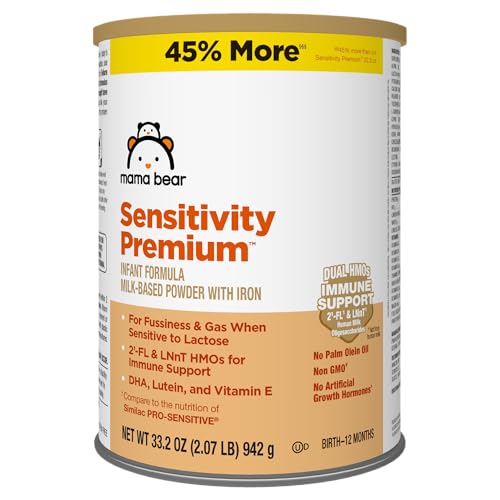
Mama Bear Sensitivity offers the most compelling mix of price and targeted relief for true lactose-sensitive babies. It reduces lactose by 99% compared to standard formula, directly addressing the root cause of gas and fussiness in this specific sub-group, while also including dual HMOs (2′-FL and LNnT) to support immune development.
The formula is completely free of palm olein oil and artificial growth hormones, two ingredients that often compound digestive issues. Parents consistently note that their babies transitioned smoothly from more expensive name-brand sensitive formulas with no change in stool quality or feeding behavior, making it an affordable alternative to Similac Pro-Sensitive.
At a 33.2 oz can size, it offers one of the best per-serving values in its category. The powder dissolves easily without excessive clumping, and the container design includes a practical scoop holder. The main caveat is that some users report a tendency toward stronger-smelling gas or “bad breath” once their baby adjusts, though this is not universal.
Why it’s great
- Dual HMO prebiotics support immune and digestive health in one serving.
- No palm olein oil helps prevent the constipation common in sensitive formulas.
- Large 33.2 oz can reduces the frequency of repurchasing.
Good to know
- Some babies experience stronger gas or bad breath during initial adaptation.
- Not appropriate for infants with a true cow’s milk protein allergy.
3. Happy Baby Organics Stage 1 Infant Formula

This standard stage 1 formula uses a patented probiotic blend that is clinically shown to result in softer, more regular stools. It is especially effective for babies transitioning from exclusive breastfeeding to formula, as its nutrient levels shift to mimic the changing composition of breast milk over time — a feature unique to Happy Baby.
Made in Europe under both USDA and EU organic certifications, the formula meets higher DHA requirements than many US-based competitors. Parents often report that the formula has a clean, pleasant smell compared to the metallic or fishy odors of some standard brands, and that it mixes easily in a prepared bottle.
While the standard 22.9 oz can is well-priced for an organic product, it uses standard milk protein, not the A2 variant. Therefore, this formula is best for mild sensitivity or as a preventative measure, not for confirmed CMPA or severe reflux. A subscription reduces the cost notably.
Why it’s great
- Clinically proven probiotic blend for softer, more regular poops.
- Adjusted nutrient levels mimic the evolving profile of breast milk.
- Pleasant smell and easily mixable powder.
Good to know
- Uses standard A1 milk protein, not suitable for A2-sensitive infants.
- Smaller can size may require frequent purchases for heavy feeders.
4. Mama Bear Gentle Premium Baby Formula

The Mama Bear Gentle formula is functionally a generic equivalent of Enfamil Neuropro Gentlease, using partially hydrolyzed proteins to break down milk proteins into smaller, more digestible fragments. This makes it a good entry point for babies with general fussiness, gas, and crying, particularly if you have not yet identified a specific cause.
It contains DHA and choline for brain support, and is notably free from artificial growth hormones. Many parents report no difference in their baby’s stool or behavior compared to the name brand, and the price point is frequently 30-40% lower per can, making it a strong value for families dealing with mild sensitivity.
One potential drawback is that the formula contains corn syrup solids and palm olein oil, which can trigger constipation or fussiness in more sensitive babies. It is best for mild, non-specific intolerance rather than severe digestive issues. The 21.5 oz can is smaller than premium bulk options.
Why it’s great
- Price is noticeably lower than Enfamil Gentlease with virtually identical results.
- Partially hydrolyzed protein is easier to digest for most mild cases.
- Available on regular Amazon subscription with consistent stock.
Good to know
- Contains corn syrup solids and palm olein oil, which can cause constipation in some.
- Best for mild fussiness, not severe CMPA or digestive disorders.
5. Similac Go & Grow 360 Total Care Sensitive

Go & Grow 360 Total Care Sensitive is specifically formulated for toddlers aged 12-24 months, not infants, making it an important consideration for ongoing milk intolerance management through the second year. The key differentiator here is its blend of five distinct Human Milk Oligosaccharides (HMOs), which is the highest count in a US sensitive toddler drink and offers broad prebiotic support for the developing gut microbiome.
The milk-based composition is engineered for lactose sensitivity, with a focus on reducing typical discomforts like gas and bloating. Parents of toddlers transitioning from infant formula report that the taste is well-received and that the powder mixes consistently without lumps. It also provides DHA, lutein, and vitamin E for continued brain and eye development.
It is not intended for sole-source nutrition and contains palm olein oil. As a formula specifically for older toddlers, it should not be used to address infant milk intolerance. Availability can be spotty in physical stores, making the Amazon subscription route a reliable backup for continuity.
Why it’s great
- Five HMO strains provide above-average prebiotic support for toddler digestion.
- Formulated for the specific nutritional needs of children over 12 months.
- Low incidence of gas and stomach issues compared to standard toddler drinks.
Good to know
- Not suitable as an infant formula or sole source of nutrition.
- Contains palm olein oil, which may cause harder stools in sensitive toddlers.
6. Similac Soy Isomil Ready to Feed, 1 Qt Pack of 4

For infants with a confirmed cow’s milk protein allergy, soy-based formulas like Similac Soy Isomil are a first-line alternative. This ready-to-feed format eliminates any mixing errors or contamination risks, providing a consistent, sterilized solution that is particularly valuable for newborns and those in their first few months of life.
Soy-based formulas are clinically shown to reduce fussiness and gas caused by cow’s milk proteins. This specific product includes DHA and lutein for brain and eye development, prebiotics for gut health, and is free from palm olein oil to support better calcium absorption — all critical considerations when removing milk-based nutrition from the diet.
The ready-to-feed packs are heavy to ship (9.5 lbs for a 4-pack) and are generally not the most economical choice compared to powder, but they offer unparalleled convenience and safety. Parent feedback highlights that the transition to this formula normalized stools and settled crying within days for babies with dairy allergies.
Why it’s great
- Completely dairy-free and suitable for confirmed CMPA infants.
- Ready-to-feed format ensures perfect mixing and sterilization every time.
- No palm olein oil supports strong calcium absorption.
Good to know
- Significantly more expensive per ounce than powder options.
- Heavy shipping weight adds delivery fees and physical strain.
7. Similac Soy Isomil Infant Formula Powder, 30.8 oz Value Can, Pack of 4

This bulk pack of four 30.8 oz cans of Similac Soy Isomil offers the most cost-effective entry into dairy-free feeding for large-volume infant consumption. It retains all the same nutritional benefits as the single cans and ready-to-feed versions — soy protein isolate for allergy management, DHA for eye development, and prebiotics for digestive health — but at a far lower per-ounce cost.
The powder format mixes effectively with no clumping, even when prepared in batches for the day. Because it uses the Soy Isomil recipe, it contains prenatal nucleotides inherent in soy protein that help support immune function. Parents who subscribe to this pack often note that it supplies over 120 bottles’ worth of formula, dramatically reducing kitchen time and panic runs to the store.
The major trade-off is the upfront retail price and the storage space needed for four large cans. Additionally, because soy allergy can coexist with milk allergy, it should be introduced only after reviewing your pediatrician’s guidance to avoid cross-reactive issues. This product is best for families who know their baby tolerates soy well.
Why it’s great
- Best value per ounce for long-term dairy-free feeding.
- Consistent quality and mixing performance across all four cans.
- Subscription can save up to 15%, nearly providing a free can every cycle.
Good to know
- Large 8.7 lb package requires significant pantry space.
- Not appropriate if baby also has a soy protein allergy.
FAQ
When should I switch from a sensitive formula to a soy-based formula?
Can I use a toddler formula if my infant has milk intolerance?
What does “partially hydrolyzed” mean for infant formula?
How do I know if my baby has a milk intolerance or a true allergy?
Final Thoughts: The Verdict
For most families seeking the best formula for milk intolerance, the Mama Bear Sensitivity Premium is the winner because it specifically addresses lactose sensitivity with high HMO support at a price that doesn’t strain the monthly budget. If your child needs a dairy-free option for a confirmed CMPA, grab the Similac Soy Isomil Powder Bulk Pack for the most economical long-term supply. And for babies with A1 protein sensitivity or reflux, nothing beats the Happy Baby A2 Infant Formula.