
When your baby arching their back after every feeding or crying through the night, the search for the right formula becomes an urgent, emotional hunt. The twin challenge of managing infant reflux alongside a lactose intolerance means you need a formula that is both gentle on the digestive system and thickened enough to stay down—a combination that eliminates a surprising number of standard options from the shelf.
I’m Mohammad Maruf — the founder and writer behind Drink4Good. I’ve spent countless hours analyzing infant formula composition data, decoding the differences between hydrolyzed proteins and amino acid bases, and cross-referencing user reports of symptom relief to build this guide on the best available solutions for this specific dietary intersection.
After reviewing dozens of clinical studies and real-world user experiences, this guide breaks down the seven top formulas that effectively manage both reflux and lactose intolerance so you can make a confident decision. This is your complete analysis of the best formula for reflux and lactose intolerance.
How To Choose The Best Formula For Reflux And Lactose Intolerance
Selecting a formula that addresses both reflux and lactose intolerance requires looking past the front-of-pack marketing claims. You need to understand the specific protein source, the carbohydrate source, and the thickening mechanism—all of which determine whether a formula will help or hurt your baby.
Protein Source: Hydrolyzed, Amino Acid, or Intact
The protein source is the single most important variable. Intact cow’s milk proteins can trigger both reflux and intolerance-like symptoms in sensitive infants. Extensively hydrolyzed formulas (eHF) break these proteins into tiny fragments, making them easier to digest and less likely to trigger reflux. Amino acid-based formulas (AAF) go a step further—they contain zero intact protein and are the gold standard for babies who fail even hydrolyzed options.
Carbohydrate Source: Lactose vs. Alternatives
A baby with lactose intolerance cannot properly digest lactose, the primary sugar in standard milk-based formulas. Any formula in this category must use an alternative carbohydrate—typically corn syrup solids, maltodextrin, or sucrose. Check the ingredient list carefully; some “gentle” formulas still contain lactose. If your baby has a confirmed intolerance, only completely lactose-free options will resolve the gas, bloating, and acidic stools.
Thickening Agent: Which One Works for Reflux?
Reflux-specific formulas typically add rice starch to thicken the feed, making it harder for the contents of the stomach to flow back up. However, not all rice starch formulas are lactose-free. For babies with both conditions, you may need to either find a lactose-free anti-reflux formula or use a hypoallergenic formula that naturally reduces reflux by being easier to digest and faster to empty from the stomach.
Quick Comparison
On smaller screens, swipe sideways to see the full table.
| Model | Category | Best For | Key Spec | Amazon |
|---|---|---|---|---|
| Enfamil A.R. | Anti-Reflux | Reducing spit-up volume | Rice starch thickener | Amazon |
| Similac Alimentum | Hypoallergenic | Protein sensitivity & colic | eHF + 2′-FL HMO | Amazon |
| Pepticate | Hypoallergenic eHF | Cow milk allergy relief | Prebiotic blend GOS/FOS | Amazon |
| Alfamino | Amino Acid Based | Severe malabsorption | 100% free amino acids | Amazon |
| EleCare | Amino Acid Based | GI conditions & allergies | MCT oil for fat absorption | Amazon |
| Mama Bear Gentle | Gentle Formula | Fussiness, gas & crying | Partially hydrolyzed protein | Amazon |
| Mama Bear Advantage | Standard Infant | Budget-friendly alternative | Dual HMOs prebiotics | Amazon |
In‑Depth Reviews
1. Enfamil A.R.

Enfamil A.R. is the most direct solution for babies whose primary issue is reflux. Its key mechanism is rice starch, which thickens the formula in the bottle and in the stomach, physically reducing the volume of spit-up. Clinical data from the manufacturer shows a reduction in spit-up episodes by over 50% within one week, and the formulation meets the reflux reduction guidelines established by the American Academy of Pediatrics.
The protein source here is intact cow’s milk protein, and the carbohydrate source is a blend that includes lactose. This is the critical point for lactose intolerance: Enfamil A.R. contains lactose. If your baby has a diagnosed lactose intolerance, this formula may cause gas, bloating, or diarrhea even as it stops the spit-up. For babies with simple reflux and a mild sensitivity, however, the dual prebiotic blend and added DHA make it a strong option that supports brain development while addressing the mechanical problem.
User reports consistently note that pairing this formula with a probiotic drop and gas-relief drops creates a powerful combination. The formula is SNAP-eligible and available on Subscribe & Save, which helps offset its premium positioning. Parents who have tried this alongside Alimentum often report that Enfamil A.R. is superior for reflux volume control, while Alimentum is better for allergy-driven reflux.
Why it’s great
- Clinically proven to reduce spit-up by over 50% in one week
- Rice starch thickener is effective for mechanical reflux
- Contains DHA and dual prebiotics for immune and brain support
- Highly rated by parents for real-world reflux management
Good to know
- Contains lactose; not suitable for confirmed lactose intolerance
- Higher price point compared to generic alternatives
- Thick formula may require a faster-flow nipple to avoid frustration
2. Similac Alimentum
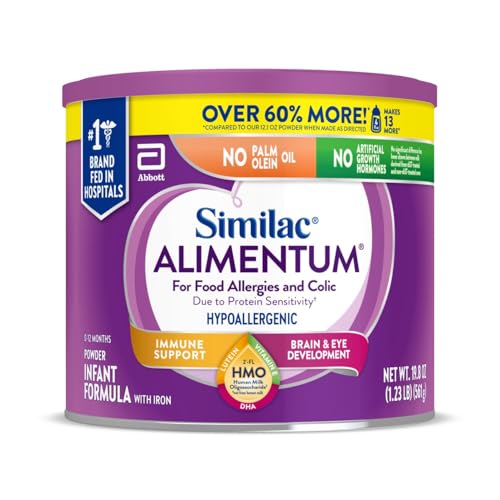
Similac Alimentum is the first and only hypoallergenic formula to include 2′-FL HMO, an immune-nourishing prebiotic that was previously only available in standard Similac formulations. The core protein source is extensively hydrolyzed—broken down into tiny fragments that are highly unlikely to trigger an allergic response. This makes Alimentum a first-line medical choice for babies with cow’s milk protein allergy, which often presents with reflux-like symptoms.
Where Alimentum truly shines for the dual-condition baby is its carbohydrate profile. This formula is lactose-free, using corn maltodextrin as its primary carbohydrate source. For a baby with confirmed lactose intolerance, this removes the gas and bloating that standard formulas cause. Clinical data shows that Alimentum starts reducing colic symptoms due to protein sensitivity within 24 hours in most infants, and real-world reviews confirm that the combination of lactose-free + hydrolyzed protein resolves both the reflux and the intolerance symptoms in many cases.
The 19.8-ounce value can offers a better per-feed cost than smaller cans, and the formula is available on Subscribe & Save. Users with CMPA babies consistently rate this as the gentlest option they’ve tried, noting that the taste is more palatable than older hypoallergenic formulas. The main drawback is the price—it sits at the upper end of the mid-range—but for babies who fail standard gentle formulas, it often eliminates the need for an even more expensive amino acid formula.
Why it’s great
- Lactose-free, ideal for confirmed lactose intolerance
- Extensively hydrolyzed proteins reduce allergic reflux triggers
- Includes 2′-FL HMO for immune support
- Clinically shown to reduce colic within 24 hours
Good to know
- Expensive per ounce compared to standard formulas
- No added rice starch thickener for mechanical reflux
- Some babies dislike the taste of hydrolyzed formulas
3. Pepticate
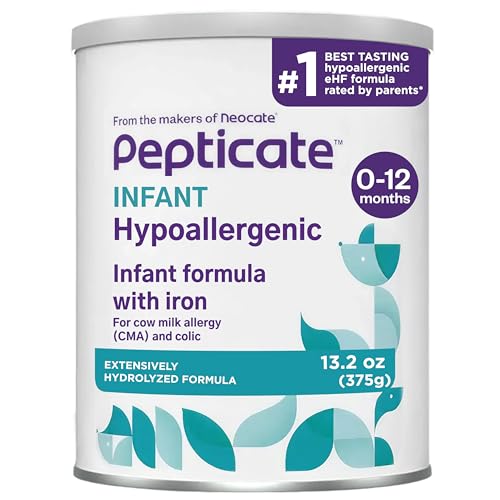
Pepticate, manufactured by Nutricia (Danone), is the #1 extensively hydrolyzed formula (eHF) recommended by UK pediatricians for cow’s milk allergy. What sets it apart from older eHF options like Alimentum is its prebiotic fiber blend—GOS and FOS—designed to mimic the prebiotic oligosaccharides naturally found in breast milk. This helps promote a healthier gut microbiome, which is often compromised in babies with digestive distress.
The protein in Pepticate is extensively hydrolyzed, making it appropriate for babies with cow’s milk allergy who present with reflux, colic, and eczema. The carbohydrate source is a blend that is effectively lactose-free, using maltodextrin and corn syrup solids. This dual attribute—hydrolyzed protein plus no lactose—positions Pepticate as a strong candidate for babies whose reflux is driven by an allergic reaction rather than mechanical weakness of the lower esophageal sphincter.
User reports are striking: multiple families reported it as the only formula that worked after trying eight or nine alternatives, including other hydrolyzed brands and even amino acid formulas. Parents consistently note that the taste is significantly better than competitors like Alimentum or Puramino, which makes bottle acceptance much easier. The 13.2-ounce can is smaller than some options, so be prepared for more frequent purchases. It is not a rice starch thickened formula, so it addresses reflux only by eliminating the allergic trigger, not by physically weighting the feed.
Why it’s great
- Extensively hydrolyzed for cow’s milk allergy relief
- Lactose-free carbohydrate profile
- Contains prebiotic blend mimicking breast milk oligosaccharides
- Rated best-tasting eHF formula by parents
Good to know
- No physical thickener for mechanical reflux
- Smaller 13.2-ounce can size
- Premium price point compared to standard formulas
4. Alfamino
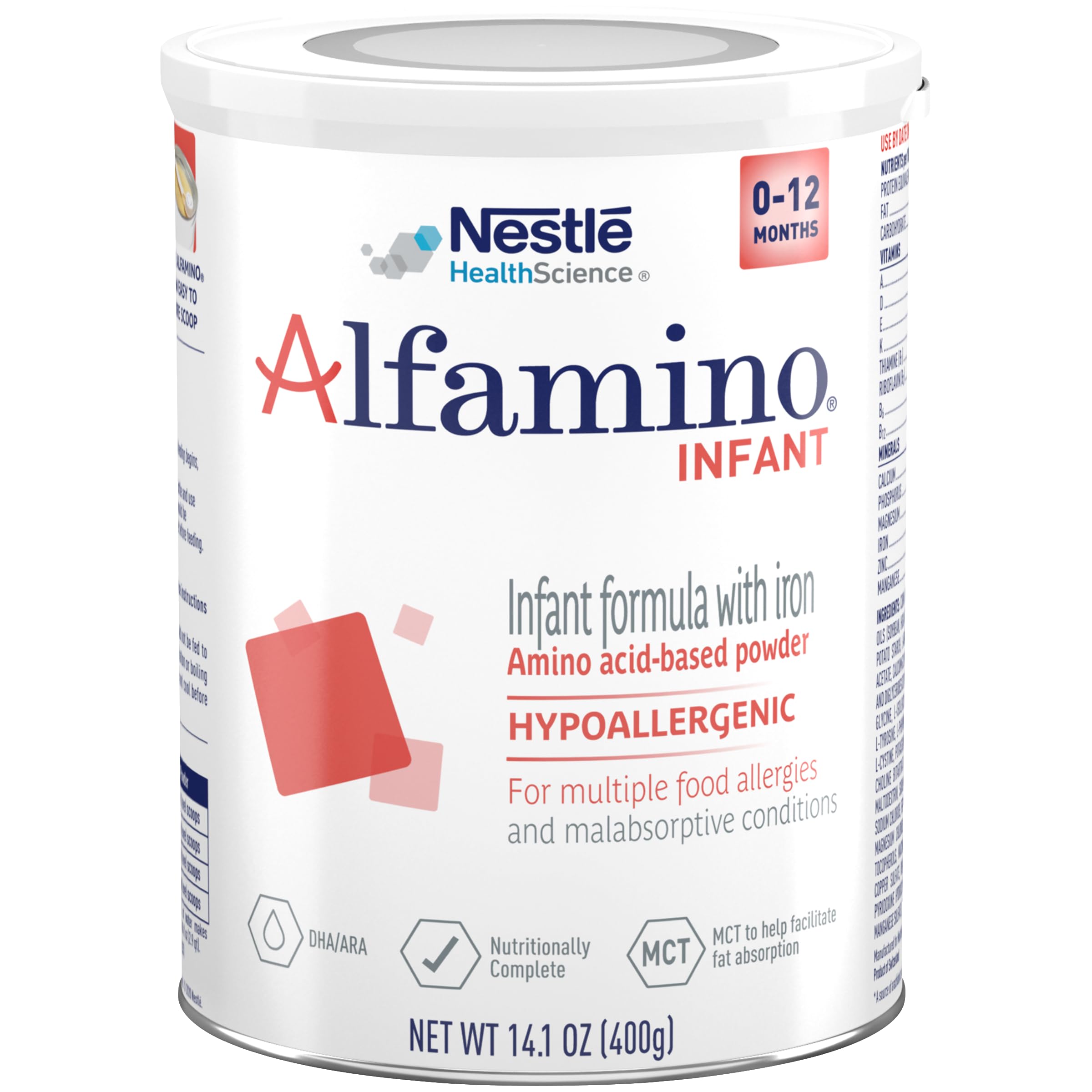
Alfamino, from Nestlé Health Science, represents the highest tier of protein elimination. It is an amino acid-based formula, meaning the protein source consists of individual free amino acids rather than any protein chains, even broken-down ones. This makes it appropriate for infants with severe multiple food allergies, malabsorption issues, or who have failed extensively hydrolyzed formulas. For babies whose reflux is caused by a severe allergic reaction to even trace proteins, Alfamino is the nuclear option.
The formula is completely lactose-free and gluten-free, and it contains a unique fat blend including medium chain triglycerides (MCT) to facilitate fat absorption—a critical feature for infants with compromised GI function. Alfamino is designed for use under medical supervision, and it is commonly prescribed by pediatric gastroenterologists for babies with severe malabsorption or short bowel syndrome. The 14.1-ounce can is relatively small, reflecting that this is a specialized medical food rather than a mainstream commodity.
Real-world reports from parents confirm that Alfamino resolved symptoms—bloody stool, colic, reflux, and skin rashes—that persisted after trying other formulas. The taste is often described as less offensive than some other amino acid formulas, though babies may need a few days to accept it. The formula dissolves well but requires thorough shaking. The main considerations are the high cost and the fact that it is a medical food requiring pediatrician or GI specialist oversight.
Why it’s great
- 100% free amino acids eliminate all protein allergy triggers
- Completely lactose-free and gluten-free
- Contains MCT oil for enhanced fat absorption
- Effective for severe reflux cases unresponsive to eHF
Good to know
- Requires medical supervision for use
- Very expensive per ounce
- May be needed only after other options fail
5. EleCare
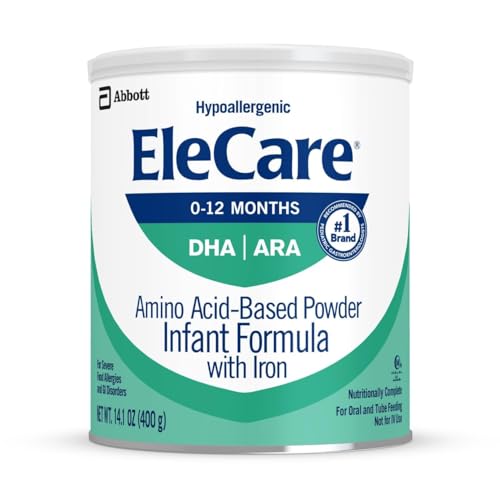
EleCare, from Abbott, is the other major amino acid-based formula on the market, and it is the #1 amino acid-based brand recommended by pediatric gastroenterologists and pediatricians. Like Alfamino, it uses 100% free amino acids as its protein source and is completely lactose-free. EleCare is clinically shown to significantly improve symptoms in infants with malabsorption issues and short bowel syndrome, and to support growth when used as the primary source of nutrition.
The formula contains DHA and ARA for brain and eye development, matching the nutritional profile of standard infant formulas. It is also lactose-free and gluten-free, making it suitable for the most sensitive babies. The key difference between EleCare and Alfamino is the fat blend: EleCare’s formulation includes a specific MCT oil profile that is optimized for fat absorption in compromised GI tracts. Some parents report that EleCare caused better weight gain in their babies than Neocate or Puramino.
Real-world reviews are overwhelmingly positive, with multiple parents noting that it stopped newborn digestive distress within 24 hours of switching. Users consistently mention the distinctive smell—a common characteristic of amino acid formulas—but report that babies tolerate it well and that it resolves issues like spit-up and discomfort that persist on hydrolyzed formulas. The cost is the primary barrier; one reviewer noted the per-ounce cost exceeded that of Irish whiskey. It is best to buy through Subscribe & Save or look into insurance coverage given its medical food status.
Why it’s great
- #1 amino acid brand recommended by pediatric GIs
- Completely lactose-free and allergen-free
- Clinically shown to improve symptoms in malabsorption
- Contains DHA and ARA for development
Good to know
- Highest price tier; cost per ounce is extreme
- Has a distinctive medicinal smell
- May cause green stools due to iron content (normal)
6. Mama Bear Gentle

Mama Bear Gentle is Amazon’s store-brand version of Enfamil NeuroPro Gentlease, manufactured by Perrigo—the same company that makes most US store-brand formulas. The key feature here is partially hydrolyzed proteins, which are broken down into smaller fragments than standard intact proteins but are not as extensively broken down as Alimentum or Pepticate. This makes Mama Bear Gentle a good option for babies with mild to moderate fussiness, gas, and crying, rather than diagnosed allergies or severe reflux.
The carbohydrate source in Mama Bear Gentle includes corn syrup solids, making it a low-lactose formulation but not completely lactose-free. For babies with true lactose intolerance—characterized by watery diarrhea, gas, and failure to thrive on lactose-containing formulas—this may still cause issues. However, for babies whose “reflux” is actually discomfort from gas and undigested intact proteins, the partially hydrolyzed protein can significantly reduce spit-up volume and crying episodes.
Real-world reviews confirm that babies transition smoothly from Enfamil Gentlease to Mama Bear Gentle with no digestive issues. Users note that the formula mixes easily without clumps, the can has a convenient scoop holder, and the price is significantly lower than the name-brand equivalent. However, some reviews mention that the formula is slightly thicker than the name brand, and one reviewer noted that switching from a fully sensitive formula to this caused increased spit-up in a very sensitive baby. It is best suited for babies with mild gas and fussiness, not for those with diagnosed reflux or lactose intolerance.
Why it’s great
- Partially hydrolyzed for easier digestion
- Significantly cheaper than name brand equivalents
- Mixes easily and comes in a convenient can design
- Non-GMO with no artificial growth hormones
Good to know
- Not completely lactose-free
- Proteins are only partially hydrolyzed—may not be enough for allergies
- Some babies may experience increased spit-up vs. gentler formulas
7. Mama Bear Advantage
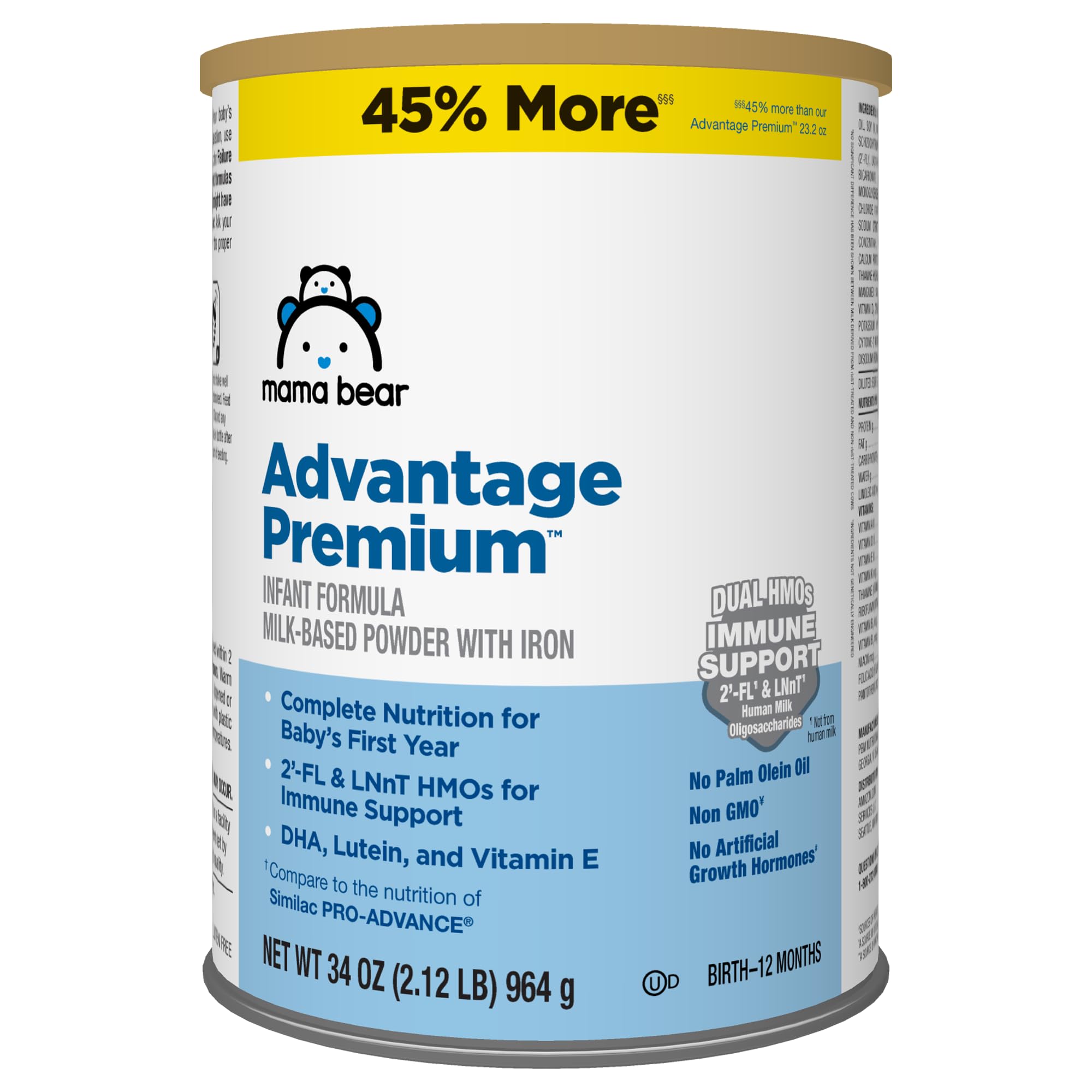
Mama Bear Advantage Premium is Amazon’s standard infant formula, designed to be comparable to Similac Pro-Advance. The major feature here is the dual HMO blend—2′-FL and LNnT—which are prebiotics found in breast milk that support immune and digestive health. This formula is enhanced with DHA, Lutein, Vitamin E, and Choline for brain and eye development, and it contains no artificial growth hormones or palm olein oil.
This formula uses intact cow’s milk protein and lactose as the primary carbohydrate. For babies with lactose intolerance or reflux driven by protein allergy, Mama Bear Advantage Premium is likely to exacerbate symptoms rather than resolve them. However, for babies whose reflux is not allergy-driven and who have no lactose intolerance, the dual HMO blend can promote a healthier gut microbiome that naturally improves digestion and reduces general fussiness. The price point is the most budget-friendly of all options in this guide.
User reviews are very positive for the general population, with parents praising the affordability and comparable quality to name brands. Multiple reviews highlight that babies transitioned easily with no digestive issues. However, none of the reviews mention reflux or lactose intolerance as the reason for purchase. This formula is best viewed as the baseline benchmark: if your baby tolerates it, it offers excellent value. If your baby has symptoms on it, you should move up to a hydrolyzed or amino acid formula with a lactose-free carbohydrate profile.
Why it’s great
- Most affordable option with dual HMO prebiotics
- Enhanced with DHA, lutein, and choline
- No palm olein oil or artificial growth hormones
- SNAP eligible and widely available
Good to know
- Contains intact milk protein and lactose—not suitable for allergies or intolerance
- No specialized thickener for mechanical reflux
- Only appropriate for babies with no digestive sensitivities
FAQ
Can I use a standard anti-reflux formula like Enfamil A.R. for a baby with lactose intolerance?
What is the difference between an extensively hydrolyzed formula and an amino acid based formula?
Will a hypoallergenic formula completely resolve my baby’s reflux?
Final Thoughts: The Verdict
For most users, the best formula for reflux and lactose intolerance winner is the Similac Alimentum because it combines extensively hydrolyzed proteins with a completely lactose-free carbohydrate profile, addressing the most common root causes of both conditions simultaneously. If you need a formula that physically thickens to stop spit-up from a mechanical reflux issue, grab the Enfamil A.R.. And for severe cases where even hydrolyzed proteins trigger symptoms, nothing beats the amino acid-based Alfamino or EleCare—though these require medical supervision due to their extreme specialization.