
The cycle is exhausting: you feed your baby, they spit up, they cry, then they get gassy, and the cycle repeats. It’s not just a laundry problem — it’s about finding a formula that sits right instead of coming right back up. The right combination of gentle proteins, reduced lactose, and targeted probiotics can turn those messy, fussy feedings into calm, happy moments.
I’m Mohammad Maruf — the founder and writer behind Drink4Good. This guide is built on hours of cross-referencing ingredient profiles, protein structures, and real parent feedback to find which formulas actually deliver on their spit-up and gas reduction claims.
Whether you’re dealing with mild reflux or severe colic, finding the right formula for spit up and gas can feel overwhelming — but it doesn’t have to be when you know exactly which ingredients and protein levels to look for.
How To Choose The Best Formula For Spit Up And Gas
Not all formulas marked “gentle” work the same way. The key is understanding the mechanism behind each formula’s design. Some use partially broken-down proteins (hydrolysis), while others reduce lactose or add specific probiotic strains. Here’s what to prioritize.
Protein Structure — Hydrolysis Level Matters Most
When a baby spits up, the formula often curdles in the stomach due to large casein proteins. Formulas with partially hydrolyzed whey protein (broken into smaller fragments) digest faster and empty from the stomach quicker, reducing the chance of reflux. Fully hydrolyzed (hypoallergenic) formulas are even gentler but are designed for milk protein allergies, not just spit-up.
Lactose Content — Not All Reduced Lactose Is Equal
Cow’s milk contains intact lactose, which some babies struggle to break down, producing gas as a byproduct. Formulas labeled “Gentle” often reduce lactose partially, while “Sensitive” formulas may replace most lactose with corn syrup solids. For spit-up and gas, a moderate lactose reduction (like Similac’s Gentle Comfort) can be the sweet spot — enough to reduce gas without causing constipation from too much corn syrup.
Probiotics and HMO Prebiotics — The Gas-Fighting Duo
Specific probiotic strains like L. Reuteri (found in Dr. Brown’s Soothe Pro) have clinical data showing reduced fussiness in the first bottle. HMO prebiotics (like 2′-FL) feed good gut bacteria, which can reduce gas production over several days. A formula with both probiotics and HMOs gives the best shot at resolving chronic gas.
Quick Comparison
On smaller screens, swipe sideways to see the full table.
| Model | Category | Best For | Key Spec | Amazon |
|---|---|---|---|---|
| Dr. Brown’s Soothe Pro | Premium | Chronic gas & fussiness | 100% Whey + L. Reuteri Probiotic | Amazon |
| Enfamil NeuroPro Gentlease | Premium | Multi-symptom relief in 24 hrs | Partially Hydrolyzed + PDX/GOS Prebiotics | Amazon |
| Similac 360 Total Care Gentle Comfort | Mid-Range | Lactose sensitivity & fussiness | Partially Hydrolyzed + 5-HMO Blend | Amazon |
| Happy Baby Organics Stage 1 | Mid-Range | Organic gut health | Probiotics + Prebiotics | Amazon |
| Mama Bear Gentle Premium | Value | Budget-friendly gentleness | Reduced Lactose + 2′-FL HMO | Amazon |
| Baby’s Only A2 Organic | Value | A2 protein tolerance | A2 Beta-Casein Protein Only | Amazon |
In‑Depth Reviews
1. Dr. Brown’s Soothe Pro

Dr. Brown’s Soothe Pro stands apart because of its dual-action approach: it uses a 100% whey protein base that undergoes a 2-step hydrolysis process, breaking proteins down to 1/10th the size of standard cow’s milk proteins. That matters because intact casein proteins are a primary cause of curdling and spit-up. Combined with the probiotic L. Reuteri — which has clinical backing showing reduced fussiness by the first bottle — this formula directly targets the root causes of both gas and reflux.
The 30.6-ounce can offers a cost-effective per-feeding value in the premium tier, and parent reviews consistently note a dramatic reduction in both spit-up volume and gassiness within 24-48 hours. The low osmolality (207 mOsm/kg) also means it’s gentle on immature kidneys, a rarely discussed but important spec for babies with reflux sensitivity.
One practical trade-off: the powder requires vigorous shaking to avoid clumps, and the can lacks a scoop storage ledge. Some parents also report darker, iron-stained stools — a normal side effect of the iron fortification but worth noting if you’re used to lighter stools from other brands.
Why it’s great
- 2-step hydrolysis creates ultra-small proteins for easy digestion, directly reducing spit-up incidence.
- Contains L. Reuteri probiotic with clinical data supporting fussiness reduction by the first bottle.
- Large can size (30.6 oz) reduces cost per feeding despite being a premium formula.
- Low osmolality (207 mOsm/kg) is gentle on developing kidneys and may reduce reflux discomfort.
Good to know
- Powder tends to clump and requires thorough shaking; bubbles are common if shaken too vigorously.
- Scoop is buried in the powder with no integrated lid storage, making prep slightly less convenient.
- Iron-fortified stools may appear darker and have a stronger odor than other formulas.
2. Enfamil NeuroPro Gentlease
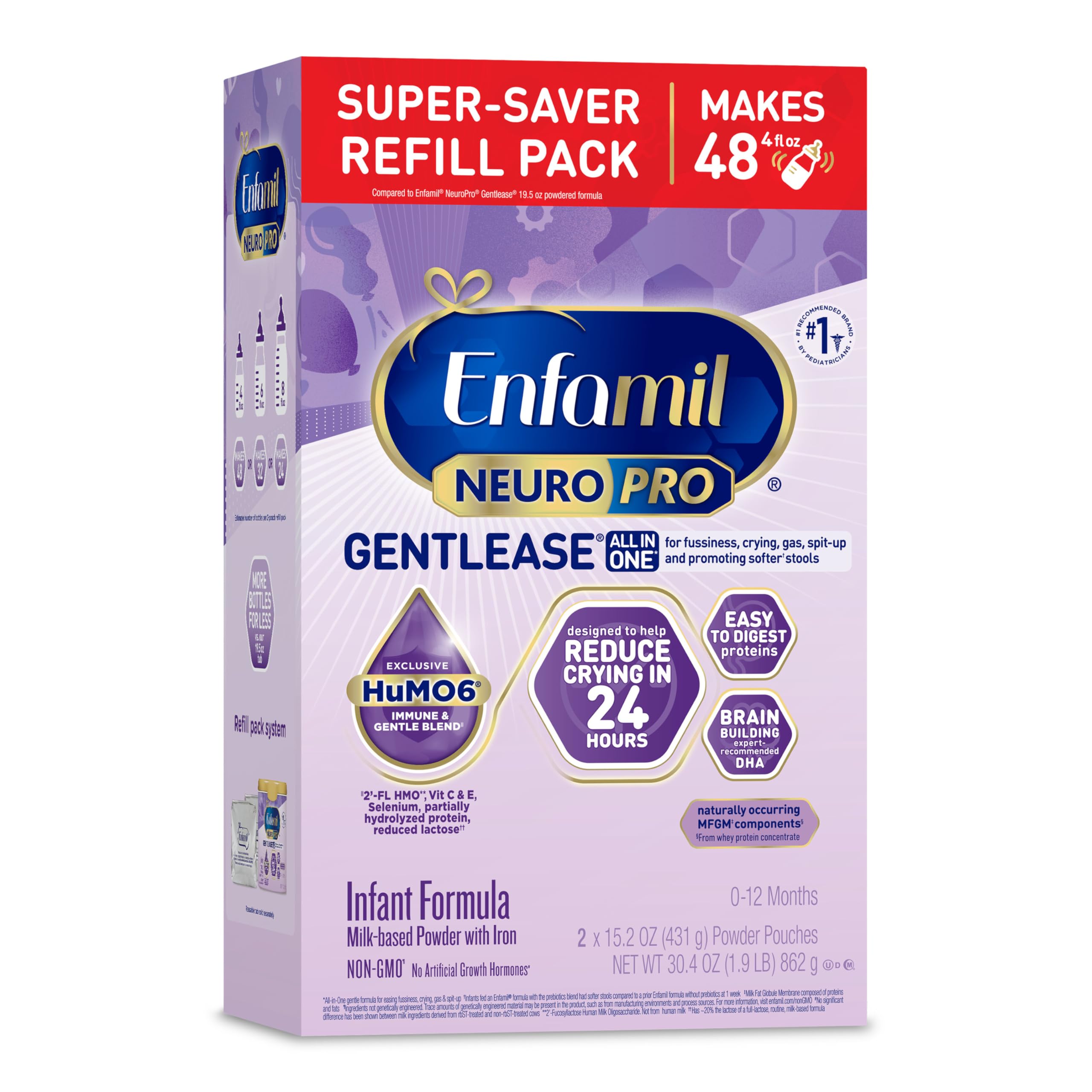
Enfamil NeuroPro Gentlease is the formula most pediatricians recommend first for mixed spit-up, gas, and fussiness. It uses partially hydrolyzed proteins (smaller than standard but not as broken down as Soothe Pro) combined with a patented PDX/GOS prebiotic blend that helps soften stools and reduce gas production in the gut. The 24-hour claim — reduced fussiness, crying, gas, and spit-up — is backed by Enfamil’s clinical data and thousands of parent verifications.
The 30.4-ounce refill box offers a solid cost-per-feeding advantage for a brand-name formula, and the DHA + choline brain-support blend gives parents peace of mind that their baby isn’t missing nutritional milestones while switching formulas. Users consistently report that switching from standard Enfamil or Similac to Gentlease resolves spit-up within two to three days without a transitional period.
However, parents of extremely sensitive babies — those with true cow’s milk protein allergy (CMPA) — may find the partially hydrolyzed proteins still too intact. Also, the refill box format (individual bags) requires a separate container for storage, and some users report the bags are less airtight than a tub.
Why it’s great
- Clinically shown to reduce fussiness, crying, gas, and spit-up within 24 hours in most infants.
- Partially hydrolyzed proteins are easier to digest than standard milk-based formulas but more affordable than fully hydrolyzed options.
- PDX/GOS prebiotic blend supports softer, more regular stools, addressing gas from both sides.
- Contains DHA and choline for brain development, so you don’t lose nutrition while switching formulas.
Good to know
- Partial hydrolysis may not be sufficient for babies with confirmed CMPA or severe reflux.
- Refill box format lacks an integrated container — you’ll need a separate canister for storage.
- Some batches have been reported with inconsistent powder texture, though quality control is generally reliable.
3. Similac 360 Total Care Gentle Comfort
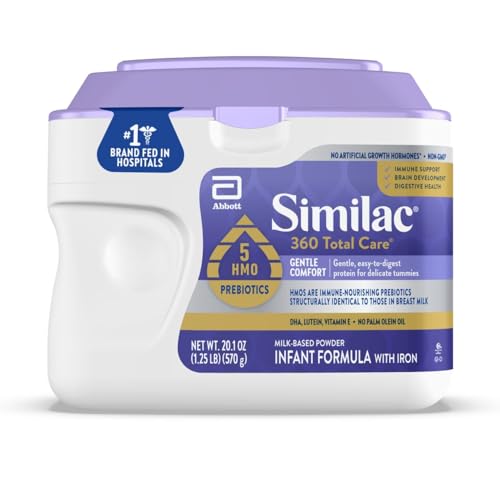
Similac 360 Total Care Gentle Comfort is engineered specifically for babies with lactose sensitivity — a common but often overlooked cause of gas that mimics colic. Instead of fully removing lactose (which can cause constipation from excessive corn syrup), Similac reduces it while adding partially hydrolyzed whey protein. The real star here is the 5-HMO prebiotic blend, which is structurally identical to five HMOs found in breast milk — the most diverse prebiotic profile in any mid-range formula.
Parents transitioning from regular Similac 360 report a noticeable drop in gassiness within the first 48 hours, with spit-up volume decreasing as the partially hydrolyzed proteins empty from the stomach faster. The formula excludes palm olein oil, which is known to reduce calcium absorption and contribute to hard stools — a bonus for babies prone to constipation alongside gas.
On the downside, the 20.1-ounce tub is smaller than the value-size cans from competitors, so you’ll go through it faster. Some parents also note that the reduced lactose formula has a slightly sweeter taste due to the corn syrup solids, which can make transitioning from breast milk slightly more challenging.
Why it’s great
- 5-HMO prebiotic blend is the most diverse in its price tier, closely mimicking breast milk’s immune support.
- Partially hydrolyzed whey protein and reduced lactose target both reflux and gas simultaneously.
- No palm olein oil means better calcium absorption and less constipation risk.
- Smooth mixing with minimal clumping, even with the reduced lactose formula.
Good to know
- Smaller tub size (20.1 oz) means more frequent repurchases compared to 30+ oz competitors.
- Reduced lactose formula has a noticeably sweeter taste due to corn syrup solids.
- Not suitable for confirmed cow’s milk protein allergy — only for lactose sensitivity.
4. Happy Baby Organics Stage 1

Happy Baby Organics Stage 1 is the only USDA organic formula in this guide that also includes both probiotics and prebiotics — a patented blend designed to bring gut bacteria closer to that of breastfed infants. The probiotics help populate the gut with beneficial bacteria that produce less gas, while the prebiotics feed those bacteria. For parents who prioritize clean ingredients (no palm oil, no corn syrup, USDA and EU certified organic), this is the best option for organic gut support without sacrificing digestive function.
The 22.9-ounce tub is priced competitively for an organic formula, and the DHA level meets European requirements — a higher standard than the current US minimum. Parents transitioning from breast milk report remarkably smooth transitions with minimal gas, likely because the probiotic + prebiotic duo replicates the gut environment breast milk creates. The Clean Label Project certification also adds an extra layer of trust for heavy-metal-sensitive parents.
The main limitation for spit-up and gas specifically: this formula uses intact cow’s milk proteins (not hydrolyzed), so babies with significant reflux or protein sensitivity may not see improvement in spit-up alone. It excels at reducing gas and normalizing stool patterns, but it does not have the protein modification that directly targets spit-up mechanics.
Why it’s great
- Only USDA organic formula in the guide with both probiotics and prebiotics for gut health.
- Patented probiotic + prebiotic blend has clinical data showing softer, more regular stools.
- DHA levels meet stricter European requirements, providing higher brain-development support.
- Clean Label Project Certified for reduced heavy metals — critical for organic-focused parents.
Good to know
- Uses intact cow’s milk proteins, so it won’t address spit-up caused by protein curdling.
- Subscription price is significantly better than one-time purchase — plan ahead.
- Some babies transitioning from hydrolyzed formulas may need a gradual blend to adjust.
5. Mama Bear Gentle Premium

Mama Bear Gentle Premium is Amazon’s store-brand take on Enfamil NeuroPro Gentlease, and it’s made by Perrigo — the same manufacturer that produces most US store-brand formulas. The ingredient lineup mimics the Gentlease formula closely: reduced lactose, partially hydrolyzed whey protein, and the immune-nourishing 2′-FL HMO prebiotic. The price point is roughly 30% lower than the name-brand equivalent, making it the most accessible entry point for parents looking to try a gentle, gas-reducing formula without a big financial commitment.
Parents who switched from Enfamil Gentlease to this formula report virtually no difference in gas, fussiness, or spit-up reduction — babies accept it readily, and the mixing consistency is smooth with minimal clumping. The 21.5-ounce can includes a practical scoop storage ledge, a small detail that makes middle-of-the-night prep easier than with some premium cans that bury the scoop.
It’s worth knowing that this formula contains both corn syrup solids and palm oil, which some parents prefer to avoid. While these ingredients mirror those in Enfamil Gentlease, babies with an existing sensitivity to palm oil may experience harder stools. Additionally, if your baby is extremely sensitive to lactose, the reduced lactose may not be enough — you may need to step up to a “Sensitive” formula instead.
Why it’s great
- Made by Perrigo, the same manufacturer as most national store brands — reliable, consistent formulation.
- Contains 2′-FL HMO prebiotic for immune and gut support at a value-tier price.
- Mixes smoothly with minimal clumps, and the can includes a scoop storage ledge.
- Works as a direct substitute for Enfamil NeuroPro Gentlease at a significantly lower per-ounce cost.
Good to know
- Contains corn syrup solids as the primary carbohydrate source rather than lactose.
- Palm oil may contribute to harder stools in some babies, mimicking constipation from other formulas.
- Not suitable for confirmed CMPA or severe reflux — partial hydrolysis may not be enough.
6. Baby’s Only A2 Organic

Baby’s Only A2 Organic takes a different approach to the spit-up and gas problem: instead of breaking down proteins, it removes the problematic A1 beta-casein protein found in most standard cow’s milk formulas. Some babies have a harder time digesting the A1 variant, which can trigger more gas and inflammation in the gut. By sourcing milk exclusively from cows that produce A2 beta-casein (the same protein found in human breast milk), this formula eliminates that potential irritant at the source.
The formula is USDA organic, made in small batches in Ohio, and contains no corn syrup, palm oil, or growth hormones — making it one of the cleanest ingredient lists in this guide. Parents of babies with mild digestive sensitivity report noticeably less gas and no spit-up issues after switching, especially among babies who previously did well on breast milk but struggled with standard formulas.
The main catch: this formula uses intact milk proteins (not hydrolyzed), so it works best for babies whose spit-up and gas are driven by A1 protein intolerance rather than general protein curdling. If your baby has significant reflux or spits up large volumes, this formula likely won’t resolve the mechanical issue of curdling in the stomach. Also, the 21-ounce tub is smaller than most value-size options, and the price per ounce is higher than some partially hydrolyzed competitors.
Why it’s great
- Uses A2 beta-casein protein, which is structurally identical to the protein in human breast milk.
- USDA organic, made in small batches in Ohio with rigorous quality testing.
- No corn syrup, no palm oil, no artificial growth hormones — one of the cleanest ingredient decks.
- Excellent transitional formula for babies moving from breast milk to formula without digestive shock.
Good to know
- Intact proteins mean it won’t solve spit-up caused by curdling — only A1-related gas issues.
- Higher per-ounce cost compared to partially hydrolyzed options like Mama Bear or Similac.
- Smaller tub size (21 oz) means more frequent repurchases for exclusively formula-fed babies.
7. Similac Alimentum with 2′-FL HMO
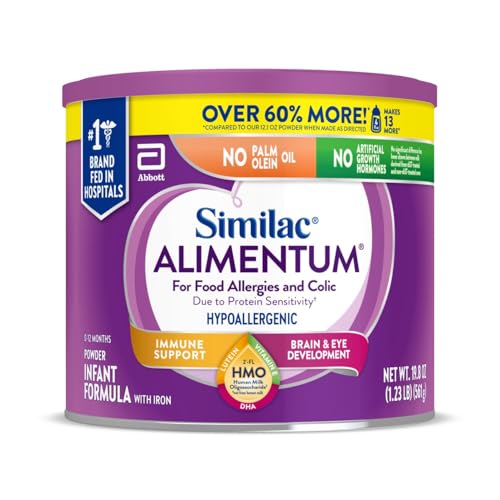
Similac Alimentum is the nuclear option for babies whose spit-up and gas are driven by an actual cow’s milk protein allergy (CMPA). Unlike partially hydrolyzed formulas, Alimentum uses extensively hydrolyzed proteins — broken down into tiny fragments that most immune systems won’t recognize as allergens. This is the same class of formula used in hospital settings for colic and allergy symptoms. The addition of 2′-FL HMO makes it the first hypoallergenic formula with this immune-nourishing prebiotic, bridging a gap between allergy relief and gut health.
Parents of babies with confirmed CMPA report near-miraculous turnarounds within 24-48 hours: projectile spit-up stops, green mucoid stools normalize, and colic-level crying vanishes. The formula is designed to reduce colic symptoms due to protein sensitivity, and clinical data supports resolution in most infants within that timeframe.
The major trade-off is the price point — it’s the most expensive formula in this guide by a significant margin. The 19.8-ounce can goes fast for an exclusively formula-fed baby, and some parents find the cost unsustainable without WIC or SNAP assistance (which Alimentum is eligible for). Additionally, extensively hydrolyzed formulas have a distinct bitter taste and smell that some babies reject initially, requiring a gradual transition period.
Why it’s great
- Extensively hydrolyzed proteins eliminate allergic reactions in most babies with CMPA, resolving severe spit-up and colic.
- First hypoallergenic formula to include 2′-FL HMO for immune support.
- Clinically shown to reduce colic symptoms within 24 hours in most infants with protein sensitivity.
- Eligible for SNAP/EBT benefits in select states, reducing financial burden for eligible families.
Good to know
- Highest price per ounce in this guide — can become very expensive for full-time feeding.
- Distinct bitter taste and smell may require a gradual transition for some babies to accept.
- Small can size (19.8 oz) means frequent repurchases; buying bulk containers is more cost-effective.
FAQ
How quickly should I see results after switching to a spit-up formula?
What’s the difference between “Gentle” and “Sensitive” formulas for gas?
Can probiotics in formula really reduce gas enough to stop spit-up?
Is A2 formula better for spit-up than standard cow’s milk formula?
When should I consider a hypoallergenic formula like Similac Alimentum?
Final Thoughts: The Verdict
For most users, the formula for spit up and gas winner is the Dr. Brown’s Soothe Pro because its 100% whey base, 2-step hydrolysis, and L. Reuteri probiotic target both the curdling mechanism of spit-up and the bacterial gas production simultaneously. If you want an organic gut-health formula, grab the Happy Baby Organics Stage 1. And for lactose sensitivity with a 5-HMO immunity boost, nothing beats the Similac 360 Total Care Gentle Comfort.