
That zigzag crack running across your basement floor or driveway isn’t just an eyesore—it’s a direct path for groundwater, frost heave, and structural erosion that turns a minor nuisance into a costly slab replacement. The right repair kit must chemically bond to the concrete, tolerate seasonal expansion and contraction, and create a waterproof seal that stops moisture from reaching the rebar below. Choosing between a dry granular powder, a self-leveling polyurethane gel, or a brushable rubber membrane determines whether your patch lasts a single winter or a full decade.
I’m Mohammad Maruf — the founder and writer behind Drink4Good. I spent dozens of hours analyzing formulation chemistry, cure times, adhesion test data, and real-world application videos to build this guide to the most effective options in the category.
Whether you are sealing a hairline control joint or a wide gap with rebar exposure, choosing a high-quality foundation crack repair kit requires understanding polymer chemistry, freeze-thaw resilience, and proper surface preparation for a lasting bond.
How To Choose The Best Foundation Crack Repair Kit
Foundation crack repair is not a one-size-fits-all job. The width of the crack, the presence of active water seepage, and whether the surface is horizontal (driveway slab) or vertical (basement wall) all dictate which kit will actually hold. The wrong chemistry peels, shrinks, or simply washes out during the first heavy rain.
Material Chemistry: Polyurethane vs. Polyurea vs. Rubber vs. Dry Powder
Polyurethane formulations offer the best balance of flexibility, adhesion to damp concrete, and resistance to freeze-thaw cycling. Polyurea variants cure faster (surface-tack-free in two hours) but demand precise nozzle application. Dry powder granular formulas like the Magic Crack Filler rely on water activation and are best for shallow, horizontal surface pits. Liquid rubber membranes are ideal for vertical foundation walls where self-leveling gels would run off before curing.
Crack Width and Depth: Kit Capacity and Layering
A kit that claims to fill a crack 2 inches wide must be paired with a backer rod for deep voids to prevent the sealant from sinking and wasting material. Most polyurethane pastes recommend a maximum layer thickness of about 1 cm per pass, with 24–48 hours between layers. If you are repairing a control joint that is only 1/4 inch deep, a single application of a self-leveling gel will suffice. For wider structural cracks, prioritize kits with multiple pouches or a large total fluid ounce capacity so you don’t run out mid-job.
Cure Time and Surface Readiness
The speed of cure directly impacts whether your repair is rain-ready before a storm. Standard self-leveling polyurethane gels cure in 24–48 hours, but premium polyurea options can achieve a non-tacky surface in as little as 2 hours. However, faster cure often means less working time for troweling or smoothing. For outdoor slabs exposed to unpredictable weather, a fast-curing polyurea kit is a safer bet. For basement walls where temperature and humidity are stable, a standard 48-hour polyurethane gel gives you more control over the final finish.
Quick Comparison
On smaller screens, swipe sideways to see the full table.
| Model | Category | Best For | Key Spec | Amazon |
|---|---|---|---|---|
| OakSky 4-Pack | Polyurea | Fast-cure, wide horizontal cracks | 75.84 oz total, tack-free in 2 hours | Amazon |
| Heelos 4-Pack | Polyurethane | Heavy-duty driveway and garage slabs | 52 oz total, 4.4 lb polyurethane gel | Amazon |
| Boncart 3-Pack | Rubber Paste | Versatile application with included tools | 39.57 fl oz, self-leveling paste | Amazon |
| Tufinein Liquid Sealant | Rubber Liquid | Vertical foundation walls and roof leaks | 53 oz, brushable rubber coating | Amazon |
| FIRE ROSE Magic Crack Filler | Dry Powder | Small hairline cracks and shallow pits | 32 oz dry powder, no mixing required | Amazon |
In‑Depth Reviews
1. OakSky Concrete Crack Filler 4-Pack (75.84 oz)
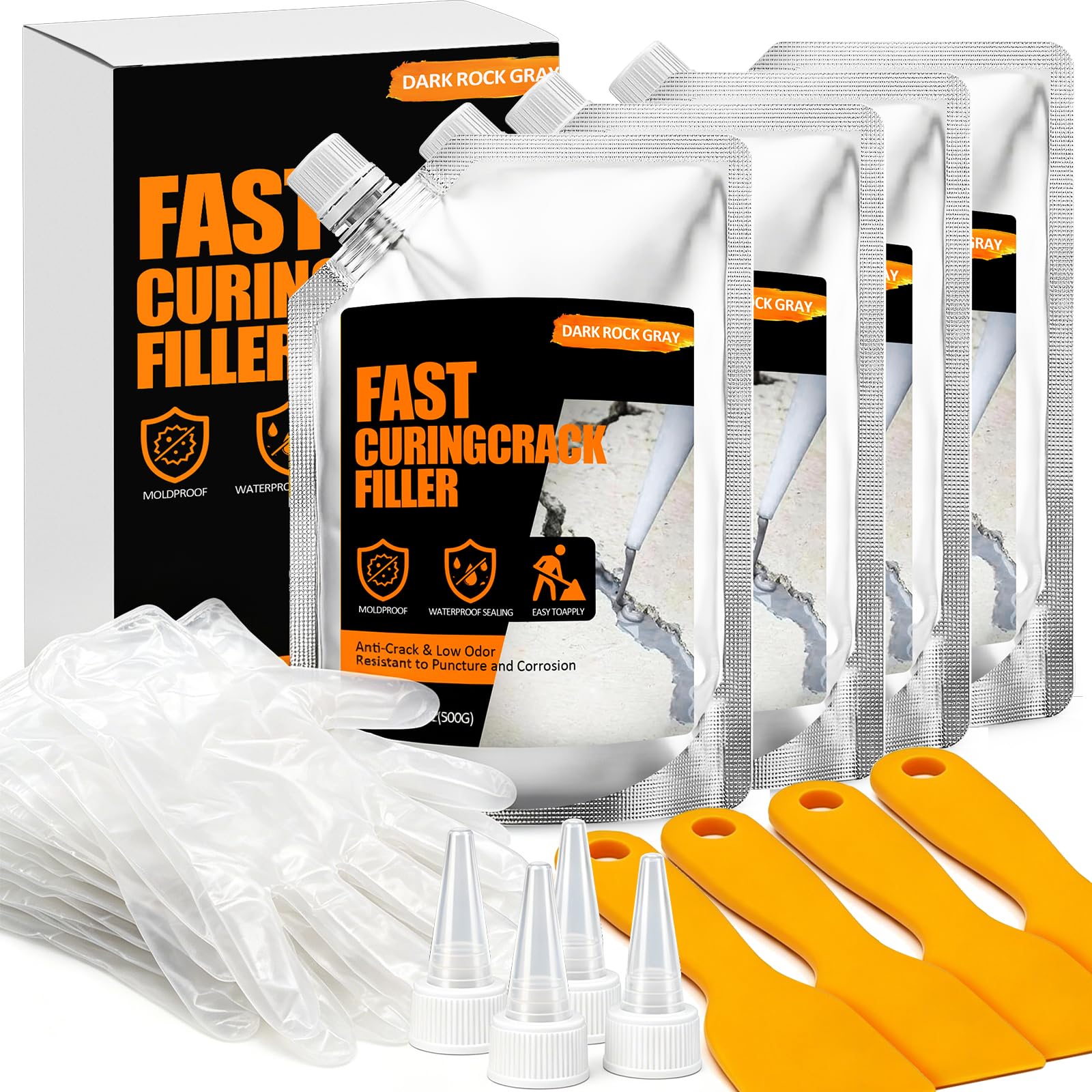
This kit uses a polyurea formulation that sets apart from standard polyurethane by curing to a non-tacky surface in roughly 2 hours instead of 24–48, which is a significant advantage if rain is in the forecast. The self-flowing nozzle design genuinely reduces waste—once you snip the tip, the sealant spreads across horizontal cracks without requiring manual troweling, so you get flat, even coverage on driveway control joints and patio gaps.
Each of the four pouches holds 500 g (17.6 oz), bringing the total to 75.84 oz—enough to seal cracks up to 2 inches wide and ½ inch deep for about 15 linear feet per pack. The chemical bond forms directly on damp concrete without bubbling, and the cured material stays flexible enough to handle seasonal ground movement without re-cracking. Users report that the color generally blends with standard gray concrete, though the rubbery texture is noticeable if you run your hand over it.
This kit is ideal for homeowners who want a fast, single-session repair on horizontal slabs. The included scraper and gloves make the cleanup straightforward, but the polyurea does have a shorter working time than polyurethane pastes, so you need to move quickly once the nozzle is attached. For vertical foundation walls, the self-leveling nature makes it less suitable than a brushable membrane.
Why it’s great
- Ultra-fast 2-hour tack-free cure protects against sudden rain
- Self-flowing nozzle eliminates troweling and material waste
- Bonds directly to damp concrete without bubbling or peeling
Good to know
- Short working time requires quick application
- Rubbery texture and color may not perfectly match all concrete
- Not designed for vertical wall application—runs before curing
2. Heelos Concrete Crack Filler 4-Pack (52 oz)
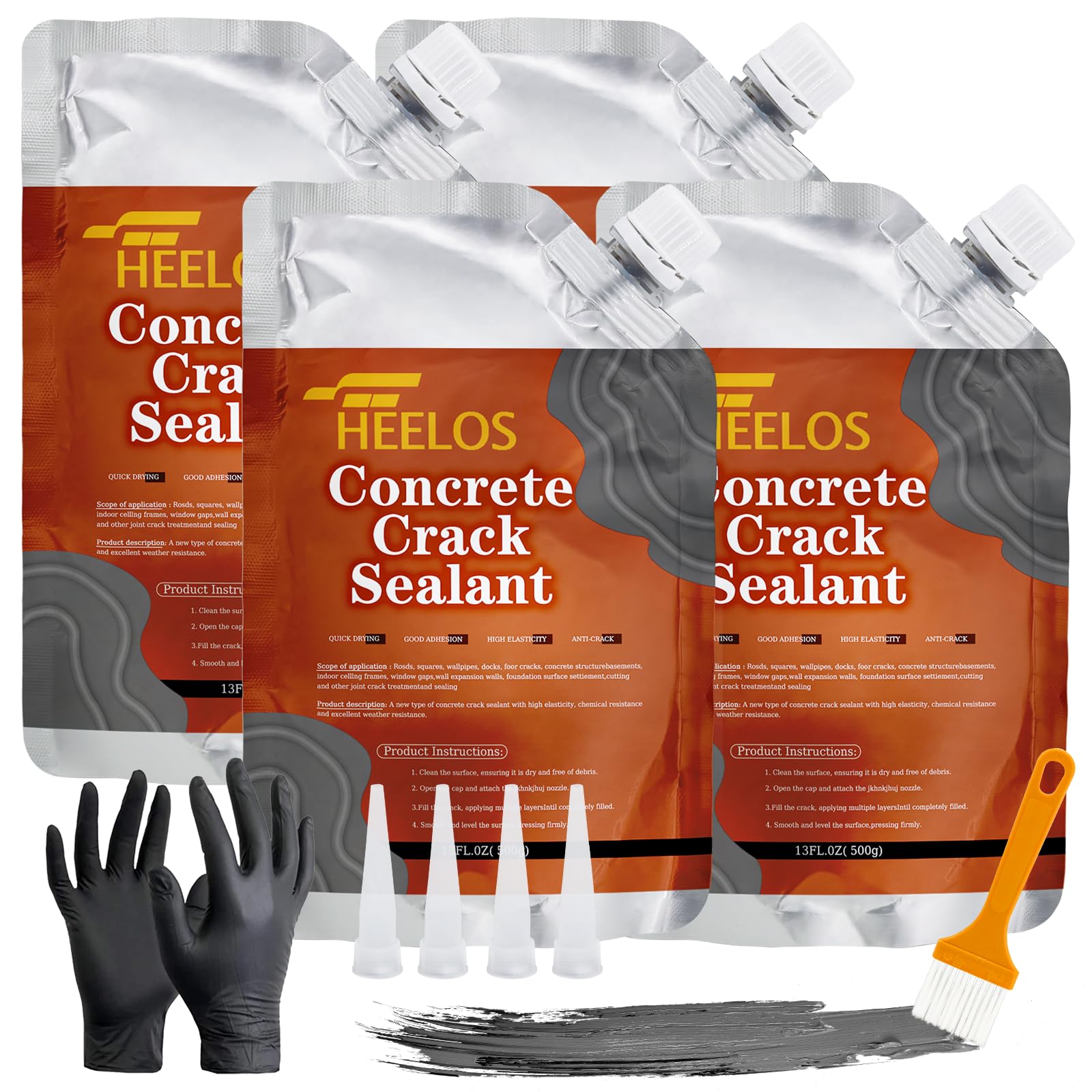
This polyurethane gel kit delivers 4.4 pounds of sealant across four resealable pouches, making it a strong candidate for large driveway projects where you need ample material to fill multiple control joints or a single long crack up to 15 feet. The self-leveling formula spreads evenly on horizontal surfaces without requiring a trowel, and the included cleaning brush and gloves simplify prep and cleanup.
The cured sealant forms a waterproof barrier that remains flexible enough to resist re-cracking from freeze-thaw cycles and ground settlement. Users consistently report that it adheres tenaciously to concrete and holds up well under foot traffic and vehicle loads after the full 48-hour cure. The gel consistency is thick enough to stay in place on slightly sloped slabs, but some users recommend using a backer rod for cracks deeper than ½ inch to prevent the material from sinking too far down.
The main drawback is the cure time—you need to protect the repair area from rain and traffic for a full two days. One long-term review noted that larger cracks remained slightly soft and attracted dust after six months, though this appears to be less common with proper depth preparation. For the total volume per dollar, this kit offers the best balance of capacity and performance for most residential slab repairs.
Why it’s great
- High total volume (52 oz) for large or multiple crack jobs
- Self-leveling gel requires no troweling on horizontal surfaces
- Resists freeze-thaw cycles and vehicle traffic after full cure
Good to know
- Full 48-hour cure time leaves repair exposed to weather
- Deep cracks require a backer rod to avoid sunken patch
- Some users report long-term softness in thick applications
3. Boncart Concrete Crack Filler 3-Pack (39.57 fl oz)
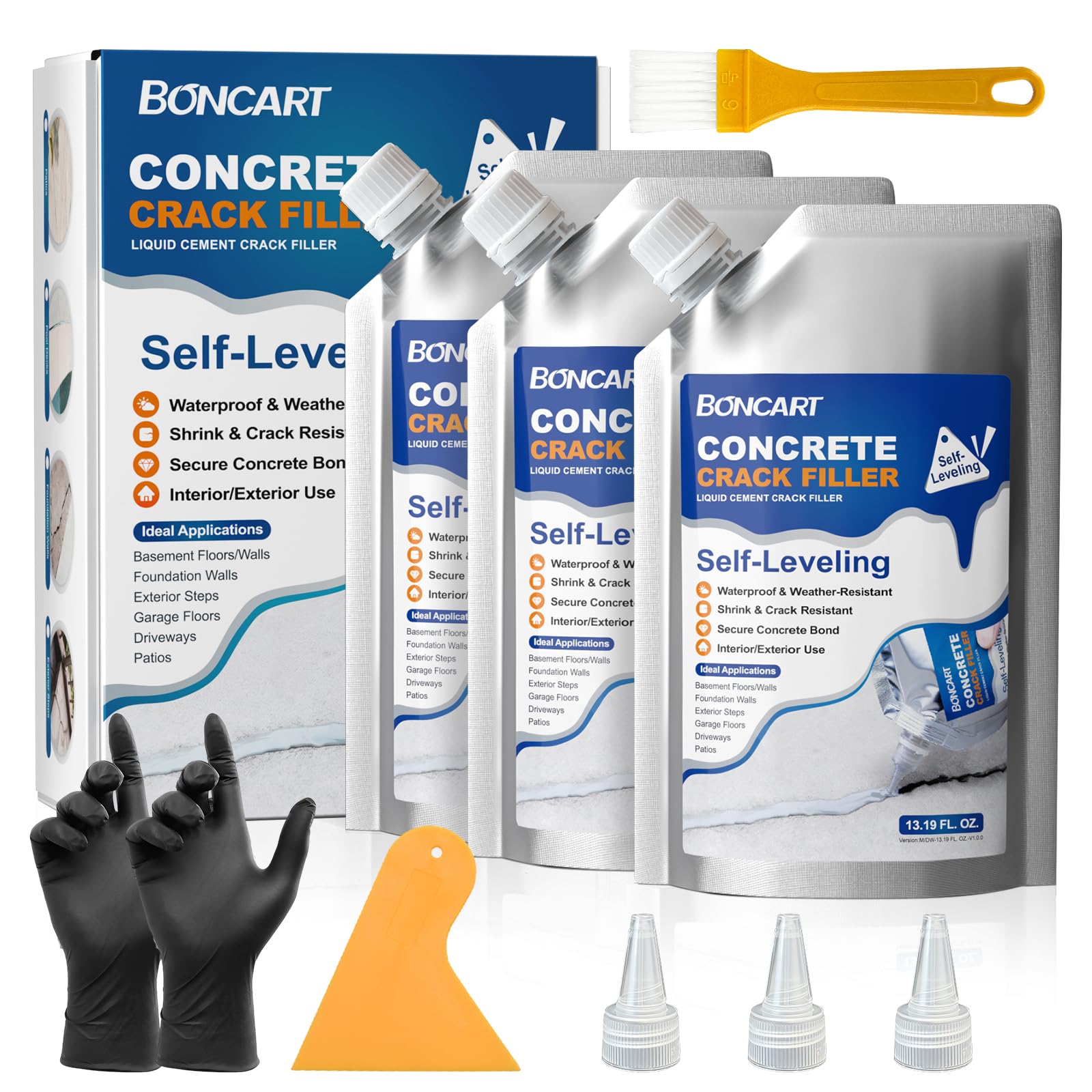
This kit stands out because it includes not only three pouches of self-leveling rubber paste but also a crevice cleaning brush, scraper, gloves, and a caulking nozzle, so you have everything needed for the job in one box. The paste formulation is thick enough to stay in place on cracks up to 1.5 inches wide but self-levels well enough to produce a smooth finish without visible tool marks after curing.
The chemical composition bonds to concrete, brick, tile, metal, and wood, making it a useful option if your repair spans multiple material transitions, such as a concrete slab meeting a brick wall or a metal gutter joint. It cures to a light gray finish that blends reasonably well with standard concrete, though multiple users note the color is not an exact match for all shades of new concrete. The waterproof seal holds up under rain and UV exposure, and the cured material remains flexible to accommodate minor structural movement.
The trade-off is that the pouches are smaller than the 4-pack competitors, with a total of 39.57 fl oz spread across three units. Deep cracks require layering, and each 1 cm layer needs 24–48 hours to dry before the next application, which can stretch a single repair over several days. The included gloves are thin, and the scraper is basic, but the brush is genuinely useful for cleaning out debris before application.
Why it’s great
- Complete kit with brush, scraper, gloves, and nozzle included
- Adheres to concrete, brick, metal, and wood for multi-material repairs
- Self-leveling paste produces a smooth, professional-looking finish
Good to know
- Total volume is lower than most 4-pack alternatives
- Color may not perfectly match all concrete shades
- Requires 24–48 hours between layers for deep cracks
4. Tufinein Rubber Liquid Waterproof Sealant (53 oz)

Unlike the self-leveling gels that require horizontal surfaces, this liquid rubber formula is designed to be brushed, rolled, or poured onto vertical foundation walls, making it the best option for basement wall cracks and foundation-to-soil transitions. The 53-ounce can delivers enough material to cover roughly 21 square feet at 0.6 mm thickness, and the included patch cloth can be embedded at joints or over wider cracks to reinforce the waterproof membrane.
The rubber coating cures to a flexible, dense membrane that remains stable in temperatures from -40°F to 176°F and resists aging from UV exposure. Users report that it effectively sealed outdoor fountains and cracked rubberized porch floors, adhering well to old concrete and brick. The self-leveling property means it flows into smaller gaps on its own, but the primary application method is a brush or roller, which gives you control over thickness on vertical surfaces.
The main caveats are the strong odor during application—adequate ventilation is mandatory—and the fact that the cured surface remains slightly tacky, which means it is not suitable for walking surfaces. The can is smaller than it appears in product photos, and the liquid is thick and staticky, attracting dust and debris during the curing window. For foundation wall waterproofing rather than driveway smoothing, this is the right tool.
Why it’s great
- Brushable formula designed specifically for vertical foundation walls
- Wide temperature tolerance (-40°F to 176°F) for all climates
- Includes patch cloth for reinforcing wider cracks and joints
Good to know
- Strong odor requires good ventilation during application
- Cured surface remains tacky—not suitable for walking surfaces
- Thick liquid attracts dust and debris while curing
5. FIRE ROSE Magic Crack Filler (32 oz)
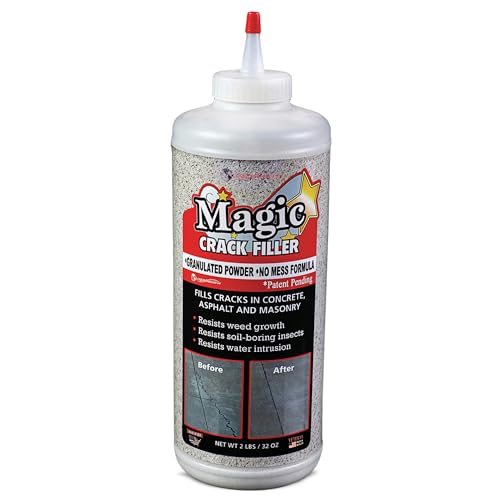
This is a dry granular powder that works differently from every other product in this guide—instead of a chemical cure, it relies on water activation. You simply pour the powder into the crack, dampen it with water, and the material hardens into a solid patch that blends with raw concrete. There is no mixing, no shelf life, and no need for trowels or scrapers beyond a simple card to level the surface.
The formula is made from synthetic rubber granules and works best on hairline cracks to small pits on horizontal concrete slabs, driveways, and patios. Users who cleaned the crack thoroughly with alcohol before application reported that the patch dried hard by the next day and was barely noticeable against the surrounding concrete. The material resists water intrusion and does not shrink or pull away from the edges like some liquid fillers can.
The limitation is that this is a surface-level cosmetic repair, not a structural sealant. It does not have the deep-penetrating adhesion or flexibility of polyurethane gels, so it is not appropriate for wide structural cracks or any gap that undergoes frequent freeze-thaw movement. The color can lean slightly lighter or darker than new concrete depending on the specific mix. For a quick, no-mess fix on small driveway pits, it is surprisingly effective at a very low entry cost.
Why it’s great
- No mixing, no tools, no shelf life—just pour, wet, and done
- Dries hard and blends well with raw concrete color
- Resists water ingress in hairline cracks and shallow pits
Good to know
- Not suitable for wide structural cracks or freeze-thaw environments
- Surface-level repair only—lacks deep bonding of polyurethane gels
- Color may not perfectly match all concrete shades
FAQ
Can I apply a self-leveling polyurethane filler on a vertical foundation wall?
How deep can I fill a crack with a single application of a polyurethane kit?
Why does my repaired crack still look wet or oily after several days?
Final Thoughts: The Verdict
For most users, the foundation crack repair kit winner is the OakSky Concrete Crack Filler 4-Pack because its polyurea chemistry delivers the fastest cure time while maintaining the flexibility and adhesion required for long-term slab repairs. If you need maximum volume for a large driveway job at a lower per-ounce cost, grab the Heelos 4-Pack. And for vertical foundation wall leaks where a brushable rubber membrane is required, nothing beats the Tufinein Liquid Sealant.