
A shed’s lifespan is decided the moment you set it on the ground. The soil underneath holds moisture, frost, and shifting forces that will warp floor joists, rust metal panels, and invite rot into wooden framing within a single season. Choosing the right foundation for a shed is the single most consequential decision in the entire build process — one that separates a permanent outbuilding from a future demolition project.
I’m Mohammad Maruf — the founder and writer behind Drink4Good. I’ve spent years analyzing ground-contact specs, geotechnical fabrics, load-bearing polymers, and drainage geometry to understand what actually keeps a structure stable through freeze-thaw cycles and heavy rain.
This guide breaks down the load capacities, material science, and installation realities that define the best foundation for a shed — so you can match the right system to your soil, climate, and structure weight without guessing.
How To Choose The Best Foundation For A Shed
Matching a foundation to your shed starts with three fixed variables: the soil type on your site, the total weight of the structure, and the local frost depth. A lightweight garden shed on clay soil needs a completely different approach than a heavy workshop on sandy loam. Prioritize drainage first — every foundation system must shed water away from the shed floor, not trap it underneath.
Ground Grids vs. Deck Blocks vs. Prefab Base Frames
Ground grids (geocells) use a honeycomb structure filled with gravel or soil to distribute loads across a wide footprint while allowing water to pass through. Deck blocks are individual pedestals that support posts or joists, elevating the shed floor above grade. Prefab steel base frames provide a rigid perimeter that integrates directly with the shed walls. Choose ground grids for poor soil and heavy loads, deck blocks for quick floating platforms, and base frames for factory-integrated metal sheds.
Load Capacity and Soil Bearing Pressure
Every foundation component has a rated load — usually expressed in pounds per square foot (PSF) or per-block capacity. Compare this number against your shed’s total weight (frame + contents) divided by its footprint. A 10×12 shed with 50 PSF of snow load and heavy equipment can easily demand a foundation rated for 250+ PSF. Undersized foundations sink unevenly; oversized ones waste material. The sweet spot is a system that exceeds your calculated load by at least 25% to account for wet soil where bearing capacity drops by half.
Permeability and Moisture Management
Standing water under a shed accelerates rot in wood floors, corrodes metal panels, and attracts termites. Permeable foundations — gravel-filled grids, vented deck blocks, or steel frames with ground clearance — allow moisture to drain or evaporate rather than pond. Non-permeable options like solid concrete slabs require proper slope and edge drainage. For most DIY builds, a permeable system is the safer bet because it forgives minor grading errors and reduces long-term maintenance.
Quick Comparison
On smaller screens, swipe sideways to see the full table.
| Model | Category | Best For | Key Spec | Amazon |
|---|---|---|---|---|
| BuildTuff TuffBlock (12-Pack) | Deck Block | Floating ground-level decks and sheds | 1,700 lbs per block | Amazon |
| Standartpark EasyPave 2″ (126 units) | Ground Grid | Heavy vehicle driveways and large shed pads | 80,000 lbs load class | Amazon |
| Vodaland HexPave 1″ (22 units) | Ground Grid | Medium shed bases and walkways | 27,000 lbs capacity | Amazon |
| CAMO Block Deck Block (10-Pack) | Deck Block | Versatile post and joist support | 1,800 lbs per block | Amazon |
| VEVOR Ground Grid 25×9.5 ft | Ground Grid | DIY patios and erosion-prone slopes | 1,885 lbs per sq inch | Amazon |
| BULLKE Round Foundation Block (10-Pack) | Deck Block | Floating pier and beam supports | 1,250 lbs per block | Amazon |
| Super Geotextile Woven Fabric 17.5×30 ft | Separation Fabric | Underlayment for gravel bases | 4 oz woven polypropylene | Amazon |
| WACASA 10×12 Metal Shed with Base Frame | Prefab Shed + Base | Ready-to-assemble all-in-one structure | 250 lbs/sqft floor load | Amazon |
| WACASA 10×16 Metal Shed with Base Frame | Prefab Shed + Base | Large workshop or equipment storage | 250 lbs/sqft floor load | Amazon |
In‑Depth Reviews
1. BuildTuff TuffBlock Deck Support (12-Pack)

The TuffBlock is the benchmark for modular deck block foundations in the residential market. Each block carries a 1,700 lb rating — enough to support a corner post of a fully loaded 12×12 shed without deflection. The design accepts both 2-inch nominal joists and 4×4 posts, giving you flexibility to frame the shed floor exactly to your plan. Weighing only 1.5 lbs per block, these units are 28 times lighter than concrete equivalents, which transforms the installation logistics for a solo builder.
The underside is ventilated to prevent moisture entrapment and deter termites — a critical detail for sheds placed on damp ground. Users report building 12×12 decks single-handedly with these, something physically impossible with concrete blocks. The 12-pack covers a 10×12 footprint with blocks at each corner and mid-span supports. For ground-level structures under 8 inches tall, this system eliminates digging, rebar, and curing time while delivering concrete-grade stability.
One limitation: the blocks do not include built-in drainage holes beyond the vent channels. On sites with heavy water flow, pairing TuffBlocks with a geotextile fabric base and a gravel drainage layer prevents any standing water from reaching the support surface. Over four years of documented use across multiple builds, the TuffBlocks show no UV degradation or cracking.
Why it’s great
- Ultra-lightweight design enables single-person installation
- 1,700 lb load rating matches most residential shed loads
- Vented underside prevents moisture and termite damage
Good to know
- No integrated drain holes; needs gravel base on wet sites
- Only works for structures under 8 inches off the ground
2. Standartpark EasyPave Permeable Pavers 2″ (126 Units)

The EasyPave system is the heavy artillery of shed foundations. At 2 inches deep and covering 315 square feet, this is a full pad foundation that distributes loads up to 80,000 lbs — enough for a large workshop shed, multiple vehicles, or even light aircraft as one verified user demonstrated. The 126 units lock together on all four sides using the True Lock system, creating a monolithic geocell mat that prevents lateral gravel migration under heavy point loads.
Made from 100% recycled polypropylene, the material resists UV degradation and chemical exposure. The wave-type edge tapering adds structural rigidity at connection points where shear forces concentrate. Water passes through the open cells and filters into the ground below, eliminating the need for drainage pipes or sloping the pad. For a 10×16 shed, this system delivers a fully permeable, weed-suppressing base that can handle any snow load or equipment weight you throw at it.
The main drawbacks are the 2-inch depth — you need to excavate 3 to 4 inches to recess the pavers flush with grade — and the assembly time for 126 interlocking units. Some users report that the included stakes are insufficient for large areas and recommend purchasing additional landscape pins. Color variation between batches has also been noted, though this matters less when the pavers are filled with gravel.
Why it’s great
- Exceptional 80,000 lb capacity supports heavy equipment sheds
- Full 2-inch depth prevents gravel migration under load
- 100% recycled material with no off-gassing or chemical leaching
Good to know
- Requires excavation to recess the 2-inch profile flush with grade
- Large assembly project; extra stakes recommended for perimeter
3. Vodaland HexPave System 1″ (22 Units)

HexPave occupies the sweet spot between cost and capability for medium shed bases. The 22-unit kit covers 65 square feet, and with a 27,000 lb capacity, each section handles the weight of a fully loaded 8×10 shed and then some. The 1-inch depth is ideal for light foot traffic and small to medium structures where full excavation is impractical. The hexagonal cells lock together without tools, and the polypropylene construction is resistant to frost, UV, and soil acids.
For a shed base, users recommend pairing HexPave with a sand leveling layer and a vapor barrier underneath to prevent weed growth. The grid holds gravel firmly in place even on sloped sites, which makes it effective for hillside sheds where erosion is a concern. The permeability eliminates runoff pooling — rainwater filters through the gravel and into the subsoil, keeping the shed floor dry.
The 1-inch depth limits the fill volume, so the system works best with angular crushed stone that locks together within the shallow cells. Round river rock or pea gravel may shift under heavy loads over time. One user noted that the included anchors were insufficient for high-wind areas and recommended adding 6-inch landscape staples around the perimeter.
Why it’s great
- 27,000 lb capacity exceeds needs of most residential sheds
- Tool-free interlocking assembly speeds installation
- Permeable design eliminates standing water under structure
Good to know
- 1-inch depth requires angular stone to prevent load shifting
- Included anchors may need supplementing on windy sites
4. CAMO Block Heavy Duty Deck Block Foundation Support (10-Pack)
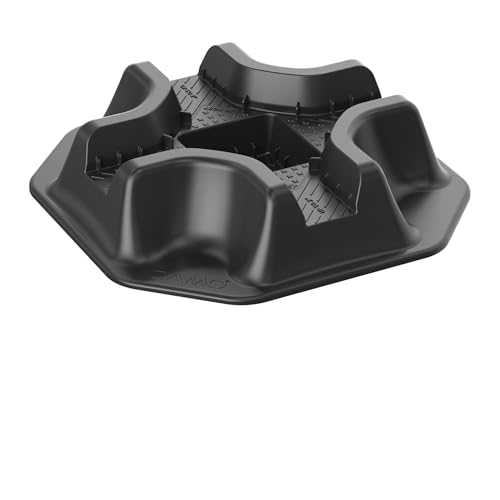
The CAMO Block is engineered for builders who need maximum adaptability in a single product. This compatibility range means the same block can support a shed’s perimeter rim joists, center girder, or post-and-beam arrangement without adapters.
Weighing 2.16 lbs each, the blocks are still light enough to reposition by hand during layout. The vented design prevents water buildup, and the UV-protected polyolefin material carries a 30-year warranty — the longest coverage in the deck block category. The blocks are rated for residential grade but have proven capable under heavier loads in user builds, including chicken coops and small cabins.
The vent channels are narrow, so on clay soils that hold moisture, placing a 4-inch gravel base beneath the blocks improves drainage. Some users found that the blocks only accept 2-inch nominal corners, not 4×4 post corners, so verify your framing plan before purchasing. Despite this, the CAMO Block remains the most framing-agnostic option on the market.
Why it’s great
- Accepts multiple post and joist sizes without adapters
- 1,800 lb rating with a 30-year warranty
- Lightweight design allows easy repositioning during layout
Good to know
- Narrow vents may need gravel base on heavy clay soil
- Not compatible with 4×4 post-to-corner framing
5. VEVOR Ground Grid 25 ft x 9.5 ft

VEVOR’s ground grid delivers commercial-grade geocell stabilization at a price point that undercuts most competitors. The 25×9.5 foot sheet covers 237.5 square feet with 3-inch-deep cells — a full 9 feet wide, matching the typical 8-foot shed depth plus overhang. The load rating of 1,885 lbs per square inch (calculated per filled cell) is exceptional for a system in this range, and the HDPE material resists photooxidation aging and soil acidity across all climates.
The supersonic weld technology creates stronger cell junctions than heat-pressed alternatives, though some users reported areas where the welds separated during shipping or installation. The grid cuts easily with a utility knife, allowing you to resize it for irregular shed footprints. For a 10×10 shed, you can lay the full sheet and cut away the excess, leaving a perfectly sized base with no joints.
Installation requires anchoring — the included plastic pegs are widely considered inadequate, and experienced users recommend replacing them with galvanized 1/4-inch bolts with washers for permanent edge retention. The system works best with angular aggregate that locks within the 3-inch cells. Without proper anchoring, the grid can shift during gravel filling on curved or sloped layouts.
Why it’s great
- Large 9.5-foot width fits standard shed depths without joins
- 3-inch depth holds more fill for stronger load distribution
- HDPE material resists UV, acids, and all-weather degradation
Good to know
- Plastic anchor pegs are weak; upgrade to galvanized bolts
- Weld quality varies; inspect all junctions before installation
6. BULLKE USA Made Round Foundation Block (10-Pack)
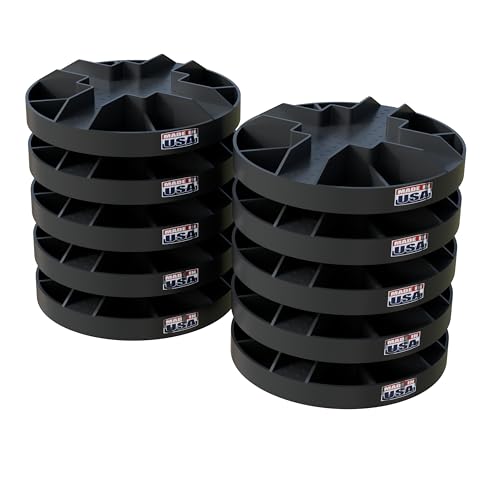
BULLKE’s round foundation blocks offer a low-profile pier solution for floating shed platforms. At 1.75 inches thick and 10 inches in diameter, each block elevates the structure just over an inch above ground — enough clearance for air circulation while keeping the finished shed height minimal. The 1,250 lb per-block capacity is appropriate for light to medium sheds when spaced at 4-foot intervals on a standard post-and-beam layout.
Made in the USA from 100% recycled high-density polyethylene, these blocks appeal to builders prioritizing sustainability without compromising structural reliability. The circular design distributes load evenly into the soil, and the material won’t rot, rust, or spall like concrete. Users report easy installation on level ground by placing blocks on compacted sand pads and adjusting height with additional sand before setting the structure.
The low profile is a double-edged sword — the blocks provide minimal elevation above grade, so they are less forgiving on uneven or poorly drained sites. Some users noted the lack of integrated drain holes and drilled their own to prevent water pooling inside the block cavity. For sheds over 120 square feet, spacing these at load-bearing points requires careful load calculation to avoid exceeding the 1,250 lb limit on any single block.
Why it’s great
- 100% recycled US-made material reduces environmental impact
- Low 1.75-inch profile keeps structures close to ground
- Circular design prevents stress concentration at edges
Good to know
- No integrated drain holes; may need drilling for wet sites
- Low clearance limits use on uneven or poorly drained ground
7. Super Geotextile Woven Fabric 17.5×30 ft

This is not a standalone foundation, but it is the layer that makes any gravel-based foundation perform. The 4-ounce woven polypropylene fabric delivers zero-permeability separation between your subgrade soil and the gravel base — preventing the two materials from mixing under load. Without this fabric, gravel sinks into soft soil, creating a mud pit under your shed within two years. The 17.5×30 foot sheet covers a full 10×16 shed pad with generous overlap.
The woven construction gives it exceptional puncture resistance compared to non-woven fabrics. Users report spreading crushed stone directly on the fabric without tearing, even when dumping from a wheelbarrow. The 50-year lifespan when buried means you install this once and forget about it. The fabric also blocks weed growth from below, eliminating the need for chemical weed barriers under the shed.
The trade-off is near-zero water permeability. Water is not meant to pass through this fabric — it is designed to stay on top and drain laterally to the edges. On sites with slow-draining clay soil, the fabric can trap water if the gravel layer is too thin. A minimum 4-inch gravel depth above the fabric is recommended to ensure lateral drainage before water reaches the fabric surface.
Why it’s great
- Zero-permeability prevents soil and gravel from mixing
- 50-year buried lifespan outperforms cheaper landscape fabrics
- High puncture resistance survives heavy stone placement
Good to know
- Zero permeability requires adequate gravel depth for drainage
- Shipped folded, not rolled; may have creases to flatten
8. WACASA 10×12 Metal Shed with Base Frame Floor Kit
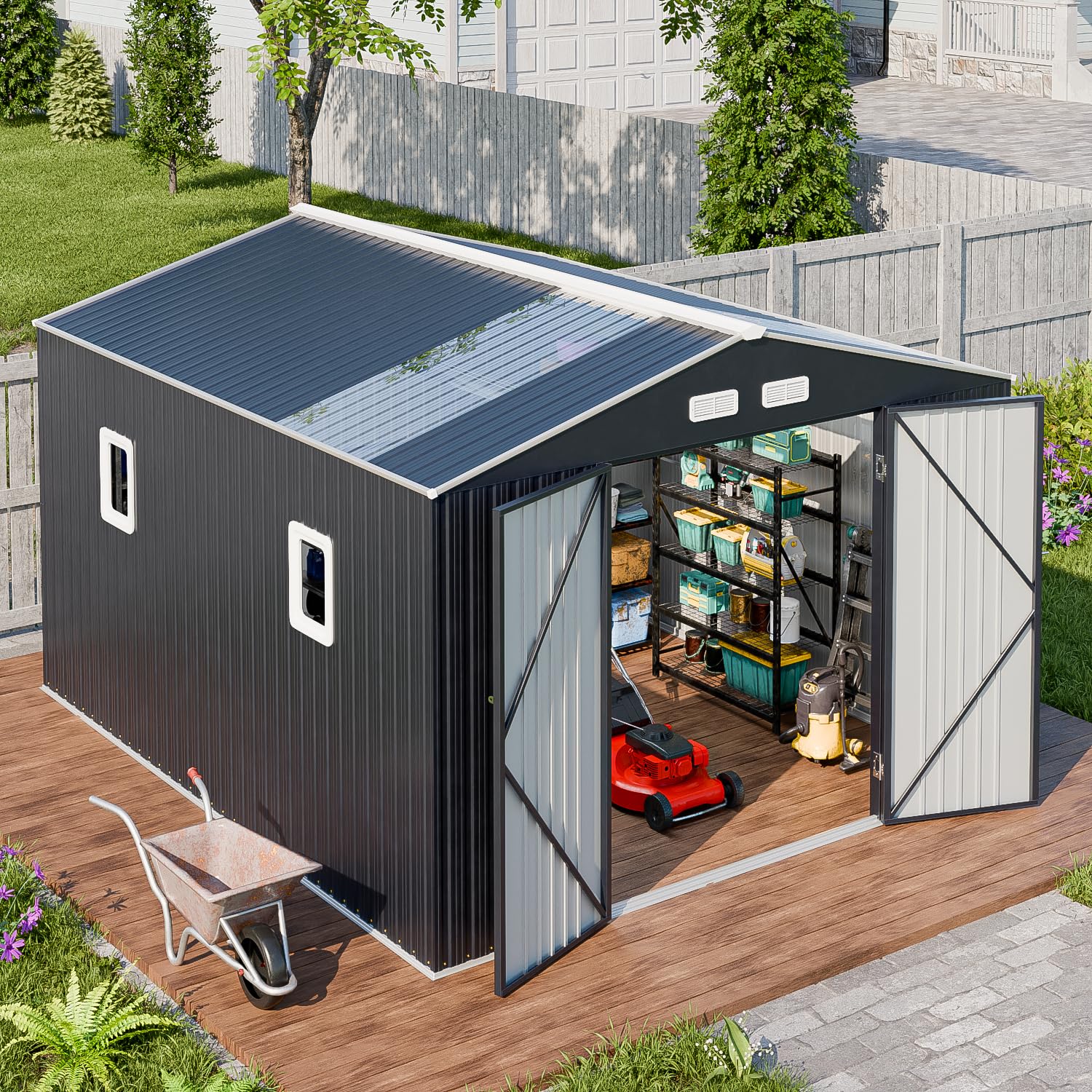
The WACASA 10×12 takes a different approach — the foundation is built into the shed itself. The 20-gauge galvanized steel base frame creates a floor system rated for 250 lbs per square foot, which exceeds most ground grid and deck block systems. The frame elevates the shed floor above grade with ventilation channels that prevent moisture buildup against the steel panels. This is a complete solution: the base, walls, roof, and floor are designed as one integrated system.
The military-grade powder coating on the frame resists salt spray and acid rain, extending rust-free life to 5-10 years in coastal environments. The 50 PSF snow load and 120 MPH wind ratings make this one of the most structurally certified shed-and-foundation combos available. The 20-gauge structural frame is significantly thicker than typical 30-gauge competitor sheds, and the two polycarbonate skylights eliminate dark corners without electricity.
The install is a 3-4 person team build requiring 5-8 hours, and the instructions have known issues — some users report misaligned holes and insufficient hardware. The base frame requires a perfectly level site; any unevenness transfers to the floor system. For buyers who want a single-purchase turnkey shed with an integrated foundation, this eliminates the complexity of matching a separate base to a separate structure.
Why it’s great
- Integrated steel base eliminates foundation compatibility issues
- 250 lbs/sqft floor rating exceeds all ground grid systems
- 120 MPH wind rating with proper anchoring to base frame
Good to know
- Requires perfectly level site; uneven ground transfers to floor
- Assembly instructions have errors; watch video guide first
9. WACASA 10×16 Metal Shed with Base Frame Floor Kit
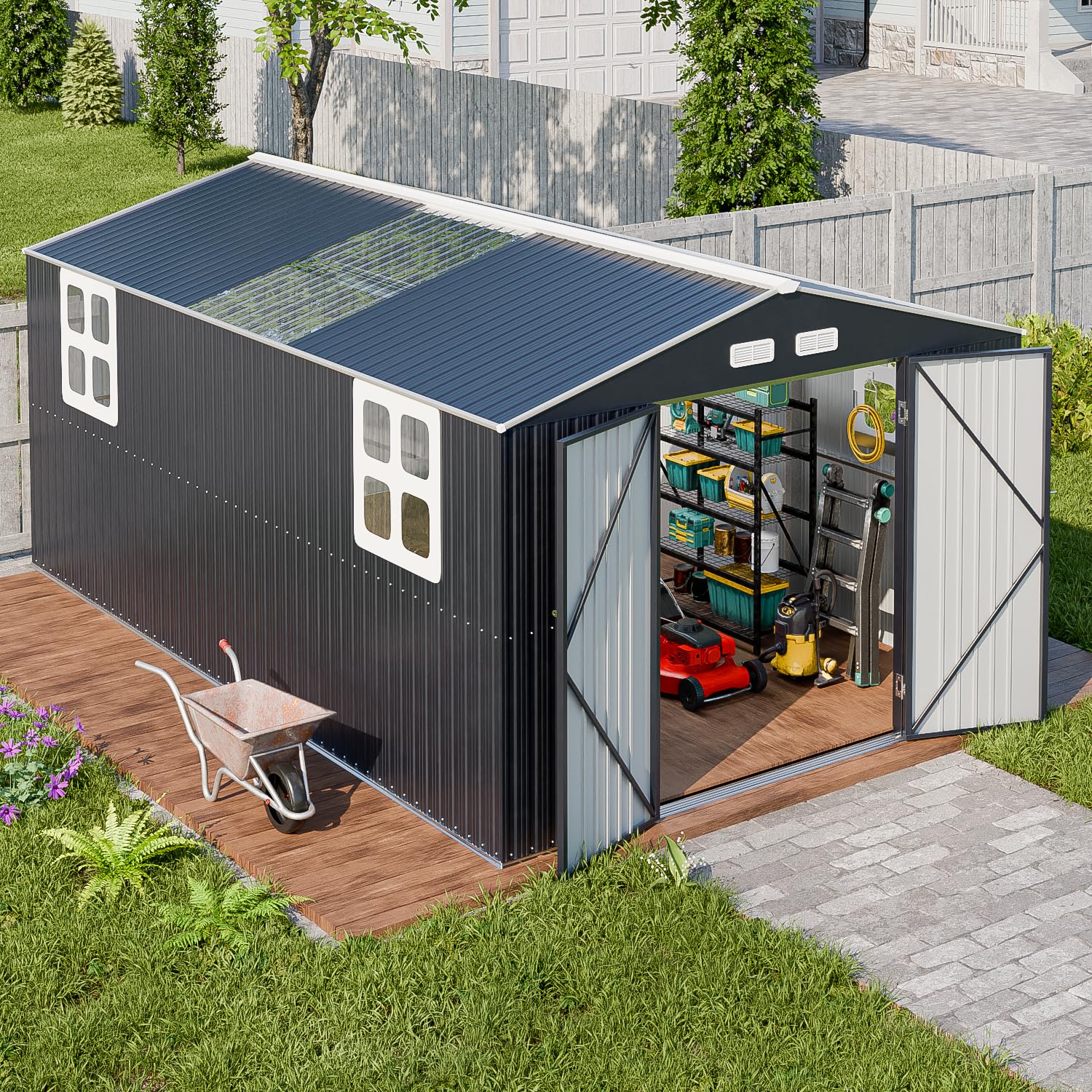
The 10×16 version of WACASA’s integrated shed-and-base system scales up the same foundation engineering for larger workshop storage. The 20-gauge steel base frame maintains the 250 lbs/sqft rating across the larger footprint, and the overall structure weighs 360 lbs — heavy enough to feel solid, light enough to be delivered in separate manageable boxes. The 7-foot ceiling height with skylights makes this viable as a dedicated workspace rather than just storage.
The foundation base frame incorporates the same ventilation channels and rust-protection coating as the 10×12 version. For a 10×16 structure, this integrated base eliminates the need to calculate load distribution across multiple deck blocks or to excavate for a full gravel pad. The wide double doors (55 inches wide) fit riding mowers and large equipment, and the 250 lbs/sqft floor load handles heavy tool chests and workbenches without deflection.
The same build challenges apply — multiple users reported stripped screws, missing hardware, and instruction errors. The thin 30-gauge wall panels dent easily during assembly if handled roughly. The base frame must sit on a level prepared surface; WACASA recommends a concrete slab or compacted gravel pad. For buyers committed to a large metal shed with a factory-engineered floor, this is the most turnkey option at this size, but prepare for a two-day team build with potential frustration.
Why it’s great
- Large 10×16 footprint with integrated 250 lbs/sqft foundation
- 55-inch wide doors accommodate riding mowers and large gear
- Ventilated steel base prevents moisture damage to stored items
Good to know
- Thin panels dent easily; require careful handling during assembly
- Level prepared base essential; instructions need video supplement
FAQ
Can I use ground grids directly on grass without excavating?
How many deck blocks do I need for a 10×12 shed?
Do metal shed base frames work on any soil type?
What size gravel should I use to fill ground grid cells?
Will frost heave damage a ground grid foundation?
Final Thoughts: The Verdict
For most users, the foundation for a shed winner is the BuildTuff TuffBlock (12-Pack) because it combines a 1,700 lb per-block rating with a ventilated design that prevents moisture damage, all in a package light enough for solo installation. If you want a fully integrated system with a steel base and walls, grab the WACASA 10×12 Metal Shed. And for a heavy-duty gravel pad that handles equipment and vehicles, nothing beats the Standartpark EasyPave 2-inch system with its 80,000 lb load class.