
The ground beneath your above-ground pool is rarely as level or clean as you think. Grass, pebbles, roots, and even stray acorns can press up through the liner, creating tiny punctures that grow into leaks over a single season. A proper foundation absorbs that ground-layer abuse so your liner stays intact and your feet don’t find hidden divots.
I’m Mohammad Maruf — the founder and writer behind Drink4Good. I’ve spent years researching outdoor gear and home wellness products, analyzing material densities, geotextile weights, and installation methods to separate effective pool foundations from disposable sheets.
Above-ground pool owners often overlook the base layer until water starts seeping out. This guide breaks down the material choices, thickness grades, and coverage strategies you need to select a durable foundation for above ground pool that prevents liner damage and keeps your pool comfortable season after season.
How To Choose The Best Foundation For Above Ground Pool
Selecting a foundation involves more than grabbing the cheapest roll. The wrong material can trap moisture, shred under the pool’s weight, or leave gaps that invite weeds. Focus on three factors: material type, thickness and density, and coverage fit.
Material Composition and Fabric Weight
The most effective pads use geotextile fabric — a blend of polyester, acrylic, and cotton fibers needled together into a dense felt. Look for weights above 9 oz/yd² (roughly 260 g/m²) for reliable puncture resistance. Cheaper pads use thin spunbond polypropylene that tears easily when stretched over uneven ground.
Pool Cove vs. Ground Pad vs. Wall Foam
These three components serve different roles. A ground pad protects the floor from below. A pool cove cushions the liner where it meets the wall, preventing stress cracks at the 90-degree angle. Wall foam lines the metal or resin wall to smooth out seams and rivets. Many buyers overlook coves, but they are critical for liner longevity — sand coves wash out, while foam peel-and-stick coves hold their shape.
Size and Shape Precision
Your pad must match the pool’s footprint exactly — too small and the liner edges contact bare ground, too large and the overhang bunches under the wall. True round pads cut from a single sheet provide better edge-to-edge coverage than pieced-together rolls. For oval pools, look for pads that can be trimmed cleanly without fraying.
Quick Comparison
On smaller screens, swipe sideways to see the full table.
| Model | Category | Best For | Key Spec | Amazon |
|---|---|---|---|---|
| FUZE Pool Liner Pad | Ground Pad | Maximum puncture protection | 2x denser geotextile, seamless | Amazon |
| Gladon NL104-22 Pool Cove | Pool Cove | Liner wall-floor protection | 1.8 lbs/ft³ foam, 48-inch strips | Amazon |
| Gladon Wall Foam Roll | Wall Foam | Smoothing metal pool walls | 1/8-inch x 48-inch x 100-ft | Amazon |
| Horizon Peel & Stick Cove | Pool Cove | 30-ft round pool coves | 24-pack, 48-inch strips each | Amazon |
| Aqua Select Gladon Cove | Pool Cove | 24-ft round pool installations | 46-inch peel-and-stick pieces | Amazon |
| Modern Innovations Pool Pad | Ground Pad | 24-ft round budget protection | Pre-cut, weather-resistant felt | Amazon |
| Niuyhe Pool Mat 18ft | Ground Pad | Small round pools / entry-level | 260 g/m² geotextile felt | Amazon |
In-Depth Reviews
1. FUZE Pool Liner Pad 24 FT Round
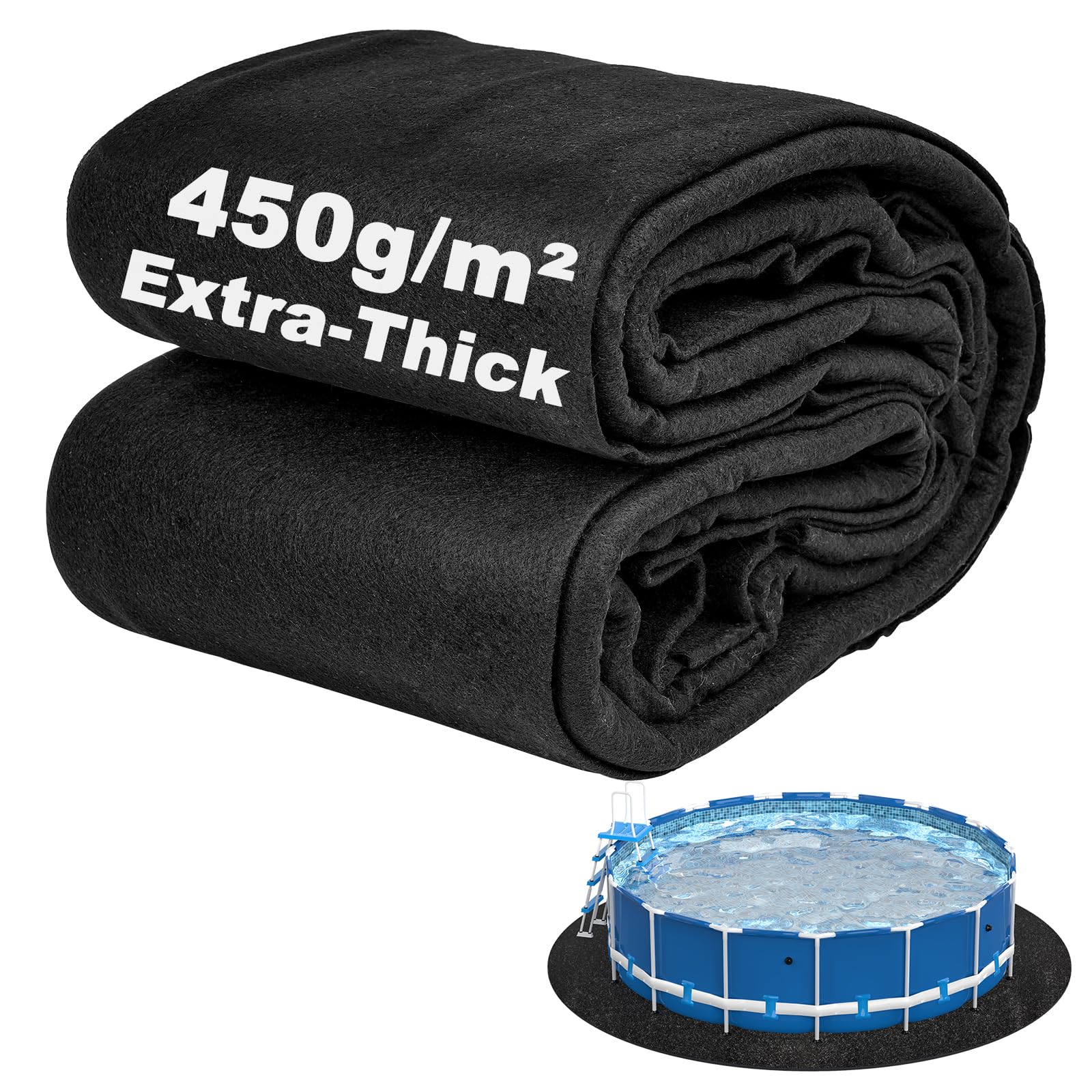
The FUZE pad uses a composite geotextile blend that is twice as dense as standard pads — owners report they cannot tear it by hand. The seamless one-piece design eliminates the weak seam lines found on stitched pads, which means no debris traps and no risk of seam separation under 5,000+ gallons of water pressure. At 40.6 pounds for a 24-foot round pad, the material heft alone signals serious puncture resistance.
Installers specifically noted the extra thickness compared to “gorilla pads” they had used previously, with one reviewer mentioning a noticeably softer feel underfoot during the first swim. The pad also acts as a thermal buffer when paired with a solar cover, reducing heat loss through the pool floor — a practical bonus for extending the swimming season.
For large round pools between 18 and 24 feet, this is the most complete ground protection available. The higher density also blocks light completely, preventing any algae or weed growth beneath the liner. It fits true round footprints with full edge-to-edge coverage, so no part of the liner sits directly on bare ground.
Why it’s great
- Double-density geotextile offers best-in-class puncture resistance
- Seamless construction prevents edge fray and debris buildup
- Full-edge coverage protects liner from ground contact
Good to know
- Premium cost reflects the industrial-grade material quality
- Heavy and bulky to maneuver during installation solo
2. Gladon NL104-22 Premium Peel and Stick Pool Cove

Gladon’s cove is rated at 1.8 pounds per cubic foot foam density — a spec that tells you this foam will hold its shape under the liner’s constant outward pressure without compressing flat. The 48-inch strips create a smooth 45-degree transition from the pool floor up the wall, which prevents the liner from stretching and cracking at the sharp bottom corner. The 22-pack covers 18×33-foot oval pools and 28-foot round pools precisely.
Several owners praised the adhesive as strong enough for DIY installation, though a minority found the stick less reliable on certain wall materials. The fix is simple — a light application of 3M spray contact adhesive on both the foam and the wall surface solves adhesion issues permanently. Once the pool is filled, the cove stays perfectly in place regardless of initial tack.
Skipping a cove is the most common mistake in above-ground pool installations. Sand coves wash out within a season, leaving gaps that stress the liner. Gladon’s foam cove eliminates that risk and adds a finished, professional feel when you run your foot along the wall-floor junction. It’s a mid-range investment that directly extends liner life.
Why it’s great
- High foam density resists compression under heavy water weight
- Eliminates messy sand coving that shifts and washes away
- Peel-and-stick simplifies installation for DIY pool builders
Good to know
- Adhesive strength varies by wall surface material
- May require spray adhesive for maximum hold
3. Gladon 100-Feet Roll Above Ground Pool Wall Foam

Metal above-ground pool walls have seams, rivets, and slight irregularities that can puncture the liner over time. Gladon’s wall foam creates a smooth, cushioned barrier between the metal and the liner. At 1/8-inch thick and 48 inches tall, this 100-foot roll covers pools up to roughly 15×30 feet with enough leftover for a double-layer application in cold climates — one reviewer extended his swimming season from two months to six by using the foam as thermal insulation.
Installation requires foam-compatible spray adhesive applied to the wall and the foam backing, then unrolling and pressing into place. A few users noted the foam can sag before the adhesive dries, but duct tape holds it temporarily until the pool fills and presses the liner against it. The thin profile means it doesn’t eat into pool interior space, and once filled, the wall feels smooth and uniform.
Beyond puncture protection, this foam provides a measurable thermal benefit. It reduces heat transfer through the metal wall, so solar-heated water stays warm longer into the evening. For pools in windy or exposed backyards, this insulation effect can cut heater runtime significantly. It pairs well with a ground pad and cove for a full foundational system.
Why it’s great
- Smooths wall imperfections that can puncture liners
- Thermal insulation extends swimming season and reduces heating costs
- 100-foot length covers large pools with excess for double layering
Good to know
- Requires spray adhesive — backing alone may not stick reliably
- May need temporary tape to hold foam while adhesive cures
4. Horizon 48 inch Peel and Stick Pool Cove 30′ Round

Horizon’s cove comes in a 24-pack tailored specifically for 30-foot round above-ground pools. Each 48-inch strip has a peel-and-stick adhesive backing, and the pre-formed foam holds its 45-degree angle without sagging. Buyers consistently mention the ease of installation — peel, stick, and press — with no messy sand or measuring required. The foam maintains its structure under the liner, reducing weak spots at the wall joint.
One reviewer with a robot pool vacuum noted the cove created a smooth transition that the vacuum could climb without getting stuck, a small but telling sign of consistent geometry. The foam is dense enough to avoid excessive compression but soft enough to feel comfortable under bare feet when you step along the pool edge. Multiple owners confirmed it arrived fast and fit perfectly with no trimming needed on specified pool sizes.
For anyone installing a 30-foot round pool, this cove pack eliminates the guesswork. The adhesive has improved compared to earlier generations — newer batches stick firmly to clean pool walls. At this price point, it delivers cove protection without the need for additional spray adhesive, making it a straightforward upgrade over sand coving.
Why it’s great
- Pre-cut for exact 30-foot round pool fit
- Peel-and-stick adhesive works reliably on clean walls
- Maintains shape under full water pressure without gaps
Good to know
- Some users found adhesive could be stronger on textured walls
- Only available in the 30-foot round pack size
5. Aqua Select Gladon 46 in. Peel Stick Above Ground Pool Cove

Aqua Select’s cove is built for 24-foot round pools, using 46-inch peel-and-stick foam strips. The shorter strip length compared to 48-inch options means slightly more pieces to install, but the fit around curves is tighter with less overhang. Owners consistently report that the cove saved them the labor of hand-forming sand coves, which is tedious and often imprecise. The foam’s consistent thickness ensures the liner sits at a uniform angle around the entire circumference.
Adhesive tack varies — some reviewers found the backing held well on clean pool walls, while others used spray adhesive as a precaution. A notable detail: one buyer attached these coves to a Gladon wall protector and found the two products’ surfaces incompatible, causing the cove to shift upward during filling. This is a specific compatibility note — if using wall foam, ensure the adhesive bonds to that surface or use supplementary contact cement.
Despite the adhesion variability, the cove itself performs exactly as needed once secured. The foam does not compress flat, and the 45-degree transition prevents liner stress cracks. For the price, it’s a reliable cove solution that beats sand every time. Just budget for spray adhesive to guarantee a permanent bond.
Why it’s great
- 46-inch strips fit 24-foot round pools precisely
- Foam holds shape under water pressure without compressing
- Eliminates messy sand coving entirely
Good to know
- Adhesive may not stick to wall foam surfaces reliably
- Spray adhesive recommended for guaranteed hold
6. Modern Innovations Above Ground Pool Liner Pad 24′ Round
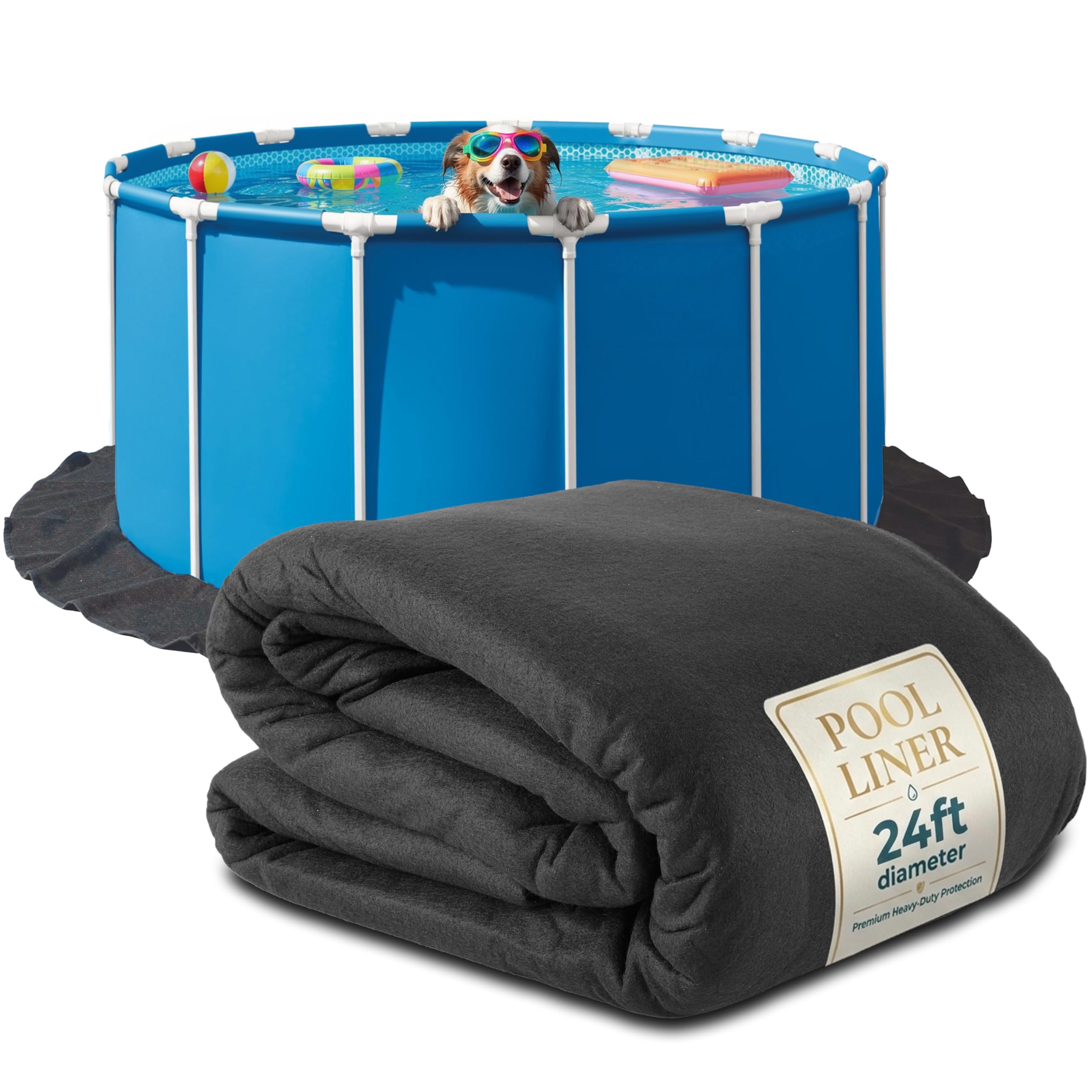
Modern Innovations offers a pre-cut 24-foot round pad made from thick, weather-resistant felt material. The pad is designed to work on grass, sand, concrete, or wooden decks without modification. Multiple verified buyers described it as a “must-have” for above-ground pool installation, noting that it saved time during setup and prevented liner damage from hidden ground debris. One owner reported leaving a previous pad from the same brand outside for two full years without degradation — the material holds up to UV and moisture exposure between seasons.
The felt construction provides decent cushioning underfoot, though a few users pointed out that it is not as thick as premium geotextile pads. On perfectly prepped ground, the thickness is adequate, but on rougher terrain with sharp stones, a thicker pad would offer more margin. The black color hides dirt well and absorbs solar heat, which can slightly raise the pool floor temperature on sunny days.
For a mid-range ground pad that balances cost and coverage, this is a solid choice for 24-foot round pools. It fits true to size with minimal overhang. If your ground is relatively smooth and well-raked, this pad provides all the protection you need without stepping up to the premium price tier.
Why it’s great
- Weather-resistant felt survives multiple seasons outdoors
- Pre-cut to exact 24-foot round size for easy installation
- Works on various ground surfaces without modifications
Good to know
- Not as thick as premium geotextile pads for rough terrain
- Some users expected more substantial material density
7. Niuyhe 18ft Pool Mats 260G/M² Geotextile Ground Pad
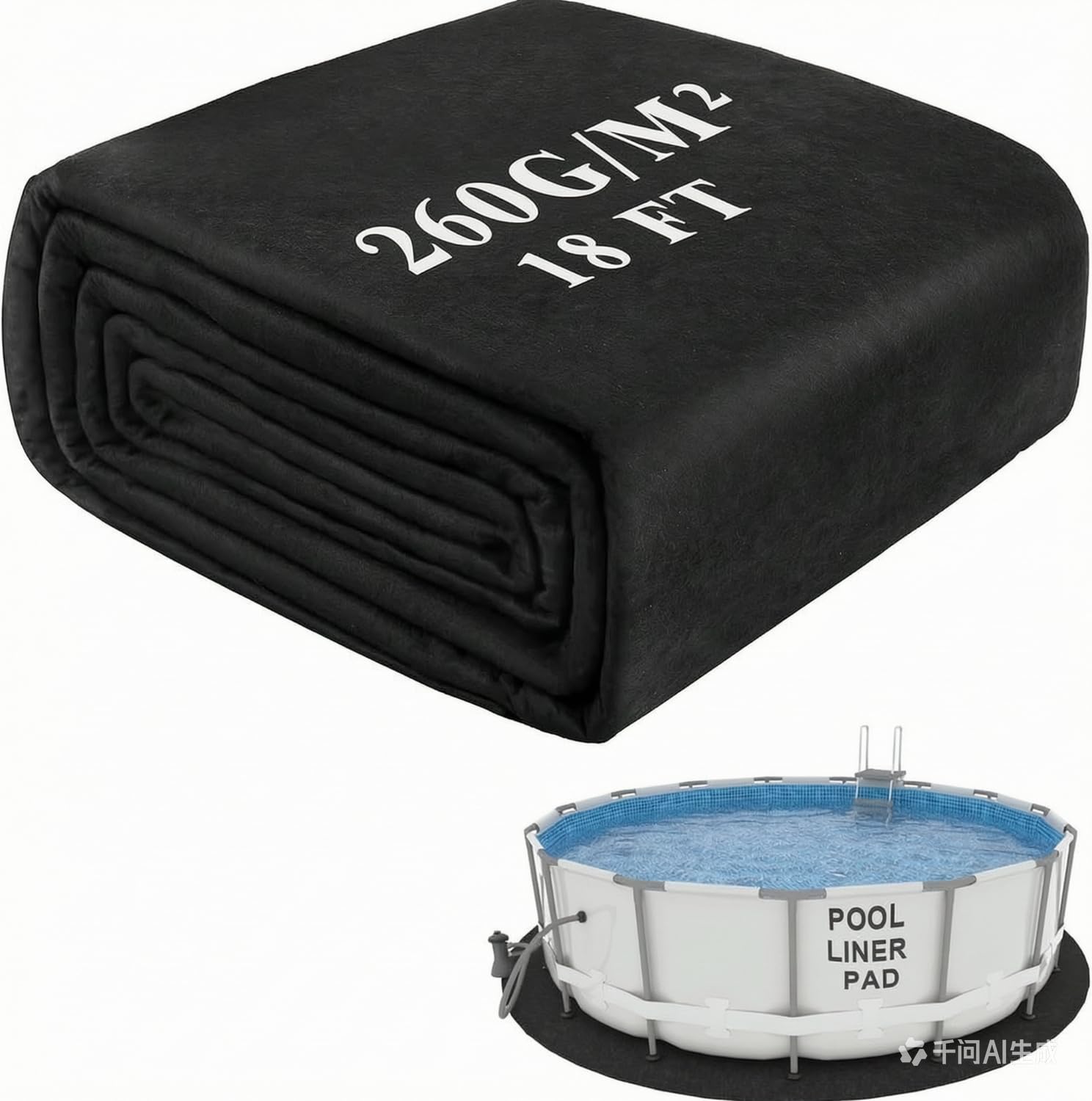
Niuyhe’s 18-foot pad uses 260 g/m² geotextile felt — a blend of polyester, acrylic, and cotton fibers that provides basic puncture resistance for small round pools up to 18 feet. Buyers with 12-foot and 15-foot pools found the pad generously sized with plenty of overhang to trim or fold. On smooth ground like pavers or leveled dirt, the felt prevents the liner from contacting sharp edges and adds a thin cushion layer.
The material is effective but thin — multiple reviewers noted it is essentially a large sheet of felt without the density of premium options. One user specifically called it a “thin sheet” and wished for more thickness. That honesty is helpful: this pad is best suited for pools on already-prepared ground where the main risk is minor abrasion rather than puncture by rocks or roots. The non-slip surface helps keep the liner in place during filling.
For small inflatable pools or steel-frame pools under 15 feet, this pad offers a budget-friendly foundation that beats placing the liner directly on grass. It ships folded, so expect creases that flatten out once the pool is filled. The 13.87-pound weight makes it easy to handle during solo setup — a practical advantage for lightweight installations.
Why it’s great
- Lightweight and easy to position for solo installation
- 260 g/m² felt blocks weeds and minor ground debris
- Generous sizing works for multiple small pool diameters
Good to know
- Thin material may not stop sharp stones on rough ground
- Folded packaging leaves creases that take time to flatten
FAQ
Do I need both a ground pad and a pool cove?
Can I use carpet or tarp instead of a geotextile pool pad?
Final Thoughts: The Verdict
For most users, the foundation for above ground pool winner is the FUZE Pool Liner Pad because its double-density seamless geotextile construction offers unmatched puncture resistance and full-edge coverage. If you want a complete liner protection system, pair it with the Gladon NL104-22 Pool Cove for the wall-floor transition. And for smoothing metal walls and gaining thermal insulation, nothing beats the Gladon Wall Foam Roll.