
An FPV drone kit collapses the gap between watching aerial footage and actually flying through it. Moving from a standard camera drone to a true first-person-view system means contending with real-time video transmission, radio protocols like ExpressLRS or FrSky, and a flight controller that speaks Betaflight. The best kits bundle everything — quadcopter, transmitter, goggles, batteries — so you can power on and punch the throttle without sourcing parts individually.
I’m Mohammad Maruf — the founder and writer behind Drink4Good. My analysis of FPV drone kits focuses on three non-negotiable markers: the flight controller firmware (Betaflight vs. proprietary), the radio link’s range and penetration, and the goggles’ display resolution and latency. These variables separate a kit that teaches you to fly from one that leaves you grounded.
Whether you are entering the hobby through a tiny whoop that bounces off walls or a GPS-assisted cruiser that films family outings, the right fpv drone kit balances crash durability, video clarity, and upgrade potential without forcing you to weld a soldering iron before your first flight.
How To Choose The Best FPV Drone Kit
Selecting an FPV drone kit means balancing three interdependent systems: the quadcopter’s flight controller and frame, the radio transmitter’s link protocol, and the goggles’ video receiver. A weak link in any one area turns a promising kit into a frustration source. Concentrate on these factors to make a decision that matches your flying ambitions.
Flight Controller and Firmware Ecosystem
The flight controller (FC) is the brain of the quad. Kits with a Betaflight-compatible FC give you access to the configurator for adjusting PID tuning, rates, motor direction, and receiver protocol. Proprietary FCs lock you into the manufacturer’s firmware, which often lacks community support and upgrade paths. For anyone planning to learn acro mode or eventually build their own quad, a Betaflight-based kit is a prerequisite.
Radio Link: ExpressLRS vs. FrSky
The radio link determines control range and penetration. ExpressLRS (ELRS) has become the gold standard in FPV — it offers sub-5 millisecond latency and range exceeding several kilometers on 2.4 GHz, with superior performance through walls and foliage. Older kits may use FrSky D8/D16 or FlySky AFHDS, which offer shorter effective range and less obstacle penetration. Prioritize ELRS kits if you plan to fly outside or around structure.
Goggles: Analog, Digital, or Screen-Based
FPV goggles fall into two camps: analog and digital. Analog goggles receive a standard 5.8 GHz video signal and display it on a low-resolution screen; they are affordable and low-latency but produce grainy, lower-resolution images. Digital systems like DJI’s O3 transmit high-definition video with minimal breakup but cost significantly more. Some kits now include a controller with a built-in 4.5-inch or 5-inch screen, eliminating goggles entirely — a valid choice for relaxed cruising but less immersive for acro flight.
Quick Comparison
On smaller screens, swipe sideways to see the full table.
| Model | Category | Best For | Key Spec | Amazon |
|---|---|---|---|---|
| DJI Neo Motion Fly More Combo | Digital FPV | Beginner FPV immersion | DJI O3 digital transmission | Amazon |
| E MAX Tinyhawk 3 RTF | Analog Whoop | Indoor acro training | Betaflight FC, FrSky RX | Amazon |
| BETAFPV Cetus X ELRS | Analog Whoop | ELRS beginner kit | ExpressLRS V3, Betaflight FC | Amazon |
| E MAX Tinyhawk RTF Micro | Analog Whoop | Budget indoor FPV | FrSky D8, 200m range | Amazon |
| Potensic ATOM LT | GPS Camera | Long-range photo/video | 4KM PixSync 2.0 range | Amazon |
| PLEGBLE 4K GPS Drone | Screen Controller | No-phone-required flight | 5.0″ built-in controller screen | Amazon |
| Karuisrc GPS Drone | Screen Controller | GPS-assisted beginners | 4.5″ built-in controller screen | Amazon |
| DJI Neo 2 Motion Fly More | Digital FPV | Next-gen FPV immersion | Omnidirectional obstacle sensing | Amazon |
| Ruko U11MINI 4K | Touchscreen Controller | Standalone high-res filming | 3-axis mechanical gimbal | Amazon |
In‑Depth Reviews
1. DJI Neo Motion Fly More Combo

The DJI Neo Motion Fly More Combo packages a 135g self-flying drone, DJI Goggles N3, and the RC Motion 3 controller into a single ready-to-fly bundle that prioritizes immediate immersion over configuration. The O3 digital transmission delivers a low-latency, high-definition feed to the goggles, while palm takeoff and full-coverage prop guards reduce the intimidation factor for first-time FPV pilots.
Subject tracking and QuickShots modes automate cinematic sequences without requiring stick skill. The three-battery charging hub and two-way charger extend total flight time beyond 30 minutes, though individual packs deliver roughly 10 to 12 minutes of active flying.
The Motion Controller 3 uses hand gestures rather than traditional gimbals, which simplifies orientation but sacrifices the precision needed for tight gaps or rapid acro maneuvers. Experienced pilots may want to budget for a standard FPV controller to unlock the drone’s full potential.
Why it’s great
- Digital O3 video feed with no analog static
- Palm launch and landing simplify operation
- Full prop guards enable confident indoor flight
Good to know
- Motion controller lacks precision for acro flying
- Short individual flight times require battery swapping
- Wind affects stability due to low weight
2. EMAX Tinyhawk 3 RTF Kit

The Tinyhawk 3 builds on the lineage that made the original Tinyhawk a benchmark for indoor FPV training. It ships with a Betaflight-compatible flight controller, a 5.8 GHz analog transmitter, and box goggles that give you a true low-latency feed. The flexible ABS frame shrugs off crashes that would snap a rigid plastic or carbon frame.
Out of the box, the FrSky D8 receiver provides enough range for flying through a house or small park. The included controller and goggles are functional but feel entry-level — the goggles have a single fixed antenna and the transmitter lacks the adjustability of premium hardware.
Configuring the drone through Betaflight Configurator unlocks PID tuning, accelerometer adjustments, and VTX power control, which helps eliminate the signal breakup some pilots report. The camera is analog standard-definition, so footage recorded via the goggles’ DVR will look grainy on a monitor.
Why it’s great
- Betaflight FC allows full PID and rate tuning
- Flexible plastic frame survives hard indoor crashes
- True 5.8 GHz analog FPV with low latency
Good to know
- Box goggles and controller feel low quality
- Analog video appears grainy on recorded footage
- Signal range drops beyond 150 feet through walls
3. BETAFPV ELRS V3 Cetus X FPV Kit

BETAFPV’s Cetus X combines a Betaflight flight controller with ExpressLRS V3 — the two most important specifications for anyone who plans to progress beyond basic hovering. The ELRS link gives sub-5 ms latency and reliable control through multiple walls, outperforming the FrSky receiver found in the Tinyhawk 3.
The kit includes the LiteRadio 3 transmitter, VR03 goggles with DVR recording, and four BT2.0 450 mAh 1S batteries. Flight time per battery sits around five minutes, which is typical for a 1S whoop, but the bundle includes enough packs for a 20-minute session when cycled through the charger.
Some units arrive with loose camera cables that cause intermittent video loss — reseating the cable inside the frame usually resolves it. The C04 camera is analog and delivers a standard-definition feed; upgrading the VTX antenna improves range beyond the stock configuration.
Why it’s great
- ExpressLRS V3 provides superior range and latency
- Betaflight FC enables full tuning capability
- VR03 goggles record DVR footage
Good to know
- Camera cable can loosen and cause video loss
- Stock VTX antenna limits range to 150 feet
- Only five minutes of flight per battery
4. EMAX Tinyhawk RTF Micro Indoor Racing Drone

The original Tinyhawk RTF Micro remains one of the most forgiving entry points into analog FPV. It arrives fully assembled with goggles, a controller, and the drone itself — no soldering, no Betaflight configuration needed. The small 1S whoop frame is lightweight and durable, and multiple customer reports confirm it survives drops from head height onto hardwood floors.
Real 5.8 GHz FPV transmission offers up to 200 feet of range through open air, though walls and furniture reduce that distance. The camera feed shows noticeable breakup when flying into adjacent rooms, which is expected from a budget analog system. The included goggles are bulky and single-antenna, but they are serviceable for learning.
Battery life hovers around four minutes with the stock 450 mAh pack, and the pilot must manage a separate battery for the goggles. The controller feels basic but works reliably with the FrSky D8 protocol. Many pilots report owning this kit for years as a basher or loaner drone.
Why it’s great
- Extremely durable construction for repeated crashes
- Real analog FPV, not Wi-Fi-based
- Ready to fly with no configuration required
Good to know
- Goggles require a separate battery for power
- Camera feed loses signal through walls
- Only four minutes of flight time per charge
5. Potensic ATOM LT GPS Drone

The Potensic ATOM LT occupies a different corner of the FPV market — it prioritizes camera quality and GPS-assisted flight over acro performance. Weighing under 249 grams, it bypasses FAA registration while carrying a Sony sensor that records 2.5K video at 30 fps with EIS stabilization. PixSync 2.0 transmission maintains a clean HD feed up to four kilometers.
Two 3000 mAh intelligent batteries provide up to 80 minutes of total flight time — more than double what any analog whoop kit offers. GPS modes including Follow Me, Waypoint Fly, and Circle Fly automate complex camera maneuvers, making this kit a strong choice for capturing travel footage.
The ATOM LT only operates in GPS mode, which means it cannot fly indoors or in spaces without satellite lock. The camera lacks a mechanical gimbal; video stabilization relies entirely on the Sony sensor’s electronic cropping and the ShakeVanish 2.0 algorithm. Users report slower GPS acquisition compared to more expensive platforms.
Why it’s great
- 80 minutes of total flight time with two batteries
- 4KM PixSync 2.0 HD video transmission
- Under 249g, no FAA registration required
Good to know
- GPS-only flight mode prevents indoor use
- No mechanical gimbal; stabilization is electronic
- Slow GPS satellite lock in some conditions
6. PLEGBLE 4K GPS Drone
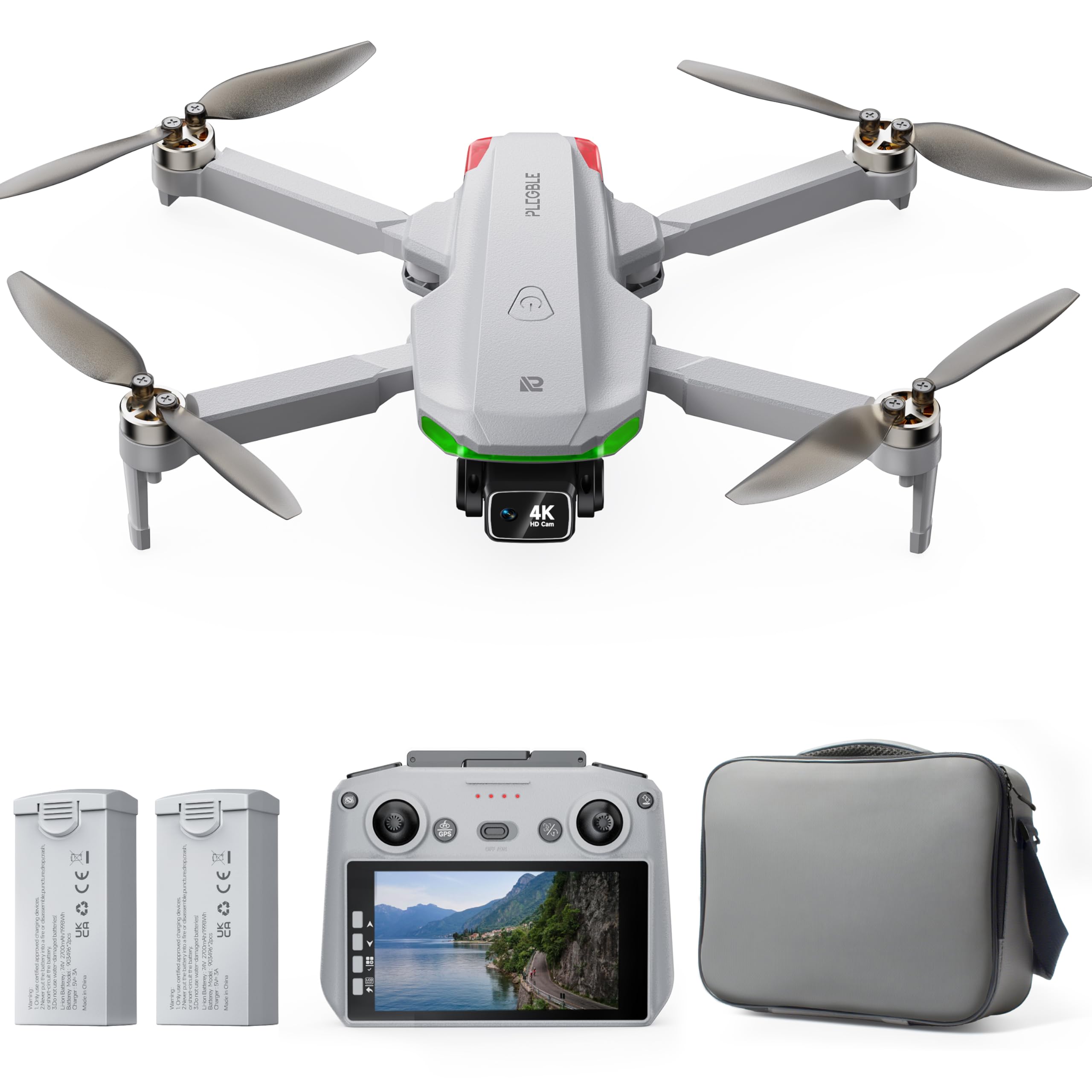
The PLEGBLE 4K GPS Drone integrates a 5.0-inch HD screen directly into the controller, eliminating the need to tether a smartphone for live FPV. This design simplifies the pre-flight workflow — power on the controller, and the video feed appears without app pairing. The 4K camera uses EIS stabilization and a 130-degree wide-angle lens with 90-degree tilt adjustment.
Two 2700 mAh batteries deliver up to 70 minutes of combined flight time. GPS features including Auto Return, Low Battery Return, Follow Me, Waypoint Fly, and Circle Fly provide automation that reduces pilot workload during filming. The under-249g weight keeps the drone FAA-exempt.
The controller screen shows local photo and video previews, but the device lacks a mechanical gimbal — all stabilization is electronic. The 4K resolution is upscaled from the camera’s native sensor, so the actual dynamic range will not match a dedicated 4K sensor. Maximum control range sits around 600 meters in open areas.
Why it’s great
- Built-in 5.0-inch screen removes phone dependency
- 70 minutes total flight with two included batteries
- GPS automation features for hands-free filming
Good to know
- EIS stabilization, not a mechanical gimbal
- 4K resolution is digitally upscaled
- Control range limited to about 600 meters
7. Karuisrc GPS Drone with 4.5″ Screen
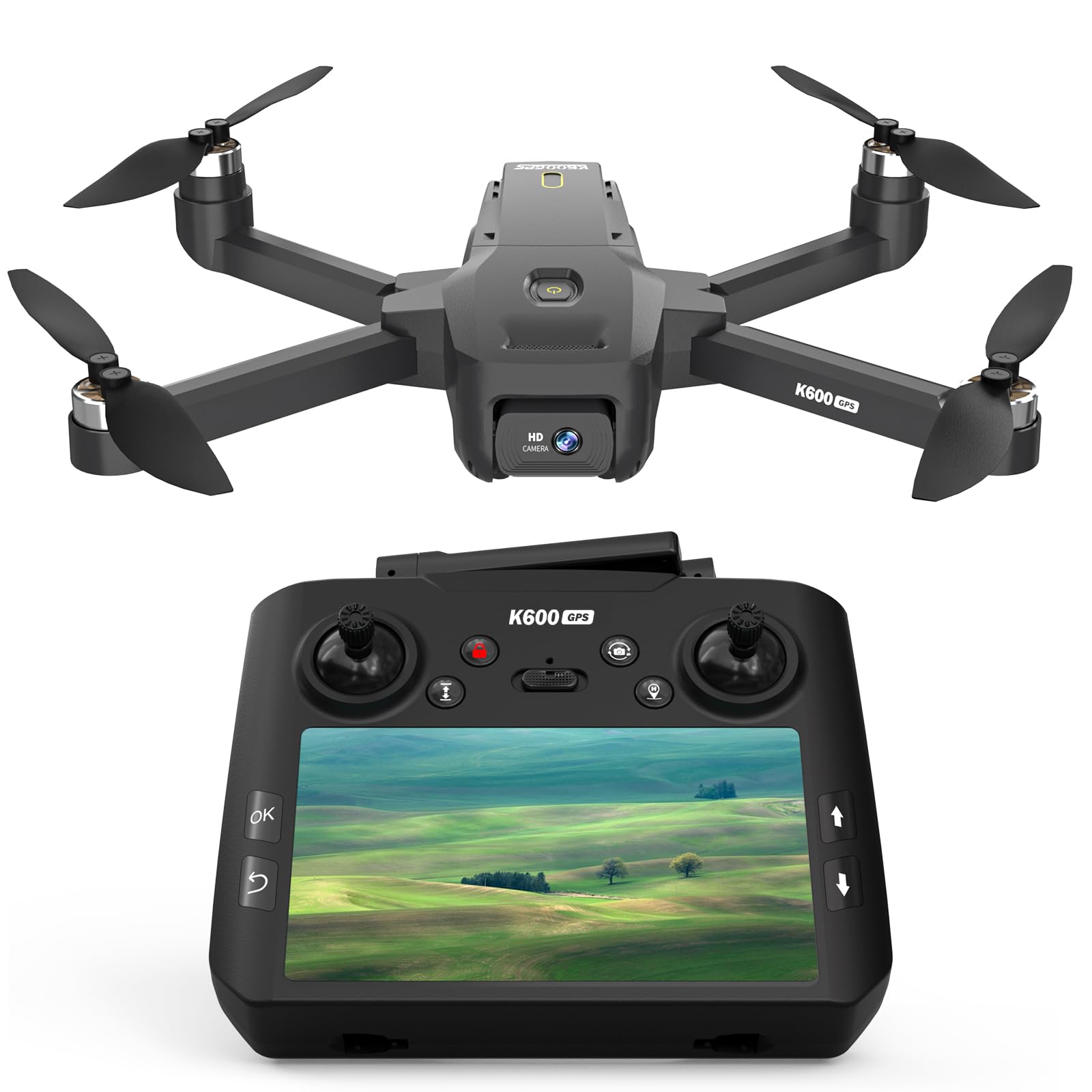
The Karuisrc GPS drone offers a 4.5-inch HD display built into the controller, mirroring the no-phone-required approach of the PLEGBLE but at a lower price point. The EIS camera records stabilized footage with AI Track and Orbit modes that follow moving subjects automatically. GPS positioning provides Auto Return and altitude hold for beginner pilots.
The 2200 mAh battery delivers around 25 minutes of flight time, and the under-249g form factor makes it portable and registration-free. The Wi-Fi-based transmission system maintains a stable feed up to 400 meters according to the manufacturer, though real-world performance often drops to about 250 meters in suburban environments with interference.
The controller screen shows live FPV and recorded clips, but the touch response can be sluggish compared to a dedicated smartphone screen. The camera is not 4K native — it captures EIS-stabilized 1080p footage. Beginners report that the GPS functions reduce the learning curve significantly compared to flying a non-GPS whoop.
Why it’s great
- Built-in 4.5-inch controller screen
- GPS-assisted flight reduces pilot workload
- Lightweight and portable under 249g
Good to know
- Wi-Fi transmission range limited to about 250 meters
- Camera captures 1080p, not native 4K
- Controller screen is less responsive than a phone
8. Ruko U11MINI 4K (RC3)
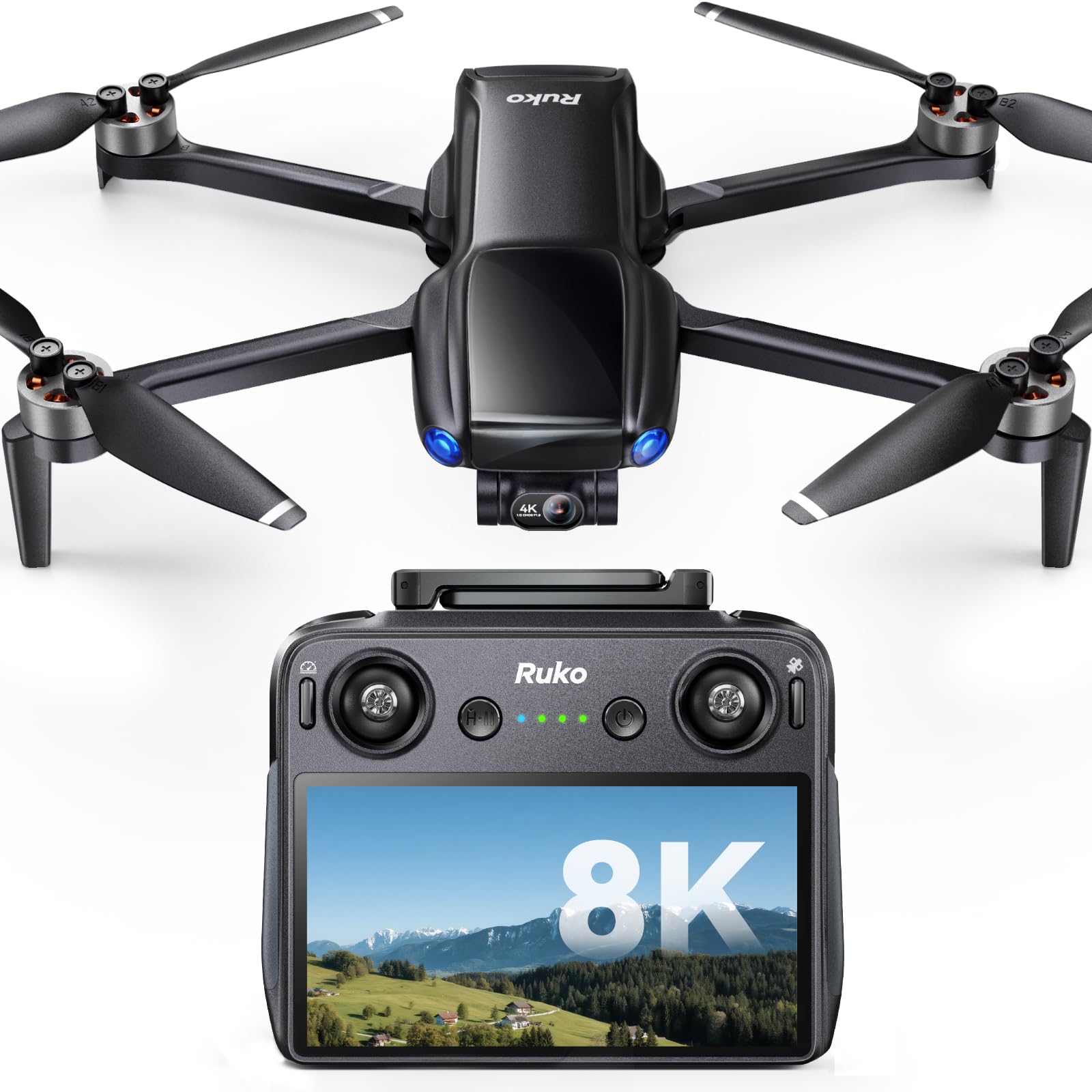
The Ruko U11MINI 4K distinguishes itself with a 3-axis mechanical brushless gimbal that physically stabilizes the camera independent of flight movement — a feature normally reserved for drones costing twice as much. The 5.5-inch 1080P touchscreen controller runs the R2 digital transmission system with a claimed 20,000-foot range, operating without Wi-Fi for better signal penetration.
Two 2200 mAh intelligent batteries support PD 3.0 fast charging and deliver up to 64 minutes of total flight time. The 1/2-inch CMOS sensor captures 8K photos and 4K/30fps video. Quadruple positioning (GPS, barometric, TOF, optical flow) maintains stable hover even in light wind, and the AI Takeoff/Landing system automates the most intimidating parts of flying for a beginner.
Some users report that the controller’s video signal can be weak at extreme ranges, and the firmware update process is slow — a 350 MB download can take over twelve hours on a standard connection. The Ruko customer support team is responsive and has replaced defective units under warranty, but the initial quality control appears inconsistent.
Why it’s great
- 3-axis mechanical gimbal for shake-free footage
- 5.5-inch 1080P touchscreen controller
- 64 minutes total flight time with PD fast charging
Good to know
- Firmware updates can take over twelve hours
- Controller video signal weakens at longer ranges
- Some units arrive with hardware defects
9. DJI Neo 2 Motion Fly More Combo
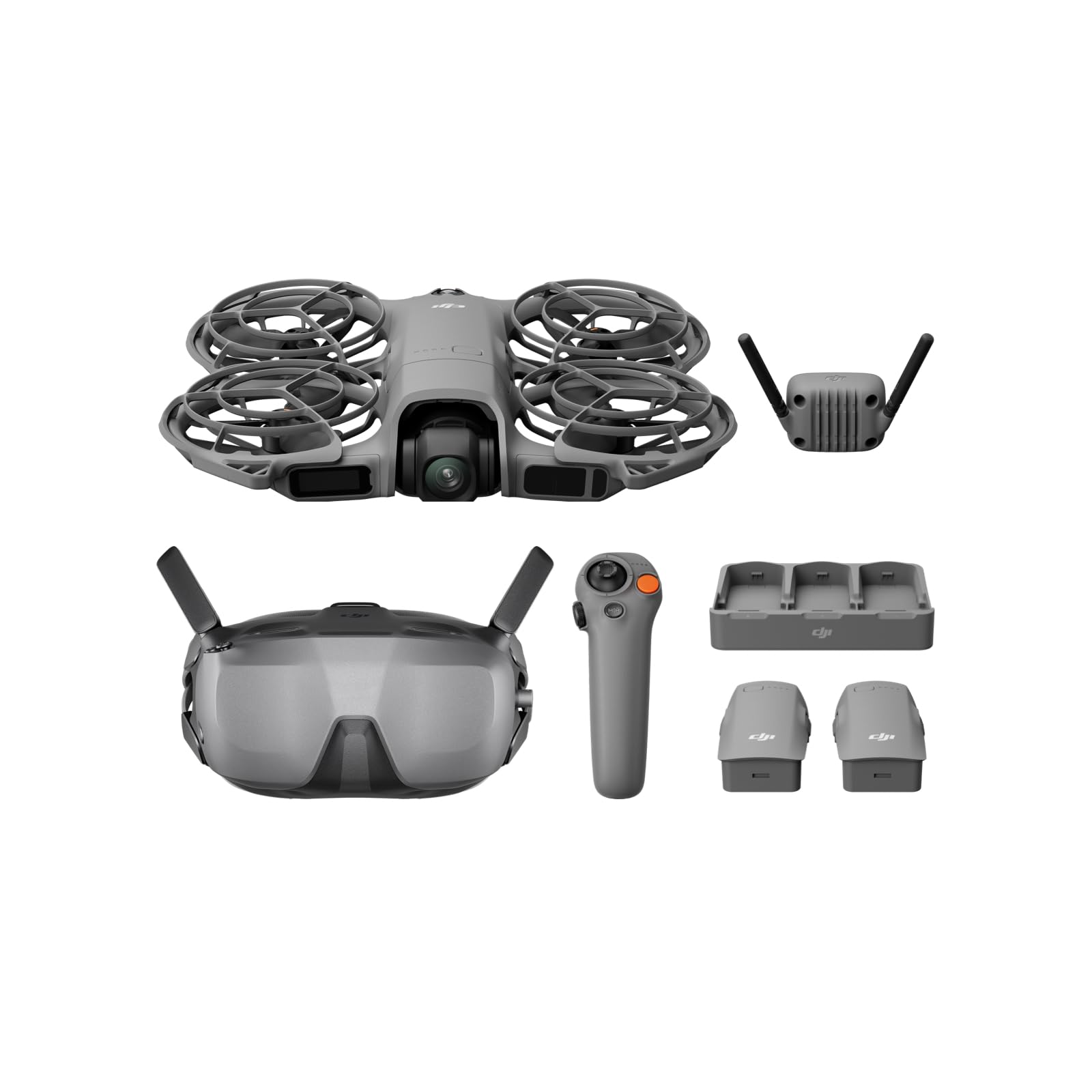
The DJI Neo 2 builds on the original Neo with omnidirectional obstacle sensing, a Digital Transceiver for stable FPV transmission, and support for ActiveTrack subject tracking. The RC Motion 3 and Goggles N3 provide an immersive digital FPV experience that eliminates analog static and delivers crisp HD views through walls and trees.
The 151g airframe stays under C0 certification thresholds while carrying full-coverage propeller guards for indoor safety. Three 1606 mAh batteries and a two-way charging hub keep the flight session going past the 10-minute individual pack limit. Gesture controls and palm takeoff add convenience for quick sessions.
The short per-battery flight time — approximately 10 to 15 minutes — requires disciplined battery management, especially when flying in more demanding FPV modes. The RC Motion 3 controller, while intuitive for beginners, lacks the precision stick control needed for advanced acro flying, and adding the DJI FPV Controller 3 represents a significant additional expense.
Why it’s great
- Omnidirectional obstacle sensing prevents crashes
- Digital FPV feed with no analog breakup
- Three batteries and fast charging hub included
Good to know
- Only 10-15 minutes of flight per battery
- Motion controller lacks precision for acro
- Premium controller upgrade is expensive
FAQ
Do I need a license to fly an FPV drone kit in the United States?
Why does my FPV drone kit have video signal breakup through walls?
Can I upgrade the camera or receiver on a beginner FPV drone kit?
How long do the batteries last in a typical FPV drone kit?
Final Thoughts: The Verdict
For most users, the fpv drone kit winner is the DJI Neo Motion Fly More Combo because it bundles digital FPV goggles, a motion controller, and a durable 135g airframe into a single package that works immediately out of the box. If you want a Betaflight-based training platform with ExpressLRS for future builds, grab the BETAFPV Cetus X ELRS Kit. And for capturing stabilized aerial footage under 250g without registration, nothing beats the Ruko U11MINI 4K with its 3-axis mechanical gimbal and touchscreen controller.