
An errant welding spark lands on your sleeve. Instead of burning through, the fabric chars and self-extinguishes — that is the fundamental promise of FR clothing, and it is a promise not every garment on the shelf keeps. Whether you are on a pipeline, in a refinery, or behind a torch table, the difference between a shirt that protects and one that fails often comes down to an obscure weave weight, a specific NFPA certification stamp, or the way the thread was sewn.
I’m Mohammad Maruf — the founder and writer behind Drink4Good. After hundreds of hours analyzing fabric specs, arc-flash ratings, and seam construction patterns across the FR workwear market, I built this guide around the concrete metrics that actually predict real-world survival in a flash-fire or electric-arc environment.
This guide cuts through the noise to deliver the best fr clothing for the specific hazards you face daily, focusing on measurable protection, true-to-size durability, and the right weight for your work climate.
How To Choose The Best FR Clothing
Selecting flame-resistant gear is not about brand loyalty — it is about matching your specific hazard level to a garment’s certified arc rating, fabric weight, and durability. A lightweight shirt that works for occasional torch work will fail catastrophically in a petrochemical flash fire.
Understand Your Hazard Category (HRC)
HRC 1 through HRC 4 dictates the minimum arc rating (ATPV in cal/cm²) your clothing must meet. An HRC 2 environment (8 cal/cm²) demands a heavier 7.5-ounce or 9-ounce fabric. Know your site’s Category Level before you pick a shirt — wearing an under-rated garment is not just unsafe, it is often a compliance violation.
Inherent FR vs. Treated Fabrics
Inherent FR fibers (like aramid or modacrylic) have flame resistance built into the molecular structure — they never wash out. Treated fabrics are cotton or cotton blends dipped in a flame-retardant chemical; they are cheaper but lose effectiveness after repeated industrial laundering. For daily, heavy-exposure work, inherent FR saves money over the garment’s life.
Fabric Weight and Climate Fit
Heavier 9-ounce and 12-ounce cottons offer longer arc-flash survival time but trap heat. A welder in Arizona needs a 7.5-ounce shirt with moisture-wicking FR properties. An electrician in a Northern winter plant can tolerate a heavier duck-cotton bib. Match weight to your ambient temperature to avoid heat-stress trade-offs.
Quick Comparison
On smaller screens, swipe sideways to see the full table.
| Model | Category | Best For | Key Spec | Amazon |
|---|---|---|---|---|
| Carhartt FR Duck Bib Overalls | Bib Overalls | Oil & gas, pipeline winter wear | 12 oz Duck Cotton | Amazon |
| Ariat FR M3 Straight Leg Jeans | Denim Jeans | All-day wear, industrial, summer | M3 Relaxed Fit, 9 oz Denim | Amazon |
| Wrangler Slim Boot Jean (FR) | Boot Jeans | Low-profile FR, slimmer builds | Slim Boot Cut, 8.5 oz | Amazon |
| Just In Trend Hi-Vis Coverall | Coveralls | Railroad, hi-vis pipeline work | 7.5 oz Poly-Cotton | Amazon |
| BOCOMAL Hi-Vis Reflective Shirt | Shirt | High-vis welding, railroad | 7.5 oz, Reflective Tapes | Amazon |
| BOCOMAL FR Utility Cargo Pants | Cargo Pants | Welding, heavy pocket-carry | Water/Oil Repellent, 8 oz | Amazon |
| TICOMELA FR Welding Shirt | Shirt | Budget welding, light torching | 7.5 oz Cotton, NFPA 2112 | Amazon |
In‑Depth Reviews
1. Carhartt Men’s FR Duck Bib Overall
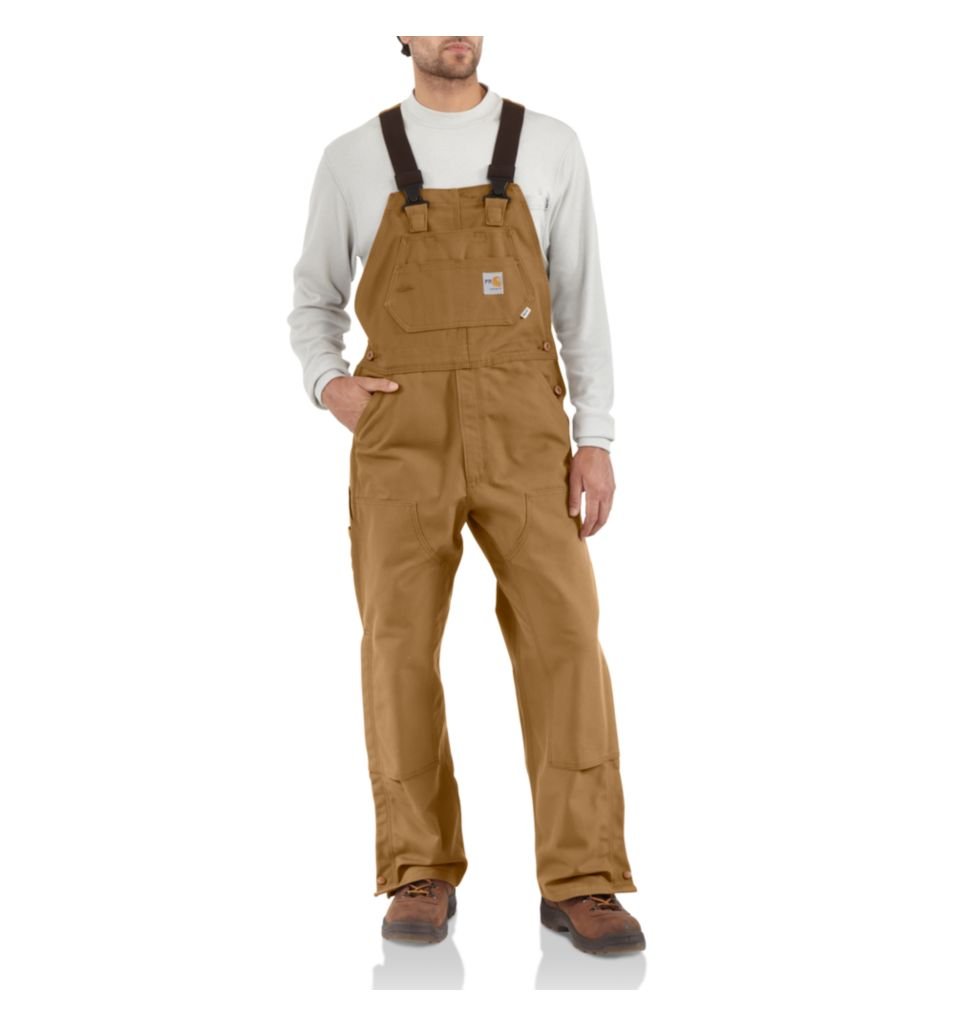
The Carhartt FRR45 Duck Bib Overall uses a 12-ounce cotton duck — the heaviest fabric in this roundup — delivering serious arc-flash survival time (ATPV ratings typically exceed 25 cal/cm² in this weight grade). The knees are doubled-up for durability against grinding and kneeling on gravel, and the bib-pocket layout keeps a notepad and flashlight accessible without needing a vest.
Owners who work oil and gas or pipeline consistently praise the fit: one buyer at 5’9″ found the length runs long enough to sit near the heel over boots, which is ideal for preventing sparks from dropping into the boot shaft. The material starts stiff (characteristic of duck cotton) but softens significantly after two to three hot washes, while the FR properties remain inherent to the cotton fibers.
For winter range-of-motion, the bib allows full squat and ladder climb without binding at the shoulders — a common complaint with cheaper coveralls. The downsides are the premium price point and the longer break-in period. If your site requires HRC 3 or 4 protection and you work cold climates, this bib is the gold standard.
Why it’s great
- Heaviest 12 oz duck offers the highest arc-flash protection in the group
- Double-layer knees outlast single-ply panels through months of kneeling
- Inherent flame resistance will never wash out
Good to know
- Stiff fabric requires several washes to reach full flexibility
- Runs long in the inseam — size down one for boot-clearance
2. Ariat FR M3 Basic Stackable Straight Leg Jeans

Ariat’s M3 fit is a true relaxed seat and thigh, specifically designed to accommodate FR underwear layers without looking baggy. The 9-ounce denim weight hits the sweet spot for HRC 2 environments where you need protection but cannot sweat through a 12-ounce weave. The stackable leg design means the hem sits cleanly over a work boot without dragging or catching on ladder rungs.
Field reviews from pipeline workers confirm these jeans survive months of sharp metal edges and grinding without a single snag. One buyer reported that after a year on a pipeline job, the fabric still showed no tears or blown seams — a direct result of the heavy gauge thread and bar-tack stress points at the pocket corners and crotch gusset. The fabric also has a lighter hand feel for summer wear compared to duck cotton.
The main catch is the premium cost and the need to understand Ariat’s sizing matrix: M3 is their loosest cut; M4 would be too roomy for most. If you want a jean that balances protection, comfort, and heat management for year-round industrial use, the Ariat M3 is the best investment.
Why it’s great
- Relaxed M3 fit allows full range of motion and layering under bibs
- 9 oz weight provides good arc protection without heat buildup
- Stackable leg stays clean over boots and resists fraying
Good to know
- Higher price point — not a budget-first choice
- M3 sizing is roomy; buyers used to slim-fit should size down one waist
3. Wrangler Men’s FR Slim Boot Jean
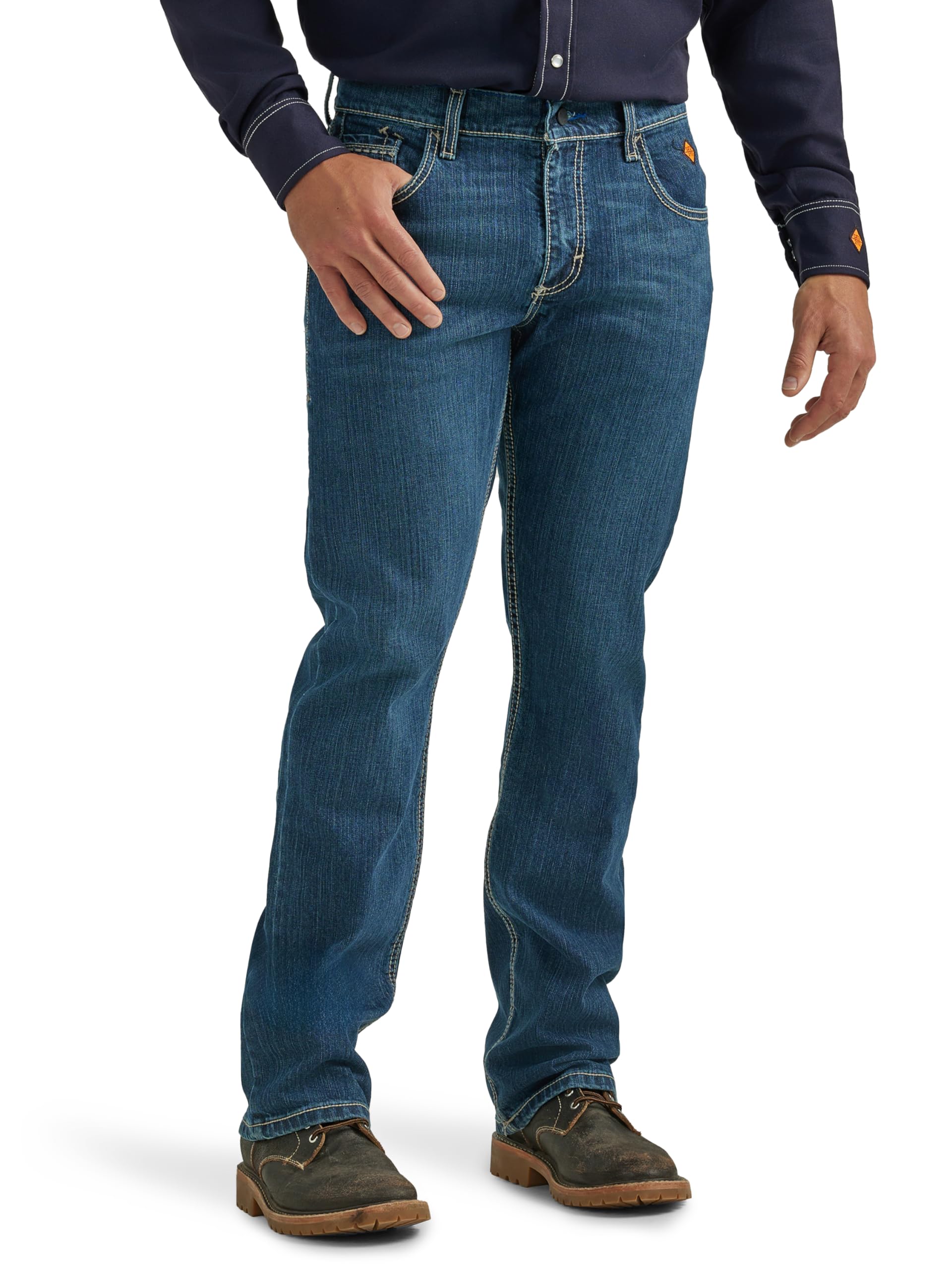
The Wrangler Riggs FR77MRN Slim Boot Jean is one of the few FR denims built for slimmer body types without looking like a fashion cut. The 8.5-ounce denim is noticeably lighter under the fingertips than the Ariat 9-ounce, making it a strong contender for warmer-weather sites where you still need certified FR performance. The boot cut opening clears a work boot without buckling over the heel.
Buyers report that after a few washes the fit tightens slightly — a known behavior of cotton-dominant FR denim — but the slim silhouette remains comfortable for all-day wear if you are not built thick in the thigh. One 5-star review emphasizes the win-win value: the jeans meet general FR requirements while looking and feeling like a normal denim jean for after-hours wear.
The only notable drawback is the boot cut leg opening. Several buyers wished for a straight leg option because they prefer a cleaner line over boots. If you are a slim-to-average build working in a moderate hazard environment and want a jean that looks like a regular jean, this Wrangler delivers that balance — but know the cut may feel restrictive if you squat deep regularly.
Why it’s great
- Slim fit is rare in the FR jean category — ideal for non-baggy builds
- Light 8.5 oz denim breathes better in hot conditions
- Meets FR requirements without screaming “safety wear” visually
Good to know
- Shrinks slightly after wash — plan one waist size up if between sizes
- Boot cut only; no straight-leg alternative available
4. Just In Trend Flame Resistant High Visibility Coverall

This Just In Trend coverall delivers FR and hi-vis ratings in a single one-piece suit at a fraction of the price of premium FR coveralls. The 7.5-ounce poly-cotton blend is breathable enough for active site work, and the reflective tape is applied with a durable heat-seal that resists peeling through industrial laundering. Side-zip access makes pulling this on over steel-toe boots easier than a full bib.
Buyers on pipeline and railroad sites confirm the quality per dollar is exceptional — one reviewer noted that competing brands cost three times as much. The fit is true to the size chart but snug in the shoulders for anyone with a broad chest; sizing up one full size provides room for a thin FR underlayer. The zipper pull can be stiff when new, but owners report it loosens with wear.
The trade-off is that the 7.5-ounce fabric does not reach the arc rating of heavier duck cotton, so this coverall is best suited for HRC 1 and light HRC 2 environments. The double-layer knee panels are absent, meaning kneeling on rough terrain will wear through faster than the Carhartt bib. But for a hi-vis FR suit at a mid-range price, this covers the essentials without cutting corners on certification.
Why it’s great
- Full hi-vis and FR certification at a significantly lower price than competitors
- Lightweight fabric is comfortable for all-day active wear
- Easy-on zipper design works over boots and normal clothing
Good to know
- 7.5 oz fabric is not designed for high-HRC environments
- Knee durability is average — consider adding pad inserts for heavy kneeling
5. BOCOMAL FR High Visibility Reflective Shirt

The BOCOMAL hi-vis FR shirt uses a heavyweight 7.5-ounce cotton that resists tearing under high-abuse conditions, with reflective tape sewn across the torso and sleeves for nighttime visibility. The front pockets include a pen/screwdriver opening — a small touch that saves time reaching for a tool pouch. Owners report it washes out petroleum and grease stains effectively, a practical consideration for anyone working around hydrocarbons.
Multiple buyers confirm that the thread stitching is flame-resistant — one tester took a lighter to a loose thread and confirmed it would not sustain a flame. The shirt runs a full size large compared to the size chart, which is intentional: it allows room for an FR underlayer. The heavy fabric weight, while protective, also means the collar tips curl after machine washing and require ironing to look professional.
The main trade-off is weight — this is not a hot-weather shirt. In humid conditions, the 7.5-ounce cotton will trap sweat against the skin. But for high-vis welding, railroad, or night utility work where sparks and arc flash are real risks, the BOCOMAL shirt offers thick, certified protection with strong seam construction at a mid-range price point.
Why it’s great
- Thick 7.5 oz cotton resists tearing and spark penetration
- Flame-resistant thread construction tested by real buyers
- Front pocket pen slots are a practical work-safety detail
Good to know
- Runs large — size down unless layering underneath
- Collar requires ironing after wash; not a “throw in the dryer” shirt
6. BOCOMAL FR Utility Cargo Pants

BOCOMAL’s FR cargo pants bring two rare features to the budget-friendly segment: a water- and oil-repellent finish, plus six utility pockets sized for welding tools and a smartphone. The 8-ounce cotton-poly weave feels soft on the first wear — no break-in stiffness — while the FR rating meets NFPA 2112 for flash fire protection. The true-to-size fit is a standout, as many FR pants shrink or drift from the size chart.
One reviewer who welds for 12-hour shifts noted zero restriction in movement and confirmed that hydraulic hose fluid beaded up and wiped off without soaking through — a direct win from the repellent finish. The cargo pockets sit at the thigh with a flap closure, which means small parts stay secure when you bend. However, some buyers observed early stitch loosening on the rear pockets after the first few wears, suggesting the thread tension could be tighter.
For the price, these pants deliver more utility features than any other product in this guide. The water/oil repellent is a genuine differentiator for anyone working with lubricants or hydraulic fluid. If you need a durable, multi-pocket FR pant that handles liquids and costs less than premium denim, the BOCOMAL cargo is a smart pick. Just inspect the stitching after the first wash and reinforce high-stress points if you work them hard.
Why it’s great
- Water- and oil-repellent finish is rare in the budget FR pant segment
- Six utility pockets keep tools and phone accessible without a belt pouch
- Soft fabric requires zero break-in time
Good to know
- Some early reports of stitching loosening on rear pockets
- Not a heavy-denim feel — lighter than traditional FR jeans
7. TICOMELA FR Shirts for Men Welding Shirt
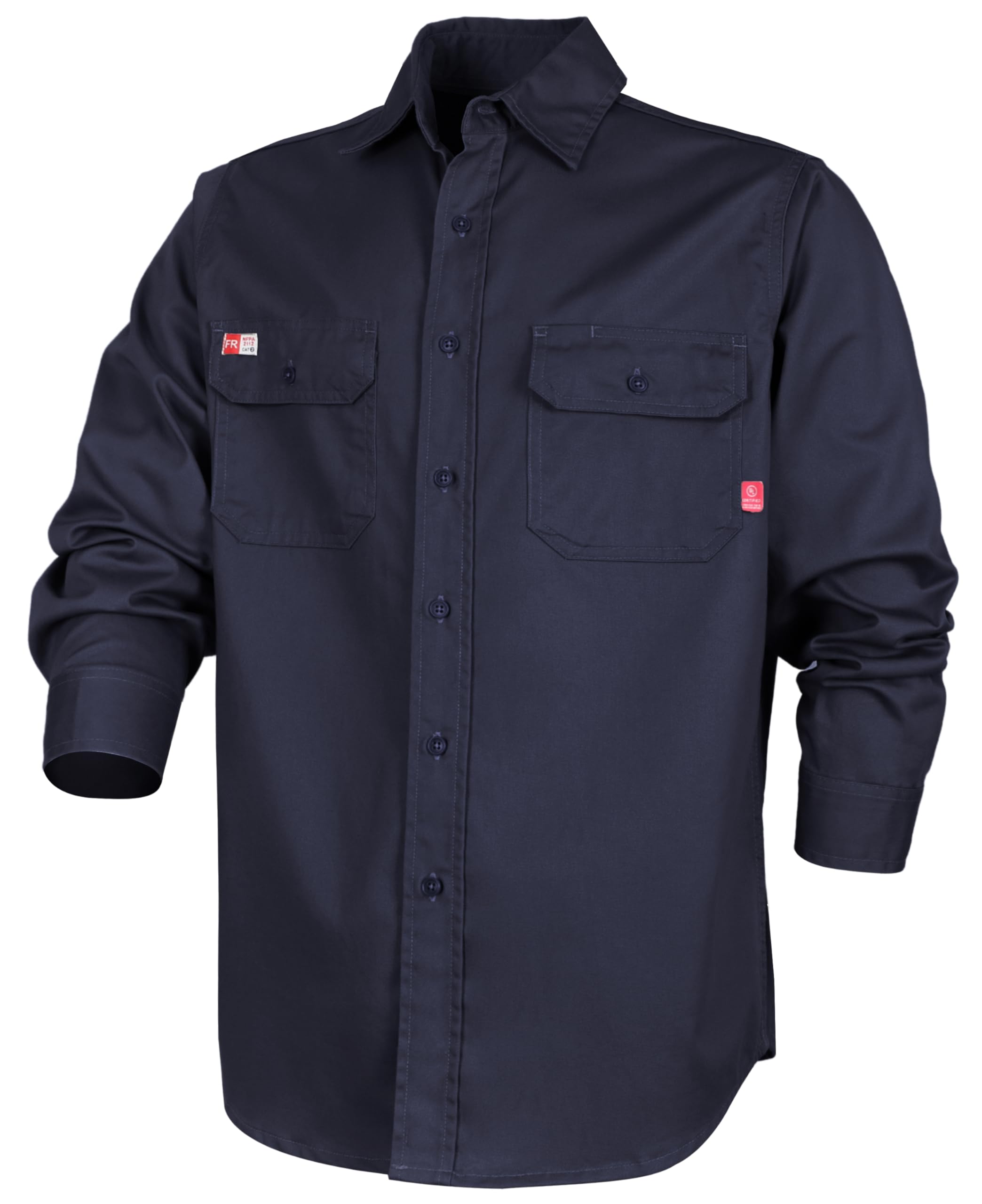
The TICOMELA welding shirt uses a 7.5-ounce cotton weave certified to NFPA 2112, making it a legitimate FR option at the lowest price in this guide. Multiple buyers confirm the fabric holds up to multiple hot washes without burn holes—a strong indicator that the FR treatment is durable. The heavyweight cotton feels substantial for the price and covers the wrist well when welding in an extended-arm position.
Sizing requires careful attention: one experienced buyer at 6′ and 280 pounds normally wears 3XL but sized down to 2XL for a snug chest and stomach fit. The sleeves cover the wrist when extended, eliminating spark gaps at the glove cuff. However, a small but notable batch of reviews mentions quality-control issues with the front button seam appearing sewn backwards or inside-out, suggesting the assembly line can be inconsistent.
At its price, the TICOMELA shirt is the entry-level recommendation for someone who needs FR protection for occasional torch work or as a backup shirt. It is not the softest, the best-finished, or the most durable in this roundup — but it is certified, it works, and it lets a welder on a tight budget stay compliant without compromising on the NFPA standard.
Why it’s great
- NFPA 2112 certified at the lowest price point in the guide
- Thick 7.5 oz weave resists spark burn-through in field testing
- Good sleeve coverage for extended welding positions
Good to know
- Button placket quality control can be inconsistent out of the box
- Runs one size large — size down for a proper work fit
FAQ
Can I wear FR clothing with a cotton undershirt and still be compliant?
How do I know if my FR shirt has lost its flame resistance?
What is the difference between HRC 2 and HRC 4 clothing?
Does FR clothing protect against both flash fire and electric arc?
Final Thoughts: The Verdict
For most users, the best fr clothing winner is the Carhartt FR Duck Bib Overall because its 12-ounce duck cotton provides the highest certified protection for oil and gas or pipeline environments. If you want a all-day wearable FR jean for industrial work, grab the Ariat FR M3 Straight Leg Jeans. And for a protective hi-vis coverall at a reasonable price, nothing beats the Just In Trend Hi-Vis Coverall.