
A rose that only looks good but smells of nothing is a missed opportunity. The difference between a garden that visitors politely admire and one they can’t stop breathing in comes down to one variable: fragrance. For gardeners who prioritize scent as much as bloom color, selecting the right variety means understanding the subtle differences in aroma profiles, bloom repeatability, and plant hardiness.
I’m Mohammad Maruf — the founder and writer behind Drink4Good. I spend my time analyzing nursery-grade plant stock, comparing own-root versus grafted performance, and studying how fragrance oils develop under different climate conditions so you can pick a rose that actually delivers on its aromatic promise.
Whether you are planting a foundation border, a cutting garden, or a trellis feature, this guide breaks down the most reliable choices to help you find the best fragrant roses for your specific outdoor space and scent preference.
How To Choose The Best Fragrant Roses
Fragrance in roses is not a single note. You will encounter scents that range from classic damask and myrrh to citrus, spice, and fruity undertones. Your zone, your available sunlight, and how often you want blooms will narrow the field fast.
Own-Root vs. Grafted Plants
Own-root roses are grown from cuttings of the parent plant, so every stem and flower is genetically identical to the original. This means the fragrance profile is consistent, and the plant can regrow true to type if it dies back in winter. Grafted roses, often cheaper, use a hardy rootstock with a different scion — if the scion dies, the rootstock suckers may take over with a different flower and no scent. For pure fragrance reliability, own-root is the safer investment.
Bloom Cycle and Fragrance Delivery
A rose that blooms only once in spring gives you a short burst of scent. A repeat or continual bloomer like a Floribunda or modern shrub rose will produce flushes of flowers from spring through fall, meaning you get weeks of fragrance rather than days. The trade-off: some once-blooming old garden roses have the most intense, complex scents, while modern repeat bloomers often prioritize disease resistance and flower count over perfume strength.
Hardiness Zone Matching
A rose that is not suited to your winter low temperatures will struggle to establish deep roots and may not bloom reliably, which directly reduces fragrance output. Every rose listed in this guide specifies its USDA zone range. Check your zone before buying — planting a zone 8 rose in zone 4 is a recipe for disappointment regardless of how good the seller says it smells.
Quick Comparison
On smaller screens, swipe sideways to see the full table.
| Model | Category | Best For | Key Spec | Amazon |
|---|---|---|---|---|
| Earth Angel Parfuma Rose | Own-Root Shrub | Peony-shaped blooms with perfume scent | 4-5 ft tall, zones 5-10 | Amazon |
| Heirloom Polka Climbing Rose | Own-Root Climber | Large hand-sized blooms on a trellis | 9-10 ft tall, zones 5-10 | Amazon |
| Heirloom Ebb Tide Floribunda | Own-Root Floribunda | Deep magenta blooms with strong fragrance | 4 ft x 4 ft, zones 5-10 | Amazon |
| Knock Out Double Pink Rose | Shrub Rose | Low-maintenance landscape coverage | 4 ft tall, zones 5-11 | Amazon |
| Peach Drift Rose | Groundcover Rose | Low-growing border or container accent | 18 in x 24 in, zones 4-11 | Amazon |
| Sweet Drift Rose | Groundcover Rose | Continuous baby pink groundcover blooms | 1-2 ft x 2-3 ft, full sun | Amazon |
| Great Big Roses Fertilizer Booster | Liquid Soil Amendment | Boosting fragrance and bloom from existing plants | 32 oz concentrate, 8 gal mix | Amazon |
In‑Depth Reviews
1. Earth Angel Parfuma Rose
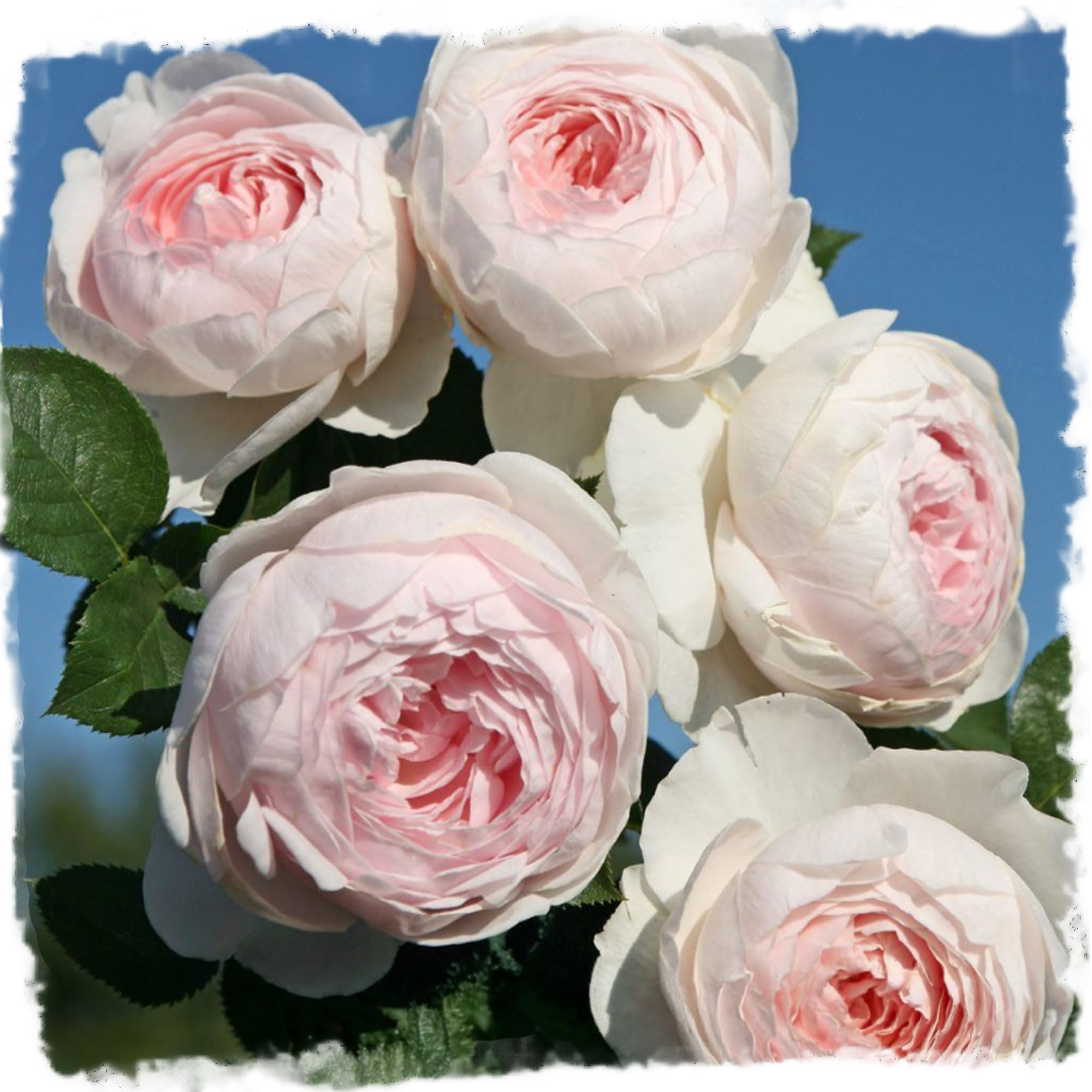
The Earth Angel Parfuma is a premium own-root rose bred specifically for gardeners who rank scent above all else. It produces cream and blush pink flowers with a high petal count that resembles a cabbage rose, and the fragrance is consistently described as a sweet perfume that lingers in the air. Grown on its own root in a 1.5-gallon fiber pot with slow-release fertilizer included, this plant is ready to establish quickly without the root disturbance of transplanting from a plastic nursery pot.
Buyers in zone 8b reported seeing their first fragrant bloom within seven weeks of planting, and the plant continued producing buds through summer even after surviving a hailstorm. At maturity, it reaches 4 to 5 feet tall with a 4-foot spread, making it suitable for a mixed perennial bed or a large decorative container on a patio where the scent can be appreciated up close.
The only caution is that young plants may arrive looking small — some customers noted the first few blooms were slightly undersized compared to the mature flower photos. However, the same reviewers confirmed that by the second or third year, the plant had grown into a 4-foot powerhouse that outperformed their other roses in both bloom count and fragrance intensity.
Why it’s great
- Own-root genetics guarantee true-to-type fragrance every year
- Peony-shaped blooms with high petal count look and smell luxurious
- Fiber pot with included fertilizer reduces transplant shock
Good to know
- Young plants can appear small on arrival
- First-year blooms may be smaller than expected
2. Heirloom Polka Climbing Rose
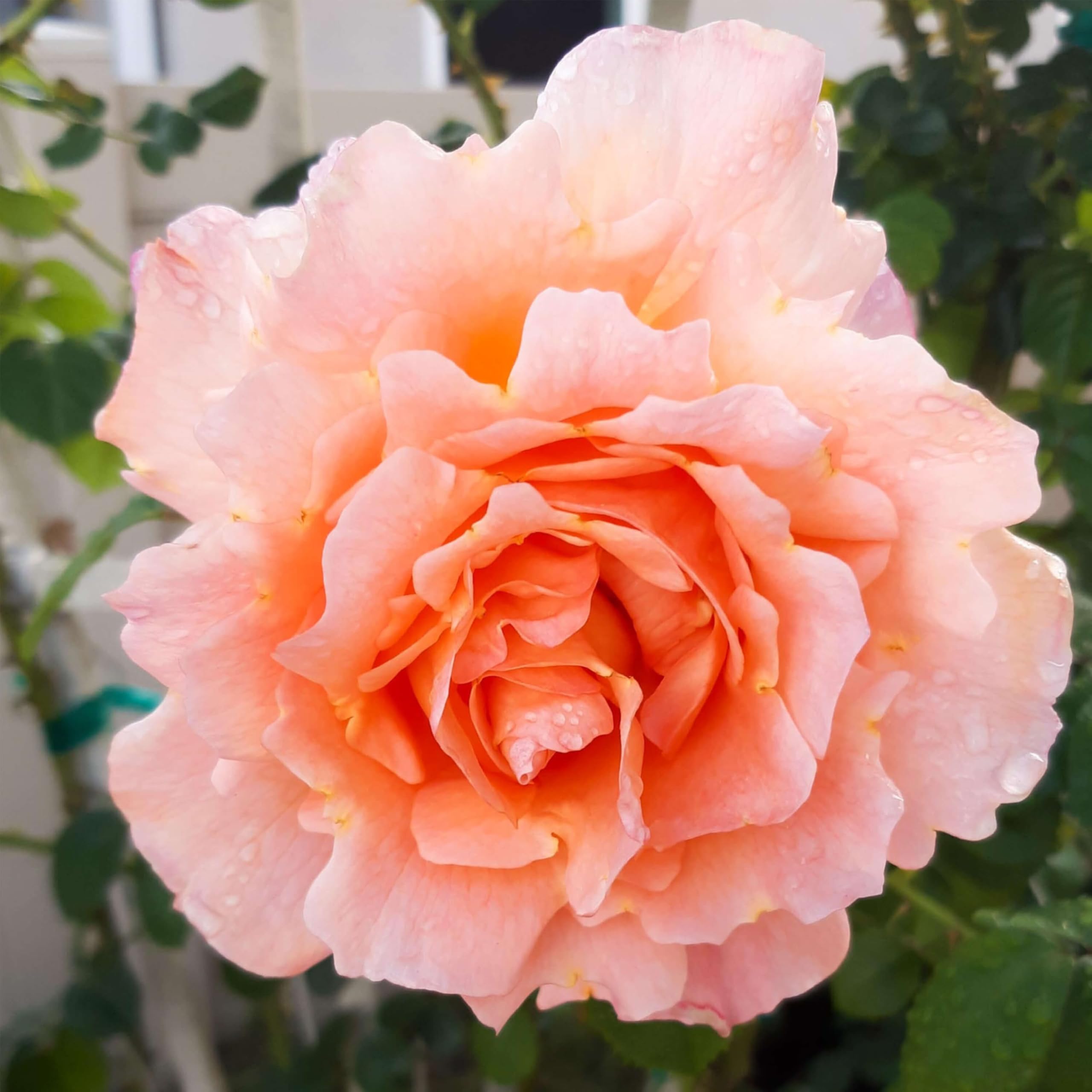
If you need fragrance at eye level or above, the Polka climbing rose from Heirloom Roses is the obvious choice. This own-root climber reaches 9 to 10 feet at maturity, making it ideal for training up a trellis, arbor, or along a fence line. The flowers are large — described by multiple customers as hand-sized — with a soft apricot color and a strong, sweet fragrance that carries well in the open air.
Because it is a continual bloomer, Polka produces flushes of flowers from spring through fall rather than a single show. Buyers in zone 8 reported that their plant began blooming in its first year and put on significant growth by the second season, eventually producing the massive, perfectly shaped blooms shown in the product images. The own-root construction means that even if the top growth dies back in a harsh winter, the regrowth will produce the same apricot flowers with the same scent profile.
The main drawback reported by a few customers is slow initial growth after transplanting. One buyer noted that their Polka spent the first month producing only tiny, weak leaves with no new buds, though the plant was healthy and well-packaged. This is not uncommon for climbers — they often prioritize root establishment before putting energy into vertical growth. Patience in the first season pays off with significantly more blooms in year two.
Why it’s great
- Reaches 9-10 feet for vertical garden fragrance
- Large hand-sized apricot blooms with strong sweet scent
- Own-root genetics ensure consistent flower and fragrance
Good to know
- Initial growth after transplant can be slow
- Needs a sturdy support structure at maturity
3. Heirloom Ebb Tide Floribunda Rose

The Ebb Tide Floribunda is built around one thing: intense fragrance. This own-root rose produces clusters of deep magenta blooms that lean toward fuchsia rather than the dark purple shown in some marketing photos, but the scent is where it truly stands out. Customers consistently describe the aroma as powerful enough to be noticed from across the garden, with a classic old-rose perfume that is richer than most modern hybrid teas.
At 4 feet tall and 4 feet wide at maturity, this is a compact, bushy plant that fits neatly into a mixed border without overwhelming neighboring perennials. It is a repeat bloomer, producing flushes of flowers from spring through fall rather than a single spring show. Buyers in zone 8 who planted in late fall reported seeing blooms from late winter through late spring in the first year, with no additional fertilization needed during that period.
A handful of customers noted that the flower size was smaller than expected from the product images, especially in the first year. This is typical for Floribundas — they produce many smaller flowers in clusters rather than a few large individual blooms. The trade-off is that you get more total fragrance surface area per plant. If you are buying for scent volume rather than single-bloom drama, this is still a top-tier choice.
Why it’s great
- Exceptionally strong old-rose fragrance that carries across the garden
- Compact 4×4 foot size fits well in mixed borders
- Repeat blooming through spring and fall
Good to know
- Bloom color leans fuchsia, not deep purple as sometimes pictured
- Flowers are smaller than hybrid tea singles
4. Knock Out Double Pink Rose Shrub

The Knock Out Double Pink is not the strongest fragrance in this list — its scent is mild compared to the Heirloom or Earth Angel varieties — but it earns its place here for reliability and bloom volume. If you are creating a large landscape bed or a foundation planting where you want consistent color from spring through fall, this shrub delivers without demanding constant attention. It thrives in zones 5 through 11, making it one of the most adaptable options here.
Buyers consistently praise the packaging and plant health on arrival. The bush arrives with multiple blooms and buds already formed, and when planted in full sun with daily watering during establishment, it settles in quickly. One Texas buyer reported that their Double Pink, planted in December, was still thriving and producing blooms through the following June with no disease issues. The flowers are large, double-petal pink blooms that hold up well in rain without shattering.
The scent is present but subtle — more like a light fruity note than the heavy damask perfume of the premium varieties. If you or your household are sensitive to strong floral smells, this could actually be an advantage. The trade-off is that this is a grafted shrub, not own-root, so any winter dieback could theoretically result in rootstock suckers overtaking the plant. In practice, buyers in zones 5 and warmer report no issues with this.
Why it’s great
- Extremely hardy from zone 5 to 11
- Large double pink blooms from spring through fall
- Excellent packaging and plant health on arrival
Good to know
- Fragrance is mild, not strong
- Grafted rootstock, not own-root
5. Peach Drift Rose

The Peach Drift Rose is the most versatile low-growing option in this guide. It reaches only 18 inches tall with a 24-inch spread, making it perfect for the front of a border, edging a walkway, or spilling over the sides of a container. The flowers are a blend of peach and soft yellow tones, and while the fragrance is not as bold as the floribunda or climbing roses, it carries a light, sweet scent that works well when planted in groups.
This rose is exceptionally tough, thriving in zones 4 through 11 and blooming continuously from spring through fall. If you have a partially shaded spot where larger roses struggle, the Peach Drift will likely outperform them. The plants arrive with buds already forming, and customers consistently note that the packaging keeps the soil moist and the stems intact during shipping.
The main limitation is that individual blooms are small — this is a groundcover rose, not a cut-flower variety. The flowers measure roughly an inch across, but the plant produces so many of them that the visual impact is still strong. One buyer humorously noted they could not get a proper photo because a snake was hiding in the bush, which at least confirms the plant grows dense enough to provide wildlife cover.
Why it’s great
- Thrives in partial sun with as little as 3 hours of direct light
- Compact 18-inch height ideal for borders and containers
- Continuous blooms from spring through fall
Good to know
- Individual blooms are small (roughly 1 inch)
- Fragrance is light, not powerful
6. Sweet Drift Rose
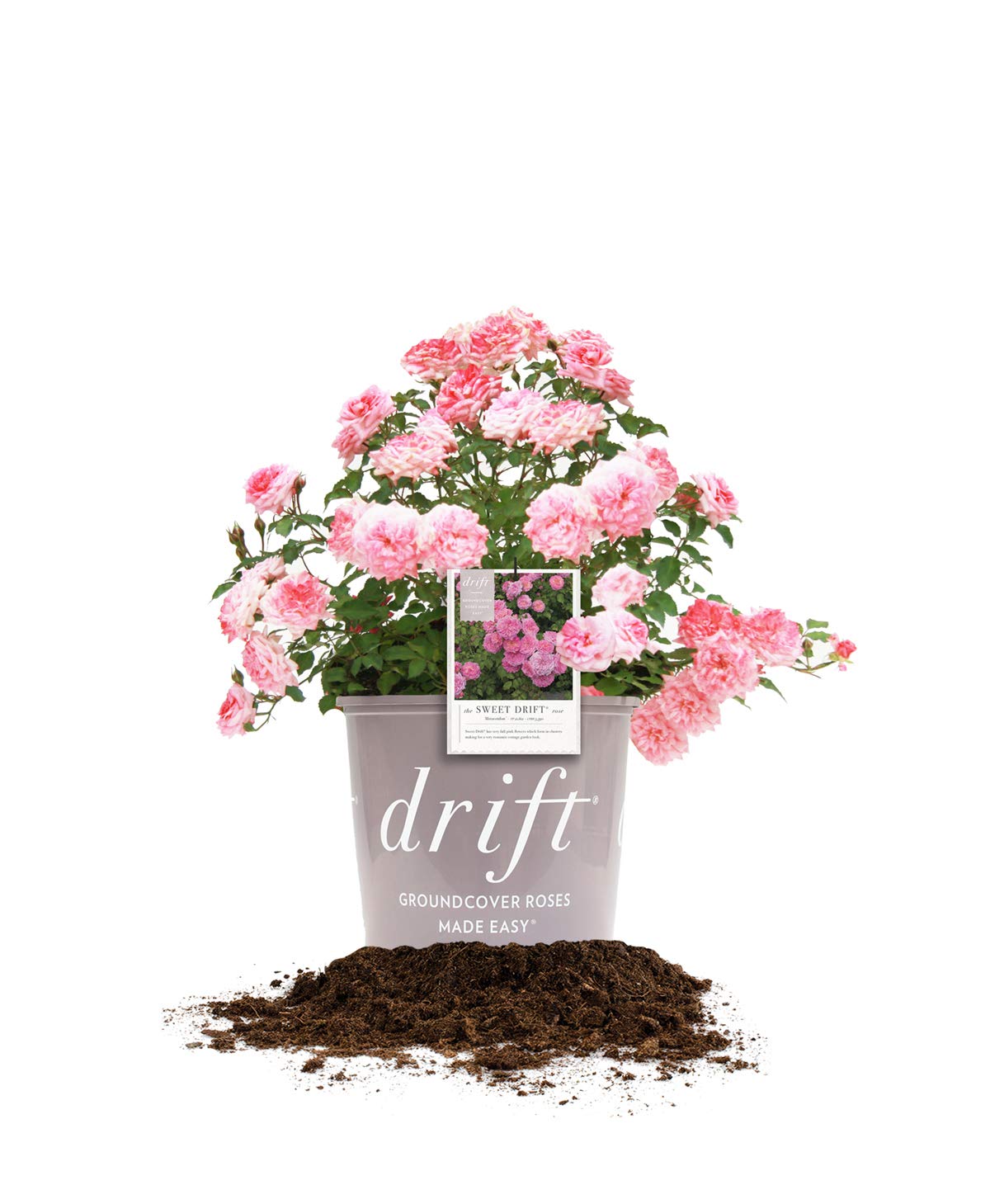
The Sweet Drift Rose is a budget-friendly entry point for adding fragrance and color to large areas without spending heavily per plant. It grows low to the ground, reaching only 1 to 2 feet tall with a 2- to 3-foot spread, and produces baby pink blooms for 8 to 9 months of the year in warmer climates. The fragrance is mild but pleasant — a soft, sweet scent that becomes noticeable when you walk past a cluster of these plants.
This rose is exceptionally hardy for its price point. It is both drought-tolerant and winter-hardy, meaning it can survive dry spells in summer and cold winters without special protection. Buyers in zone 8 reported that their plant arrived with healthy foliage and blooms already forming, and that it continued producing new flowers consistently through the summer. The low, spreading growth habit makes it a natural choice for mass planting along a driveway, under a bay window, or lining a patio edge.
The most common complaint is inconsistency in plant quality. While many buyers received lush, blooming plants, one customer reported that their Sweet Drift arrived as a miniature plant with half-inch blooms that died within days. This appears to be a shipping or handling issue rather than a systemic problem, but it is worth noting that live plants always carry some risk during transit. The majority of reviewers received healthy plants and were very satisfied with the value.
Why it’s great
- Blooms for 8-9 months in warmer climates
- Drought-tolerant and winter-hardy for low maintenance
- Low spreading habit perfect for groundcover
Good to know
- Plant quality on arrival can be inconsistent
- Fragrance is light, better for mass planting effect
7. Great Big Roses Fertilizer Booster
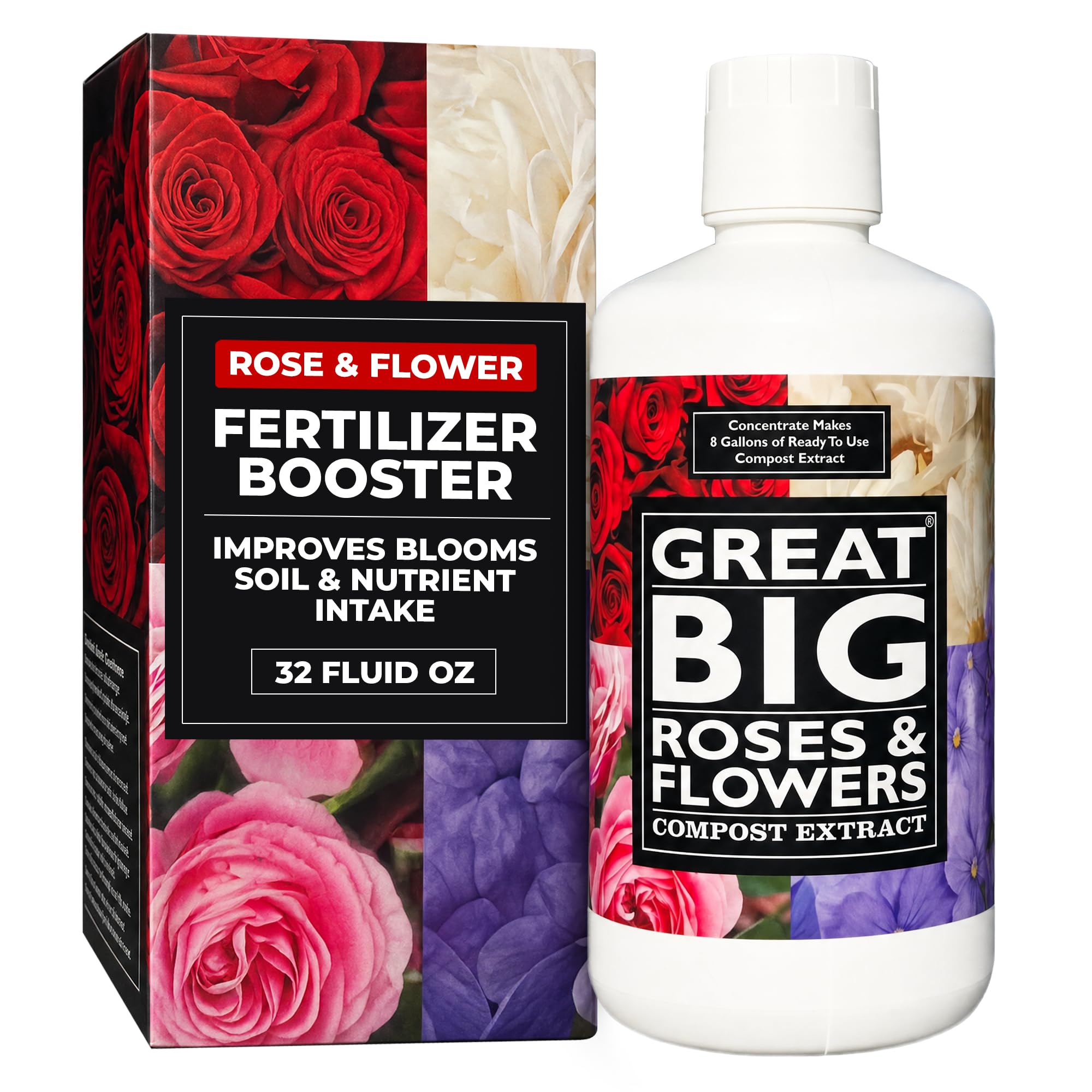
This is not a rose plant — it is a liquid soil amendment designed to boost the performance of the roses you already have. The Great Big Roses Fertilizer Booster is a 32-ounce concentrate that mixes with water to make 8 gallons of root-zone feed. It contains humic acids, chelated trace minerals, and seaweed extract that work together to improve soil structure and increase the uptake of your existing fertilizer.
The value proposition is simple: if you have roses that are blooming but the flowers are small or the fragrance is weak, this product can push them into higher performance. Buyers report that established rose bushes that were already blooming predictably produced significantly more buds and larger flowers after a few applications. One customer with white iceberg roses said the results were unbelievable — their bushes bloomed more profusely than in any previous year. Another gardener noted that their rose trees went from having no buds to being covered in healthy, vibrant blooms within weeks.
The main complaint is the packaging. The jug has a wide mouth that makes it easy to spill the concentrate when measuring, which is frustrating given the premium price. Apply 4 ounces per gallon of water and drench the root zone every two weeks during the growing season for best results.
Why it’s great
- Contains humic acids and chelated minerals for better nutrient uptake
- Concentrate makes 8 gallons, cost-effective per application
- Visible results on bloom size and quantity within weeks
Good to know
- Jug design makes pouring and measuring messy
- Premium price compared to standard granular rose food
FAQ
Which rose variety has the strongest fragrance on this list?
Can I grow fragrant roses in a container on a patio?
Why is my new rose plant not smelling as strong as expected?
Final Thoughts: The Verdict
For most users, the best fragrant roses winner is the Earth Angel Parfuma Rose because it combines a strong, sweet perfume with peony-shaped blooms and own-root reliability in a manageable 5-foot size. If you want a vertical fragrance feature that draws the eye upward, grab the Heirloom Polka Climbing Rose for its large apricot flowers and continual blooming habit. And for a budget-friendly option that fills a large bed with consistent color and light scent, nothing beats the Sweet Drift Rose.