
The right framing screw must bite into dense treated lumber, resist corrosion from pressure-treated chemicals, and deliver consistent torque without snapping off mid-drive. That means evaluating thread geometry, coating durability, and drive-system engagement before you sink the first fastener.
I’m Mohammad Maruf — the founder and writer behind Drink4Good. I’ve spent hundreds of hours cross-referencing corrosion test data, thread-pattern patents, and real-world installation feedback to isolate the options that actually perform in structural wood-to-wood connections.
Whether you’re tying a deck ledger to the house or assembling a playset that needs to survive another winter, choosing the right framing screws means balancing pull-out strength, coating resilience, and drive efficiency — and this guide breaks down every spec that matters.
How To Choose The Best Framing Screws
A framing screw is not simply a deck screw with a bigger head — the thread pitch, shank diameter, coating chemistry, and drive profile all shift when the connection carries structural load. Focus on these four attributes before making any purchase.
Thread Pitch and Tip Geometry
Coarse-thread screws (typically 8–10 threads per inch) provide faster pull-out resistance in softwoods and pressure-treated lumber. A Type 17 or self-tapping tip eliminates the need for a pilot hole in most framing scenarios, though dense hardwoods or engineered lumber may still require one. A sharp, aggressive thread also reduces the torque needed to bury the head flush, lowering the risk of cam-out and driver fatigue.
Coating and Corrosion Resistance
Pressure-treated lumber contains high levels of copper and other chemicals that accelerate rust on standard zinc-plated fasteners. Look for an epoxy, ceramic, or high-corrosion-resistant (HCR) topcoat that has passed a 500- to 1,000-hour salt spray test. A bronze or yellow ceramic finish often signals better long-term resistance than a simple black oxide coating, which offers minimal protection in wet environments.
Head Style and Drive System
A built-on washer head (often called a structural or “Powerlag” head) distributes clamping force evenly and eliminates the need for a separate washer. Torx or star drive systems provide superior bit engagement compared to Phillips or slotted heads, reducing cam-out and allowing higher torque transfer without stripping. For heavy connections with ¼‑inch or larger diameters, an external hex head may be preferred for use with a socket driver.
Quantity and Bulk Pricing
Framing projects typically consume 30–100 screws per ledger or beam, making bulk boxes (4–10 pounds) more economical than small packs. A 176-count box of #14 screws, for example, covers multiple ledger connections and shear wall tie-downs without forcing a mid-project hardware run. Always verify that the included driver bit matches the recess precisely — a loose bit will wear out the screw head before the fastener is fully seated.
Quick Comparison
On smaller screens, swipe sideways to see the full table.
| Model | Category | Best For | Key Spec | Amazon |
|---|---|---|---|---|
| Power Pro 30‑Piece Lag Screws | Structural Lag | Heavy-duty wood-to-wood connections | 5/16″ diameter, Type 17 tip | Amazon |
| SG TZH #14 x 3″ (176‑Pc) | Structural Wood | Value‑packed deck and framing jobs | 176 pieces, 1,000‑hr salt spray | Amazon |
| SPAX 1/4″ x 3″ Powerlags | Premium Structural | Critical load‑bearing connections | Grade 5 heat‑treated, washer head | Amazon |
| Acorn International SW‑MW15BN250 | Washered Framing | Roofing and siding to wood | No. 9, external hex drive | Amazon |
| LUPANTER #10×3″ (500‑Pc) | Exterior Deck | High‑volume decking projects | 500‑count, yellow ceramic coat | Amazon |
In‑Depth Reviews
1. Power Pro 30‑Piece Construction Lag Screws (5/16″ x 3″)

The Power Pro 5/16‑inch lag screws combine the largest shank diameter in this guide with a reinforced neck and aggressive coarse threading, making them ideal for ledger boards, stair stringers, and playset tie-downs where sheer strength matters most. The Type 17 cut point effectively reduces splitting in treated lumber without pre-drilling, saving significant time on multi-fastener structural connections. The bronze ceramic coating provides corrosion resistance that holds up against the copper content of pressure-treated wood, and the truss head distributes clamping force across a wide bearing surface.
Real-world reviews confirm that these screws hold 170‑pound tension loads on wire runs without backing out, and the Star drive system effectively eliminates cam-out during high-torque driving. At only 30 pieces per box, this pack is best suited for targeted structural applications rather than full-sheath coverage — but for critical connection points, the 5/16‑inch diameter delivers a level of structural integrity that smaller framing screws cannot match.
The 1.3‑pound box is compact enough to toss in a tool bag, though the per-screw cost is higher than larger assortment packs. For deck-ledger installations, beam-to-post connections, or any application governed by an engineering specification, the diameter and heat-treated strength of the Power Pro lags make them the safest option in the roundup.
Why it’s great
- 5/16‑inch thick shank provides superior load‑bearing capacity
- Type 17 tip drives into treated lumber without pilot holes
- Bronze ceramic coating resists corrosion from ACQ chemicals
Good to know
- 30‑count package is best for targeted structural connections
- Some users report needing a hammer tap to start in very dense wood
2. SPAX 1/4″ x 3″ Powerlags (50‑Count) Washer Head

SPAX Powerlags represent the engineering ceiling of this category: a ¼‑inch shank heat‑treated to Grade 5 durability, paired with a built-on washer head that eliminates the need for a separate washer and distributes clamping pressure evenly across framing connections. The patented thread geometry reduces splitting while allowing faster driving than standard lag screws, and the high-corrosion-resistant (HCR) topcoat is specifically formulated to withstand the aggressive chemistry of ACQ‑treated lumber used in deck and dock construction.
User feedback consistently praises the T‑Star Plus bit engagement — the Torx recess is deep and the included bit fits without wobble, which translates to less driver fatigue when sinking dozens of these into structural framing. Many reviews note that these screws replace the time‑consuming process of drilling through carriage bolts and tightening nuts, saving significant labor on projects such as swing‑set A‑frames, pergola beams, and outdoor furniture assembly.
The 50‑count box lands at a premium per‑screw price point, but the combination of heat treatment, built‑in washer, and HCR coating justifies the investment for critical load‑bearing connections. If your project calls for engineer‑level fastening specifications — such as deck ledgers, beam ties, or sheer-wall anchoring — the SPAX Powerlags are the most reliable choice in this review.
Why it’s great
- Grade 5 heat‑treated shank resists shearing under heavy loads
- Built‑on washer head eliminates separate hardware and improves speed
- HCR coating passes rigorous salt‑spray testing for treated lumber
Good to know
- Higher per‑screw cost than basic deck screws
- Black finish shows wear more visibly than bronze coatings
3. SG TZH #14 x 3″ 176‑Piece Structural Wood Screws
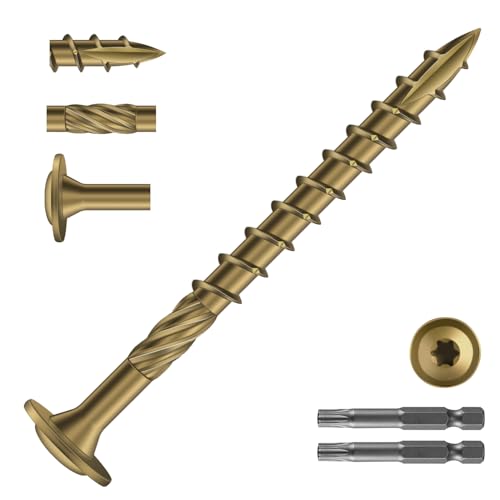
The SG TZH #14 structural screws deliver the best count‑to‑strength ratio in this guide: 176 pieces of a #14‑diameter fastener with a knurled middle shank that increases holding power and reduces splitting in hardwoods. The four‑layer epoxy coating has passed a 1,000‑hour salt spray test, making these screws fully suitable for exterior treated‑lumber projects where rust resistance is non‑negotiable. The T30 Torx drive system is paired with two included bits, and the washer head provides broad clamping without requiring a separate washer.
Customer reports indicate zero stripped heads or broken screws after installing 60‑plus fasteners into 4×4 deck legs and frame members, and many buyers note that the thread pattern and holding force are comparable to premium brand options at a lower per‑screw cost. The knurling on the mid‑section acts as a secondary cutting edge, which helps reduce the torque spike that often causes cam‑out in over‑driven screws. The 4‑pound box is substantial enough for a full deck‑framing job or multiple ledger connections.
The bronze powder‑coated finish has a slightly rougher texture than the SPAX or Power Pro coatings, which can lead to minor finish abrasion if the screws are stored loose in a bag. However, for the framer or contractor who needs a large volume of structurally rated screws without paying the premium per‑piece price, the SG TZH pack offers the best balance of corrosion protection and mechanical strength available at this tier.
Why it’s great
- 176‑count box at a low per‑screw cost for bulk framing work
- Knurled shank improves grip and reduces splitting in dense wood
- Four‑layer epoxy coating handles 1,000 hours of salt spray
Good to know
- Coating texture may scuff if screws are stored loosely
- Torx bit included, but a longer bit shank would improve reach
4. Acorn International SW‑MW15BN250 Washered Framing Screw
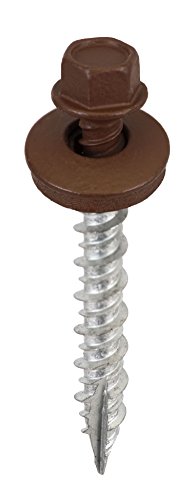
The Acorn International No. 9 washered framing screw is purpose-built for metal roofing and siding applications where a self‑tapping tip must pierce 26‑gauge steel without wandering. The external hex head allows a socket driver to transfer maximum torque without cam‑out — critical when fastening through metal panels into wood purlins. The Dacro and powder‑coated finish provides a dual‑layer corrosion barrier that has earned strong feedback from roofers who need fasteners that won’t bleed rust stains down the panel.
Reviews from users who have installed thousands of these screws across multiple roofing jobs report near‑zero defective fasteners, consistent engagement with the hex driver, and reliable sealing at the washer interface. The 250‑count bag is packaged in a heavy‑duty tear‑off resealable bag that keeps the fasteners organized on the jobsite. While the No. 9 diameter is lighter than the #14 or 5/16‑inch options, it is purpose‑matched to metal‑to‑wood connections and is not intended for heavy beam‑to‑beam framing.
Some buyers note a slight orange tinge on the screws upon arrival, suggesting minor surface oxidation under the paint layer, but the finish has held up for months after installation in exposed outdoor conditions. For contractors or DIY builders fastening metal roofing or siding panels to wood framing, the Acorn International hex‑head screw provides a specialized, reliable solution that general‑purpose framing screws cannot match.
Why it’s great
- External hex drive allows high‑torque socket installation without stripping
- Dacro + powder coat provides dual‑layer rust protection for roofing
- Self‑tapping tip pierces steel panels cleanly without a pilot hole
Good to know
- No. 9 diameter is lighter than structural framing screws
- Paint may chip if over‑tightened, requiring occasional replacement
5. LUPANTER #10×3″ 500‑Piece Exterior Deck Screws
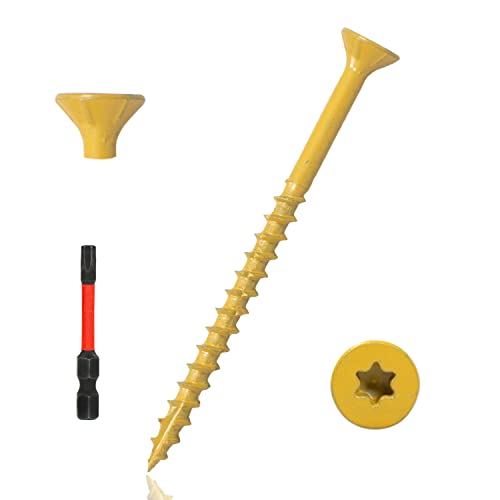
The LUPANTER 500‑count pack of #10×3‑inch deck screws is built for volume — the yellow ceramic coating offers strong corrosion resistance for pressure‑treated and composite decking, and the T25 star drive system reduces stripping during high‑speed installation. The special‑thread design provides better torquing and cleaner penetration through harder decking materials, making them a reliable choice for fastening deck boards to joists in large‑scale outdoor builds.
User reports highlight that the screws drive easily into both softwood and composite materials without pre‑drilling, and that the included T25 bit fits snugly without slipping during extended use. At 7.2 pounds total weight, this box is the heaviest in the guide and will cover an entire deck surface without requiring a mid‑project restock. The ceramic coating has held up well in wet conditions, and the alloy‑steel construction provides adequate shear strength for standard deck‑board fastening.
The #10 diameter is lighter than the #14 or 5/16‑inch framing screws used for ledger or beam connections, so these are best suited for deck‑board attachment rather than structural framing. For a homeowner or contractor laying down hundreds of linear feet of decking, the per‑screw economy and reliable drive performance make the LUPANTER pack a strong choice — just pair them with heavier structural screws for the underlying frame.
Why it’s great
- 500‑count box provides best cost per screw for large deck projects
- Yellow ceramic coating resists rust from pressure‑treated chemicals
- Special thread design reduces splitting in composite and hardwood
Good to know
- #10 diameter is not rated for ledger or beam‑to‑beam framing
- Some users noted a need for a higher‑quality included bit
FAQ
Do I need to pre‑drill for framing screws with a Type 17 tip?
Can I use deck screws for structural framing connections?
How do I interpret a 1,000‑hour salt spray rating for framing screws?
What is the difference between a washer head and a truss head framing screw?
Are stainless steel framing screws always better than coated carbon steel?
Final Thoughts: The Verdict
For most users, the framing screws winner is the Power Pro 30‑Piece Construction Lag Screws because the 5/16‑inch diameter, Type 17 tip, and bronze ceramic coating deliver structural‑grade performance for ledger boards, stair stringers, and playset connections without requiring a pilot hole. If you need a premium, engineer‑rated fastener for critical load‑bearing connections, grab the SPAX Powerlags with their Grade 5 heat‑treated shanks and built‑on washer head. And for a large‑volume deck project where cost per screw matters most, nothing beats the SG TZH 176‑piece pack for balancing holding power, corrosion resistance, and value.