
A framing square that drifts even a hair off square turns every rafter tail, stair stringer, and stud layout into a compounding error you won’t catch until the walls don’t line up. The right L-shaped ruler should lock that 90-degree reference so you can mark, cut, and trust the math without second-guessing your tool. This guide cuts through the noise on stamped versus painted graduations, alloy choice, and table readability so you walk away knowing exactly which steel or aluminum rectangle earns a spot in your tool belt.
I’m Mohammad Maruf — the founder and writer behind Drink4Good. For this guide I spent hours cross-referencing material thickness, graduation methods, and scale accuracy across five popular models to separate the daily-use squares from the ones that belong in the bottom of a drawer.
Whether you are framing a new addition or building a deck with your dad, picking a reliable framing square means understanding the difference between laser-etched aluminum and stamped steel, and knowing which rafter tables actually help on the job site.
How To Choose The Best Framing Square
A framing square is a simple L-shaped ruler, but the difference between a tool you grab every day and one you constantly fight comes down to three factors: the material, how the markings are applied, and whether the scale layout matches your work. Ignore the branding and focus on these specs.
Stamped or Laser‑Etched vs. Painted Graduations
Painted markings look crisp on day one, but on a job site they wear off in weeks as the square slides against plywood, dimensional lumber, and tool belts. Deep-stamped or laser-etched graduations remain readable for years because the line is physically cut into the metal. A square with painted numbers is a disposable square.
Aluminum vs. Steel: Weight vs. Rigidity
A steel square typically weighs around 1.4 pounds, which gives it a solid, rigid feel and resists bending if dropped. An aluminum square weighs roughly half that — closer to 12 ounces — which matters when you carry it up ladders or hold it in one hand while marking. Aluminum squares can be bent back into true with a center punch; steel squares require more force to adjust. Choose aluminum for everyday carry and steel for a stationary shop tool.
Scale Density and Table Readability
A useful framing square includes rafter tables, octagon scales, and essex board measure. But the real spec is how dense the markings are. Graduations at 1/8, 1/10, 1/12, and 1/16 inches are standard, but if the numbers are cramped or the contrast is low, you will misread a measurement in low light. Yellow-on-blue or high-contrast laser etching reduces eye strain significantly.
Quick Comparison
On smaller screens, swipe sideways to see the full table.
| Model | Category | Best For | Key Spec | Amazon |
|---|---|---|---|---|
| IRWIN Hi-Contrast Aluminum | Premium Aluminum | All-day carry & outdoor readability | Yellow-on-blue deep stampings | Amazon |
| Klein Tools 935FSQ | Premium Aluminum | Lightweight precision with laser etching | Double laser-etched markings | Amazon |
| Johnson CS9 Steel | Mid-Range Steel | Shop durability & budget value | Thermal-bonded EZ Read text | Amazon |
| POWERTEC 80008W | Entry-Level Steel | Budget-friendly with stair gauges | Carbon steel with stamped scales | Amazon |
| POWERTEC 80008V | Entry-Level Steel | Basic square for occasional use | Alloy steel with painted gradations | Amazon |
In‑Depth Reviews
1. IRWIN Tools Framing Square (1794447)
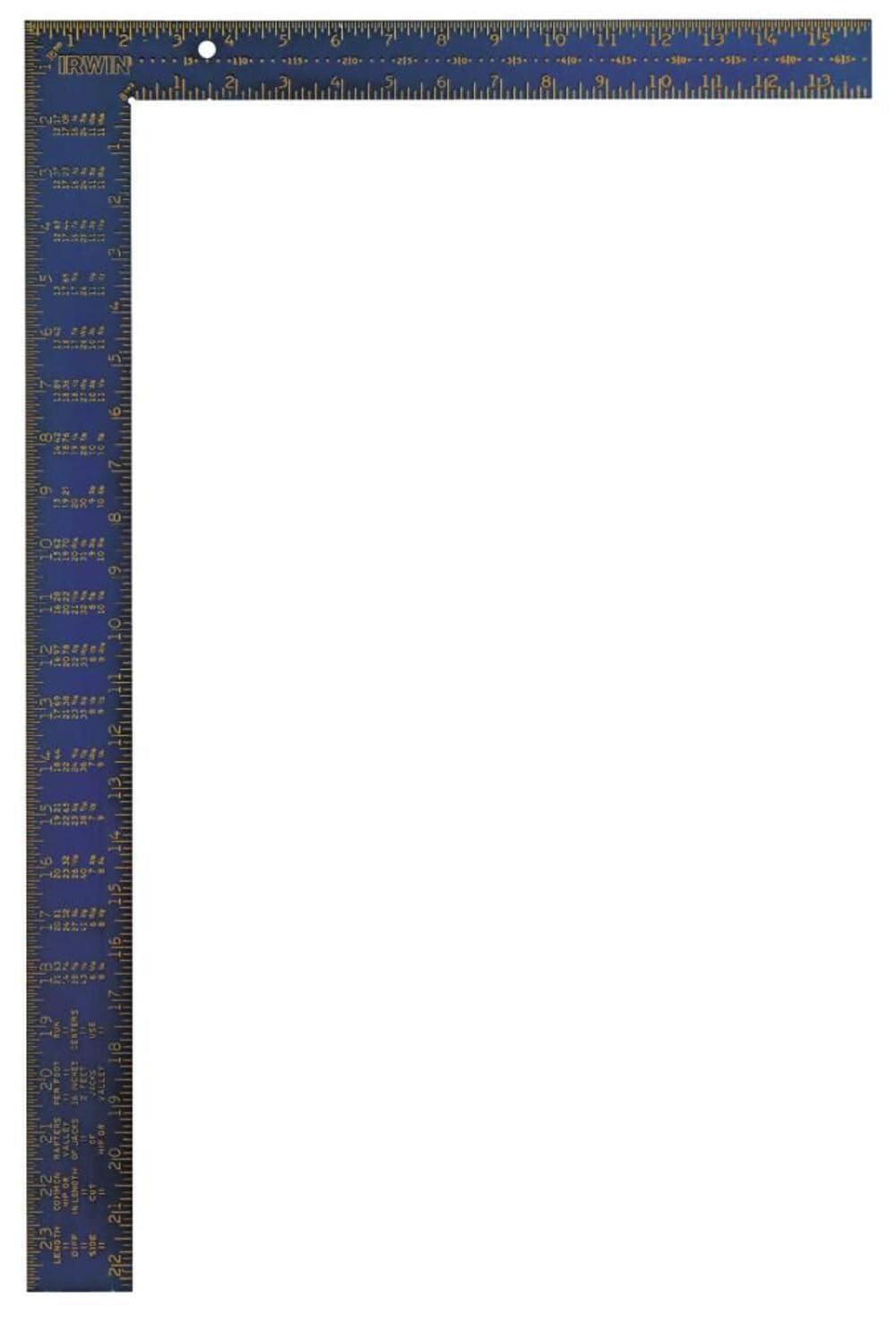
The IRWIN Hi-Contrast Aluminum square uses deep-stamped markings on a yellow-on-blue background that are effectively permanent and dramatically easier to read in direct sunlight than any painted silver square. At just over 12 ounces, this is the lightest full-size framing square in the comparison, making it the obvious choice for anyone who carries a tool belt up ladders or across a job site all day. The included rafter tables, brace scales, octagon scales, and essex board measure cover every layout calculation you need for conventional framing.
A few buyers reported the square was slightly acute by roughly 0.04 inches over the 24-inch leg out of the box — that is a common reality with aluminum stamps and is easily corrected by scoring the vertex with a center punch to open the angle back to 90 degrees. This is not a precision instrument for cabinet work, but for rough framing, roof rafters, and stair layout it is more than adequate and far more portable than steel alternatives.
The high-contrast color scheme is the standout feature here. If your eyes struggle with tiny stamped numbers on silver steel, or if you frequently work in bright outdoor conditions where glare washes out the markings, this square eliminates that problem entirely. The weight savings over steel also means you will actually reach for this square instead of leaving it in the truck.
Why it’s great
- Yellow-on-blue deep stampings are the most readable markings tested
- Lightweight aluminum reduces fatigue during all-day use
- Correctable to true square with a center punch if dropped
Good to know
- May require truing out of the box if tolerances matter for precision work
- Aluminum is less rigid than steel and can flex under heavy pressure
2. Klein Tools 935FSQ Framing Square

Klein Tools brings its trademark orange branding to the construction layout category with the 935FSQ, a 24-by-16-inch aluminum square that uses double laser-etched markings for excellent readability without the wear issues that plagues painted graduations. The laser etching creates a permanent groove that will not fade or peel, and the orange aluminum body provides a high-visibility tool that is harder to misplace on a messy site. The square includes rafter tables and octagon scales for roof and stair calculations.
Aluminum construction keeps this square very lightweight, and the corrosion resistance means it can live in a truck bed tool box through rain and humidity without rusting. One reviewer noted that the high-contrast numbers make it easy to read at a glance, which speeds up repetitive marking when you are laying out a whole wall of studs. Because the markings are etched rather than stamped, the surface is smooth and won’t catch on your pencil or scribe.
One minor complaint is that the laser-etched markings can still wear off over years of heavy use, though this is far less common than with painted alternatives. The aluminum body also means you have to be careful not to drop it on concrete from height, as a hard impact can bend the leg out of square. But for the price, this is a solid mid-range aluminum square that outperforms most budget steel options.
Why it’s great
- Double laser-etched markings are highly durable and easy to read
- Lightweight aluminum resists corrosion and rust
- High-vis orange body reduces chances of misplacing it on site
Good to know
- Aluminum can bend out of true if dropped from height
- Some users report the orange color wears off over time
3. Johnson Level & Tool CS9 Steel Framing Square

The Johnson CS9 is a USA-made steel framing square that uses thermal-bonded EZ Read graduations rather than simple paint, giving it better longevity than the cheapest painted squares while still maintaining a rigid 1/8-inch thick steel body. The 16-by-24-inch format includes octagon scales, brace tables, rafter tables, and board foot tables, making it a fully featured layout tool. At 1.4 pounds it is noticeably heavier than aluminum competitors, but that weight translates to a solid feel that does not flex when you lean on it.
Multiple customers praised the 1/16-inch markings, which is a significant upgrade over bargain-store squares that only offer 1/8-inch increments. The steel body also means the square can survive being tossed into a gang box or used as a straightedge for cutting without worrying about bending it easily. The silver finish is corrosion-resistant enough for normal job site moisture, though it is not as rust-proof as aluminum.
The main trade-off is that the bonded EZ Read text is not as durable as deep-stamped or laser-etched markings. Over several years of heavy use the graduations can begin to wear off, especially along the edges where the square slides against lumber. But for the price, the Johnson CS9 delivers professional-level accuracy and rigidity that suits both shop work and field framing.
Why it’s great
- Rigid steel body resists flexing under pressure
- Includes 1/16-inch markings for finer layout work
- USA-made with thermal-bonded EZ Read graduations
Good to know
- Heavier than aluminum squares at 1.4 pounds
- Bonded markings can wear off over years of heavy use
4. POWERTEC Framing Square (80008W)
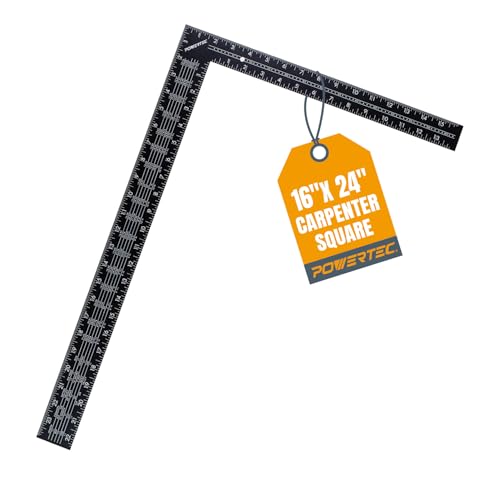
The POWERTEC 80008W is a 16-by-24-inch carbon steel framing square with stamped scales that offer better durability than painted gradations. The square comes with stair gauges and rafter instructions, making it a convenient package for a beginner who wants both the tool and the reference material in one box. The body is 1/16-inch thick, which is thinner than the Johnson CS9 but still adequate for typical layout and marking tasks.
A few buyers noted significant quality control issues — one unit was nearly 3 degrees out of square, which is a deal-breaker for aligning track saw rails or cutting rafters. A replacement unit was dead-on square, so consistency is a concern. Another reviewer measured a long-edge variation of 0.008 to 0.010 inches on a flat surface, which reinforces that this is not a precision tool for cabinet work but can serve for rough framing.
The included stair gauges add real value for anyone laying out stair stringers, saving you the cost of buying gauge stops separately. The steel body gives it a solid feel, though the thin profile means it can flex slightly under heavy pressure. If you get a square that passes the squareness check, this is a usable budget option, but you should verify the angle before trusting it for critical cuts.
Why it’s great
- Comes with stair gauges and rafter instructions included
- Stamped scales are more durable than painted markings
- Carbon steel provides a solid feel for the price
Good to know
- Quality control is inconsistent — verify squareness before use
- Thinner 1/16-inch steel can flex under heavy pressure
5. POWERTEC Framing Square (80008V)
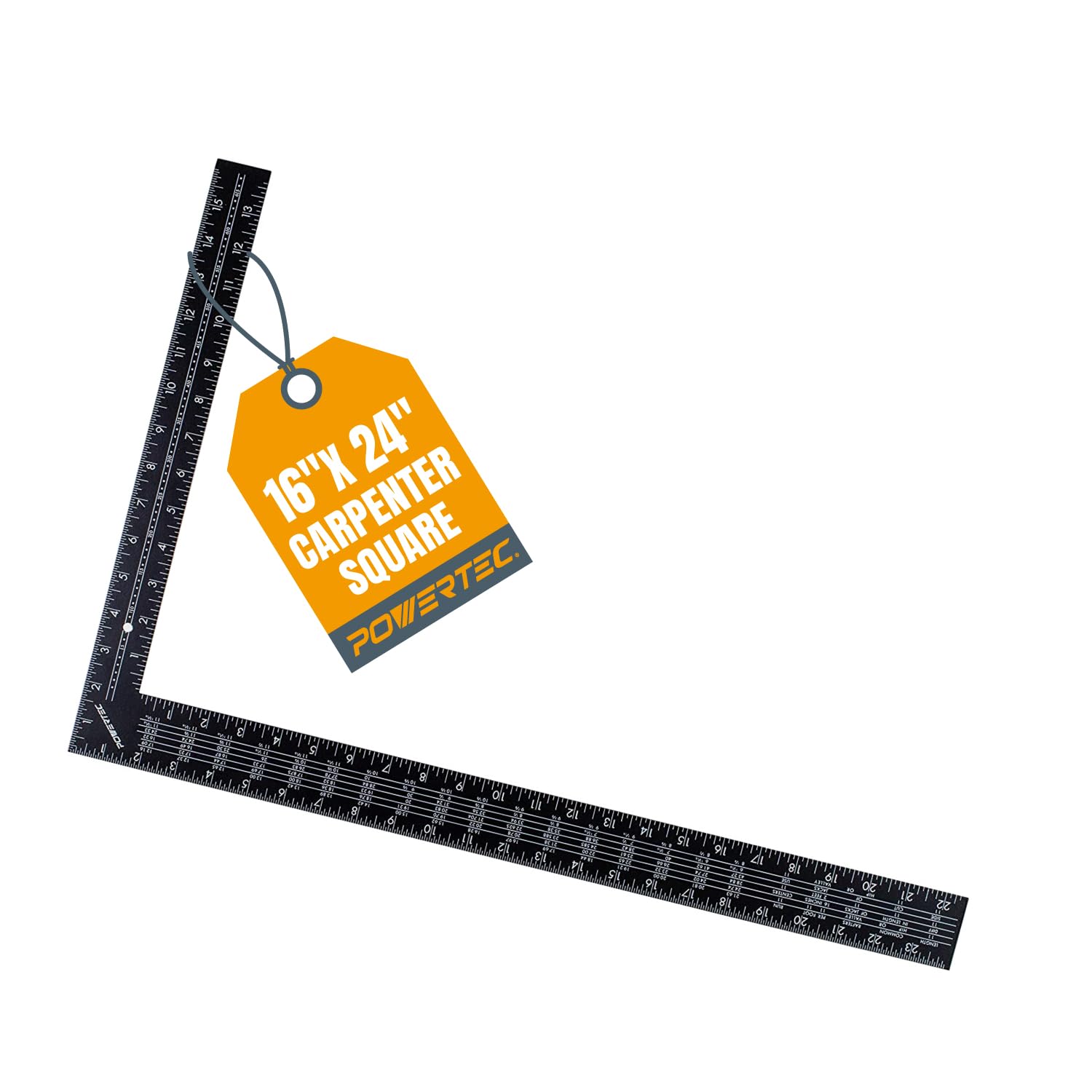
The POWERTEC 80008V is the most budget-friendly framing square in this lineup, using an alloy steel body with painted black gradations on a silver background. It includes the standard rafter tables, octagon scales, and conversion tables found on more expensive squares, so you get the same layout functionality at a lower cost. The dimensions are identical to the 80008W model: a 24-inch body and 16-inch tongue at 1/16-inch thickness.
The main drawback is that the graduations are painted rather than stamped or etched. Multiple reviewers called this out as a weak point, with one stating bluntly that they dislike painted squares because the markings wear off quickly. The square itself functions correctly for most rough framing tasks, and the build quality is acceptable for the price, but this is a tool you will likely replace after a few years of regular use once the numbers become hard to read.
This square is best suited for someone who needs a functional framing square for occasional DIY projects and does not want to spend much. If you are a professional framer or a serious hobbyist who uses the tool daily, the extra cost for a stamped or laser-etched square pays for itself in longevity alone. But for a weekend deck build or a single garage project, the 80008V gets the job done.
Why it’s great
- Lowest cost option in the lineup — accessible for any budget
- Includes full rafter tables and conversion scales
- Alloy steel body is functional for basic framing tasks
Good to know
- Painted graduations will wear off with regular use
- Not recommended for daily professional use
FAQ
What does the “1/8, 1/10, 1/12, 1/16” scale marking mean on a framing square?
Can I use a framing square for precision woodworking like dovetails or cabinet joinery?
Final Thoughts: The Verdict
For most users, the framing square winner is the IRWIN Hi-Contrast Aluminum because the deep-stamped yellow-on-blue markings are the most readable in outdoor conditions and the aluminum body makes it easy to carry all day. If you want a lightweight option with laser-etched durability, grab the Klein Tools 935FSQ. And for a rigid shop square on a budget, nothing beats the Johnson CS9 Steel.