
Whether you’re spearing supper in a murky kelp forest or holding your breath for a personal best on a single breath, the right set of freediving gear is the difference between a fluid descent and a fight against the water. Every piece — from the lens volume in your mask to the flex pattern in your blade — dictates how much energy you conserve and how deeply you can explore.
I’m Mohammad Maruf — the founder and writer behind Drink4Good. My analysis of freediving gear focuses on the measurable specs that matter: internal mask volume measured in square inches, blade durometer, foot pocket geometry, and neoprene thickness gradients, all compared against real-world performance feedback from competitive freedivers and spearfishers.
Finding the right setup that balances comfort, efficiency, and thermal protection can be overwhelming given the sheer variety of options available. That is precisely why we created this guide to help you identify the best freediving gear for your specific diving style, ensuring every single breath you take underwater is maximized for performance and enjoyment.
How To Choose The Best Freediving Gear
Choosing gear for freediving is fundamentally different from scuba. Every component is optimized to minimize oxygen consumption and drag. Prioritize low-volume masks, efficient long-blade fins, and a wetsuit that balances thermal protection with flexibility without restricting your diaphragm.
Understand Mask Volume
A standard scuba mask holds 150-200 cubic centimeters of air. Freediving masks typically drop below 100 cc. Lower volume means less air is needed to equalize the mask during descent, reducing the risk of mask squeeze and conserving oxygen for breath-hold. The Cressi Nano, for example, achieves one of the lowest internal volumes on the market at just 83 cm².
Choose Your Fin Flex
Freediving fins prioritize energy return over raw thrust. A softer, more progressive flex — like that found in Cressi’s Gara series — allows a smooth, economical kick cycle that reduces lactic acid buildup. Stiffer blades provide more power for spearfishers needing rapid acceleration but require stronger legs. Look for a 20-29 degree blade angle to optimize the natural path of your leg stroke.
Wetsuit Thickness and Construction
Thermal protection in freediving is about more than staying warm. A cold body consumes oxygen faster. For surface temperatures above 75°F, a 2mm suit works. For 65-75°F, go with 3mm. For water below 60°F, a 5/4mm suit with sealed seams is necessary. Features like front zippers (easier to don/doff) and blind-stitched seams (less water entry) directly impact your dive comfort.
Quick Comparison
On smaller screens, swipe sideways to see the full table.
| Model | Category | Best For | Key Spec | Amazon |
|---|---|---|---|---|
| Cressi Nano 2-Lens Mask | Mask | Equalization & Visibility | 12.86 in² internal volume | Amazon |
| Cressi Gara Modular Impulse Fins | Fins | Interchangeable Blades | 29° blade angle | Amazon |
| Seac Motus Freediving Fins | Fins | Thrust & Foot Pocket Comfort | 22° blade angle | Amazon |
| Cressi Gara Professional LD Fins | Fins | Deep Diving & Spearfishing | Polypropylene blade, soft flex | Amazon |
| Hevto 4/3mm Wetsuit | Wetsuit | Cold Water Insulation | 4/3mm neoprene thickness | Amazon |
| Seaskin 3mm Front Zip Wetsuit | Wetsuit | Versatility & Value | 3mm neoprene, front zip | Amazon |
| Seaskin 2mm Front Zip Wetsuit | Wetsuit | Warm Water Diving | 2mm neoprene, front zip | Amazon |
In‑Depth Reviews
1. Cressi Nano 2-Lens Mask

The Cressi Nano sets the standard for low-volume freediving masks. Its patented integrated dual-frame technology brings internal volume down to just 12.86 square inches, making equalization at depth near-instantaneous and effortless. The inverted teardrop lenses are tilted to improve downward visibility — a feature freedivers who track the line during descent will immediately appreciate.
Made entirely in Italy, the Nano uses a soft, hypoallergenic silicone skirt that conforms to both slim and average face shapes without leaving deep marks. The buckle system is fully flexible and virtually indestructible, reducing bulk behind the mask. Users consistently report that even with mustaches, minimal leakage occurs if a thin layer of vaseline is applied — a common trick for maintaining a seal with facial hair.
While the Nano excels in the water, it is a true freediving-specific mask. The lenses are treated to be scratch-resistant, and while fogging can occur in colder water, standard anti-fog treatment resolves it completely. For divers who prioritize a compact, hydrodynamic profile and effortless clearing, this mask remains the gold standard across hundreds of dives.
Why it’s great
- Ultra-low internal volume makes mask equalization extremely easy.
- Excellent downward visibility for line tracking.
- Soft silicone skirt is comfortable for long sessions and fits varied face shapes.
Good to know
- May leak slightly if you have a mustache without extra sealant.
- Lenses require frequent anti-fog treatment in cold water.
2. Cressi Gara Modular Impulse Fins

The Gara Modular Impulse is Cressi’s highest-efficiency freediving fin. The standout feature is the redesigned blade with a 29-degree angle — this positions the blade in alignment with your leg’s natural kicking arc, reducing drag and requiring noticeably less energy per stroke. The “Rondine” tail shape and lateral ribs stabilize the blade, preventing lateral water escape and improving directional control during deep ascents.
The foot pocket uses a multi-compound construction that provides stiff support under the heel for power transfer while remaining soft and supple around the top of the foot for comfort. The Gara Modular system allows you to swap blades for different conditions — you can run a softer blade for recreational dives and a stiffer blade for spearfishing without buying a new fin set. This modularity makes it ideal for divers progressing from intermediate to advanced levels.
Users note that sizing runs slightly large; most wearers with US size 9-10 feet find the 44/45 comfortable with 3mm wetsuit socks. The fins can be disassembled for travel, packing flat in a suitcase. A small number of reviewers mention the foot pocket can feel a touch loose for narrower feet, solved easily with neoprene filler inserts. Overall, these fins deliver an impressive balance of efficiency, comfort, and longevity.
Why it’s great
- 29-degree blade angle reduces energy waste during the kick cycle.
- Interchangeable blades allow the fins to grow with your skill level.
- Comfortable, multi-compound foot pocket with excellent power transfer.
Good to know
- Runs large — most users need to size down one full size.
- Slightly loose fit for narrow feet without wetsuit socks.
3. Seac Motus Freediving Fins
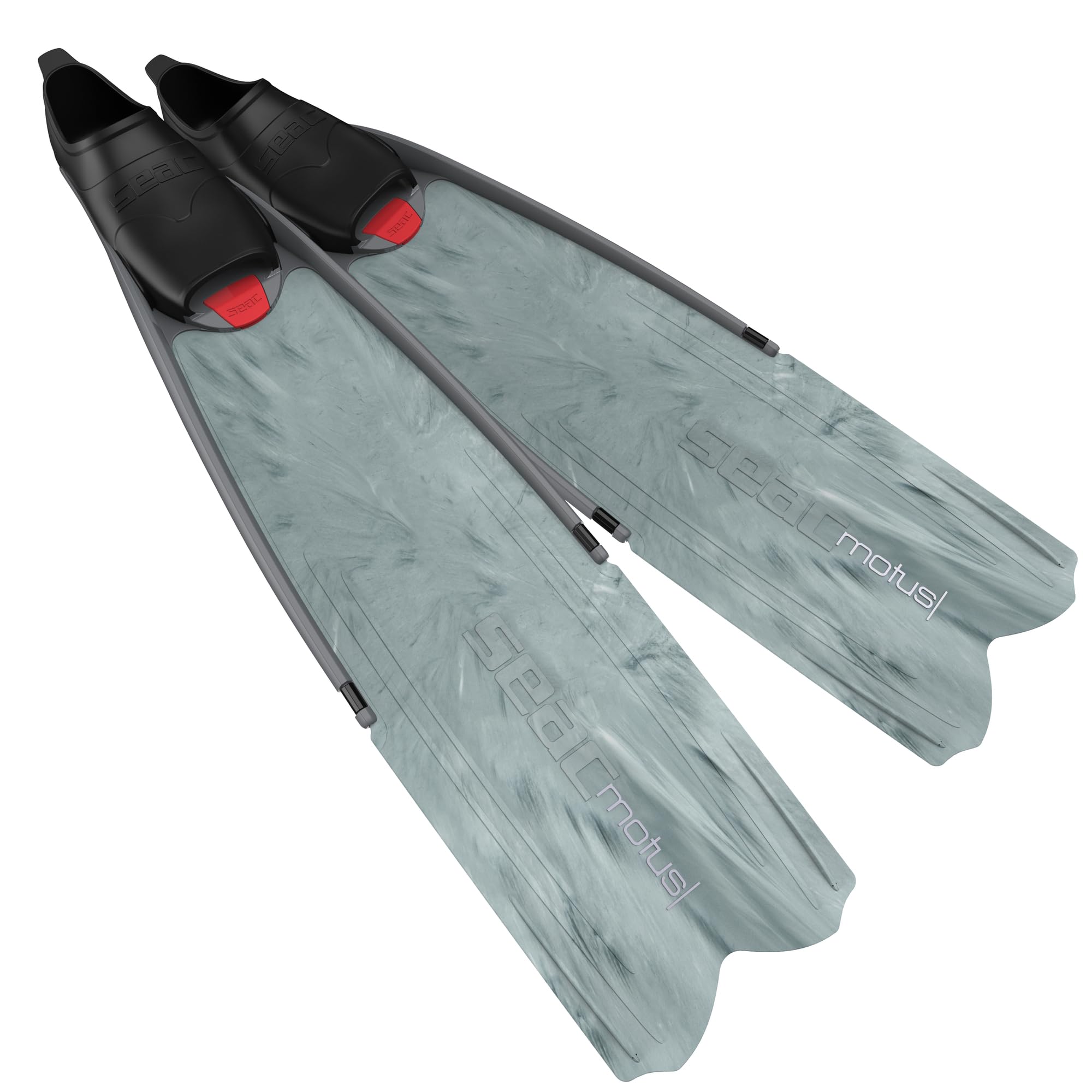
Seac’s Motus fins deliver high thrust output with a softer, more forgiving flex than many premium competitors. The 22-degree blade-to-foot angle optimizes the power-to-effort ratio, giving you a strong kick without the aggressive stiffness that can cause calf cramping on long dives. The interchangeable techno-polymer blade is highly reactive, delivering a satisfying snap at the end of each kick.
The foot pocket is constructed from dual-density thermoplastic rubber — stiff in the heel for power transfer, softer through the midfoot for comfort. Made in Italy, these fins have a sleek camo or black finish that resists scratching from reef contact. Reviewers who push their limits on deep repeated dives consistently note how much less leg fatigue they experience compared to stiffer, entry-level fins.
A critical sizing note: the Seac Motus runs large. Most users with US shoe size 9.5-10 need to size down to 41-42 and wear thick 3-5mm neoprene socks to achieve a snug fit. Without socks, some users report heel chafing that requires blister bandaging. If you dial in the fit, these fins feel like an extension of your leg — responsive, comfortable, and efficient for hours in the water.
Why it’s great
- Soft, reactive blade reduces calf fatigue on repeated dives.
- Dual-density foot pocket balances comfort and power transfer.
- High-quality Italian construction with durable blade edges.
Good to know
- Runs significantly large — downsize one full size.
- Thick wetsuit socks are required to avoid heel irritation.
4. Cressi Gara Professional LD Fins

The Gara Professional Long Diving fins are a time-tested workhorse for competitive freedivers and spearfishers. The blade is made from a special elastomer polypropylene that delivers a fluid, progressive flex — it softens through the kick cycle to reduce load on your knees while maintaining enough stiffness to produce real speed. Experienced divers describe the sensation as “smooth” rather than “snappy,” which translates to less energy wasted per stroke.
The foot pocket is constructed from a particularly soft elastomer compound that prioritizes comfort over extreme stiffness. While this means less direct power transfer compared to stiffer pockets, it significantly reduces foot cramping during long sessions. The blade runs over the top of the foot pocket, creating a seamless union that minimizes energy dispersion and improves hydrodynamics. These fins are especially effective for deep freediving where conservation of energy directly impacts bottom time.
Some users note that the foot pocket runs small — divers with US size 10+ feet may need the largest size and are best served wearing thin dive socks. The long blade also extends past the foot significantly, making surface swimming slightly splashier than shorter fins. For divers who prioritize deep, efficient descents over surface agility, these fins deliver exceptional value for performance that rivals fins costing twice as much.
Why it’s great
- Progressive polypropylene blade offers smooth, efficient flex ideal for extended deep dives.
- Soft foot pocket reduces cramping and increases comfort over long sessions.
- Excellent value — performance comparable to high-end fins at a mid-range price.
Good to know
- Runs small — larger feet may require the biggest size with thin socks.
- Long blades cause surface splash and slight momentum loss during snorkeling.
5. Hevto Men Wetsuit 5/4/3/2mm Neoprene Full Wet Suit
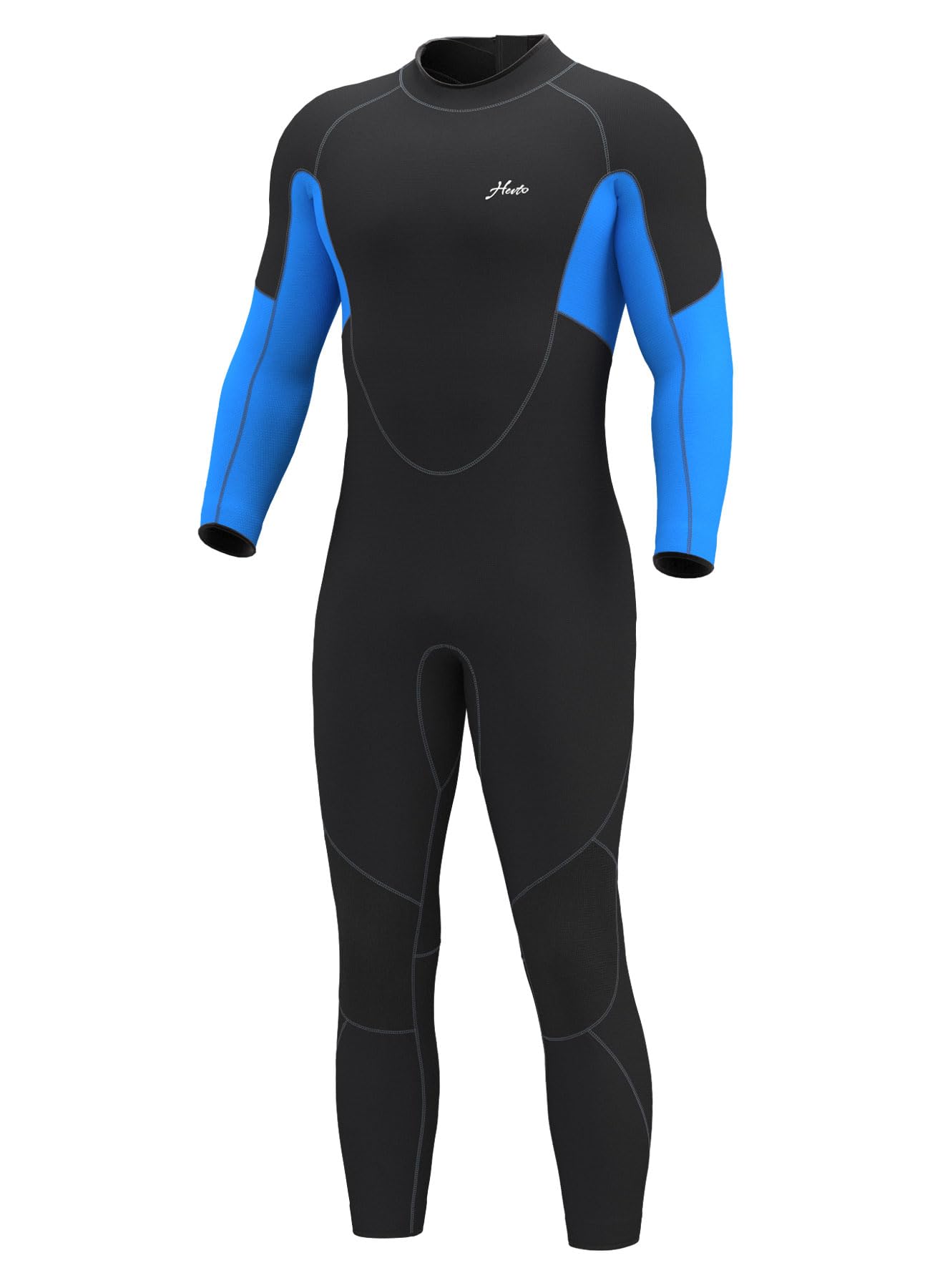
The Hevto 4/3mm wetsuit is built for serious cold-water diving where thermal protection is paramount. It uses premium neoprene core material with a super-stretch nylon outer that allows a full range of motion for your shoulders and core — critical for freedivers who need an unrestricted diaphragm for breath-hold diving. The back-zip design includes an upgraded puller with a zipper flap to minimize water seepage.
Sealed, glued, and blind-stitched seams actively resist water entry, keeping a warm layer of water trapped against your skin. Reinforced knee areas add durability for shore entries and kneeling on rocky bottoms. Reviewers report diving comfortably in water temperatures down to 40°F when paired with aqua socks and gloves, and the suit’s 4/3mm gradient provides targeted thickness — 4mm across the core for warmth, 3mm in the arms and legs for flexibility.
The sizing runs slightly large, so consult the size chart and consider ordering one size down. The suit is optimized for a variety of water sports including diving, surfing, kayaking, and paddleboarding, making it a versatile option for freedivers who also surface swim. While the back-zip design is convenient, some freedivers prefer front-zip wetsuits for easier donning after a cold dive.
Why it’s great
- Blind-stitched, glued seams provide excellent thermal protection in cold water.
- 4/3mm thickness gradient balances warmth with arm and leg mobility.
- Durable reinforced knee panels hold up well against rough entry points.
Good to know
- Runs large — order one size down per the manufacturer’s chart.
- Back-zip design can be slightly harder to manage after a cold dive compared to front-zip.
6. Seaskin Wetsuits for Men Women 3mm Front Zip Full Wetsuit
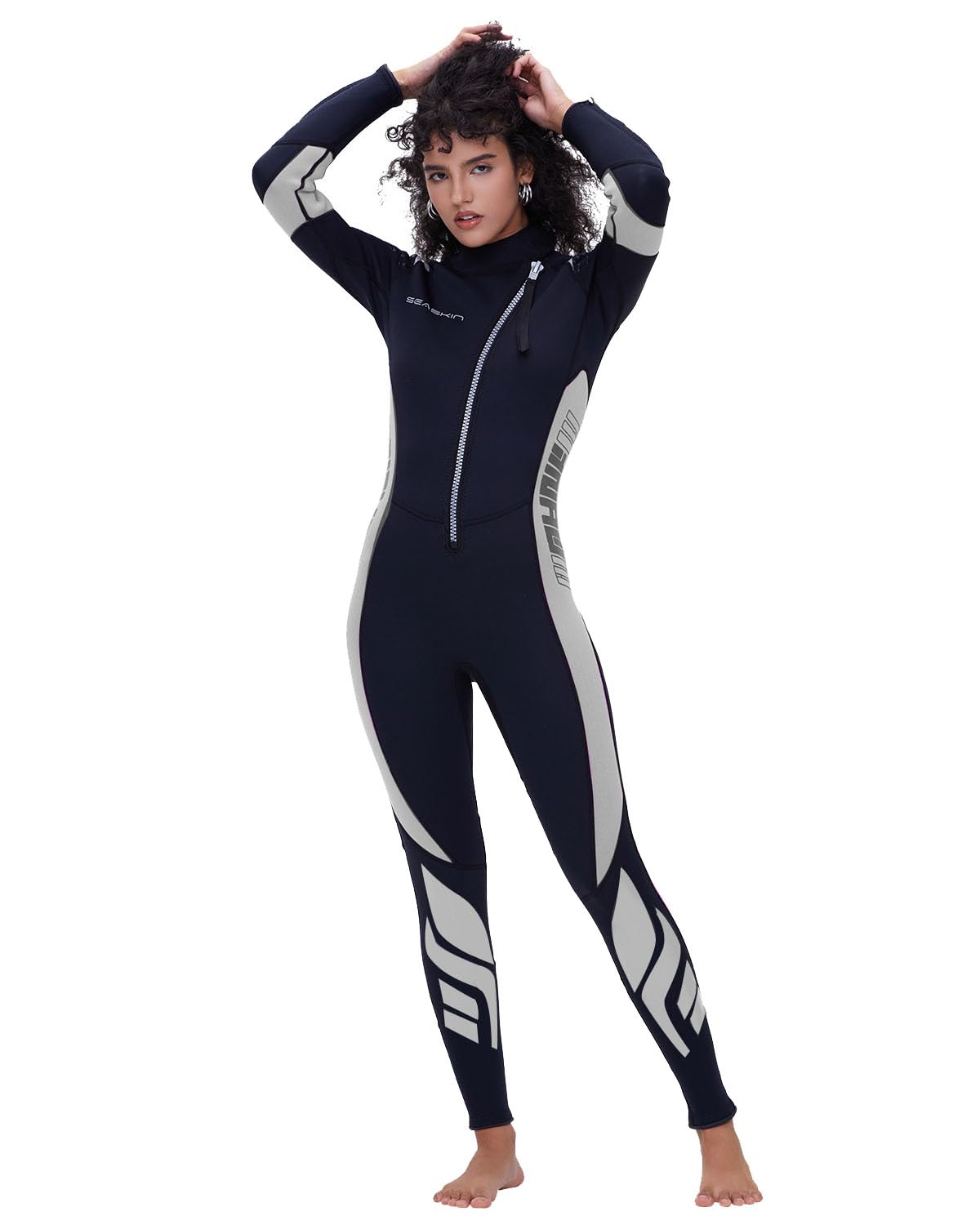
The Seaskin 3mm front-zip wetsuit offers exceptional versatility for freedivers who operate in warmer waters (65-75°F). The front-zip design is a standout — it’s far easier to get into and out of than a back-zip suit, which is a significant convenience between dives. The three-layer fabric construction combines an elastic nylon outer, a stretchable neoprene core, and a soft inner lining that prevents chafing while trapping heat.
Flat-lock stitched seams provide excellent durability and comfort, though they are technically less water-resistant than glued/blind-stitched seams. This makes the 3mm Seaskin better suited for warmer water where you aren’t fighting hypothermia. The wetsuit also includes UV protection and a barrier against biological irritants like sea lice and jellyfish stings. Both men’s and women’s cuts are available, with the women’s version offering a more tailored fit through the torso and hips.
Several reviewers highlight the front zipper as a major differentiator, noting they avoid back-zip suits because of the struggle. The price point is notably lower than many competitors while delivering good thermal performance. Sizing is generally accurate to the chart, though users with curvier builds (wider hips) may find the legs slightly baggy. For freedivers looking for a warm-water suit that doesn’t break the bank, this is a reliable choice.
Why it’s great
- Front zipper makes entry and exit exceptionally easy compared to back-zip suits.
- Three-layer construction with stretchable neoprene offers good warmth and flexibility.
- Excellent value for a 3mm full wetsuit with UV and biological protection.
Good to know
- Flat-lock seams are less water-resistant than glued/blind-stitched alternatives.
- Legs may fit baggy for those with wider hips; trial fit is recommended.
7. Seaskin Wetsuits for Mens Womens 2mm Front Zip Full Body Diving Suits

For freedivers in tropical or warm-water environments where surface temperatures stay above 75°F, the Seaskin 2mm front-zip wetsuit provides just enough thermal protection without significant weight or mobility restriction. The 2mm neoprene is extremely lightweight and compressible, allowing for maximum freedom of movement in the shoulders, hips, and knees — essential for dynamic freediving movements.
The front-zip closure system is the same design as the 3mm version, meaning easy entry and exit even when wet. The suit is manufactured from 90% neoprene and 10% nylon stretch fabric for a comfortable, near-second-skin fit. It includes full-length sleeves and legs, offering UV protection and a barrier against jellies and sea lice without the overheating that a thicker suit would cause in warm water.
Reviewers praise the suit’s fit for shorter statures, with several female divers under 5’4″ finding the women’s cut perfectly proportional. The 2mm thickness means it packs down small for travel, making it an excellent choice for dive trips where you need a basic barrier suit without the bulk. The suit is not recommended for water temperatures below 70°F, as the thin neoprene offers limited insulation against cold. For dedicated tropical freediving, however, it’s a lightweight and affordable option.
Why it’s great
- Ultra-lightweight 2mm neoprene offers maximum mobility for warm-water freediving.
- Front-zip design is easy to don and doff.
- Travel-friendly — packs down small without adding significant weight to luggage.
Good to know
- Provides minimal thermal protection — not suitable for water below 70°F.
- Some users find the top too small for a comfortable fit; trial the size chart carefully.
FAQ
Should I choose a full-foot or open-heel freediving fin?
Does a lower volume mask always equalize easier?
How do I prevent my freediving mask from fogging?
What thickness wetsuit do I need for freediving in 70°F water?
Final Thoughts: The Verdict
For most freedivers, the best freediving gear winner is the Cressi Nano 2-Lens Mask because its ultra-low internal volume makes equalization borderline effortless — a foundational piece of gear that enhances every dive. If you want maximum kick efficiency and the ability to swap blades as you progress, grab the Cressi Gara Modular Impulse Fins. And for cold-water protection where thermal retention can make or break a dive session, nothing beats the Hevto 4/3mm Wetsuit for its sealed, blind-stitched construction and versatile thickness gradient.