
Forget the crowded groomers. Freeride is about the gut-check drop into a steep, untracked chute, the silent float through deep powder, and the raw commitment of big-mountain terrain. Your bindings are the critical link between your boot and board — they must deliver immediate response, reliable hold, and damp power transfer the moment you commit. The wrong choice means chatter at speed, premature release, or a sore foot halfway down the line.
I’m Mohammad Maruf — the founder and writer behind Drink4Good. I’ve spent hundreds of hours analyzing binding designs, reading technical spec sheets, and cross-referencing real rider feedback to separate genuine high-altitude performance from marketing hype.
This guide strips away the noise and walks you through the top performers that actually hold up when the terrain gets serious, so you can confidently choose the right freeride bindings for your style, boot, and budget.
How To Choose The Best Freeride Bindings
Freeride bindings live in a different world from park noodles or all-mountain twins. They prioritize stability, dampness, and response at speed over buttery flex or weight savings. If you are shopping for a binding that can handle hardpack transitions, chunder, and deep snow without losing its nerve, focus on these three pillars.
Baseplate Construction and Flex
The baseplate is the foundation of power transfer. Look for glass-filled nylon, carbon-reinforced blends, or full aluminum chassis. A medium-stiff to stiff flex rating (7 to 9 on the brand’s scale) ensures you can drive the board’s edge through crud without the binding twisting under load. Softer baseplates introduce lag and chatter — two things you do not want when you are pointing it down a 40-degree face.
Damping and Vibration Control
Freeride terrain is rarely smooth. A binding with dedicated dampening — whether through a rubber-infused footbed, EVA layers, or a specific bushing design — filters out high-frequency chatter and reduces fatigue. Fewer vibrations also mean better edge hold on icy transitions. If a binding lacks damping tech, every irregularity in the snow gets transmitted straight to your joints.
Highback Stiffness and Forward Lean
The highback controls heel-side response and how quickly the binding engages your turn. Freeride bindings typically use a stiffer, taller highback that locks in when you drive through the heel edge. Adjustable forward lean lets you fine-tune how aggressive the binding feels — more lean equals faster edge-to-edge response. Avoid highbacks that collapse under hard pressure or feel overly flexible.
Quick Comparison
On smaller screens, swipe sideways to see the full table.
| Model | Category | Best For | Key Spec | Amazon |
|---|---|---|---|---|
| Union Force | Premium | All-mountain freeride & big-mountain charging | Aluminum/EVA chassis, 5.66 lb weight | Amazon |
| JONES Mercury Fase | Premium | Freeride power with fast-entry | 30% GF Nylon baseplate, TPU chassis | Amazon |
| Burton Step On X Re:Flex | Premium | Hyper-responsive step-on freeride | 50:50 Carbon/nylon composite | Amazon |
| Nidecker Supermatic | Mid-Range | Automatic dual-entry, all-terrain | Flax fiber highback, recycled carbon | Amazon |
| Burton Step On Re:Flex | Mid-Range | Efficient step-on all-mountain freeride | Single-component baseplate, canted hi-back | Amazon |
| Union Strata | Mid-Range | Park & freeride hybrid, responsive | EVA footbed, aluminum components | Amazon |
| Nidecker LT Supermatic | Mid-Range | Dual-entry step-in, supportive ride | Flax fiber highback, reinforced chassis | Amazon |
| Nidecker Flow Nexus | Budget | Comfortable all-mountain, progressing riders | Glass-filled nylon baseplate, Fusion strap | Amazon |
| Marker Griffon 13 | Budget | Freeride/freestyle ski binding | DIN 4-13, Triple Pivot Elite Toe | Amazon |
In‑Depth Reviews
1. Union Force Men’s Snowboard Bindings
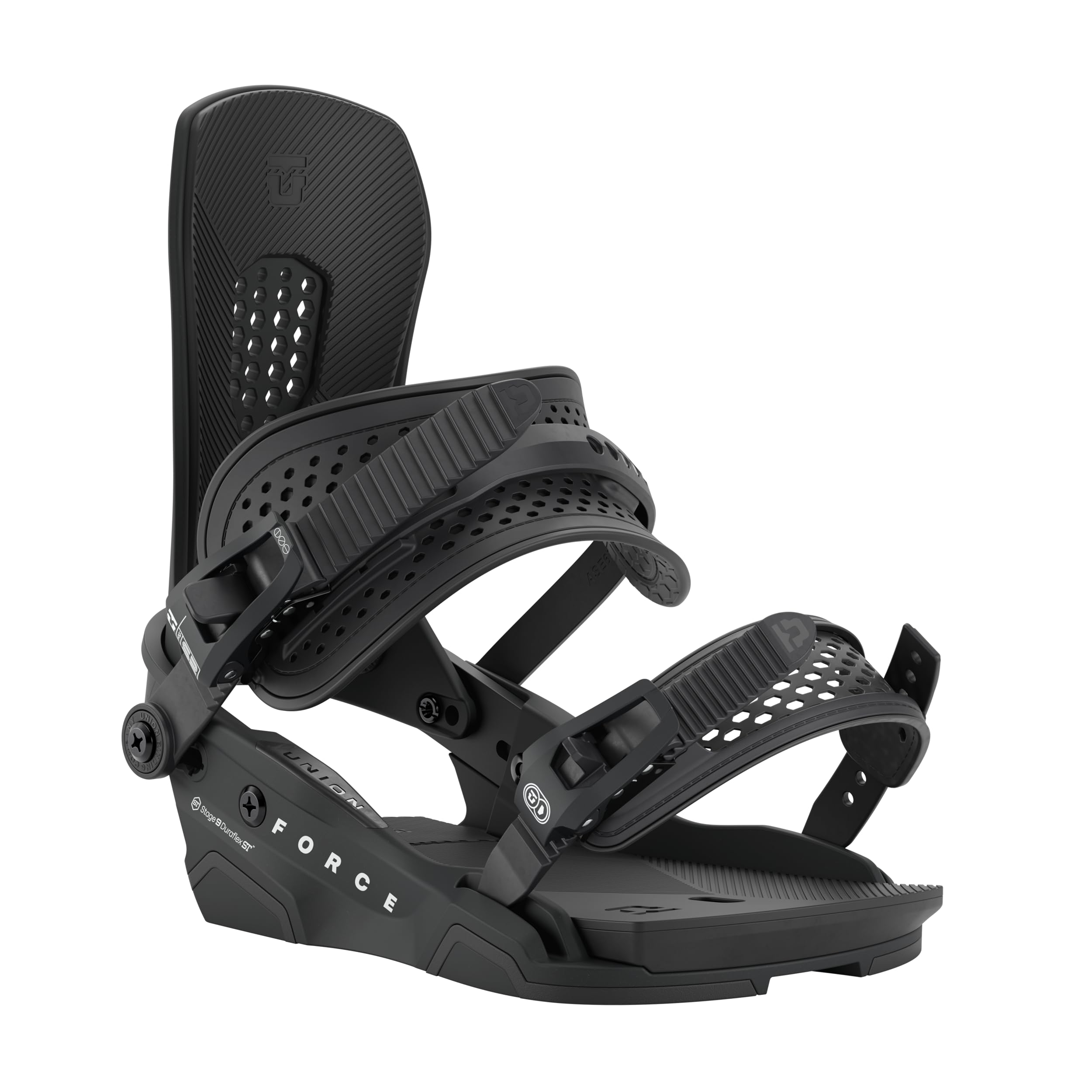
The Union Force has earned its reputation as a workhorse for riders who demand consistent, chatter-free performance across variable terrain. The aluminum and EVA chassis provides a stable platform that resists twisting under hard edge loads, while maintaining a manageable 5.66-pound weight that does not feel clunky on the lift. The stiff flex rating gives you immediate input into the board, making it ideal for charging through crud or holding an edge on firm snow.
Ridden by professionals Miles Fallon and Benny Milam, the Force is designed for aggressive freeride and all-mountain use. The tool-free adjustment on the highback and strap system allows for quick tuning without removing your gloves, which is a practical benefit when conditions change midday. The toe strap offers a solid fit over the boot toe, and the ankle strap wraps securely without creating pressure points.
One nuance: the binding uses a mini-disc mounting system, which means it is not compatible with vintage Burton 3D hole patterns. If you ride a modern board with a standard 4×4 or channel system, you are good to go. The build quality is high, and the long-term durability is well documented by riders who put dozens of days on them each season.
Why it’s great
- Stable, torsionally stiff chassis for big-mountain charging.
- Tool-free adjustment on highback and straps for on-the-fly tuning.
- Durable build that holds up season after season.
Good to know
- Mini-disc design not compatible with vintage Burton 3D boards.
- Stiff flex might feel overly aggressive for park-focused riders.
2. JONES Mercury Fase Snowboard Bindings
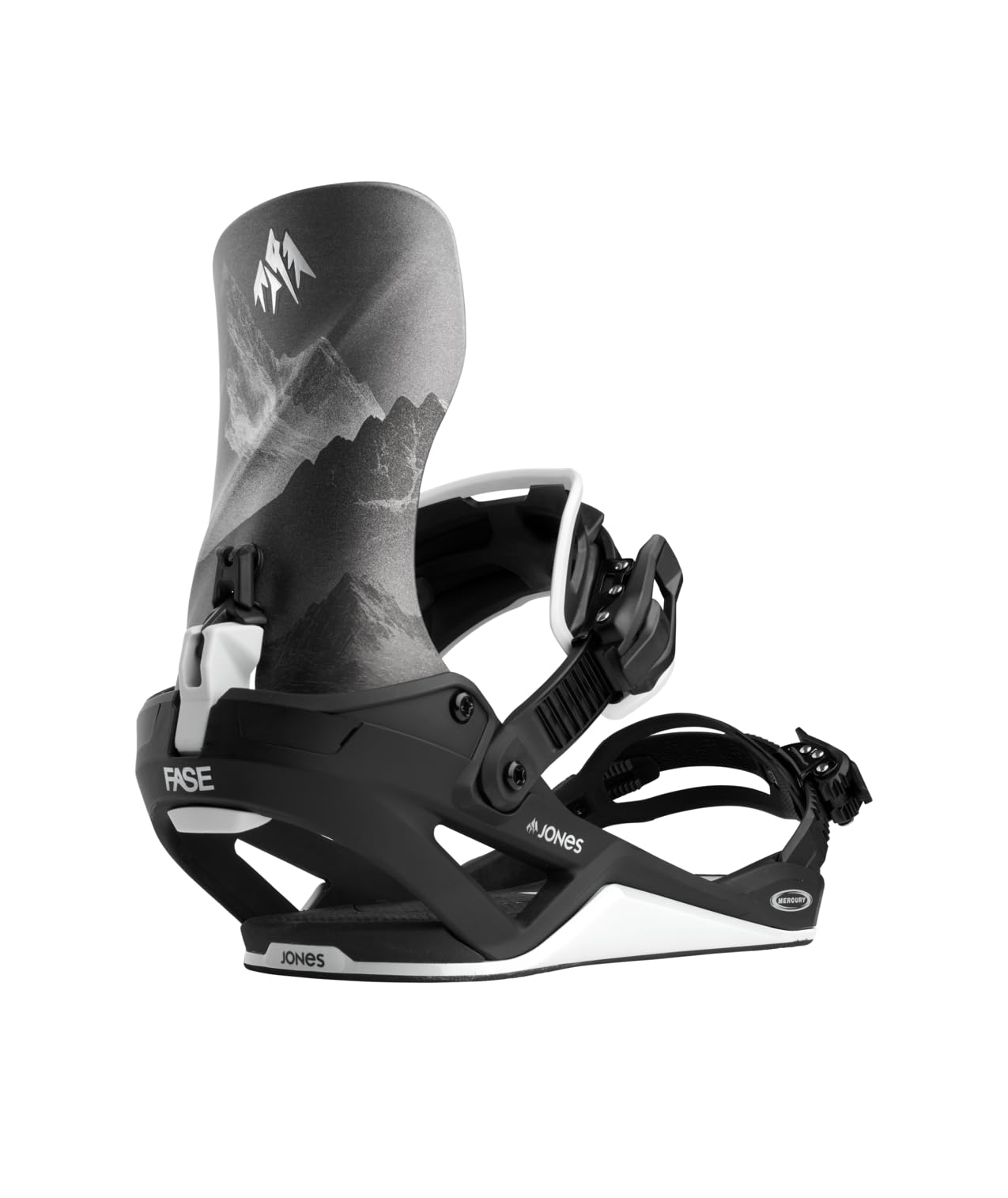
The Mercury Fase is a precision instrument for riders who refuse to compromise between traditional strap performance and the convenience of a speed-entry system. The FASE system uses a highback hinge and a pre-set toe strap that stays open, allowing you to step in and secure only the ankle strap before dropping in. The 30% glass-filled nylon baseplate delivers a medium-stiff flex that is responsive enough for steep chutes but retains enough play for freestyle transitions.
Rider feedback highlights the absence of performance loss compared to traditional two-strap bindings. The enveloping straps and full EVA cushioning reduce vibration and fatigue, which matters when you are linking turns through variable snow. The binding is compatible with most boot shapes and board mounting systems, and the high-quality materials — including a TPU chassis — suggest it will hold up under heavy use.
One detail worth noting: the FASE system does add a step to the entry process compared to fully automatic bindings. You still need to close the ankle strap manually. However, the ability to skate off a chair and step in without sitting down is a genuine time-saver. Expect a short learning curve to find the ideal strap tension for quick entry and exit.
Why it’s great
- FASE system provides fast entry without sacrificing traditional strap performance.
- Medium-stiff flex balances freeride power with freestyle playfulness.
- Enveloping straps and full cushioning reduce high-frequency vibrations.
Good to know
- Requires manual ankle strap closure — not fully automatic.
- Initial setup requires finding the correct strap tension for quick entry.
3. Burton Men’s Step On X Re:Flex Snowboard Bindings
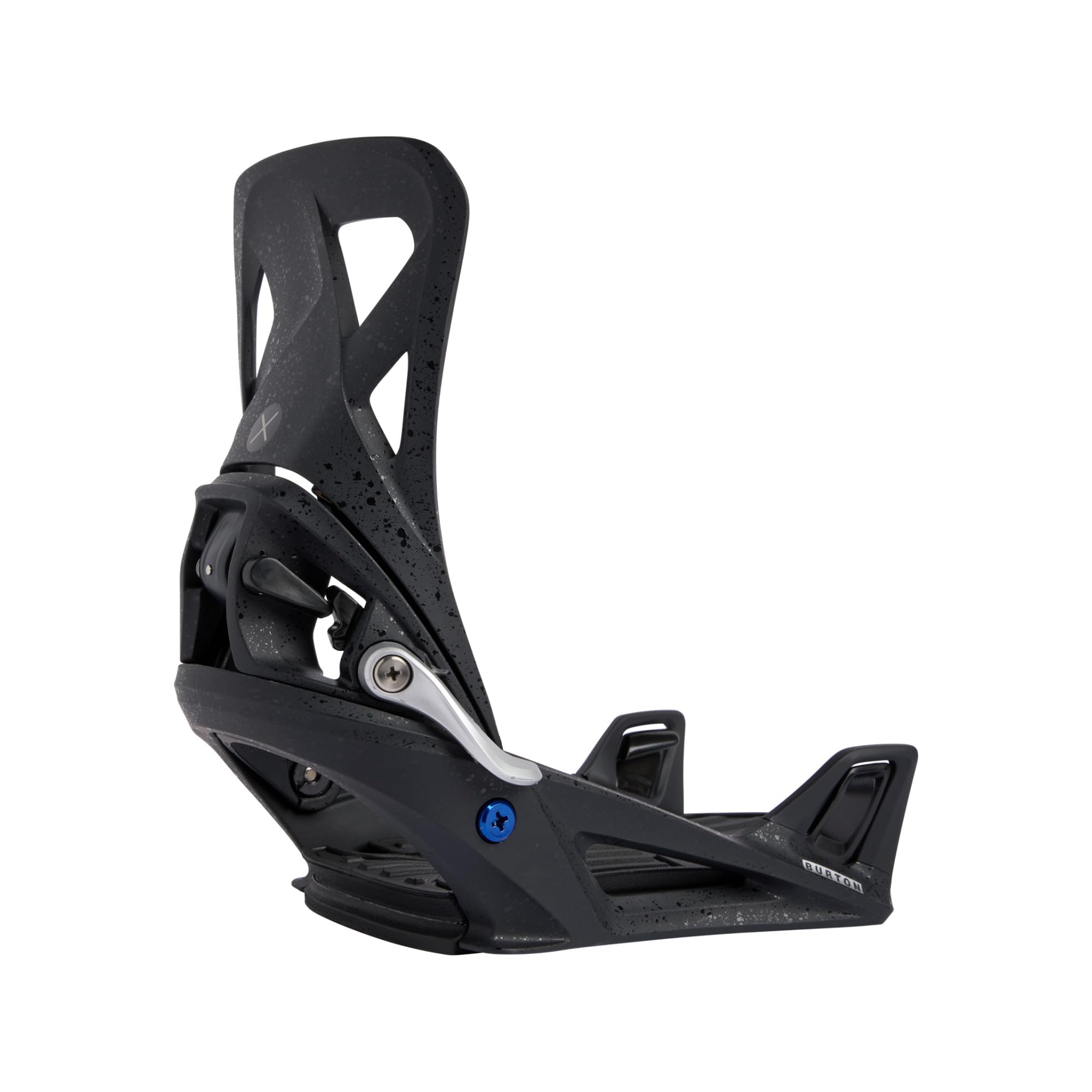
The Step On X is Burton’s highest-performance step-in binding, built with a 50:50 carbon fiber and nylon composite blend that makes it hyper-lightweight while maintaining extreme stiffness. The single-component baseplate construction provides consistent torsional response, and the canted hi-back — adjustable via the FLAD system — lets you fine-tune forward lean for aggressive heel-side engagement. The carbon blend also shaves weight, making this one of the lightest premium bindings on the market.
Users report a significant improvement in heel hold compared to earlier Step On versions, especially when paired with Burton Ion boots. The toe hook 2.0 makes entry and exit smoother, and the lack of straps eliminates the pressure points that can develop during long days in the backcountry. The Re:Flex FullBED cushioning system provides underfoot damping that limits fatigue on long traverses.
The trade-off is boot dependency: Step On X bindings require compatible Burton Step On boots. If you already own a favorite boot brand, this may not be the right choice. The binding also demands a slightly more deliberate stomp to engage the toe hooks compared to traditional strap bindings, though most users adjust within a run or two.
Why it’s great
- Carbon/nylon blend offers excellent stiffness-to-weight ratio.
- Step On system provides fast, consistent entry and exit.
- FLAD system allows precise forward lean adjustment for aggressive riding.
Good to know
- Requires Burton Step On compatible boots.
- Toe hook engagement takes a run or two to get used to.
4. Nidecker Supermatic Snowboard Bindings
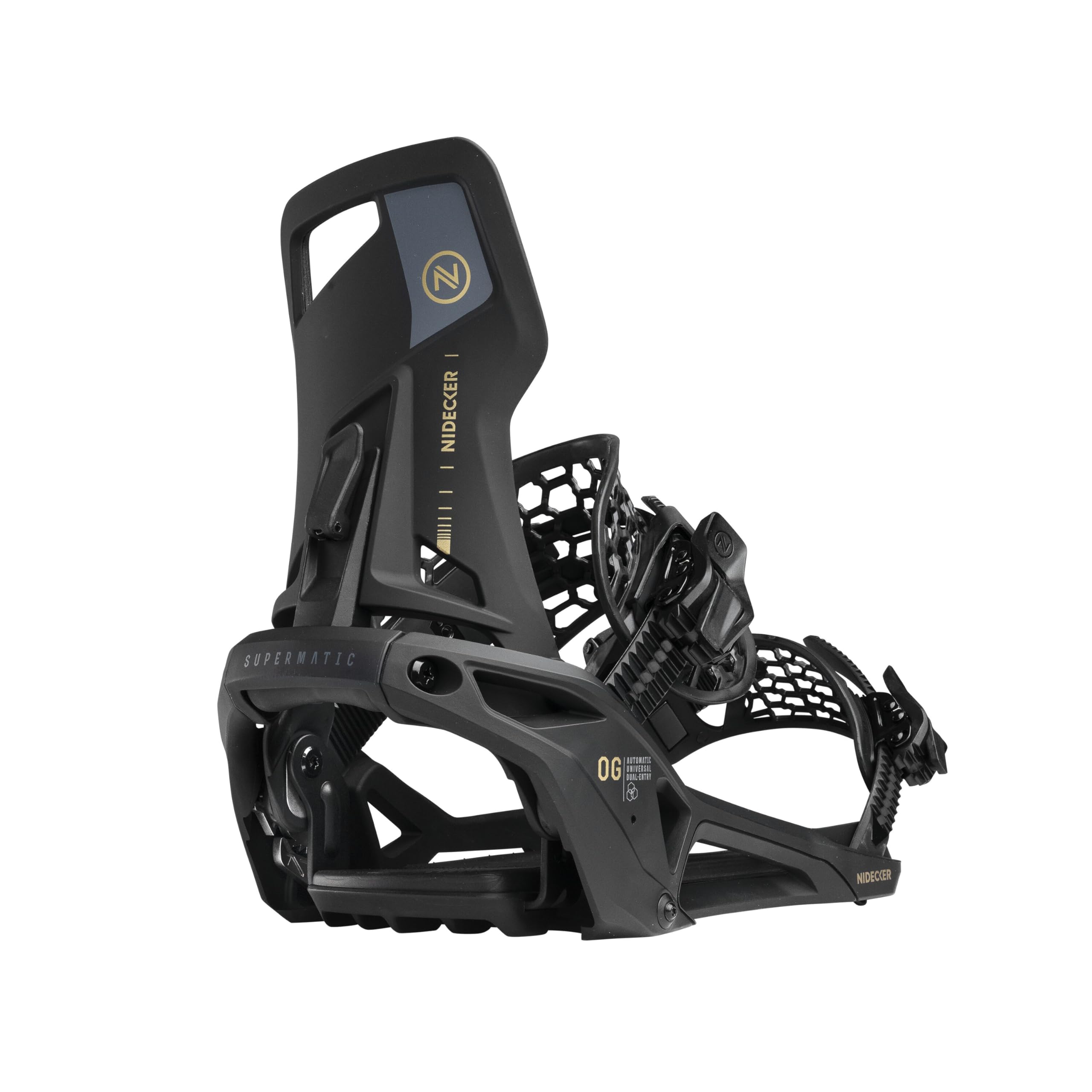
The Supermatic is the first fully automatic dual-entry binding that works with any standard snowboard boot. The hands-free engagement mechanism allows you to step in and lock without touching any straps, while the traditional two-strap backup system gives you the option to fine-tune tension for different terrain. The flax fiber highback and recycled carbon components make this a surprisingly eco-conscious choice without sacrificing structural integrity.
User feedback emphasizes the time saved on the mountain: you can step in while standing, ride off the chair, and never have to sit down to strap in. The shock-absorbing footbed does an excellent job of dampening chatter on hardpack, and the rigid baseplate channels energy efficiently for carving and jumps. The medium-stiff flex sits in a sweet spot for all-mountain freeride use.
There is a learning curve with the automatic mechanism. Some users report needing to loosen the middle strap initially to achieve smooth entry, and occasional freezing of the lever in wet conditions requires a firm boot-pull to release. Once dialed in, however, the Supermatic delivers a riding experience that many users describe as superior to traditional strap bindings in speed and consistency.
Why it’s great
- Fully automatic entry works with any standard snowboard boot.
- Excellent dampening from the shock-absorbing footbed.
- Eco-friendly materials without compromising performance.
Good to know
- Initial setup requires finding the correct strap tension for smooth entry.
- Lever can freeze in wet conditions, requiring a firm boot-pull to release.
5. Burton Men’s Step On Re:Flex Snowboard Bindings
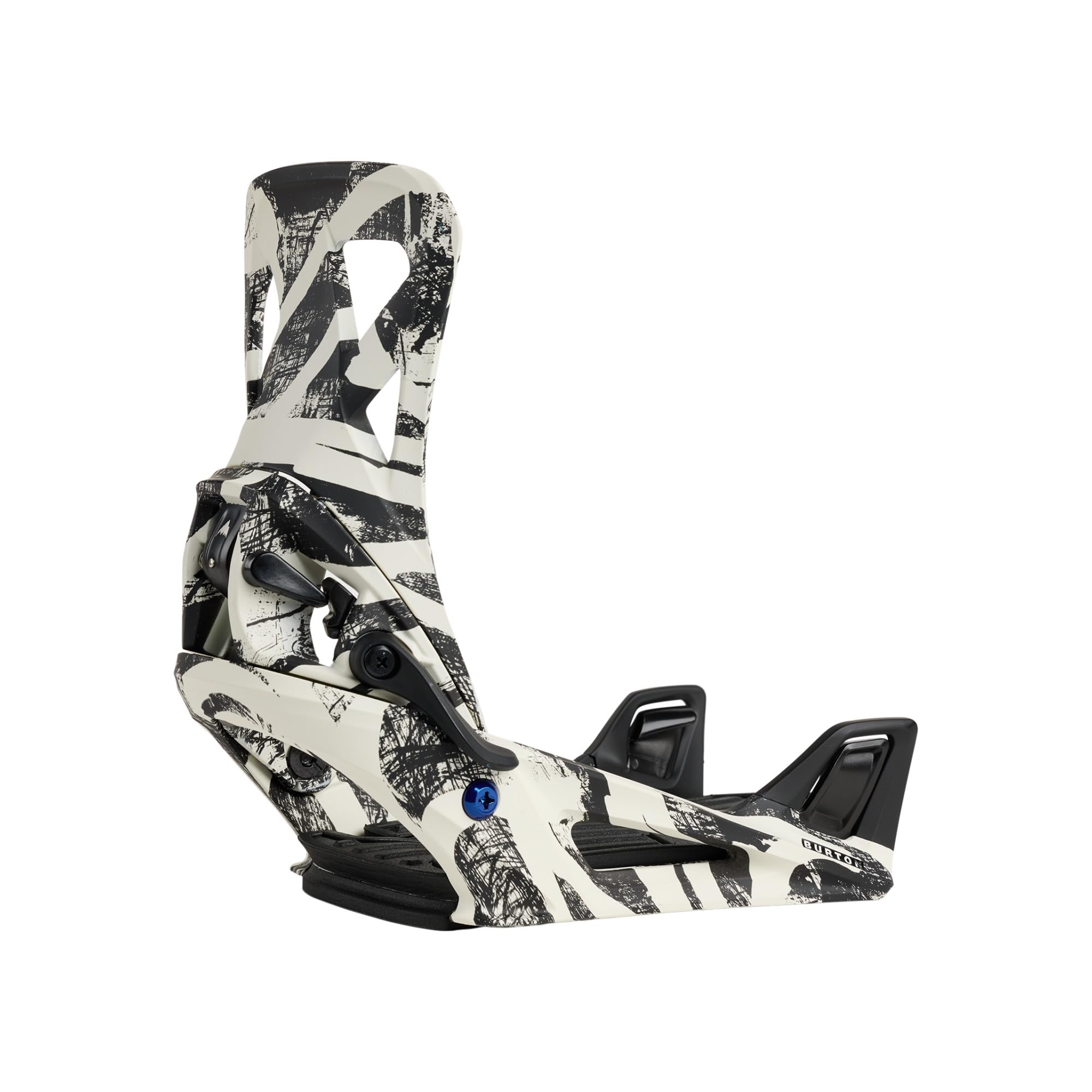
The standard Burton Step On Re:Flex offers the same core step-in technology as the X version at a more accessible price point. The single-component nylon composite baseplate delivers a playful, medium flex that suits all-mountain freeride and resort riding without feeling overly stiff. The canted hi-back provides ergonomic alignment for improved heel-side response, and the zero forward lean setting appeals to riders who prefer a more upright stance.
Riders consistently praise the fatigue reduction from not having to bend over to strap in during long days. The step-on mechanism uses two toe hooks and a heel cleat for a three-point connection that feels secure once engaged. The Re:Flex FullBED cushioning system limits underfoot fatigue, and the mounting system is compatible with any board mount system, including channel boards.
The main limitation is boot dependency — only Burton Step On boots work with this binding. The standard Re:Flex also lacks the carbon reinforcement of the X version, so it may feel less responsive for heavier riders or those who drive the board very aggressively. For intermediate to advanced riders who want step-in convenience without the premium price, this binding hits a strong sweet spot.
Why it’s great
- Smooth, secure step-in system reduces bending and fatigue.
- Medium flex suits all-mountain freeride and resort riding.
- Compatible with all board mount systems including channel boards.
Good to know
- Requires Burton Step On compatible boots only.
- Less responsive than the carbon-reinforced Step On X version.
6. Union Strata Men’s Snowboard Bindings
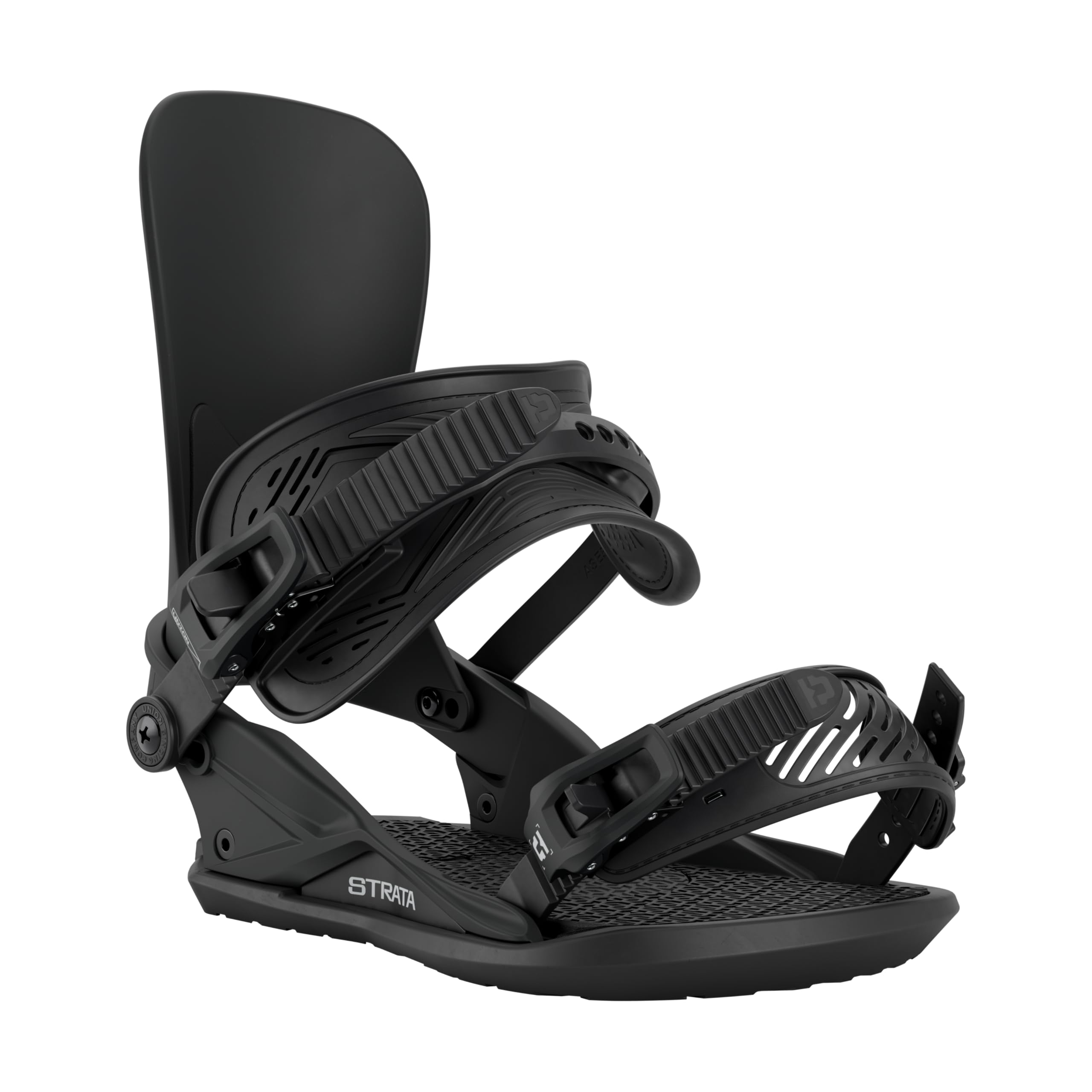
The Union Strata sits at the intersection of freeride power and park playfulness. The upgraded bushing material and ankle strap design improve dampening and response, while the EVA footbed provides a cushioned platform that absorbs impact on landings. The medium-stiff flex is forgiving enough for spins and flat-ground tricks but stiff enough to hold an edge on firmer snow.
Ridden by Brandon Cocard and Austin Vizz, the Strata has a loyal following among riders who want a single binding for both side-country drops and park laps. The rubber base layer prevents vibration loosening of the screws, which is a practical detail for riders who frequently travel or ride hard. The tool-less adjustment on the top strap allows quick tension changes without removing the binding.
One quirk: the over-toe strap can feel slightly awkward to position initially, though it becomes intuitive after a few rides. The mini-disc mounting system means the Strata will not fit vintage Burton 3D boards. At 4.66 pounds, the Strata is lighter than the Force, which makes it easier to swing for spins and tricks.
Why it’s great
- Upgraded bushings and straps improve dampening and control.
- Lightweight design (4.66 lb) makes spins and tricks easier.
- Rubber base layer prevents screw loosening from vibrations.
Good to know
- Over-toe strap can feel awkward to position initially.
- Mini-disc mounting not compatible with vintage Burton 3D boards.
7. Nidecker LT Supermatic Snowboard Bindings
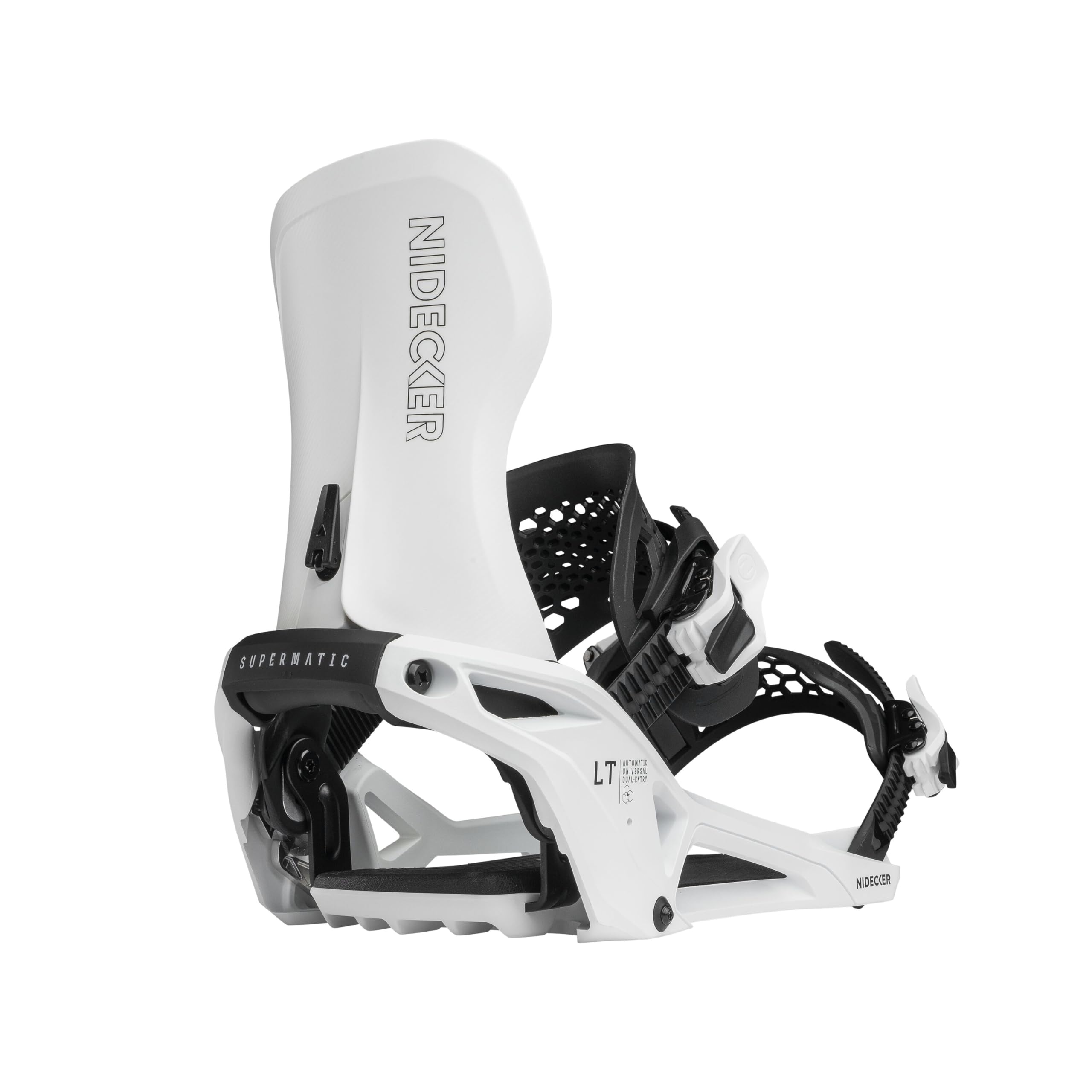
The LT Supermatic is the lighter sibling of the standard Supermatic, designed for riders who want the convenience of dual entry without the weight penalty. The flax fiber highback and recycled carbon components keep the binding responsive while shaving grams compared to the full-sized version. The reinforced chassis provides a stable platform for edge-to-edge power transfer, and the cushioned footbed tames vibrations on longer runs.
User reviews highlight the time savings on the mountain: stepping in and out quickly without sitting down saves significant energy, especially on days with 30-plus runs. The binding works with any standard boot, which eliminates the boot-compatibility restrictions that come with step-on systems. The medium-stiff flex provides a supportive ride without feeling overly aggressive.
Some users note the binding is heavier than traditional strap bindings, though the difference is not noticeable while riding. The heel strap can feel too tight initially, making rear-entry release difficult until you tune the tension. Once adjusted, the LT Supermatic delivers a secure, responsive ride that matches or exceeds traditional bindings in performance.
Why it’s great
- Dual-entry design works with any standard snowboard boot.
- Flax fiber highback and recycled carbon keep weight down.
- Reinforced chassis delivers solid power transfer.
Good to know
- Heavier than traditional strap bindings, though not noticeable while riding.
- Heel strap tension needs initial tuning for smooth rear-entry release.
8. Nidecker Flow Nexus Snowboard Bindings

The Nexus is a forgiving, all-mountain binding designed for progressing riders who want comfortable all-day performance without breaking the bank. The glass-filled nylon baseplate provides a stable but flexible platform that absorbs chatter and reduces fatigue. The Fusion strap spreads support across the entire foot, which eliminates pressure points and allows you to run the straps looser than traditional two-strap models.
The locking slap ratchets are simple to use — just push a button to fix your preferred tension — and the softer flex is comfortable for riders who are still developing their technique. The binding is light (just 1 pound per binding) and easy to install, making it a practical choice for anyone setting up their first freeride-oriented board.
Some riders with larger boots have reported difficulty getting boots out of the binding, and the soft flex may feel too loose for advanced riders charging steep terrain. The Nexus is best suited for intermediate riders who want a comfortable, easy-to-use binding that supports progression without overwhelming them with stiffness.
Why it’s great
- Fusion strap eliminates pressure points and allows looser fit.
- Locking slap ratchets make entry and exit super fast.
- Soft flex is comfortable for progressing riders.
Good to know
- Soft flex may feel too loose for advanced freeride charging.
- Some users report difficulty removing larger boots from the binding.
9. Marker Griffon 13 Ski Bindings
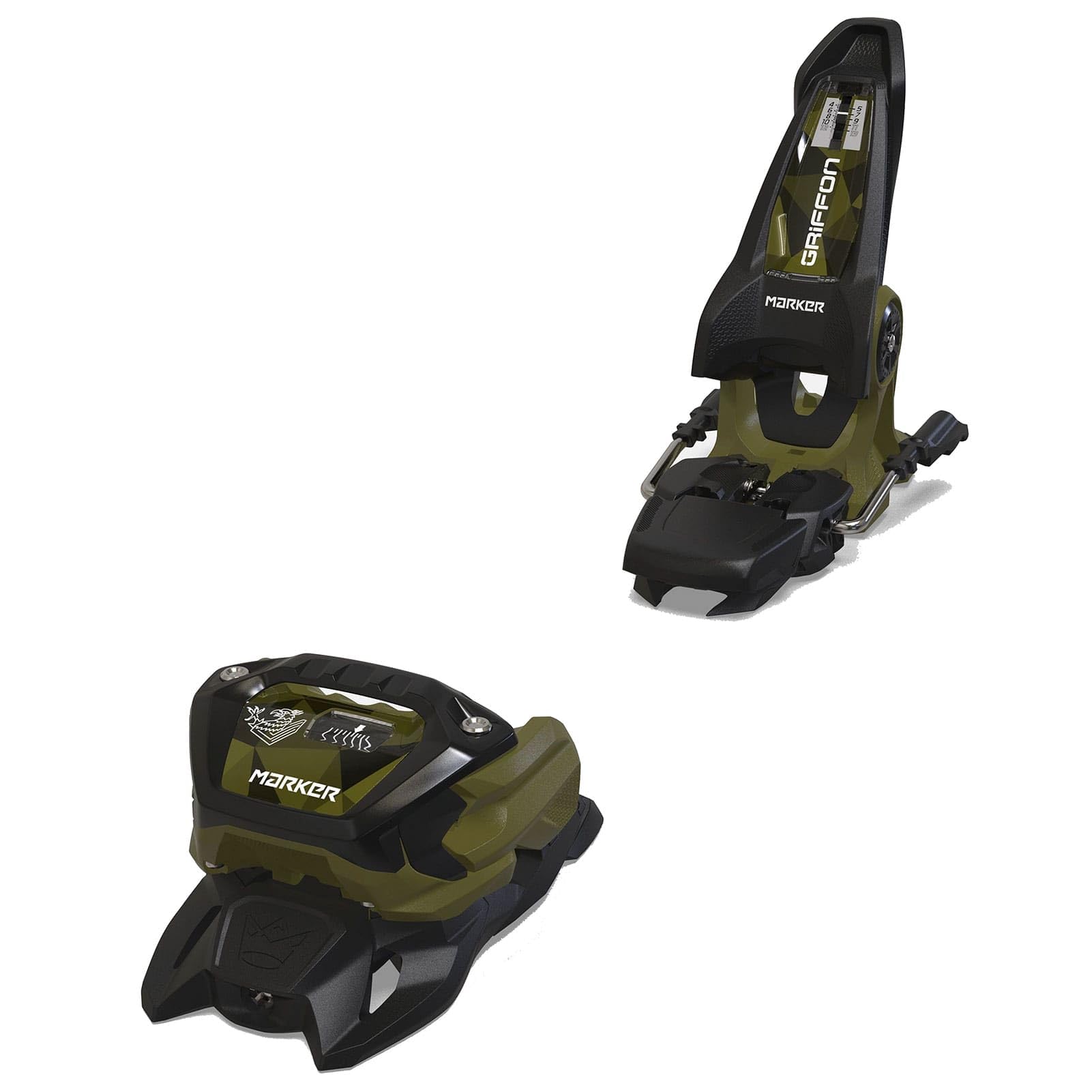
The Griffon 13 is a lightweight freeride ski binding that delivers the power and retention demanded by advanced to expert skiers who explore tight chutes, variable snow, and mixed terrain. The Triple Pivot Elite Toe system provides massive power transmission and superior edge grip, while the Anti Ice Rail lets you scrape soles clean for consistent step-ins in sticky conditions. The DIN range of 4 to 13 covers a wide spectrum of ability levels.
The Inter Pivot 3 Freeride Heel offers exceptional energy absorption and vertical elasticity, which reduces unwanted release while improving boot hold and control. The Multinorm (SOLE.ID) technology ensures compatibility with Alpine, GripWalk, and Touring boot soles, making this a future-proof choice if you upgrade boots down the line. The stainless steel Gliding AFD ensures precise release even when dirt or ice builds up.
At 8 pounds, the Griffon 13 is not the lightest binding on the market, but the centralized swing weight is optimized for freestyle spins and tricks. The binding is easy to install, and user feedback consistently highlights reliability and durability across multiple seasons. The olive green color option is a subtle aesthetic upgrade from standard black bindings.
Why it’s great
- Triple Pivot Elite Toe delivers excellent power transmission and retention.
- Multinorm technology works with Alpine, GripWalk, and Touring boot soles.
- Steel Gliding AFD ensures clean release even when dirty or icy.
Good to know
- At 8 pounds, it is heavier than some competing freeride ski bindings.
- DIN range 4-13 may not cover expert-level racers with very high DIN settings.
FAQ
Should I choose a stiff flex binding for freeride if I am an intermediate rider?
Does an automatic entry binding lose performance compared to traditional two-strap models?
Final Thoughts: The Verdict
For most riders, the freeride bindings winner is the Union Force because it delivers a proven balance of dampening, responsiveness, and durability that handles everything from powder fields to hardpack — without requiring a specific boot investment. If you want a fast-entry system that works with any boot and preserves traditional strap feel, grab the JONES Mercury Fase. And for maximum convenience with zero compromise in performance, nothing beats the Burton Step On X if you already own or plan to buy compatible boots.