
Choosing a freeride binding isn’t just about locking in your boot — it’s about finding the precise balance of edge hold, dampening, and response that lets you trust every turn in variable snow and steep terrain. A binding that chatters under load or delivers inconsistent energy transmission can ruin a line before it even starts.
I’m Mohammad Maruf — the founder and writer behind Drink4Good. I’ve spent years analyzing the structural engineering, material science, and rider feedback behind snowboard bindings to help you find the setup that matches your specific style and terrain.
Whether you chase powder stashes, slash through tight trees, or drop into exposed chutes, finding the right freeride snowboard bindings means prioritizing chassis rigidity, highback response, and strap systems that keep your feet locked under high-speed loads.
How To Choose The Best Freeride Snowboard Bindings
Freeride bindings prioritize stiffness, dampening, and power transfer over the playful feel of a park or all-mountain binding. The goal is to keep your board planted at speed in uneven snow while still allowing enough flex for natural terrain absorption.
Baseplate Stiffness and Materials
A stiff baseplate made from glass-filled nylon, carbon composites, or aluminum transfers energy from your legs directly to the board edge. Softer nylon flexes too much under load, resulting in delayed response when you need to initiate a carve on firm snow or punch through a crud patch.
Highback Design and Forward Lean
The highback controls your heel-side edge engagement. Freeride highbacks are typically taller and stiffer than all-mountain models, and a tool-free forward lean adjustment lets you dial in a more aggressive riding posture. A canted highback can also reduce boot-out when carving hard on steep faces.
Strap System and Entry Convenience
Traditional two-strap bindings offer the most direct boot feel and adjustability. Rear-entry and step-on systems trade a small amount of strap feedback for faster transitions. For freeride, you want straps that distribute pressure evenly to avoid hotspots on long descents — fusion straps and contoured ankle straps are worth looking for.
Quick Comparison
On smaller screens, swipe sideways to see the full table.
| Model | Category | Best For | Key Spec | Amazon |
|---|---|---|---|---|
| Union Force | Premium | All-mountain freeride versatility | Aluminum baseplate / EVA bushing | Amazon |
| Burton Step On X | Premium | Step-on quick entry / stiff response | 50/50 carbon fiber/nylon baseplate | Amazon |
| Union Ultra | Premium | Lightweight freeride / surfy feel | Union exclusive bushing | Amazon |
| Nidecker Supermatic | Premium | Automatic entry / resort laps | Dual-entry drop-in mechanism | Amazon |
| Nidecker LT Supermatic | Premium | Light dual-entry / all-day comfort | Flax fiber highback / recycled carbon | Amazon |
| Union Strata | Mid-Range | Park-forward freeride / side hits | EVA bushing / upgraded ankle strap | Amazon |
| Nidecker Flow Nexus | Mid-Range | Comfort-focused progression | Glass-filled nylon baseplate | Amazon |
| Burton Step On Reflex | Mid-Range | Entry-level step-on transition | Single-component nylon baseplate | Amazon |
| Nidecker Flow Nexus White | Mid-Range | Comfort-focused smaller feet | Glass-filled nylon baseplate | Amazon |
In‑Depth Reviews
1. Union Force Men’s Snowboard Bindings
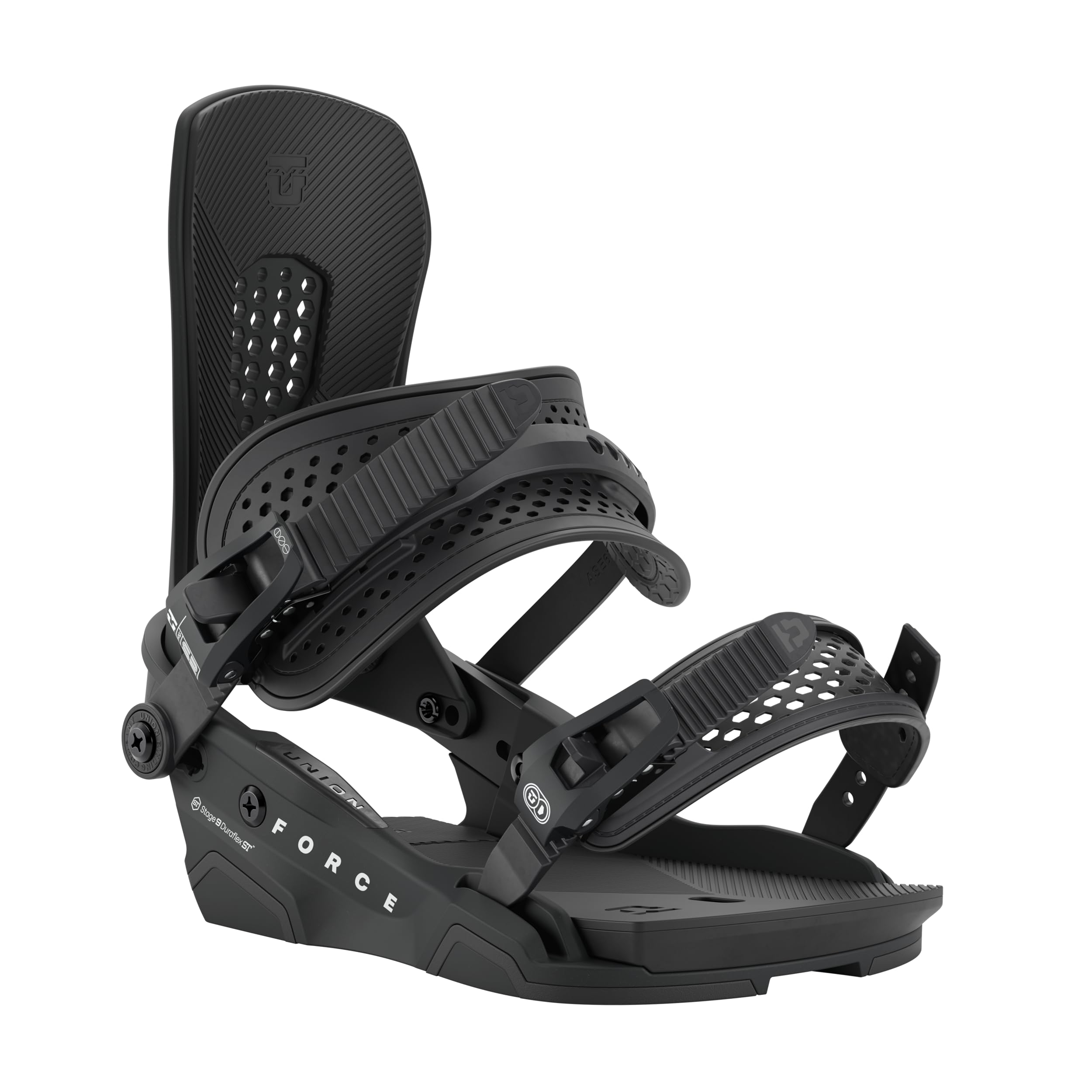
The Union Force has held the title of the most popular binding in snowboarding for a reason. The aluminum baseplate delivers a responsive, fairly rigid platform that channels power directly to the board edge without the dead feeling of a softer nylon chassis. The EVA bushing system sits between the baseplate and the board to absorb high-frequency chatter, which helps maintain edge hold when charging through uneven snow.
Union updated the ankle strap with a contoured design that wraps the boot more evenly than previous generations, reducing pressure points on long runs. The tool-less forward lean adjuster lets you quickly switch your highback angle depending on whether you’re dropping vertical faces or traversing a ridge. Ridden by Miles Fallon and Benny Milam, this binding handles everything from groomers to pillow lines.
The Force uses a mini-disc mounting system, which is compatible with most modern boards, including Burton’s Channel system. The XL size option accommodates US 13–15 boots without overhang. The overall weight is moderate at 5.6 pounds, but the energy transfer and durability justify the slight heft for riders who prioritize control over grams.
Why it’s great
- Aluminum baseplate provides instant edge-to-edge response
- EVA bushing effectively dampens vibration at speed
- Contoured ankle strap eliminates pressure points
Good to know
- Mini-disc does not fit Burton 3D mounting pattern on vintage boards
- Not the lightest option for touring or multi-lap resort days
2. Burton Men’s Step On X Re:Flex Snowboard Bindings

The Burton Step On X represents the premium tier of Burton’s step-on ecosystem, and the main upgrade over the standard Step On is the baseplate construction. A 50/50 blend of carbon fiber and nylon composite makes this binding hyperlight while remaining stiff enough to transfer energy instantly. The Re:Flex FullBED cushioning system sits underfoot to limit fatigue without deadening the board feel.
The Toe Hook 2.0 mechanism gives two secure points of connection at the toe, and the locking system engages with a satisfying click. Riders who pair this binding with Burton’s Ion boots report a solid heel hold and no play between the boot and binding interface. The FLAD system allows micro adjustments to forward lean angle, so you can fine-tune your stance for steep terrain.
At 4.8 pounds, this is one of the lightest stiff bindings on the market. The main tradeoff is boot compatibility: you need Burton Step On boots, which limits your options if you prefer another boot brand. The baseplate is backed by a lifetime warranty, and the straps and hi-backs carry a one-year warranty from the date of purchase.
Why it’s great
- Carbon fiber baseplate keeps weight low and response high
- Step-on entry is genuinely fast for lift line efficiency
- FullBED cushioning reduces fatigue on long descents
Good to know
- Requires Burton Step On boots — no standard boot compatibility
- Toe hook 2.0 can be slightly sticky in cold, wet conditions
3. Union Ultra Men’s Snowboard Bindings
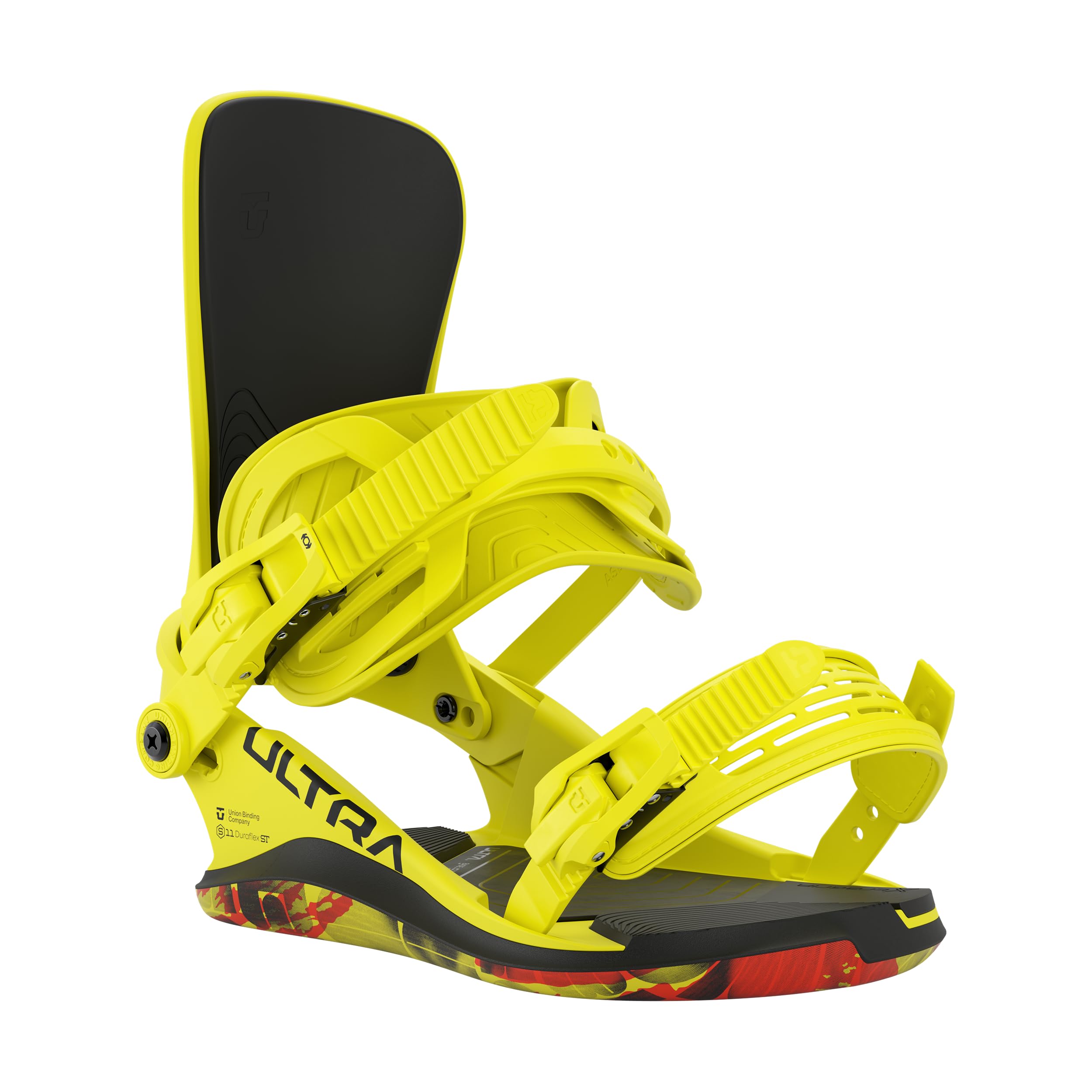
The Union Ultra is designed for riders who want a reactive, surfy feel that still holds up under aggressive freeride loads. The exclusive bushing technology creates a plush ride laterally while maintaining quick edge-to-edge responsiveness when you drive your back foot. This makes the Ultra a strong choice for riders who spend time slashing powder and hitting natural features rather than charging straight down groomers.
The upgraded ankle strap uses a contoured shape that wraps the boot without creating a hinge point, which improves heel hold on toe-side turns. The highback is canted to follow the natural angle of your lower leg, reducing boot-out when you lay into steep carves. Testers noted that the binding feels soft and surfy when flexed laterally but still locks in immediately when you pressure the edge.
The Ultra is lighter than the Force, coming in at around 5 pounds, which is noticeable on chairlifts and during hike-to terrain. The tool-less adjustment system is the same as the Force, making it easy to dial in strap length and forward lean without a screwdriver. Scott Stevens and Gigi Rüf ride this model, so it sees use in both park and freeride contexts.
Why it’s great
- Bushing technology provides a unique surfy yet responsive ride
- Contoured ankle strap improves heel hold without pressure points
- Lightweight build makes it suitable for hike-to lines
Good to know
- Lateral flex may feel too soft for pure chunder-charging riders
- Not ideal for heavy riders who need maximum baseplate stiffness
4. Nidecker Supermatic Snowboard Bindings
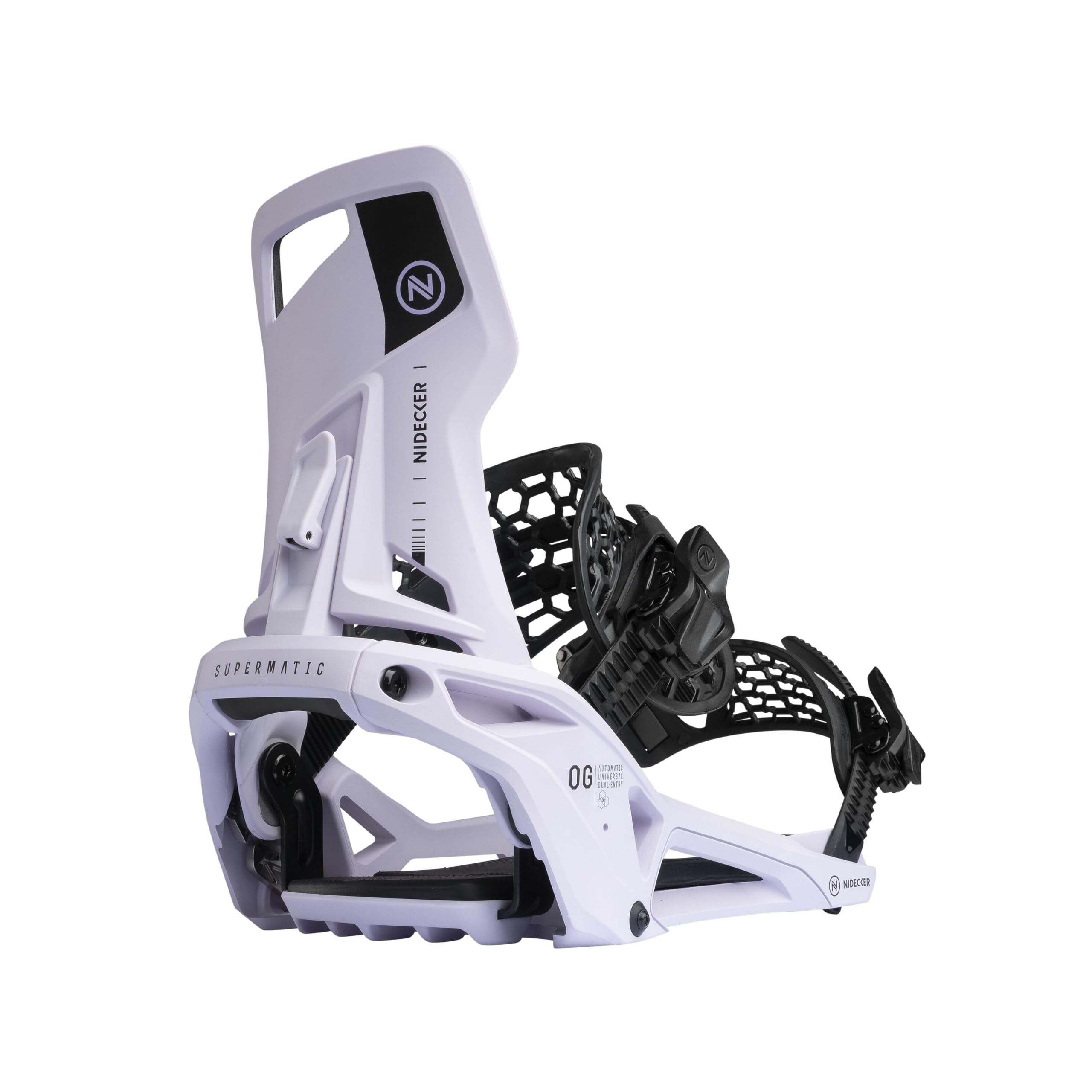
The Nidecker Supermatic represents a genuine shift in binding design: an automatic dual-entry system that lets you step in without sitting down, yet still wraps the boot with a traditional strap feel once engaged. The reinforced platform channels energy efficiently for carving and jumps, and the plush straps and padded highback reduce hotspots. This binding solves the “sitting down on every run” problem without compromising the locked-in feel that freeride demands.
The drop-in mechanism uses a heel pedal that flips up when you step in, engaging the rear strap automatically. The front straps are traditional, giving you the option to dial in toe tension independently. Testers noted that the binding requires a few runs to find the perfect strap adjustment, but once set, it allows fast, consistent entry and exit. The shock-absorbing footbed tames chatter from icy runouts.
The Supermatic weighs around 6 pounds, which is heavier than traditional strap bindings. However, the convenience tradeoff is compelling for resort riders who do 20+ laps per day. The binding works with any standard snowboard boot, so you don’t need to buy a specific boot system. Beginner to intermediate riders benefit most from the ease of use, but advanced riders will appreciate the responsive platform.
Why it’s great
- Automatic drop-in entry eliminates sitting down on slopes
- Works with any standard snowboard boot
- Shock-absorbing footbed dampens chatter effectively
Good to know
- Heavier than traditional strap bindings at 6 pounds
- Mechanism can freeze in very wet conditions; requires boot pull to release
5. Nidecker LT Supermatic Snowboard Bindings
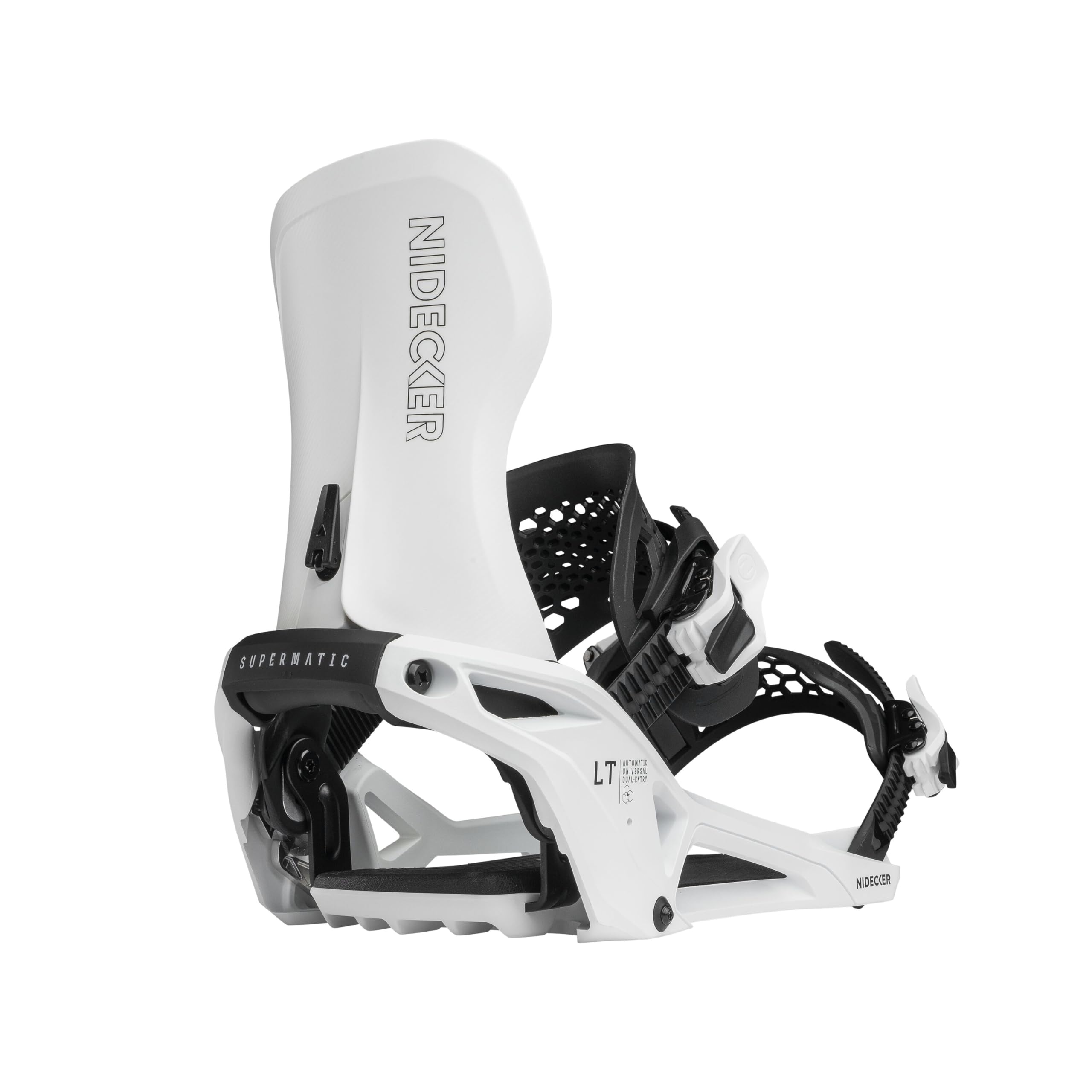
The Nidecker LT Supermatic takes the automatic dual-entry concept from the Supermatic and refines it with lighter materials. The highback is constructed from flax fiber instead of standard nylon, and the hanger and post use recycled carbon fiber. The result is a binding that retains the step-in convenience but feels noticeably less bulky underfoot compared to the standard Supermatic.
The assisted entry design speeds up in and out while keeping a classic strapped feel once the boot is locked in. The reinforced platform drives efficient power transfer edge to edge, and the cushioned footbed tames vibrations for longer sessions. Testers found that the LT model is easier to adjust mid-run than the standard Supermatic, thanks to tool-free micro-adjustments that match terrain and boot fit.
The main consideration is weight — at 6 pounds, it’s still heavier than a traditional strap binding like the Union Force. But for riders who prioritize convenience on high-volume resort days, the LT Supermatic offers a strong compromise. It also works with standard boots, which is a major advantage over Burton’s Step On system.
Why it’s great
- Flax fiber highback and recycled carbon reduce overall weight
- Tool-free micro-adjustments for on-the-fly tuning
- Dual-entry system compatible with any standard boot
Good to know
- Heavier than traditional strap bindings despite lighter materials
- Rear entry heel strap tension requires precise adjustment to avoid jamming
6. Union Strata Men’s Snowboard Bindings
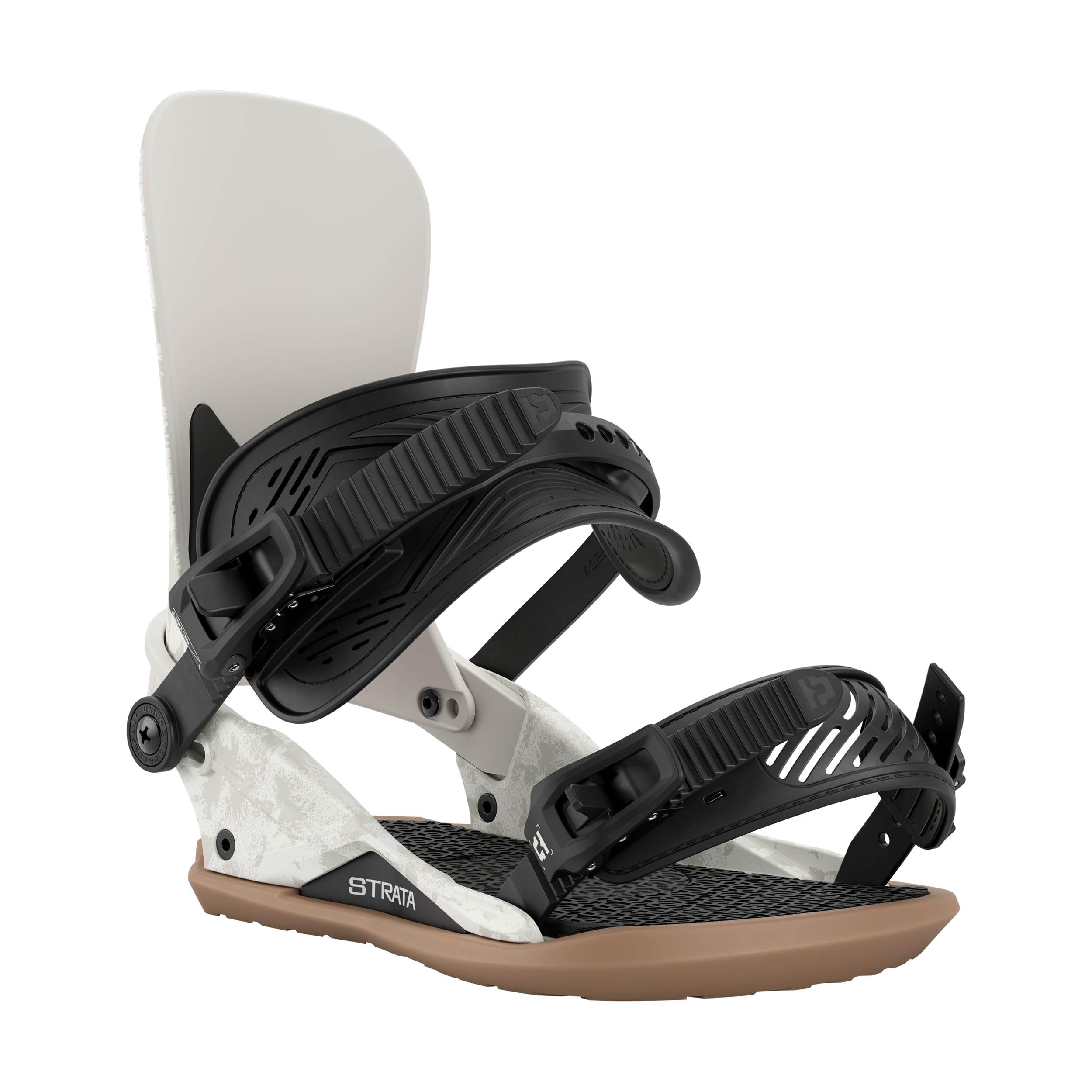
The Union Strata sits in a sweet spot between park playfulness and freeride response. The upgraded bushing material reduces vibration transfer, helping the binding stay silent and secure on rough terrain. Testers noted that the rubber base does a solid job of preventing screws from loosening over time, which is a common issue with bindings that see hard carving and impact landings.
Ridden by Brandon Cocard and Austin Vizz, the Strata is built for riders who spend time on side hits and jump lines rather than straight-line chunder. The upgraded ankle strap uses a design that wraps the boot evenly without creating a pinch point. The tool-less top strap adjust requires you to set tightness before riding, but once set, it holds reliably.
The mini-disc mounting system means these bindings are not compatible with older Burton boards using the 3D pattern. The Strata weighs 4.6 pounds, making it competitive with mid-range options. The feel is slightly softer than the Force, which some riders prefer for freestyle-oriented freeride.
Why it’s great
- EVA bushing reduces bolt loosening and vibration transfer
- Contoured ankle strap eliminates pinch points
- Lightweight at 4.6 pounds for a mid-range binding
Good to know
- Not compatible with older Burton 3D mounting pattern
- Softer flex than Force; less stable for straight-line bombing
7. Nitro Mens Step-In Reflex Snowboard Bindings

Despite the confusing naming, these are Burton Step On bindings sold under a different listing. The Re:Flex FullBED cushioning system provides underfoot dampening that limits fatigue, and the Re:Flex mounting system improves flex and feel while reducing weight. The single-component nylon baseplate offers a consistent, medium-stiff response that works well for intermediate riders transitioning to a step-on system.
The Toe Hook 2.0 offers easier entry and exit than the first-generation step-on design, and the FLAD system allows micro adjustments to forward lean angle. The zero-forward-lean hi-back is completely vertical, which suits riders who prefer a relaxed stance rather than an aggressive forward lean. The bindings mount to any board mount system, including Channel systems.
The main limitation is boot compatibility: you need Burton Step On boots. The nylon baseplate is less responsive than the carbon-reinforced model in the Step On X, so heavier riders or aggressive carvers may find it too soft under high loads. The lifetime warranty on the baseplate adds peace of mind, but the straps and hi-backs are only covered for one year.
Why it’s great
- Step-on system is genuinely faster than traditional straps
- Re:Flex FullBED reduces foot fatigue on long days
- Lifetime warranty on baseplate
Good to know
- Requires Burton Step On boots — no standard boot compatibility
- Nylon baseplate is less responsive than carbon-fiber alternatives
8. Nidecker Flow Nexus Snowboard Bindings (Black ’25)

The Nidecker Flow Nexus is designed for riders who prioritize comfort and ease of entry over maximum stiffness. The glass-filled nylon baseplate provides a medium-stiff flex that is forgiving enough for progressing riders while still offering enough response for all-mountain freeride. The Comfort-Fit Fusion strap spreads support over the whole foot, which means you don’t have to crank the straps as tight as traditional two-strap models.
The Locking Slap Ratchets fix your preferred strap tension at the push of a button, enabling quick entry and exit. Testers noted that the fusion strap eliminates pressure points, making the Nexus a good choice for riders who do full-day resort sessions and want to avoid foot fatigue. The softer flex makes it less suitable for aggressive charging but ideal for mixed-terrain riding where you want a forgiving feel.
The Nexus is marketed toward beginner and intermediate riders, but advanced freeriders might find it too soft for steep, firm terrain. The Fusion strap system also means you cannot independently adjust toe and ankle tension, which some riders prefer for fine-tuning their fit. The binding weighs just 1 pound per binding, making it one of the lightest options in this lineup.
Why it’s great
- Fusion strap eliminates pressure points and reduces strap tension
- Locking Slap Ratchets enable extremely fast entry and exit
- Very lightweight at 1 pound per binding
Good to know
- Softer flex not ideal for charging steep, firm terrain
- Fusion strap lacks independent toe and ankle adjustment
9. Nidecker Flow Nexus Snowboard Bindings (White ’25)

The Flow Nexus in White ’25 is mechanically identical to the Black ’25 version but available in a Small size, which makes it a solid choice for riders with smaller feet or lighter builds. The glass-filled nylon baseplate delivers a medium-stiff flex that is comfortable for all-mountain riding without being overly demanding. The fusion strap eliminates the need to tighten separate toe and ankle straps, reducing setup time and eliminating pressure points.
The locking slap ratchets allow you to tension the straps once and then simply lock and unlock the mechanism for entry and exit. This makes the Nexus especially convenient for riders who struggle with bending over to adjust traditional straps on cold mornings. The Small size fits US Men’s boot sizes 5.5–8.0, which also covers women’s boots in the 7.0–9.5 range.
The same caveats apply as the Black version: the fusion strap does not allow independent toe and ankle adjustment, and the flex is softer than premium freeride bindings. Riders who want maximum response for steep, technical terrain should look at the Union Force or Burton Step On X instead. For comfort-focused all-mountain riding, the Nexus offers a compelling value.
Why it’s great
- Small size fits smaller feet and lighter riders well
- Fusion strap provides a comfortable, pressure-free fit
- Locking ratchets make entry and exit very fast
Good to know
- Fusion strap lacks independent toe/ankle tension adjustment
- Softer flex limits performance on steep, firm terrain
FAQ
Do I need Burton Step On boots for step-on bindings?
What is the main difference between the Union Force and Union Strata?
Are heavier bindings better for freeride?
Final Thoughts: The Verdict
For most users, the freeride snowboard bindings winner is the Union Force because it delivers the best combination of aluminum baseplate stiffness, EVA dampening, and proven durability for aggressive terrain. If you want the lightest possible response with step-on convenience, grab the Burton Step On X. And for riders who value fast entry and standard boot compatibility above all else, nothing beats the Nidecker Supermatic.