
The wrong freewheel turns a smooth single-speed cruiser into a noisy drivetrain that skips under load or wears out after a season of town rides. Matching thread pitch, tooth count, and chain width to your specific hub is the difference between a silent coast and a constant headache.
I’m Mohammad Maruf — the founder and writer behind Drink4Good. I’ve analyzed hundreds of drivetrain components across BMX, fixie, and budget single-speed conversions to uncover which freewheels actually hold up under daily use.
Whether you are building a fixed-gear conversion or refreshing a vintage single-speed, finding the right freewheel for single speed means balancing engagement speed, material hardness, and compatibility with your specific hub threading.
How To Choose The Best Freewheel For Single Speed
Buying a freewheel for a single-speed build feels simple until you realize the wrong pitch, width, or tooth count can make your drivetrain skip or seize. Focus on three specific variables to avoid wasting money.
Thread Pitch and Hub Compatibility
Most standard single-speed and BMX hubs use a 1.37 x 24tpi threading, but flip-flop hubs often have a metric (smaller) thread on one side. Measure your hub’s threading before ordering — forcing a standard freewheel onto a metric hub strips the engagement surface.
Tooth Count, Gear Ratio, and Chain Width
Tooth count directly determines your final gear ratio when paired with a specific chainring. A 13-tooth freewheel paired with a 44-tooth chainring gives a stiff climbing gear, while a 16-tooth freewheel lowers the ratio for quicker acceleration. Chain width must match as well: 1/8-inch freewheels fit thicker BMX chains, while 3/32-inch units suit narrower derailleur-compatible chains.
Pawl Mechanism and Engagement Feel
Freewheels with two pawls often engage with a noticeable delay, creating a loose coasting feel. Three-pawl designs engage every 12 degrees, giving a snappier, more immediate connection when you start pedaling. This matters most for track standing and stop-and-go urban riding.
Quick Comparison
On smaller screens, swipe sideways to see the full table.
| Model | Category | Best For | Key Spec | Amazon |
|---|---|---|---|---|
| ACS Freewheel PAWS 4.1 | Premium | Aggressive riding & high-torque | Nickel-plated, three-pawl, 12° engagement | Amazon |
| Shimano MX 16T | Premium | Ultra-quiet coasting & eBike use | 16 teeth, 3/32″, chromoly steel | Amazon |
| Odyssey 13t BMX Freewheel | Mid-Range | Metric flip-flop hub builds | 13 teeth, metric thread, chromoly | Amazon |
| Shimano Mftz5006428 | Mid-Range | Budget multi-gear to single-speed conversion | 14-28 teeth, Shimano standard | Amazon |
| Origin8 Single Speed Cog | Budget | Entry-level budget build | 13 teeth, chromoly, splined | Amazon |
In‑Depth Reviews
1. ACS Freewheel PAWS 4.1

The ACS PAWS 4.1 uses a cold-forged, nickel-plated body that resists corrosion better than standard chromoly freewheels. Its three-pawl mechanism engages every 12 degrees, eliminating the sloppy slack common in two-pawl designs. Riders on high-torque setups — eBikes or heavy BMX cruisers — benefit from the superior material hardness and reduced flex under load.
Compatible with both 1/8 and 3/32 chains, the PAWS 4.1 fits standard 1.37 x 24tpi threaded hubs. The four-notch removal system works with standard freewheel tools, making swaps quick. Users report noticeably quieter operation compared to OEM freewheels, with minimal vibration during coasting.
If you push hard out of the saddle or ride in wet conditions, the nickel plating and three-pawl design justify the mid-range investment. It holds up better than entry-level stamped steel units and offers consistent engagement over thousands of miles.
Why it’s great
- Three-pawl design with 12° quick engagement
- Nickel-plated cold-forged body resists rust
- Works with 1/8 and 3/32 chains
Good to know
- Requires grinding of certain electric scooter internal gears for fitment
- Not completely silent — moderate pawl click audible
2. SHIMANO MX 16 Tooth Freewheel

The Shimano MX 16T is the quietest production freewheel tested, with multiple users describing it as nearly silent during coasting. The chrome-moly steel body and internal bushing design reduce pawl chatter to a faint whisper. This makes it the first choice for riders who want a stealthy ride or dislike the loud buzz of aggressive freewheels.
Fitting standard 1.37 x 24tpi threaded hubs and accepting 3/32 chains, the MX 16T is drop-in compatible with most single-speed and BMX builds. The 16-tooth count pairs naturally with a 44-tooth chainring for a balanced 2.75 ratio ideal for flat urban riding and mild inclines. It requires a Park Tool FR6 or similar external freewheel tool for removal.
The sealed lubricant inside is thick from the factory, causing a slightly sticky finger spin — but under pedal load, it operates butter-smooth. For eBike conversions, the quiet engagement is a major upgrade over the clicking alternatives.
Why it’s great
- Remarkably quiet operation for a freewheel
- Chrome-moly steel body for long wear
- Balanced 16T gear ratio for city riding
Good to know
- Requires specific FR6 tool for removal
- Thick factory grease can feel slightly sticky when spun by hand
3. Odyssey 13t BMX Freewheel

The Odyssey 13t is the go-to freewheel for flip-flop hubs that use the metric (smaller) thread on one side. Most standard freewheels require 1.37 x 24tpi threading, but this unit threads directly onto the metric side, making it essential for fixed-gear conversions that need a freewheel on a threaded fixed hub.
Constructed from chromoly steel, the 13-tooth design offers a stiff gear ratio suited for BMX racing or high-speed cruising when paired with a large chainring. The black finish reduces visible wear compared to bare chrome, and the internal engagement is reliable out of the box with no break-in period required.
Users report a smooth, consistent pawl action with no skipping, even after rebuilding vintage flip-flop hubs. The 13-tooth count is on the smaller side, so check your desired gear ratio before buying — it works best for riders who prefer a harder push per pedal stroke.
Why it’s great
- Threads directly onto metric flip-flop hubs
- Chromoly construction resists flex under load
- Black finish hides chain wear marks
Good to know
- 13T is a small gear — confirm ratio before buying
- Not designed for 1.37 x 24tpi standard hubs
4. Shimano Unisex Mftz5006428

This Shimano freewheel covers a 14-tooth to 28-tooth range, giving it flexibility for riders converting old multi-speed bikes to single-speed who need a wider gear selection. The threaded body fits standard freewheel hubs and uses the same removal tool as other Shimano freewheels, simplifying installation.
Construction quality meets Shimano’s standard — the steel body and internal ratchets are consistent and reliable, with no reported skipping or premature wear. The 14-tooth small cog works well for higher-speed gearing, while the 28-tooth is useful for hill climbing on budget conversions.
Keep in mind this is a multi-speed freewheel, so if you only need a single fixed cog, the wider body adds unnecessary weight. But for riders who want gearing options without swapping freewheels, this is the most versatile entry-level pick.
Why it’s great
- Wide 14-28 tooth range for flexible gearing
- Consistent Shimano build quality
- Easy installation with standard freewheel tools
Good to know
- Multi-speed design adds weight vs. single cog
- Requires gear shift adjustment after swapping
5. Origin8 Single Speed Cog
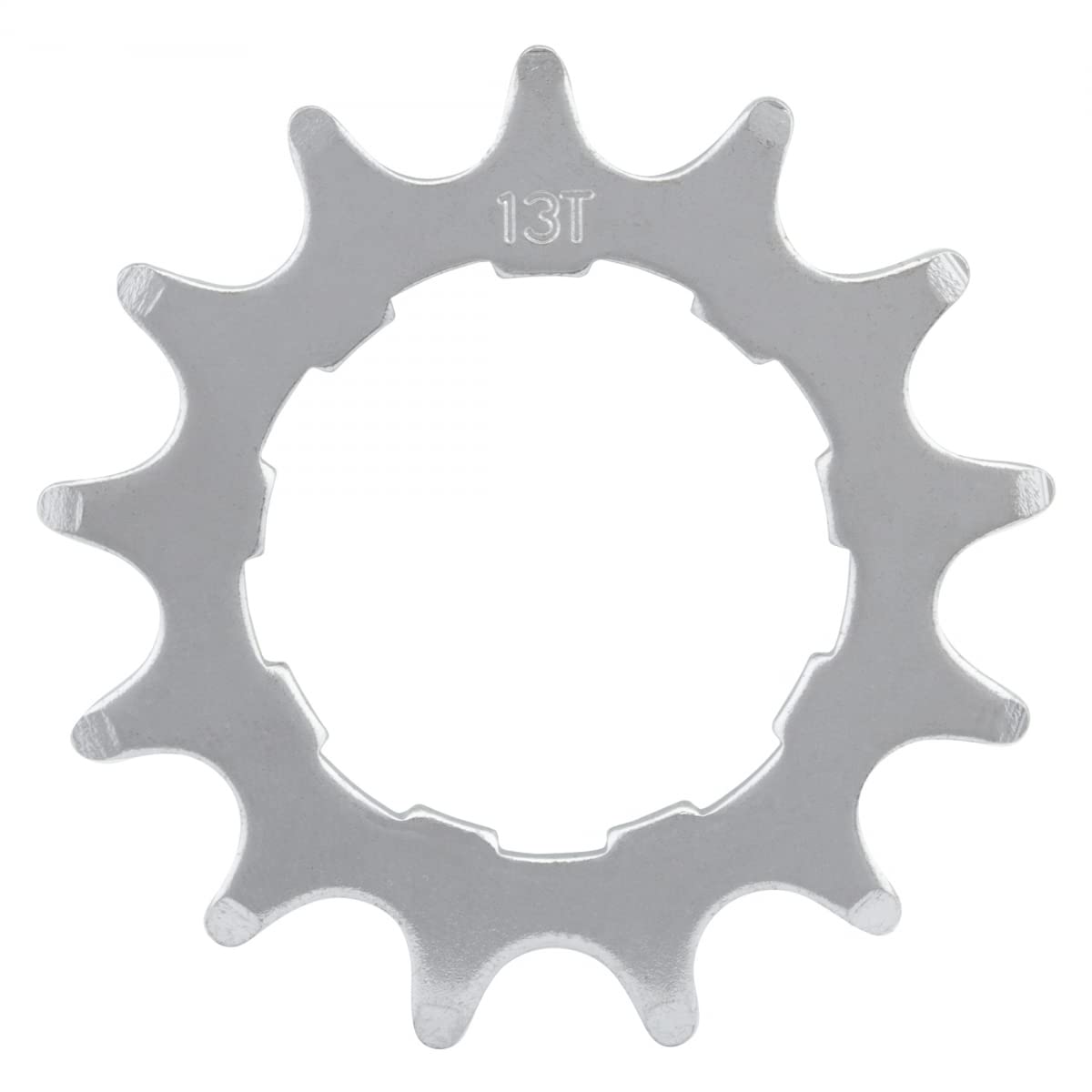
The Origin8 Single Speed Cog is an entry-level chromoly steel sprocket designed for Shimano/Sram-style cassette bodies, not threaded freewheel hubs. This is technically a cog that mounts on a cassette driver, making it best suited for riders converting a multi-speed hub to single-speed using spacers and a lockring.
The chrome-plated finish prevents surface rust, and the 13-tooth size fits standard 1/8 chains. Users report the teeth are fairly pointed — this leads to faster wear than premium cogs, but for occasional riders or budget builds, it holds up for several seasons before needing replacement.
Be aware of the 3/32 chain width specification: the cog accepts 3/32 chains natively but runs 1/8 chains without issue. If you plan to build a dedicated single-speed with a cassette hub, this is the cheapest reliable option available.
Why it’s great
- Lowest cost option for cassette hub conversions
- Chrome plating resists corrosion
- Works with both 1/8 and 3/32 chains
Good to know
- Designed for cassette bodies, not threaded freewheel hubs
- Tooth profile is pointed, leading to faster wear
FAQ
Can I use a BMX freewheel on a road single-speed hub?
What is the difference between a freewheel and a cassette for single-speed use?
Final Thoughts: The Verdict
For most users, the freewheel for single speed winner is the ACS Freewheel PAWS 4.1 because it combines hardened nickel-plated construction, three-pawl engagement, and dual chain-width compatibility into one reliable package. If you want nearly silent coasting and proven Shimano durability, grab the Shimano MX 16T. And for metric flip-flop hub builds, nothing beats the Odyssey 13t for correct thread fit and chromoly strength.