
You pull into camp after a long day on the trail, and the last thing you want is a lukewarm, soggy pouch of food that tastes like cardboard. Freeze-dried camping meals have evolved well beyond the bland astronaut fare of the past, but navigating the options — from rehydration times to sodium levels and calorie density — can still feel overwhelming.
I’m Mohammad Maruf — the founder and writer behind Drink4Good. I’ve spent years analyzing the freeze-dried food market, cross-referencing shelf-life claims, serving sizes, and real-world rehydration performance so you don’t have to guess which meals will actually satisfy you after miles of hiking.
In this guide, I break down the top contenders in the space, focusing on taste, weight, and preparation ease. Whether you’re planning a weekend backpacking trip or building a long-term emergency stash, you’ll find a clear winner in freeze dried camping food that matches your specific needs.
How To Choose The Best Freeze Dried Camping Food
The right meal for your next trip depends on more than just flavor. Rehydration speed, overall weight per serving, and the length of the shelf life all play a role. Pay close attention to the ingredient list — some brands rely heavily on sodium to preserve taste, which can leave you thirsty on the trail. The best freeze-dried options use a combination of real proteins, vegetables, and whole grains to deliver a satisfying texture without a long list of additives.
Rehydration Time and Water Temperature
Most pouches require boiling water and a 8-to-10 minute wait, but some thick sauces or dense pasta shapes can take longer. A meal that stays crunchy after the recommended time is a sign of poor processing. Look for brands that specify “just add hot water” with no simmering required — this saves fuel and time when you’re tired at the end of the day.
Serving Size and Calorie Density
A standard pouch marked “2 servings” often provides only 400–600 total calories, which is barely enough for one hungry adult after a long hike. If you’re covering serious mileage, aim for meals that pack at least 200 calories per ounce. Checking the net weight per serving helps you avoid the disappointment of a pouch that looks big but contains mostly air.
Shelf Life and Storage Format
Freeze-dried food can last anywhere from 5 to 30 years when sealed properly. Pouches are great for short trips — they’re lightweight and easy to pack out. #10 cans are better for long-term emergency supplies because they offer better oxygen protection and more servings per container. Always check the “best by” date before relying on a meal for a remote trip.
Quick Comparison
On smaller screens, swipe sideways to see the full table.
| Model | Category | Best For | Key Spec | Amazon |
|---|---|---|---|---|
| Mountain House Chicken & Mashed Potato | Entrée Pouch | Solo hikers wanting comfort food | 2 servings, 4.48 oz pouch | Amazon |
| Mountain House Creamy Mac & Spaghetti | Variety 2-Pack | Quick variety on short trips | 2 servings per pouch, 10 min prep | Amazon |
| ReadyWise Favorites Box | Emergency Kit | Disaster prep & pantry stocking | 18 servings, 25-year shelf life | Amazon |
| Nutrient Survival Freeze-Dried Strawberries | Fruit #10 Can | Adding real fruit to camp meals | 6.5 oz, 25-year shelf life | Amazon |
| Harmony House Veggie Sampler | Dehydrated Variety | Adding veggies to any backcountry meal | 15 pouches, yields 40 cups | Amazon |
In‑Depth Reviews
1. Mountain House Chicken & Mashed Potato Dinner
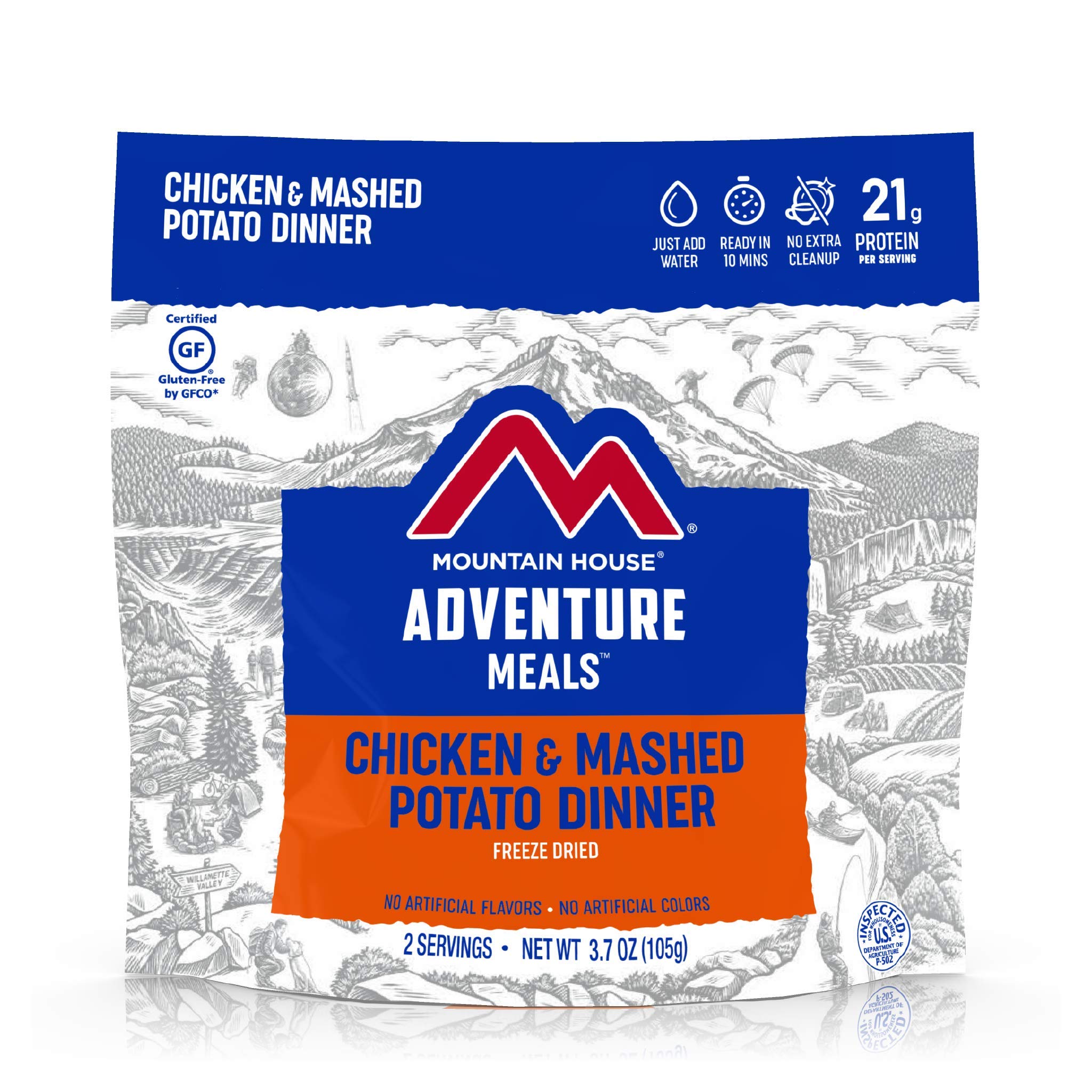
The Mountain House Chicken & Mashed Potato dinner is the benchmark that other freeze-dried meals are measured against. The creamy mashed potatoes rehydrate into a texture that is remarkably close to fresh, with visible herbs and chives adding a layer of flavor that most competitors miss. At 4.48 ounces for a pouch labeled as two servings, it is light enough for a solo hiker to pack without a second thought, and the 30-year taste guarantee gives you confidence for emergency storage.
Preparation is straightforward — just pour hot water directly into the pouch, stir, and wait about eight to ten minutes. The pouch retains heat extremely well, so you can eat straight from the bag without needing a separate bowl. Some reviewers note that the base can be slightly on the bland side, which is easily fixed with a sprinkle of garlic powder or black pepper, but the chicken and potato balance is satisfying enough to stand on its own.
This meal is ideal for backpackers who prioritize both taste and convenience. It is certified gluten-free by the GFCO, and the pouch itself is recyclable through TerraCycle if you want to minimize waste. The only real tradeoff is the calorie density — at roughly 400–500 calories per pouch, you may want to supplement with a protein bar or extra snacks if you are burning 3,000+ calories on trail.
Why it’s great
- Honest-to-goodness potato and chicken texture that feels real, not chalky
- Gluten-Free certification removes guesswork for dietary needs
- 30-year taste guarantee for long-term storage confidence
Good to know
- Pouch stays very hot after adding water; transfer to a bowl if you prefer faster cooling
- Calorie count per pouch is modest for high-mileage days
2. Mountain House Creamy Mac & Cheese + Spaghetti with Meat Sauce
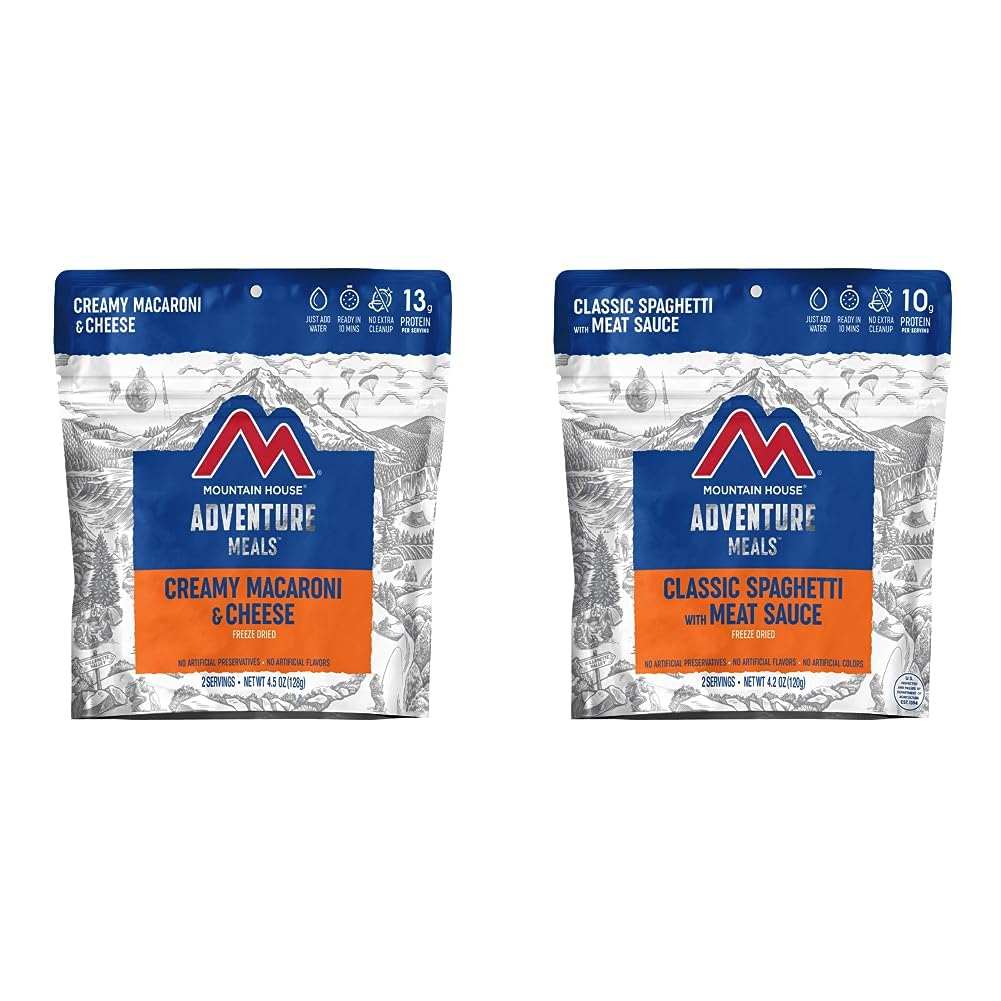
This two-pack from Mountain House gives you a pasta-and-marinara dinner alongside a classic mac and cheese, making it a solid entry point for anyone new to freeze-dried camping meals. The Spaghetti with Meat Sauce uses tender spaghetti strands and real chunks of beef in a marinara that tastes much closer to homemade than to the metallic flavor some competitors carry. The Creamy Macaroni & Cheese delivers a thick cheese sauce that kids and adults both appreciate, though some users note the noodles can remain slightly firm even after the full recommended steep time.
Both pouches weigh roughly the same as a single Mountain House entrée, so you can easily split them across a two-night trip. The preparation process is identical — boil water, fill to the fill line, wait ten minutes, and eat. Because each pouch holds two servings, you can feed two people a light dinner or one hungry person with a full pouch and still have room for dessert.
The main consideration is that the macaroni and cheese has drawn mixed feedback on noodle hydration, with some hikers letting it sit an extra five minutes to get the texture right. The spaghetti side, by contrast, rehydrates consistently and has become a favorite among reviewers who add beef crumbles or jalapeños for extra heat. For the convenience of two different meals in one purchase, this combo is hard to beat.
Why it’s great
- Two different dinners in one order, perfect for short trips
- Spaghetti with meat sauce rehydrates quickly and tastes authentic
- Budget-friendly entry point for trying the Mountain House line
Good to know
- Mac and cheese may require extra steeping time for fully soft noodles
- Not certified gluten-free due to wheat pasta
3. ReadyWise Emergency Food Supply – 18 Servings Favorites Box

The ReadyWise Favorites Box is built for a different mission than single-serve pouches — it prioritizes shelf stability and volume over gourmet flavor. With 18 servings per box and a claimed 25-year shelf life, this is the kit you stash in the basement, the RV, or the bug-out bag for when a power outage or weather event keeps you at home. The included recipes — Creamy Pasta & Vegetables, Cheesy Lasagna, and Tomato Basil Soup with Pasta — provide a solid variety that doesn’t feel monotonous over a few days of emergency eating.
Preparation takes a bit more work than Mountain House’s pouch-in-bag method. ReadyWise meals typically require simmering in a pot for 15–20 minutes to fully rehydrate the pasta, and the instruction sheets are not always clear on single-serving adjustments. The flavor profile leans heavily on salt for preservation, which is effective for long-term storage but does mean you will want extra water on hand. The serving sizes are also smaller than what most active adults need — each “serving” is roughly 200–250 calories, so plan on eating two pouches per meal if you are hiking or doing physical labor.
For pure survival-readiness at a moderate price per serving, this box delivers. The stackable design fits neatly into pantry shelves, and the resealable pouch system keeps unused portions fresh. Just be aware that the “18 servings” number is based on small portions; experienced campers often treat each pouch as a half meal.
Why it’s great
- Exceptional 25-year shelf life for worry-free long-term storage
- Stackable box design maximizes pantry and car space
- Includes a range of flavors to avoid menu fatigue
Good to know
- Needs a pot and simmering, not a simple hot-water pour
- Sodium content is high; keep hydrated on the trail
4. Freeze-Dried Strawberries – Premium Sliced by Nutrient Survival
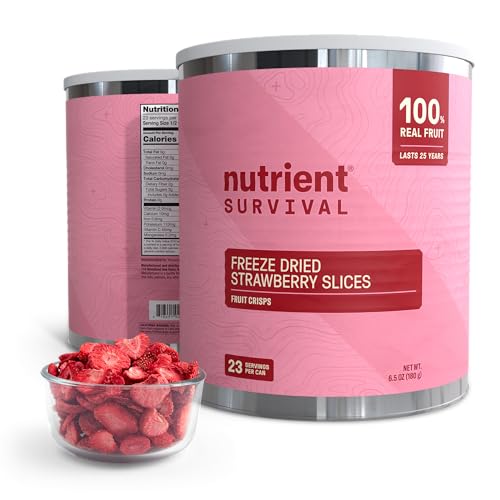
Freeze-dried fruit is one of the most versatile additions to any camp kitchen, and Nutrient Survival’s Premium Sliced Strawberries set a high bar for quality. Packed in a #10 can with an oxygen-controlled seal, these strawberries maintain their bright red color and natural sweetness without any added sugars or preservatives. The slices are large enough to eat as a standalone crunchy snack — perfect for adding to morning oatmeal or mixing into pancake batter on a camp stove — but they also rehydrate quickly into a soft, jam-like texture if you soak them for a few minutes.
Each #10 can weighs 6.5 ounces and yields multiple servings, making it a more economical choice than buying several small pouches. The 25-year shelf life means you can buy a few cans, throw them in the back of the pantry, and forget about them until you need a fruit boost on a trip or during an emergency. The fruit is freeze-dried and packaged in the USA, which is a quality differentiator compared to some imported alternatives that may have inconsistent slice sizes or a higher stem content.
The main downside is the lack of a country-of-origin label for the strawberries themselves, which some buyers have raised as a transparency concern. That said, the flavor and texture reviews are overwhelmingly positive — users describe the strawberries as “always in season” and note zero spoilage, which is exactly what you want from a long-term storage food. If you eat oats, smoothies, or desserts on the trail, this can is a worthy addition to your camp pantry.
Why it’s great
- No added sugars or preservatives, just real fruit
- 25-year shelf life in a durable #10 can
- Rehydrates quickly into a soft texture for oatmeal or baking
Good to know
- Can size may be more than you need for short weekend trips
- Country-of-origin information is not clearly printed on the can
5. Harmony House Dehydrated Vegetable Sampler – 15 Count
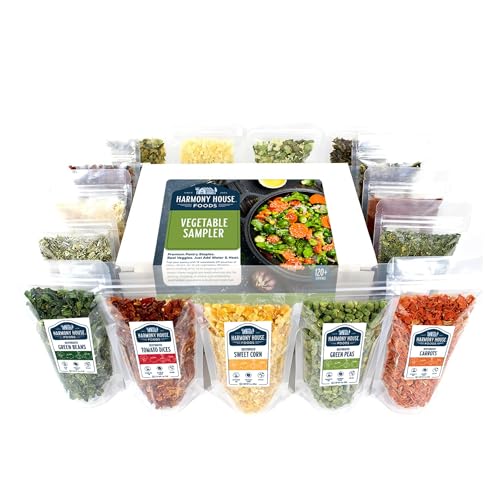
The Harmony House Vegetable Sampler is not a complete meal in itself, but it is arguably the most useful supplement you can add to your freeze-dried camping food stash. The pack contains 15 separate, resealable zip pouches of vegetables — broccoli, cabbage, carrots, celery, corn, green beans, jalapeños, leeks, onions, peas, bell peppers, potatoes, spinach, and tomatoes — that you can mix into any freeze-dried entrée, ramen, or soup. Dehydration preserves more structure than freeze-drying for certain vegetables like carrots and peas, so you get a satisfying bite that does not turn to mush.
Each pouch is lightweight and yields about 2.6 cups of rehydrated veggies, so the whole box gives you roughly 40 cups total — enough to stretch 15 freeze-dried dinners into more complete, fiber-rich meals. The veggies do require a soak of 10 to 20 minutes (or a quick simmer), and the jalapeños are genuinely spicy — use a teaspoon at most if you have a low tolerance. For hikers who worry about scurvy on multi-day trips (a real concern expressed in the reviews), this sampler solves the problem of eating enough greens while keeping pack weight low.
The tradeoff is that this is a dehydrated product, not freeze-dried, so the rehydration process is slightly slower and some veggies (like carrots) may remain a bit crunchy even after soaking. The resealable pouches help you portion out just what you need, and the overall cost per serving is significantly lower than buying pre-mixed freeze-dried meals. If you want to add serious volume and nutrition to your camp cooking without carrying fresh produce, this sampler is the smart move.
Why it’s great
- 15 different vegetables allow endless meal customization on the trail
- Resealable pouches prevent waste and keep portions controlled
- Non-GMO and Kosher certified, with a very good cost per serving
Good to know
- Dehydration means slower rehydration than freeze-dried options
- Jalapeños are extremely hot — start with a tiny pinch
FAQ
How do I rehydrate freeze-dried camping food without a stove?
What is the difference between freeze-dried and dehydrated camping food?
How many servings should I plan per day on a backpacking trip?
Final Thoughts: The Verdict
For most users, the freeze dried camping food winner is the Mountain House Chicken & Mashed Potato Dinner because it combines fast rehydration, great texture, and a 30-year taste guarantee in a lightweight pouch. If you want variety for short trips, grab the Mountain House Mac & Spaghetti 2-Pack. And for adding real vegetables to every backcountry meal, nothing beats the Harmony House Vegetable Sampler.