
A front tine tiller that bucks and jumps over hard soil isn’t a tool — it’s a chore. The right machine sinks its forged steel tines into compacted clay, breaks sod into loam, and lets you move through a row without wrestling the handlebars. That takes an engine with real displacement, a transmission built to handle shock loads, and a chassis that stays planted when the tines bite.
I’m Mohammad Maruf — the founder and writer behind Drink4Good. I’ve spent years analyzing torque curves, gear reduction ratios, and tine configurations across the gas-powered garden equipment market to separate machines that actually break ground from those that just vibrate in place.
Whether you’re prepping a new vegetable patch or rejuvenating compacted flower beds, finding the right best front tine tiller comes down to matching engine power to your soil type and row layout.
How To Choose The Best Front Tine Tiller
Front tine tillers place the tines directly in front of the wheels or axle. That design gives you direct control over the cut depth but also means the machine tends to lurch forward when the tines grab hard ground. Choosing the right one requires understanding how engine displacement, transmission type, tine steel, and weight distribution interact with your specific soil and garden layout.
Engine Displacement and Cycle Type
Displacement measured in cubic centimeters (cc) defines the raw torque available to spin the tines. A 46cc engine works fine for soft, pre-tilled beds and light cultivating, but breaking new sod or dense clay requires at least 79cc. Four-cycle engines eliminate the need to pre-mix oil and fuel, run cleaner, and typically produce smoother torque at lower RPMs compared to two-stroke options.
Transmission: Gear Drive vs. Chain Drive
The transmission transfers engine power to the tines. Gear drives use machined bronze or steel gears inside a sealed housing — they handle shock loads from rocks and roots better and generally last longer without maintenance. Chain drives are cheaper to manufacture and can be noisier, but they’re also easier to repair if a chain snaps. For heavy soil, gear drive is the more durable choice.
Adjustable Tilling Width and Depth Control
Adjustable width lets you switch between full-width tilling (17 to 21 inches) for open beds and narrower passes (9 to 11 inches) for weeding between established rows. Tool-less removal of outer tines and side shields is a convenience that saves time during garden maintenance. Depth stakes or drag bars control how deep the tines bite — multi-position stakes that adjust without tools give you precise control on the fly.
Quick Comparison
On smaller screens, swipe sideways to see the full table.
| Model | Category | Best For | Key Spec | Amazon |
|---|---|---|---|---|
| Earthquake Badger 41080 | Premium | Deep tilling & heavy clay | 160cc Viper engine, 21″ width | Amazon |
| Earthquake Versa 20015 | Premium | Large gardens & roots | 99cc Viper engine, 11″ depth | Amazon |
| TAZZ 35310 Viper | Mid-Range | Versatile beds & rows | 79cc, bronze gear transmission | Amazon |
| NOVUS NV17FTG | Mid-Range | New ground & large areas | 79cc, 24 steel tines, reverse | Amazon |
| SPLENDOR 79cc | Mid-Range | Adjustable width precision | 79cc, 24″ max width | Amazon |
| Makita KR401MP | Mid-Range | Raised beds & flower gardens | 9″ 6-tine steel, 11.25 lbs | Amazon |
| SENIX 4QL TL4QL-L1 | Mid-Range | Small-medium gardens | 46cc 4-cycle, 15″ width | Amazon |
| Honda FG110KiAT | Premium | Small beds & soft soil | GX25 engine, 29 lbs | Amazon |
| Pulsar PTG1120R | Premium | Large plots & heavy work | 212cc, 20″ width, reverse | Amazon |
In‑Depth Reviews
1. Earthquake Badger Front Tine Tiller, 160cc Viper Engine (41080)
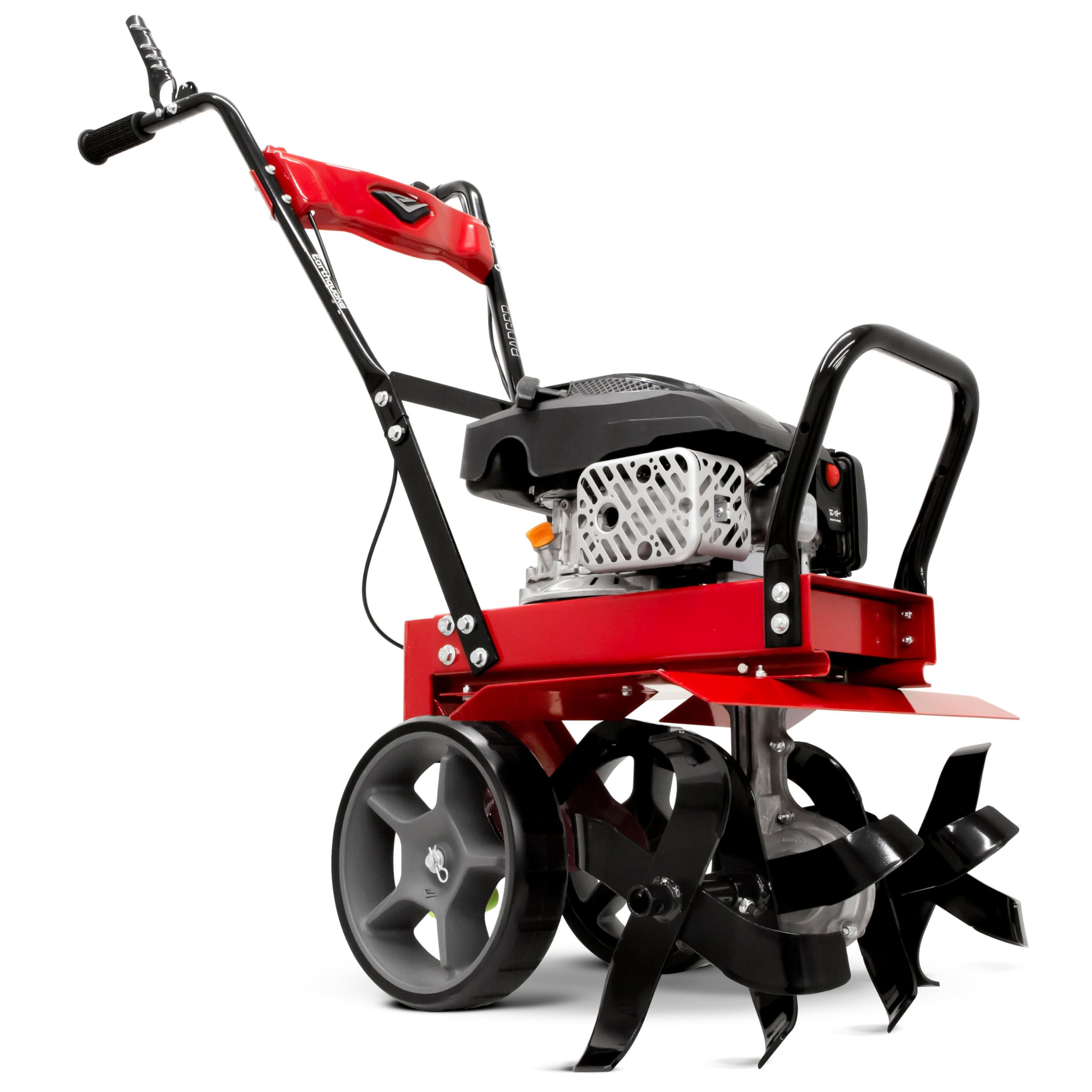
The Earthquake Badger stands apart with its 160cc Viper engine — one of the largest displacements you’ll find in a compact front-tine frame. That extra displacement translates into sustained torque through tough soil without the engine bogging down. The two-position wheel assembly is a genuine innovation: forward for easy transport across grass or pavement, then extended rearward to lower the center of gravity during active tilling, which virtually eliminates the bucking that plagues smaller machines.
Adjustable tilling width from 11 to 21 inches uses a tool-free tine removal system, so you can switch from breaking new ground to weeding between rows in under a minute. The all-steel construction and forged tines hold up well against buried rocks, and the airless wheels remove the risk of a flat tire mid-job. At 102 pounds, the Badger has enough mass to stay planted but remains manageable for a single operator to pivot at row ends.
Customer feedback consistently highlights how the engine fires on the first or second pull even after seasonal storage, and the 5-year limited warranty provides confidence for regular use. The only notable weak point is the instruction manual, which some users found sparse — but the assembly itself is straightforward with basic hand tools.
Why it’s great
- 160cc Viper engine provides class-leading torque for hard soils
- Two-position wheels improve transport and tilling stability
- Tool-free tilling width adjustment from 11 to 21 inches
- 5-year limited warranty backs the all-steel construction
Good to know
- Assembly instructions are minimal; rely on online videos
- At 102 pounds, it’s heavy for carrying over long distances
2. Earthquake Versa 2-in-1 Tiller Cultivator (20015)

The 99cc Viper engine in the Earthquake Versa delivers serious bite for a machine in this weight class. It’s designed to handle compacted soil and root-packed ground without stalling, and the tool-less side shield and outer tine removal let you dial in the tilling width from 11 to 21 inches. The 11-inch maximum tilling depth matches what many rear-tine models offer, making this a strong contender for anyone who needs deep soil preparation without stepping up to a much heavier machine.
The adjustable handlebar height accommodates different users comfortably, and the onboard transport wheels simplify moving the 78-pound unit across the yard. The drag stake is critical here — when adjusted properly, it controls the tiller’s forward speed and prevents the bucking that can occur when the tines grab hard ground. Users report that the engine starts reliably in two pulls and handles vines and dense clay well, though the tine bolts can loosen over time and should be checked regularly.
The Versa shines in medium-to-large gardens where you need both full-width tilling and narrow-row cultivation. The 5-year limited warranty is competitive at this price point, and the combination of power, depth, and adjustable width makes it a versatile workhorse for gardeners who want one machine that does both heavy and light work.
Why it’s great
- 99cc Viper engine with real torque for compacted soil
- 11-inch tilling depth rivals rear-tine models
- Tool-less width adjustment and handlebar height
- Onboard transport wheels for easy yard movement
Good to know
- Tine and handlebar bolts vibrate loose; use threadlocker
- Drag stake adjustment is critical to prevent bucking
3. TAZZ 35310 2-in-1 Front Tine Tiller Cultivator, 79cc Viper Engine
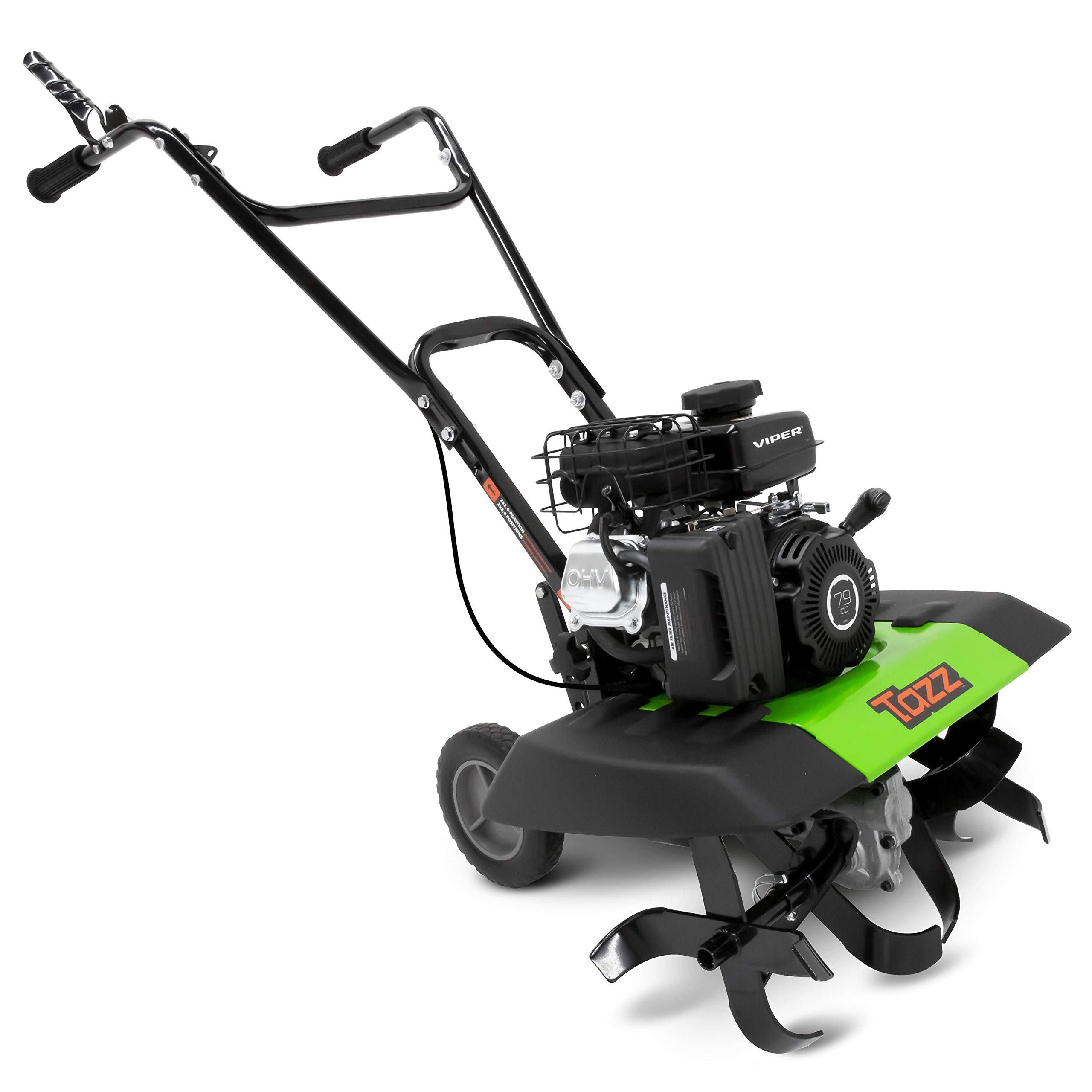
The TAZZ 35310 hits a sweet spot between power and price with its 79cc Viper engine mated to a bronze gear transmission. That gear drive is a major differentiator at this tier — most competitors in the sub- range use chain drives, which wear faster under continuous load. The bronze gears handle shock loads from rocks and roots better and run quieter, making this tiller feel more refined during operation.
The 2-in-1 design allows tool-less removal of outer tines and side shields, giving you three working widths: 21 inches for full bed prep, 16 inches for intermediate passes, and 11 inches for cultivating between rows. The multi-position drag stake adjusts without tools and controls tilling depth up to 11 inches, which is generous for a front-tine machine. The steel handlebar offers four height positions, so operators of different statures can find a comfortable ergonomic angle.
Owners consistently report that the engine starts on the first pull with ethanol-free gas and that the machine’s low center of gravity provides good stability even on uneven ground. The 3-year limited warranty adds peace of mind. The main trade-off is that the tiller is best suited for already-worked or moderately hard soil — breaking extremely compacted clay may require several passes.
Why it’s great
- Bronze gear transmission for durability and quiet operation
- Three tool-less tilling widths (21, 16, and 11 inches)
- 11-inch tilling depth with tool-free drag stake
- 3-year limited warranty and US-based support
Good to know
- Not a one-pass machine for extremely hard virgin soil
- Oil filling requires laying the tiller on its side
4. NOVUS 2-in-1 Gas Tiller Cultivator, 79cc 4-Cycle (NV17FTG)
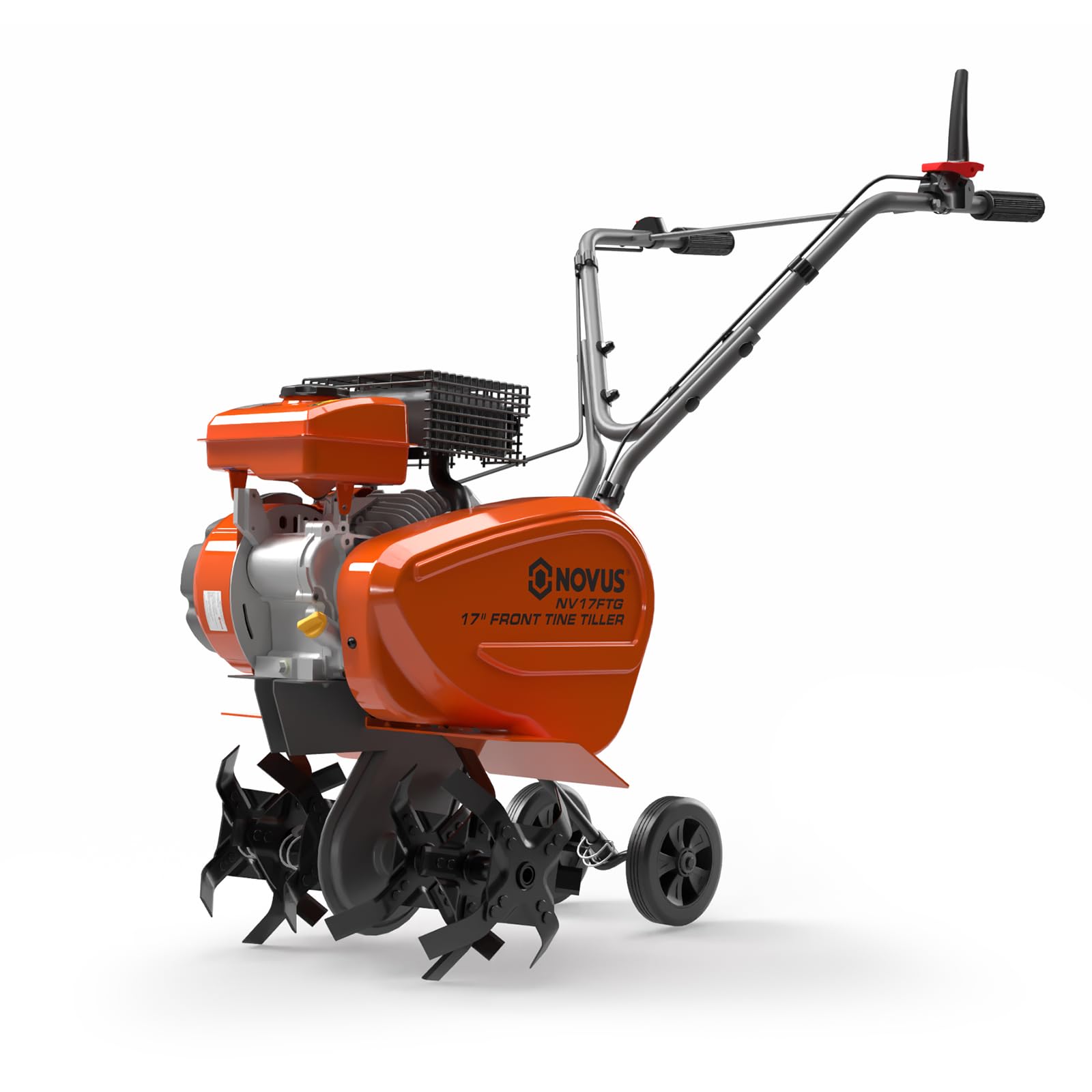
The NOVUS NV17FTG brings a feature rarely seen at the mid-range price point: a dedicated reverse gear. That alone saves considerable effort when maneuvering in tight spaces or backing out of a row without lifting and turning a 75-pound machine. The 79cc 4-cycle engine fires easily with a smooth recoil pull, and the 24 hardened steel tines — each 9.5 inches long — provide aggressive soil penetration across adjustable working widths of 9, 14, and 17 inches.
The 2-in-1 design lets you remove the outer tines without tools to switch from full-width tilling to narrow cultivating. The never-flat airless wheels eliminate the worry of punctures, and the low center of gravity keeps the tiller stable even when the tines hit roots or rocks. The 6-inch working depth is shallower than some competitors, but it’s sufficient for most seedbed preparation and weed cultivation tasks.
Early user reports praise the machine’s power in breaking new ground and the ease of assembly — most users had it running in under 20 minutes. The automatic throttle and smooth pull recoil mean less arm fatigue during long sessions. Keep an eye on the gas and oil caps, which some users found prone to cross-threading, and confirm all hardware is present before assembly, as a few units have shipped with missing bolts.
Why it’s great
- Reverse gear improves maneuverability in tight spaces
- 24 hardened steel tines for aggressive soil penetration
- Tool-free tine removal and adjustable width
- Never-flat wheels eliminate flat tire issues
Good to know
- 6-inch tilling depth is shallower than some alternatives
- Check cap threading carefully; cross-threading is possible
5. SPLENDOR 79cc 4-Cycle Gas Powered Tiller

The SPLENDOR 79cc tiller distinguishes itself with a maximum tilling width of 24 inches — wider than most front-tine models in its class. That broad swath means fewer passes across large beds, saving time during initial soil prep. The 16 hardened steel hoe-style blades dig up to 9 inches deep and are arranged in removable groups (4-2-2 per side), allowing you to reduce the working width to 15 or 10 inches for tighter row work.
Ergonomics are a core focus here: the handlebar adjusts to three height positions, and the two rear wheels can be repositioned up or down to change the machine’s attitude during tilling. The chain-type gearbox is straightforward to maintain, and the engine starts reliably — multiple users note first-pull starts after proper setup. The machine’s compact footprint and 40-inch overall length make it easy to store in a shed corner.
Build quality varies, with some users reporting damaged air filter housings from shipping and one notable complaint about tines contacting the fender due to misaligned assembly. The throttle control feels thin, and the grips are small, but both are fixable with minor modifications. For the price, the SPLENDOR offers an impressive width-to-cost ratio, though quality control checks on arrival are advisable.
Why it’s great
- 24-inch max tilling width reduces passes over large areas
- Adjustable handlebar height and repositionable rear wheels
- 16 hardened steel blades dig up to 9 inches deep
- Compact dimensions for easy shed storage
Good to know
- Quality control is inconsistent; inspect all parts on delivery
- Grips and throttle feel inexpensive; may need upgrades
6. Makita KR401MP Cultivator Couple Shaft Attachment

The Makita KR401MP isn’t a standalone tiller — it’s a cultivator attachment for the Makita Couple Shaft power head system. That distinction matters: this 11.25-pound head delivers precision cultivation in raised beds, flower gardens, and previously tilled soil without the weight or engine vibration of a full-size gas machine. The steel drive shaft reduces vibration transmission to the handle, making longer sessions easier on the arms.
The 9-inch, six-tine design is narrow by design, allowing you to work within inches of plant stems without damage. That precision makes it ideal for breaking surface crust, mixing in compost, and weeding between tight rows. Because it attaches to the power head, you’re not managing a separate engine, fuel, or carburetor — just swap the attachment and go. The steel construction and Makita’s reputation for drivetrain durability add confidence.
Users consistently note that this is not a tool for breaking new ground or tilling hard virgin soil. It excels in soft, maintained beds and raised boxes where a full tiller would be overkill. Some users found the narrow head required more passes to cover area, but the control and lack of soil disruption around desired plants offset that trade-off. A great specialized tool for gardeners who already own the Makita power head system.
Why it’s great
- Extremely lightweight at 11.25 pounds for precise control
- Narrow 9-inch head works close to plants without damage
- Steel drive shaft reduces vibration for operator comfort
- Integrates with Makita Couple Shaft power head system
Good to know
- Not designed for breaking new or compacted ground
- Requires compatible Makita power head (sold separately)
- Plastic guard is not very durable against obstacles
7. SENIX 4QL 46cc 4-Cycle Gas Powered Tiller Cultivator (TL4QL-L1)

The SENIX 4QL packs a full-crank 46cc 4-cycle engine into a surprisingly compact 31.7-pound package. The full-crank design reduces vibration significantly compared to standard engines, which makes a real difference during extended tilling sessions. The patented 4QL Technology allows all-directional use without stalling or oil leakage, meaning you can tilt the tiller for edge work without worrying about oil starvation.
The six forward-rotating steel tines produce a 15-inch tilling width and 8-inch depth, which is adequate for small-to-medium garden beds and established soil. The auto-choke and compression release system lives up to its name — most users report starting within three pulls on the first use and two pulls thereafter. Foldable handles reduce storage space to roughly 3 feet, and the 3-year warranty provides solid coverage for a machine at this price point.
Real-world performance is impressive for the displacement. Owners report it handles grass, sod, weeds, and small rocks effectively, though it’s not designed for boulders or heavy clay breaking. The engine requires regular oil checks — one user noted engine failure after running low on oil, so vigilance is necessary. The included engine oil and straightforward assembly make this a strong entry-level option for new gardeners.
Why it’s great
- Compact, lightweight design at 31.7 pounds for easy handling
- Full-crank engine reduces vibration during operation
- Auto-choke and compression release ensure easy starting
- Foldable handles for compact storage
Good to know
- Manual recommends oil changes; engine needs vigilant oil levels
- Not suitable for breaking extremely hard virgin clay
8. Honda FG110 Mini Tiller Cultivator (FG110KiAT)
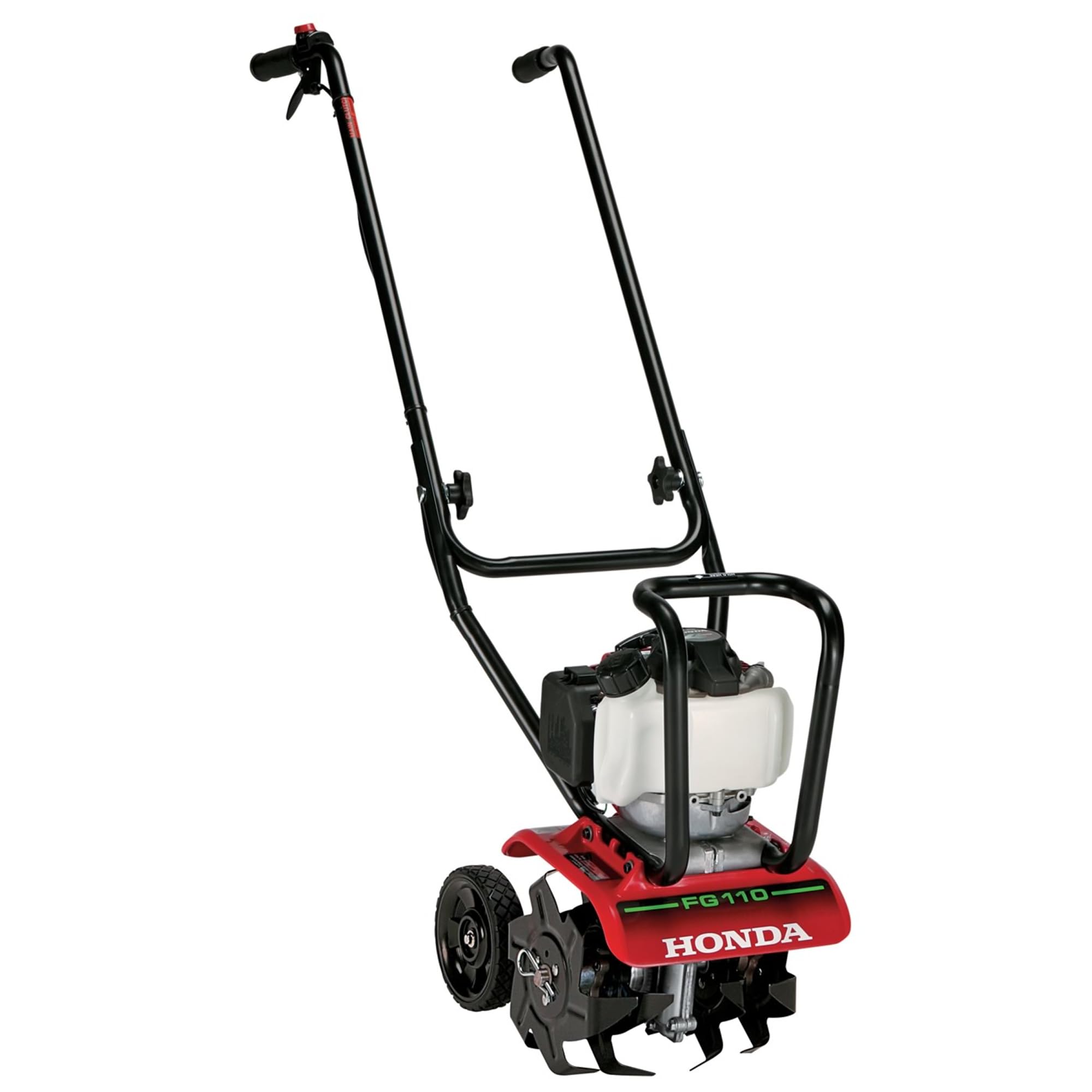
The Honda FG110 is the lightest full-engine tiller on this list at 28 pounds, and it leverages Honda’s legendary GX25 four-stroke engine — arguably the most reliable small engine in the market. The patented hybrid tine design angles half the blades for digging and the other half for cultivating, producing a unique soil action that both breaks and smooths in a single pass. That combination makes it exceptional for maintaining already-tilled beds and raised boxes.
The adjustable tilling width ranges from 6 to 9 inches, letting you work within an inch of plants without root damage. The two-position transport wheels roll the tiller over smooth or rough terrain, then remove completely during tilling for better control. The adjustable depth bar gives you precise command over cut depth, and the easy-access controls are designed to reduce vibration fatigue — a real benefit during longer sessions in a raised bed grid.
The FG110 is explicitly designed for light-to-moderate residential gardening and performs best in softer or pre-tilled soil. It will struggle in hard-packed virgin clay and may only penetrate a few inches per pass. The premium pricing reflects Honda’s engineering reliability and the 2-year residential warranty. For gardeners with established beds who prioritize weight, precision, and legendary engine reliability, the FG110 justifies its cost through years of trouble-free operation.
Why it’s great
- Honda GX25 engine is the gold standard for small-engine reliability
- Ultra-lightweight at 28 pounds for easy portability
- Patented hybrid tines dig and cultivate in one pass
- Works within 1 inch of plants without damage
Good to know
- Not designed for breaking new or hard-packed soil
- Premium pricing reflects engine quality, not raw power
- Best for raised beds, flower gardens, and maintained soil
9. Pulsar 212cc 20-Inch Gas Powered Rear Tine Tiller (PTG1120R)

The Pulsar PTG1120R is the heavyweight of this group, featuring a 212cc OHV engine and a rear-tine design with four counter-rotating 13-inch tines. While this guide focuses on front tine tillers, the Pulsar earns inclusion because its price point and capabilities overlap with the premium front-tine options, and many buyers cross-shop both configurations. The counter-rotating tines pull the machine forward while digging, providing self-propulsion that reduces operator fatigue on large plots.
The 20-inch tilling width covers ground efficiently, and the large 13.5-inch tractor-style wheels with neutral and drive cotter pin settings allow the machine to roll freely in transport mode. The built-in depth regulator maintains consistent depth across passes, and the gearbox comes prefilled with 85W140 gear oil. Engine oil is included, so the initial setup involves filling the crankcase and adding fuel. At 154 pounds, this is a machine that demands muscle for loading but delivers effortless tilling once in the soil.
Users praise the Pulsar’s fuel efficiency — one owner reports running a 6000-square-foot garden on a single tank. The engine fires in two to three pulls and runs smoothly. The main compromises are a gear-shifting mechanism that requires some practice to engage smoothly and a manual that incorrectly references a dipstick when the transmission uses a level plug. Despite minor documentation issues, the Pulsar delivers exceptional power-per-dollar for large gardens that need deep, consistent soil preparation.
Why it’s great
- 212cc OHV engine provides massive torque for deep tilling
- Counter-rotating tines provide self-propulsion, reducing fatigue
- 20-inch tilling width and efficient fuel consumption
- Large tractor-style wheels for easy transport over rough ground
Good to know
- At 154 pounds, it requires significant effort to load and unload
- Gear shifting can be stiff and requires practice
- Manual has errors; verify transmission oil level via plug
FAQ
What size engine do I need to break new ground with a front tine tiller?
How do I stop my front tine tiller from bucking and jumping?
Can I use a front tine tiller in raised garden beds?
What maintenance does a four-cycle tiller engine need?
Is a rear tine tiller better than a front tine tiller for large gardens?
Final Thoughts: The Verdict
For most users seeking a best front tine tiller, the winner is the Earthquake Badger 41080 because its 160cc Viper engine and two-position wheel assembly deliver the ideal balance of power and stability for breaking new ground and maintaining established beds. If you want tool-less versatility and a bronze gear transmission, grab the TAZZ 35310. And for precision work in raised beds where weight matters most, nothing beats the Honda FG110KiAT and its legendary GX25 engine.