
Waking up to a garden blackened by an overnight freeze is a heartbreak no grower should endure. The right frost cover acts as a mobile greenhouse, trapping ground heat while blocking icy winds, but the wrong one can tear, suffocate plants, or offer zero real protection.
I’m Mohammad Maruf — the founder and writer behind Drink4Good. I analyze fabric weights, non-woven density ratings, and UV degradation data across dozens of garden supply brands to separate effective frost blankets from disposable sheeting.
This guide breaks down fabric thickness, breathability, and coverage size so you can confidently pick the best frost covers for plants that will keep your tomatoes, citrus trees, and perennials alive through the coldest nights.
How To Choose The Best Frost Covers For Plants
Choosing a frost cover is more than picking the biggest roll. The fabric’s density determines how many degrees of protection it offers, while its breathability governs whether your plants rot or thrive underneath. Here are the critical factors to weigh before you buy.
Fabric Weight vs. Temperature Drop
Frost blankets are rated by ounces per square yard (oz/yd²). A lightweight 0.5 oz cover works for light frosts down to 28°F, but a 1.5 oz blanket can handle dips to 24°F or lower. Covers under 1 oz will tear more easily and offer limited protection against sustained freezes.
Breathability and Light Transmission
Non-woven polypropylene fabrics allow air, moisture, and sunlight to pass through. Without breathability, trapped condensation freezes on leaf surfaces, defeating the purpose. Look for covers that transmit at least 80% of available light so your plants can continue photosynthesis even when covered.
Coverage Dimensions and Cutting
Measure your garden beds, shrub heights, and tree canopies before buying. A 10 ft by 30 ft roll covers multiple raised beds, while smaller sheets are easier to drape over single bushes. Most covers can be cut with scissors, but look for fabric that doesn’t fray easily along cut edges.
Quick Comparison
On smaller screens, swipe sideways to see the full table.
| Model | Category | Best For | Key Spec | Amazon |
|---|---|---|---|---|
| Gardzen 1.5 oz | Premium | Heavy freeze & multi-season use | 1.5 oz/yd² fabric weight | Amazon |
| Harvest Guard 0.5 oz | Premium | Seed germination & light frost | 0.5 oz lightweight fabric | Amazon |
| Homoda 1.2 oz | Mid-Range | Windy areas & medium freezes | 1.2 oz/yd² with UV tech | Amazon |
| Garutom 1.1 oz | Mid-Range | Large garden beds & budget | 33 ft length & 85% light transmission | Amazon |
| JUNKOGO 0.9 oz | Budget | Versatile row cover & insect barrier | 0.9 oz breathable non-woven | Amazon |
In‑Depth Reviews
1. Gardzen 1.5 oz Plant Covers Freeze Protection

The Gardzen blanket uses a 1.5 oz/yd² non-woven fabric that stands up to sustained sub-28°F freezes while remaining lightweight enough to drape without support structures. It is the heaviest standard weight in this roundup, and buyers consistently confirm it protects potted citrus and 5 ft trees through multi-night cold snaps without tearing or degrading.
Breathability is a strong point here — the fabric lets air circulate and moisture escape, preventing the ice buildup that thinner covers often trap. The material has held up through multiple seasons and direct summer sun exposure, unlike some cheaper green blankets that disintegrate after one season.
For gardeners who need reliable frost defense without building a frame or using multiple layers, this cover delivers the thickest protection available at a mid-range price. The only drawback is that the 1.5 oz fabric slightly reduces light transmission compared to thinner alternatives, so plants may grow a bit slower underneath during extended coverage.
Why it’s great
- Thickest fabric (1.5 oz) offers most freeze protection
- Survives multiple seasons without tearing or UV damage
- Breathable design prevents trapped moisture
Good to know
- Heavier fabric reduces light penetration
- May require extra securing in high winds
2. Harvest Guard Freeze Protection Plant Cover

Harvest Guard is a USA-made floating row cover that excels at seed germination and light frost protection, not deep freezes. Its 0.5 oz fabric allows maximum sunlight penetration — ideal for grass seed, lettuce, and other cool-season crops that need to keep growing through early spring and late fall.
Gardeners in Northern California report lettuce thriving year-round under this cover, surviving snow melts and summer heat reflection. The breathable fabric also blocks birds, slugs, and rabbits without trapping heat during the day, making it a true multi-purpose cover for three seasons.
The catch is its limited cold rating. This cover will not protect tender perennials or citrus through a hard freeze below 28°F. It also tore in one corner during high winds when stapled directly to the ground, so hold it down with boards or stakes rather than staples for longevity.
Why it’s great
- Excellent light transmission for seed germination
- Blocks birds, bugs, and small animals effectively
- USA-made with durable non-woven material
Good to know
- Thin fabric tears in strong wind without support
- Not suitable for hard freezes below 28°F
3. Homoda Plant Covers Freeze Protection 1.2 oz
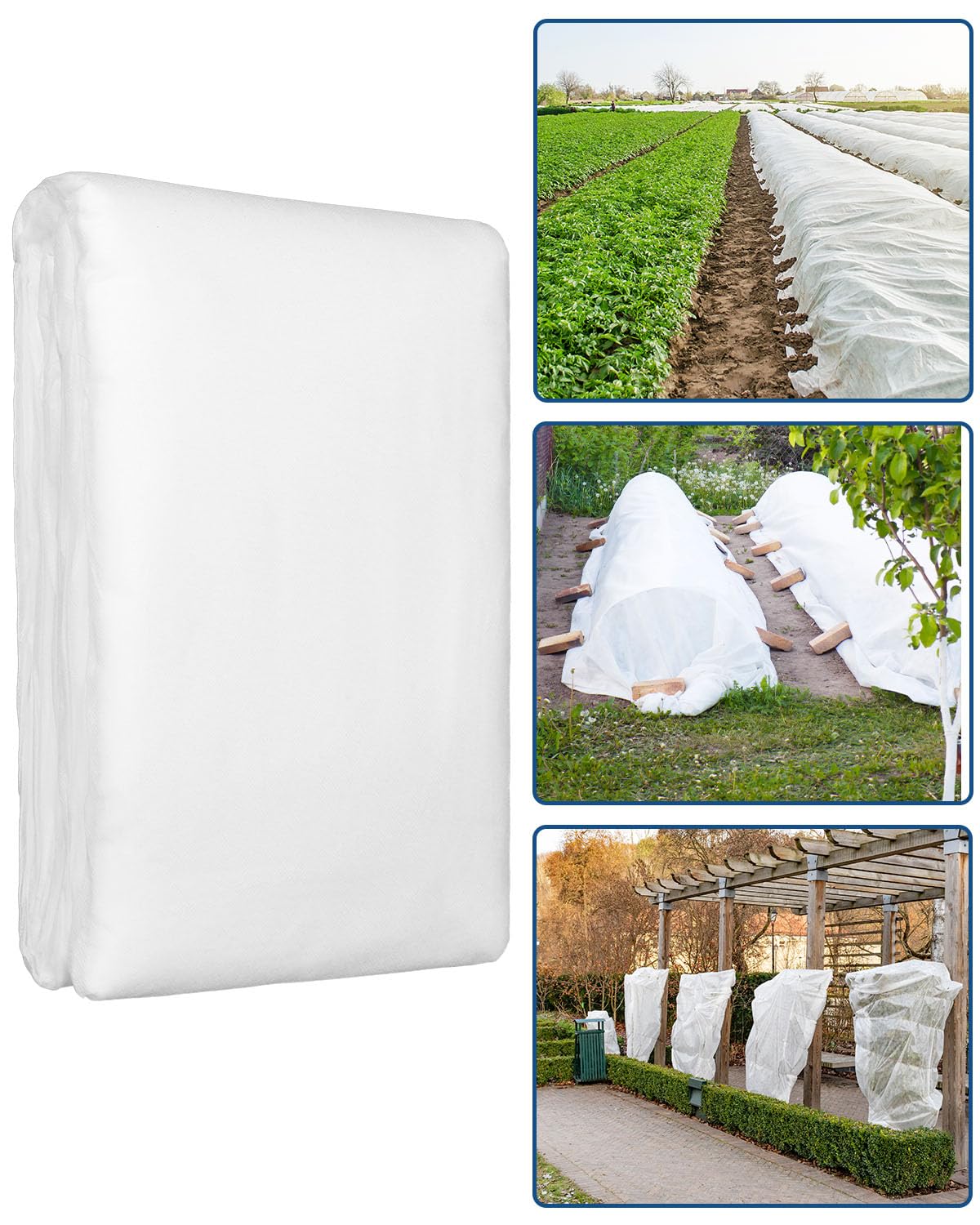
The integrated anti-UV technology prevents sun damage during extended spring and fall coverage, a feature often missing at this price point.
Buyers praise its durability against snow and ice loads, and many use it to protect perennials and trees through two-week stretches of freezing weather. The material is noticeably strong when staked down, resisting the wind lift that plagues lighter covers.
However, the cover is not water-resistant, so prolonged rain can cause it to sag onto delicate plants. You will need to use hoops or frames if you want air gaps for tall shrubs. It also performs best for short-lived freezes rather than multi-week polar vortex events.
Why it’s great
- Thicker 1.2 oz fabric at a budget-friendly price
- Anti-UV protection extends usable life outdoors
- Durable against snow loads and wind
Good to know
- Not water-resistant, sags when wet
- Frames or hoops recommended for air gaps
4. Garutom Plant Covers Freeze Protection 10ft x 33ft

The Garutom cover offers the longest length in this lineup at 33 ft, which is ideal for covering extensive raised bed rows or multiple fruit trees in a single pass. The 1.1 oz/yd² fabric transmits 85% of available light, keeping photosynthesis active while still trapping ground heat overnight.
Gardeners appreciate how easy it is to cut the material with scissors without fraying, allowing custom shapes for odd-sized beds or specimen shrubs. The drawstring on the edges helps secure the cover around individual trees, preventing the wind from billowing it off during gusts.
Where it falls short is the raw fabric thickness — 1.1 oz is adequate for light to moderate freezes, but not for hard freezes below 24°F without layering. Some users found they needed to double up the fabric for extreme cold, which reduces the value of the extra length.
Why it’s great
- Extra-long 33 ft length covers large beds
- High 85% light transmission for active growth
- Easy to cut and shape without fraying
Good to know
- 1.1 oz fabric needs doubling for hard freezes
- May need hoops to prevent plant contact
5. JUNKOGO Plant Freeze Protection Cover 10ft x 30ft
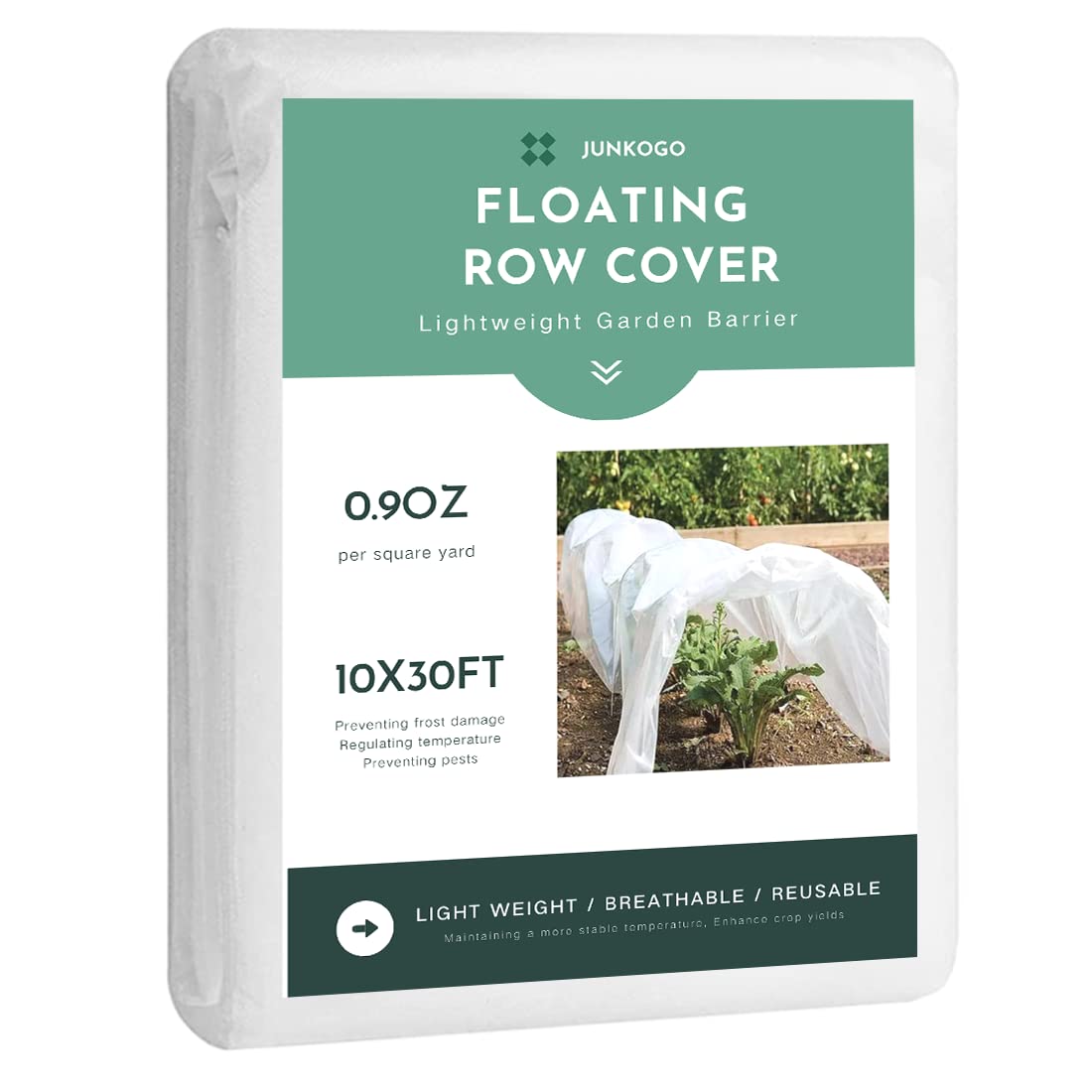
The JUNKOGO cover is a classic floating row cover that works well for light frost protection, insect barriers, and shade cloth duties across three seasons. Its 0.9 oz fabric is lighter than the mid-range options but still offers decent tear resistance when properly secured with stones or stakes.
Buyers consistently note the generous width (7 ft usable) and length (30 ft) as a major advantage over standard 3 ft to 4 ft wide row covers. It successfully protected strawberries through three nights of 25-28°F freezes, which is a strong result for such a lightweight fabric.
The trade-off is clear: the fabric is thinner than the Homoda or Garutom options, so it will not block deeper freezes or last as many seasons without care. Some users found it delicate when cutting, requiring gentle handling to avoid tears. It is best used as a temporary frost blanket rather than a permanent winter solution.
Why it’s great
- Wide 7 ft usable width covers rows efficiently
- Passes light and rain through for healthy growth
- Versatile as insect barrier and shade cloth
Good to know
- Thin fabric handles careful handling
- Not ideal for sustained deep freezes
FAQ
Should I remove frost covers during the day or leave them on?
Can frost covers directly touch plant leaves or cause damage?
How many degrees of protection does a 1.5 oz cover provide?
Final Thoughts: The Verdict
For most users, the best frost covers for plants winner is the Gardzen 1.5 oz because its thick fabric provides the widest freeze protection range without requiring frames or multiple layers. If you want a lightweight cover for seed germination and light frosts, grab the Harvest Guard 0.5 oz. And for covering large garden beds on a budget, nothing beats the extra-long Garutom 10 ft x 33 ft.