
Nothing kills a Saturday morning faster than a lawn mower that coughs, sputters, and refuses to start after sitting in the shed all winter. That gummy, varnish-like residue left by degraded fuel clogs carburetors, damages seals, and turns a simple mowing job into a frustrating repair project. The right fuel stabilizer prevents this by keeping gasoline fresh for months, protecting your investment in every leaf blower, trimmer, and chainsaw you own.
I’m Mohammad Maruf — the founder and writer behind Drink4Good. I’ve spent years analyzing chemical formulations, customer durability tests, and long-term storage results across dozens of fuel treatments to find which formulas genuinely protect small engines from ethanol damage and phase separation.
The right choice protects your equipment from gum, varnish, and corrosion during months of disuse, which is why finding the best fuel stabilizer for lawn equipment is essential for anyone who values reliable starts season after season.
How To Choose The Best Fuel Stabilizer For Lawn Equipment
Not all fuel stabilizers are formulated the same. Some only prevent oxidation, while others actively dissolve existing deposits, remove water, or provide upper-cylinder lubrication. Understanding what your equipment needs — and for how long you plan to store it — will guide you to the right bottle.
Ethanol Mitigation and Phase Separation
Most pump gas contains up to 10 percent ethanol, which attracts water. When enough water collects, the ethanol separates from the gasoline and sinks to the bottom of your tank, creating a corrosive layer that destroys carburetor jets and fuel lines. A high-quality stabilizer must contain a phase separation inhibitor to keep ethanol bonded to the fuel.
Storage Duration and Dosage Ratios
If you store equipment for three to six months, a standard stabilizer with 1 ounce per 2.5 gallons works fine. For long-term storage beyond twelve months, you need a concentrated formula that remains active at higher ratios — some premium products protect fuel for up to two years. Always treat fresh fuel; adding stabilizer to already-stale gas rarely reverses degradation.
Multi-Function Formulas vs. Dedicated Additives
Some stabilizers also clean existing deposits, lubricate upper cylinders, or emulsify water into burnable particles. If your engine already runs poorly, a multi-function product can save you a carburetor rebuild. But if you only need to store clean fuel, a simpler antioxidant formula gives you the same result at a lower cost per ounce.
Quick Comparison
On smaller screens, swipe sideways to see the full table.
| Model | Category | Best For | Key Spec | Amazon |
|---|---|---|---|---|
| Ethanol Shield (2 Pack) | Premium | Long-term storage with ethanol protection | Combustion Cool Technology | Amazon |
| STA-BIL 1 Gallon | Premium | Bulk users and multi-equipment owners | 128 fl oz per bottle | Amazon |
| K100 Marine Grade | Mid-Range | Water removal and gum dissolution | Emulsifies water into burnable fuel | Amazon |
| Mercury Quickleen | Mid-Range | Cleaning carbon deposits from carburetors | 1 oz treats 5 gallons | Amazon |
| STP Premium 2-Cycle | Budget | 2-cycle engines with integrated stabilizer | JASO FD rated synthetic blend | Amazon |
In‑Depth Reviews
1. Ethanol Shield Fuel Stabilizer (2 Pack)

Ethanol Shield brings a modern chemical toolkit to the stabilizer market. Its proprietary Combustion Cool Technology and phase separation inhibitor actively prevent ethanol from bonding with moisture, keeping your fuel stable even in humid environments. The 24-ounce bottles treat a substantial volume of gasoline, making this a strong choice for owners of multiple pieces of equipment.
Real-world testing shows dramatic improvements — one verified user reported their chainsaw starting in just 4 pulls after treatment versus 10 to 12 before, with a noticeable improvement in idle quality. The formula also helps bond 2-cycle oil to ethanol-blended fuel, solving a common trouble point in mix-and-store scenarios. Upper cylinder lubrication and rubber/plastic protection round out the package.
Some units arrived with minor leakage from the cap seal, so inspect the bottles upon delivery. The two-pack format gives excellent value for the coverage area, and the active chemistry is genuinely ahead of legacy stabilizers for ethanol-era fuel.
Why it’s great
- Combustion Cool Technology reduces engine heat stress during storage start-up
- Bonds 2-cycle oil to ethanol mix for consistent lubrication
- Dramatically reduces pull-starts on cold engines
Good to know
- Packaging has occasional cap-seal leaks in transit
- Premium price per ounce compared to basic stabilizers
2. STA-BIL Fuel Stabilizer (1 Gallon)

STA-BIL is the most recognized name in fuel stabilization, and this gallon-sized jug delivers the classic formula in bulk. One gallon treats up to 128 gallons of gasoline, making it the most cost-effective option for anyone maintaining a fleet of lawn tractors, snow blowers, generators, and power equipment. The antioxidant chemistry keeps fuel fresh for up to 12 months when stored properly.
Users consistently report treated gas remaining usable for well beyond the advertised one-year window — verified reviews mention engines starting without issue after two, three, and even four years of storage. The stabilizer also weatherizes equipment for winter, preventing the gum and varnish that plague untreated fuel left in cold sheds. It works with both ethanol and ethanol-free gasoline.
The jug is heavy at 80 ounces and the pour spout could be more precise for smaller equipment tanks. Use a dedicated measuring container to avoid over-treating. If you only need a small bottle for a single mower, the gallon size is excessive, but for serious equipment owners, no other option matches the per-treatment cost.
Why it’s great
- Treats 128 gallons — unbeatable value for bulk users
- Proven track record of keeping fuel fresh beyond 12 months
- Works with ethanol and ethanol-free gasoline
Good to know
- Gallon jug is heavy and lacks a precision pour spout
- Overkill for single-equipment owners who need only a few ounces
3. K100 Marine Grade Gasoline Fuel Treatment (32 oz)
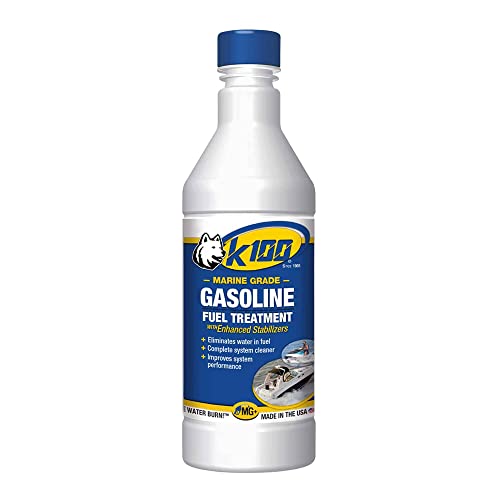
K100 takes a unique approach: rather than simply preventing fuel degradation, it actively dissolves gums and varnishes that have already formed and emulsifies water into burnable particles. This makes it an excellent rescue treatment for engines that have been sitting with bad gas for months. The recommended dosage of 0.5 ounces per gallon — half the typical stabilizer ratio — means each bottle treats 64 gallons.
User reports are unusually convincing for a chemical additive. Multiple verified owners describe equipment starting on the first pull after 14 months of storage, including lawn mowers stored through Wisconsin winters. One user reported a consistent 30-mile extra range per tank in their car after treatment. The ability to handle water contamination is particularly valuable for outdoor equipment exposed to rain and condensation.
The marine-grade formulation includes a 2-point octane boost, which can help older engines run smoother on modern pump gas. Avoid spilling the concentrated liquid on painted or plastic surfaces, as it can cause staining. For equipment with severe water contamination, multiple treatments and corresponding filter changes may be necessary.
Why it’s great
- Emulsifies water into burnable fuel, eliminating a common cause of hard starts
- Dissolves existing gum and varnish deposits
- Low dosage — 0.5 oz per gallon — stretches the bottle further
Good to know
- Can stain painted or plastic surfaces if spilled
- Heavy water contamination may require multiple treatments and filter swaps
4. Mercury Quickleen Engine & Fuel System Cleaner (12 oz)
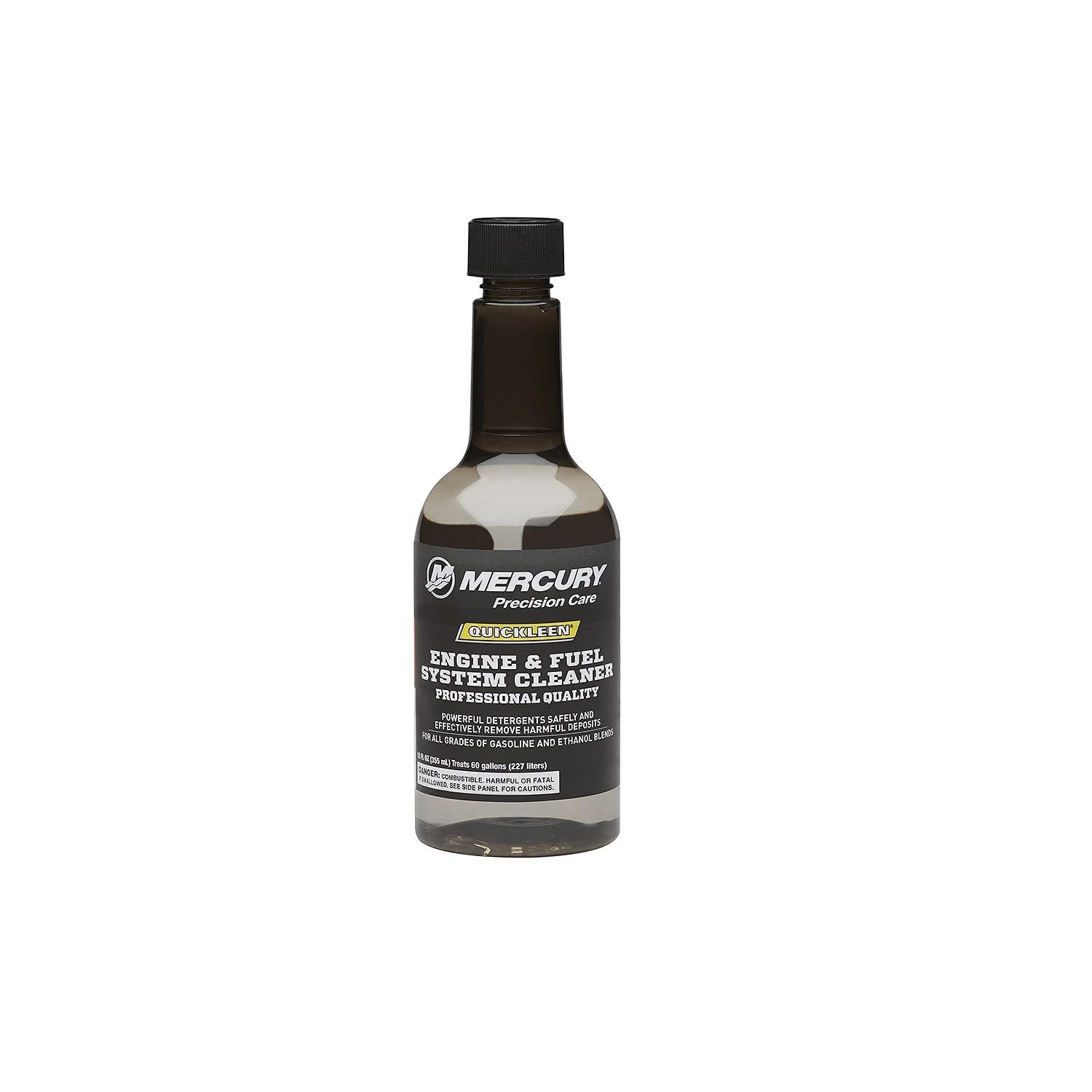
Mercury Quickleen is a dedicated engine and fuel system cleaner, not a traditional fuel stabilizer — it focuses on removing carbon deposits from carburetors, injectors, intake valves, spark plugs, and piston crowns. This is critical for equipment that has accumulated hard carbon from running rich or sitting idle. One ounce treats 5 gallons of gasoline, so the 12-ounce bottle handles 60 gallons worth of cleaning cycles.
Users report that Quickleen resolves sputtering, hard-starting, and full-throttle power loss caused by carbon buildup and bad gas. Several verified reviews mention that it cleared issues that persisted through multiple treatments with other products. The marine-grade formulation comes from Mercury Marine’s stringent OEM specifications, giving it a pedigree in harsh engine environments.
Use Quickleen as an occasional deep-clean treatment every season or whenever you notice performance degradation. It is not meant for routine tank-topping at every fill-up.
Why it’s great
- Removes carbon deposits from carburetors, valves, and pistons
- Resolves sputtering, hard starting, and power loss
- Extremely concentrated — 1 oz treats 5 gallons
Good to know
- No fuel stabilizer included — use alongside a stabilizer for storage
- Best used as an intermittent seasonal treatment, not at every fill-up
5. STP Premium 2-Cycle Oil with Fuel Stabilizer (16 oz)
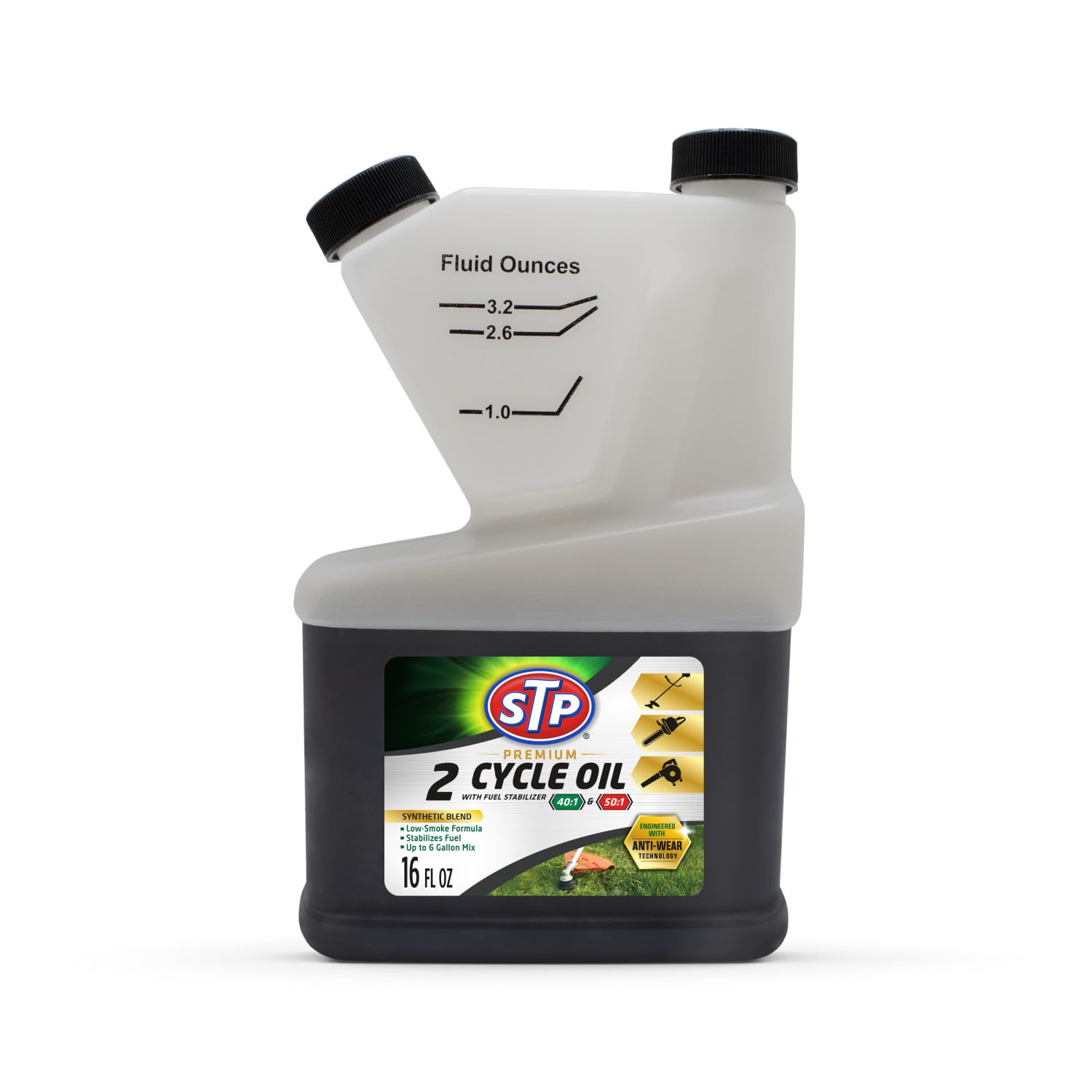
STP combines a JASO FD-rated synthetic blend 2-cycle oil with an integrated fuel stabilizer in a single bottle. This dual-purpose formulation is designed specifically for equipment like chainsaws, trimmers, leaf blowers, and other 2-cycle engines. The anti-wear technology provides excellent ring-scuffing protection, while the added detergents help control carbon deposits that would otherwise lead to ring sticking.
The built-in stabilizer contains anti-oxidants that prevent thermal breakdown of the oil, which is critical in air-cooled engines that run hot. Users praise the bottle design — the measuring spout and clear markings make it easy to mix precise ratios for different equipment. Verified reviews note that the stabilizer component protects fuel during infrequent use, which is a genuine advantage for casual users who might not remember to add stabilizer separately.
The oil is somewhat thick and can be slow to pour compared to some competitors. The 16-ounce size is best suited for single-season use or small equipment fleets. For heavy commercial users, the per-ounce cost on the 16-ounce bottle is higher than buying oil and stabilizer separately in bulk, but the convenience of an all-in-one solution is hard to beat for weekend warriors.
Why it’s great
- JASO FD rating ensures top-tier 2-cycle engine protection
- Integrated fuel stabilizer protects fuel during seasonal storage
- Easy-measure bottle design with clear markings
Good to know
- Oil is thick and pours slowly
- Better value per ounce when buying oil and stabilizer separately in bulk
FAQ
Can a fuel stabilizer fix gas that has already gone bad?
How long does treated fuel stay fresh in lawn equipment?
Do I need a different stabilizer for ethanol-free gas?
Should I use a fuel stabilizer if I run my equipment every week?
Final Thoughts: The Verdict
For most users, the best fuel stabilizer for lawn equipment winner is the Ethanol Shield 2-Pack because it combines Combustion Cool Technology with a phase separation inhibitor and 2-cycle oil bonding in a single concentrated formula. If you need bulk coverage for a large fleet, go with the STA-BIL 1-Gallon for unbeatable per-treatment cost. And for rescuing engines with existing gum and water issues, nothing beats the K100 Marine Grade treatment.