
You aerate, you rake, you water religiously before 9 a.m. — and the bare, crusty patches under that baking afternoon sun still refuse to green up. The problem isn’t your effort; it’s that most cool-season grasses wilt when soil temps push past 85°F, and annual ryes can scorch before they even establish. A full sun grass seed mix needs specific genetic traits — deeper root architecture, waxy leaf cuticles to lock in moisture, and endophyte strains that shrug off chinch bugs — to survive those relentless UV hours.
I’m Mohammad Maruf — the founder and writer behind Drink4Good. I’ve spent countless hours cross-referencing germination trials, analyzing real customer reports on weed content, and mapping each seed blend’s endurance against documented drought and traffic stress so you don’t gamble a whole season on a bag.
This guide breaks down five carefully vetted blends — from budget-friendly overseeders to premium transition-zone performers — so you can confidently choose a best full sun grass seed that turns baked dirt into a resilient, dark-green lawn you’ll actually want to walk on barefoot.
How To Choose The Best Full Sun Grass Seed
Not every seed sold under a “sunny” label can survive a real July afternoon. The key differences are in the species blend, root depth, moisture-retention traits, and purity certifications. Here are the three specs that separate a lush lawn from a patchy letdown.
Root Depth and Leaf Coating
Cool-season grasses like tall fescue and Texas bluegrass can push roots three to four feet deep when soil conditions allow. That depth accesses moisture reserves that shallow-rooted annual ryes can’t reach. A waxy leaf cuticle — the grass equivalent of an apple’s skin — further reduces evaporation. These two traits together define genuine drought resistance.
Weed-Free Percentage and Pure Seed Content
A bag labeled “99.9% weed free” means you aren’t paying for crabgrass or broadleaf invaders that will outcompete your new turf. Check the “other crop seed” and “inert matter” percentages on the back. High-quality blends keep both under 1%. Lower-priced mixes often contain annual ryegrass filler that dies after one season.
Endophyte Enhancement for Insect Resistance
Endophytes are naturally occurring fungi living inside certain grass varieties. They produce alkaloids that deter chinch bugs, sod webworms, and billbugs — three insects that target lawns under full sun stress. Look for “endophyte-enhanced” on the label if you want a chemical-free defense that lasts the life of the turf.
Quick Comparison
On smaller screens, swipe sideways to see the full table.
| Model | Category | Best For | Key Spec | Amazon |
|---|---|---|---|---|
| Lesco All-Pro Transition Tall Fescue | Tall Fescue Blend | Transition-zone resilience & insect resistance | 50 lb; roots to 4 ft | Amazon |
| Scotts Turf Builder Grass Seed Quality All-Purpose Mix | All-Purpose Mix | Large-area deep green coverage | 20 lb; 99.9% weed free | Amazon |
| Jonathan Green Black Beauty Heat & Drought | Heat-Tolerant Mix | Sunny-to-light-shade transition | 3 lb; waxy leaf coating | Amazon |
| Scotts Turf Builder Grass Seed Sunny Mix | Sunny Mix with Fertilizer | Quick patch repair in direct sun | 2.4 lb; root-building formula | Amazon |
| Pennington Annual Ryegrass Seed | Annual Ryegrass | Quick winter overseeding & erosion control | 10 lb; germinates in 3-7 days | Amazon |
In‑Depth Reviews
1. Lesco All-Pro Transition Tall Fescue Grass Seed Blend (50 lbs)
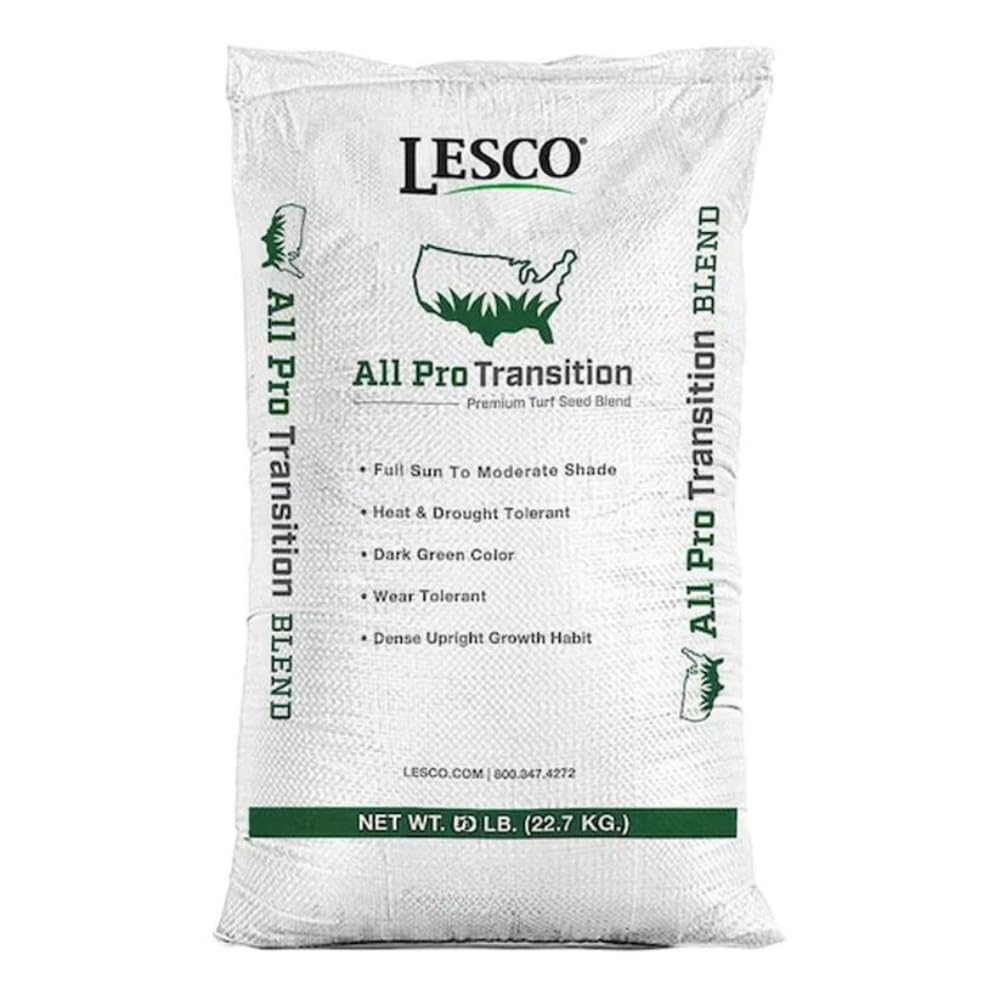
This tall fescue blend is engineered specifically for transition-zone stress — areas with hot summers and cool winters that kill both northern and southern varieties. The 50-pound bag covers up to 10,000 square feet when overseeding, or about 6,250 square feet for a new lawn, and the endophyte enhancement naturally deters chinch bugs and sod webworms. Real customers report seeing green blades within a week and dense, traffic-tolerant turf by week three.
The seed is notably clean. Multiple reviewers mention zero weed contamination and almost no dust or inert filler, which means every pound in the bag is viable growing material. The deep root profile tolerates direct sun from morning through late afternoon, and the dark green color holds well without heavy nitrogen fertilization.
This is the best option for homeowners who want a single purchase to cover a full acre or a large bare patch with professional-grade genetics. It is also one of the few consumer-available blends that matches what landscapers pay for in bulk — but priced well below big-box retail per square foot of coverage.
Why it’s great
- Endophyte-enhanced for built-in insect deterrence
- 99% weed-free with very low inert matter
- Germinates in as little as 5–7 days with consistent moisture
- Dense, soft feel that holds up under foot traffic
Good to know
- Non-returnable once opened
- Slightly slower to germinate than some annual blends
2. Scotts Turf Builder Grass Seed Quality All-Purpose Mix (20 lb)

Scotts’ all-purpose mix is coated with a proprietary WaterSmart PLUS technology that absorbs roughly twice as much moisture as uncoated seed. That coating buys you a few extra hours of hydration during hot, dry afternoons when watering schedules slip. The 20-pound bag seeds up to 8,000 square feet, and the blend mixes tall fescue with fine-bladed rye for a uniform texture that blends well with established northern lawns.
Reviewers consistently praise its speed and thickness. Sprouts appear in about two weeks on bare dirt, and the resulting turf grows tall enough to need mowing by week four. The weed-free certification is backed by real experiences — no crabgrass or broadleaf invaders reported in verified feedback. The mix handles full sun and partial shade with equal vigor, making it versatile if your property has mixed light conditions.
While it’s not endophyte-enhanced like the Lesco blend, the WaterSmart coating and high purity level make it a solid choice for homeowners reseeding a large sunny area with a single application. It also carries Scotts’ “No Quibble Guarantee,” which covers dissatisfaction with germination.
Why it’s great
- WaterSmart coating absorbs 2x more moisture
- 99.9% weed free — no unwanted invaders
- Seeds up to 8,000 sq ft per bag
- Blends well with bluegrass and tall fescue lawns
Good to know
- Not specifically for full-shade areas
- Lacks endophyte insect protection
3. Jonathan Green Black Beauty Heat & Drought Resistant Grass Seed (3 lb)

Jonathan Green’s Black Beauty line uses tall fescue and Texas bluegrass, both of which produce a waxy leaf coating that slows moisture loss — similar to the skin on an apple. This biological feature allows the grass to keep growing even when soil temperatures climb toward 100°F. The 3-pound bag covers up to 750 square feet for new lawns or 1,500 square feet for overseeding, with a standard germination window of 14 to 21 days.
Customer reports are compelling: one buyer moved from Ohio to the Carolinas and described a transformation from patchy centipede grass to a dark, Kentucky bluegrass-like lawn in two weeks after proper site prep (aeration, topsoil, morning watering). Another reviewer in hard, shady soil saw bald spots fill in after using the seed with a simple garden claw and potting soil mix.
A small number of customers reported zero germination, likely tied to extreme heat during installation or poor seed-to-soil contact. The product performs best when planted mid-March through mid-May or mid-August through mid-October — aligning with the cool-season window tall fescue requires. For homeowners with moderate sun exposure who want a lush, dark green lawn without heavy watering, this blend delivers the best balance of heat tolerance and aesthetic quality.
Why it’s great
- Waxy leaf coating preserves moisture in direct sun
- Texas bluegrass genetics improve heat tolerance
- Dark green color comparable to Kentucky bluegrass
- Works in both sunny and lightly shaded areas
Good to know
- 3 lb bag covers only up to 750 sq ft new lawn
- Some users reported slow germination in poor soil prep
4. Scotts Turf Builder Grass Seed Sunny Mix (2.4 lb)
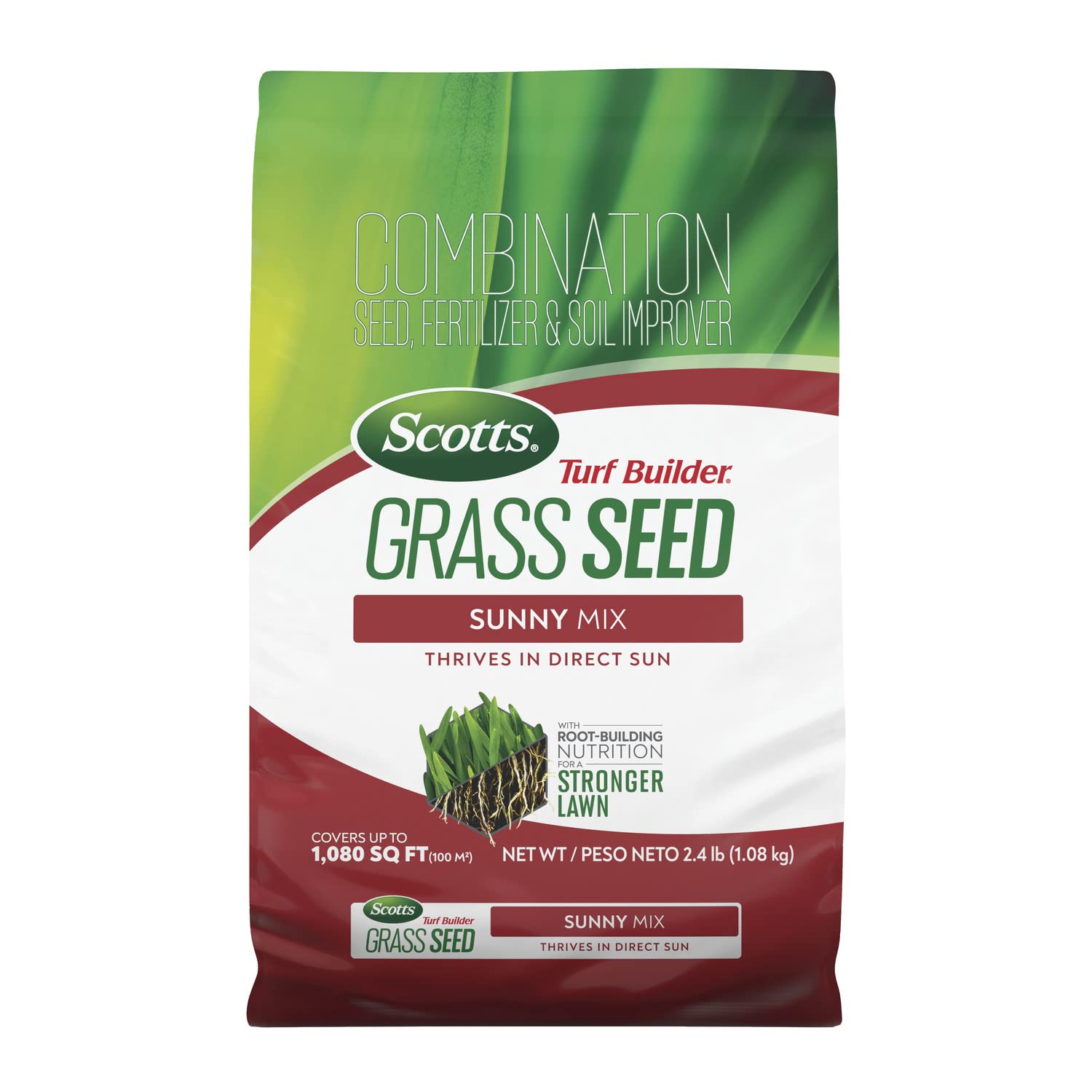
This Sunny Mix combines seed, fertilizer, and soil improver in a single granular blend — a time-saving solution for homeowners who don’t want to spread starter fertilizer separately. The Root-Building Nutrition formula helps the grass establish deep roots that access moisture lower in the soil profile. The 2.4-pound bag is designed for smaller jobs: 360 square feet for a new lawn or 1,080 square feet for overseeding.
Verified buyers report fast results in direct sun. One customer scraped the top inch of pavement-adjacent dirt, added topsoil, and saw the seed spread laterally into the yard within three months. The formula handles drought conditions better than typical annual mixes, and the low bag weight makes it easy to carry and apply by hand without a spreader if you’re spot-treating.
The drawback is coverage area per dollar when compared to bulk bags. For a small patch repair or a strip along a sunny sidewalk, this is an efficient buy. For a full yard overhaul, the 3-pound Jonathan Green or the 20-pound Scotts all-purpose mix offer better value per square foot.
Why it’s great
- All-in-one seed, fertilizer, and soil improver
- Root-building nutrition for deep drought tolerance
- Grows fast in direct sun with consistent watering
- Compact 2.4 lb bag for small patches
Good to know
- Smaller coverage per dollar vs bulk bags
- Fertilizer added means you shouldn’t over-apply
5. Pennington Annual Ryegrass Seed (10 lb)

Annual ryegrass is not a permanent solution, but it is unmatched for speed and winter color. Pennington’s bag germinates in three to seven days — fast enough that you can see green shoots before the first frost. The 10-pound bag covers up to 2,000 square feet, making it the most economical buy for temporary overseeding of warm-season Bermuda or Zoysia lawns that go dormant and brown in winter.
Customers in zones 7 and 8 report lush green lawns from December through March with consistent watering. The seed holds up well under moderate foot traffic and resists disease during the cooler, wetter months. It is also the simplest option for erosion control on bare slopes or construction sites where a quick root system is needed to hold soil.
The trade-off is that annual ryegrass dies off when summer heat returns, usually by late May or June. The texture is coarser than tall fescue or bluegrass, and it will not self-seed reliably for another year. Use it as a single-season green carpet — or as a “nurse crop” to shade the soil while slower perennial grasses establish underneath.
Why it’s great
- Germinates in 3–7 days — fastest in this guide
- Ideal for winter overseeding of warm-season lawns
- Disease-resistant and handles foot traffic well
- Large 10 lb bag at an entry-level price point
Good to know
- Annual grass dies in summer heat
- Coarser texture than tall fescue or bluegrass
FAQ
Can I plant full sun grass seed in the middle of summer?
What does “endophyte-enhanced” mean on a grass seed label?
How deep should I water after seeding a full sun lawn?
Will annual ryegrass come back next year on its own?
Final Thoughts: The Verdict
For most users, the best full sun grass seed winner is the Jonathan Green Black Beauty Heat & Drought Resistant Grass Seed because it combines waxy-leaf drought protection with a dark green aesthetic and a proven germination window for sun-to-shade transition zones. If you want maximum coverage for a full acre with built-in insect resistance, grab the Lesco All-Pro Transition Tall Fescue (50 lb). And for a quick winter green-up over a dormant warm-season lawn, nothing beats the Pennington Annual Ryegrass Seed (10 lb).