
Fungal acne, or Malassezia folliculitis, is a stubborn skin condition often mistaken for bacterial acne. Because yeast thrives on certain oils and feeds the breakout cycle, using the wrong face wash can make it dramatically worse. The ideal formula avoids oils and esters that feed the yeast, using gentle, non-comedogenic cleansers that respect the skin barrier while keeping the microbiome in check.
I’m Mohammad Maruf — the founder and writer behind Drink4Good. I have spent years analyzing the chemical composition and dermatological data behind skincare formulations to separate effective fungal-acne safe cleansers from those that merely claim to be gentle.
After cross-referencing ingredient databases and real user outcomes, I have identified the cleansers that genuinely keep Malassezia in remission. This guide explains exactly what to look for in a fungal acne face wash and how to match the right formula to your skin type and daily routine.
How To Choose The Best Fungal Acne Face Wash
Malassezia yeast requires specific lipids to grow, so the central task is avoiding oils and esters that serve as its food. Beyond that, the cleanser must stay gentle enough for daily use on already-irritated skin. These four criteria will help you make the right pick.
Ingredient List: The Yeast-Safe Check
Cross-reference every ingredient against a fungal-acne safe list. Avoid anything with oleic acid, stearic acid, palmitic acid, or esters like isopropyl myristate and ethylhexyl palmitate. Look for cleansers built around glycerin, sodium cocoyl isethionate, or coco-glucoside — none of which feed the yeast.
Surfactant Style: Foaming vs. Non-Foaming
Mild foaming cleansers remove excess oil without leaving a biofilm that yeast can colonize. Non-foaming cream cleansers often contain fatty alcohols or oils that can trigger a flare-up. For fungal-prone skin, a clear gel that lathers gently is usually the safest bet.
Barrier Support Without Feeding the Yeast
Ceramides and niacinamide are generally safe for Malassezia-prone skin, while plant oils like squalane (olive-derived) and shea butter are not. Choose formulas that rely on synthetic or mineral-derived barrier boosters that won’t trigger a bloom.
pH Balance
The ideal cleanser pH for fungal acne falls between 4.5 and 6.0. A pH that is too high strips the acid mantle and invites yeast overgrowth. Many dermatologist-developed brands now list a pH range, so check before committing.
Quick Comparison
On smaller screens, swipe sideways to see the full table.
| Model | Category | Best For | Key Spec | Amazon |
|---|---|---|---|---|
| La Roche-Posay Effaclar Purifying Foaming Gel | Foaming Gel | Oily fungal-prone skin | Zinc Pidolate + pH 5.5 | Amazon |
| La Roche-Posay Toleriane Purifying Foaming Cleanser | Foaming Gel | Sensitive fungal-prone skin | Niacinamide + Ceramide-3 | Amazon |
| CeraVe Foaming Facial Cleanser | Foaming Gel | Daily maintenance / budget | Ceramides 1, 3, 6-II + pH 5.5 | Amazon |
| CeraVe Renewing Salicylic Acid Cleanser | Foaming Gel | Exfoliation + fungal acne maintenance | 2% Salicylic Acid + Ceramides | Amazon |
| KraveBeauty Matcha Hemp Hydrating Cleanser | Gel | Dry, dehydrated fungal-prone skin | Matcha + Hemp Seed Oil + 15% Glycerin | Amazon |
In‑Depth Reviews
1. La Roche-Posay Effaclar Purifying Foaming Gel Cleanser
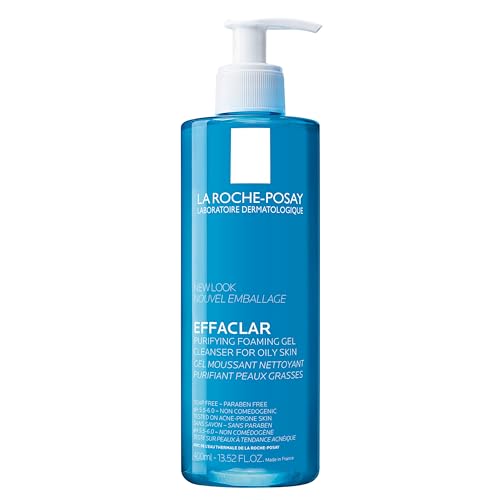
La Roche-Posay Effaclar is the most targeted option for oily fungal-prone skin because of its active ingredient, Zinc Pidolate. This compound is known for its sebum-regulating and antimicrobial properties, directly addressing the environment Malassezia needs to thrive. The gel transforms into a light foam that removes excess oil without stripping the barrier, a critical balance for skin that is both over-productive and sensitive.
With a pH around 5.5, this cleanser respects the acid mantle, helping prevent the pH spikes that trigger yeast overgrowth. It is fragrance-free, soap-free, and non-comedogenic, so it won’t clog pores or introduce unnecessary irritants. Users consistently report clearer skin within a week of switching to this formula.
It is powerful enough for double-cleansing but still gentle enough for morning use, which is rare in a foaming cleanser for oily skin.
Why it’s great
- Zinc Pidolate actively reduces yeast-friendly oil
- pH balanced to preserve the acid mantle
- Lasts months with conservative use
Good to know
- May feel slightly drying for already dehydrated skin
- Does not remove heavy waterproof makeup alone
2. La Roche-Posay Toleriane Purifying Foaming Facial Cleanser

Unlike the Effaclar line, the Toleriane Purifying Foaming Cleanser is built for sensitive skin that also deals with fungal acne. It swaps Zinc Pidolate for Niacinamide and Ceramide-3 — both of which are safe for Malassezia-prone skin and focus on barrier support. The foam is lighter and even more gentle, making it ideal for skin that gets tight after any wash.
The formula is soap-free, oil-free, and fragrance-free, with a pH of 5.5. It removes dirt, sweat, and light sunscreen without leaving residue that yeast can eat. Clinical data from the brand shows 94% of users reported cleaner-looking skin after four weeks, and the lack of pore-clogging ingredients makes it a strong daily workhorse for those with reactive fungal acne.
It works especially well in a double-cleanse routine for the evening. While it won’t tackle heavy makeup on its own, it leaves no film behind, which is the number-one cause of post-cleanser flare-ups. The large pump bottle delivers consistent texture month after month.
Why it’s great
- Ceramide + Niacinamide support barrier without feeding yeast
- Residue-free rinse ideal for fungal-prone skin
- Fragrance-free and allergy-tested
Good to know
- Too gentle for heavy oil control
- Price per ounce higher than drugstore alternatives
3. CeraVe Foaming Facial Cleanser
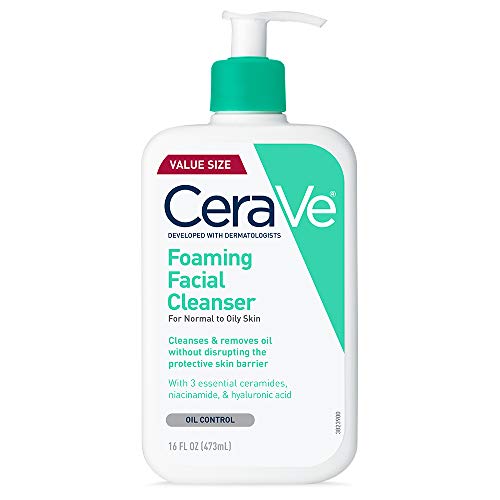
CeraVe Foaming Facial Cleanser is a budget-friendly workhorse that checks nearly every box for a fungal-acne-safe wash. It contains Hyaluronic Acid, Niacinamide, and three essential Ceramides (1, 3, and 6-II), none of which feed Malassezia. The gel-to-foam texture removes excess oil without stripping, and the pH falls within the safe range for the acid mantle.
This formula is fragrance-free and non-comedogenic, so it minimizes the risk of irritation that can trigger a yeast flare-up. Users with normal-to-oily fungal-prone skin find it effective for daily morning and evening use. The 16 oz bottle offers exceptional value, lasting well over two months with twice-daily application.
One nuance: the cleanser struggles with waterproof mascara and mineral sunscreen, so it works best as part of a double-cleanse if you wear these products. For those who keep their routine simple, it is one of the most reliable and affordable fungal-acne-safe options available.
Why it’s great
- All essential ceramides — yeast-safe barrier support
- Large 16 oz bottle at a very low cost per wash
- Non-drying foam ideal for daily use
Good to know
- Struggles with waterproof makeup and sunscreen
- May leave a slight film on very oily skin
4. CeraVe Renewing Salicylic Acid Cleanser

For fungal acne that presents with texture, closed comedones, or rough patches, the CeraVe Renewing Salicylic Acid Cleanser adds gentle BHA exfoliation to the equation. The 2% salicylic acid penetrates pores to dissolve dead skin cells without the physical abrasion that triggers inflammation in sensitive fungal-prone skin. It also contains Hyaluronic Acid, Niacinamide, and the same three Ceramides found in the standard Foaming Cleanser.
The key here is that salicylic acid is oil-soluble, meaning it can get inside the hair follicle where Malassezia colonizes. While it does not directly kill yeast, it helps remove the buildup and biofilm that yeast creates. The formula is fragrance-free, non-comedogenic, and has a pH of 5.5, so it stays within the safe zone for the acid mantle.
Users with mild-to-moderate fungal acne see improvement within one to two weeks when used 2-3 times per week. Daily use can be too drying for some, so alternating with a non-exfoliating cleanser is recommended. It is also a good option for managing body fungal acne on the chest or back.
Why it’s great
- BHA exfoliation penetrates the follicle where yeast resides
- Fragrance-free and gentle enough for sensitive skin
- Effective for body fungal-prone areas
Good to know
- Can cause dryness if used more than 3 times per week
- Not a standalone treatment for active fungal infections
5. KraveBeauty Matcha Hemp Hydrating Cleanser
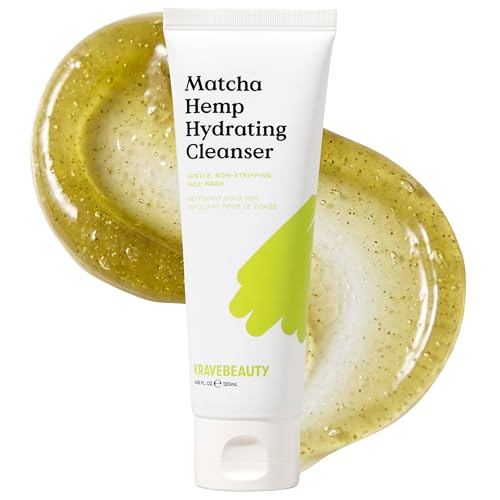
KraveBeauty Matcha Hemp Hydrating Cleanser is a gentle gel cleanser specifically designed for dry or sensitive skin that often accompanies fungal acne. It uses Matcha (antioxidant) and Hemp Seed Oil (linoleic acid-rich) and 15% Glycerin to draw moisture into the skin without feeding Malassezia — Hemp Seed Oil is low in oleic acid and generally considered safe for fungal-prone skin.
The formula is essential oil and fragrance-free, pH balanced, and non-stripping, making it an excellent morning cleanser for those who wake up with tight, dehydrated skin. It removes light sunscreen and sweat without leaving a film, but it will not remove heavy makeup or waterproof products. Users with reactive skin report it calms redness while cleansing.
One caveat: while Hemp Seed Oil is classified as low-risk for Malassezia, individual sensitivity varies. If you have tried everything else and still flare up, test this one on a small patch first. For most, it provides a comfortable, hydrating cleanse that does not trigger yeast overgrowth.
Why it’s great
- High glycerin content keeps dehydrated fungal-prone skin comfortable
- Matcha provides antioxidant support without irritation
- pH balanced and fragrance-free
Good to know
- Hemp Seed Oil may still be a trigger for the most sensitive
- Does not remove heavy sunscreen or makeup
FAQ
Can I use a foaming cleanser if my skin feels tight after washing?
How often should I wash my face with a fungal-acne safe cleanser?
Will salicylic acid in a cleanser kill the yeast causing fungal acne?
Final Thoughts: The Verdict
For most users, the fungal acne face wash winner is the La Roche-Posay Effaclar Purifying Foaming Gel because Zinc Pidolate directly reduces the oil environment that Malassezia needs to survive. If your skin is more sensitive than oily, grab the La Roche-Posay Toleriane Purifying Foaming Cleanser for barrier support without feeding the yeast. And for a budget-friendly daily option that checks every box, nothing beats the CeraVe Foaming Facial Cleanser at its price per ounce.