
Boxwood blight doesn’t just damage a hedge — it wipes it out. This aggressive fungal disease spreads fast, thrives in humid conditions, and can destroy decades of growth in a single season. Without a strategic defense plan, your landscape is at risk.
I’m Mohammad Maruf — the founder and writer behind Drink4Good. I’ve spent months analyzing the chemistry, application methods, and real-world results of fungicides designed to stop boxwood blight, comparing systemic, protective, and biological options.
This guide breaks down the most effective treatments so you can choose the right fungicide for boxwood blight for your garden’s specific needs and risk level.
How To Choose The Best Fungicide For Boxwood Blight
Choosing a fungicide for boxwood blight requires understanding how the disease spreads and which chemistries block it at each stage. A protectant spray forms a barrier on leaves, while a systemic fungicide moves inside the plant to stop the fungus from colonizing tissue. The best approach often combines both, applied on a strict schedule during wet weather.
Active Ingredients That Matter
Chlorothalonil is the industry standard for protectant control, but it must cover new growth completely. Propiconazole and myclobutanil offer systemic movement inside the plant, protecting tissue that wasn’t sprayed directly. Look for products containing these active ingredients rather than broad-spectrum garden mixes that list vague claims.
Application Method and Coverage
Boxwood blight spores require wet leaves to infect. A liquid concentrate mixed with water and applied with a pump sprayer gives you the coverage control you need. Ready-to-use spray bottles are convenient for small gardens, but concentrated formulas allow you to treat multiple plants cost-effectively. Always spray to the point of runoff — every leaf surface, including the interior canopy, must be coated.
Resistance Management and Rotation
Using the same active ingredient all season encourages resistant fungal strains. Rotate between a protectant like chlorothalonil and a systemic like propiconazole or myclobutanil at different intervals. This strategy keeps the fungus from adapting and extends the effectiveness of each product in your arsenal.
Quick Comparison
On smaller screens, swipe sideways to see the full table.
| Model | Category | Best For | Key Spec | Amazon |
|---|---|---|---|---|
| TOPBUXUS Boxwood Restore & Protect | Specialized | Boxwood-specific nutrition and blight defense | 10 tablets for 1000 sq ft | Amazon |
| Atticus Gravex 20EW | Systemic | Long-lasting curative and preventive control | 19.7% Myclobutanil | Amazon |
| Atticus Gunner 14.3 MEC | Systemic | Rainfast systemic protection up to 28 days | 14.3% Propiconazole | Amazon |
| Ortho MAX Garden Disease Control | Protectant | Reliable barrier against blight and leaf spots | 29.6% Chlorothalonil | Amazon |
| Monterey Garden Phos | Systemic | Root drench for Phytophthora and blight | Phosphonate systemic | Amazon |
| Fertilome Liquid Systemic II | Systemic | Entry-level systemic control in a ready-to-use bottle | 32 oz ready-to-use | Amazon |
| Monterey Complete Disease Control | Organic | OMRI-listed control for organic gardens | Bacillus amyloliquefaciens | Amazon |
In‑Depth Reviews
1. TOPBUXUS Boxwood Restore & Protect Mix
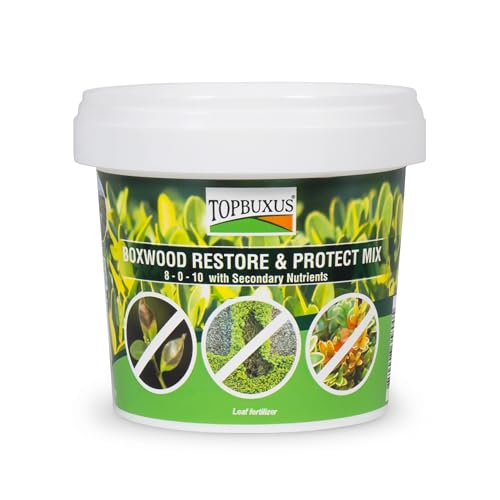
This is the only product on the market developed exclusively for boxwood health, designed by growers who once ran the world’s largest boxwood nursery in the Netherlands. Each effervescent tablet dissolves in a quart of water and covers 100 square feet of boxwood foliage through a pressure sprayer. The 8-0-10 NPK ratio supplies targeted nutrition while strengthening the plant’s natural defenses against blight.
Users report visible results after a single season, with boxwoods producing dense, vibrant green growth that resists dieback. The tablets are individually wrapped, so you mix only what you need, avoiding waste. Because it is a foliar fertilizer and not a conventional fungicide, it supports recovery rather than just suppressing symptoms — but it works best as part of a complete blight management program.
TOPBUXUS is a specialized tool for anyone serious about boxwood preservation. It does not contain chlorothalonil or triazole fungicides, so it can be used alongside other treatments without conflict. If you value long-term plant health over a quick chemical fix, this is the most intelligent choice.
Why it’s great
- Formulated specifically for boxwood by Dutch experts
- Easy-to-use tablets eliminate mixing guesswork and waste
- Promotes lush green regrowth while strengthening defenses
Good to know
- You will need a separate pump sprayer for application
- Results develop gradually over weeks, not instantly
- Best used as a restorative feed alongside a fungicide program
2. Atticus Gravex 20EW Fungicide
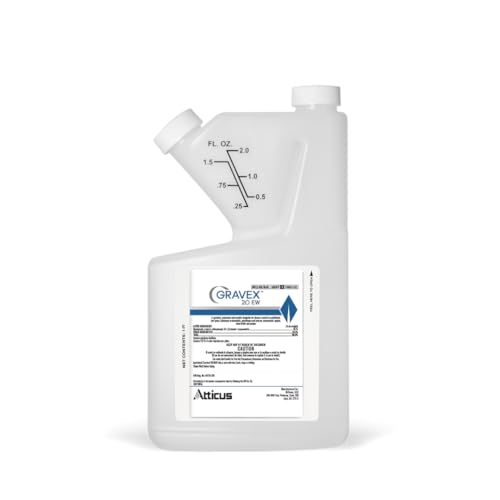
Gravex 20EW contains the same active ingredient as Eagle 20EW — myclobutanil — but at a more accessible price point. This systemic fungicide moves upward through the plant’s vascular system, protecting new growth as it emerges. It has both curative and preventive properties, meaning it can stop an active infection and shield healthy tissue for up to 28 days.
Users report impressive results against powdery mildew, brown rot on peaches, and rust on ornamentals. For boxwood blight, this systemic action is especially valuable because the disease commonly reemerges even after visible symptoms are removed. The concentrate mixes easily with a backpack sprayer, and the built-in measuring spout simplifies dosing.
The strong odor is worth noting, but the results justify the trade-off. This is a serious systemic tool for the homeowner who wants professional-grade chemistry. Rotate with a protectant like chlorothalonil to prevent resistance from developing in your boxwood planting.
Why it’s great
- Systemic mobility protects unsprayed new growth
- Active ingredient matches professional specialty fungicides
- Controls over 38 plant fungal diseases
Good to know
- Not available in Alaska, DC, New York, Puerto Rico, or Vermont
- Strong chemical odor during mixing and application
- Requires rotation with other modes of action to prevent resistance
3. Atticus Gunner 14.3 MEC Fungicide
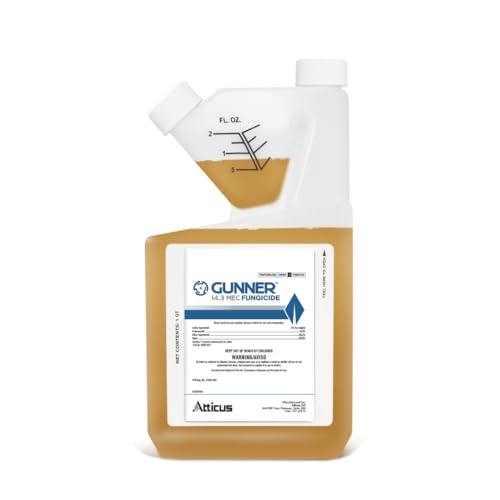
Gunner uses propiconazole — the same active ingredient as Banner Maxx — formulated as a microemulsion concentrate (MEC) for exceptional mixing stability. Unlike wettable powders that settle in the tank, this low-odor solution stays suspended so you don’t have to re-agitate. Once dry on the leaf surface, it resists wash-off from rain or irrigation, a critical feature for boxwood blight control during wet spring weather.
The systemic uptake occurs through both roots and stems, offering a dual pathway for protection. Users say it works wonders on lawns and ornamentals, and the 32-ounce bottle treats a large area. For boxwood blight, apply at the first sign of leaf spots and repeat every 14 to 28 days according to the label.
Gunner is ideal for gardeners who need predictable, long-lasting control without the strong fumes of some other fungicides. The lack of odor makes it easier to apply around living spaces. It is a premium systemic option that pairs well with a protectant spray for complete coverage.
Why it’s great
- Rainfast once dry, excellent for humid, rainy seasons
- Microemulsion stays mixed without constant agitation
- Low odor during and after application
Good to know
- Not for sale in Alaska, DC, Hawaii, Puerto Rico, or Vermont
- Label instructions are printed in very small text
- Systemic control requires careful adherence to application intervals
4. Ortho MAX Garden Disease Control Concentrate

Chlorothalonil is the gold standard protectant fungicide, and Ortho MAX delivers it at 29.6% concentration. Unlike systemic fungicides that move inside the plant, chlorothalonil forms a protective layer on leaf surfaces that prevents spore germination. This makes it an essential first line of defense against boxwood blight, which infects through wet foliage.
One 16-ounce bottle makes up to 64 gallons of diluted spray, offering excellent value for large plantings. Users report curing black spot on roses and stopping leaf spot on photinia, and several note it revived box shrubs that had visible fungal damage. For best results, apply before symptoms appear and reapply every two weeks during periods of wet weather.
Ortho MAX is a straightforward, reliable choice for the preventive side of your blight program. It does not cure an active infection inside the plant, but it creates a formidable barrier outside. Use it in rotation with a systemic triazole product for comprehensive year-round protection.
Why it’s great
- Industry standard protectant proven on boxwood blight
- Concentrate makes up to 64 gallons for large gardens
- Does not damage plants when used as directed
Good to know
- Not systemic — must coat every leaf surface completely
- Requires monthly reapplication, more often in rainy seasons
- Not organic; a chemical protectant
5. Monterey Garden Phos Fungicide

Monterey Garden Phos is a systemic phosphonate fungicide approved for root rot, downy mildew, and fire blight — diseases that often accompany or mimic boxwood blight symptoms. It can be applied as a soil drench, foliar spray, or basal bark treatment, giving you flexibility depending on the stage of the outbreak. For boxwood, a soil drench delivers protection directly into the root zone where early infection often begins.
Users report saving trees from root rot and controlling fire blight after other products failed. For boxwood blight management, applying Garden Phos as a drench and a periodic foliar spray provides systemic coverage that complements a protectant barrier. It is not organic but is considered low-harm, and it is easy to mix and apply with a standard pump sprayer.
This product is particularly useful if you suspect Phytophthora or Pythium involvement alongside blight. It adds a layer of below-ground protection that most foliar-only fungicides cannot offer. Keep in mind that misapplication can cause leaf burn, so follow the mixing rates closely.
Why it’s great
- Systemic drench action protects roots from soil-borne pathogens
- Three application methods for maximum flexibility
- Highly effective against fire blight and Phytophthora
Good to know
- Can cause leaf burn if mixing rates are incorrect
- Not organic despite low-harm classification
- Best used preventively rather than as a cure
6. Fertilome Liquid Systemic Fungicide II RTS
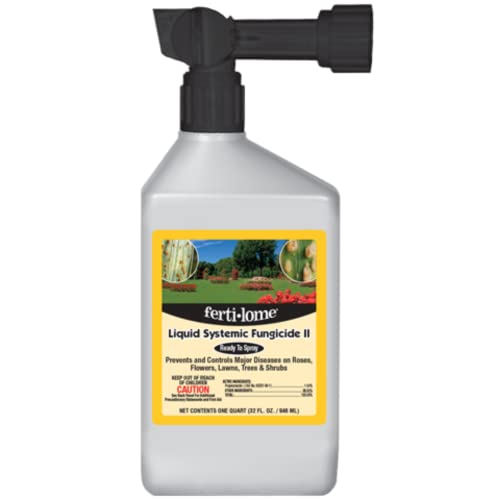
Fertilome’s ready-to-use formula is the simplest entry point for homeowners looking for a no-mix, no-measure systemic fungicide. It comes in a 32-ounce trigger spray bottle, and you just point and spray until the foliage is covered. It targets a range of fungal diseases including leaf spot and brown patch, which makes it a useful option for small-scale boxwood maintenance.
Users appreciate how easy it is to grab and apply, especially for spot-treating a few bushes. Reviews mention success with fire blight and leaf spot, and the price is approachable for those trying a systemic for the first time. For concentrated control, however, the ready-to-use format means you are paying for water weight and covering less area per dollar than a concentrate.
This is a good backup or starter product for small boxwood plantings. But for quick convenience and instant application, Fertilome delivers.
Why it’s great
- No mixing or measuring required — spray directly from the bottle
- Systemic formula moves inside the plant for internal protection
- Affordable entry point for small boxwood gardens
Good to know
- Small bottle size limits coverage for larger plantings
- Ready-to-use format is less cost-effective than concentrate
- Results may require multiple applications to fully control blight
7. Monterey Complete Disease Control
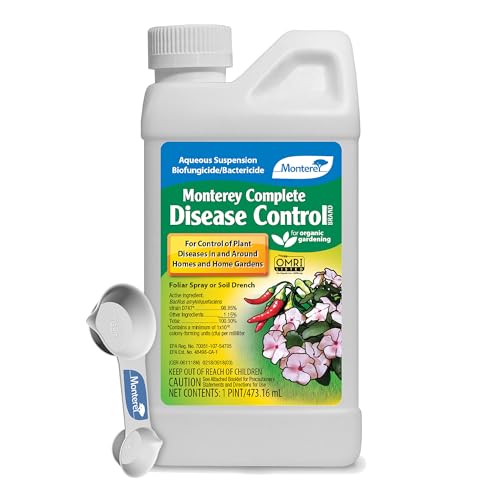
Monterey Complete Disease Control uses a biological active ingredient (Bacillus amyloliquefaciens) rather than a synthetic chemical, making it OMRI-listed for organic gardening. It colonizes root hairs and leaf surfaces to outcompete pathogens, preventing the establishment of fungi and bacteria. For boxwood blight prevention in an organic system, this is the most targeted biological option available.
Users report excellent results on tomatoes, peaches, and cucumbers, and note it can be used as a drench for root-level protection. It is not as aggressive as synthetic fungicides against an active blight infection, but it performs well as a preventive measure. The pint-sized concentrate lasts a long time because the mixing rate is just 1 teaspoon per gallon.
If you maintain an organic garden and boxwoods are a key part of your landscape, this product fits seamlessly into your program. It will not eliminate an established blight outbreak, but combined with cultural practices like removing fallen leaves and improving air circulation, it significantly reduces disease pressure over the growing season.
Why it’s great
- OMRI-listed for use in certified organic gardens
- Biological mode of action with no synthetic residue
- Can be applied as foliar spray or root drench
Good to know
- Controls but may not eliminate an active blight infection
- Health warnings for skin, eyes, and breathing during application
- Frequent reapplication needed for consistent prevention
FAQ
How often should I apply fungicide to boxwood for blight control?
Can I mix chlorothalonil and propiconazole in the same sprayer for boxwood blight?
Is it possible to save a boxwood that already has advanced blight symptoms?
Final Thoughts: The Verdict
For most gardeners, the best fungicide for boxwood blight is the TOPBUXUS Boxwood Restore & Protect Mix because it was designed specifically for boxwood health, strengthening the plant from within while supporting natural disease resistance. If you want a powerful systemic that works against active infections, grab the Atticus Gravex 20EW. And for affordable barrier protection, nothing beats the Ortho MAX Garden Disease Control as a core protectant spray.