
Crepe myrtles are one of the most resilient flowering trees you can plant, but nothing kills their summer show faster than a blanket of white powdery mildew coating every leaf and bud. The fungus creeps in during humid spells, stunts new growth, and leaves your tree looking more sickly than spectacular. Finding a formula that actually stops the cycle without burning tender bark or harming nearby pollinator activity is the real challenge.
I’m Mohammad Maruf — the founder and writer behind Drink4Good. I’ve spent countless hours cross-referencing product labels, parsing active ingredient concentrations, and studying user-reported outcomes to separate the fungicides that truly protect ornamental trees from those that just rinse off in the first rain.
Whether you’re dealing with recurring powdery mildew, Cercospora leaf spot, or sooty mold from aphid honeydew, this guide cuts through the noise to help you choose the right fungicide for crepe myrtle based on real-world results, application ease, and long-term prevention.
How To Choose The Best Fungicide For Crepe Myrtle
Crepe myrtles are naturally tough, but high humidity and poor air circulation create the perfect breeding ground for fungal spores. The right fungicide stops the outbreak without compromising the tree’s health or the surrounding soil biology. Here are the critical factors to weigh before buying.
Active Ingredient: Systemic vs. Contact vs. Biofungicide
Systemic fungicides like propiconazole or chlorothalonil penetrate the leaf tissue and move through the plant, offering protection from the inside out. Contact fungicides, including neem oil-based sprays, coat the surface and prevent spore germination on contact but wash off in heavy rain. Biofungicides such as Bacillus subtilis trigger the plant’s natural immune response and are ideal for preventative care on organic gardens and edible plants nearby.
Application Method: Concentrate vs. Ready-to-Use
Concentrates require mixing with water and a dedicated sprayer, giving you more coverage per dollar — ideal for larger, mature crepe myrtles that need full canopy soaking. Ready-to-use spray bottles eliminate measuring and are perfect for spot treatments on younger trees or for the homeowner who only needs to treat a couple of trees. Pay attention to the mixing ratio, because too strong a concentration can cause leaf burn, especially in hot sun.
Target Disease Spectrum
Powdery mildew is the signature crepe myrtle fungus, but your tree might also be fighting Cercospora leaf spot (dark circular spots that cause early leaf drop) or sooty mold (a black, flaky coating that grows on aphid and scale secretions). Choose a product that specifically lists powdery mildew plus a broad range of ornamental tree diseases so one bottle covers the most common threats.
Quick Comparison
On smaller screens, swipe sideways to see the full table.
| Model | Category | Best For | Key Spec | Amazon |
|---|---|---|---|---|
| Fertilome Liquid Systemic Fungicide II RTS | Ready-to-Use | Systemic protection on mature trees | 32 oz RTU spray bottle | Amazon |
| Bonide Revitalize Biofungicide | Biofungicide | Organic preventative care | 16 oz concentrate | Amazon |
| Bonide Fung-onil Multi-Purpose | Concentrate | Broad-spectrum control on ornamentals | 16 oz chlorothalonil concentrate | Amazon |
| Garden Safe Fungicide3 | RTU + Concentrate | Triple-action for aphids and mildew | 1 gal neem oil extract RTU | Amazon |
| Monterey Neem Oil RTU | Ready-to-Use | Edible garden-safe mildew control | 32 oz neem oil RTU | Amazon |
In‑Depth Reviews
1. Fertilome Liquid Systemic Fungicide II RTS (32oz)
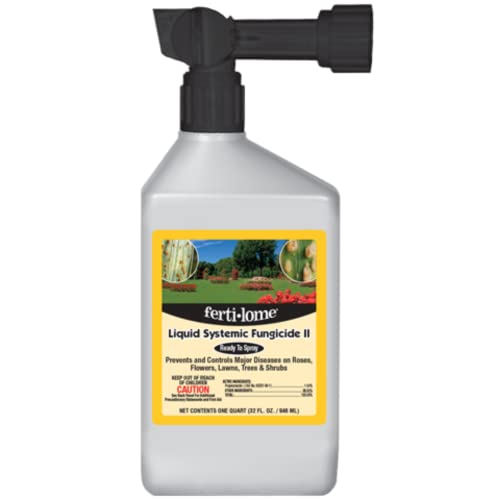
This ready-to-use systemic fungicide from Fertilome is a top-tier choice for crepe myrtle owners who want preventative control that lasts. The active ingredient is absorbed into the leaf and stem tissue, stopping powdery mildew and leaf spot from the inside rather than just sitting on the surface. That systemic action means rain won’t wash it off after a few hours, giving you reliable coverage through wet summer stretches.
At 32 ounces out of the bottle, there’s no measuring, mixing, or rinsing — just attach a sprayer and work your way around the tree’s canopy. Users report noticeable results after a single treatment on mature trees, with yellowing leaves returning to green within days. The formula also targets brown patch and dollar spot, making it a solid option if your crepe myrtle shares space with a lawn that has fungal pressure.
The price point sits at the higher end of the spectrum, but the convenience and systemic delivery make it a premium value for anyone treating multiple trees or dealing with recurring infections. If you have only one small crepe myrtle, the 32-ounce volume is still manageable and will last a full season of spot applications.
Why it’s great
- Systemic absorption keeps working after rain
- Zero mixing required, simple trigger spray application
- Controls powdery mildew, leaf spot, and lawn fungus in one bottle
Good to know
- Premium pricing per ounce compared to concentrates
- Not labeled for organic gardening
2. Bonide Revitalize Biofungicide, 16 oz Concentrate

Bonide Revitalize is not a traditional chemical fungicide — it’s a biofungicide that works by triggering the plant’s own defense mechanisms. When applied to crepe myrtle foliage, Bacillus subtilis colonizes the leaf surface and signals the tree to produce protective enzymes that stop powdery mildew spores from germinating. This makes it an excellent option for organic gardeners or anyone growing edible plants like tomatoes and herbs within the same bed.
The 16-ounce concentrate dilutes significantly — a little goes a long way, especially if you mix it for a foliar spray or a soil drench. Users consistently report that it handles powdery mildew and septoria leaf spot on vegetables, and the same mechanism works effectively on ornamental trees. The only catch is the strong sulfur-like smell during application, which fades after drying.
Because it’s preventative by nature, Revitalize works best when applied before the fungus becomes visible. If your crepe myrtle already has a thick layer of white powdery mildew, you may need a curative product first and then switch to this for ongoing protection. The organic certification also means you can spray right up to harvest day if you have fruit trees nearby.
Why it’s great
- Organic and safe for edible gardens
- Boosts plant immunity, not just surface protection
- Works as a foliar spray or soil drench
Good to know
- Strong odor during and immediately after application
- Best as a preventative, less effective on severe infections
3. Bonide Fung-onil Multi-Purpose Fungicide, 16 oz Concentrate

When powdery mildew has already taken hold and you need a curative hammer, Bonide Fung-onil delivers. The active ingredient is chlorothalonil, a broad-spectrum contact fungicide that stops spore growth on contact and leaves a protective residue on the leaf surface. It’s particularly effective against the most common crepe myrtle diseases: powdery mildew, leaf spot, rust, and scab, as well as blight on nearby vegetable plants.
The 16-ounce concentrate mixes with water to create a surprisingly large volume of spray — enough to completely drench a full-sized crepe myrtle. Users note the liquid has a milky, latex-like consistency that clings well to foliage without running off immediately, giving the fungicide more time to work against active infections. A white residue is normal after drying and won’t harm the tree, though you may want to avoid spraying directly onto flowers to protect pollinators.
One important distinction: this product is not labeled for organic use, and the chlorothalonil can be harsh if applied during peak sun hours. Apply it in the early morning or late evening, and follow the mixing instructions carefully — too high a concentration can cause leaf burn. For mid-range cost, it offers the most aggressive curative punch of any product on this list.
Why it’s great
- Chlorothalonil stops active powdery mildew fast
- Milky formula clings to vertical leaf surfaces
- Cost-effective concentrate covers large trees
Good to know
- Not suitable for organic gardening
- Can leave visible white residue on leaves
4. Garden Safe Fungicide3, 1 Gallon
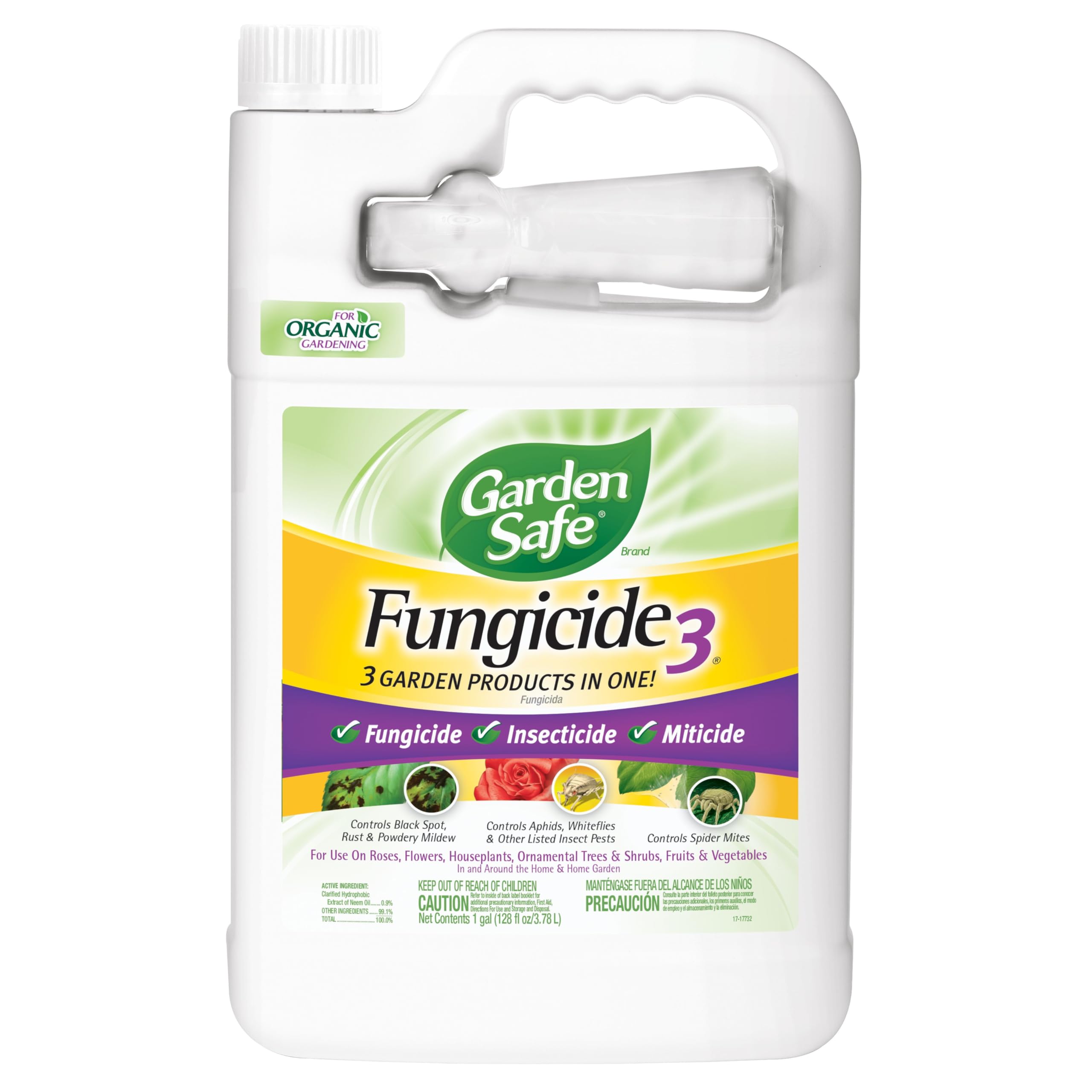
Garden Safe Fungicide3 is a three-in-one formulation that functions as a fungicide, insecticide, and miticide, all derived from clarified hydrophobic extract of neem oil. For crepe myrtle owners, this is particularly valuable because sooty mold — the black, sticky coating that often appears on crepe myrtle leaves — is caused by honeydew secretions from aphids. This product kills the aphids and treats the fungus simultaneously.
The one-gallon ready-to-use container comes with a sprayer built into the bottle, though several users report the sprayer’s short hose limits reach on taller trees. For a large crepe myrtle, you may want to transfer the liquid into a hose-end sprayer for better canopy coverage. The neem oil works by suffocating fungal spores and insect eggs, making it a contact product that requires thorough coverage of both the top and bottom of leaves.
It’s approved for organic gardening and can be used on vegetables, fruits, and ornamentals. The neem oil smell is noticeable during application but fades once dry. While it won’t cure a severe powdery mildew infection overnight, consistent weekly use prevents recurrence and keeps your tree producing greener leaves with more blossoms throughout the season.
Why it’s great
- Controls aphids, spider mites, and fungus in one spray
- Organic-approved and safe for edibles
- Convenient large gallon size with attached sprayer
Good to know
- Sprayer design limits reach on tall trees
- Neem oil smell is strong during application
5. Monterey Neem Oil RTU – 32oz
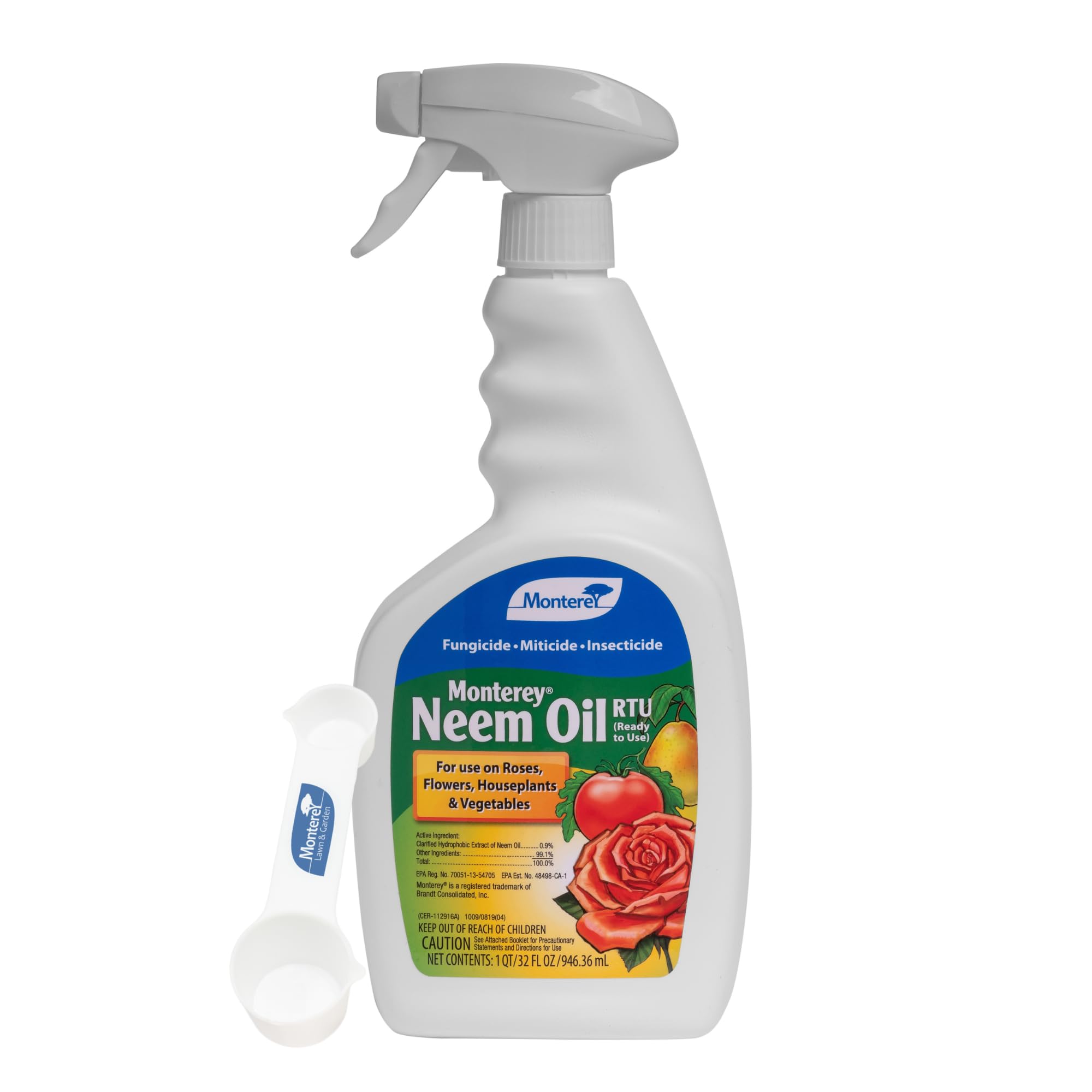
Monterey Neem Oil RTU brings the same neem oil approach as Garden Safe but in a slightly smaller 32-ounce format that’s easier to handle for homeowners with one or two trees. The clarified neem oil extract works as a contact fungicide, insecticide, and miticide, targeting powdery mildew, black spot, rust, and common crepe myrtle pests like aphids and spider mites. It’s labeled for use up to the day of harvest, so it’s a safe choice if your crepe myrtle is near vegetable beds or herbs.
No mixing is required — just shake the bottle, adjust the nozzle to stream or spray, and apply to all leaf surfaces. The formula coats leaves evenly and leaves a shine that many gardeners find appealing. Users report effective control of powdery mildew on tomatoes and roses, with consistent results that match more expensive neem oil brands at roughly half the cost per ounce.
The main drawback is the odor, which several buyers describe as unpleasant and diaper-like. It dissipates after a few hours, but you’ll want to wear gloves and avoid spraying on windy days. Some users also mention that the RTU bottle is prone to leaking during shipping, so inspect the packaging upon arrival. For a budget-friendly entry into neem oil fungicides, this is a solid performer.
Why it’s great
- Ready-to-use with no mixing required
- Safe to apply up to harvest day on edibles
- Cost-effective compared to other neem oil RTU brands
Good to know
- Strong neem oil smell during spraying
- Bottle may leak in transit if not packed carefully
FAQ
What is the best time of year to spray fungicide on crepe myrtle?
Can I use the same fungicide for crepe myrtle and my vegetable garden?
Why does my crepe myrtle look like it has black soot on the leaves?
Final Thoughts: The Verdict
For most users, the fungicide for crepe myrtle winner is the Fertilome Liquid Systemic Fungicide II RTS because systemic absorption gives you lasting protection through humid, rainy summers without needing to reapply after every storm. If you want an organic, preventative option that also boosts your tree’s natural immunity, grab the Bonide Revitalize Biofungicide. And for a triple-threat spray that kills both aphids and powdery mildew in one pass, nothing beats the Garden Safe Fungicide3.