
Leaf spot diseases turn vibrant garden foliage into brown, yellow, or black-pocked eyesores and can defoliate prized plants within weeks if left unchecked. Whether it’s black spot on roses, septoria on tomatoes, or angular leaf spot on your lawn, choosing the wrong treatment stalls recovery while the infection spreads.
I’m Mohammad Maruf — the founder and writer behind Drink4Good. I analyze fungicide chemistries, application formulations, and real-world user outcomes to help gardeners make data-backed decisions for plant health.
After researching dozens of formulas and hundreds of verified experiences, I assembled this targeted guide to the best fungicide for leaf spot on the market covering organic biofungicides, broad-spectrum concentrates, and professional-grade systemic options.
How To Choose The Best Fungicide For Leaf Spot
Leaf spot is a symptom, not a single disease — it can be caused by fungi (Alternaria, Septoria, Cercospora) or bacteria (Pseudomonas, Xanthomonas). Your fungicide must target the specific pathogen group. Broad-spectrum protectants like chlorothalonil or copper work preventatively, while systemic triazoles (propiconazole) penetrate leaf tissue to halt existing infections. Organic options use Bacillus subtilis or neem oil to boost plant immunity and suppress spore germination.
Chemistry and Mode of Action
Contact fungicides form a protective barrier on the leaf surface and stop spores from germinating — they require thorough coverage of both leaf tops and undersides. Systemic fungicides move into the plant’s vascular system and can cure established infections. Biofungicides trigger the plant’s own defense responses and are safe for edible crops up to harvest day.
Formulation and Application
Concentrates offer the best value per treatment but require accurate mixing and proper spray equipment. Ready-to-use formulas are convenient for small gardens and houseplants but cost more per ounce. Sticker-spreader adjuvants improve rainfastness, which is critical when treating leaf spot during wet spring weather when the disease thrives.
Quick Comparison
On smaller screens, swipe sideways to see the full table.
| Model | Category | Best For | Key Spec | Amazon |
|---|---|---|---|---|
| Garden Safe Fungicide3 | Organic Neem Oil | Edible gardens and ornamentals | 128 oz RTU with sprayer | Amazon |
| Quali-Pro Propiconazole 14.3 | Systemic Triazole | Lawn turf and large landscapes | 32 oz concentrate | Amazon |
| Bonide Revitalize Biofungicide | Bacillus subtilis | Organic produce up to harvest | 16 oz concentrate | Amazon |
| Bonide Captain Jack’s Orchard Spray | Multi-Purpose | Fruit trees and vegetables | 32 oz concentrate | Amazon |
| Leaf Armor Spray | Natural Protectant | Indoor houseplants | 8 oz RTU mister | Amazon |
In‑Depth Reviews
1. Garden Safe Brand Fungicide3
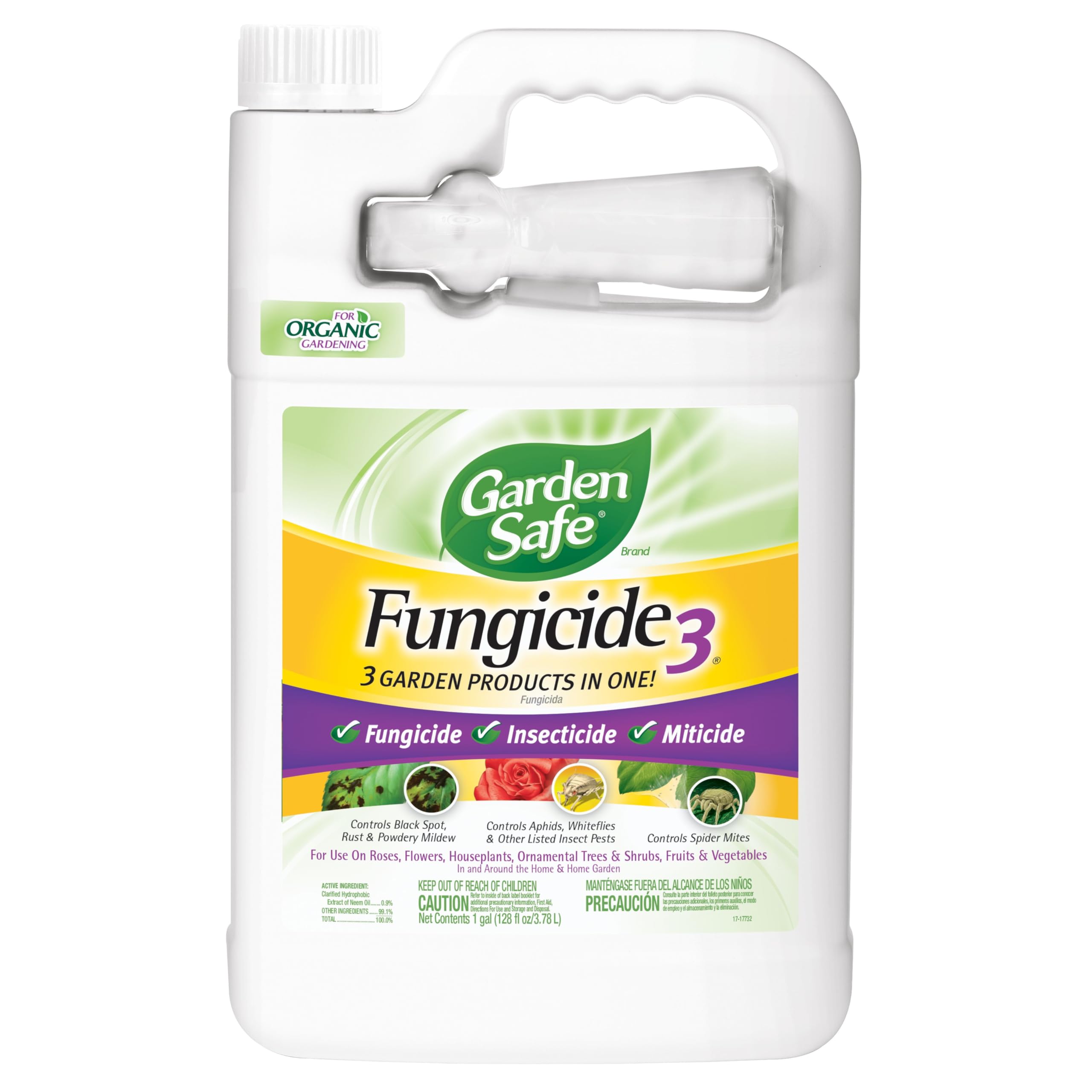
Garden Safe Fungicide3 combines clarified hydrophobic neem oil extract with a triple-action formula that works as a fungicide, insecticide, and miticide — making it a practical all-in-one for the home gardener battling multiple leaf spot pathogens. The one-gallon ready-to-use container includes a sprayer, eliminating the mixing step that often leads to under- or over-concentration with DIY concentrates.
Users consistently report effective control of black spot on roses, powdery mildew on hibiscus, and leaf spot on vegetable crops like tomatoes and blueberries when applied weekly. The neem oil extract works by smothering fungal spores and disrupting their life cycle on contact. Several reviewers note the product’s organic certification allows safe use on edible plants, a key advantage when treating leaf spot on fruit and vegetable foliage.
The integrated sprayer design drew mixed feedback — a few users found the short hose length limited reach on larger plants. Start with half the recommended dose on sensitive foliage and spray during cooler evening hours to avoid leaf burn under intense sun. For the balance of coverage volume and organic versatility, this remains the most convenient leaf spot solution for the average garden.
Why it’s great
- Triple-function formulation covers fungi, insects, and mites in one application
- Large 128-ounce RTU bottle with sprayer is ready immediately
- Organic neem oil safe for vegetables up to harvest day
Good to know
- Sprayer hose design limits reach on tall or sprawling plants
- Can cause leaf burn if applied during daytime heat
- May leave temporary powdery residue on dark foliage
2. Quali-Pro Propiconazole 14.3 Fungicide

For lawns suffering from dollar spot, brown patch, and leaf spot, the Quali-Pro Propiconazole 14.3 delivers professional-grade systemic control that penetrates leaf tissue from within. Its locally systemic mode of action means the fungicide moves into the plant’s water-conducting vessels, providing long-lasting protection even when rainfall threatens to wash off contact products. The microemulsion formulation produces less odor than older triazole formulas and offers excellent tank stability.
Users treating St. Augustine, Bermuda, and fescue lawns report visible new grass growth within one week of application and complete disease cessation after two treatments spaced 14 days apart. The concentrate is economical — a single 32-ounce bottle can treat over 5,000 square feet of turf at standard rates, making it the highest-value option for large landscapes. Commercial applicators also use it for tree injection to combat oak wilt and other vascular leaf diseases.
This is not a zero-effort product. Full personal protective equipment is required during mixing and application, and the fungicide label prohibits edible crop use for at least one year after the last spray. Homeowners with a single houseplant should look elsewhere — this is built for serious turf and ornamental management where leaf spot has become a recurring problem across significant square footage.
Why it’s great
- Systemic action cures existing leaf spot infections from within the plant
- Extremely cost-effective for large lawns and landscapes
- Excellent tank mix compatibility with other fungicides
Good to know
- Requires full PPE and precise measuring for safe use
- Not labeled for edible garden crops
- May need rotation with different MOA products to prevent resistance
3. Bonide Captain Jack’s Citrus, Fruit & Nut Orchard Spray

Captain Jack’s Orchard Spray serves as a broad-spectrum fungicide, insecticide, and miticide in one concentrated pint — a single bottle makes up to 6.4 gallons of finished spray. It controls leaf spot diseases like powdery mildew, rust, and blight alongside insect pests such as fruit flies, caterpillars, and scale, making it ideal for the backyard orchardist who wants one product for the entire spray schedule.
Real-world results show leaf spot on apple trees visibly receding after two applications, with foliage transitioning from yellowed, spotted leaves to noticeably greener, healthier growth. Users apply it on avocados, lemons, pecans, and stone fruit with the same success. The formula is gentle enough to use up to one day before harvest, though a slight sulfur-based residue may appear on fruit at higher dilution ratios.
The concentrate requires a hose-end or tank sprayer — no RTU convenience here — but the cost per gallon of finished spray is significantly lower than ready-to-use alternatives. Reapplication after heavy rain is necessary since the contact-active ingredients do not resist wash-off. For anyone managing a mixed fruit and vegetable garden with recurring leaf spot, this is the most economical single-bottle solution available.
Why it’s great
- Three-in-one formula treats fungal, insect, and mite problems simultaneously
- Each bottle makes over 6 gallons of spray at low cost per application
- Safe for use on edible crops up to one day before harvest
Good to know
- Requires separate sprayer and accurate mixing
- Contact action washes off in rain — needs reapplication
- May leave visible sulfur residue on fruit peels
4. Bonide Revitalize Biofungicide Concentrate

Bonide Revitalize takes a biological approach to leaf spot control using the beneficial bacterium Bacillus subtilis. Rather than poisoning the pathogen directly, it colonizes the leaf surface and triggers the plant’s systemic acquired resistance — essentially training the plant to fight off future infections. This makes it an excellent choice for organic vegetable gardens where chemical residues are not acceptable.
Users saw impressive results against septoria leaf spot on tomatoes, powdery mildew on squash, and black spot on roses. The 16-ounce concentrate mixes with water for a foliar spray or soil drench and can be applied up to the day of harvest without concern. A few users noted a strong odor during mixing, which dissipates once the solution dries on the foliage. The biofungicide works preventatively and curatively but requires consistent reapplication every 7–14 days during high disease pressure.
Because Revitalize relies on a living organism, it has a shorter shelf life than synthetic chemistry. Store unused concentrate in a cool, dry place and use it within one season for best results. For organic growers who want to avoid copper or sulfur buildup in their soil while keeping leaf spot under control, this biological solution offers a clean, effective alternative.
Why it’s great
- Organic-approved beneficial bacteria with zero chemical residue
- Triggers plant immune response for ongoing protection
- Safe for use on all crops up to the day of harvest
Good to know
- Strong biological odor during mixing
- Requires frequent reapplication in wet weather
- Shorter shelf life than synthetic fungicides
5. Leaf Armor Spray for Houseplants

Leaf Armor is formulated specifically for indoor houseplants prone to leaf spotting from fungi, bacteria, dust buildup, and environmental stress. Its organic-based biopolymers and yucca extract create a protective barrier that defends against pathogens while cleaning away the film that blocks stomatal gas exchange. Users noticed visible improvements in leaf gloss, flexibility, and overall health within 24 hours of application.
The ready-to-use formula comes in an 8-ounce mister — no mixing, no measuring, no harsh chemicals. Fiddle leaf fig owners reported correction of curled, brown-edged leaves and restoration of dark green, glossy foliage. The formula also works on Monstera, rubber trees, pothos, and philodendron. Since it is nontoxic when applied correctly, it is safe around children and pets, a priority for indoor plant parents.
The per-ounce cost is higher than concentrates, and some users noticed a slight white film on leaves if too much product is applied at once. Spray in the evening or early morning and test on a single leaf for plants with fuzzy or very delicate foliage (African violets may be sensitive). For the indoor plant collection where leaf spot is an occasional issue, this is the most targeted and gentle option available.
Why it’s great
- Nontoxic biopolymer formula safe for homes with kids and pets
- Cleans dust while protecting against fungal and bacterial leaf spot
- No mixing required — spray directly from the bottle
Good to know
- Higher cost per application than concentrate alternatives
- Can leave a white film if over-applied
- Not designed for large outdoor gardens or heavy disease pressure
FAQ
Can I use a lawn fungicide like Quali-Pro Propiconazole on my vegetable garden?
How often should I apply a biofungicide like Bonide Revitalize for active leaf spot?
Will neem oil fungicides burn my plants in hot weather?
Can Leaf Armor cure an established leaf spot infection on my Monstera?
Does Captain Jack’s Orchard Spray work on bacterial leaf spot or only fungal?
Final Thoughts: The Verdict
For most users, the best fungicide for leaf spot winner is the Garden Safe Fungicide3 because its organic neem oil formulation covers both prevention and control on edible and ornamental plants without mixing, and the large one-gallon size keeps you spraying through the season. If you need systemic curative power for a lawn facing dollar spot or brown patch, grab the Quali-Pro Propiconazole 14.3. And for the organic gardener who wants zero chemical residue on harvest-day produce, nothing beats the Bonide Revitalize Biofungicide.