
That orange powdery dusting on the undersides of your rose leaves is rust — a fungal infection that weakens the plant, triggers premature leaf drop, and stops blooms before they form. If you’ve seen it spread leaf to leaf despite your best pruning, you need a targeted application that kills the spores and prevents reinfection.
I’m Mohammad Maruf — the founder and writer behind Drink4Good. I’ve analyzed fungicide formulations for years, comparing active ingredients like neem oil, citric acid, and sulfur-based compounds to help home gardeners pick the spray that tackles rust without burning tender rose foliage.
After reviewing the top-rated formulas on the market, I’ve pinpointed the best fungicide for rust on roses that stops spore spread quickly and keeps your bushes healthy through the growing season.
How To Choose The Best Fungicide For Rust On Roses
Rust on roses is a tenacious fungal disease that overwinters in fallen leaves and re-emerges each spring. Choosing the wrong fungicide means you’ll spray week after week without stopping the cycle. Focus on the following factors to match the right product to your garden’s needs.
Active ingredient: Natural oil vs. synthetic concentrate
Neem oil and citric acid formulas are gentle on blooms and safe for beneficial insects when applied at dusk, but they require frequent reapplication — typically every 7 to 14 days. Sulfur-based or synthetic multi-purpose concentrates offer longer residual protection and can tackle rust, black spot, and powdery mildew in one spray, but you must follow label intervals to avoid leaf burn.
Contact versus systemic action
Contact fungicides coat the leaf surface and kill spores on contact, but they wash off in rain and leave new growth unprotected. Systemic formulas are absorbed into the plant’s tissue, providing protection from the inside out for up to four weeks. For established rust infections, a systemic or translaminar product gives you a better chance of breaking the cycle.
Formulation: Concentrate vs. ready-to-use
Concentrates (mixing 2 to 6 tablespoons per gallon of water) are more economical for large rose beds and let you adjust the strength for severe outbreaks. Ready-to-use spray bottles are convenient for a few bushes but cost more per application. If you have more than three rose plants, a concentrate pays off quickly.
Quick Comparison
On smaller screens, swipe sideways to see the full table.
| Model | Category | Best For | Key Spec | Amazon |
|---|---|---|---|---|
| Bonide Captain Jack’s Orchard Spray | Concentrate | All-in-one rose protection | Makes 6.4 gal per pint | Amazon |
| Garden Safe Fungicide3 1 Gal | Ready-to-Use | Organic rust prevention | 128 oz ready-to-use | Amazon |
| Fertilome Triple Action 8 oz | Oil Concentrate | Disease recovery spraying | 8 oz concentrate | Amazon |
| Earth’s Ally Disease Control 32 oz | Natural Concentrate | Safe edible garden use | 32 oz makes 10 gal | Amazon |
| Ortho Rose & Flower Insect Killer | RTU Spray | Insect + fungus defense | 24 oz ready-to-use | Amazon |
In‑Depth Reviews
1. Bonide Captain Jack’s Citrus, Fruit & Nut Orchard Spray

Bonide Captain Jack’s is the strongest multi-target concentrate in this roundup, formulated to take down rust, powdery mildew, blight, and brown rot while also killing beetles, caterpillars, and spider mites. One pint makes up to 6.4 gallons of finished spray, which is enough coverage for a large rose bed or multiple fruit trees over an entire season. The citrus-based active ingredients provide broad-spectrum control without the harsh phytotoxicity that can scorch rose leaves in hot sun.
Customer reports from apple tree and rose growers confirm that yellowing leaves begin to green up after just two applications, and the product’s translaminar movement helps it reach rust spores hiding on the undersides of foliage. It can be used up to the day before harvest on edible plants, making it a versatile pick if you interplant vegetables near your roses. The concentrate format requires a separate sprayer, but the per-gallon cost is significantly lower than ready-to-use alternatives.
The main tradeoff is non-persistence — rain or overhead watering washes the residue off, so you’ll need to reapply on a 7- to 14-day schedule during wet weather. Still, for a single product that covers fungus, insects, and mites, this is the most complete solution for rust-prone roses.
Why it’s great
- Kills rust plus powdery mildew and black spot in one treatment
- Highly economical concentrate — makes over 6 gallons
- Safe for edible plants through day of harvest
Good to know
- Needs reapplication after rain
- Requires a separate tank sprayer
2. Garden Safe Brand Fungicide3 1 Gallon
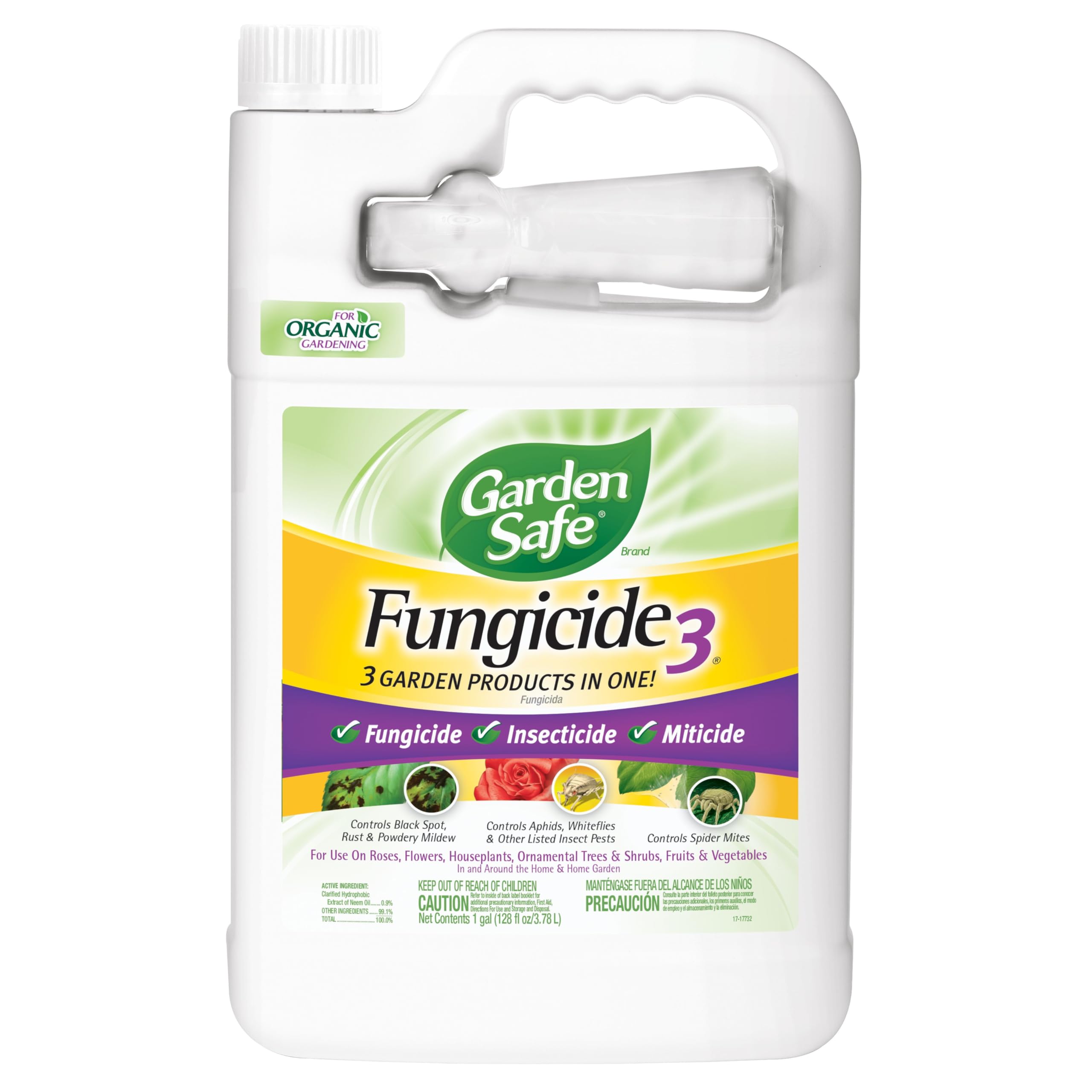
Garden Safe Fungicide3 delivers a full gallon of ready-to-use neem oil extract that works as a fungicide, insecticide, and miticide all in one bottle. The clarified hydrophobic neem oil smothers rust spores on contact while preventing new fungal attacks on leaf tissue. Because it’s ready-to-use, you screw on the hose-end sprayer and go — no measuring, no mixing, and no leftover concentrate to store.
Users report excellent results on roses, orchids, hibiscus, and vegetable gardens, noting that weekly applications eliminated rust and powdery mildew without damaging blooms. The neem formula is OMRI-listed for organic gardening, so you can spray right up to harvest on tomatoes and peppers. A few customers found the built-in spray wand design awkward, with a short coil that makes it hard to reach bushes in the back of a bed.
Because neem oil is a contact treatment, it won’t cure leaves that are already damaged by rust, but it prevents new spores from germinating and stops the disease from spreading to healthy foliage. If you value convenience and organic certification over maximum residual duration, this gallon jug is a smart buy.
Why it’s great
- Ready-to-use gallon — no mixing required
- Organic neem oil safe for edibles and pollinators (apply at dusk)
- Triple-action: fungicide, insecticide, miticide
Good to know
- Contact-only — won’t fix already damaged leaves
- Built-in spray wand has short reach
3. Fertilome Triple Action 8 oz
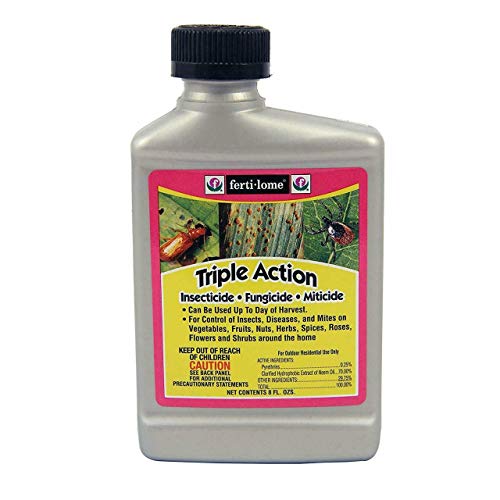
Fertilome Triple Action uses a neem oil-based formula to handle rust, powdery mildew, and leaf spot while also controlling aphids and spider mites. The 8-ounce concentrate is designed for a 7- to 14-day spray schedule, and users who applied it on azaleas and apple trees reported visible recovery from fungal damage after just two treatments — faded leaves regained color and “pods” from heavy pruning disappeared.
This product is especially strong for plants that are already stressed from disease or poor drainage. Several long-time users say it’s the best product they’ve found for reversing fungal damage and stimulating new growth, though they note the price has risen in recent years. Because it’s an oil-based concentrate, you need to shake it thoroughly before mixing and avoid spraying in direct sunlight to prevent leaf burn.
One important caution: the neem and sulfur components can harm bees if sprayed during bloom, so apply at dusk and only when flowers are not open. For gardeners who want a proven disease-recovery product in a compact, economical bottle, Fertilome is a top contender.
Why it’s great
- Proven recovery on stressed or damaged plants
- Triple action covers fungus, insects, and mites
- Small concentrate size lasts many applications
Good to know
- Can burn leaves if applied in full sun
- Not safe for pollinators during bloom
4. Earth’s Ally Disease Control Concentrate 32 oz
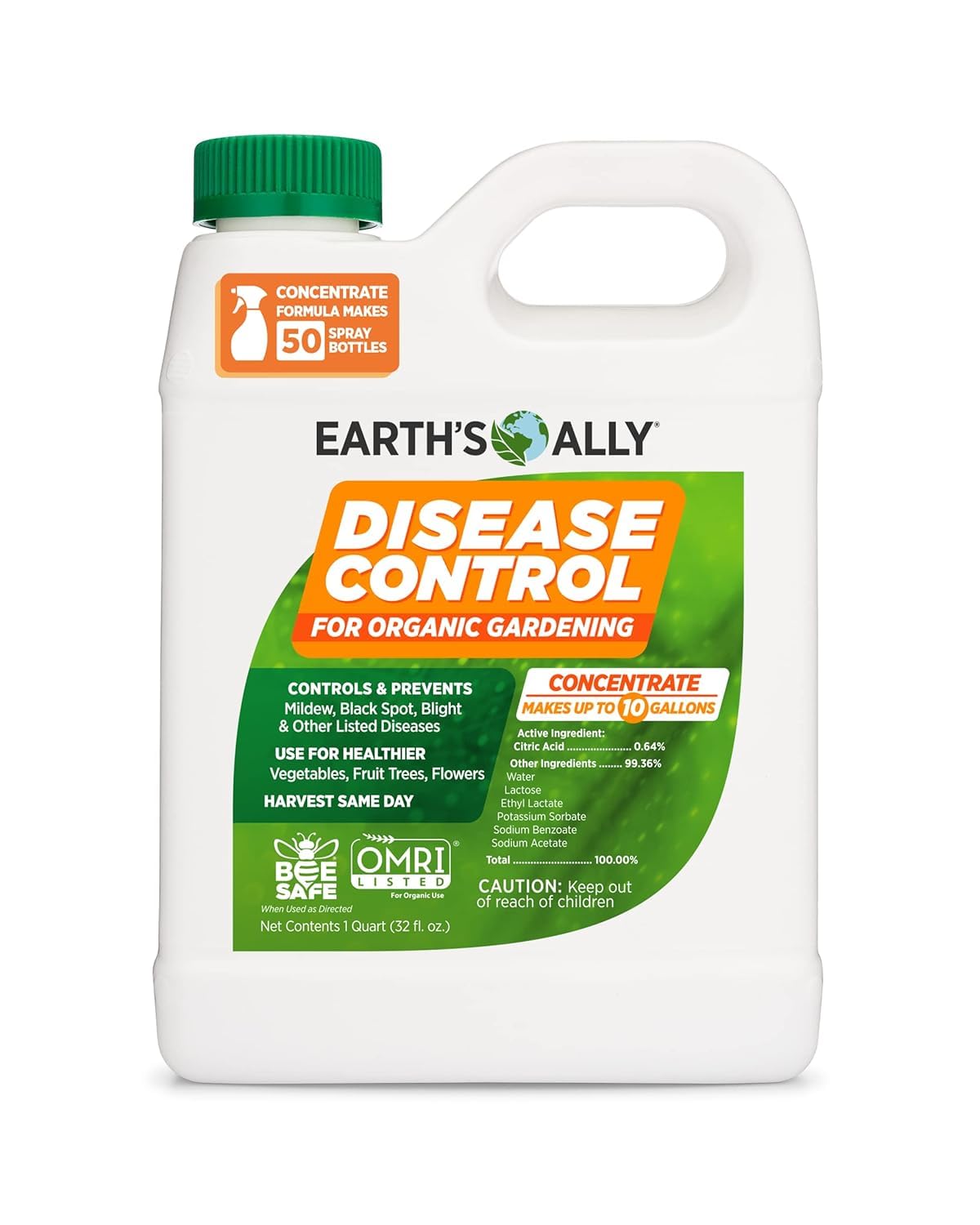
Earth’s Ally Disease Control stands out with a citric acid active ingredient — a naturally derived fungicide that is OMRI-listed and leaves no harmful residues on fruits, vegetables, or flowers. It targets powdery mildew, downy mildew, blight, black spot, and rust, making it a complete organic solution for rose rust. One 32-ounce bottle makes up to 10 gallons of finished spray, giving you an extremely low per-gallon cost compared to ready-to-use alternatives.
Users consistently report healthier rose foliage and rapid improvement after switching to this formula. Because citric acid works by altering the pH on leaf surfaces to discourage spore germination, it’s gentle on beneficial insects and safe to use up to the day of harvest. The concentrate mixes easily with water in any standard pump sprayer, though you’ll need to apply every 7 to 10 days during active infection periods.
The biggest limitation is that citric acid breaks down quickly in sunlight and rain, so it requires more frequent applications than synthetic fungicides. If you prefer a completely chemical-free approach and don’t mind a weekly spray routine, Earth’s Ally is the safest choice for a family garden.
Why it’s great
- OMRI-listed organic formula with no harsh residues
- Makes 10 gallons — very economical
- Safe for fruits and vegetables up to harvest day
Good to know
- Breaks down in sun and rain — requires weekly spraying
- Not effective against insects or mites
5. Ortho Rose and Flower Insect Killer 24 oz

Ortho’s Rose and Flower Insect Killer is a dual-action spray that kills insects on contact while providing systemic protection that moves through the plant for up to four weeks. It’s designed specifically for roses and flowering plants, targeting Japanese beetles, aphids, and spider mites that often accompany rust infections. The ready-to-use bottle lets you spray straight from the container without mixing.
Gardeners with heavy Japanese beetle pressure swear by this product — they report beetles gone within days and roses returning to full health with regular every-other-week sprays. The systemic action means new growth is protected from the inside, which helps prevent secondary pest damage while you focus on controlling rust. However, the active ingredients are synthetic and not suitable for organic gardens, and some users found the contact-only effect short-lived for heavy mealybug infestations.
If your primary concern is insects that stress roses and make them vulnerable to rust, this is an effective targeted tool. For rust itself, it works best as part of a broader spray program rather than a standalone fungicide.
Why it’s great
- Systemic protection lasts up to 4 weeks
- Kills 100+ listed insects including Japanese beetles
- Convenient ready-to-use spray bottle
Good to know
- Not organic — synthetic chemical formula
- Weak systemic action against severe infestations
FAQ
How often should I spray fungicide on roses with rust?
Can I use a rust fungicide on roses that are blooming?
Will neem oil cure rust on rose leaves that are already damaged?
Final Thoughts: The Verdict
For most users, the best fungicide for rust on roses winner is the Bonide Captain Jack’s Orchard Spray because it combines broad-spectrum rust control with insect and mite knockdown in a cost-effective concentrate. If you want a ready-to-use organic option, grab the Garden Safe Fungicide3. And for chemical-free disease recovery on stressed plants, nothing beats the Fertilome Triple Action.