
Succulent leaves turning mushy, stems collapsing at the soil line, and a foul odor from the pot — these are the unmistakable signs of a fungal infection overtaking your collection. Overwatering is often the trigger, but the real culprit is a pathogen that spreads through the root zone and vascular tissue, turning your prized Echeveria or Haworthia into a black, soggy mess. Standard all-purpose garden sprays can burn sensitive succulent foliage or simply fail to reach the roots where the problem starts.
I’m Mohammad Maruf — the founder and writer behind Drink4Good. My research into this category focused on identifying biological and organic formulas that target the specific pathogens affecting succulents, including Fusarium, Pythium, and powdery mildew strains, while being safe for tender, water-stored leaf tissue. I analyzed each formula’s active ingredient concentration, application method, and real-world user results to separate what actually works from what just smells like chemicals.
After reviewing dozens of products, I’ve narrowed the list down to five proven options. Whether you are treating an active outbreak or setting up a prevention schedule for a rare collection, this guide to the best fungicide for succulents will help you choose the right one for your specific situation.
How To Choose The Best Fungicide For Succulents
Selecting a fungicide for succulents requires a different approach than treating tropical houseplants. Succulents store water in their leaves, making them prone to tissue burn from harsh chemical sprays and especially vulnerable to over-application. The goal is a product that targets the pathogen without damaging the plant’s delicate cuticle or disrupting beneficial soil microbes.
Biological vs. Chemical Active Ingredients
Biological fungicides use beneficial bacteria or natural acids to outcompete or directly destroy fungal pathogens. For succulents, a biological formula like Bacillus amyloliquefaciens colonizes the root zone and prevents Pythium and Fusarium from establishing. Chemical fungicides can be effective for aggressive foliar issues, but they often leave residues and can stress succulents during active growth or flowering cycles. For long-term prevention on a collection, biological options are safer and more sustainable.
Application Method: Soil Drench vs. Foliar Spray
Root rot requires a soil drench — a diluted solution poured directly into the potting mix so it reaches the root system. Powdery mildew and leaf spot, which appear as white powdery patches or dark lesions on leaves, need a foliar spray applied to both sides of the leaves. Many products can do both, but check the label. A concentrate that specifies soil drench rates will save you from buying two separate bottles.
Concentration and Dilution Ratio
Ready-to-use sprays are convenient for a single plant but become expensive for a collection. Concentrates cost less per application and let you adjust the dilution for sensitive succulents. Look for concentrates that specify a per-gallon mixing rate — this tells you how many treatments a single bottle will provide. A 32-ounce concentrate that makes 10 gallons of spray will last longer than a 24-ounce ready-to-use bottle that treats only a few plants.
Quick Comparison
On smaller screens, swipe sideways to see the full table.
| Model | Category | Best For | Key Spec | Amazon |
|---|---|---|---|---|
| Southern Ag 16 oz | Biological | Root rot prevention in collections | 98.85% Bacillus amyloliquefaciens | Amazon |
| Southern Ag 8 oz | Biological | Small collection or single plant | 98.85% Bacillus amyloliquefaciens | Amazon |
| Earth’s Ally 32 oz | Organic Acid | Powdery mildew on leaves | Citric acid concentrate, 10 gal yield | Amazon |
| Safer Brand 3-in-1 | Triple-Action | Fungus + insect control on leaves | Potassium salts + sulfur, 32 oz RTU | Amazon |
| Grower’s Ally Crop Defender | Triple-Action | Spider mites and mildew indoors | Botanical oil blend, 24 oz RTU | Amazon |
In‑Depth Reviews
1. Southern Ag Garden Friendly Biological Fungicide, 16 oz

The 16-ounce bottle of Southern Ag Biological Fungicide is the top choice for succulent collectors who need a concentrated, versatile solution. Its active ingredient, Bacillus amyloliquefaciens strain D747, is a live beneficial bacterium that colonizes the root zone and outcompetes fungal pathogens like Pythium and Fusarium before they can cause root rot. Users report success using it as a soil drench for water propagations that were rotting, as well as a foliar spray for leaf miners on nearby plants.
At 98.85% active ingredient, this concentrate is far more potent than ready-to-use alternatives, requiring only a small amount per gallon of water. Multiple reviews note that it acts as a bio-fertilizer, with plants showing darker, healthier leaves after treatment. The large bottle size is economical for treating a whole collection or garden repeatedly throughout the growing season.
The main drawback is the bottle opening design, which can cause the concentrate to dribble when pouring. You will need a measuring syringe or graduated cylinder for accurate dosing. Despite this small inconvenience, the combination of root rot prevention, foliar disease control, and plant health benefits makes this the most versatile and cost-effective option for serious succulent growers.
Why it’s great
- High-concentration biological formula prevents root rot and mildew
- Doubles as a soil drench and foliar spray for whole-collection treatment
- Acts as a mild bio-fertilizer improving leaf color and growth
Good to know
- Bottle opening design makes measuring without spills tricky
- Strong bacterial smell confirms live culture but may be unpleasant during mixing
2. Southern Ag Garden Friendly Bio Fungicide Organic, 8 oz

This 8-ounce bottle is the same concentrated Bacillus amyloliquefaciens formula as the larger 16-ounce version, making it an excellent entry point for those with a small succulent collection or a single problematic plant. Users who switched from commercial root rot treatments like Hydroguard found that this concentrate is significantly stronger, requiring only 2–3.5 ml per gallon of water to achieve the same protective effect.
The biological nature of this fungicide means it smells strongly of live bacteria — a normal and reassuring sign that the culture is active. It is USDA-listed for organic gardening, so you can use it on edible succulents like Senecio serpens without concern. Multiple reviews confirm it stopped ongoing root rot in water propagations and hydroponic setups where roots are especially vulnerable to bacterial and fungal infections.
Be cautious not to over-apply, as reviews note that more is not better with biological fungicides. The strong concentrate can waste product quickly if you are heavy-handed. For a single pot or a small propagation tray, this bottle will last through many seasons. If you plan to expand your collection, the 16-ounce version offers better value per application.
Why it’s great
- Highly concentrated — a single bottle treats many plants over multiple seasons
- Effective soil drench for root rot in water propagations and pots
- OMRI-listed and safe for organic gardening, including edible succulents
Good to know
- Pungent bacterial smell during mixing can be off-putting
- Less economical per ounce than the larger 16-ounce bottle for big collections
3. Earth’s Ally Disease Control Concentrate, 32 oz
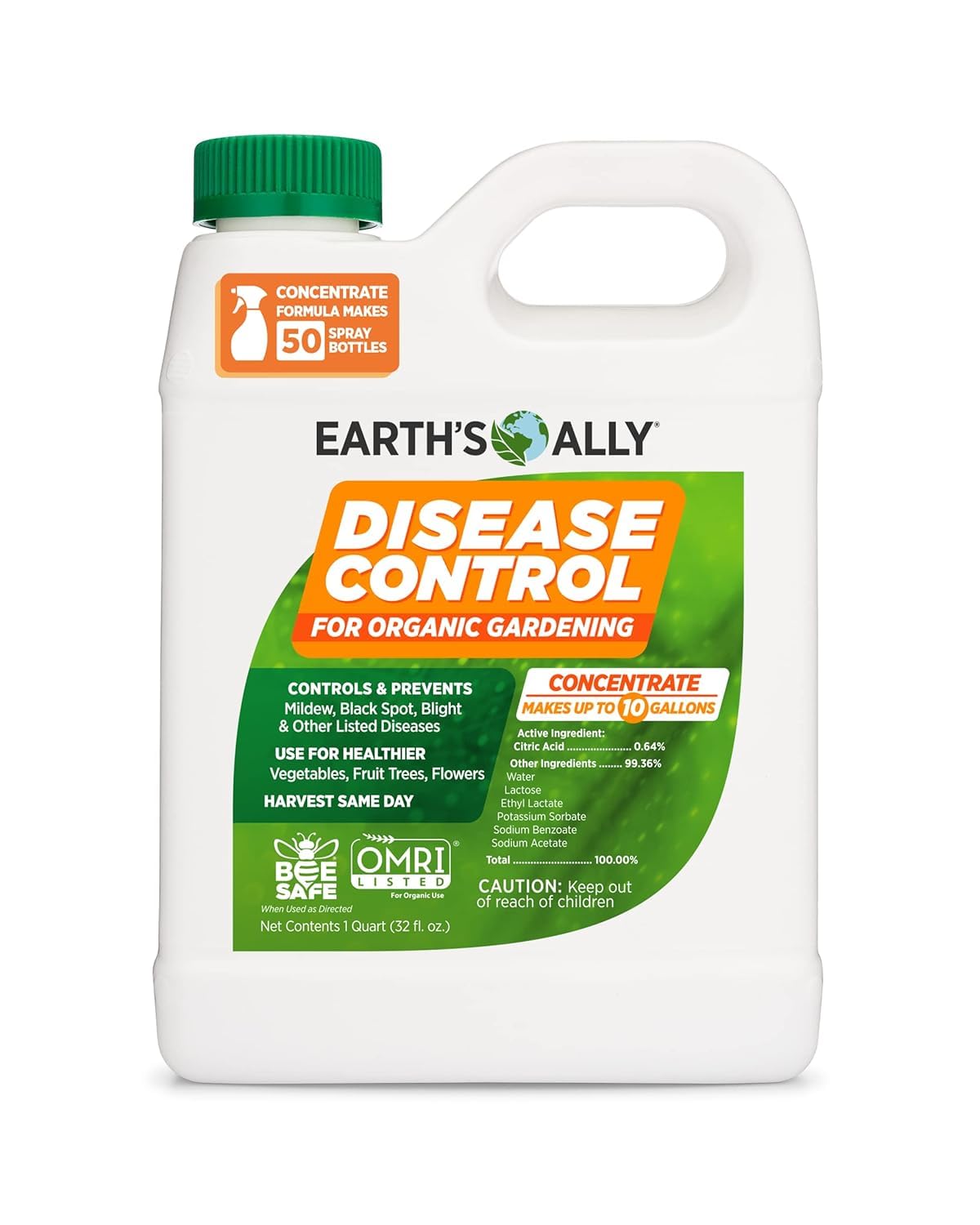
Earth’s Ally Disease Control uses citric acid as its active ingredient, making it a non-toxic option for treating powdery mildew, black spot, and blight on succulent leaves without the risk of burning sensitive tissue. The concentrated 32-ounce bottle yields 10 gallons of ready-to-use spray, making it a very economical choice for a large collection of succulents or outdoor succulent gardens that experience humidity-related fungal issues.
Users on roses, grapefruit trees, and ornamentals report visible improvement in leaf health after application. Because citric acid works by altering the pH on the leaf surface, it is most effective as a preventative treatment or for catching fungal issues early. For succulents prone to powdery mildew, such as Kalanchoe and Sedum varieties, a weekly preventative spray during humid months can keep leaves clean.
One limitation is that citric acid does not have systemic activity — it only protects the surfaces it directly contacts. You must spray both the top and bottom of every leaf, which is time-consuming for smaller, densely packed succulents like Lithops or Haworthia. Also, it will not cure advanced root rot, so this product is best paired with a biological soil drench for complete disease management.
Why it’s great
- Citric acid formula is very safe for delicate succulent leaves
- One 32-ounce bottle makes 10 gallons of spray — excellent value
- OMRI-listed and can be used up to the day of harvest
Good to know
- Only protects surfaces it directly contacts — requires thorough leaf coverage
- Not effective against established root rot infections
4. Safer Brand 3-in-1 Garden Spray, 32 oz

Safer Brand 3-in-1 combines potassium salts of fatty acids and sulfur to create a fungicide, insecticide, and miticide in one ready-to-use bottle. This is ideal for succulent owners dealing with simultaneous problems — say, powdery mildew on Jade plant leaves alongside a mealybug or spider mite infestation. The sulfur component controls powdery mildew, black spot, and rust, while the fatty acid salts break down the exoskeletons of soft-bodied insects.
Users praise its effectiveness without burning plant leaves, even on seedlings and sensitive ornamentals. It is OMRI-listed for organic gardening and safe around children and pets. The formula can be applied up to the day before harvest, making it safe for edible succulents and herbs. For indoor succulent collections where pests often accompany fungal issues, this single-bottle solution simplifies treatment.
The recurring complaint is the sprayer bottle quality. Multiple reviews report the trigger nozzle failing after one or two uses, leaving a nearly full bottle unusable. Plan to transfer the liquid to a quality sprayer immediately upon opening. Also, this product is preventative rather than curative for severe fungal infections — it slows spread but may not reverse advanced tissue damage.
Why it’s great
- Controls fungus, aphids, spider mites, mealybugs, and powdery mildew
- Will not burn succulent leaves even on young or sensitive plants
- Convenient ready-to-use format for immediate spot treatment
Good to know
- Spray bottle nozzle often breaks after first use — transfer contents
- Better as a preventative than a cure for deep infections
5. Grower’s Ally Crop Defender 3, 24 oz
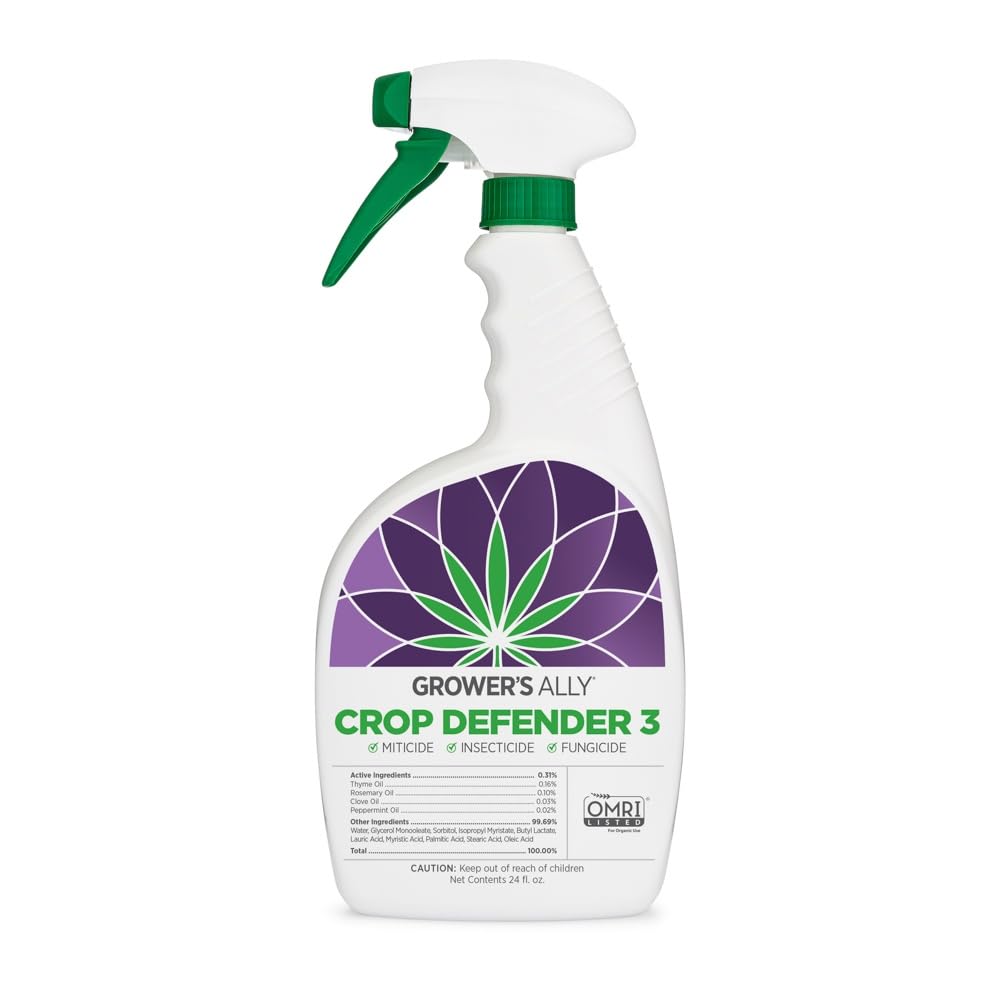
Grower’s Ally Crop Defender 3 is a ready-to-use spray formulated with a blend of botanical oils that works as a miticide, insecticide, and fungicide. It targets powdery mildew, spider mites, russet mites, thrips, and aphids — all common pests in indoor succulent setups where ventilation is poor. The triple-action formula includes a built-in surfactant, so it spreads evenly across waxy succulent leaves without beading up and rolling off.
User reviews highlight that this spray does not burn leaves, even on seedlings, and leaves behind a pleasant botanical scent rather than the chemical smell associated with sulfur-based products. It is FIFRA 25(b) exempt and OMRI-listed, meaning it contains no synthetic pesticides or heavy metals, and is safe for use around bees, kids, and pets once dry. Several users report it eradicated stubborn spider mite infestations that resisted other organic sprays.
Because it is ready to use, the 24-ounce bottle does not go as far as a concentrate. For a large collection, the cost per application adds up quickly. Also, botanical oils can leave a slight residue on leaves, which some succulent owners find visually unappealing on plants like Echeveria that display powdery farina. It is best for spot-treating pests on a few plants rather than as a whole-collection preventative.
Why it’s great
- Effective against spider mites, aphids, thrips, and powdery mildew
- Will not burn sensitive succulent leaves or seedlings
- Safe for organic gardening and leaves no synthetic residue
Good to know
- Ready-to-use format is less economical for large collections
- Botanical oil residue may dull the appearance of farina-coated leaves
FAQ
Can I use a chemical fungicide on my succulents without burning them?
How often should I apply a biological fungicide to prevent root rot?
Should I spray fungicide directly on the leaves or pour it into the soil?
Final Thoughts: The Verdict
For most users, the best fungicide for succulents winner is the Southern Ag Biological Fungicide 16 oz because it combines a high concentration of beneficial bacteria with the flexibility to treat both root rot and foliar issues across a whole collection. If you want a dedicated powdery mildew solution without harsh chemicals, grab the Earth’s Ally Disease Control. And for combining fungus and pest control into one spray, nothing beats the Safer Brand 3-in-1 Garden Spray.